tono mirai architects sculpts rammed-earth TOILETOWA in japan
tono mirai architects' TOILETOWA is an example of recycled, regenerative architecture in miyoshi city, japan.
[FEATURED]
design concept: the circle of life
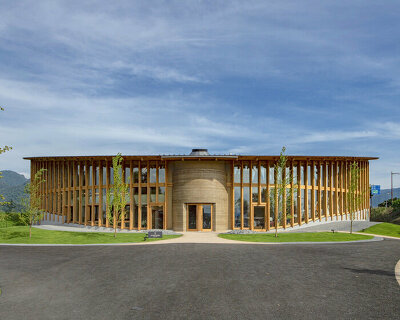
Tono Mirai Architects celebrates the completion of its TOILETOWA, an example of recycled, regenerative architecture in Miyoshi City, Saitama Prefecture, Japan. The core concept behind the toilet project is the circle of life. ‘Everything comes from the earth and eventually returns to it,’ the team reminds us. The rammed-earth building embodies this philosophy through its use of recycled materials and its wastewater treatment system, which creates clean water that can be reused.
 images © takeshi noguchi
Sustainable Materials and Techniques
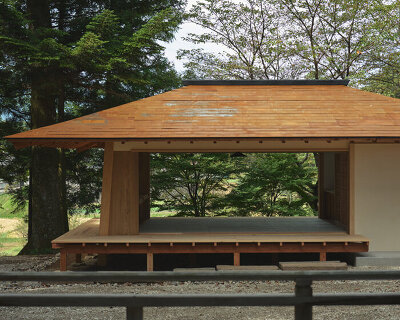
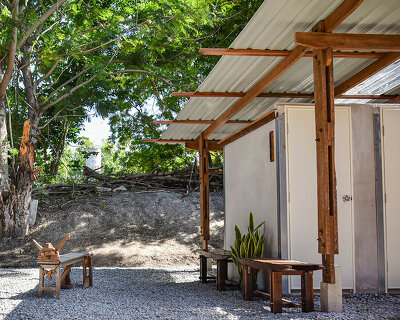
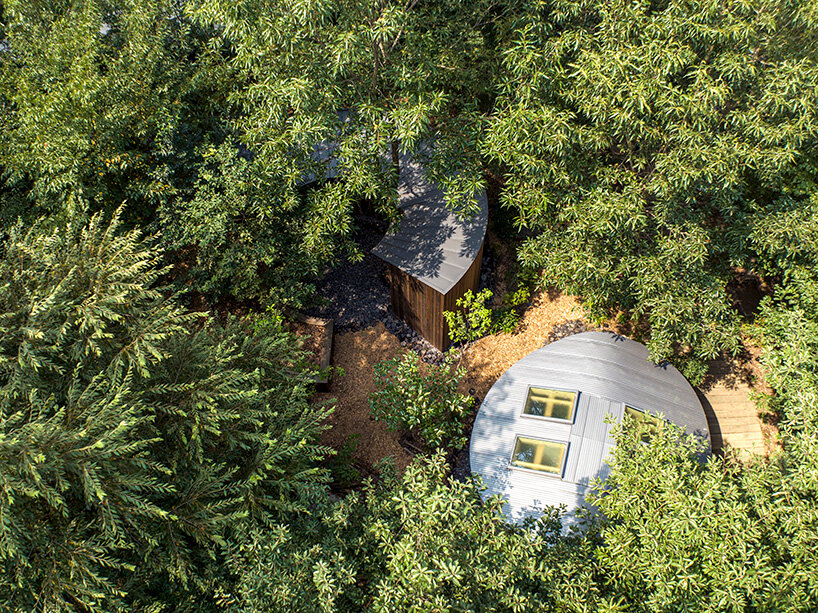
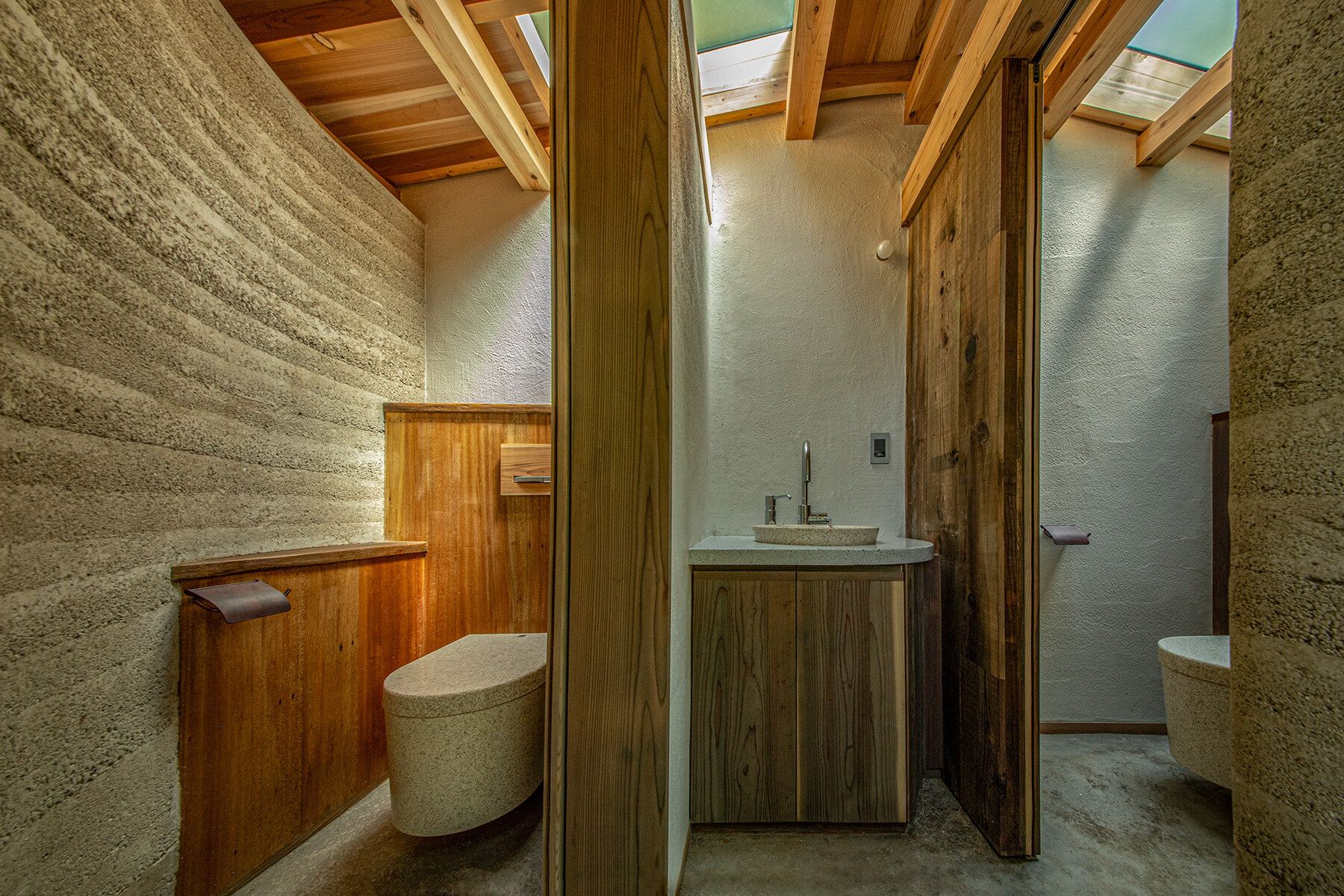
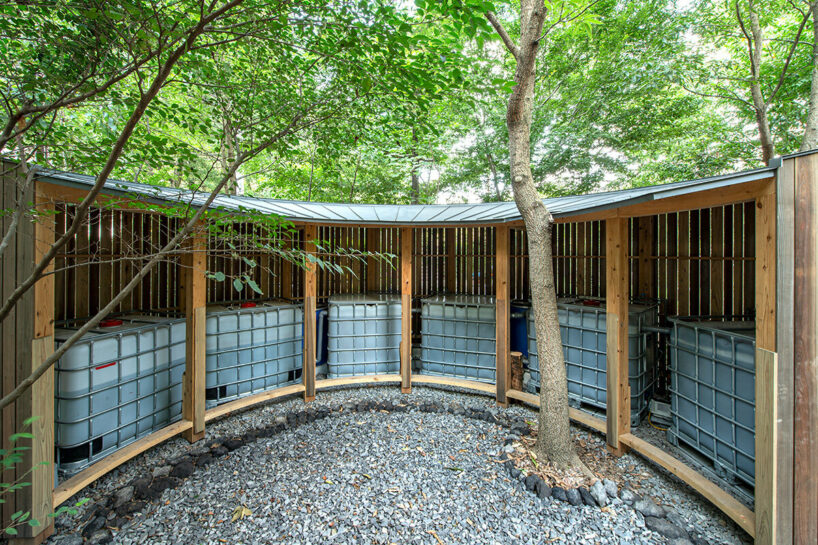
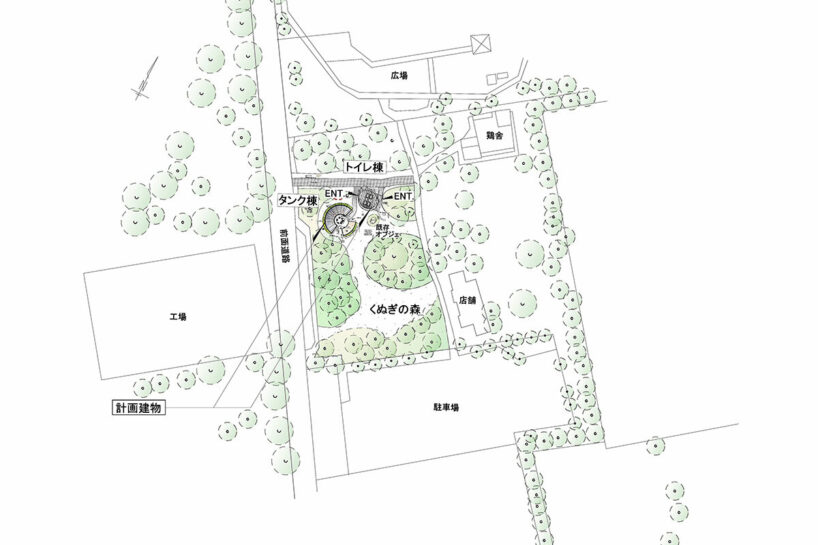
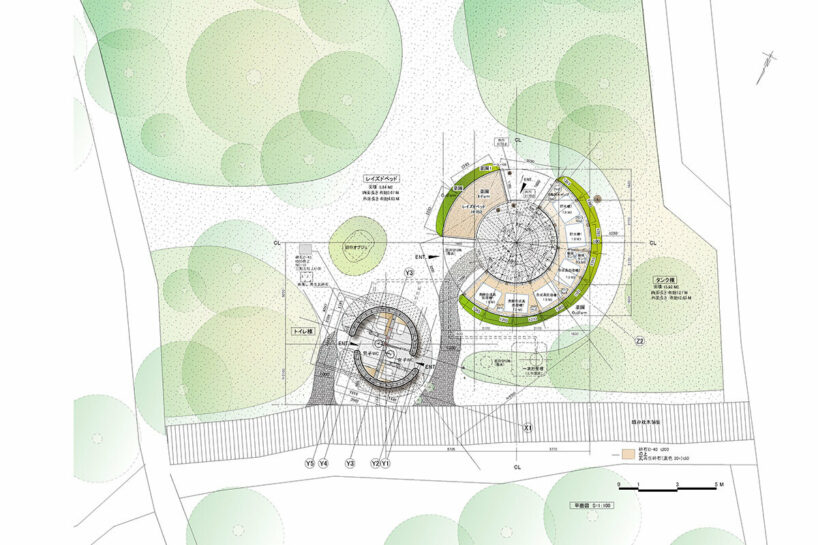
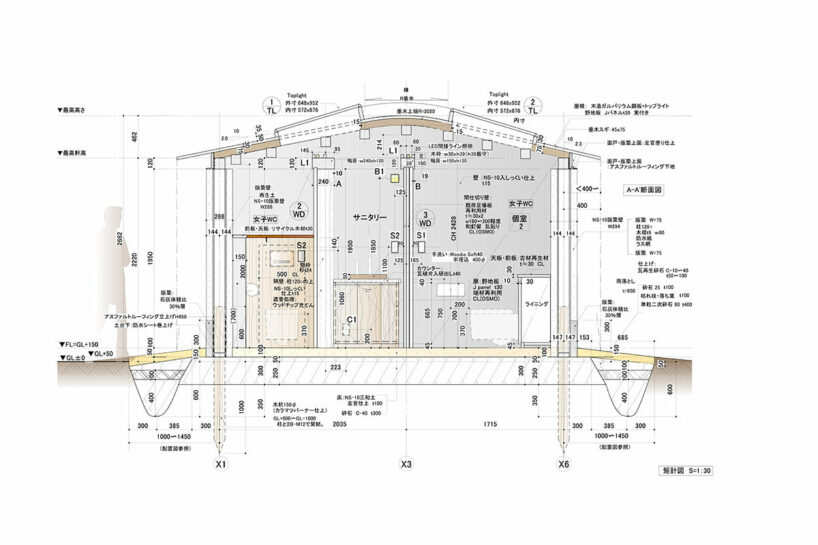
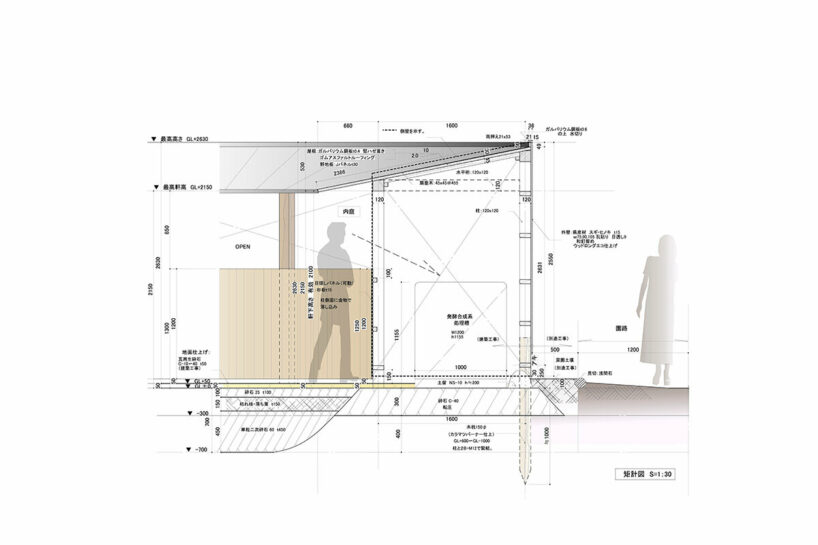
Sitting on the grounds of Ishizaka Corporation, a company dedicated to waste-free recycling, Tono Mirai Architects‘ TOILETOWA is an educational space about environmental responsibility. The project encompasses a wooden toilet building with a rammed earth wall made from recycled soil, along with and a tank building that visually demonstrates the wastewater treatment process. Sustainability is at the forefront of the toilet building’s design. The foundation is made from crushed stone, eliminating the need for concrete, and the wooden frame was built using traditional carpentry techniques. The interior walls, floors, and even the toilets and sinks are crafted from recycled materials like wood, glass, and soil.
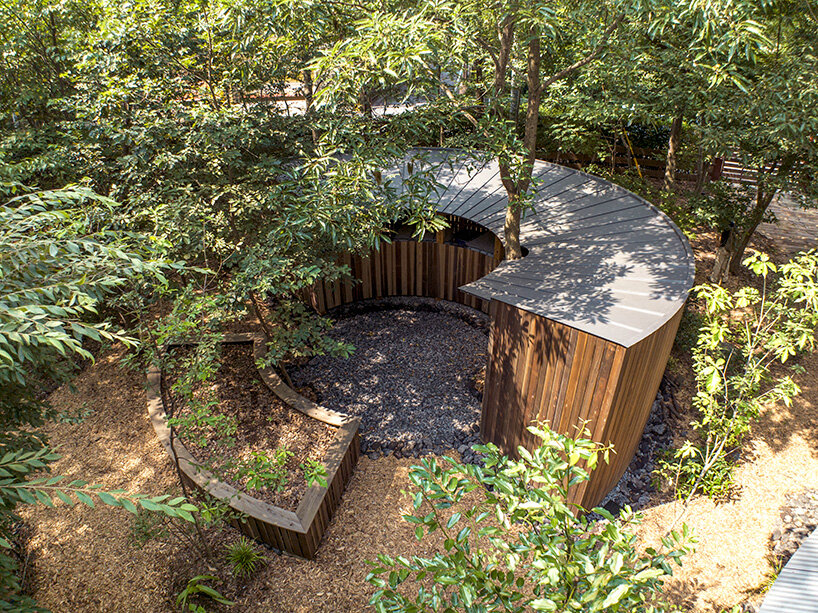
Tono Mirai’s TOILETOWA a celebration of recycled materials and a regenerative approach to design
tono mirai showcases Water Recycling
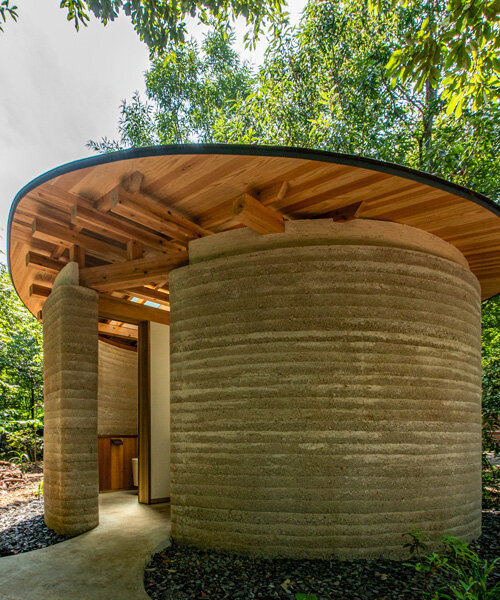
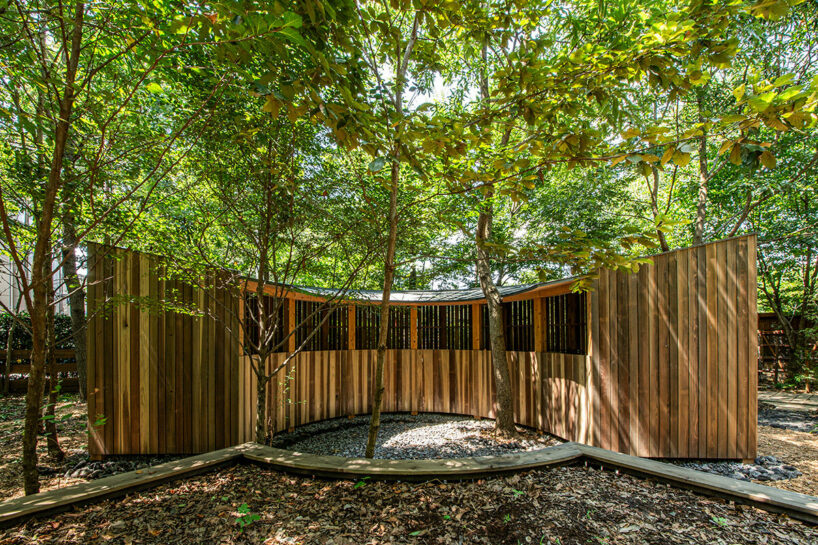
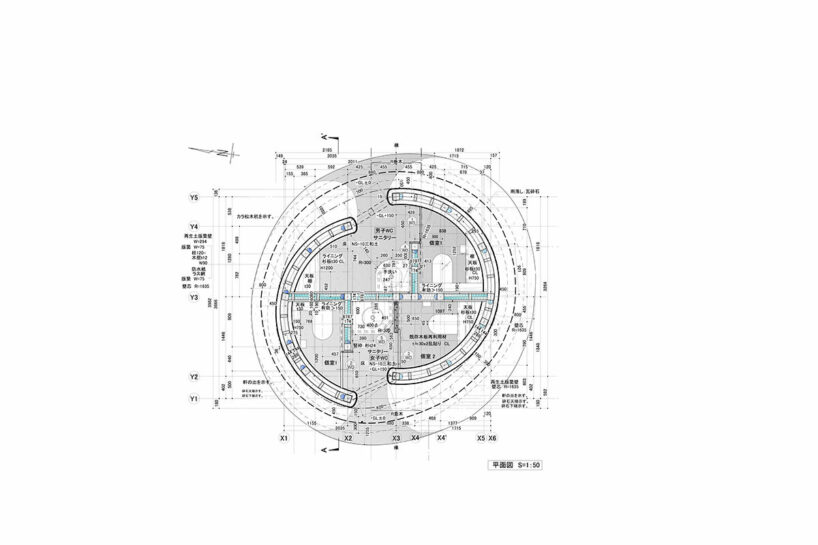
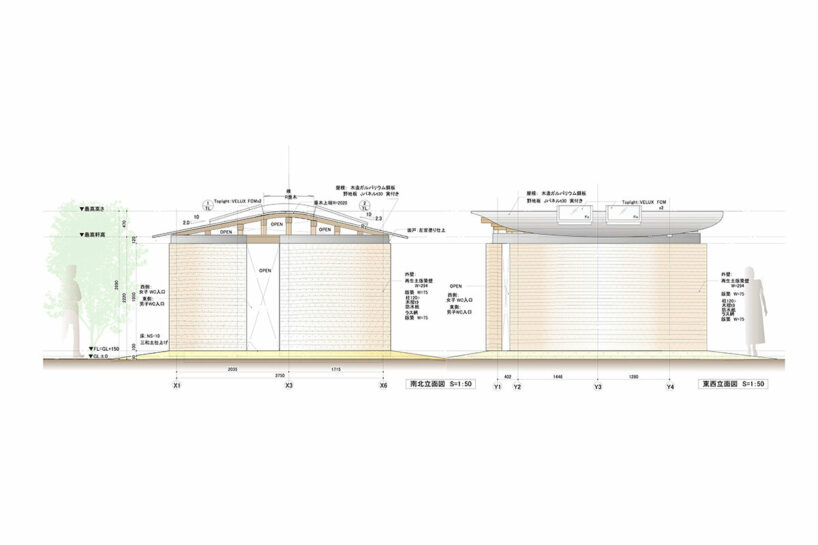
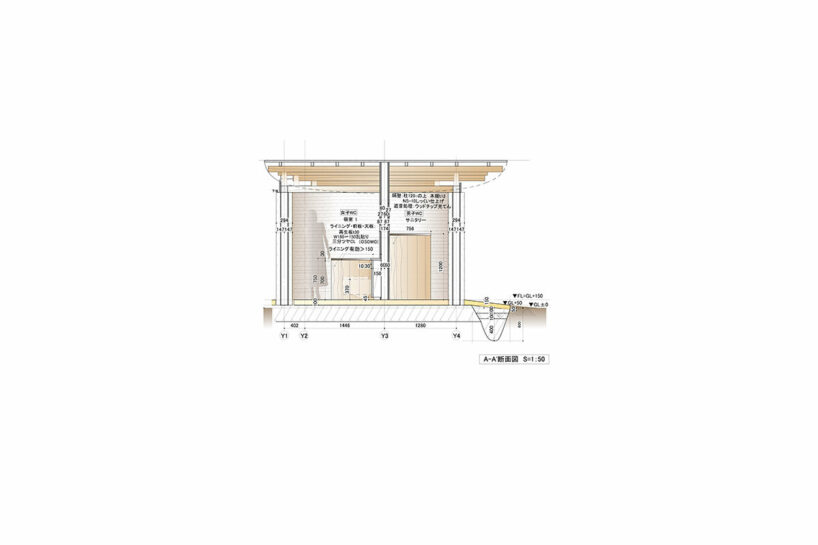
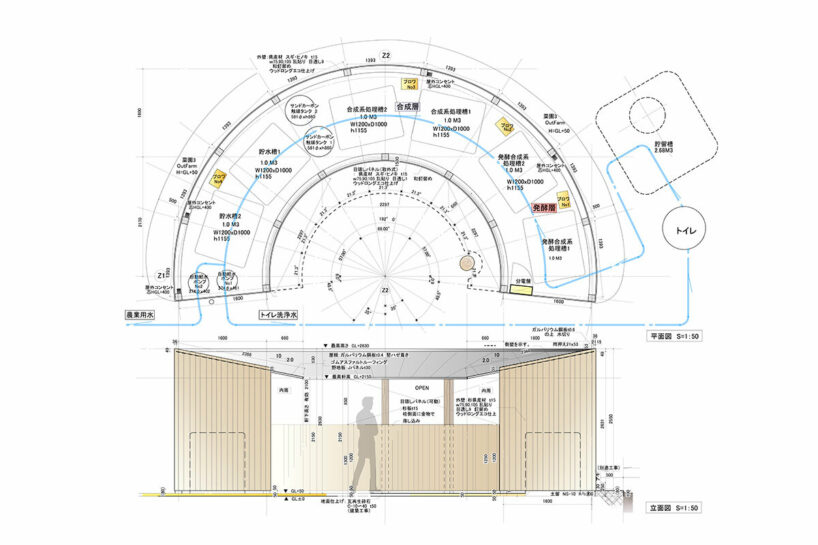
As the centerpiece of TOILETOWA, Tono Mirai Archtiects sculpts a gently curving rammed earth wall, made from recycled soil developed by Ishizaka Corporation. This material reduces environmental impact and lends a unique, textural surface. Skylights bathe the interior in natural light, further emphasizing the connection between the building and the natural world. The tank building offers a glimpse into the heart of TOILETOWA’s water recycling system. Here, the complex fermentation process is on display, with tanks arranged in a way that evokes the flow of water. The exterior walls are clad in local cedar boards, their natural variations echoing the surrounding forest.
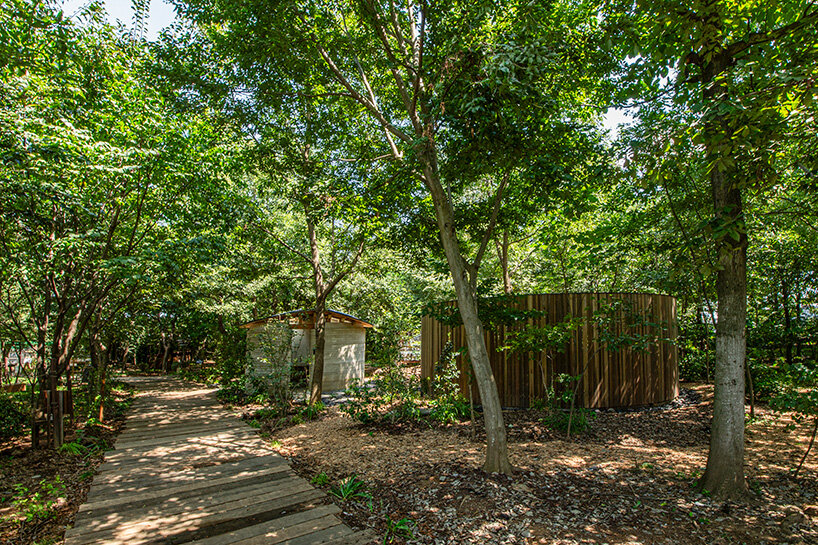
the building uses recycled materials and a wastewater treatment system that creates clean, reusable water
the combined fermentation system
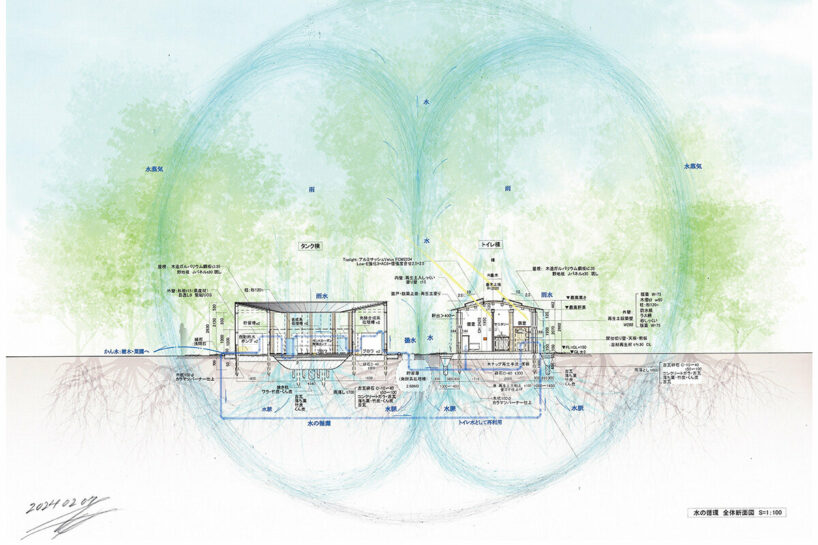
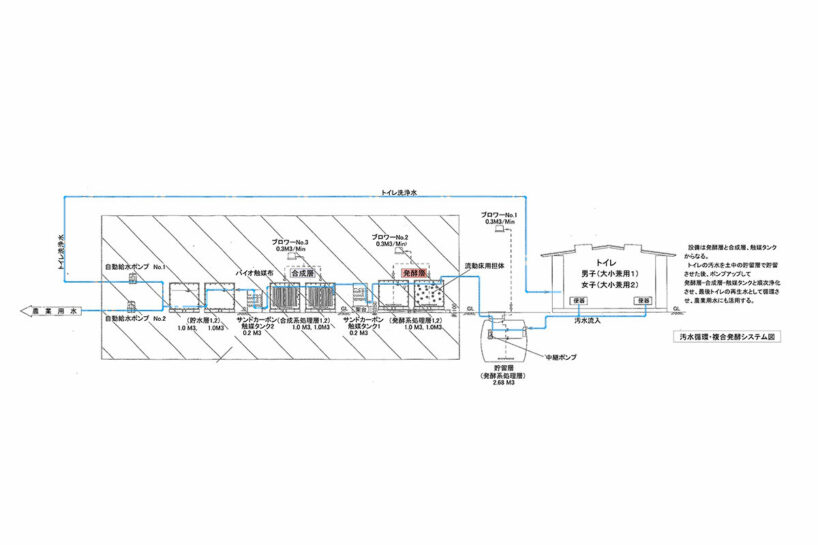
TOILETOWA uses a biotechnical process called combined fermentation (EMBC) to treat wastewater. This innovative system uses a combination of aerobic and anaerobic bacteria to purify the water, eliminating bacteria and odors. The resulting enzyme-rich water is not only safe for reuse but also promotes plant growth.
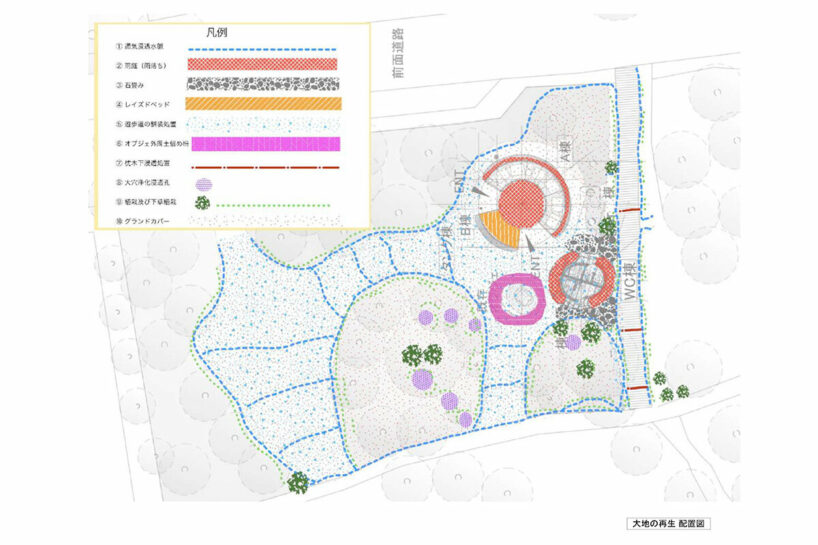
The TOILETOWA project extends beyond the building itself. Recognizing the degraded state of the surrounding forest, the architects worked with WAKUWORKS to revitalize the soil. By burying organic materials like branches, leaves, and charcoal, they created a network of water channels and improved air circulation, fostering the growth of beneficial microorganisms in the soil. Recycled crushed stone tiles were used for rainwater collection, and walkways were built with woodchips and lava stone.
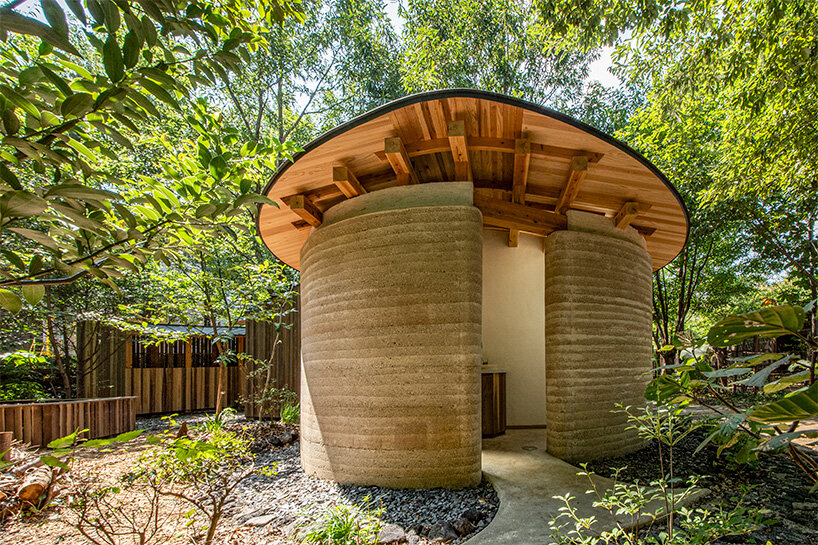
built for a recycling company, the project is an educational space about environmental responsibility 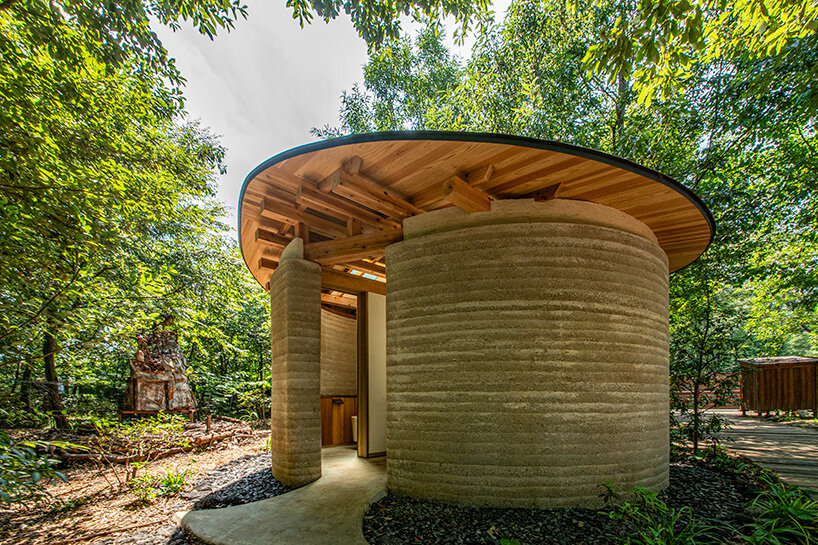
the toilet building uses crushed stone foundation, traditional carpentry techniques, and recycled wood, glass, and soil
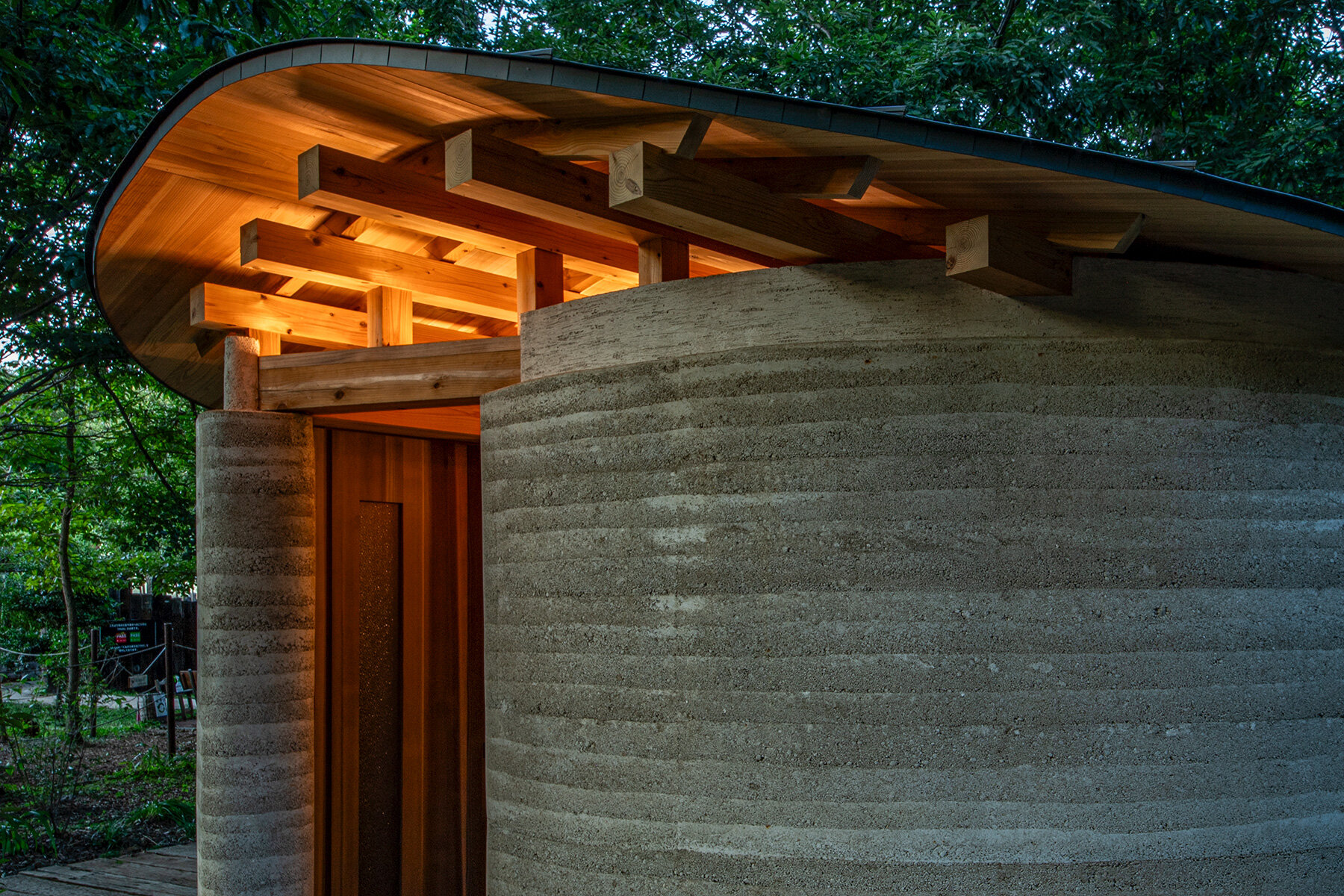
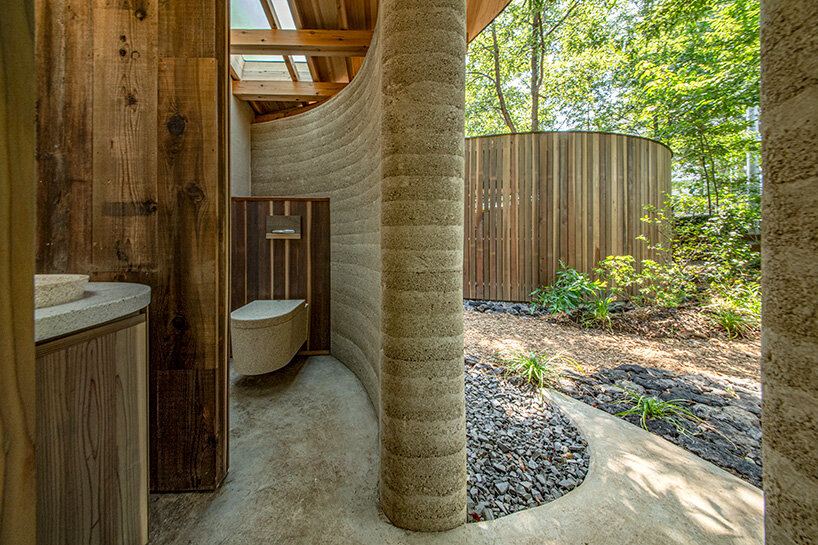
a curved rammed earth wall, made from recycled soil by Ishizaka Corporation, is the building’s centerpiece
1/13
project info:
project title: TOILETOWA
architecture: Tono Mirai Architects
location: Miyoshi City, Saitama, Japan
client: Ishizaka Corp.
lead architect: Tono Mirai
completion: August 2023
photography: © takeshi noguchi
shop
your own online design shop — no sales commission collected