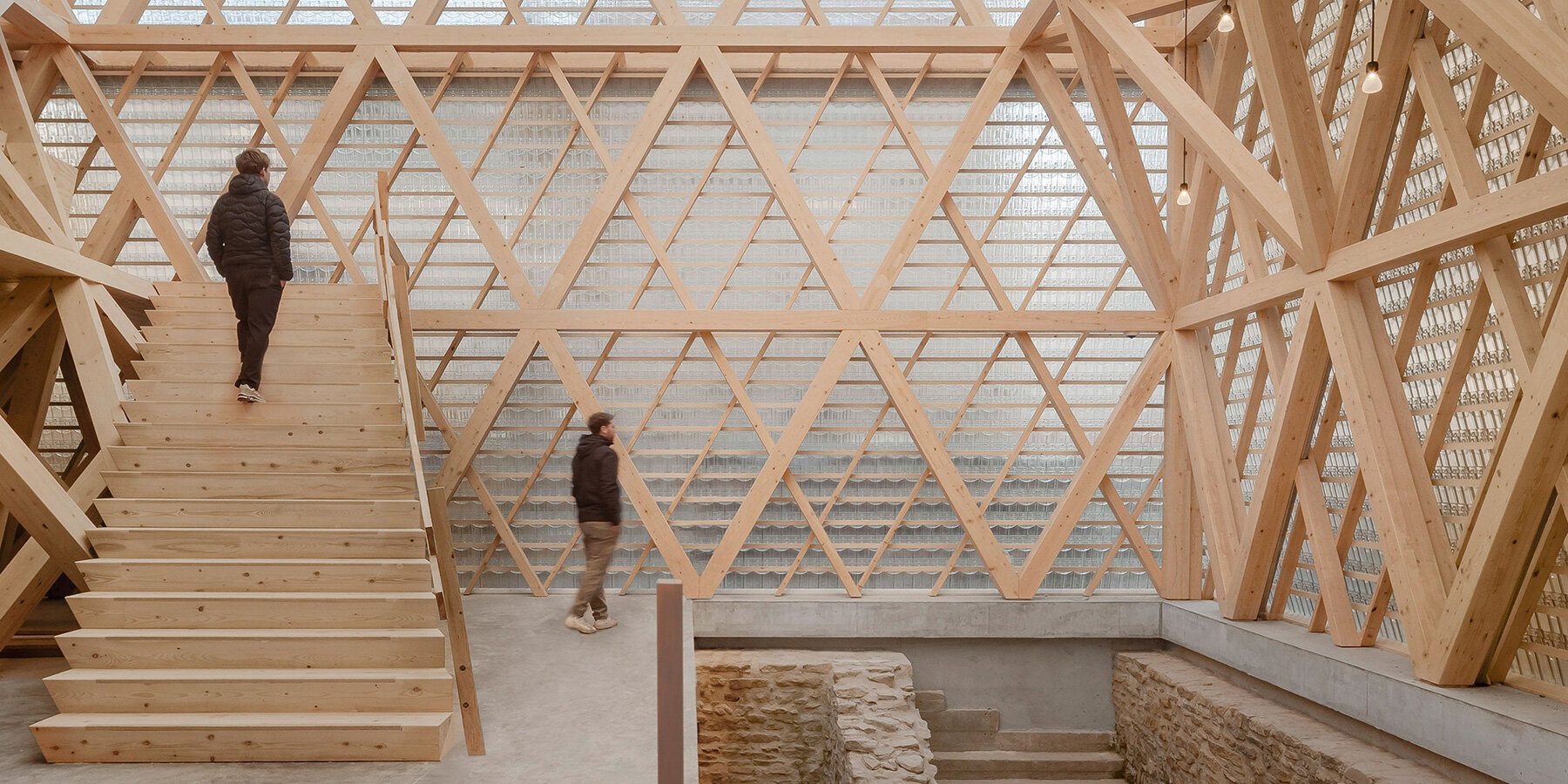
Museum Oberamteistrasse glows in Reutlingen, germany
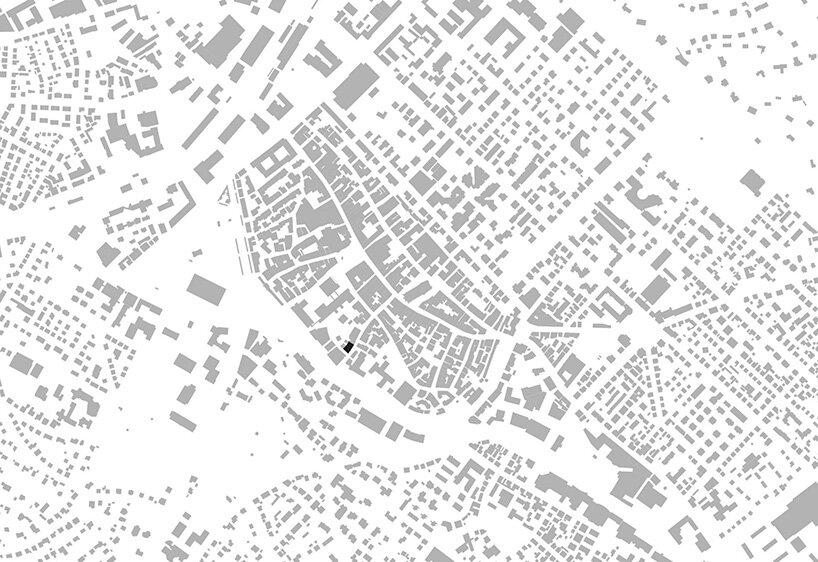
The Museum Oberamteistrasse by Wulf Architekten in Reutlingen brings a contemporary timber structure into dialogue with one of the German city’s oldest streets. The museum project restores a sequence of medieval houses and completes the corner with a new volume that traces the footprint of the former Stone House.
The surrounding fabric dates to the 12th and 13th centuries, and the surviving basements and timber frames carry more than seven centuries of construction history. The rehabilitation treats these buildings as both exhibition spaces and primary artifacts. Walls and beams are expressed and are shrouded in a dramatic facade and rooftop of translucent glass shingles.
images © Brigida González
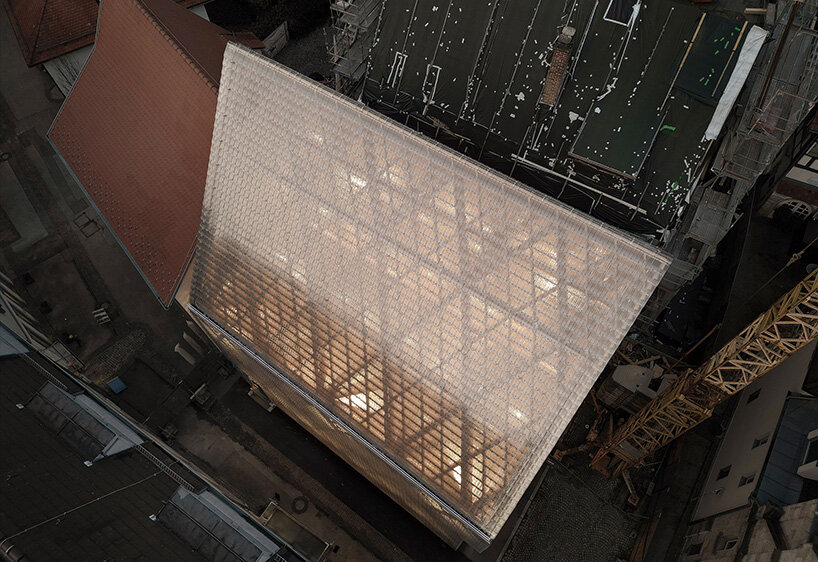
wulf architekten’s shimmering facade of glass shingles
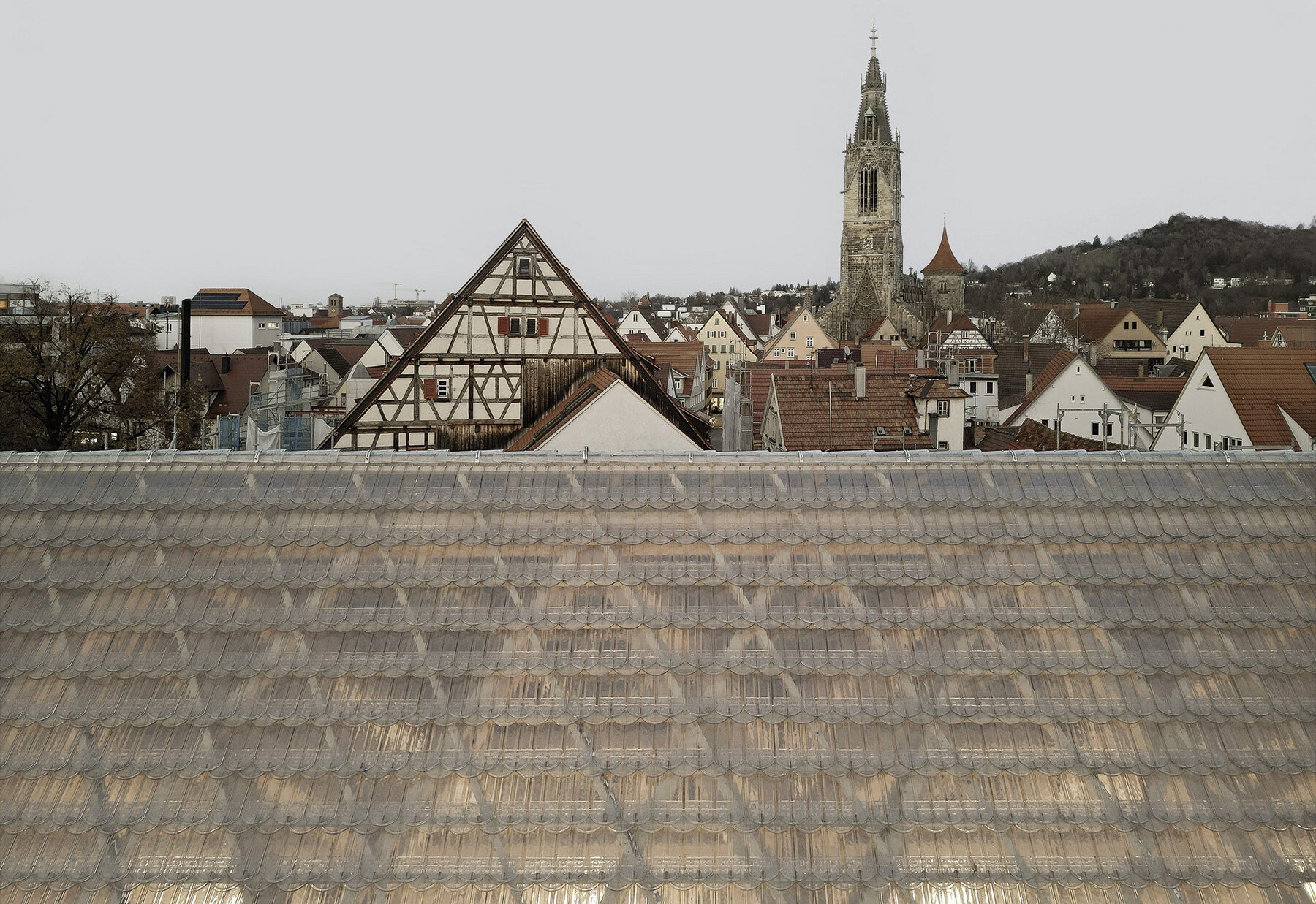
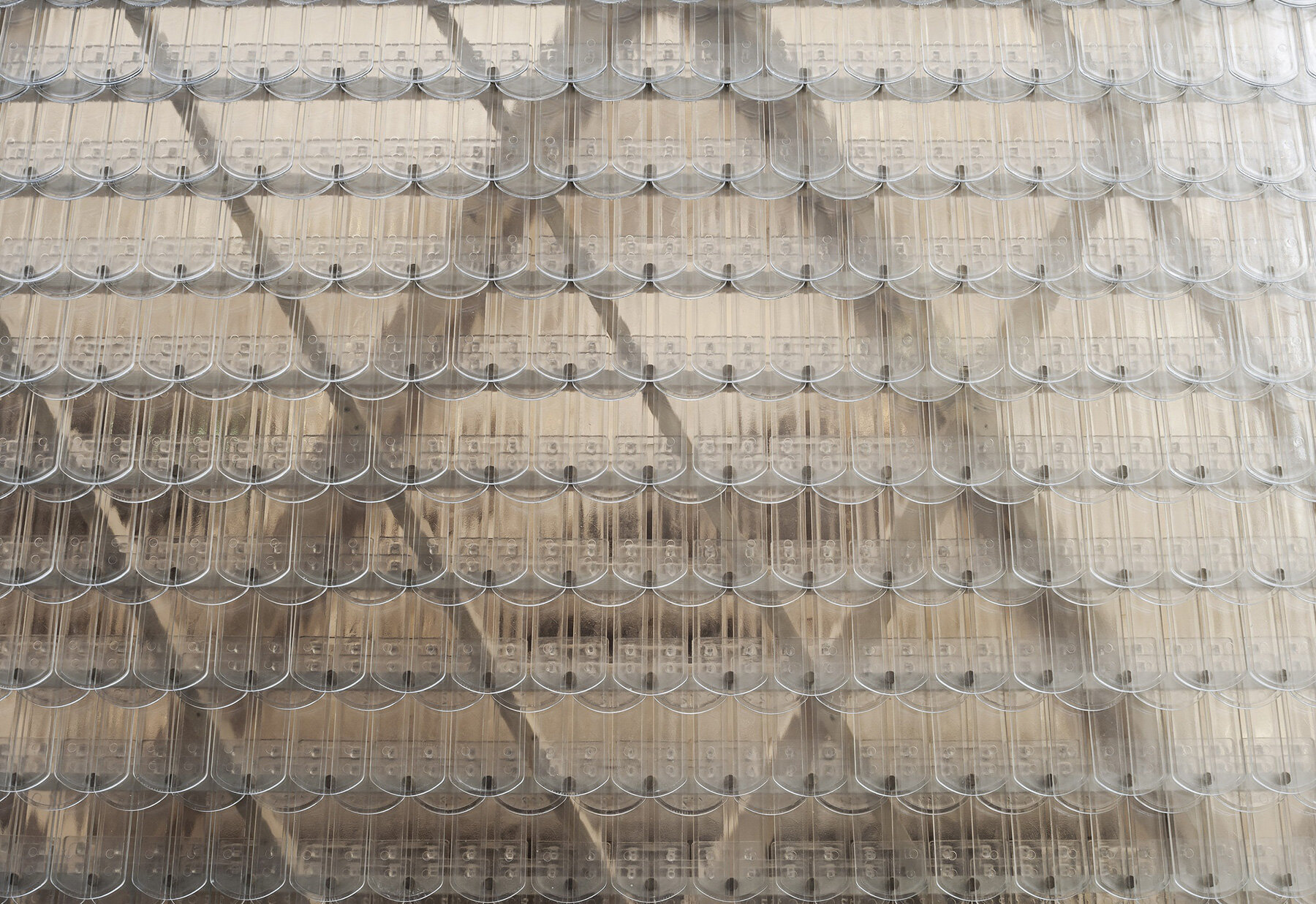
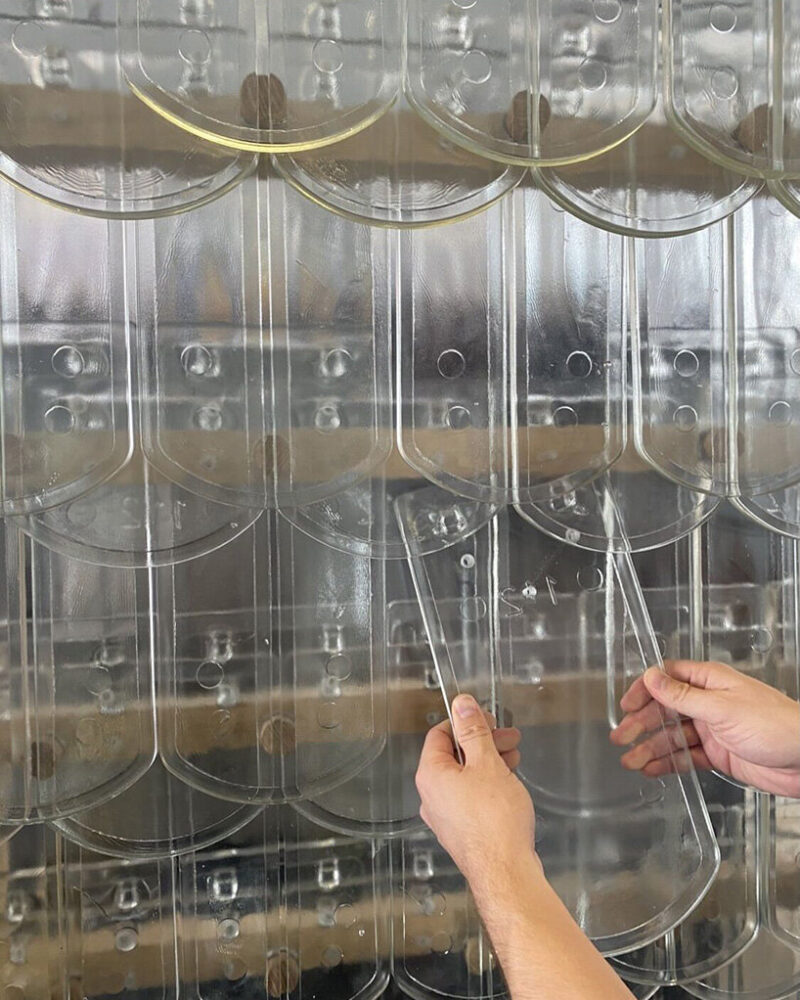
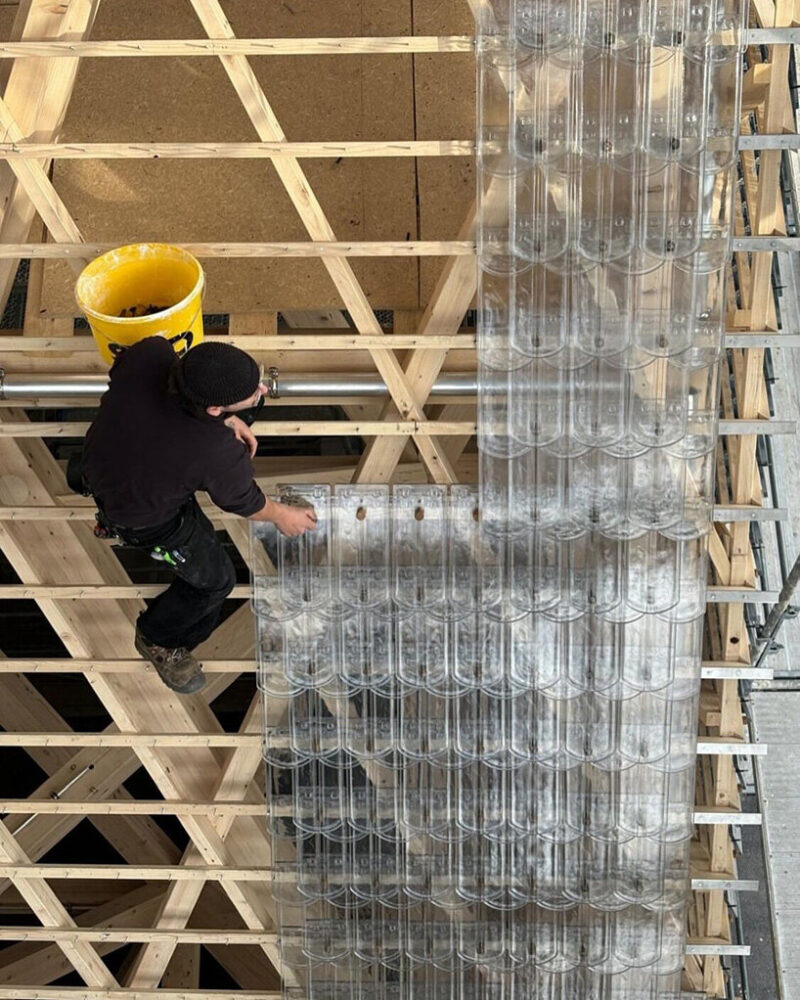
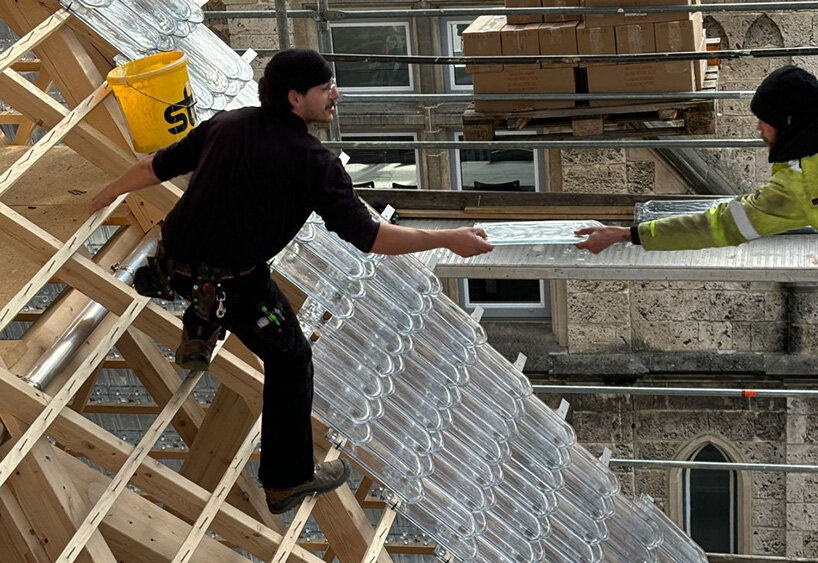
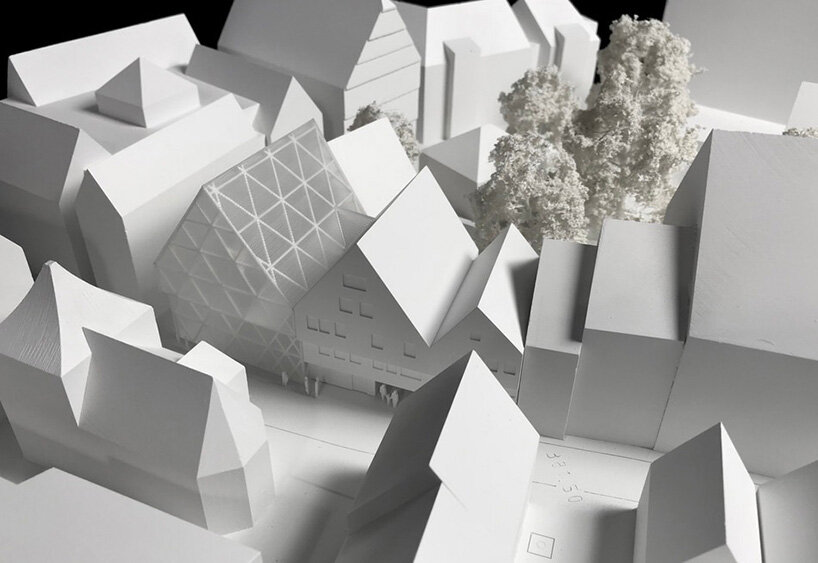
On the corner plot where the Stone House once stood, the team at Wulf Architekten introduces the Museum Oberamteistrasse intervention to reestablish the street edge without imitating the historic fabric. The volume follows the scale and roof geometry of its neighbors, while its surface announces a glowing, contemporary intervention. Cast glass shingles, shaped like traditional beaver-tail tiles, form a continuous skin across roof and facade.
The glass cladding shifts in tone with the light. In overcast conditions the envelope appears pale and matte, while interior illumination reveals the geometry of the timber structure behind it. This layered effect gives the project a changing presence within the tight grain of Reutlingen’s old town.
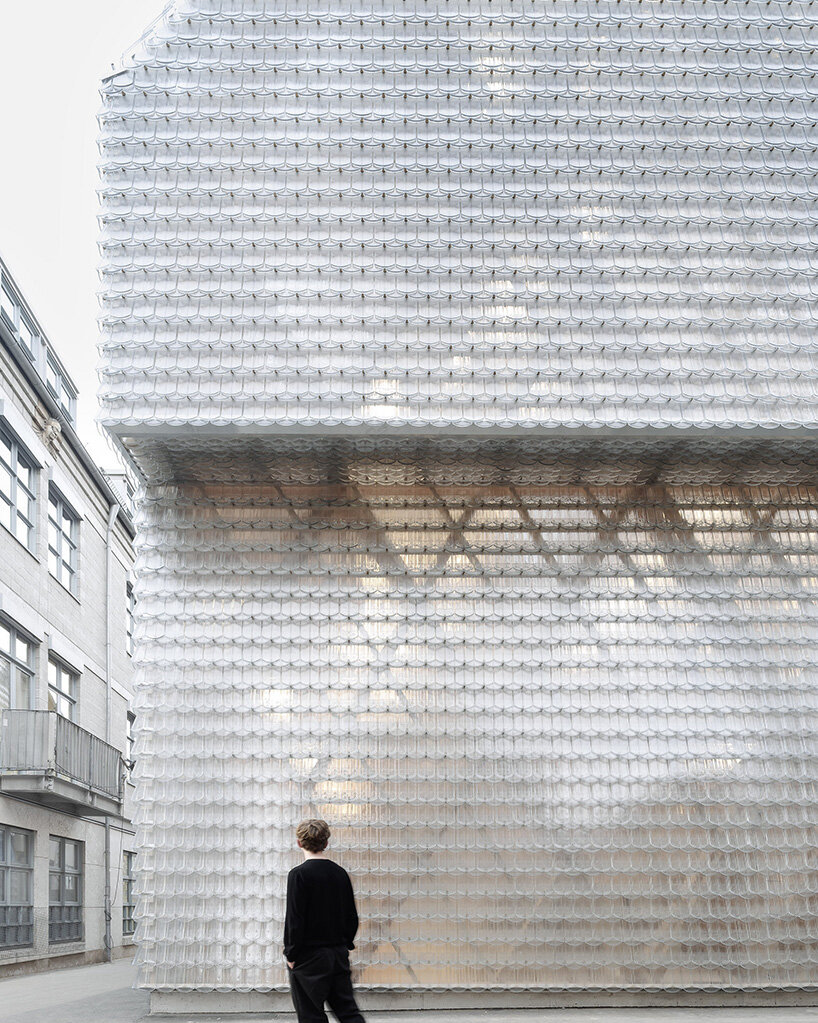
the contemporary Museum Oberamteistrasse occupies a medieval street in Reutlingen
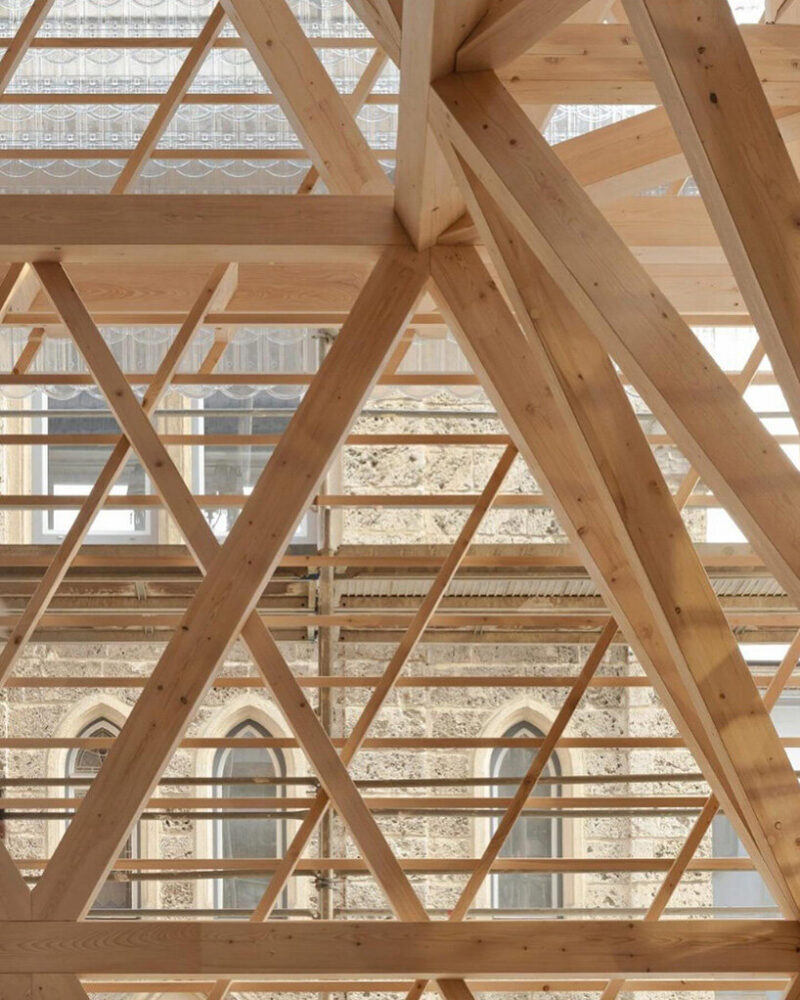
the exposed timber truss system
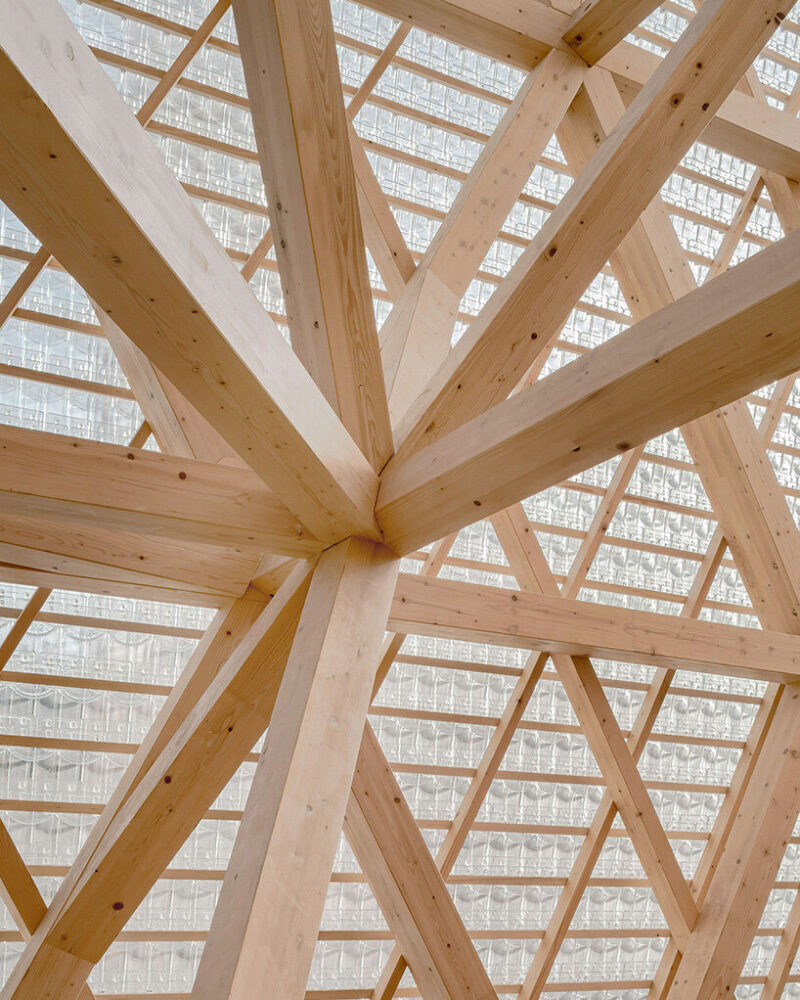
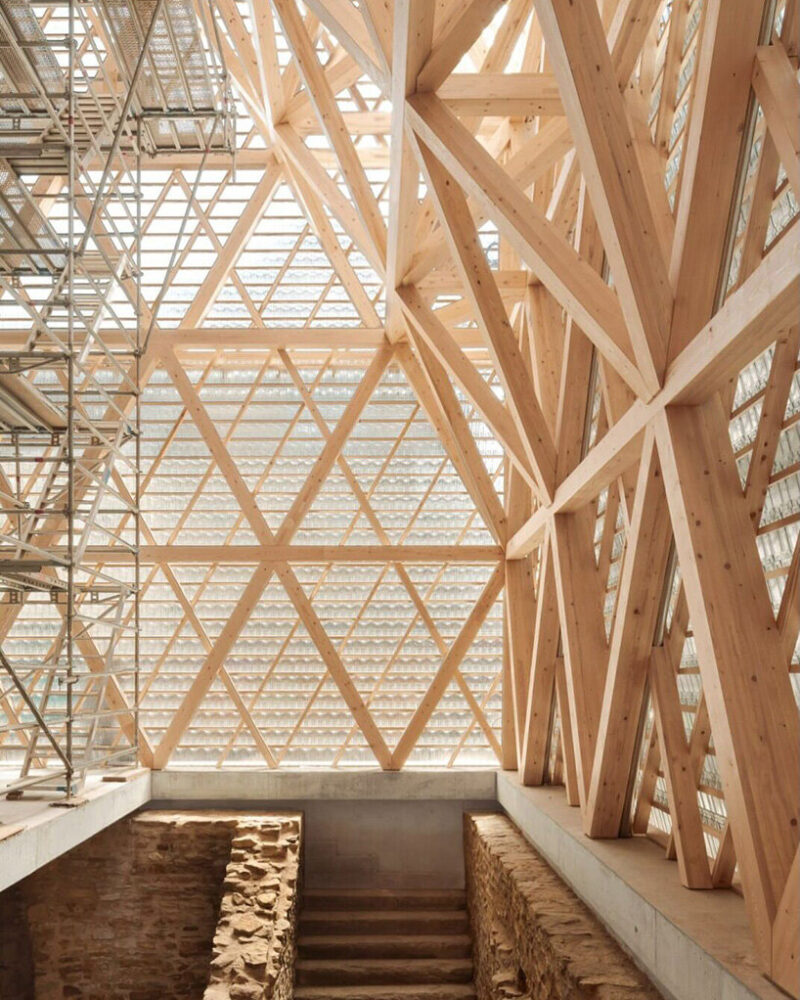
The structural design by Str-ucture centers on an exposed timber truss system that defines the Museum Oberamteistrasse’s interior volume. Large triangular frames span the height of the building, bracing the envelope and supporting adjacent historic walls. Their rhythm is legible from both inside and outside, where the grid reads faintly through the glass shingles.
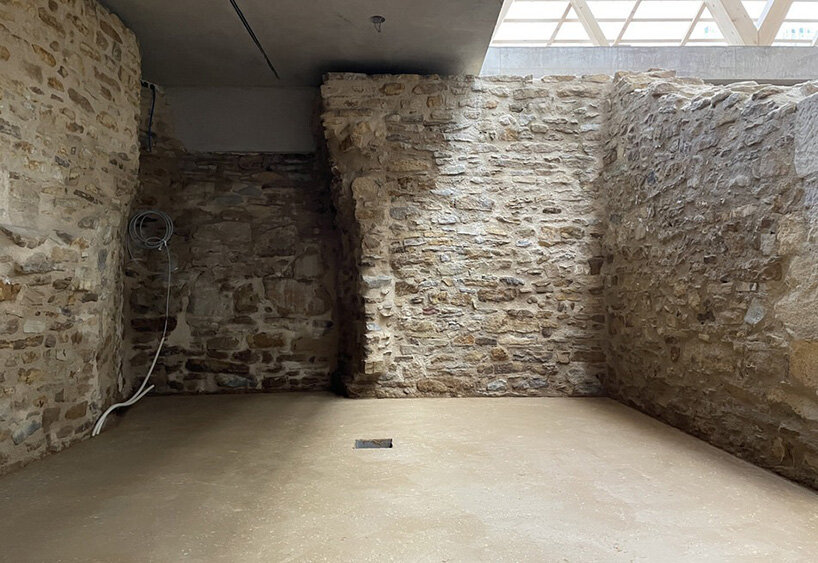
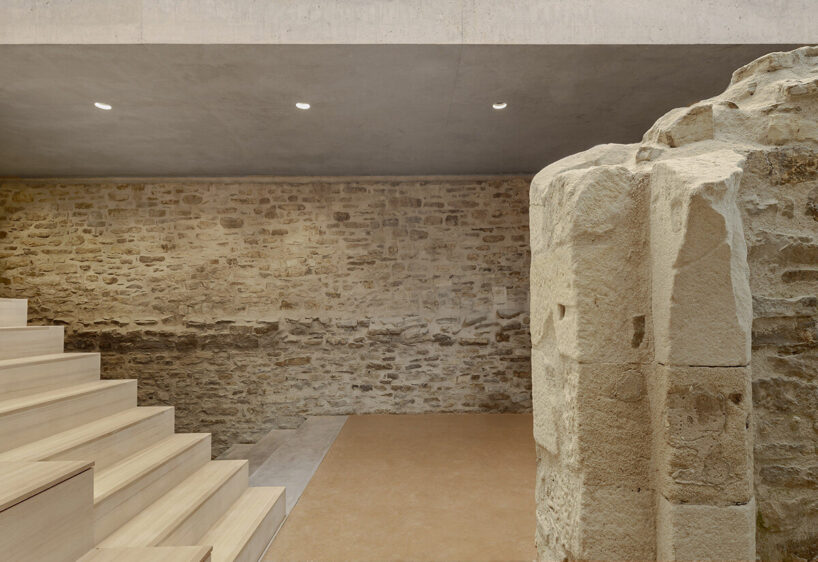
Within, the timber structure forms a spatial framework that guides circulation. A broad stair rises alongside the trusses, offering views across excavated stone foundations below. The preserved basement walls of the former Stone House remain in situ, their rough masonry contrasting with the precise joinery of the new wooden members above.
Light filters through the glass tiles and washes the interior with a soft glow. The timber takes on a warm tone against the diffuse exterior brightness, and the triangular geometry casts a shifting pattern across floors and walls.
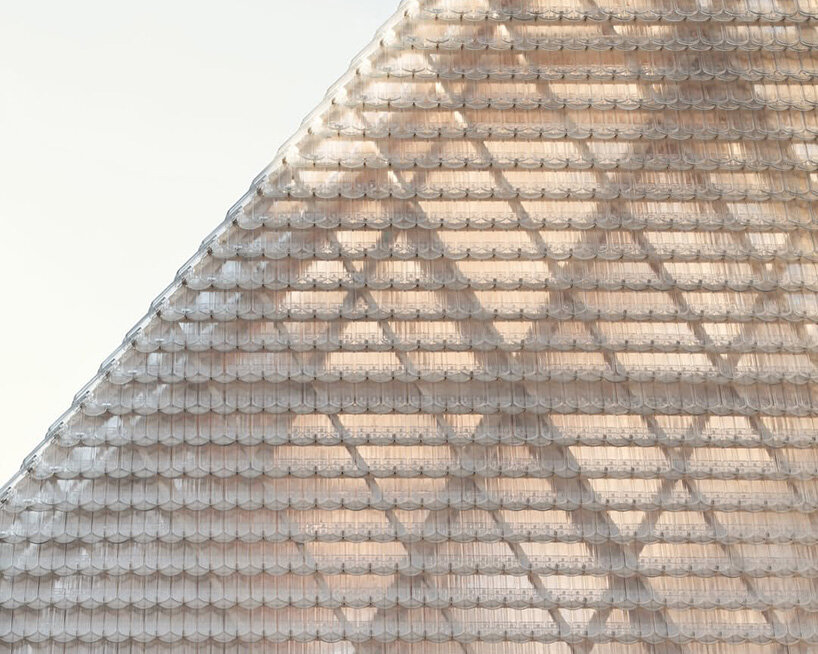
translucent cast glass shingles form a continuous roof and facade surface
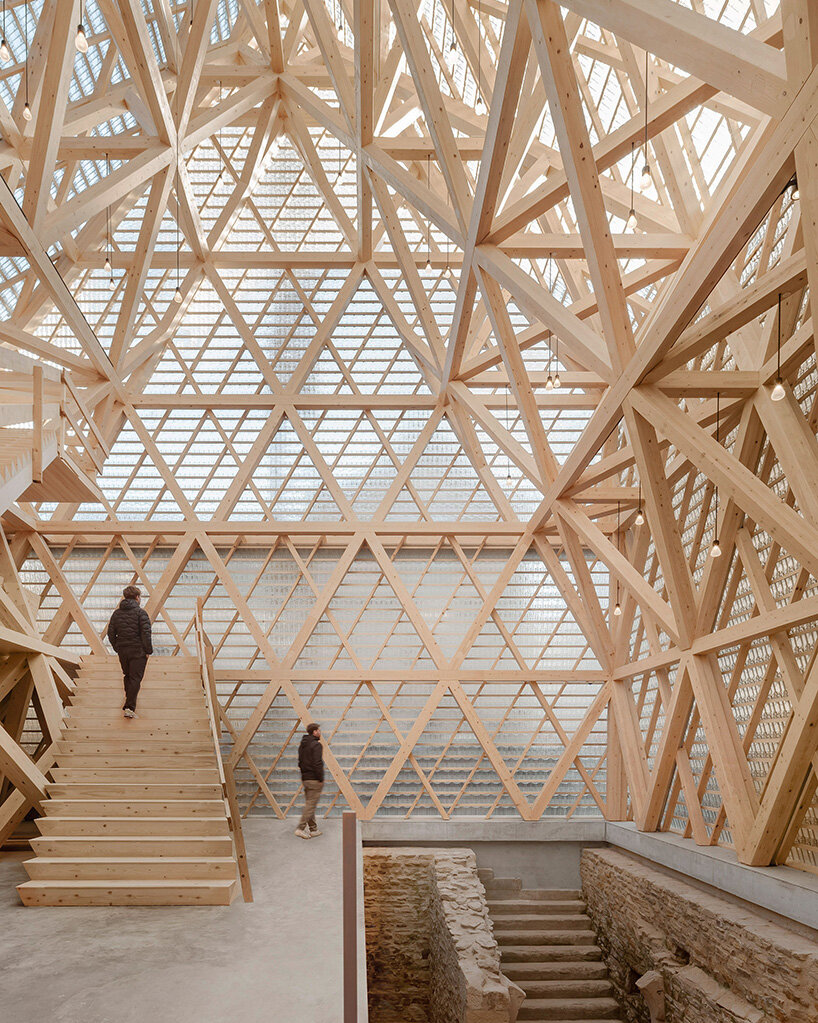
restored houses from the 12th and 13th centuries are both exhibition space and artifact
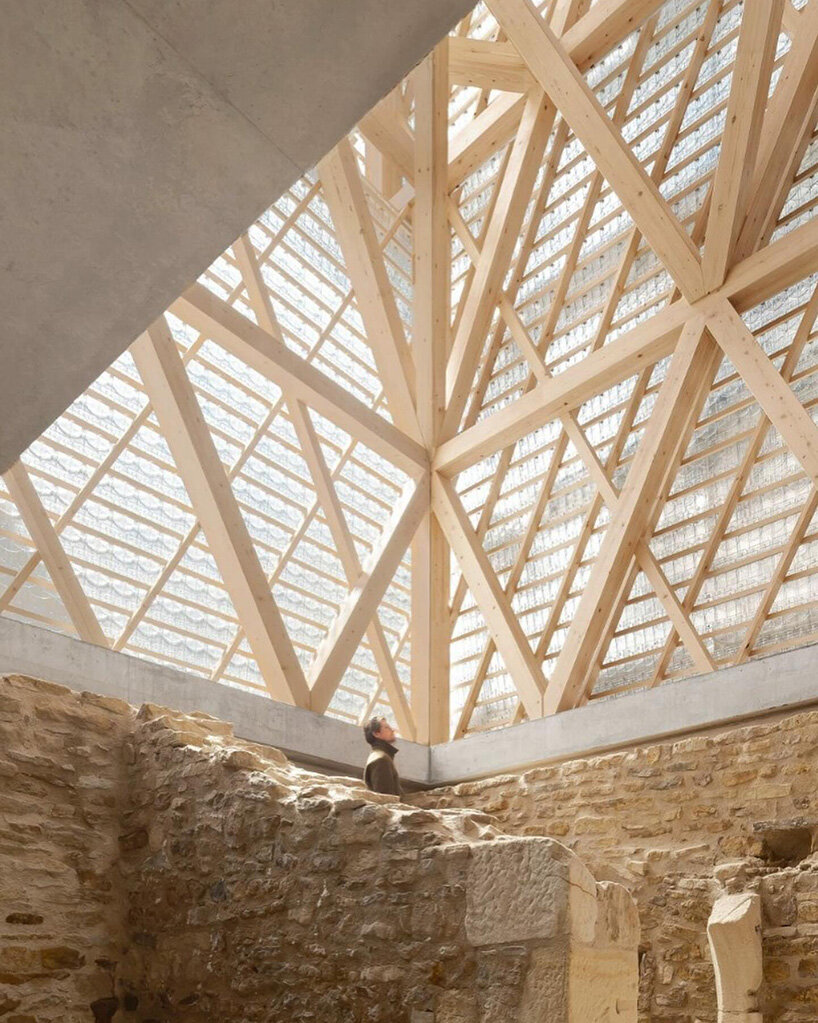
preserved stone foundations remain visible beneath the new construction
the structural design by Str-ucture supports historic walls and frames circulation
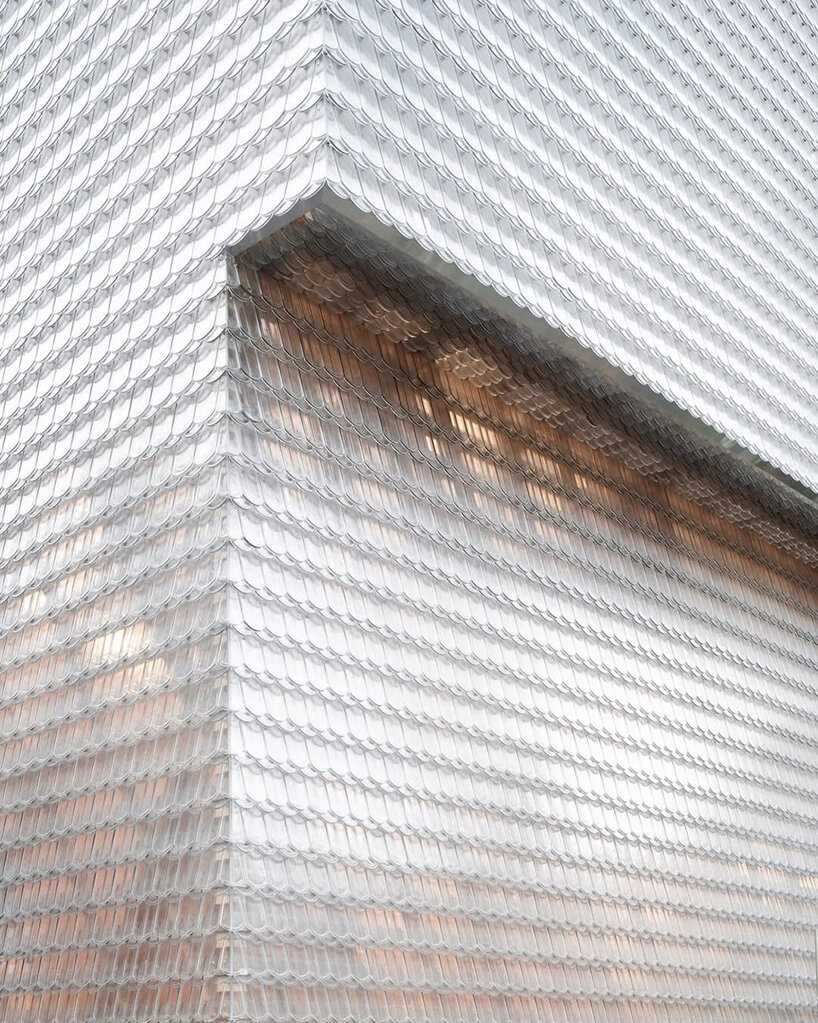
cast glass shingles are shaped like traditional beaver-tail tiles
old and new construction techniques are presented as legible architectural layers
project info:
name: Museum Oberamteistrasse
architect: Wulf Architekten | @wulfarchitekten
location: Reutlingen, Germany
structure: Str-ucture | @str.ucture.gmbh
photography: © Brigida González | @brigidagonzalezwork
architecture in germany (337)
 Feb 18, 2026
 Feb 09, 2026
 Nov 18, 2025
 Nov 13, 2025
 Oct 28, 2025
facades (461)
 Feb 13, 2026
 Feb 11, 2026
 Feb 10, 2026
 Feb 03, 2026
 Feb 03, 2026
glass art and design (219)
museums and galleries (859)
 Feb 11, 2026
 Feb 10, 2026 Feb 10, 2026
 Feb 09, 2026
 Feb 06, 2026
renovation and restoration architecture and design (1158)
 Feb 17, 2026
 Feb 14, 2026
 Feb 12, 2026
 Feb 11, 2026
 Feb 10, 2026
rooftop architecture and design (212)
 Feb 13, 2026
 Feb 06, 2026
 Feb 04, 2026
 Feb 03, 2026
 Feb 03, 2026
wood and timber architecture and design (1389)
 Feb 19, 2026
 Feb 19, 2026
 Feb 16, 2026
 Feb 12, 2026
 Feb 10, 2026
 Feb 10, 2026
 Feb 04, 2026
 Jan 20, 2026