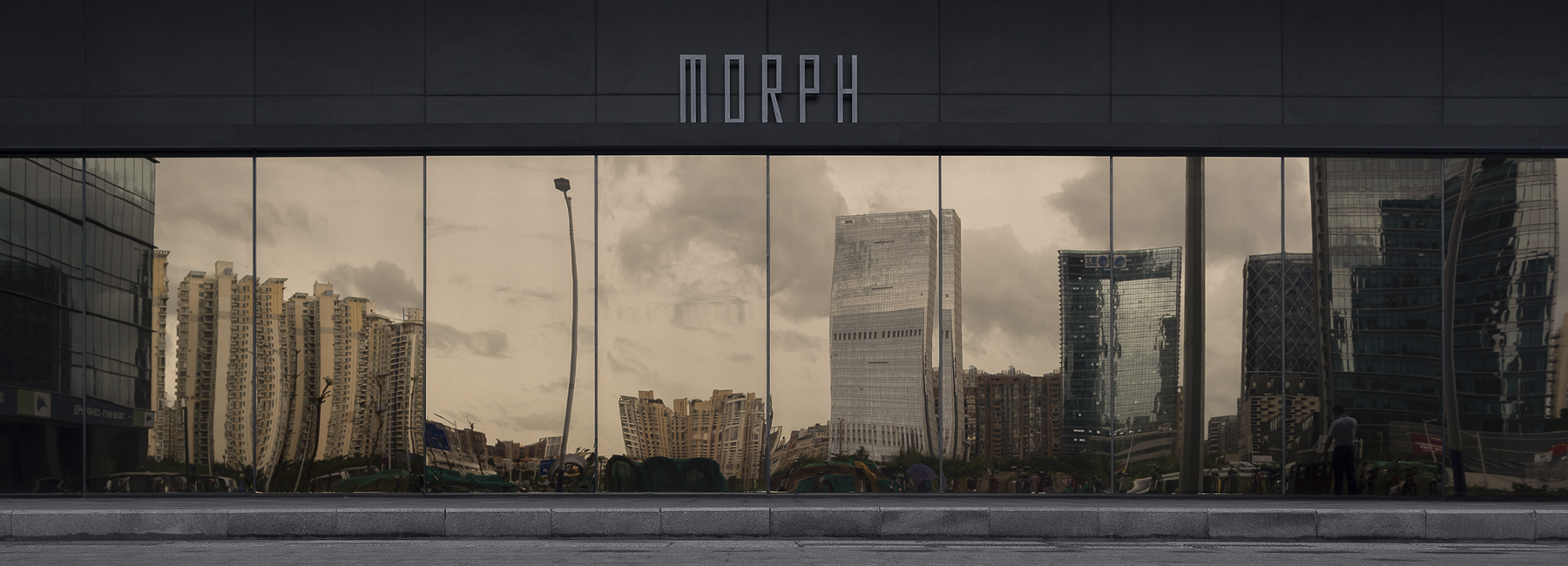
located in nanshan district, shenzhen, china and occupying the corner of a building, morph is a mixed-use, multicolored space designed by various associates. with an urban park and the houhai business circle nearby, it’s a rare tranquil place amidst the hustle and bustle of the downtown area. it functions as a bar, an event venue and a versatile space, available for facilitating ‘interaction between humans and the city in a cultural context’. functional areas are set around a seven-meter-high activity space at the center; with capacity for 100 people, theatre acoustics, and spatial installations which can be replaced irregularly, it’s adaptable to various types of activities and provides local people with an energetic place to socialize.
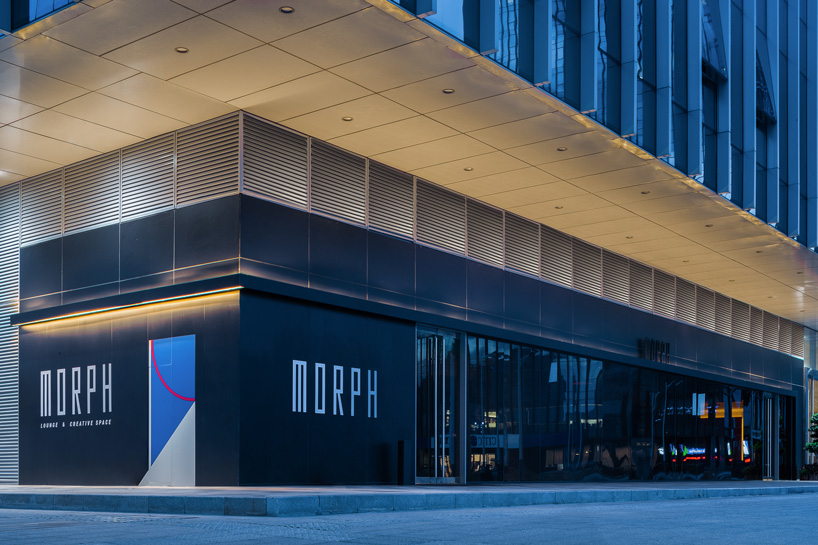
the designers were tasked with creating a vigorous and new social space, introducing a cultural hub in the city to host artistic and musical events, bringing vitality to the area. the local-based design studio was inspired by the concept of ‘morph’ as a transformation and evolution, so the approach was a design that encapsulated this process within the city and in the project itself.
taking into account the context of shenzhen as a new city, various associates wanted to utilize traditional and local materials to collide with modern interior structural forms. they fused gradually-forgotten ancient chinese elements with international, contemporary aesthetics in a sophisticated blend, presenting the ‘evolution’ of design.
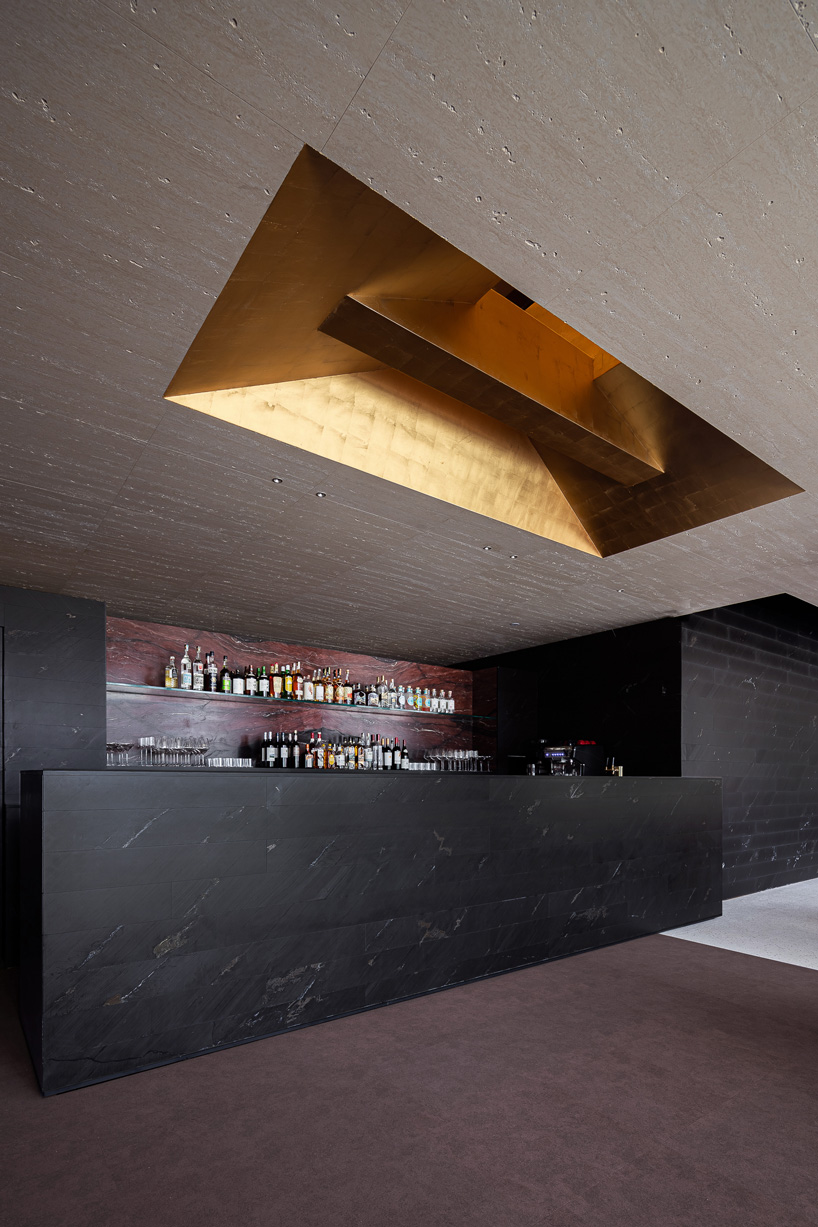
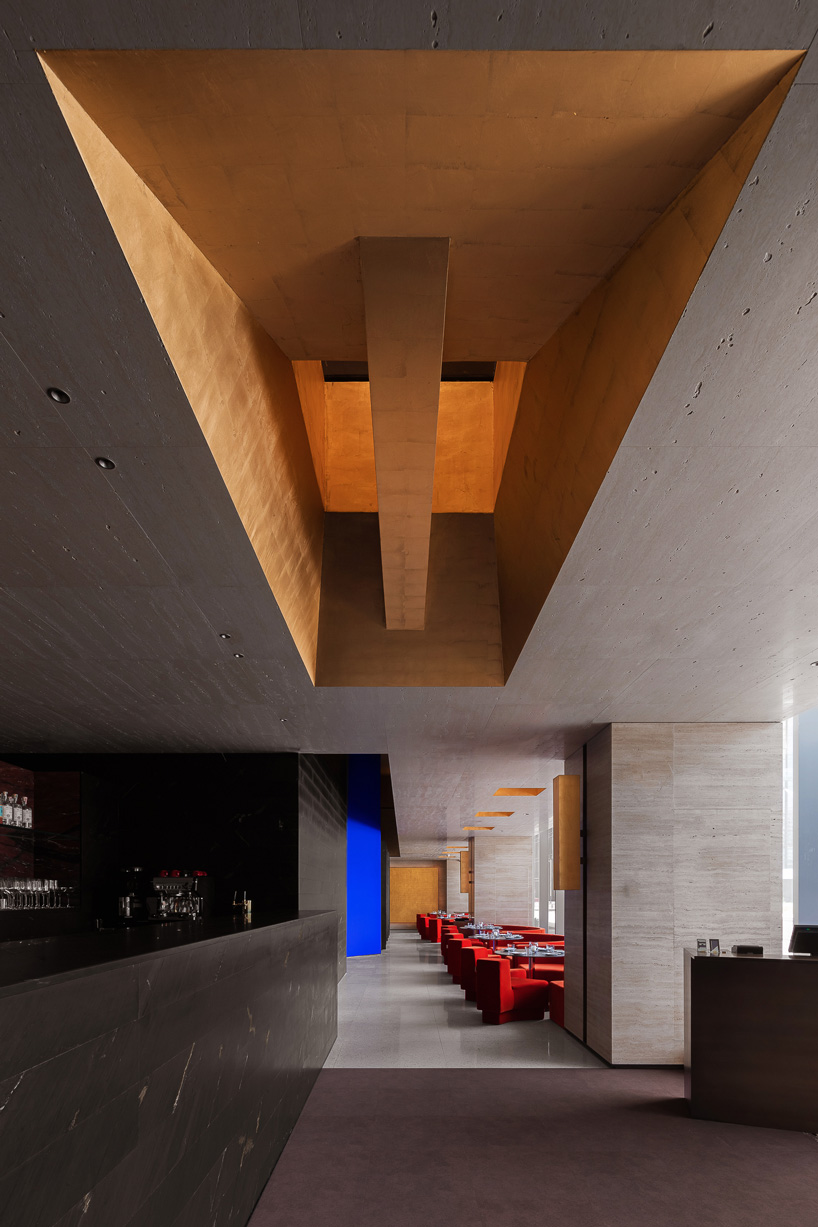
the designers created collisions within the space through a diversified material palette and contrasting interior scenes, as well as dividing the space in multiple functional areas. walls and ceilings are clad in natural sand-colored travertine, which adds a subtle texture to the simple and warm volume, and adding modernity and a sense of timelessness when combined with other details. brass connections and holes are finished with gold foil, forming a striking contrast with the rest of the space. lightweight yet massive, composed yet prudent, transparent yet closed, the space is awash with contrasting elements.
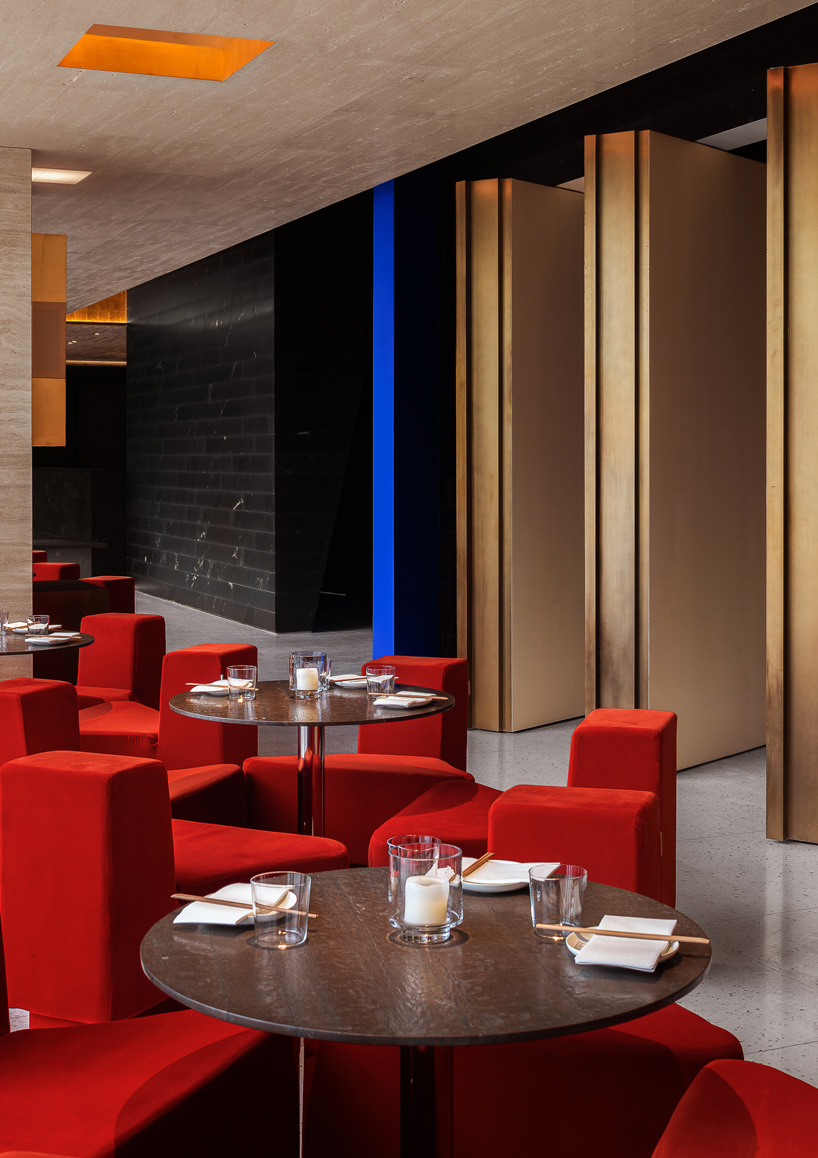
the color palette is inspired by the forbidden city, consisting of red, blue, black, yellow and gold, all vivid and energetic hues. these are also consistent with the colors of wu xing, which are the five elements including metal, wood, water, fire and earth. in traditional chinese philosophy, wu xing is the foundation of everything in the universe and natural phenomena. the five hues with chinese characteristics are reorganized, interpreted and transformed in a modern approach within the space, which integrate with the interior structures, producing a visual hierarchy.
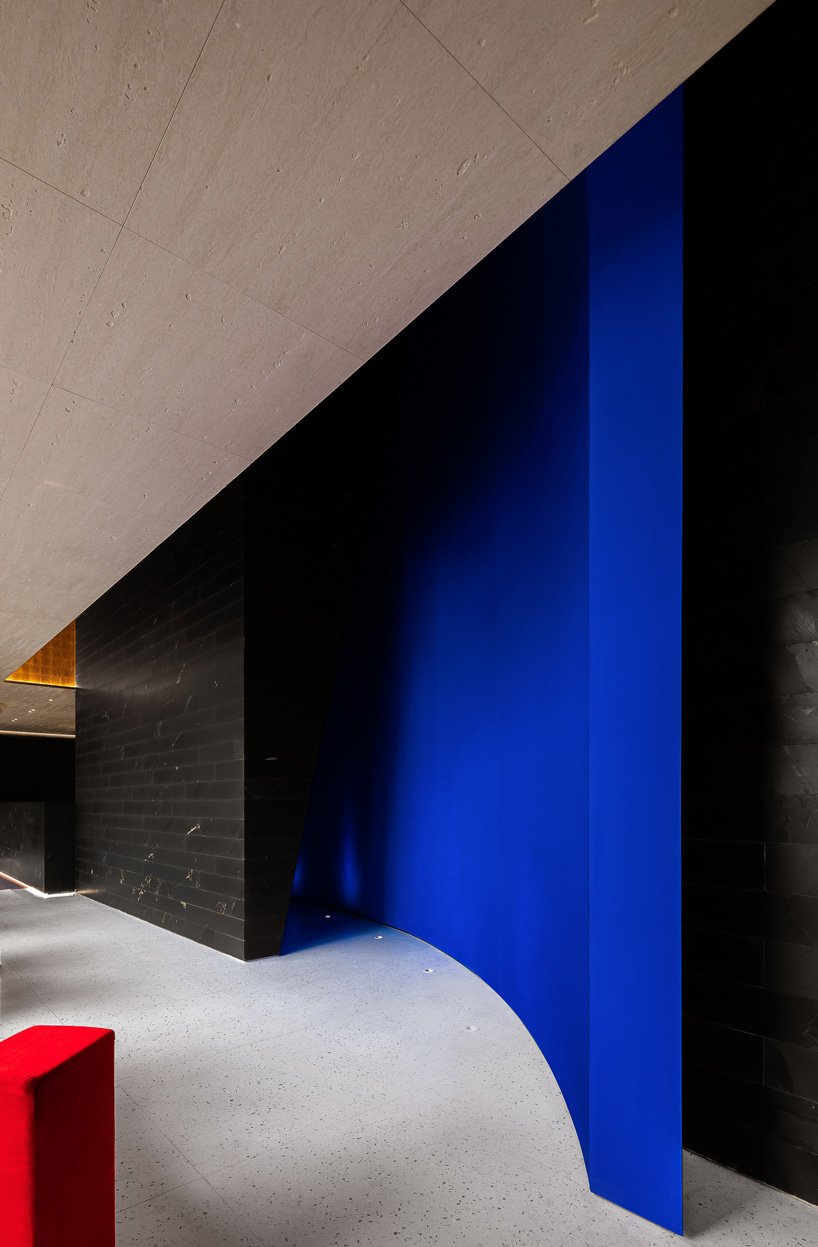
various associates combined diverse modern materials with traditional materials exclusively found in china. the matte black walls are covered with a new eco-friendly material made from black tiles seen on the floor of forbidden city’s palaces. through modern technology and a reorganization process, this new cladding not only maintains the texture and properties of the infamous forbidden city flooring or ‘gold tiles’, but also greatly reduces the production cost. the blue curved doors are wrapped in a type of traditional chinese fabric, hand-dyed by experienced craftsmen, characterized by high chroma.

at the center of the space stands a high wall, which features an ‘orthodox blue’ color, seeming to declare the fabric covering’s unadulterated quality in an uncompromising way. gold is dotted throughout the space, which is rendered by gold foil, with a warm and natural texture. each piece of foil was stuck by hand, similar to the way of how gold buddha statues in temples are clad.

layer upon layer, the gauze that resembles gold foil showcases unique grains and textures, and becomes more shiny through the reflection of light. gold openings on the first floor ceiling subtly connect the two stories. gleaming light shines onto the gold foil and then generates reflection, endowing the interior with a zen ambience and a sense of ritual. red velvet sofas feature special shapes, which add a sense of modernity and playfulness to the solemn space.

the bright red collides with the strong blue of the curved walls, a bold contrast. the furniture pieces are part of the first sofa series that various associates created in collaboration with fresh, a domestic furniture brand. with a warm hue and natural textures, the earth-toned italian travertine generates appealing contrast with the matte black walls and walls finished with gold foil.

a key design intervention within the cultural hub is the creation of a mezzanine level. through precise structural calculation, the designers added a mezzanine to the original seven-meter-high space. a circular and flexible circulation connects all the functional areas, as well as a strong color and material language that matches the lively finishes in the rest of the project.

another bold intervention was to insert a slightly oblique and curved double-height structure into the geometric space, which not only links and defines the space, but also highlights the spatial identity and increases the area’s brightness. the structure is set between the lounge and the activity area with black walls in a unique manner, presenting a geometric aesthetic with its collision between materials and structures. looking up from the first floor, it enhances spatial transparency, establishes a visual connection between two floors, and breaks the limitation of the first floor’s height.

the space also features flexible rotating doors on both sides of the activity area so it can meet the needs of different events and exhibitions. when the doors close, a separate inner activity space is created, while it connects the lounge as doors open, which enriches the interaction and sense of layering within the overall space. people including performers can go through the doors casually, thereby resulting in interesting interactions and scenes.

viewing from the lounge, continuous spaces and revolving doors bring the space more possibilities and flexibility to host different activities. the doors endow the space with different layers and variations, reflecting the concept of ‘morph’ itself. functional areas such as bar counter, lounge, vip room and cocktail kitchen are arranged around the activity space, forming an interesting ring-like circulation that can be segmented and reorganized flexibly for various events.

special windows were designed at the functional areas on the mezzanine for guests to enjoy activities and performances held at the activity space downstairs, which provides another view. at the quiet and retreated lounge area on the mezzanine, indigo velvet booths are skillfully combined with repetitive ceiling details, filling the space with a sense of architecture and a geometric aesthetic.

the geometric installation in the stairwell glows pink, adding liveliness and vividness to the calm and structure-predominant space. the designers created a scene of ‘mirror in mirror’ in the bathroom. it redefines the way of displaying mirrors by taking advantage of the space, highlighting subtle interactions between people and mirrors with interconnected visual effects.

through this project, various associates explored and worked out a solution to tackle with the oblivion and disappearing of traditional chinese materials. on the one hand, adopting unique design approaches to innovate the way traditional materials are used and redefined in modern designs; on the other hand, integrating china-specific materials with modern technologies, materials and designs, so as to break through the known limits. amidst the prosperous and charming urban night view, morph shows its expectation and hope for the city with a unique posture. just as its name indicates, it keeps evolving and transforming to face different challenges and bring infinite possibilities to the nanshan district of shenzhen.

project info
client : morph
location: hisense southern building, nanshan district, shenzhen, china
status: completed in july 2019
design team: various associates
project leader: qianyi lin
chief designer: dongzi yang
designers: dongzi yang, jingjing tang
area: 1000 sqm
photographs: shao feng
designboom has received this project from our ‘DIY submissions‘ feature, where we welcome our readers to submit their own work for publication. see more project submissions from our readers here.
edited by: cristina gomez | designboom
architecture in china (2065)
 Mar 13, 2026
 Mar 11, 2026
 Mar 10, 2026
 Mar 10, 2026
 Mar 09, 2026
architecture in shenzhen (123)
 Jan 31, 2026
 Nov 05, 2025
 Oct 03, 2025
 Mar 07, 2025
 Feb 21, 2025
various associates (12)
 Jan 07, 2026
 Sep 06, 2024
 Dec 22, 2022
 Apr 16, 2022
 Mar 04, 2022
 Mar 12, 2026
 Mar 11, 2026
 Feb 24, 2026