Multi-Generational Home by Story Architecture in Ho Chi Minh
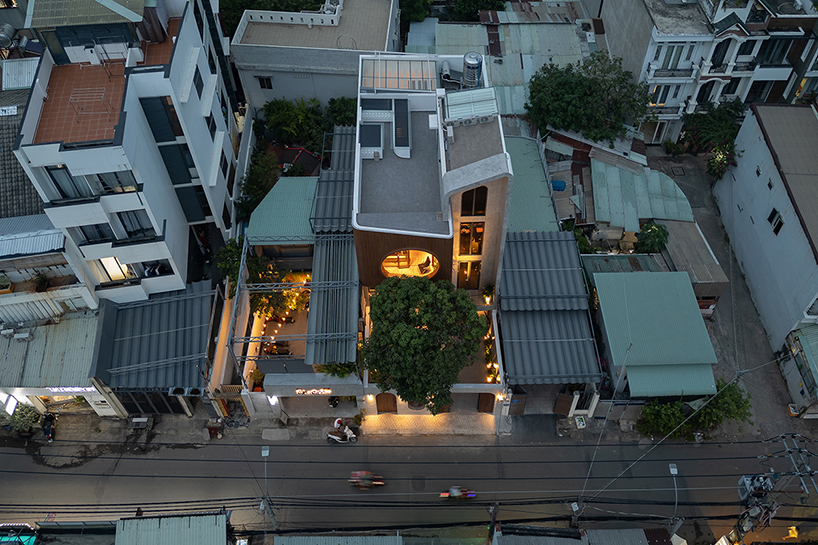
Vesp House is a multi-generational residence in Ho Chi Minh City, Vietnam, designed by Story Architecture. With a total built area of 160 sqm, the project accommodates a family of several generations, including the homeowners, parents, grandmother, and a younger sibling. The house responds to both shared domestic life and individual retreat, organizing spaces vertically to balance privacy, circulation, and connection.
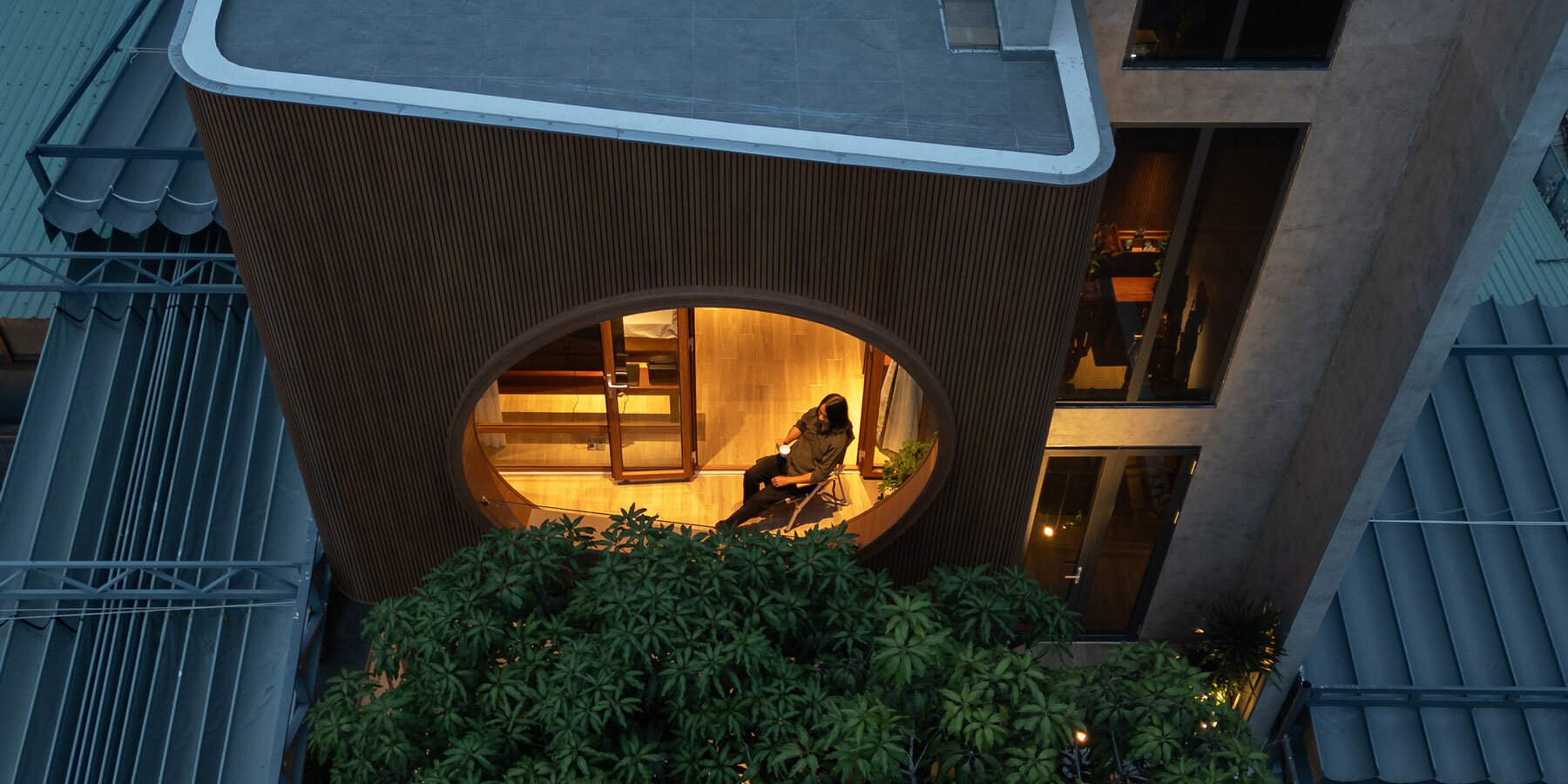
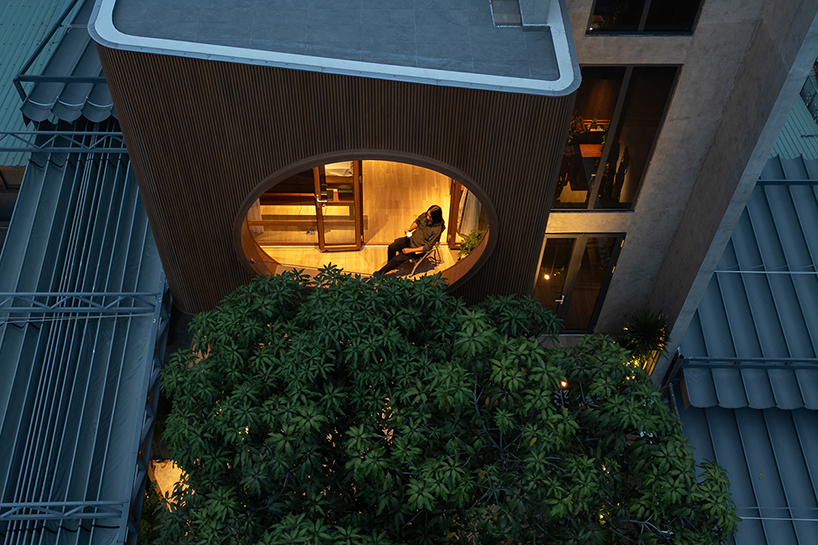
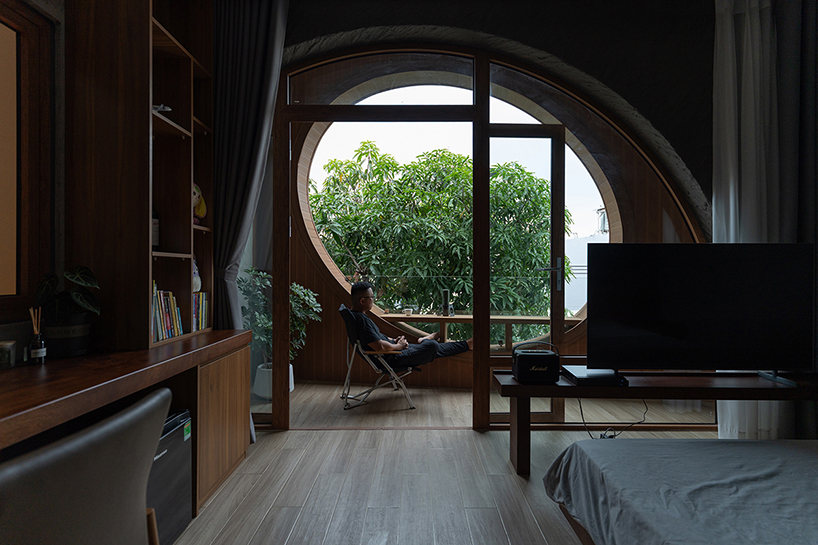
The project’s design concept originates from the upper-level bedroom, conceived as a personal retreat oriented toward the sky and surrounding rooftops. Located on the third floor, the room is defined by a large glazed opening that frames views outward while allowing daylight to penetrate deep into the interior. The window opening is proportioned to resemble a simple hut-like frame, reinforcing a direct visual relationship with the sky and an existing mango tree preserved on the site. A small balcony adjacent to the bedroom functions as a semi-outdoor space for rest and observation, positioned above the surrounding urban fabric.
all images by Quang Dâm
Vesp House’s Layered Domestic Program linked by Central Voids
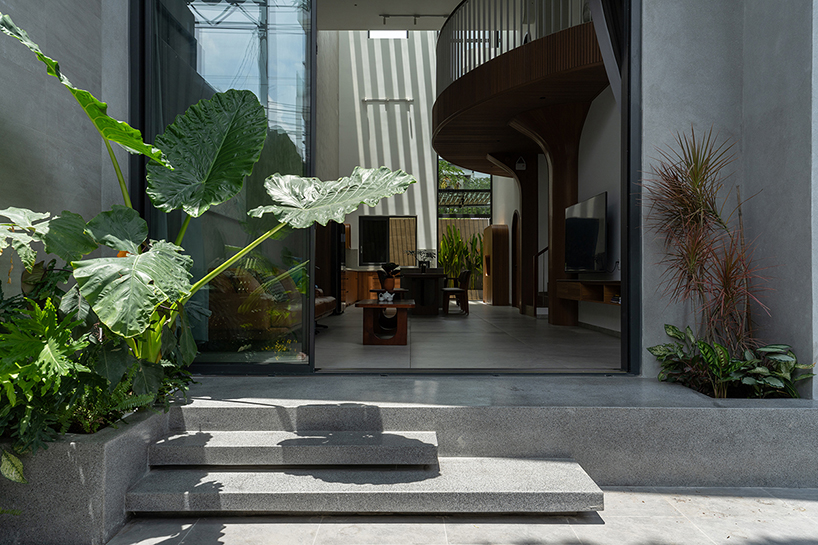
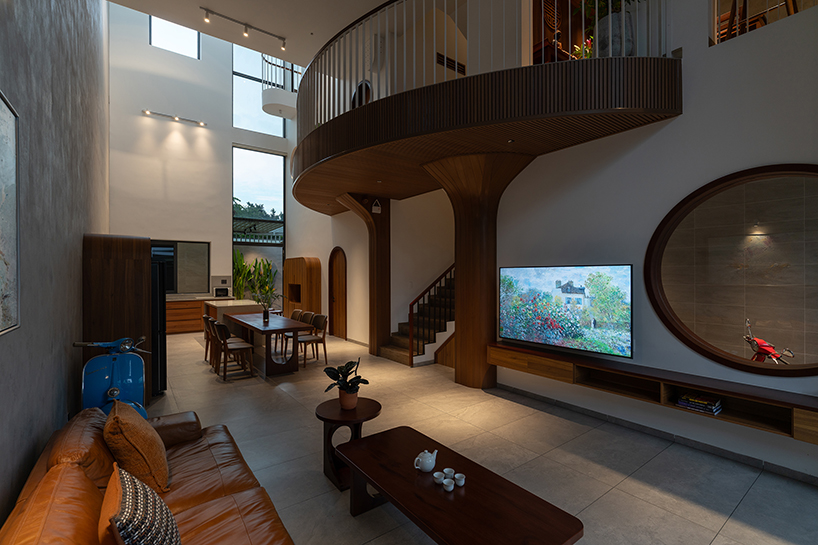
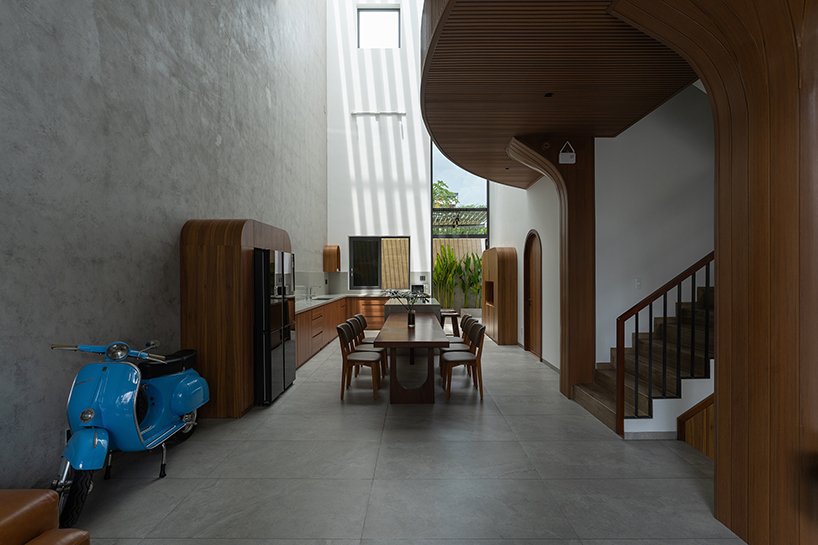
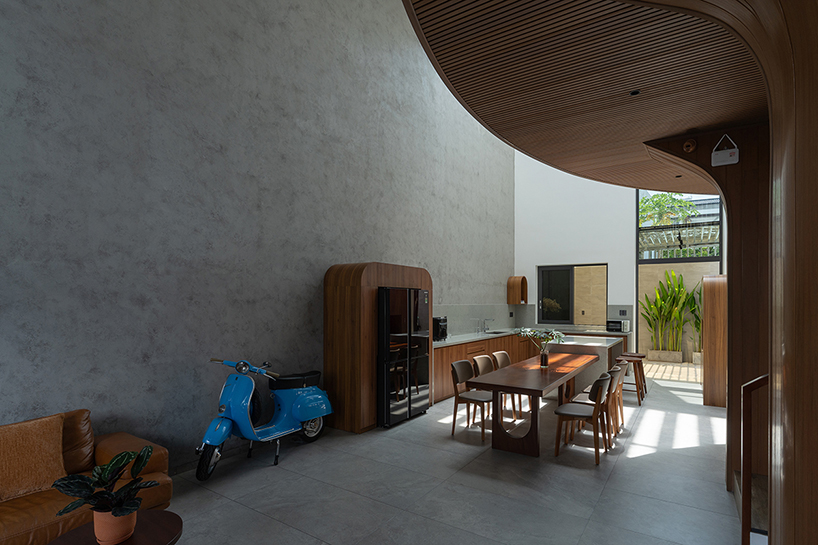
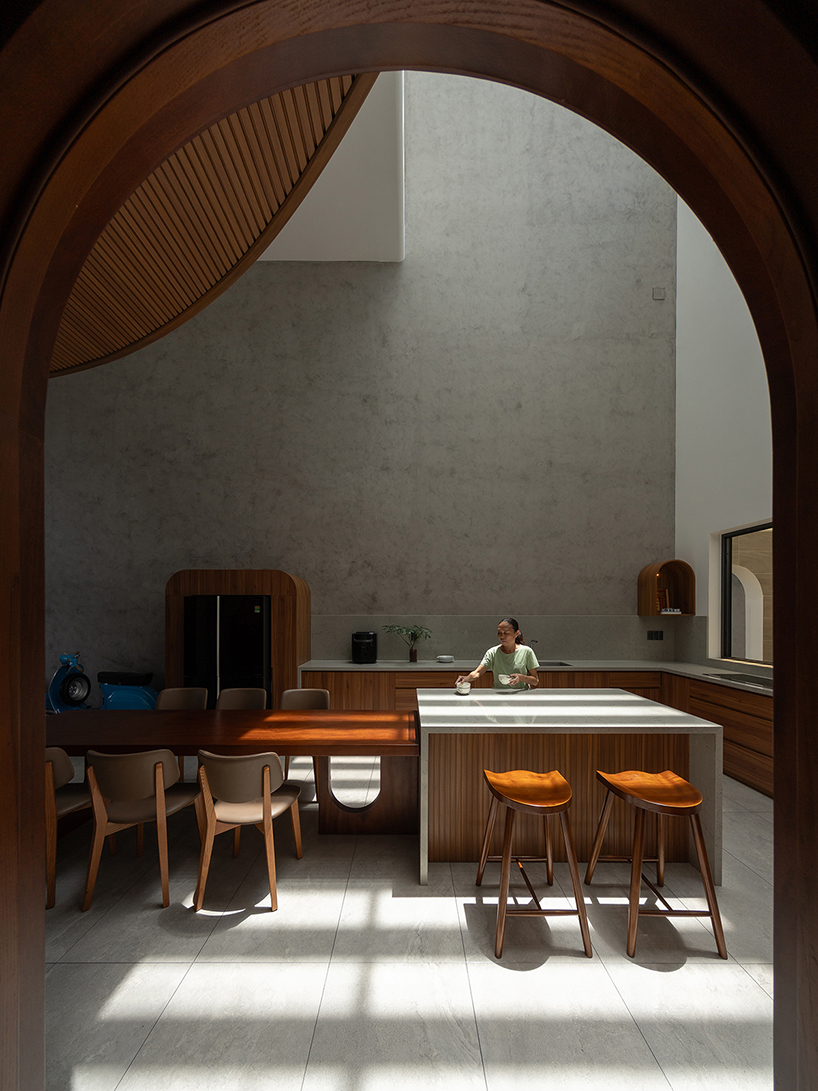
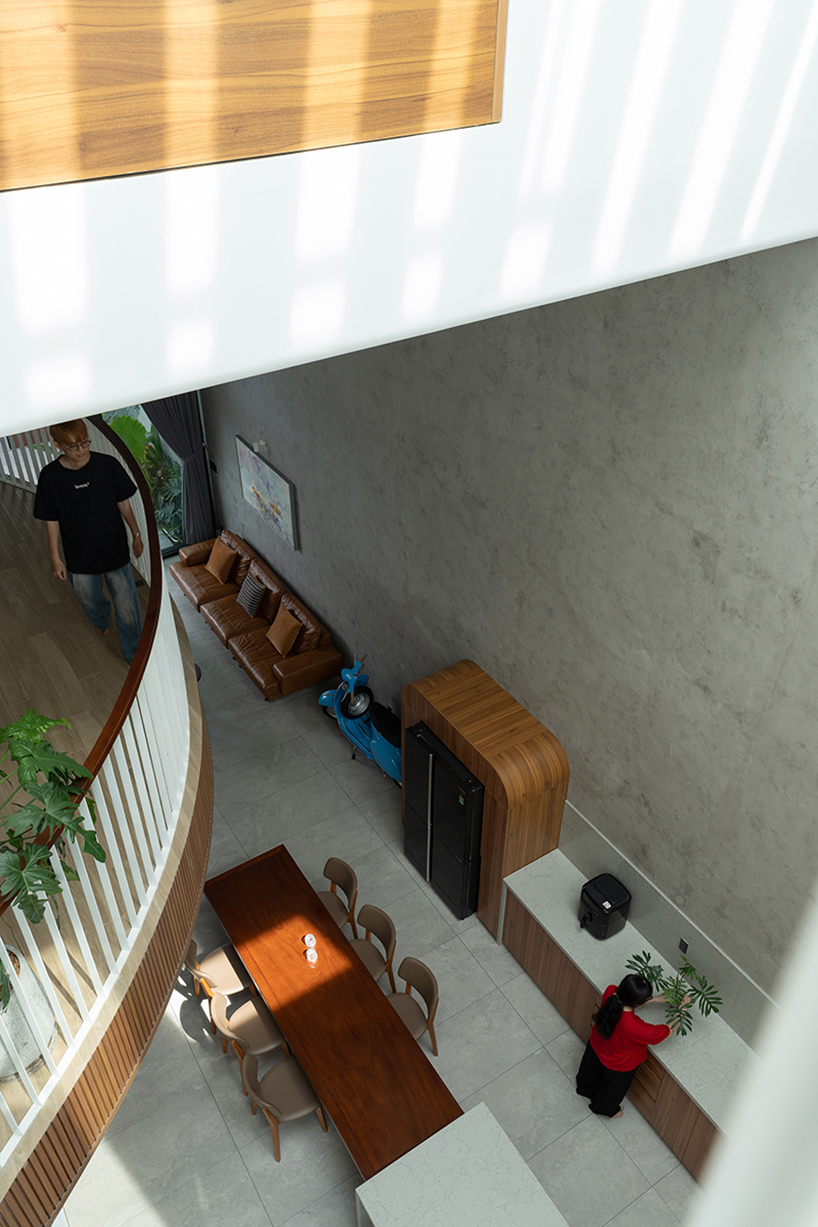
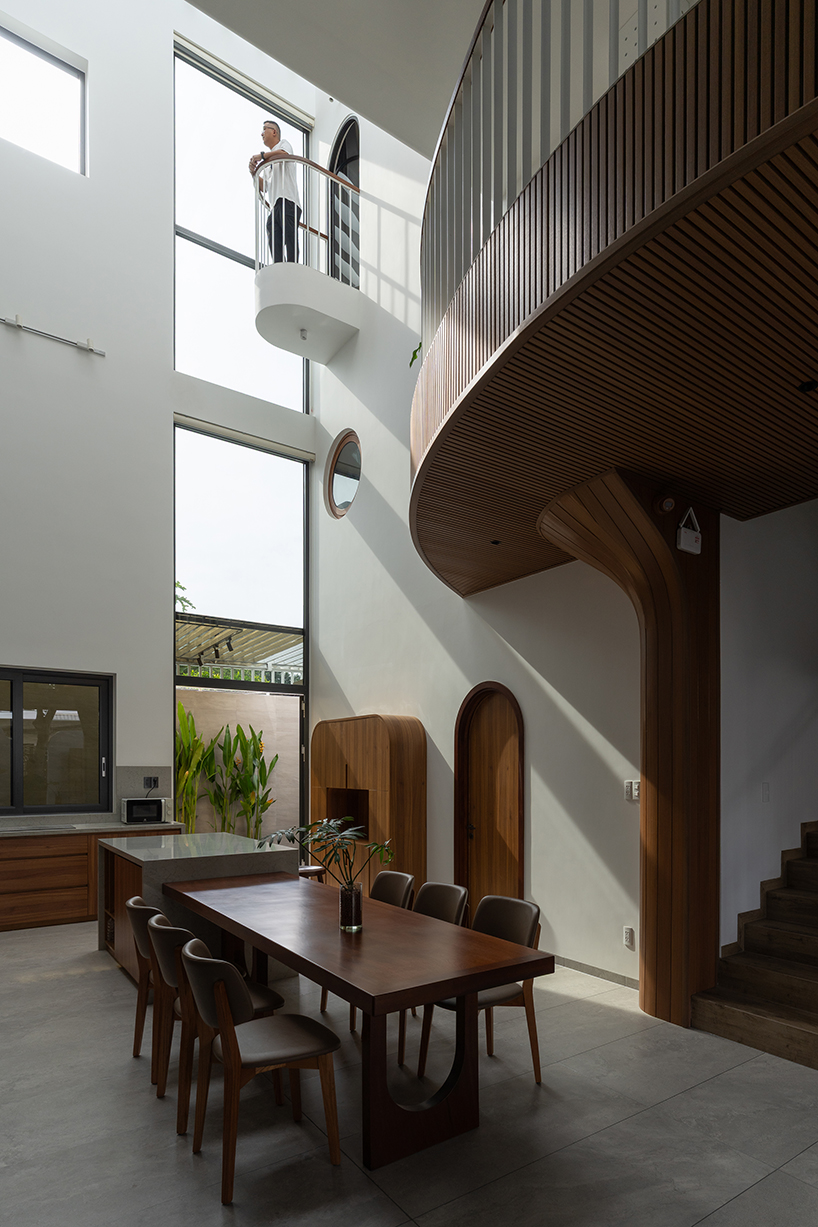
The building is set back from the street to create a front yard that serves both as a planted buffer and a space for maintaining and displaying Vespa motorcycles. On the ground floor, the design team at by Story Architecture organizes the living room and kitchen as a continuous open-plan area. The kitchen incorporates a vertical void that extends upward, improving daylight penetration and ventilation while visually connecting multiple levels of the house.
The second floor accommodates the parents’ bedroom alongside the altar room. The altar space is designed with a full-height void extending to the roof, ensuring spatial separation from upper floors and meeting cultural requirements related to placement and hierarchy. This vertical opening also introduces daylight into the center of the house, reinforcing the ceremonial character of the space.
Bedrooms for the younger sister and the homeowner are located on the third floor. Above the kitchen and dining area, a double-height volume forms the primary shared living space of the house. This open vertical connection allows circulation corridors, bedroom windows, and balconies to overlook the central void, creating visual continuity between floors and strengthening spatial relationships among family members.
Architectural Expression Informed by Vespa Motorbike’s Curves
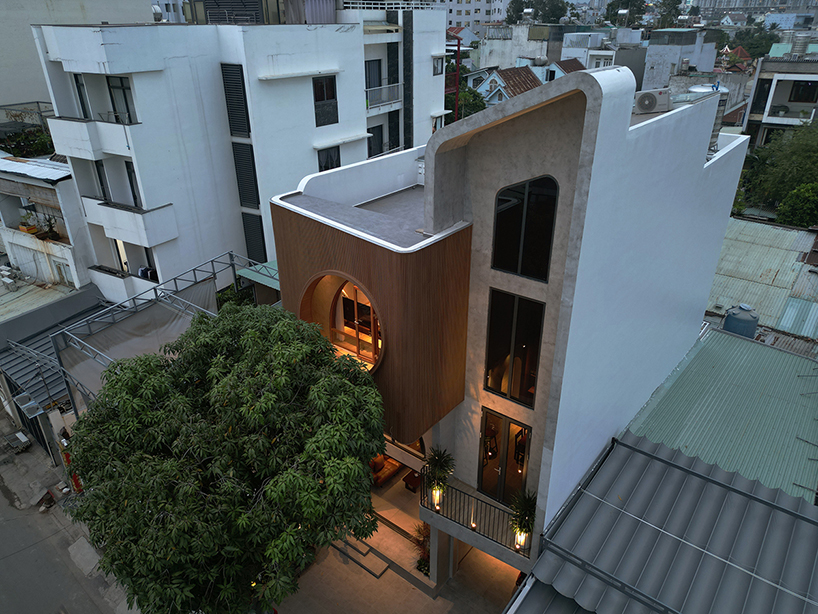
The exterior form and interior detailing are informed by the curved geometry of Vespa motorbikes, expressed through softened edges and flowing lines. A restrained material palette combines exposed cement surfaces with wood finishes, reinforcing continuity between structure and interior elements. Through its spatial sequencing, vertical openness, and material consistency, Vesp House integrates individual living spaces with collective domestic functions within a compact urban footprint.
project info:
name: Vesp House
architect: Story Architecture
location: Ho Chi Minh City, Vietnam
area: 160 sqm
lead architects: Nguyễn Kava
design team: Trần lê Trung, Phạm Như Hà Giang
constructor: Bảo Lộc Construction
photographer: Quang Dâm
designboom has received this project from our DIY submissions feature, where we welcome our readers to submit their own work for publication. see more project submissions from our readers here.
edited by: christina vergopoulou | designboom
architecture in vietnam (423)
 Feb 08, 2026
 Jan 19, 2026
 Jan 03, 2026
 Dec 18, 2025
 Dec 09, 2025
residential architecture and interiors (4757)
 Feb 22, 2026
 Feb 20, 2026
 Feb 20, 2026
 Feb 19, 2026
 Feb 19, 2026
 Feb 10, 2026
 Feb 04, 2026
 Jan 20, 2026