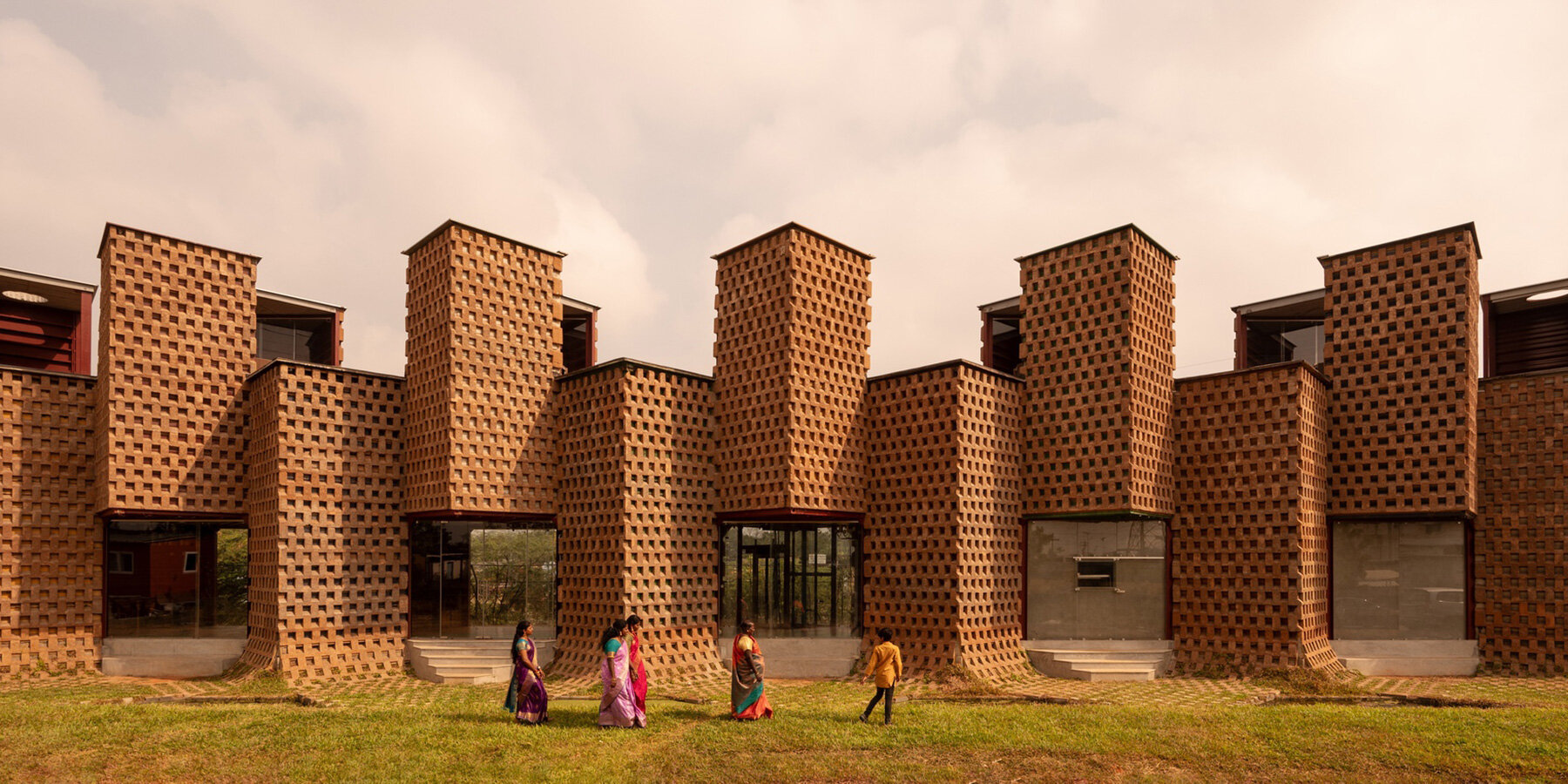
petti restaurant: a space shaped by material reuse
Wallmakers‘ newly completed Petti Restaurant stands along a narrow site in Tuticorin, India, a place where maritime trade has left behind a steady accumulation of discarded shipping containers. The project takes this surplus as its starting point, assembling a 200-seat dining space from elements that once moved goods across oceans, now fixed in place and reoriented toward habitation.
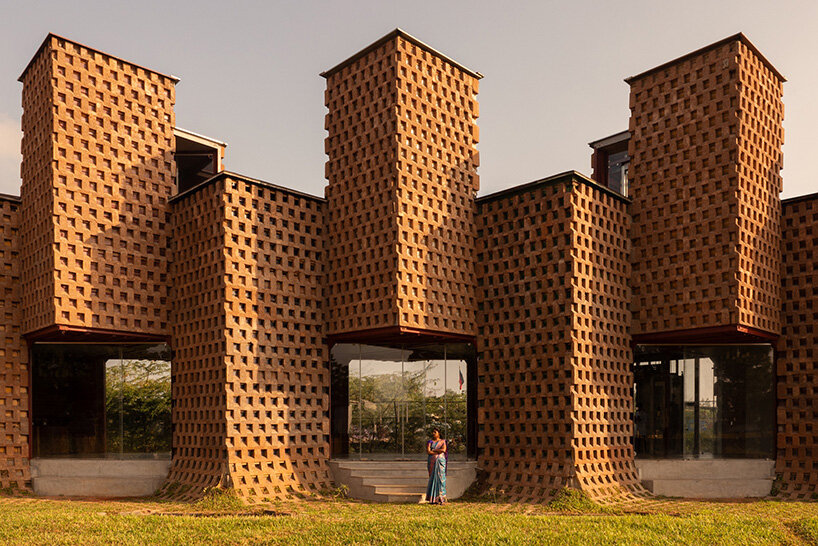
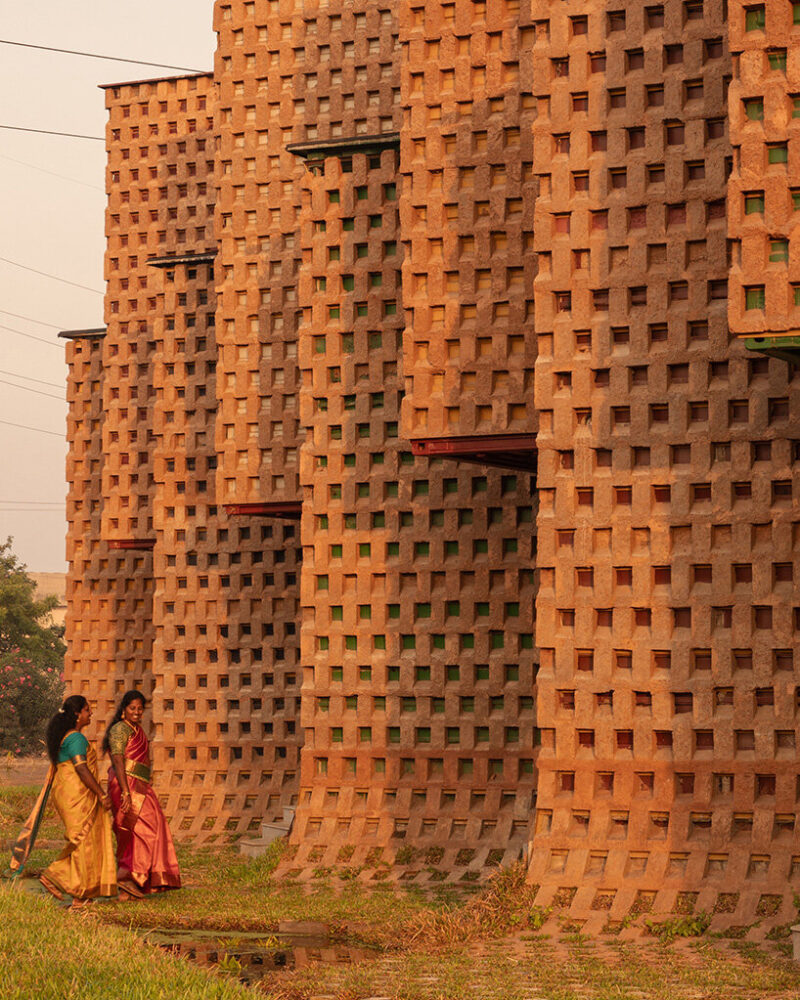
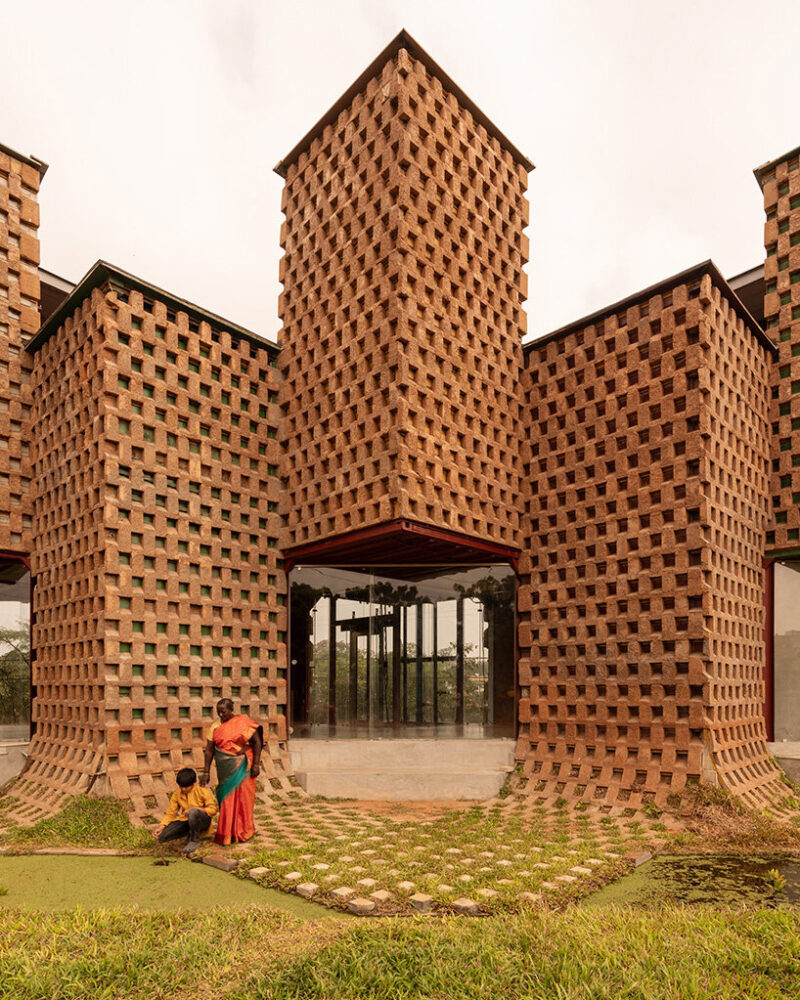
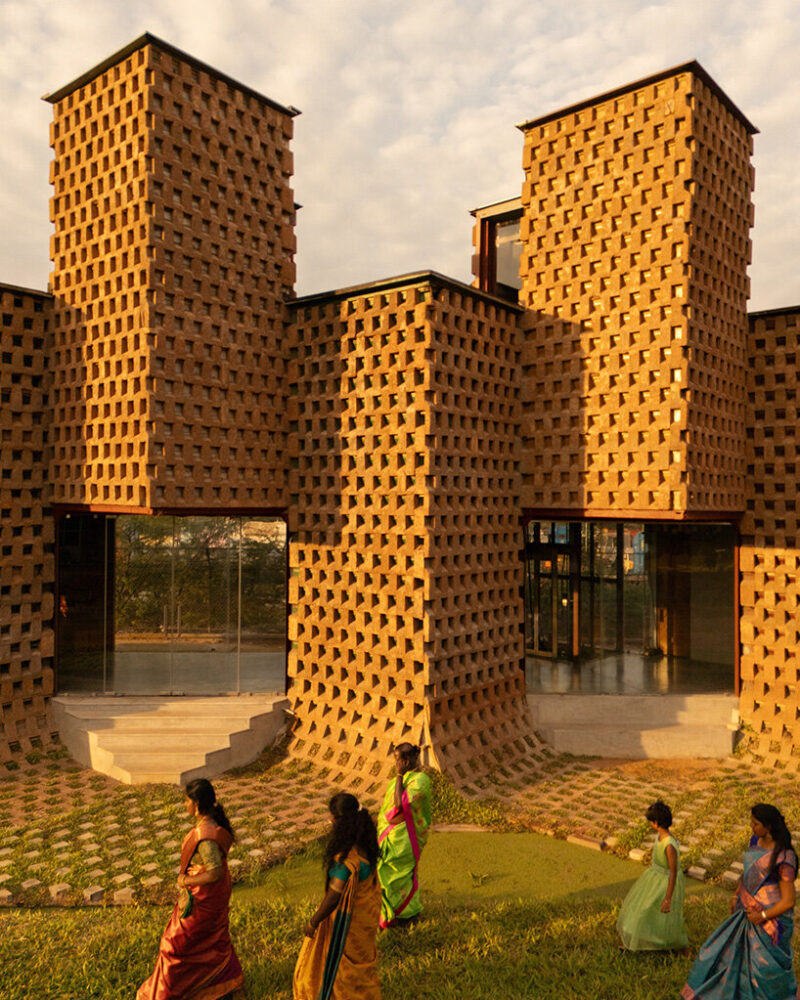
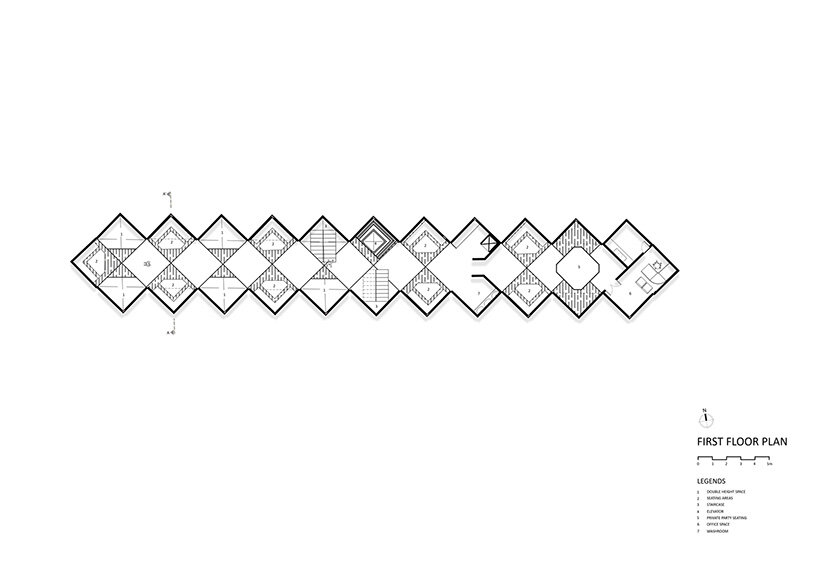
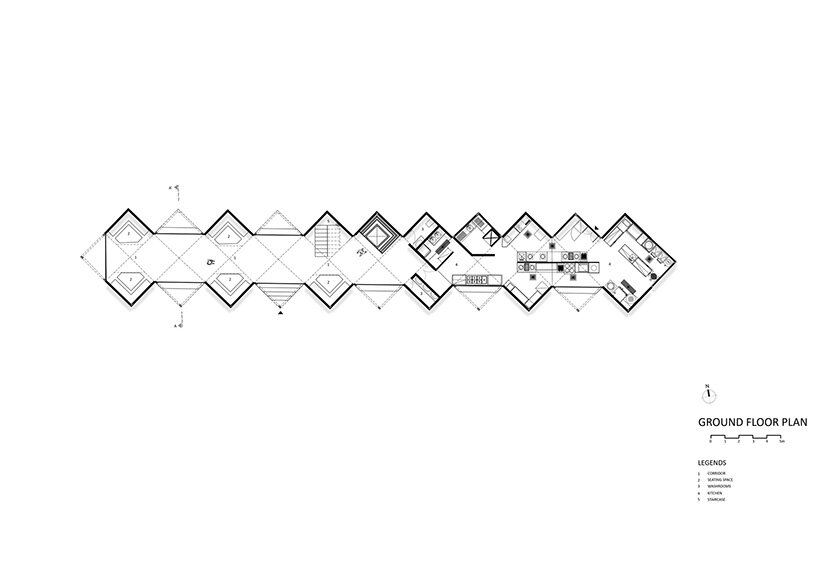
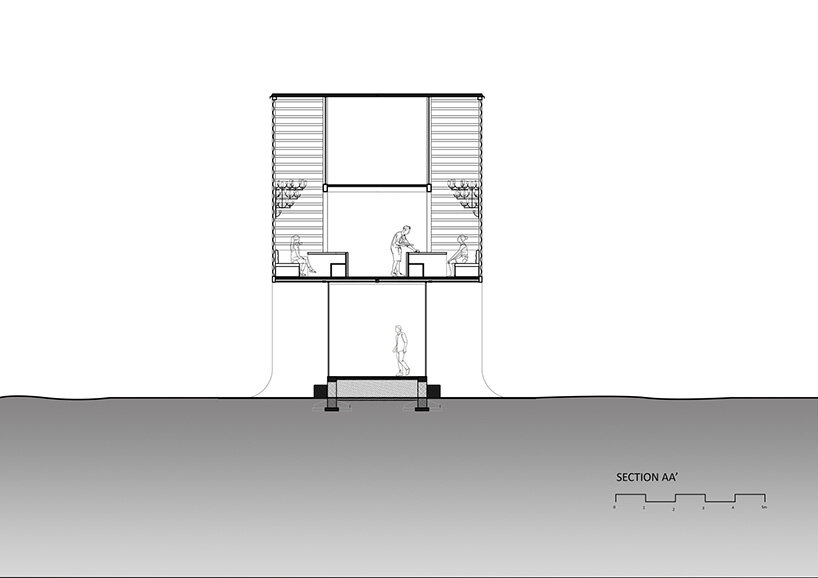
The containers are suspended vertically rather than laid flat, a decision that shifts their proportions and creates lofty interior spaces. Twelve units were lifted into position within a week and welded into a continuous structural frame, with reinforced slabs inserted at key levels. The building reads as a sequence of thickened towers, each one wrapped in a porous facade of poured earth that extends downward to meet the ground in a gentle curve.
images © Studio IKSHA
wallmakers employs poured earth as building material
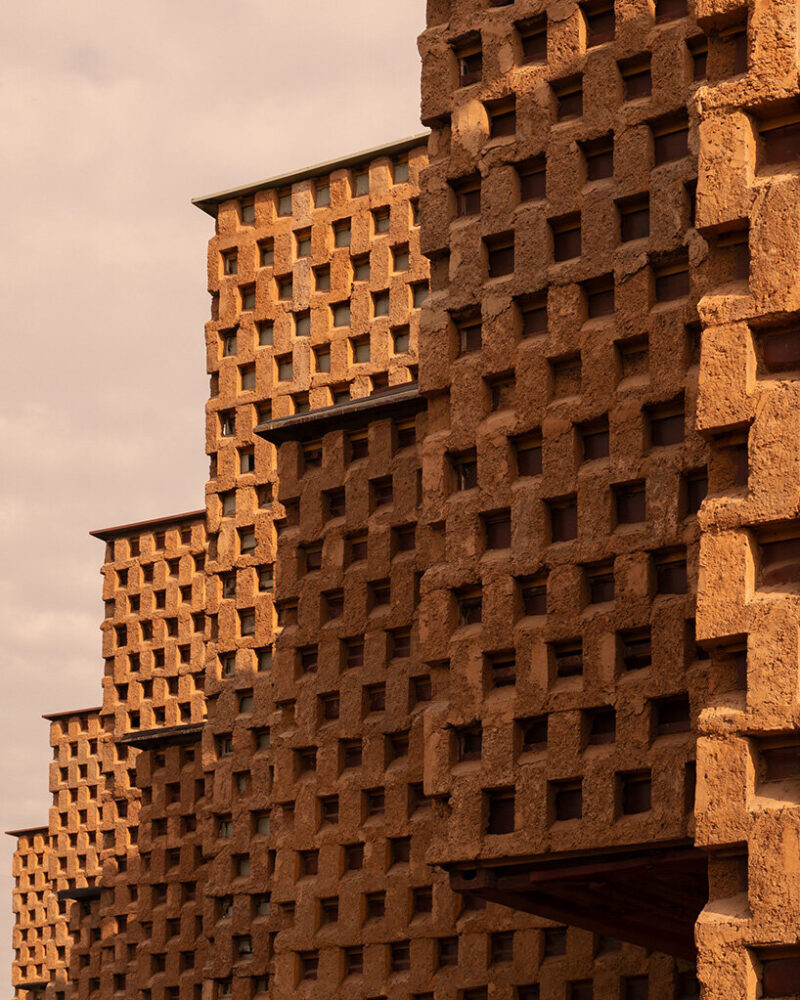
In a climate where heat defines comfort, the Wallmakers-designed Petti Restaurant turns to mass and porosity as its main tools. The architects shape the outer layer of compacted earth into a repeating recessed pattern, allowing air to circulate while shading the steel beneath. This surface reduces heat gain and lowers reliance on mechanical cooling, with the architects noting a significant drop in energy demand.
The staggered placement of containers introduces pockets of shade and channels for cross ventilation. South-facing volumes are treated as solid masses, limiting direct solar exposure while allowing upper portions to draw air through the building. The architecture operates through adjustment rather than excess, using thickness, shadow, and orientation to shape the interior climate.
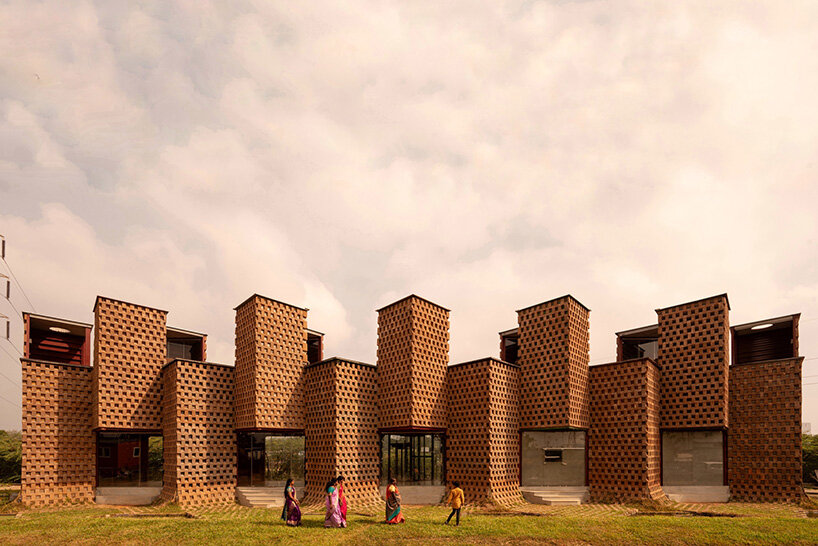
discarded shipping containers are transformed into a 200 seat restaurant in India
Interior spaces express a unique structure
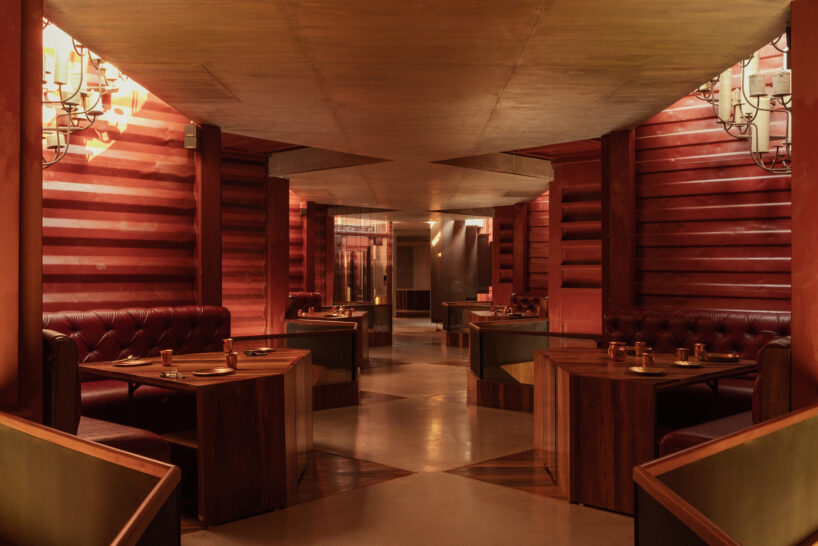
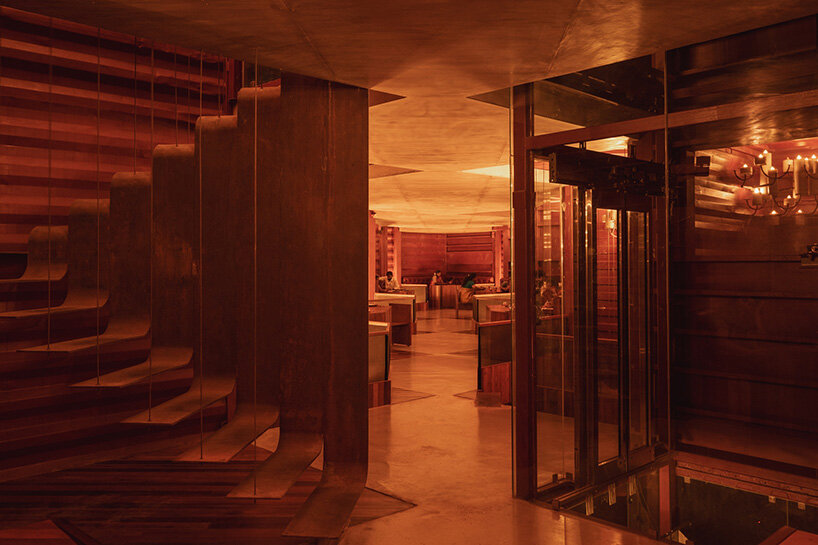
Wallmakers’ expressive structure remains legible throughout the Petti Restaurant’s interiors. Steel frames, timber surfaces, and oxide flooring define a sequence of dining areas that sit within the depth of the container grid. Each seating zone is set into a corner or edge condition, creating a sense of enclosure while maintaining visual continuity across the plan.
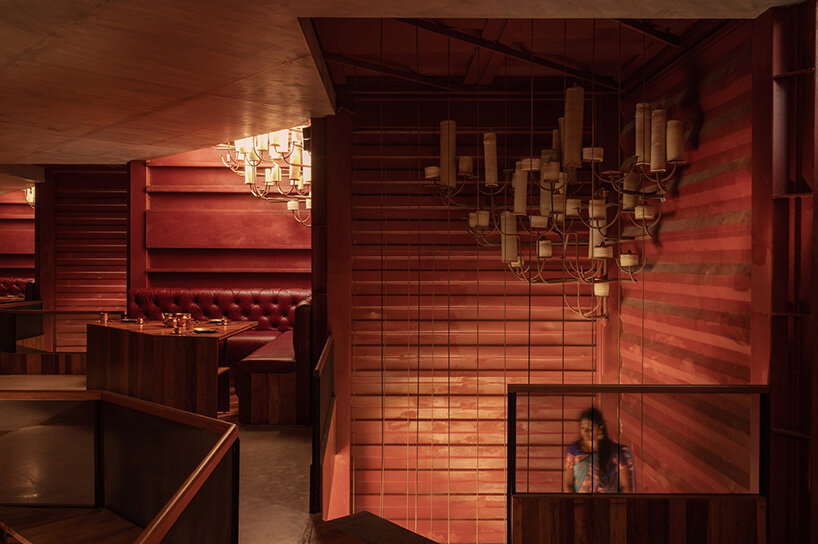
Light enters from above through skylights, shifting across the day and settling into a warm glow in the evening through custom fixtures assembled from reused materials. The scale of the rooms remains intimate despite the linear footprint, with each group of guests occupying a defined niche along the length of the building.
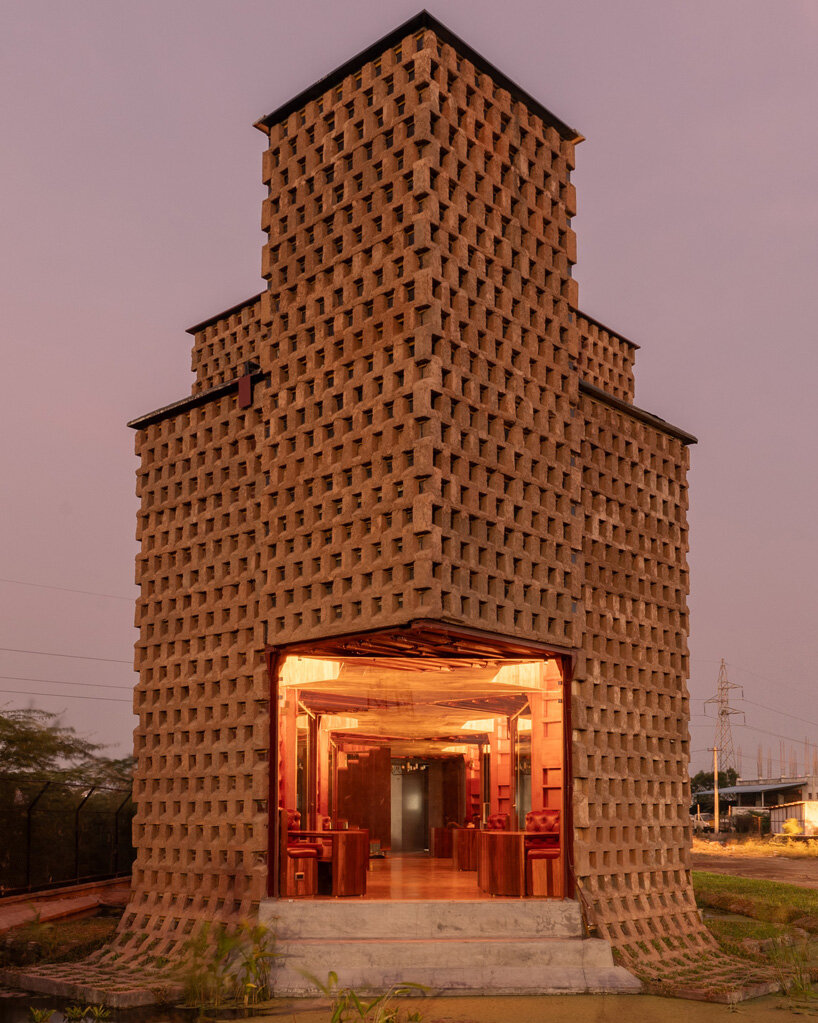
containers are oriented vertically for lofty interiors
Utopia as method in material practice
The approach taken by Wallmakers frames reuse as a structural and environmental strategy, not just a symbolic gesture. Its context is shaped by global trade, and the reuse of shipping containers becomes a way to engage directly with local surplus — all while addressing climate conditions through material choice. Steel and earth, typically separated by construction logic, are brought into a shared system where each compensates for the limits of the other.
This way of working aligns with a broader reading of utopian thinking as a method. Petti Restaurant begins with an existing condition, an excess of industrial waste, and treats it as an opportunity to reconfigure how a building performs and how it is made. Petti Restaurant suggests that architectural optimism can operate through incremental decisions — material reuse and passive cooling combine to propose an alternative model for building in tropical contexts.
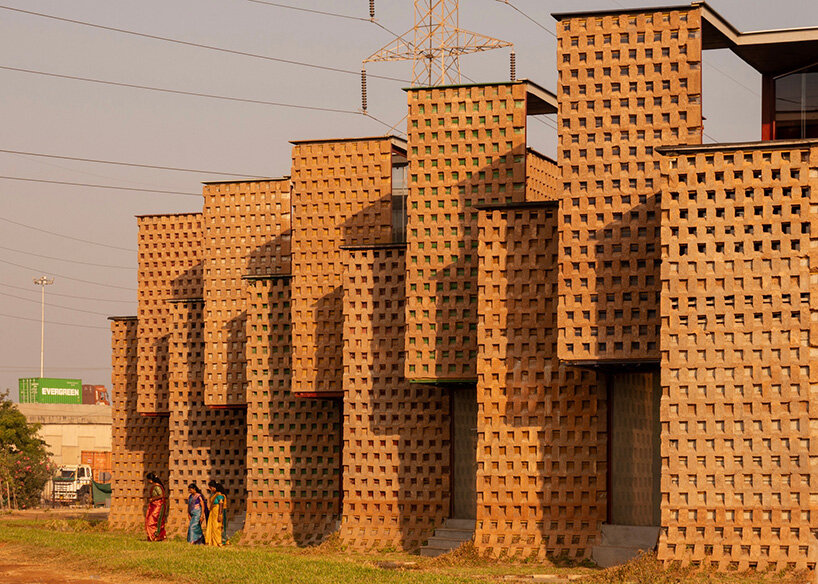
poured earth wraps the structure to improve thermal performance
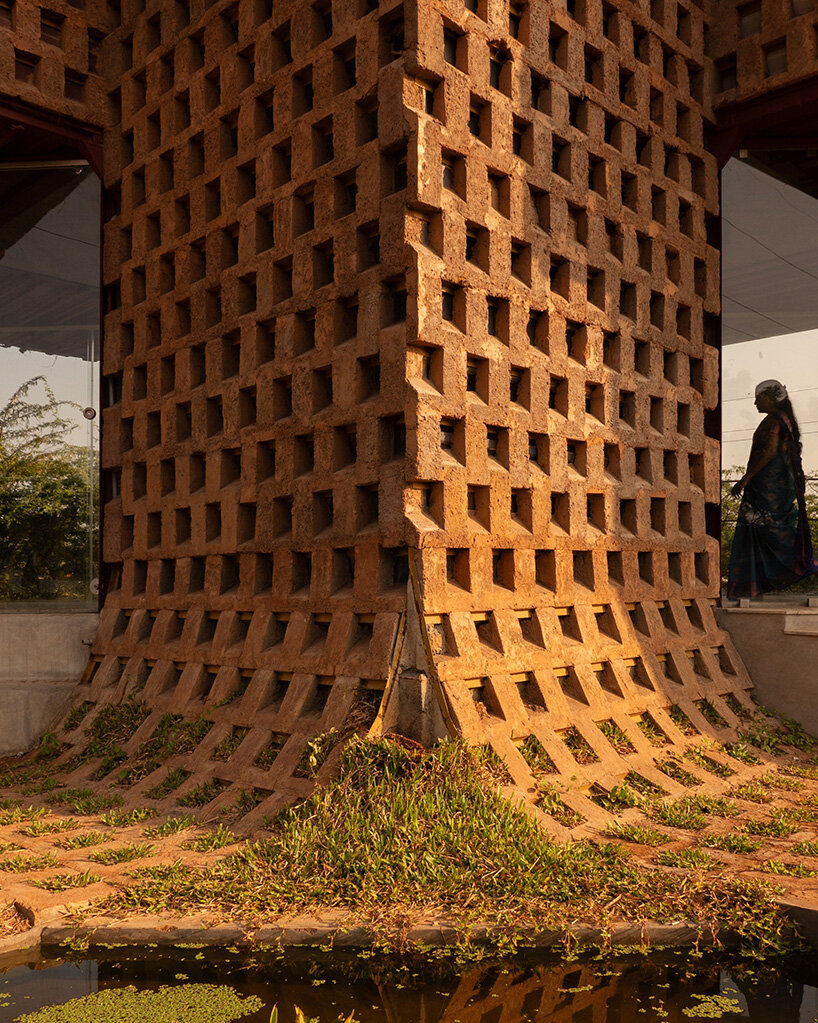
the perforated facade allows ventilation while shading the steel frame
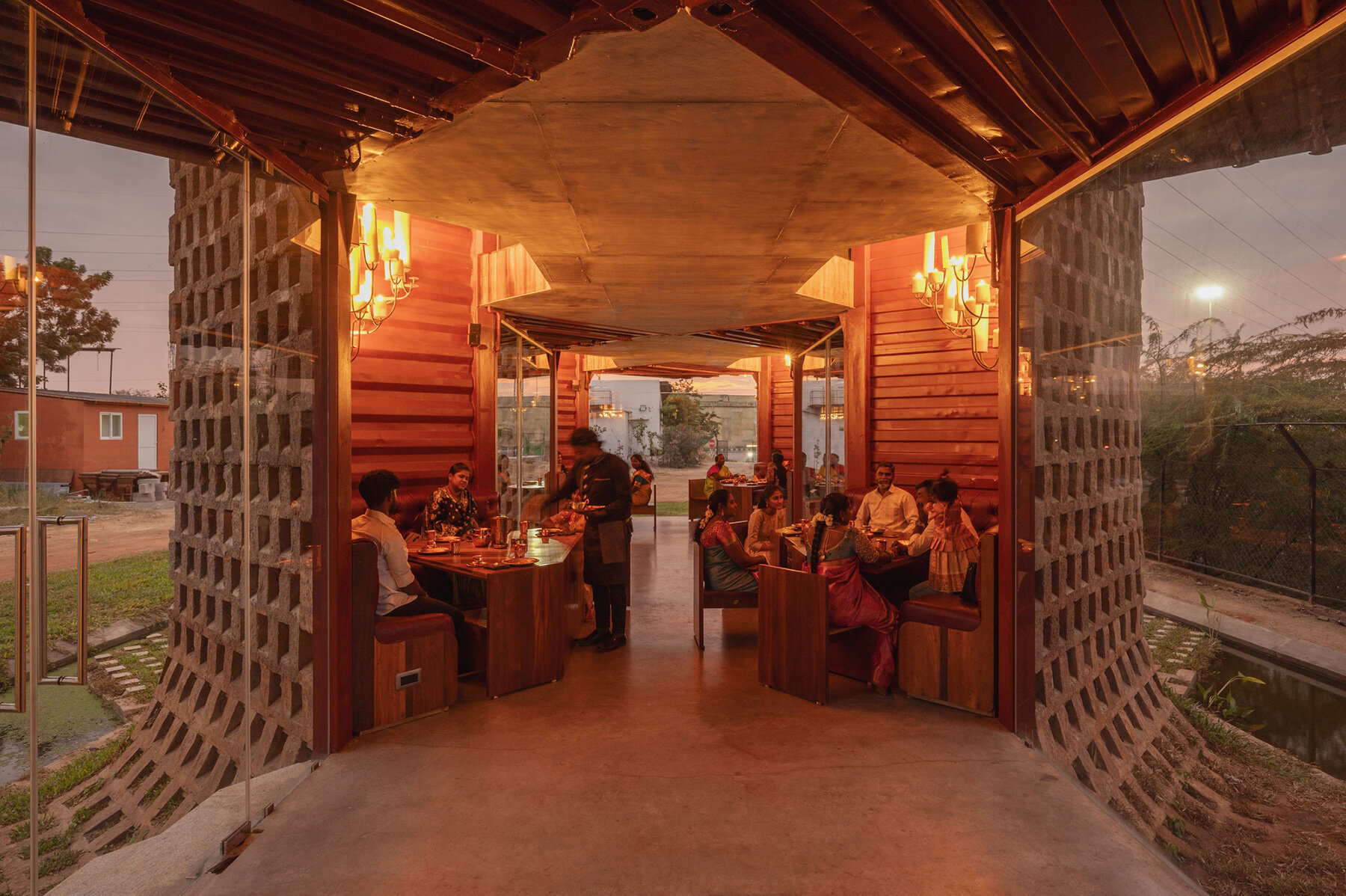
staggered volumes create shaded pockets and support passive ventilation
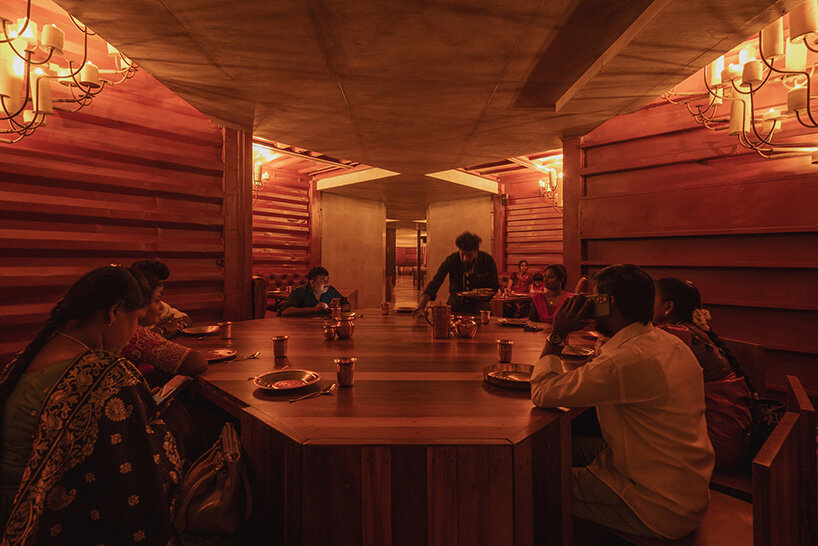
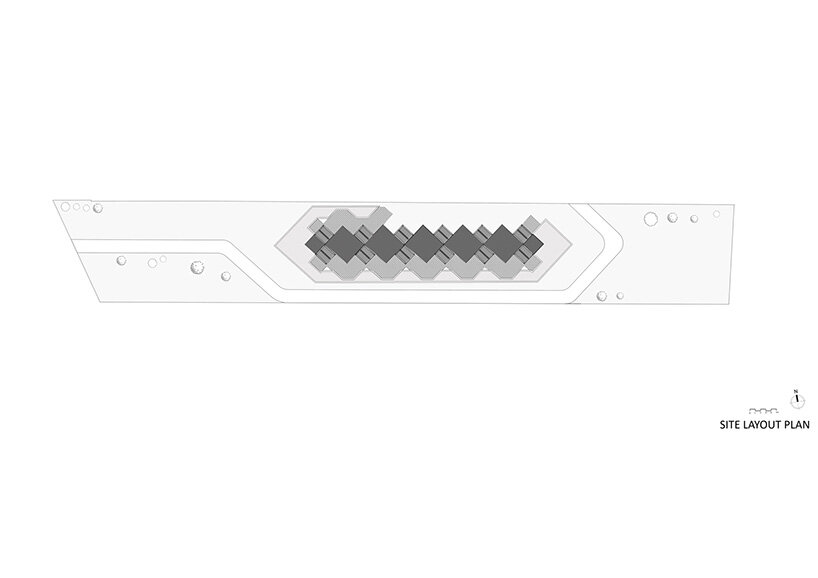
the narrow site is organized into a sequence of intimate dining niches
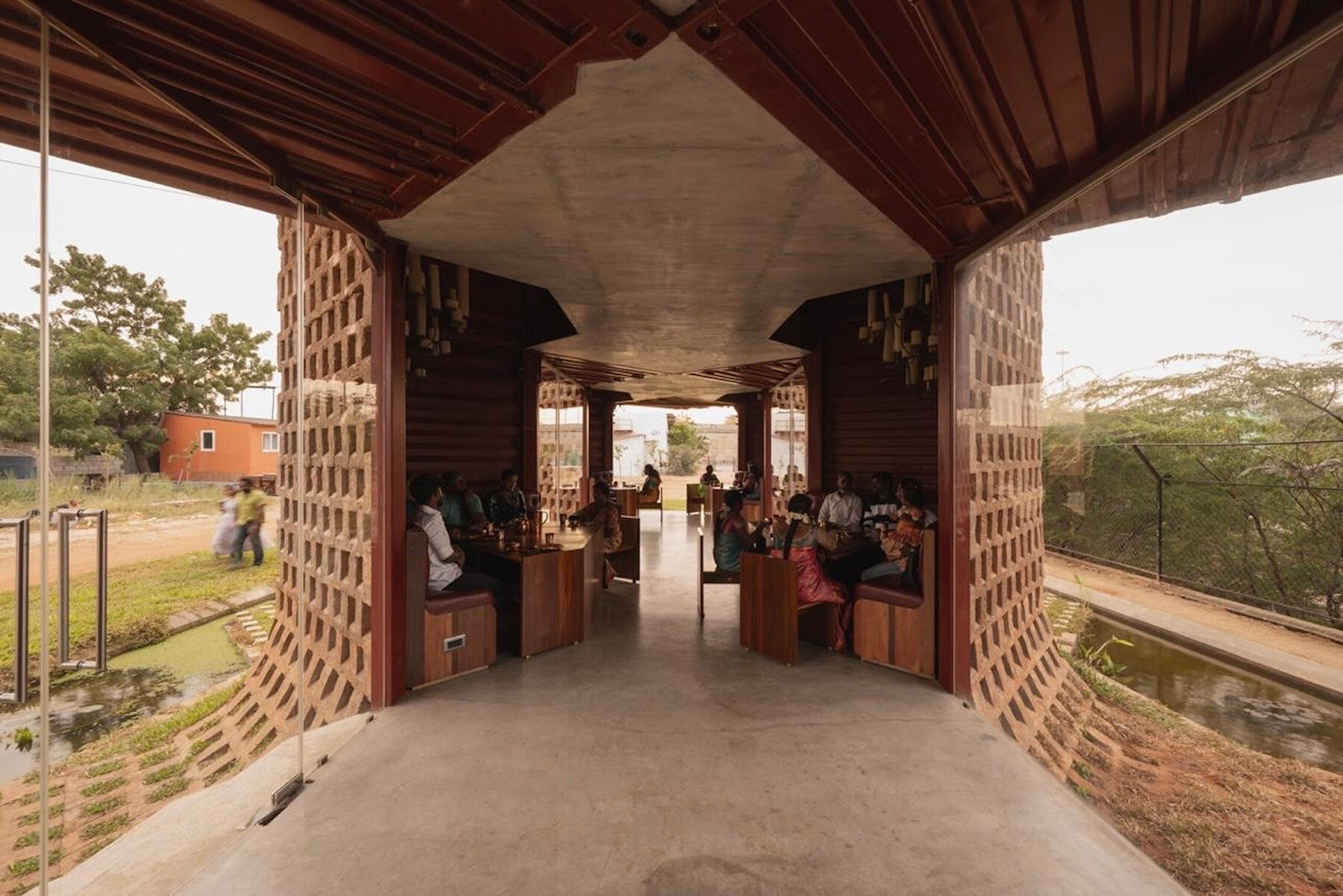
skylights bring natural light into each seating area throughout the day
project info:
name: Petti Restaurant | @petti.tuti
architect: Wallmakers | @ar.vinudaniel
location: Tamil Nadu, India
photography: © Studio IKSHA | @iksha.in
architecture in india (434)
 Mar 09, 2026
 Mar 05, 2026
 Mar 03, 2026
 Feb 27, 2026
 Feb 22, 2026
earth architecture (81)
 Mar 12, 2026
 Oct 25, 2025
 Jul 28, 2025
 Jul 27, 2025
 May 30, 2025
facades (467)
 Mar 16, 2026
 Mar 09, 2026
 Mar 02, 2026
 Feb 28, 2026
 Feb 20, 2026
restaurant and café design (945)
 Mar 14, 2026 Mar 03, 2026
 Mar 02, 2026
 Feb 25, 2026
 Feb 23, 2026
shipping container architecture (200)
 Feb 27, 2026
 Feb 01, 2026
 Apr 28, 2025
 Jun 15, 2024
 Apr 04, 2024
wallmakers (13)
 Jan 22, 2026
 Dec 12, 2025
 Oct 30, 2025
 Mar 08, 2024
 Jan 11, 2024
 Mar 12, 2026
 Mar 11, 2026
 Feb 24, 2026