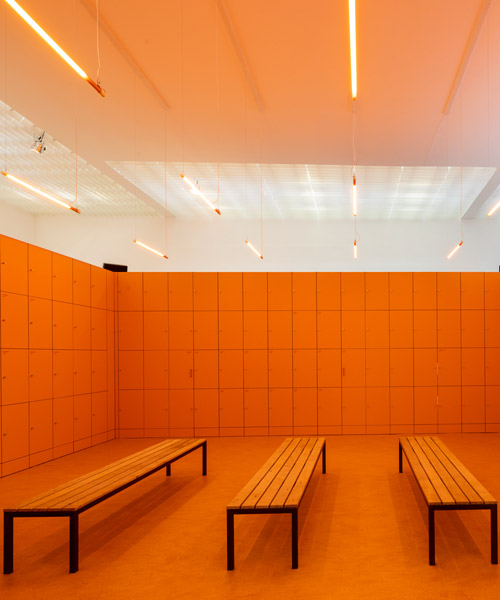
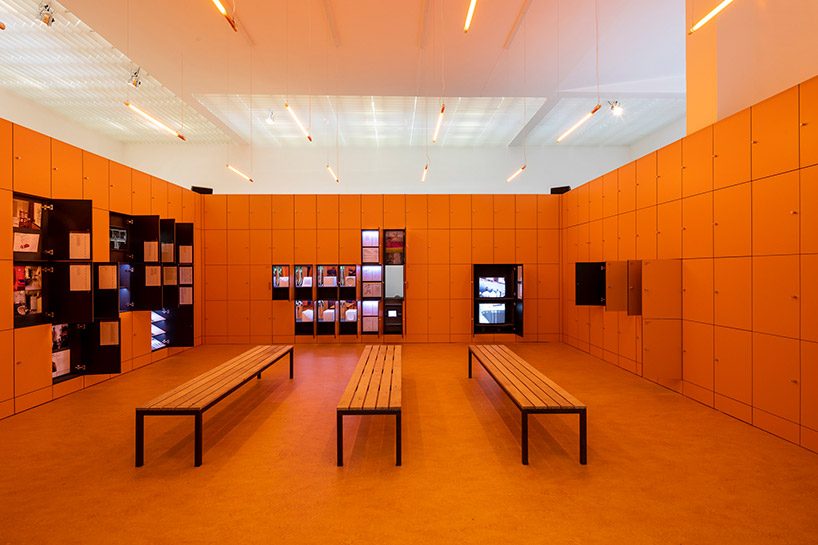
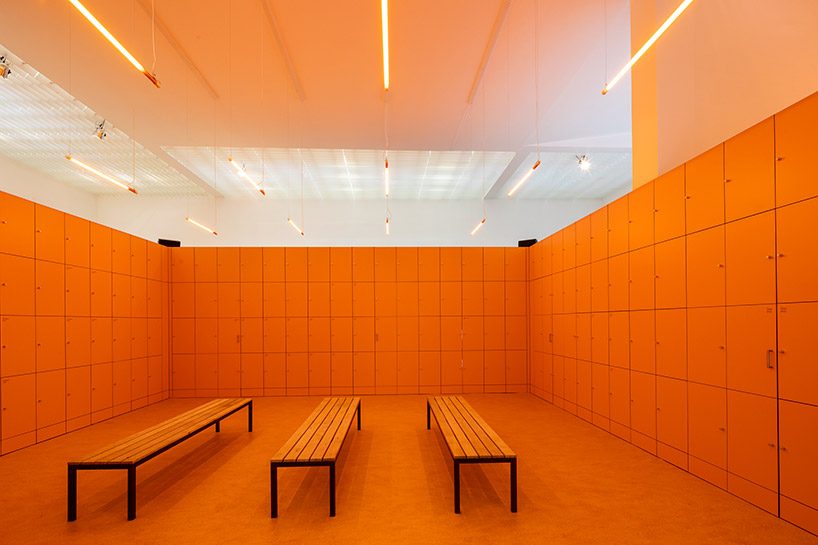
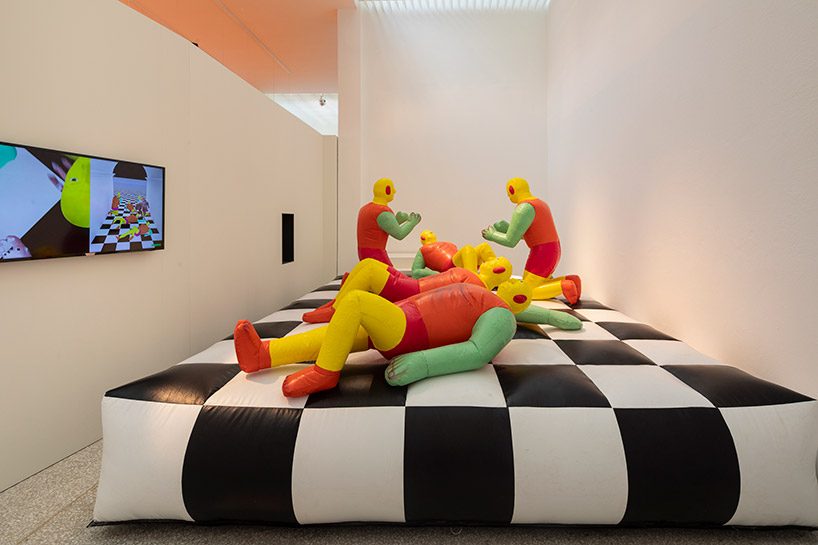
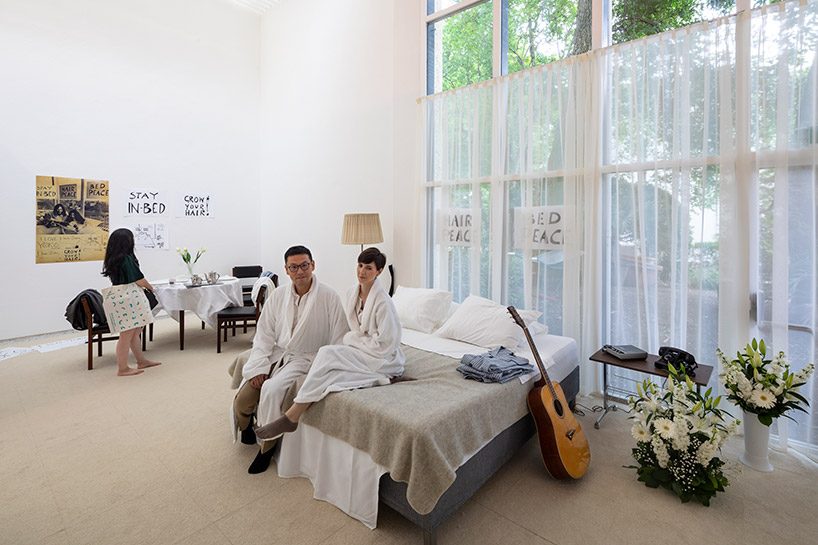
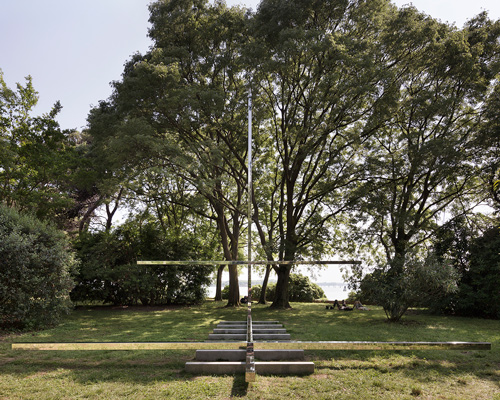
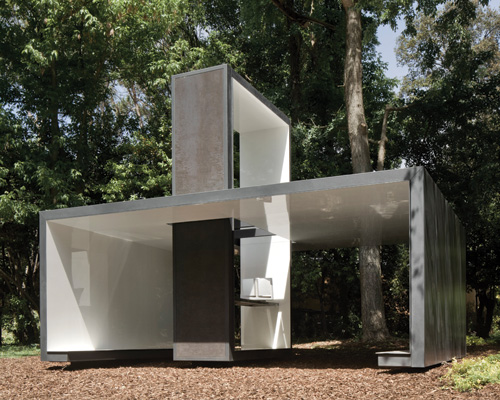
with the title ‘WORK, BODY, LEISURE’, the dutch pavilion at the 16th international architecture exhibition addresses the spatial configurations, modes of living and notions of the human body engendered by disruptive changes in labor ethos and conditions. the project, commissioned by het nieuwe instituut and curated by marina otero verzier, includes contributions by a group of architects, artists, designers, historians, musicians and theorists selected by the curatorial team and through a number of open calls.
‘in line with this collaborative working method, curator marina oteroverzier has created a multidisciplinary exhibition for the dutch pavilion,’ says barbera wolfensberger, the director-general of culture and media (ministry of education, culture and science). ‘this showcases the ambition to not only overcome national boundaries but to operate beyond disciplinary boundaries as well.’
this collaborative installation seeks to foster new forms of creativity and responsibility within the architectural field in response to emerging technologies of automation. a domain of research and innovation that, despite its ongoing transformation of the built environment and bodies that inhabit it, is still largely devoid of a critical spatial perspective.

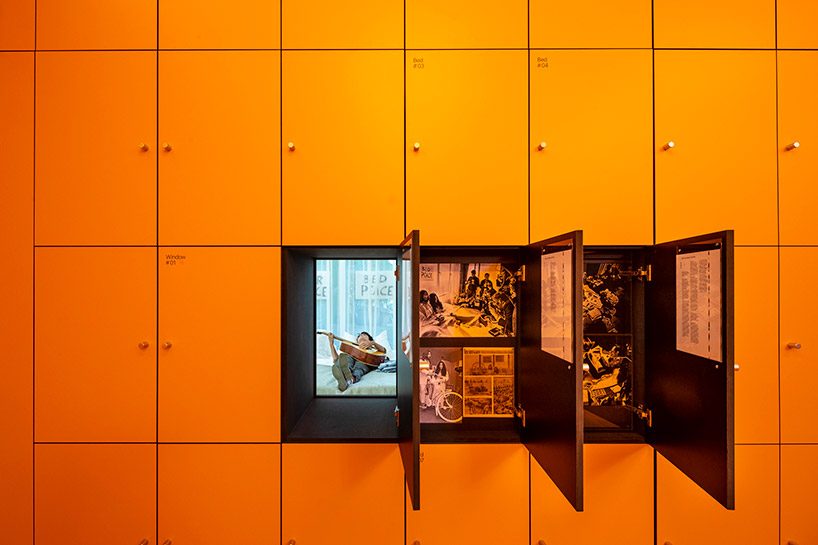
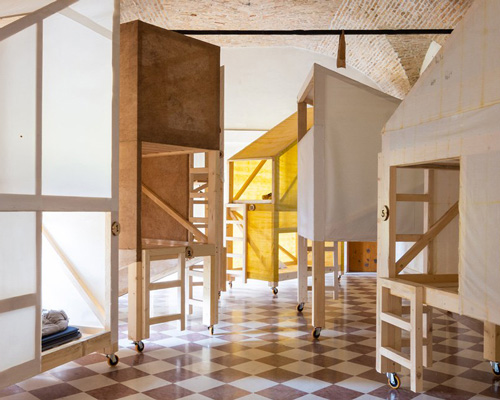
an emphasis on work and discipline over leisure manifests in its architecture, from the scale of the territory to that of the bed. the locker is an interface between the laboring and the non-laboring self if any distinction between the two remains today. the lockers in the exhibition chart a journey through a series of architectures in the netherlands and beyond in which bodies are categorized and transformed: offices, playgrounds, farms, factories and virtual spaces, windows, beds, and doors.
project info:
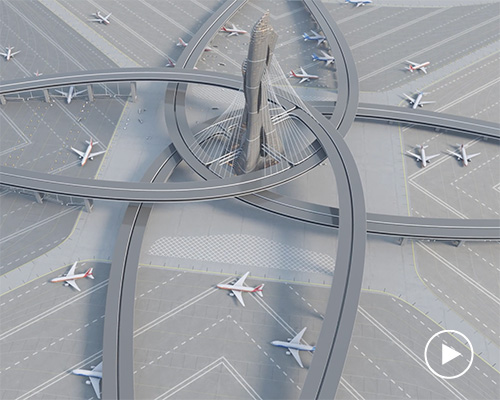
works: bed-in, by beatriz colomina; the door(s) of no return: on technologies of certain bodies, by amal alhaag; songs for hard working people, by noam toran with florentijn boddendijk and remco de jong;renderlands : installation, by liam young; the port and the fall of icarus, by hamed khosravi, taneha kuzniecow bacchin, and filippo lafleur; automated landscapes, by marten kuijpers and victor muñoz sanz; the institute of patent infringement, by jane chew and matthew stewart; constant’s new babylon, revisited by mark wigley; safety measures, by simone c. niquille; shore leaves, by giuditta vendrame, paolo patelli and giulio squillacciotti; architecture of sex work, in collaboration with amsterdam museum and the foundation for responsible robotics
designboom’s coverage of the 2018 venice architecture biennale is in partnership with leading energy company edison. edison is taking part in the 16th international architecture exhibition of la biennale di venezia by initiating a path towards sustainability and the efficient use of resources. the collaboration between edison and la biennale is based on awareness that energy is one of the fundamental elements of architecture and of the places, spaces and cities of contemporary life.