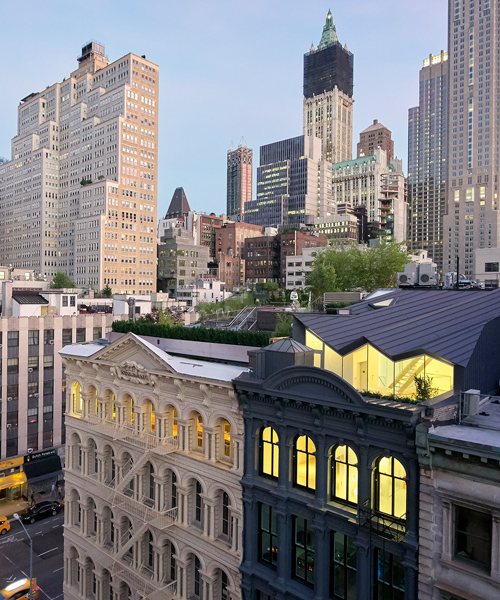
WORKac’s stealth building in new york is topped with a hidden penthouse
behind one of tribeca's oldest cast iron façades, the architects have completed the construction of a series of spacious loft residences.
prefer designboom on google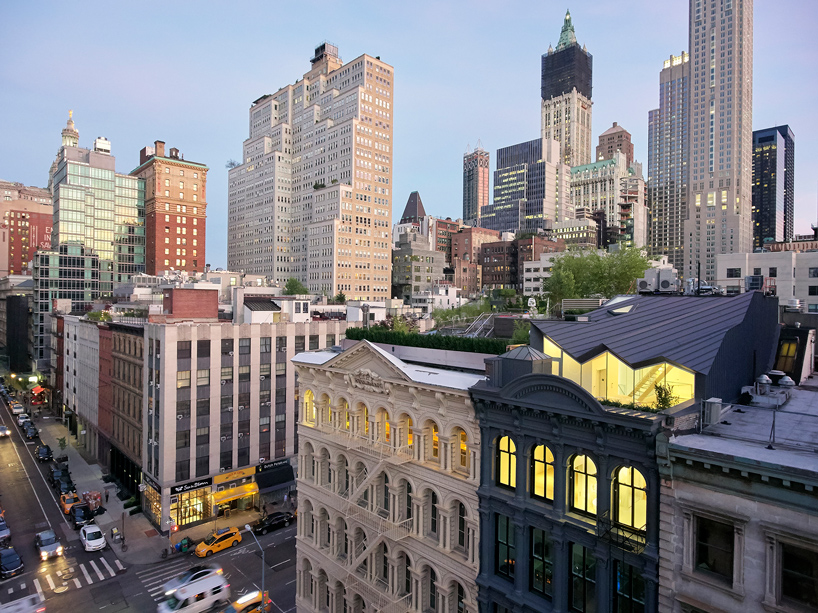
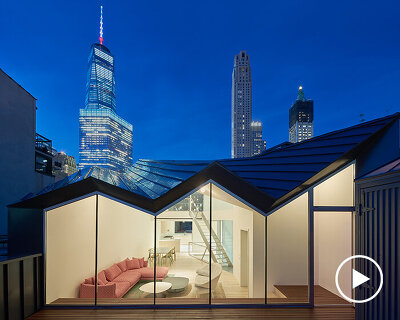
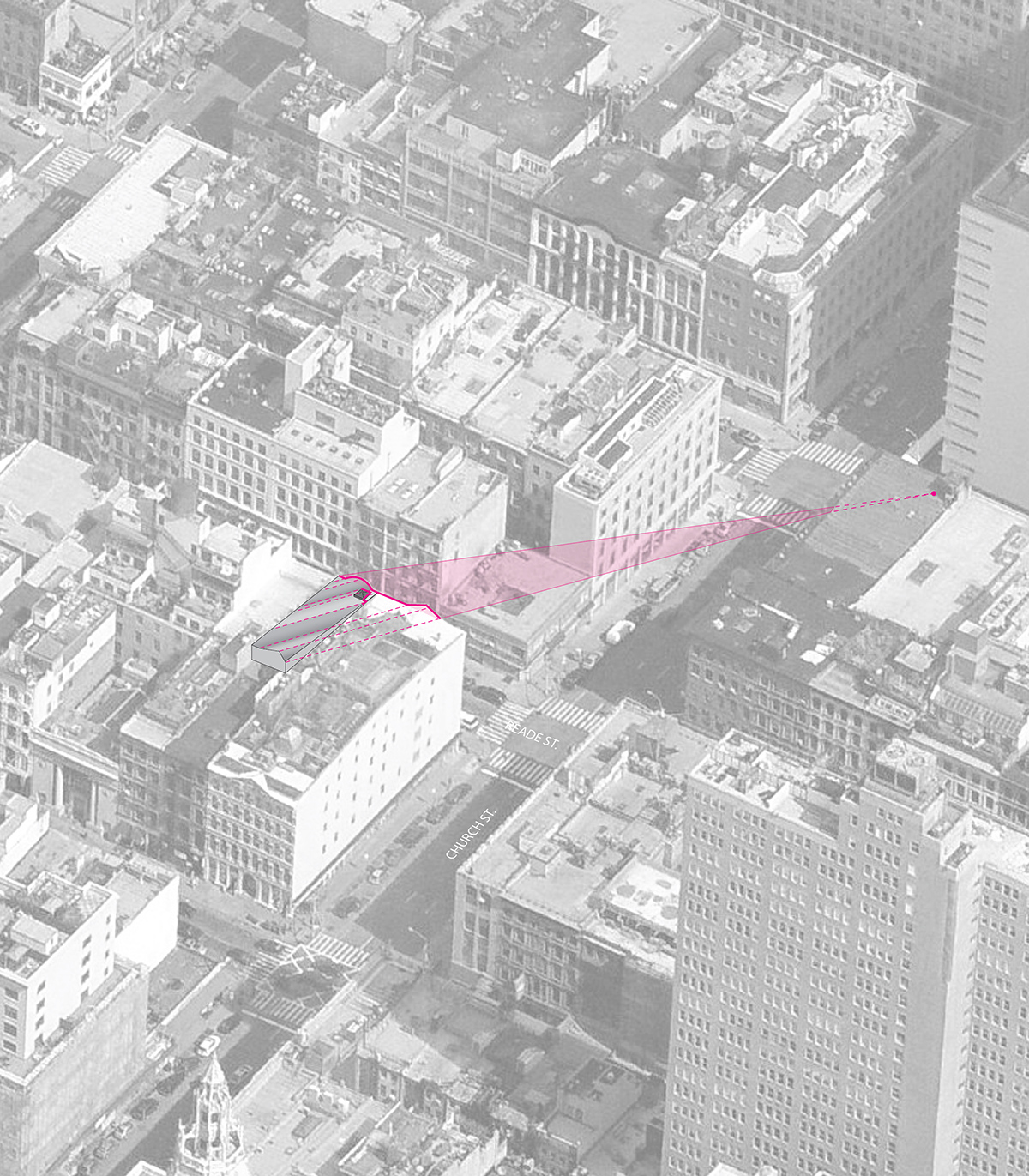
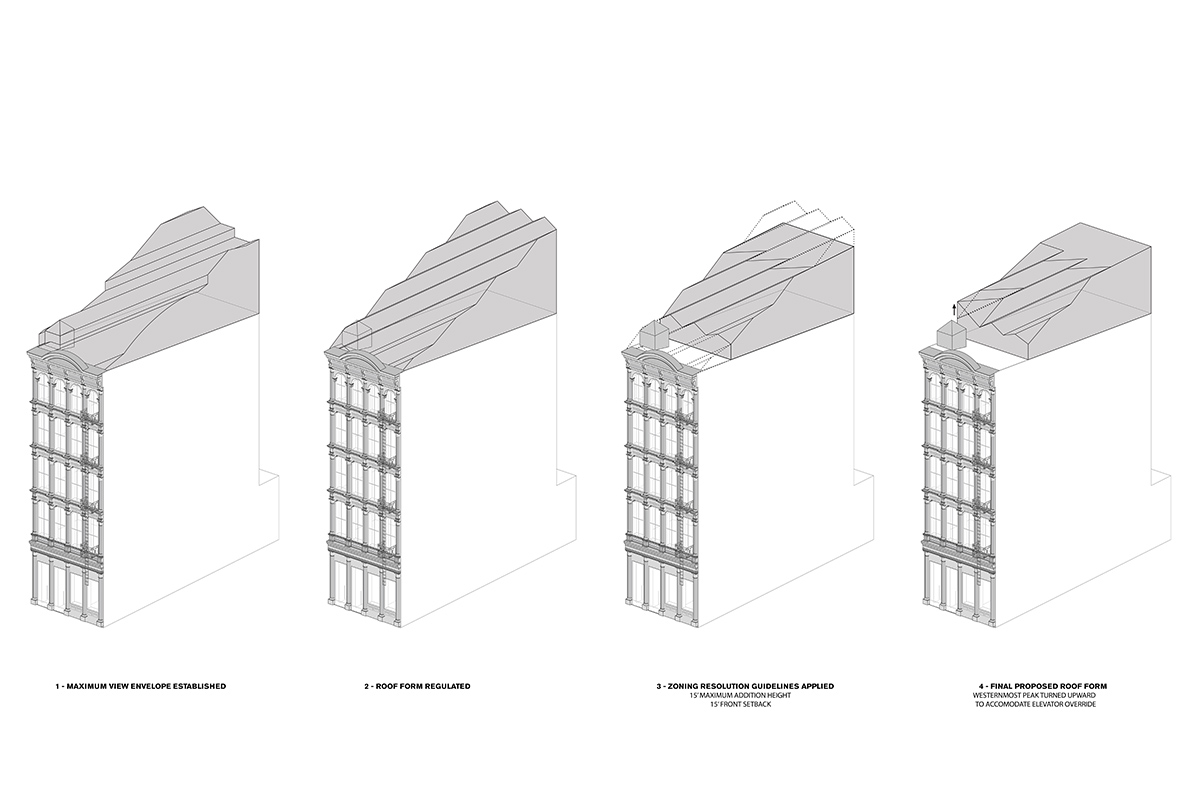
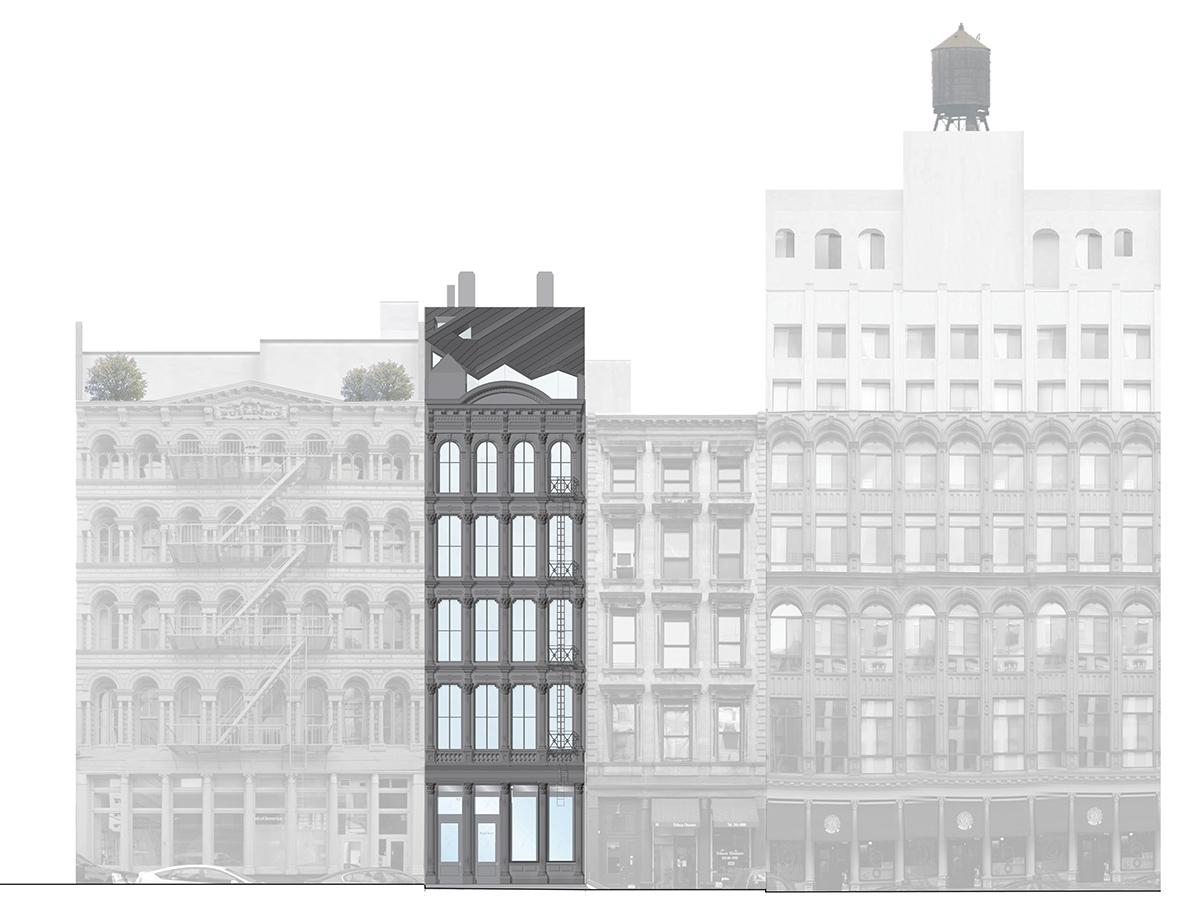
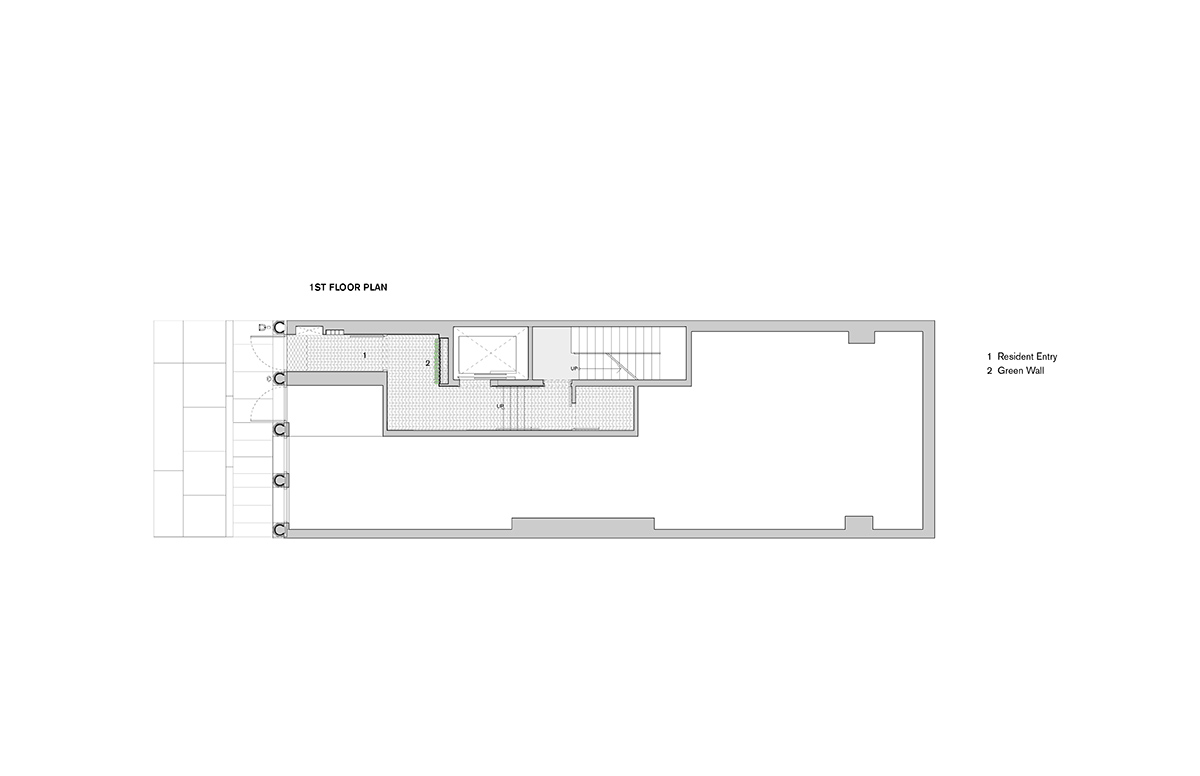
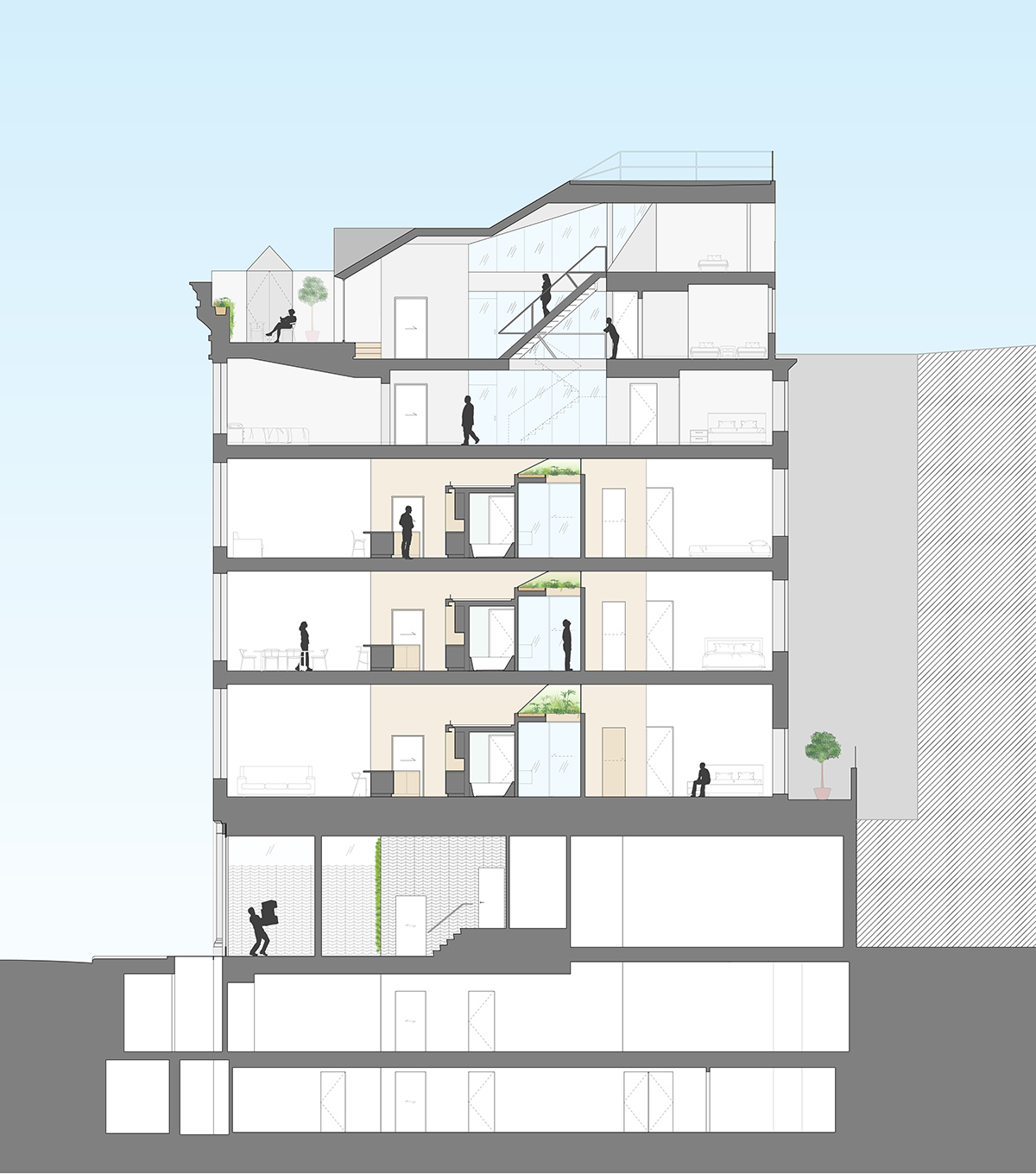
in new york, behind one of tribeca’s oldest cast iron façades, WORKac has completed the construction of a series of spacious loft residences. ‘the stealth building’ takes its name from a hidden rooftop structure that contains the development’s three story penthouse. the city’s landmarks commission required any rooftop addition to be invisible, a significant challenge considering that the building is located on a prominent corner plot with a low, two-storey structure across the street.
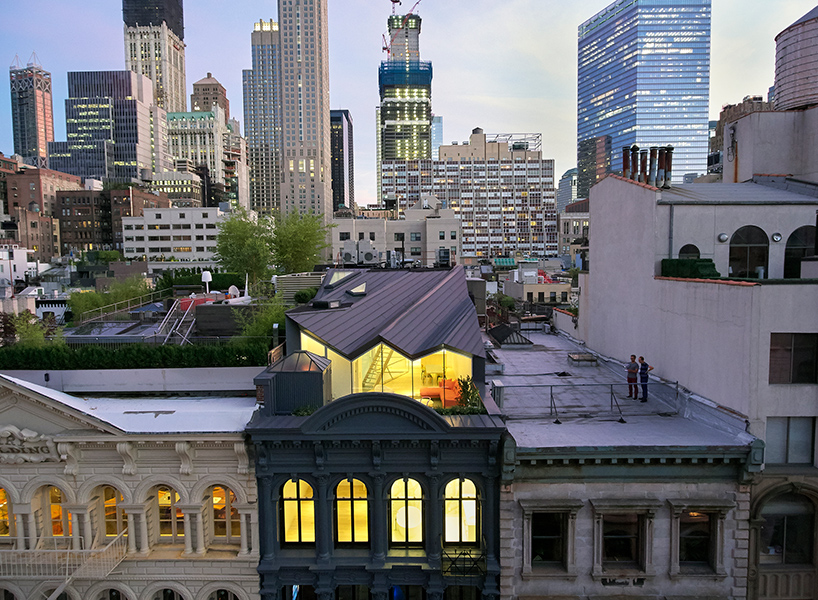
a hidden rooftop structure contains the development’s penthouse
all images © bruce damonte
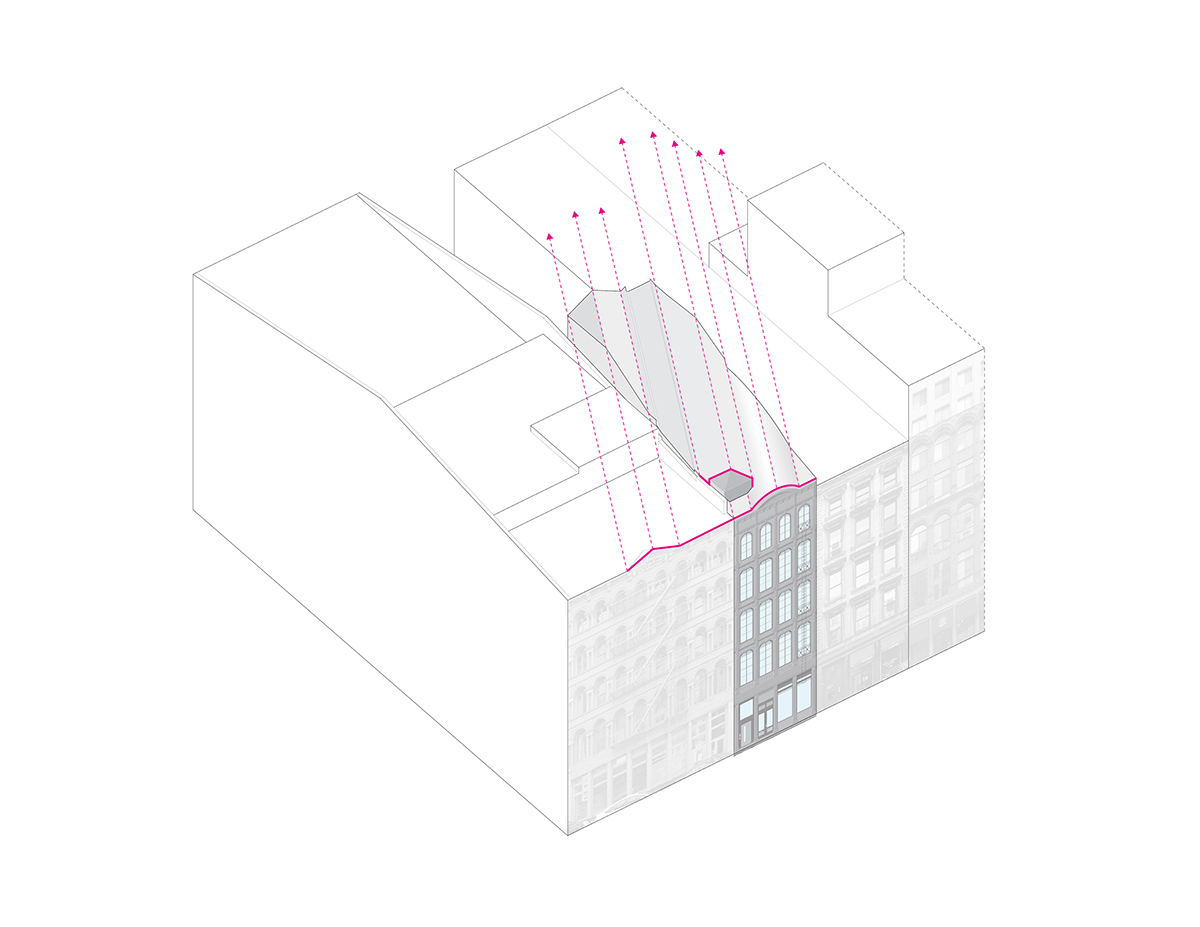
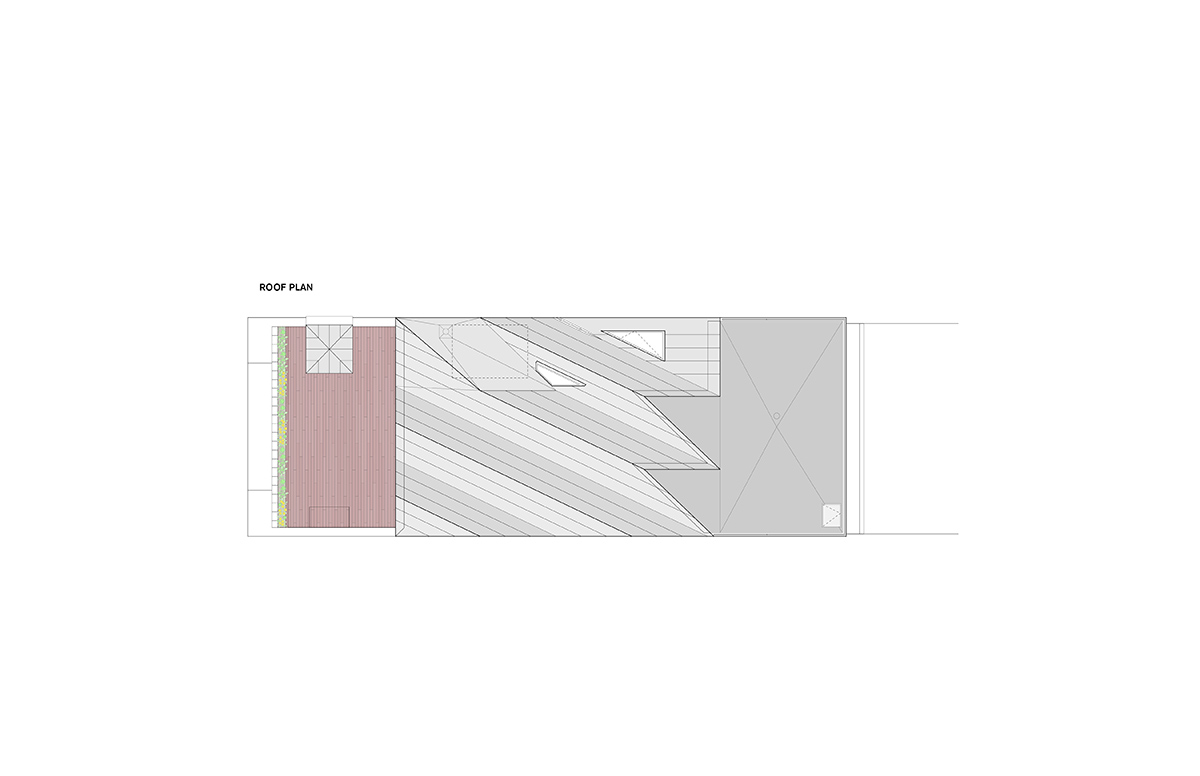
blending contemporary architecture with historic preservation, WORKac used three rooftop projections to mask the addition: the triangular pediment of the historic carey building next door, as well as the circular pediment and an abandoned elevator bulkhead at the top of the building itself. the ‘shadow’ created by these projections informed the available area for the new structure, resulting in a sculptural form that remains completely invisible from the street below.
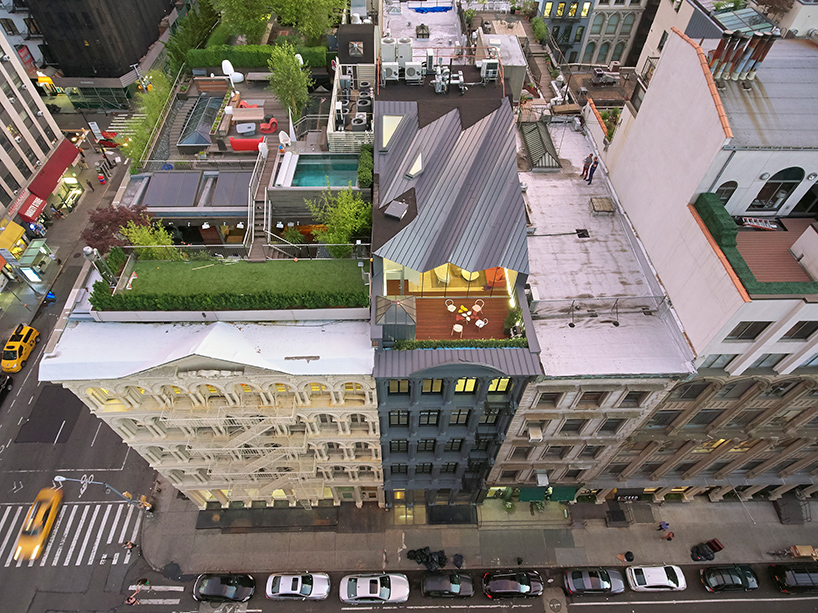
the city’s landmarks commission required that any rooftop addition had to be invisible
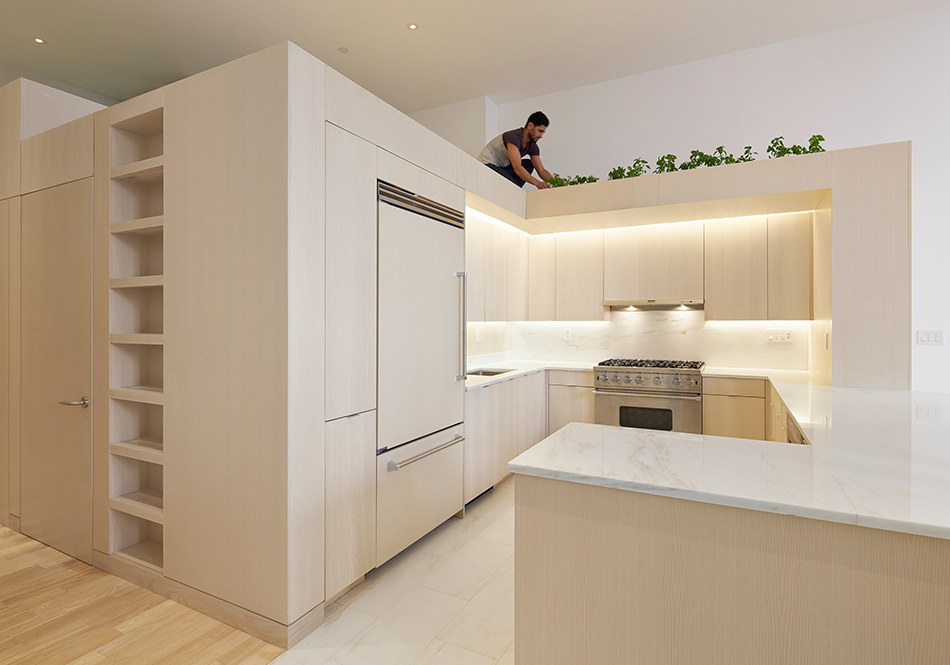
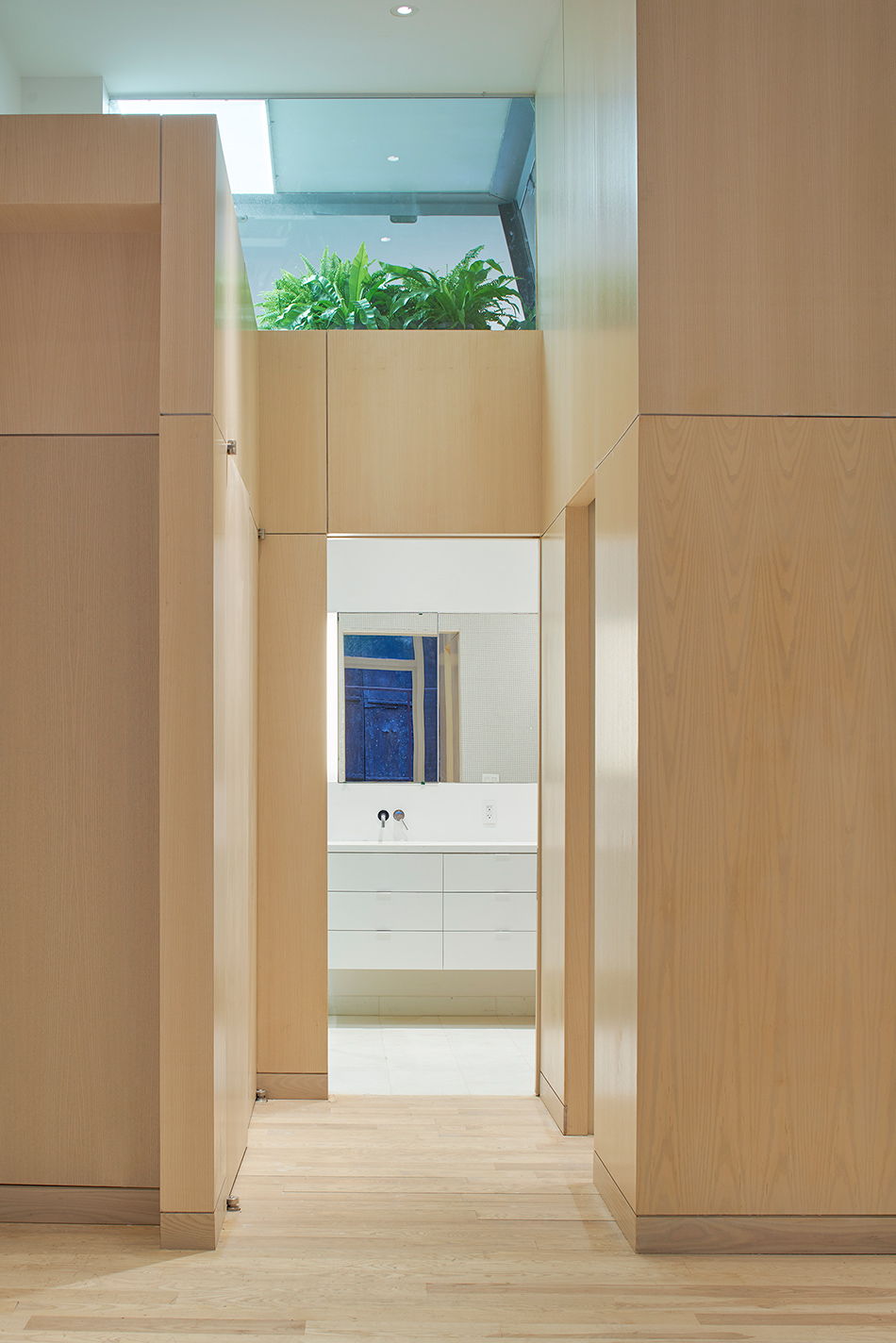
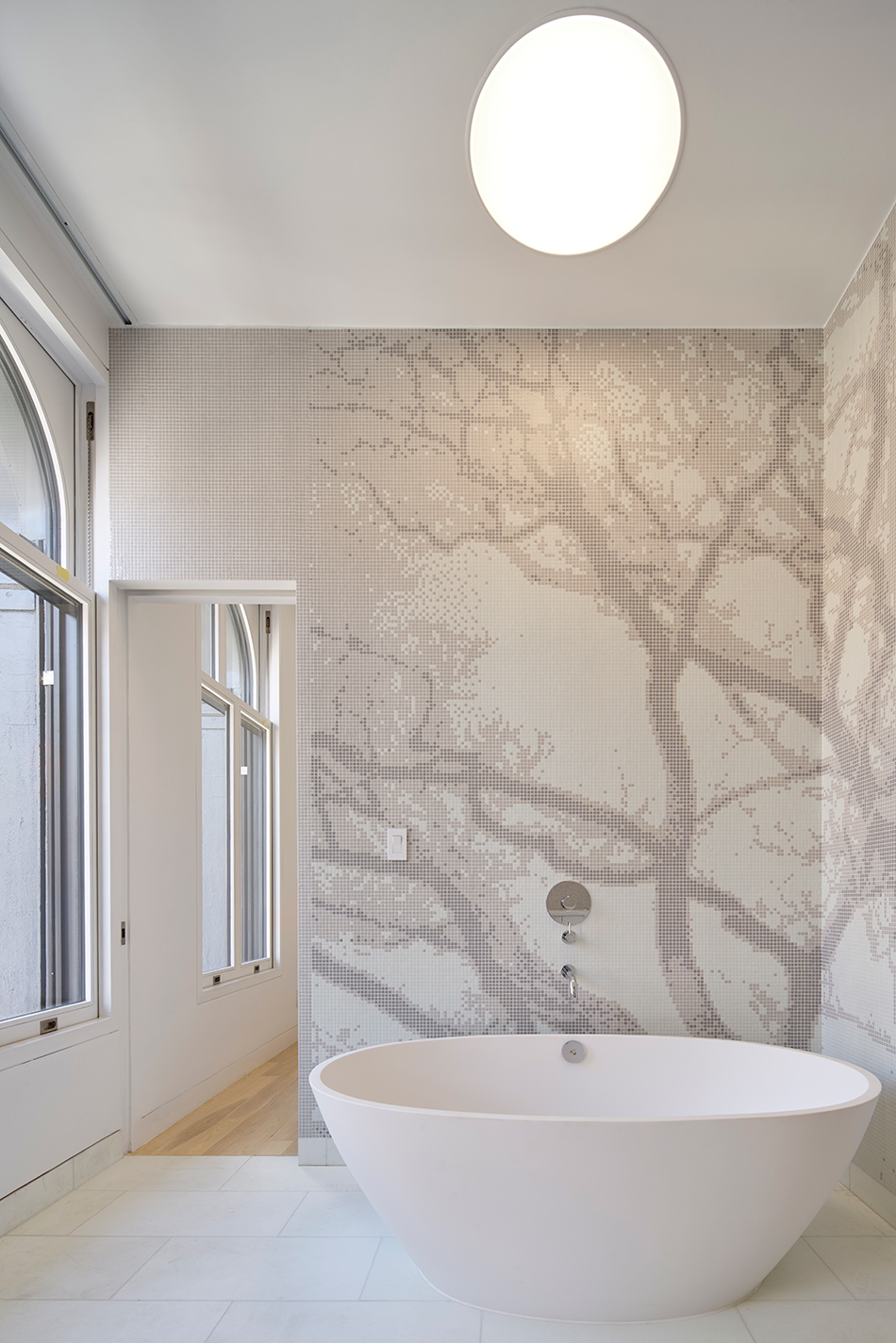
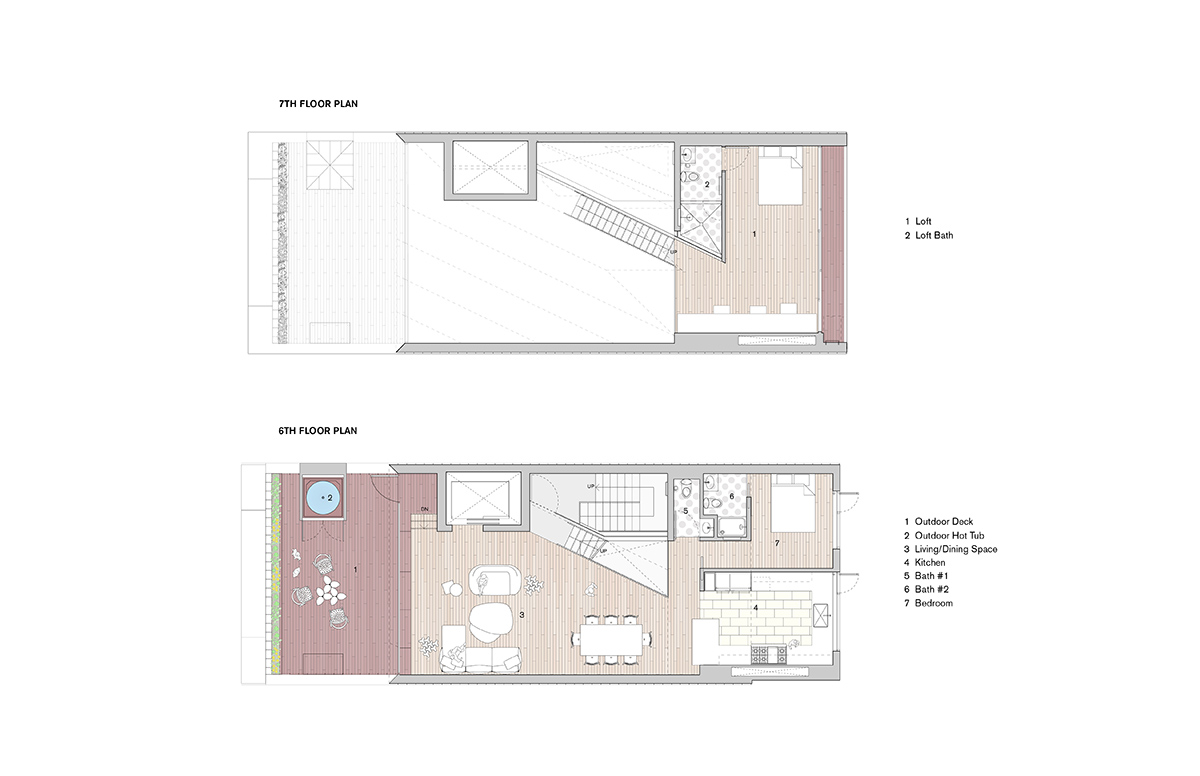
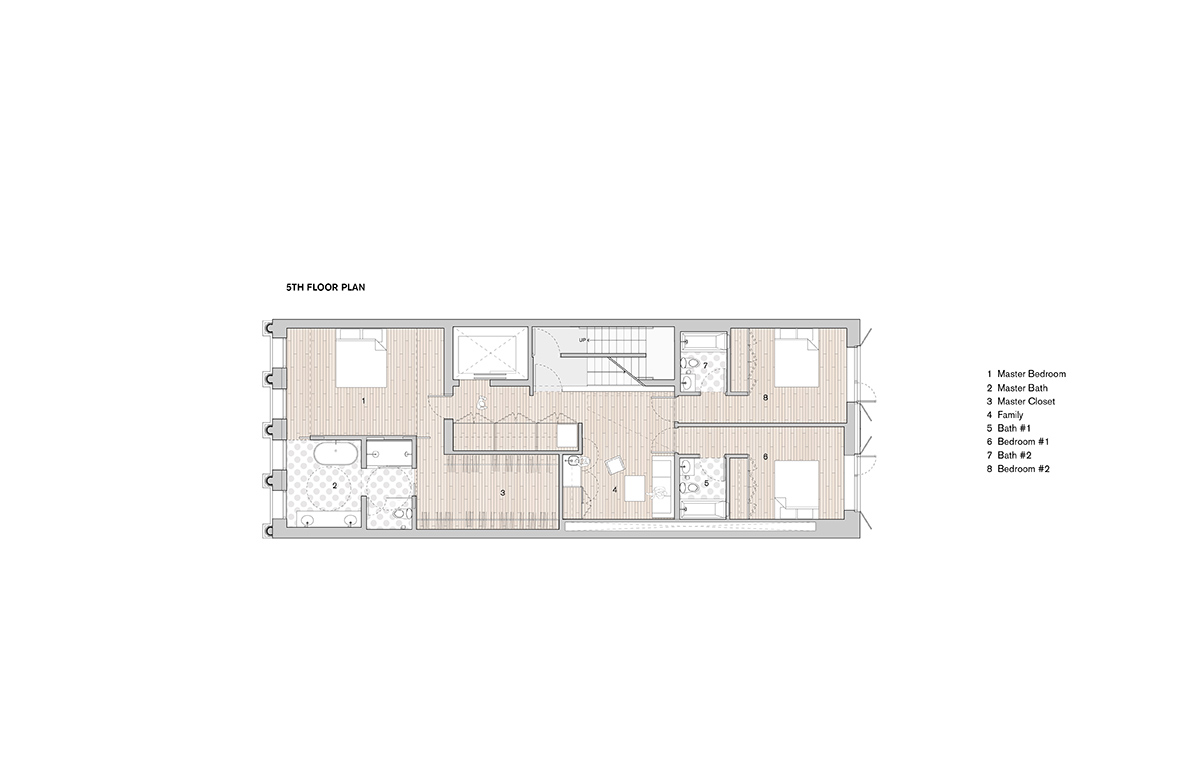
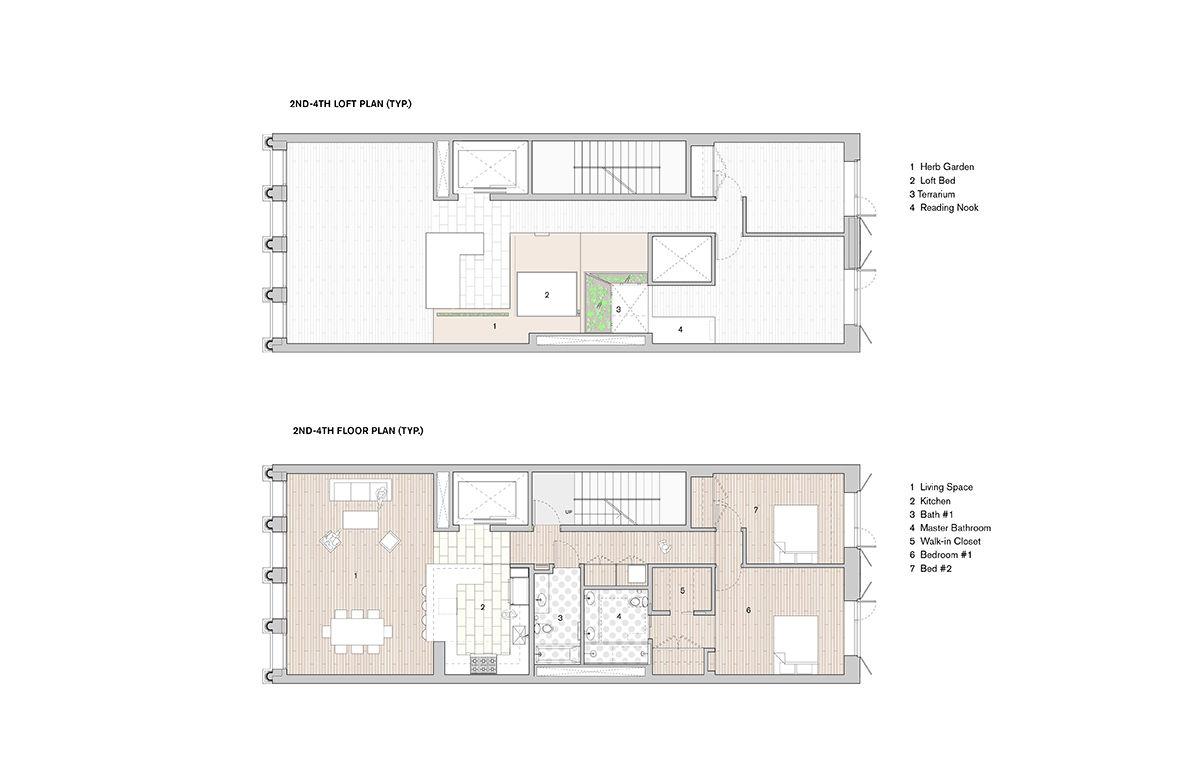
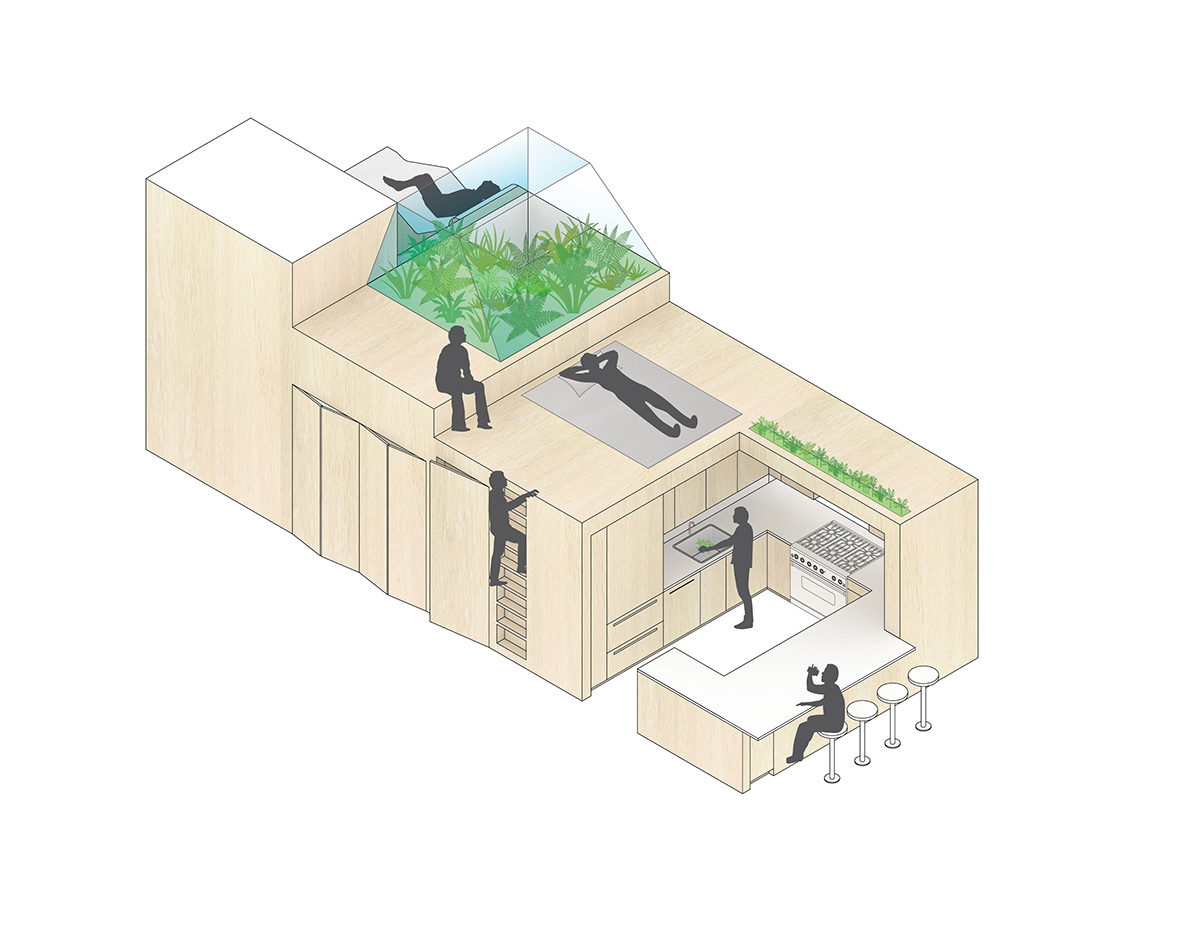
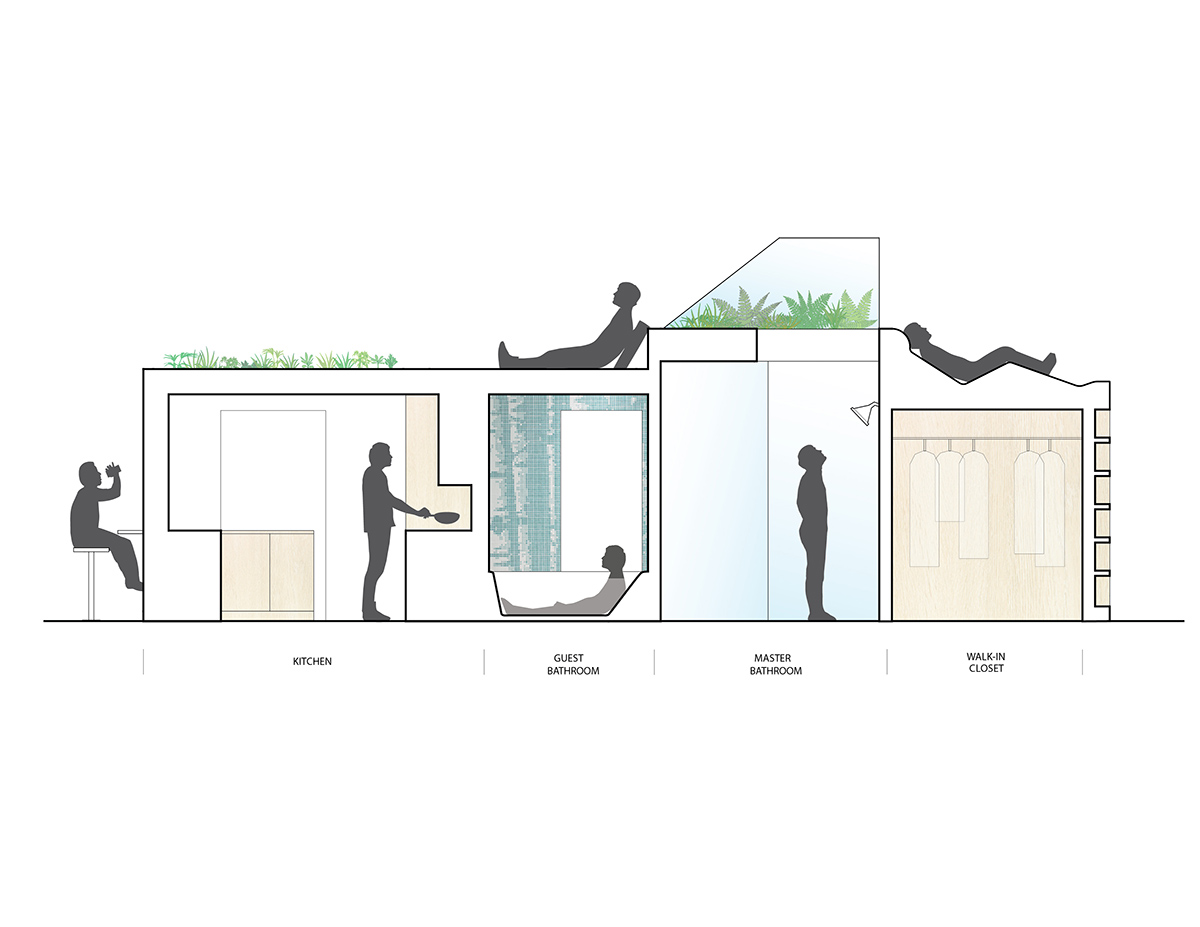
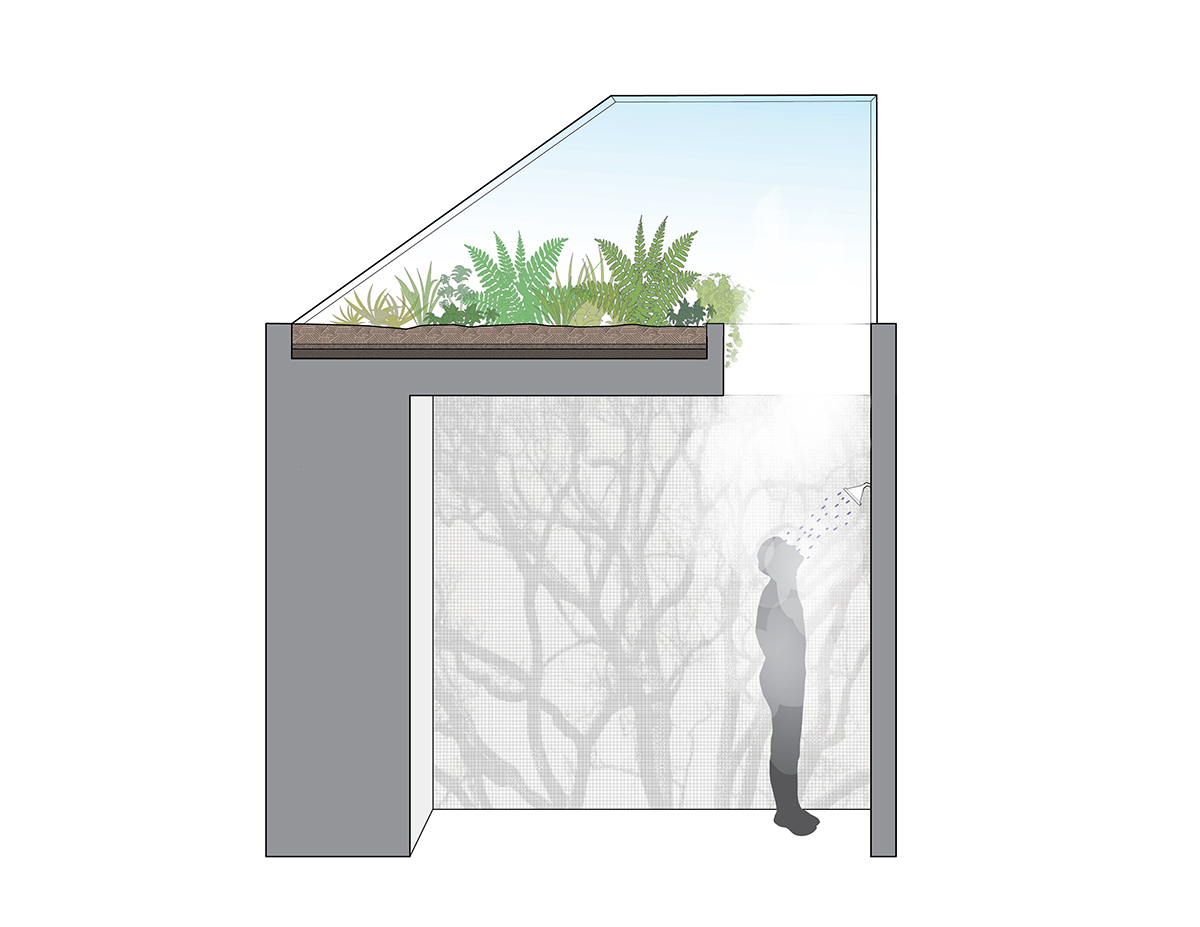
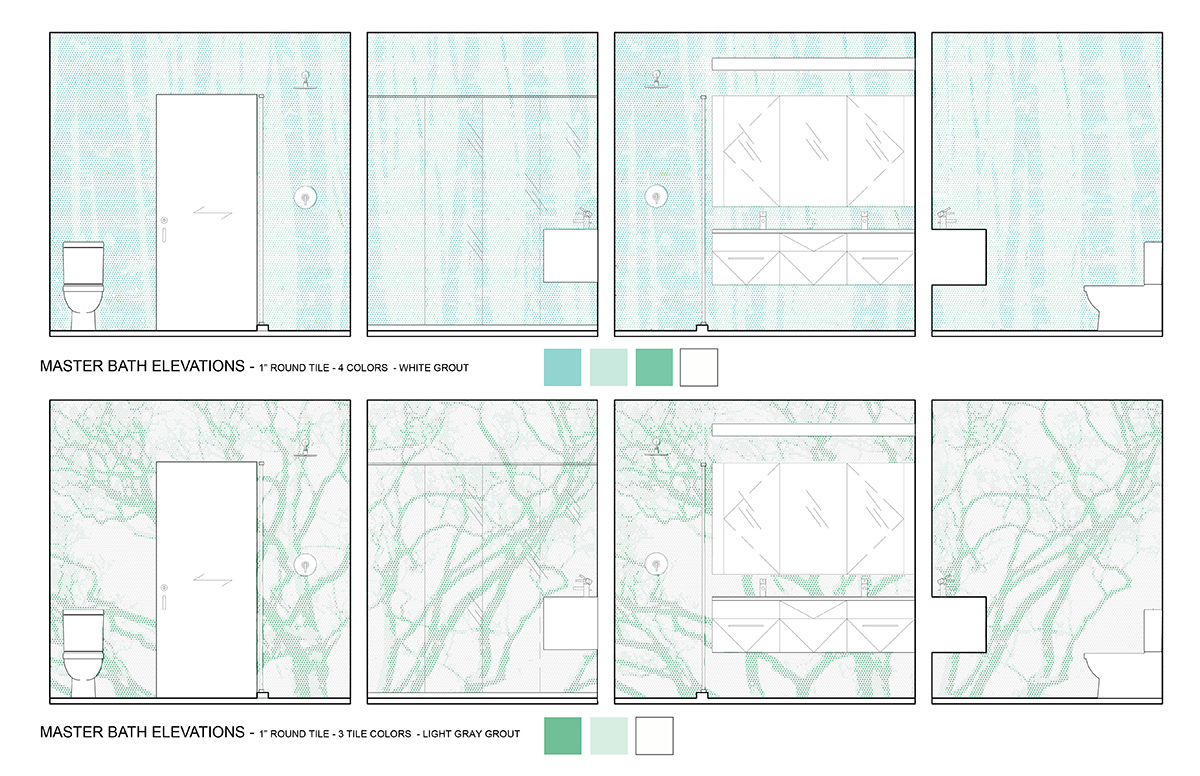
internally, the architects sought to create spaces that combine nature-inspired elements with new ideas about urban living. within each apartment, a ‘third space’ between sleeping and living areas has been positioned atop a volume containing storage and bathrooms. this ‘bonsai apartment’ is outfitted with a futon, seating areas, and a herb garden located above the kitchen. an additional fern garden is connected to the master shower and is watered by steam that collects on its glass walls.
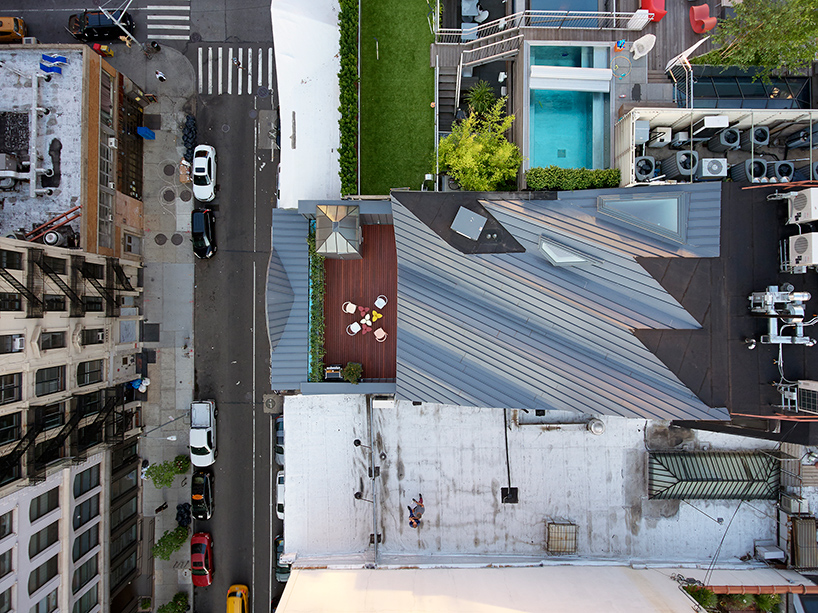
a secluded terrace is positioned behind the building’s pediment
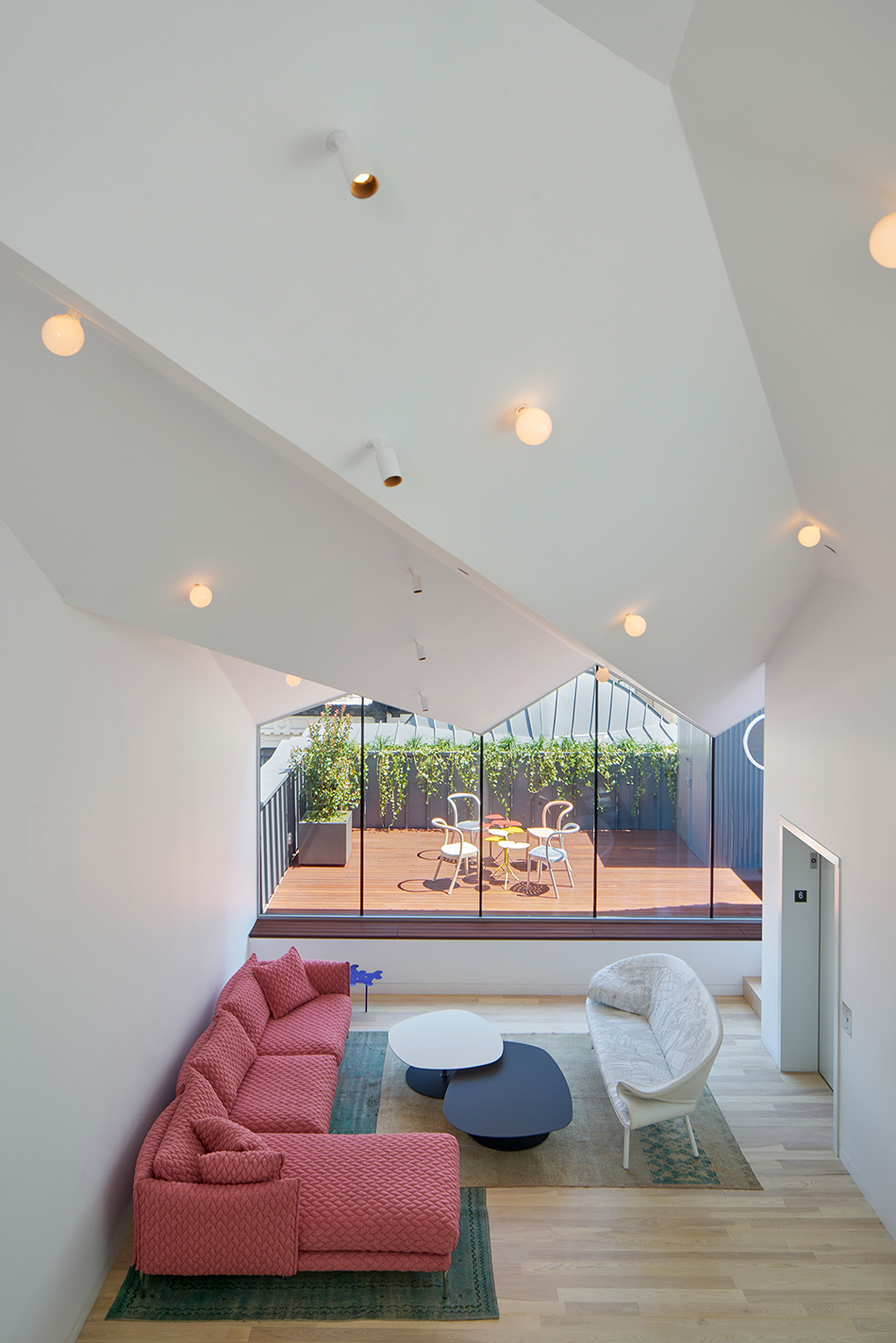
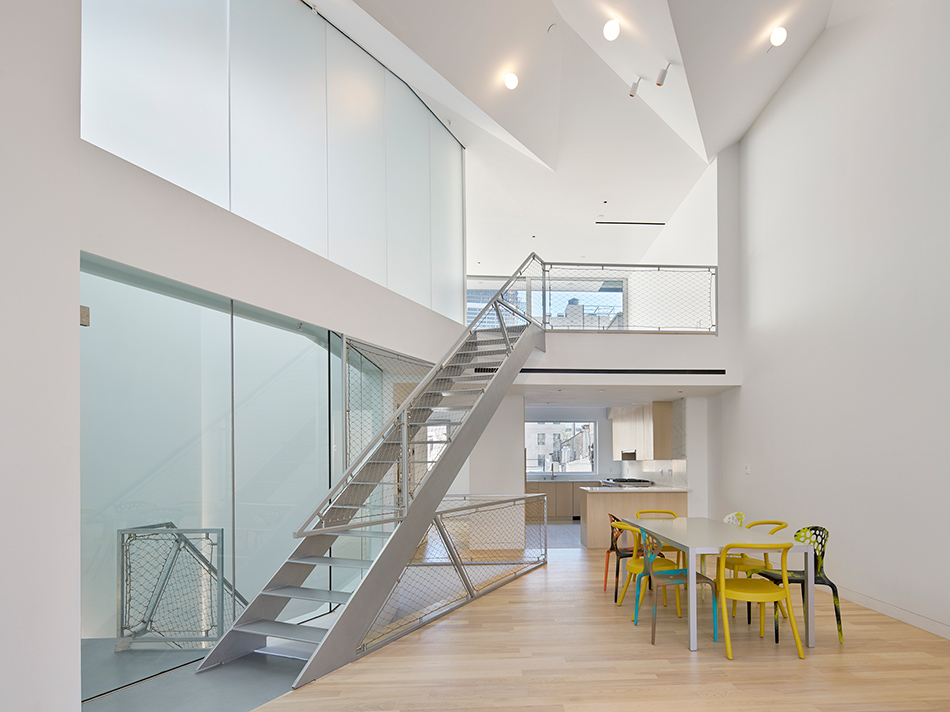
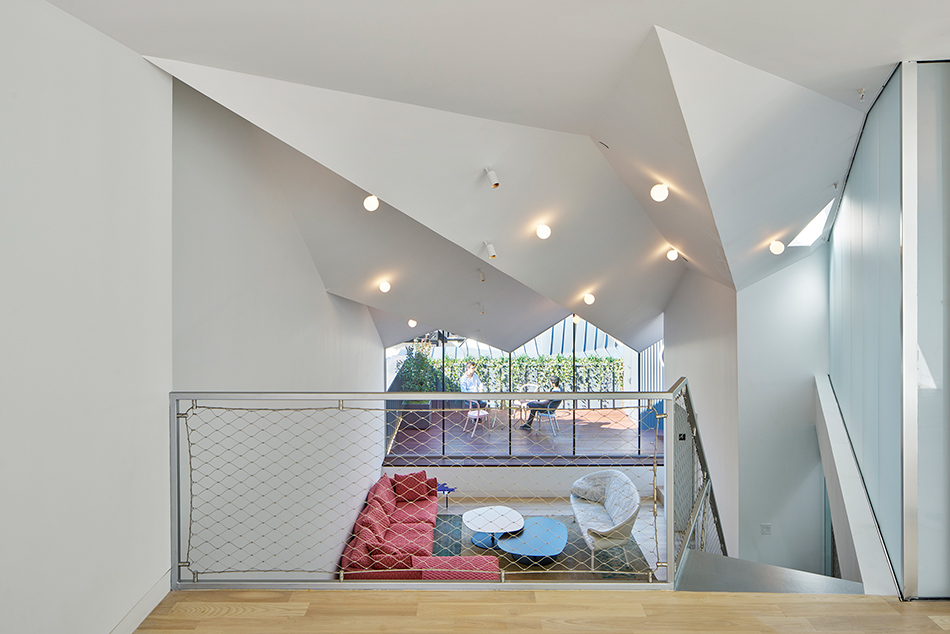
on the fifth floor, the penthouse combines the property’s sleeping quarters and a family room with entertaining and dining spaces under the new roof at the sixth storey. a secluded terrace is positioned behind the pediment, offering views of the woolworth building. meanwhile, the former elevator bulkhead has been repurposed to contain a hot tub.
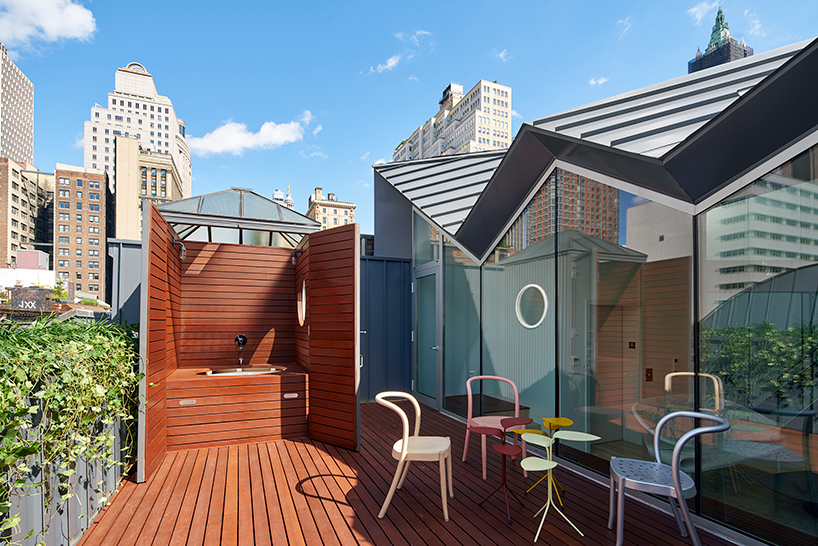
the former elevator bulkhead has been repurposed with a hot tub
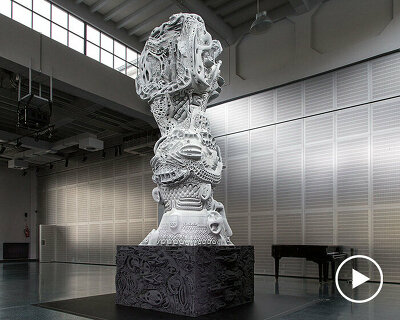
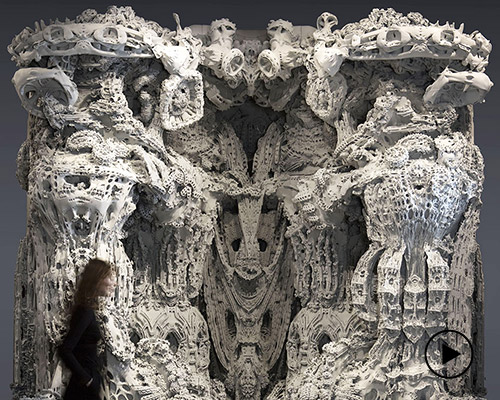
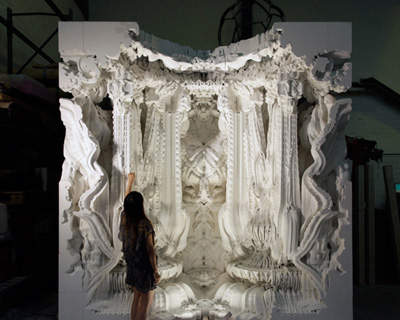
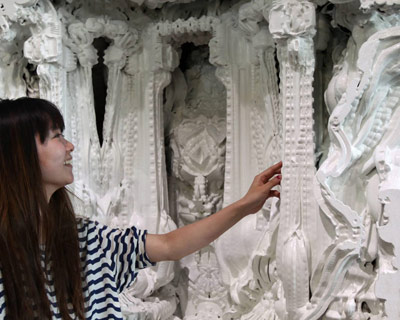
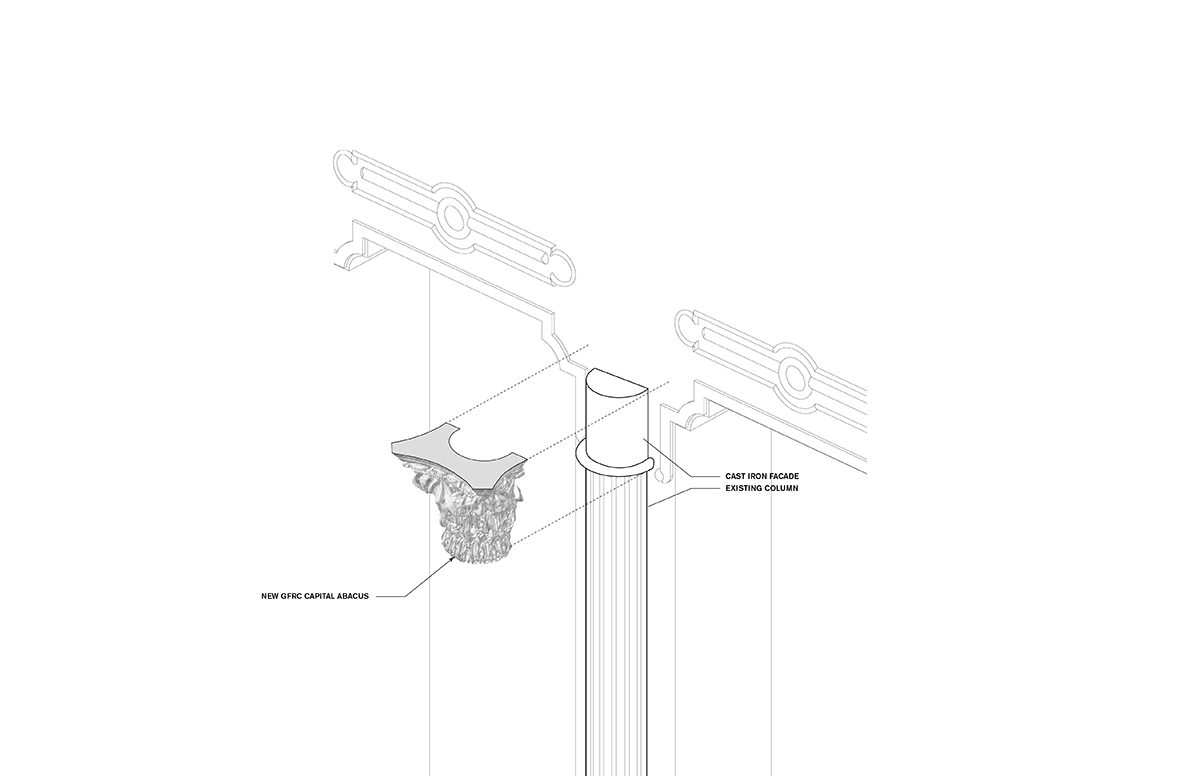
the original façade, which dates back to 1857, has been completely restored, and colored with a new charcoal tone. as all of the building’s corinthian column capitols had been lost, WORKac collaborated with artist michael hansmeyer to manufacture updated versions. hansmeyer created a computer script that allowed the classical floral elements of the corinthean order to ‘grow’ fractally, resulting in a design that adheres to classical proportions yet is clearly composed of new forms.
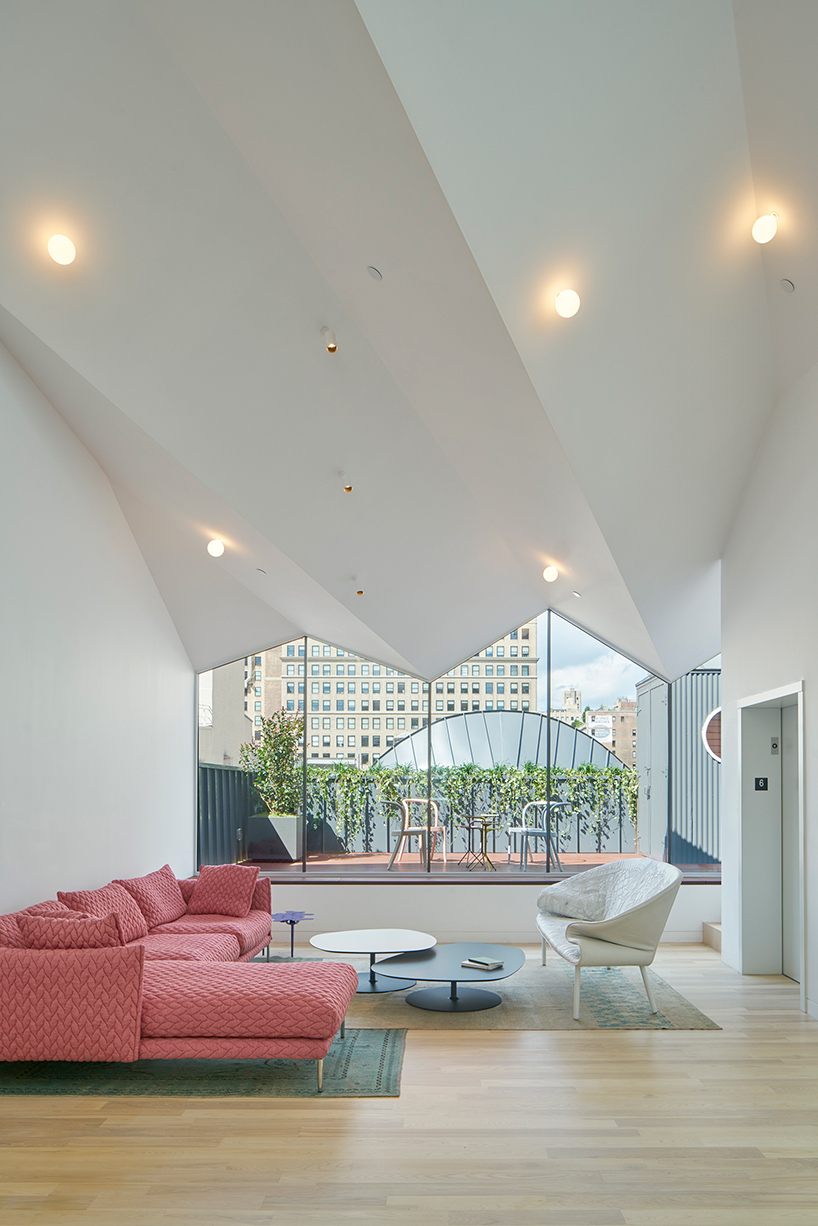
entertainment and dining spaces are contained beneath the new roof
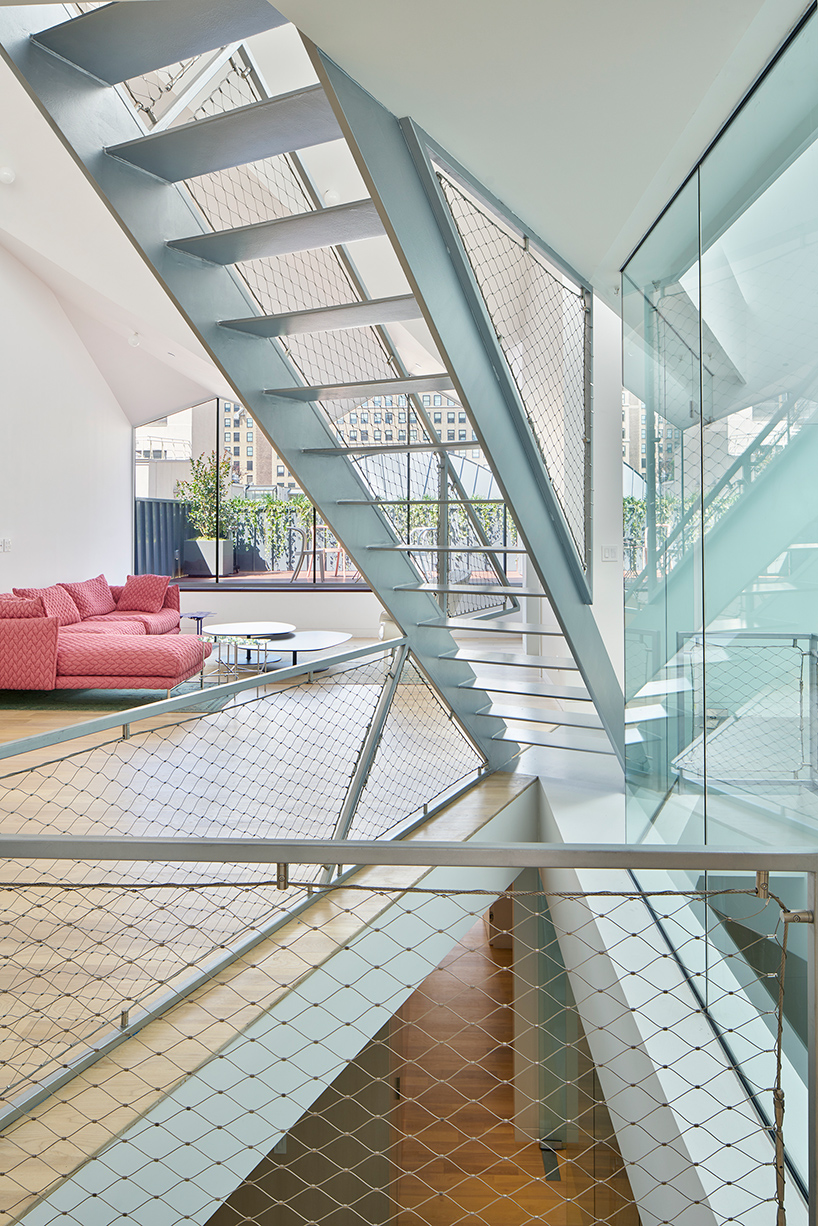
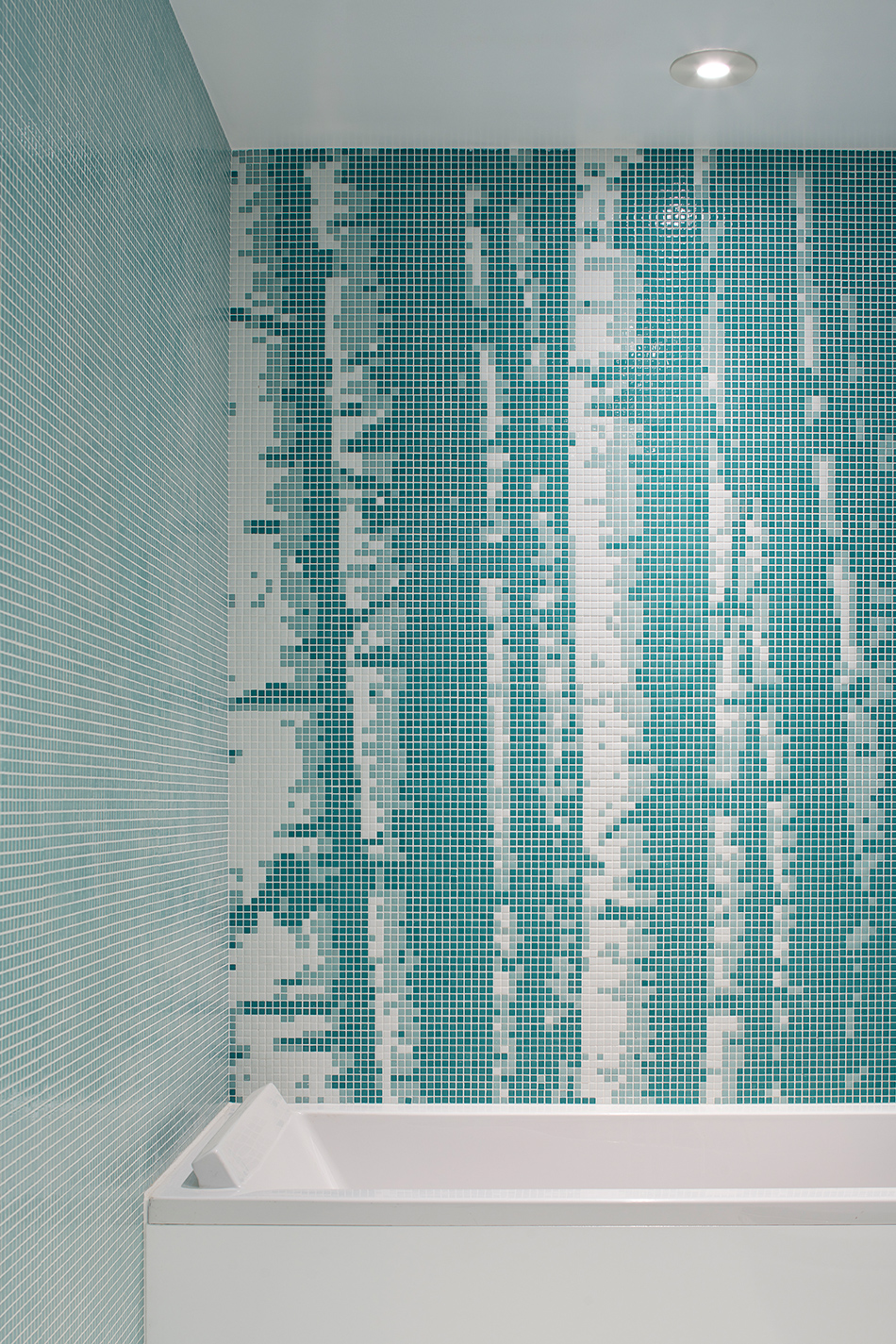
the architects created spaces that combine nature-inspired elements with new ideas about urban living
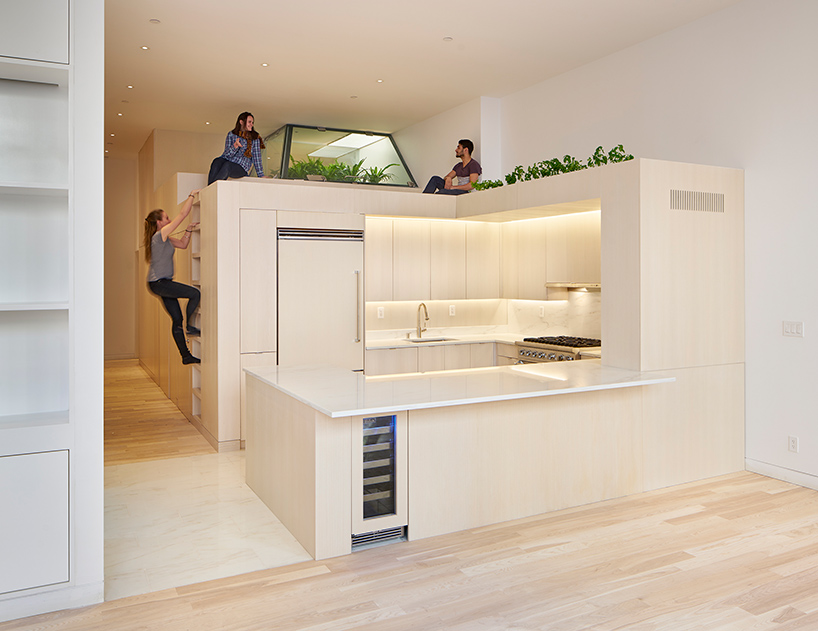
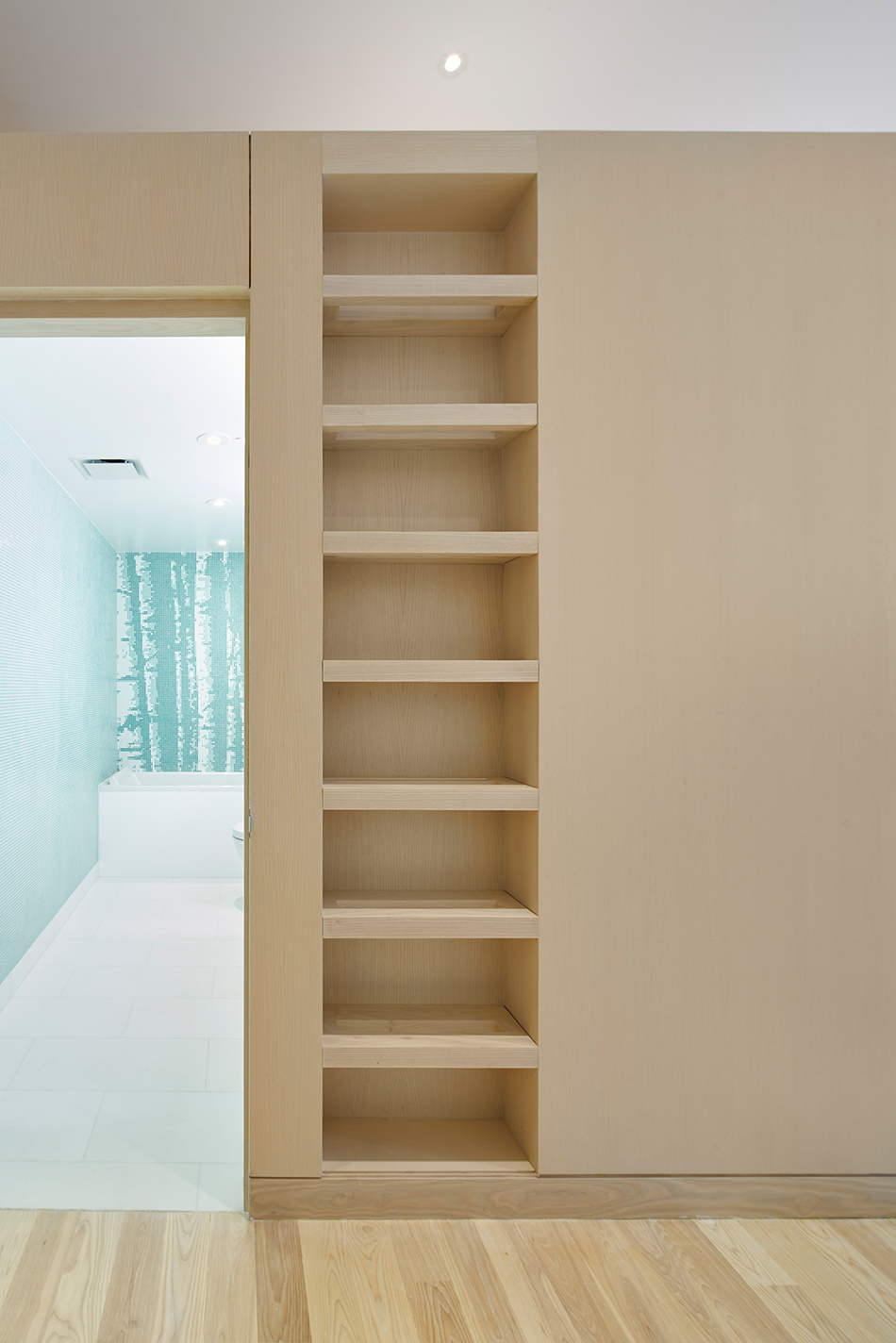
a ‘third space’ has been positioned atop a volume containing storage and bathrooms
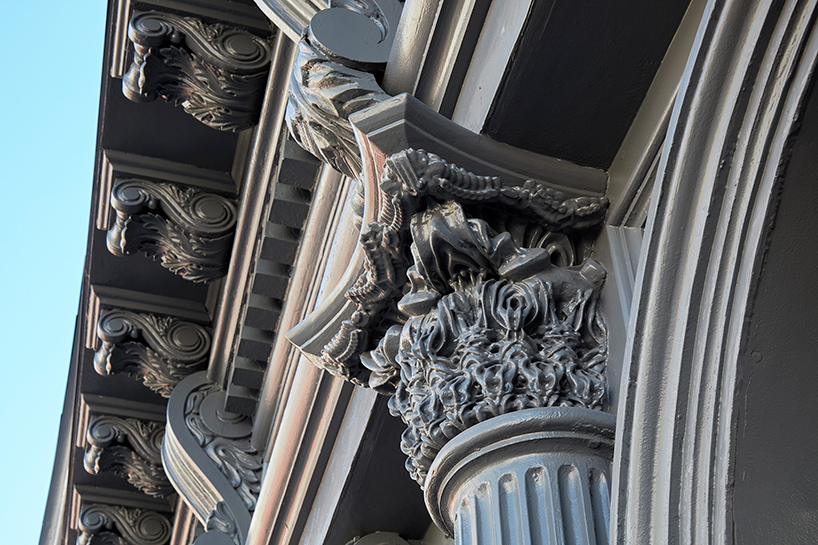
WORKac collaborated with michael hansmeyer to manufacture replacement corinthian column capitols
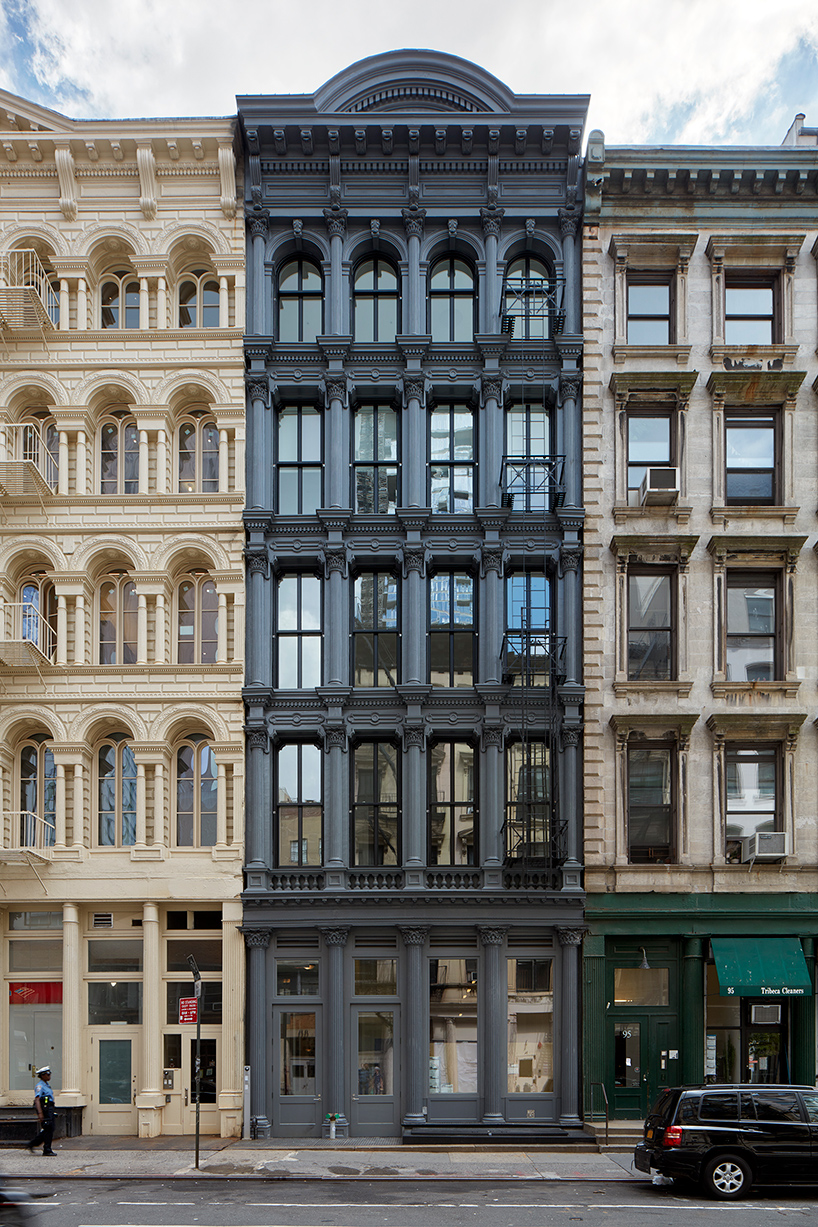
the original façade, which dates back to 1857, has been completely restored
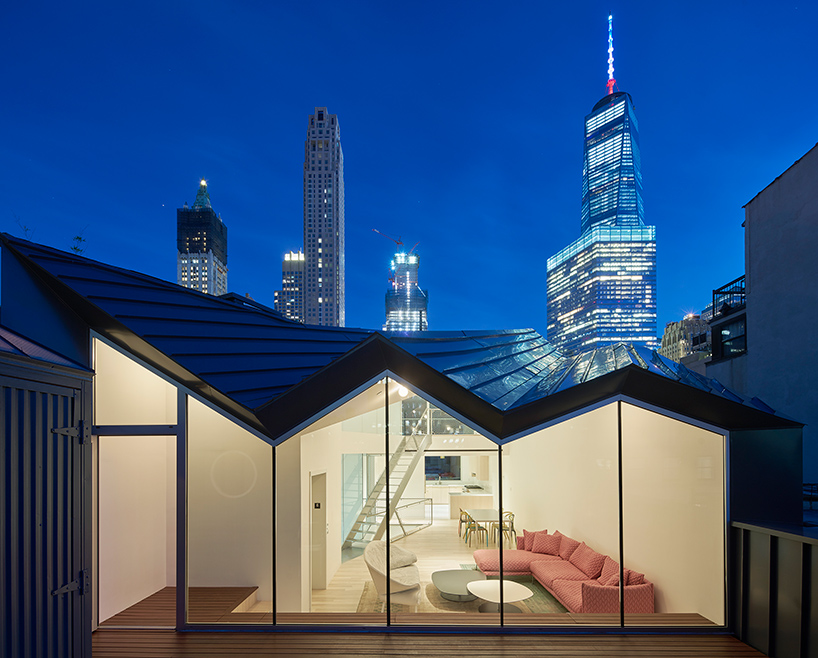
the roof’s distinctive shape affords views across the city
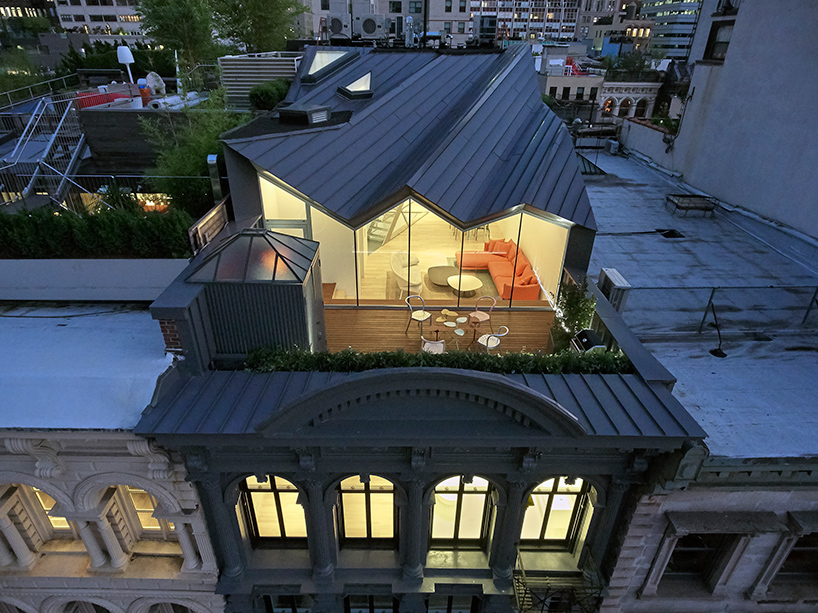
the penthouse’s sculptural form remains completely invisible from the street below
1/23
project info:
project: the stealth building, new york
client/construction manager: knightsbridge properties
architect/interior designer/landscape architect: WORK architecture company, new york
dan wood, FAIA, amale andraos (principals); sam dufaux (associate principal); karl landsteiner (construction administration project architect); chris oliver (design project architect); maggie tsang, timo otto, patrick daurio
mechanical/electrical engineer: plus group consulting engineering
structural engineer: robert silman associates
lighting designer: tillotson design associates
restoration architect: CTS group
artist, column capitals: michael hansmeyer
code consultant: CCBS consulting
size: 14,000 sqf / 1,300 sqm (building, including addition); 3,400 sqf / 316 sqm (penthouse unit)
shop
your own online design shop — no sales commission collected