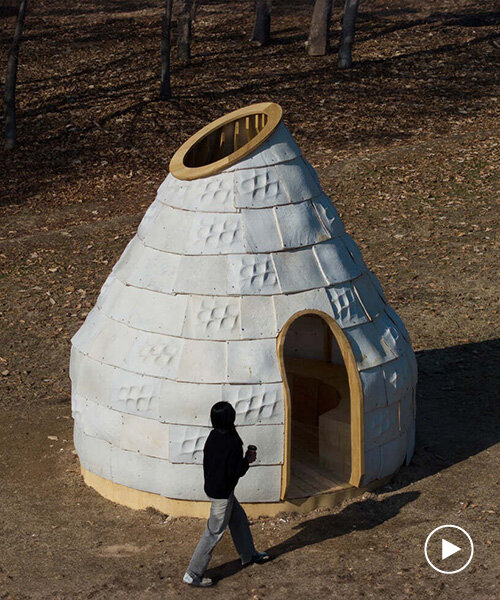
yong ju lee grows bio-integrated pavilion from mycelium using robotic 3D printing in seoul
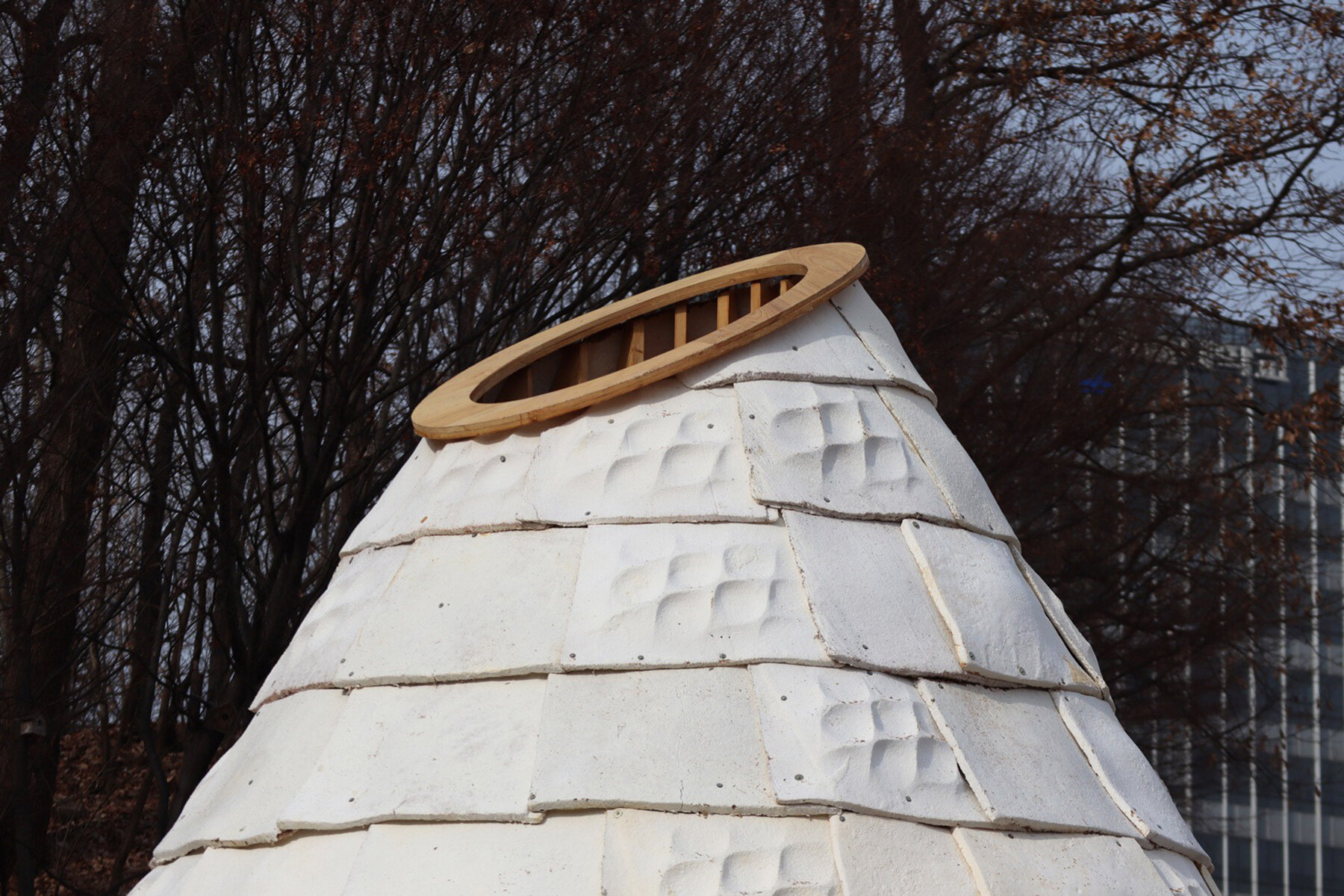
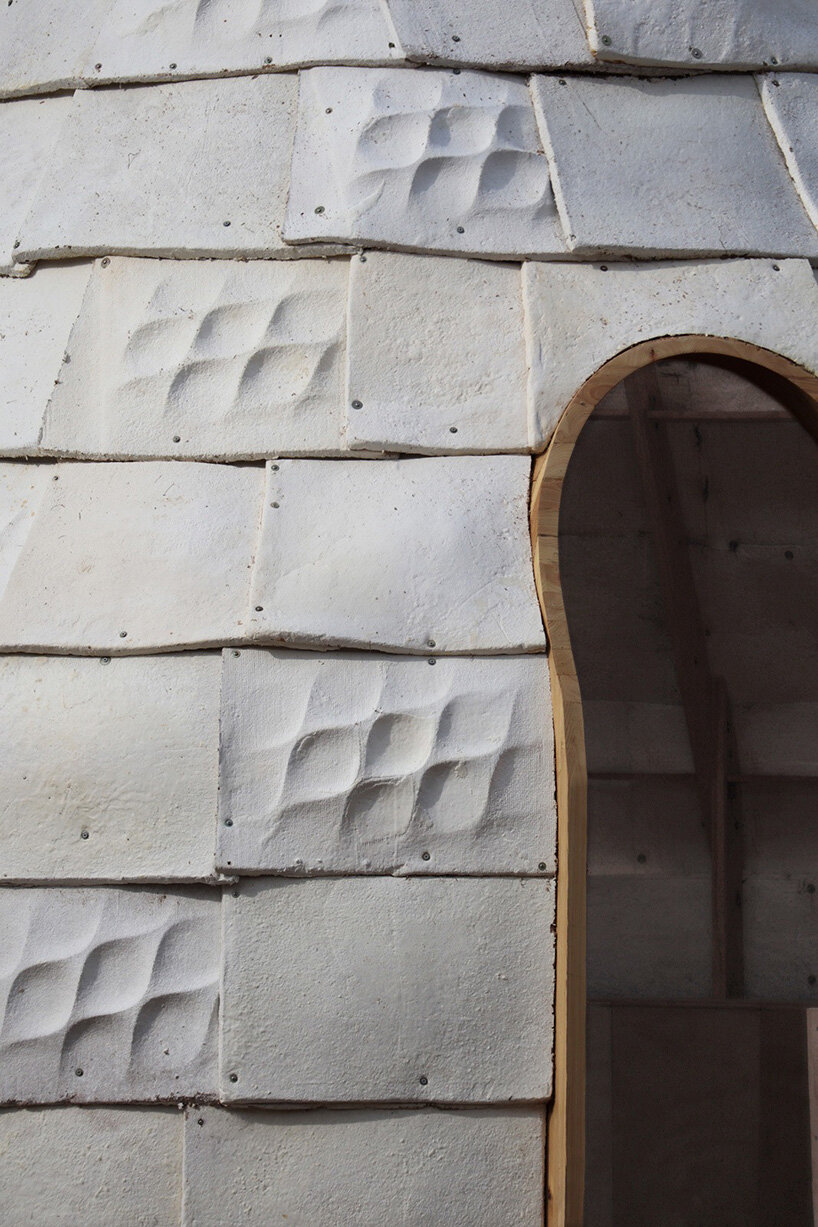
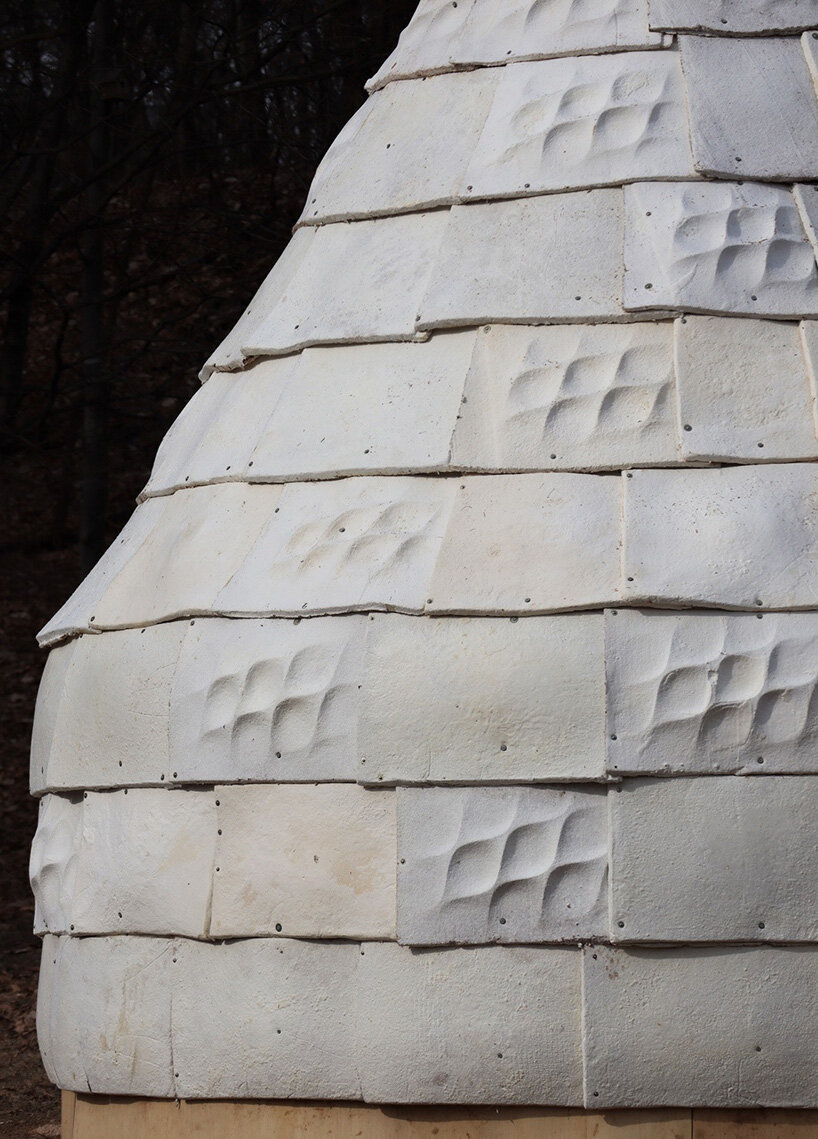
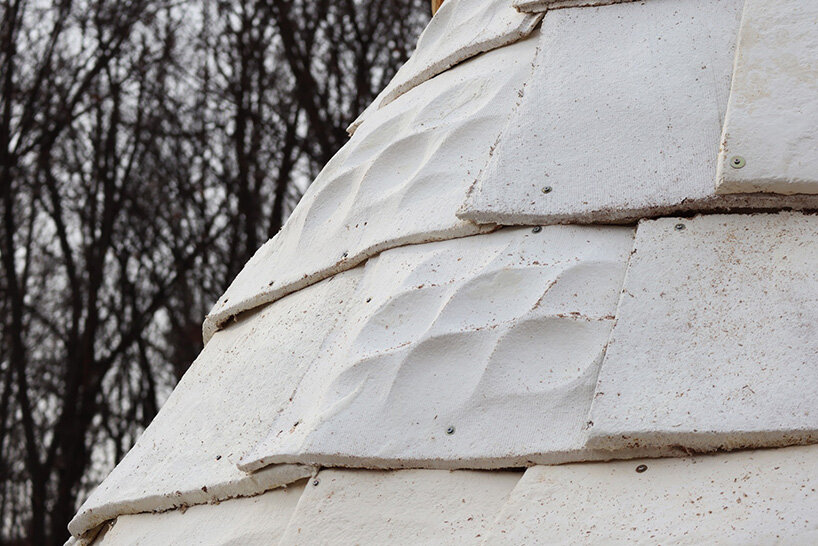
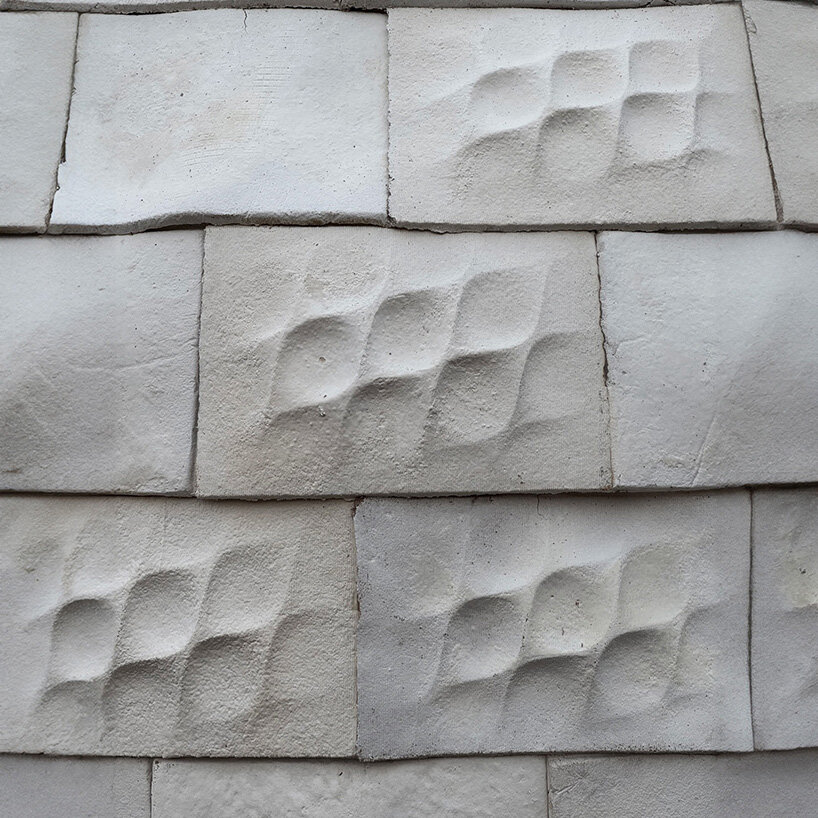
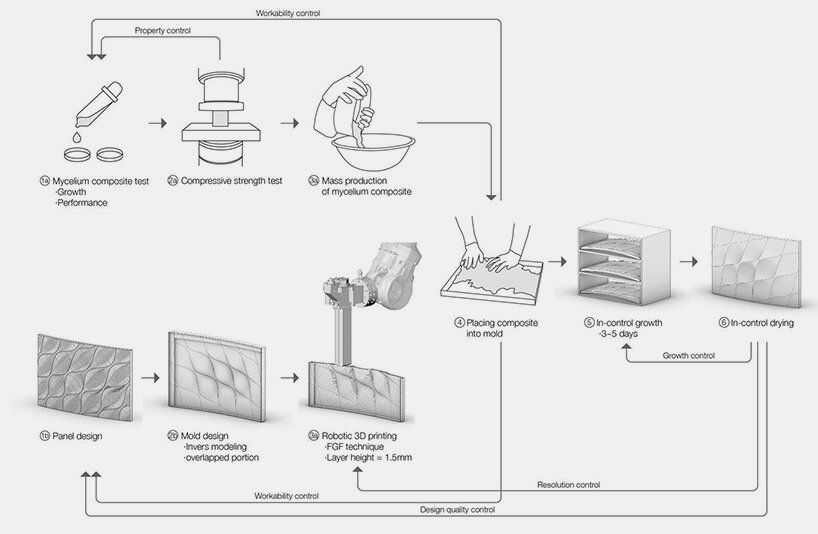
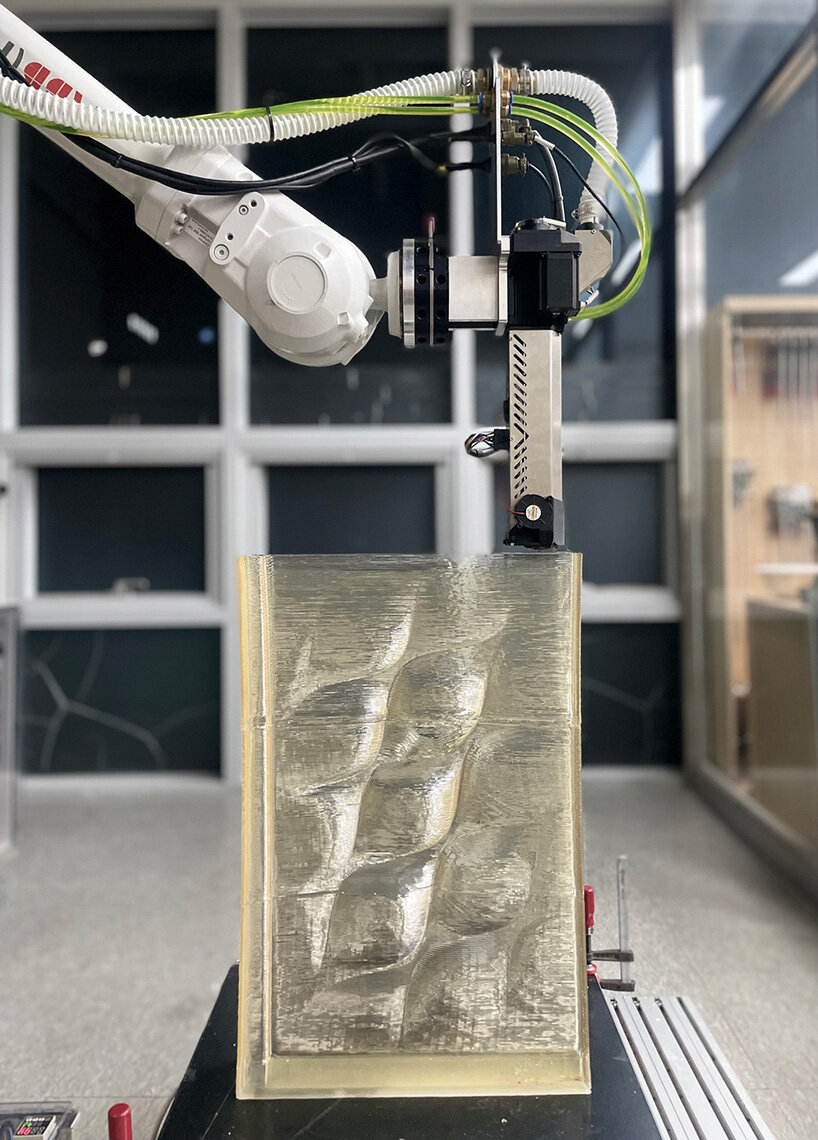
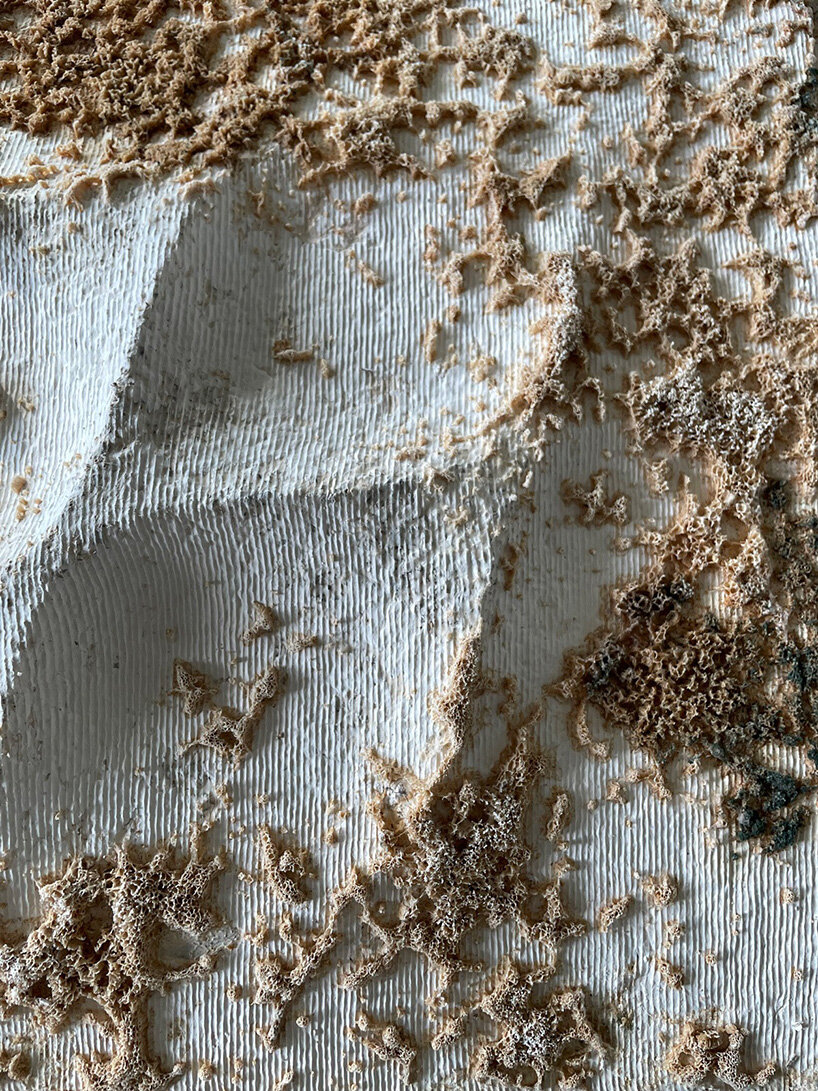
each panel is grown inside a customized 3D printed mold, shaped by industrial robotic arms and filled with a selected substrate.
prefer designboom on google[FEATURED]
yong ju lee pioneers bio-grown architecture through mycelium
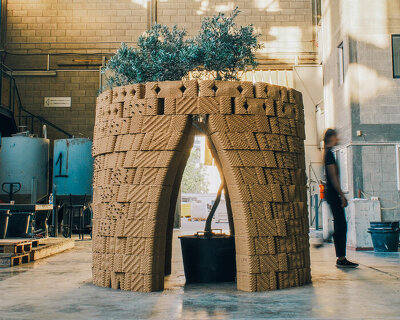
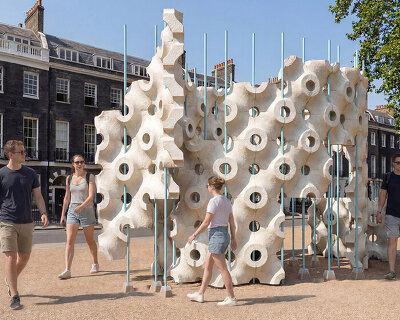
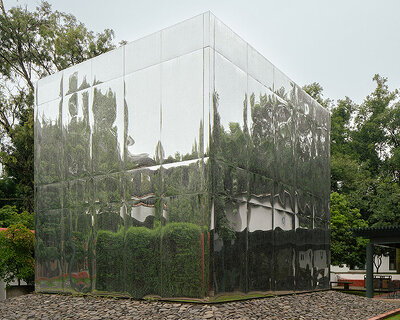
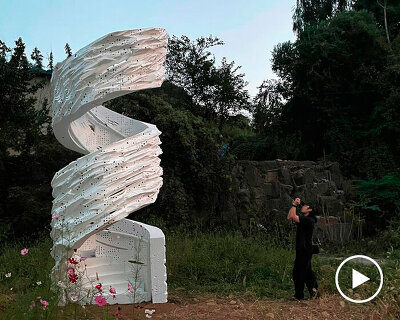
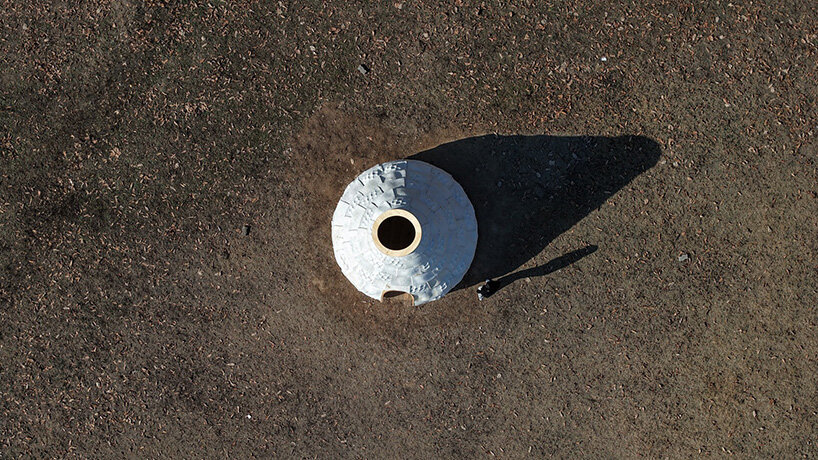
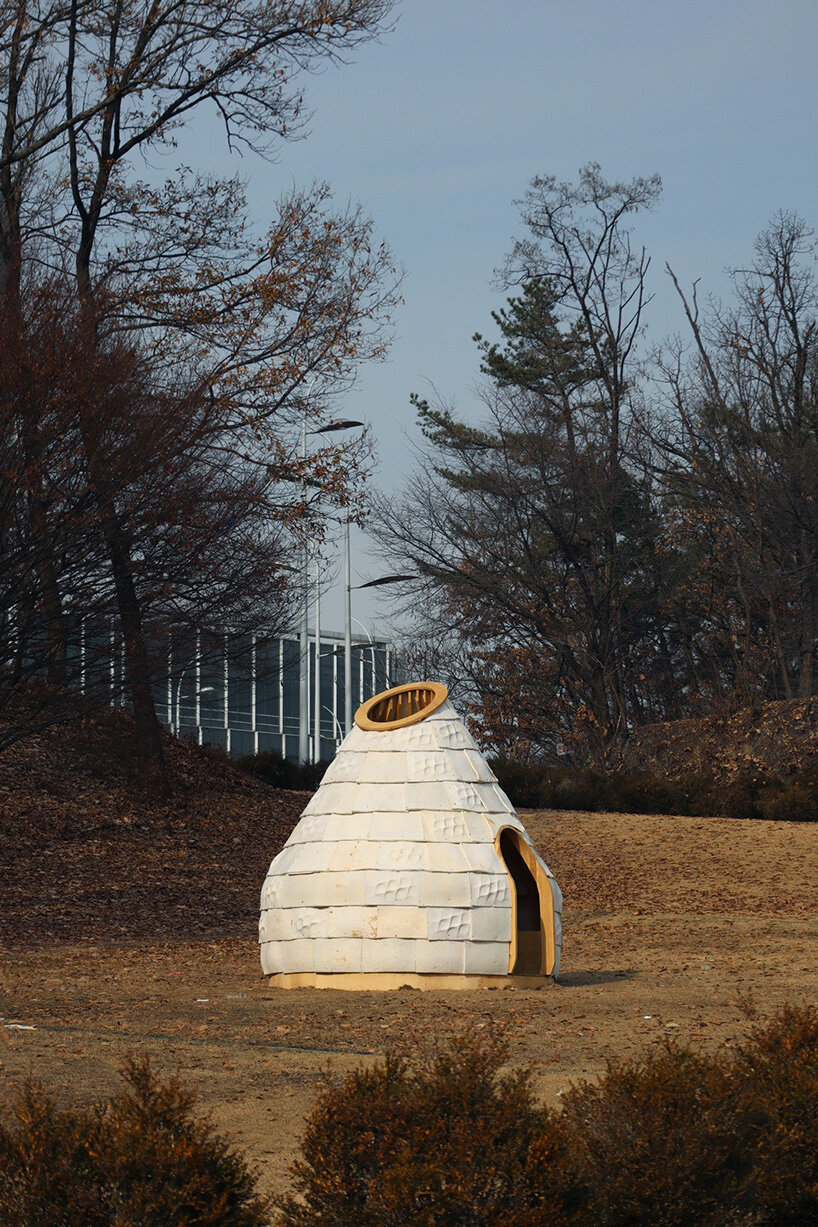
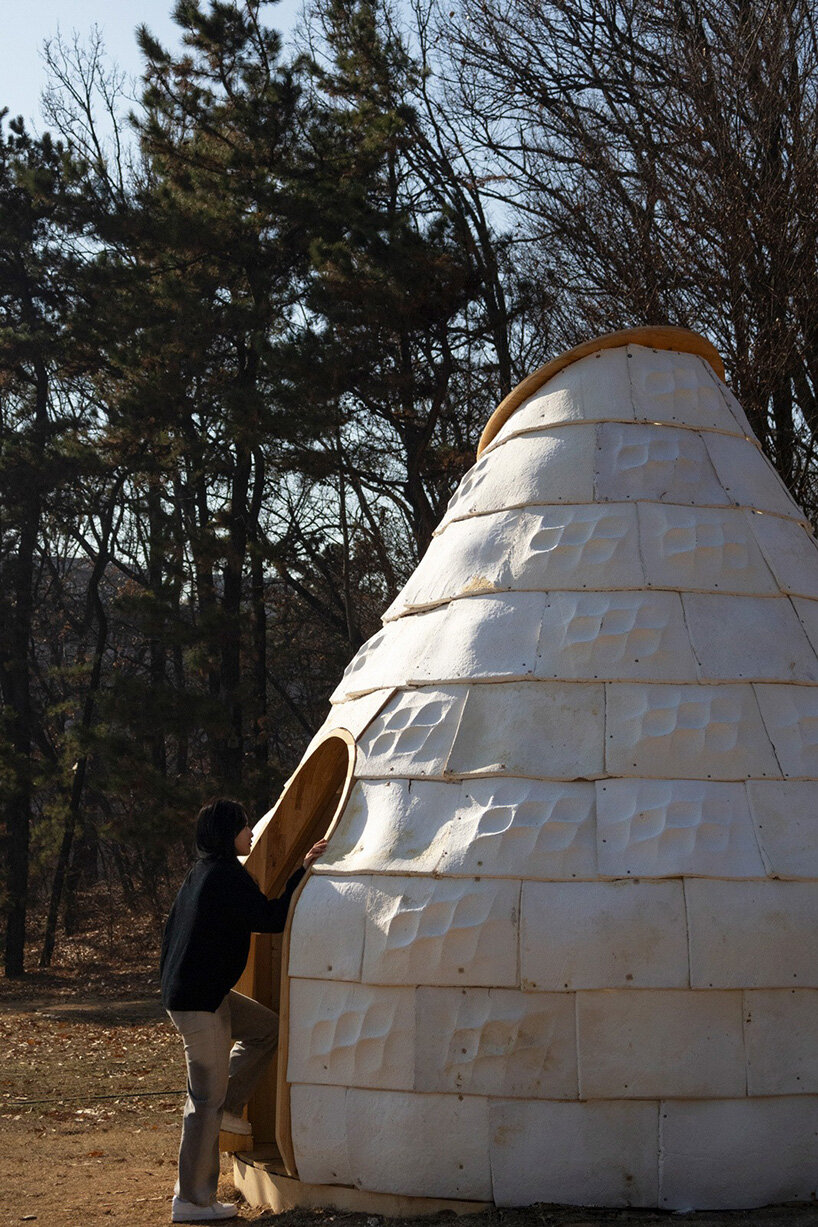
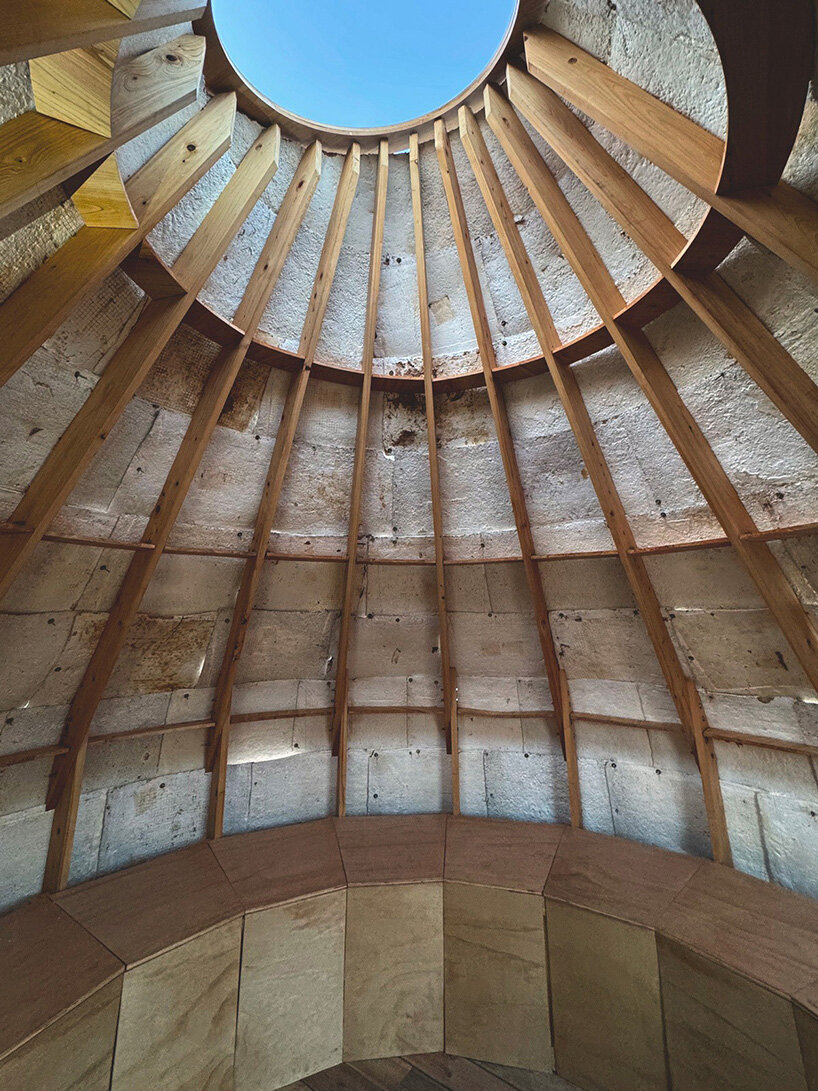
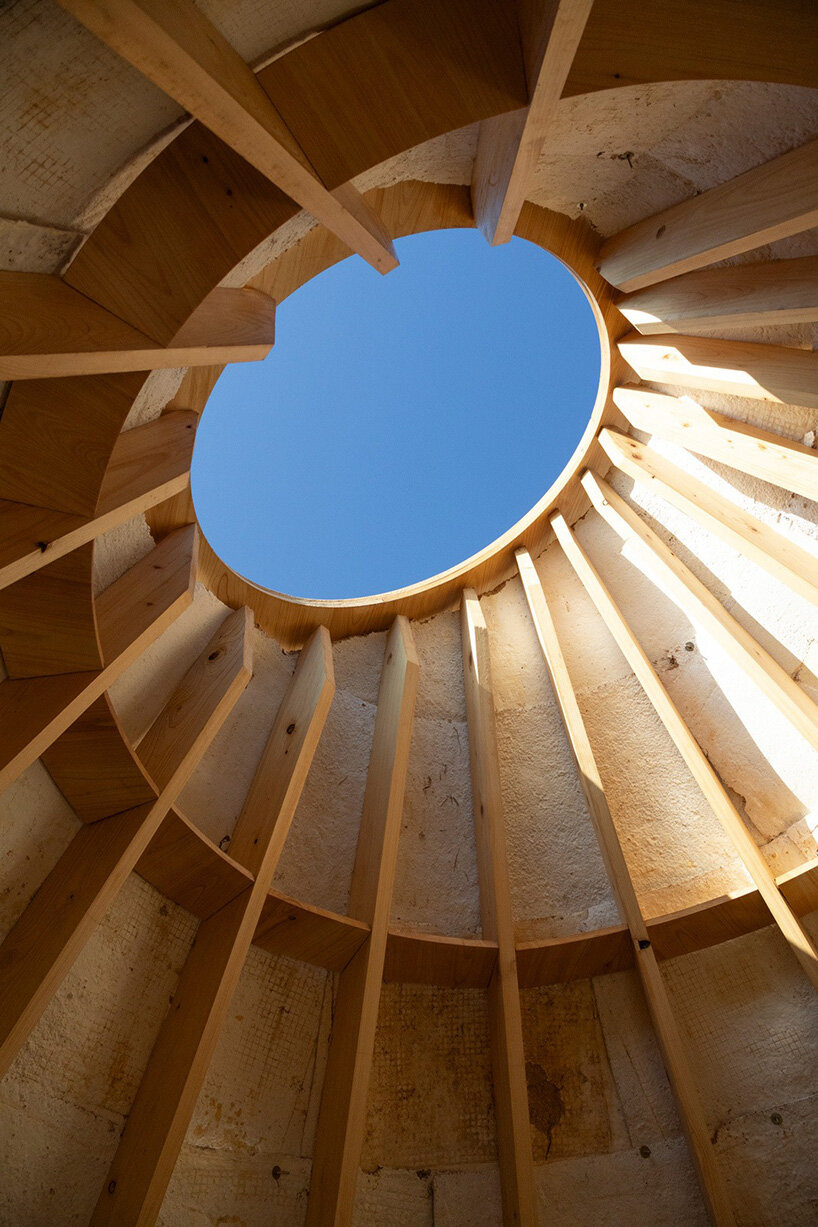
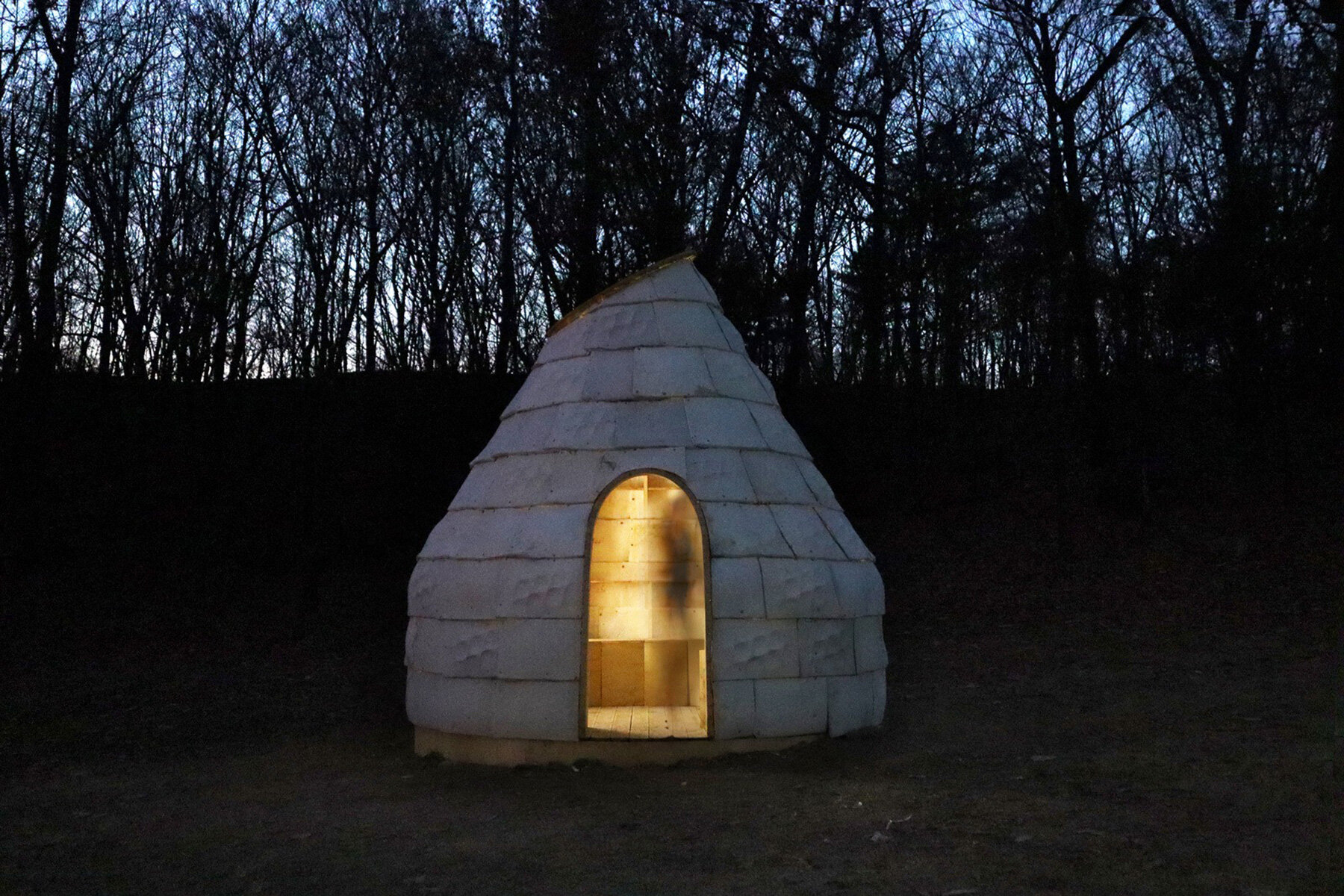
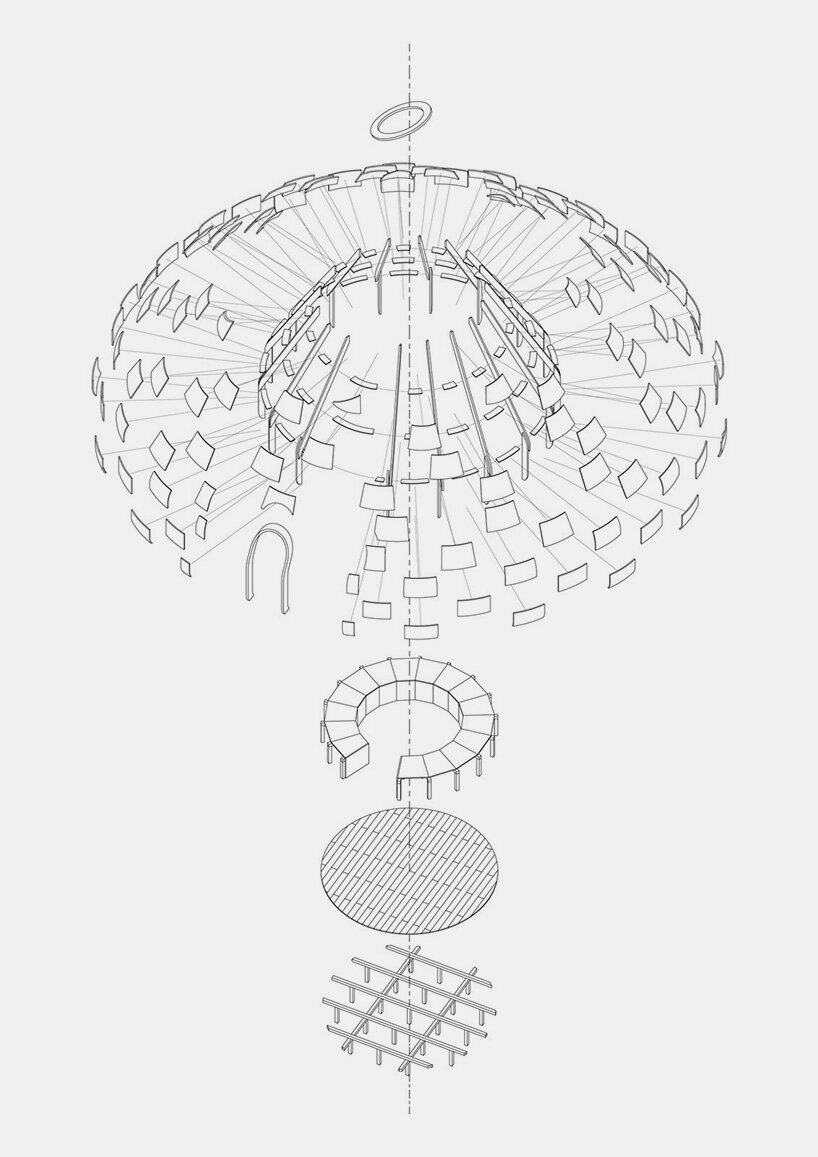
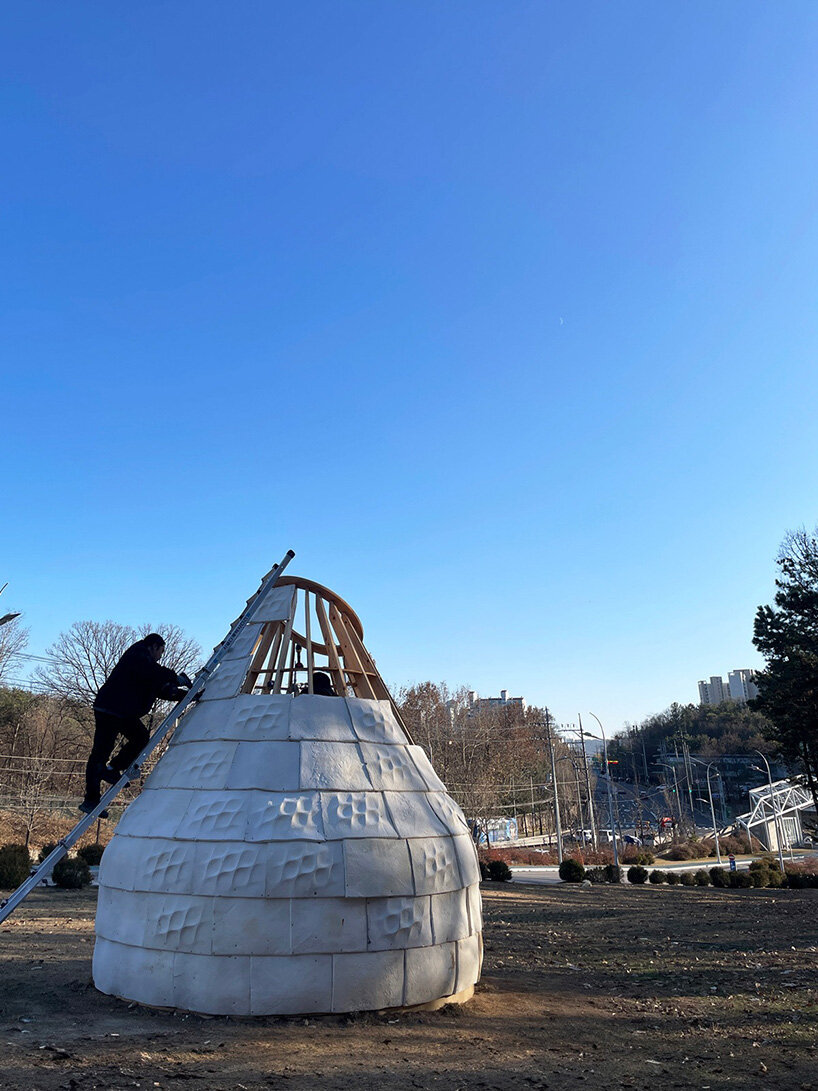
Designed by Yong Ju Lee Architecture, Mycelial Hut is an experimental pavilion in Seoul that investigates the potential of mycelium, the dense fungal network that binds and regenerates organic matter, as a large-scale building material. The project explores how architecture can be cultivated through a hybrid process that combines robotic 3D printing with biological growth.
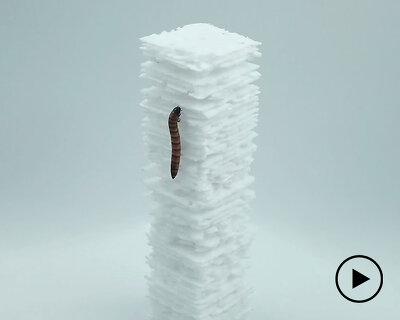
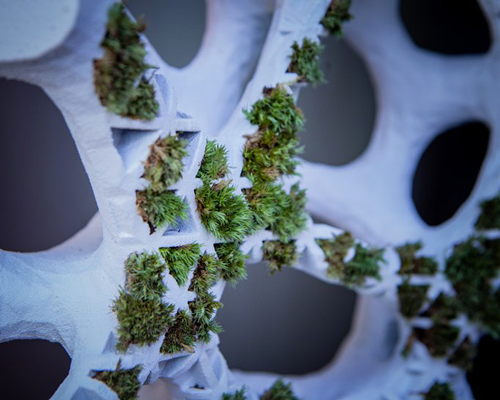
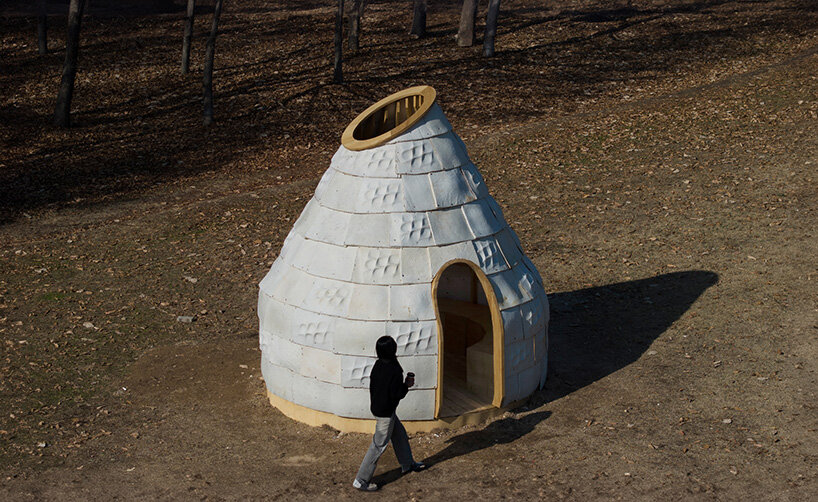
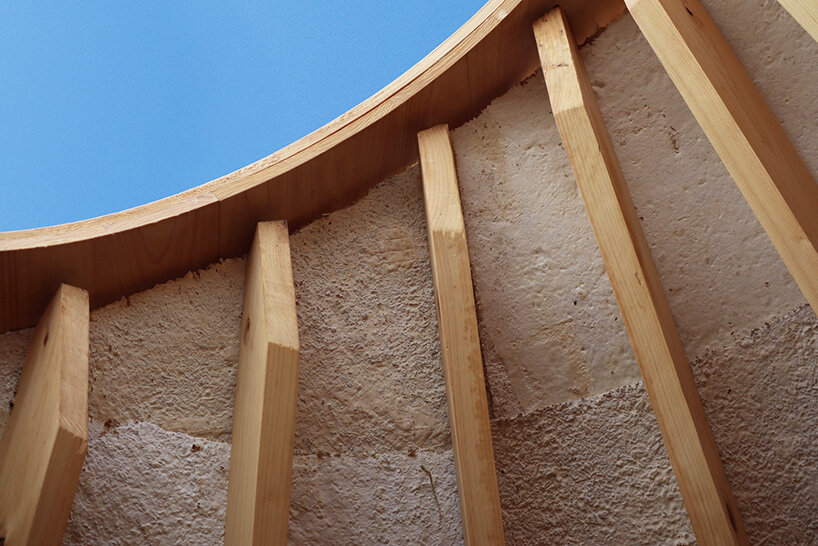
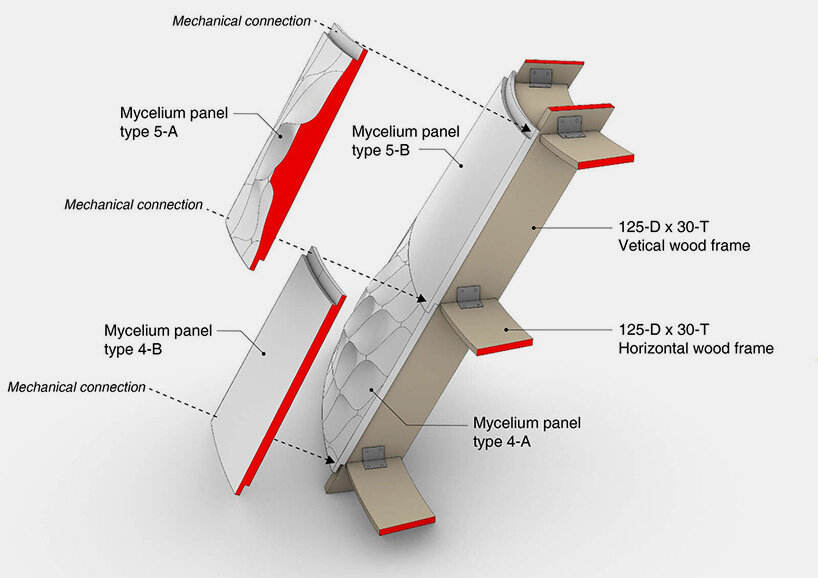
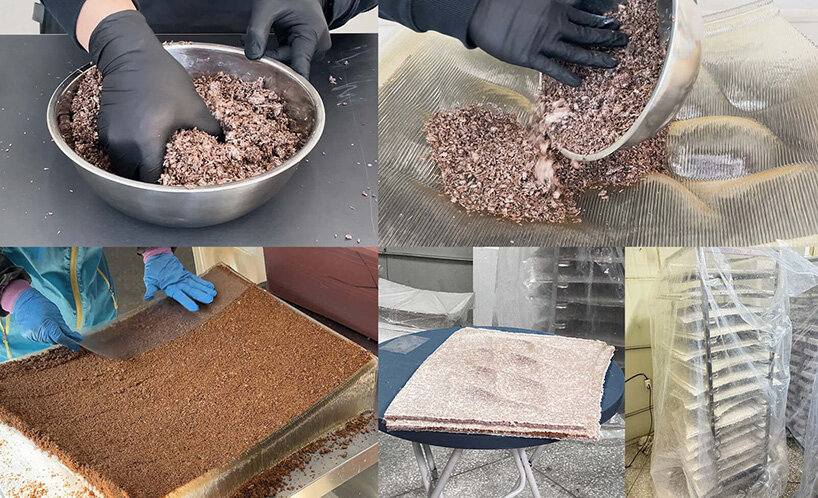
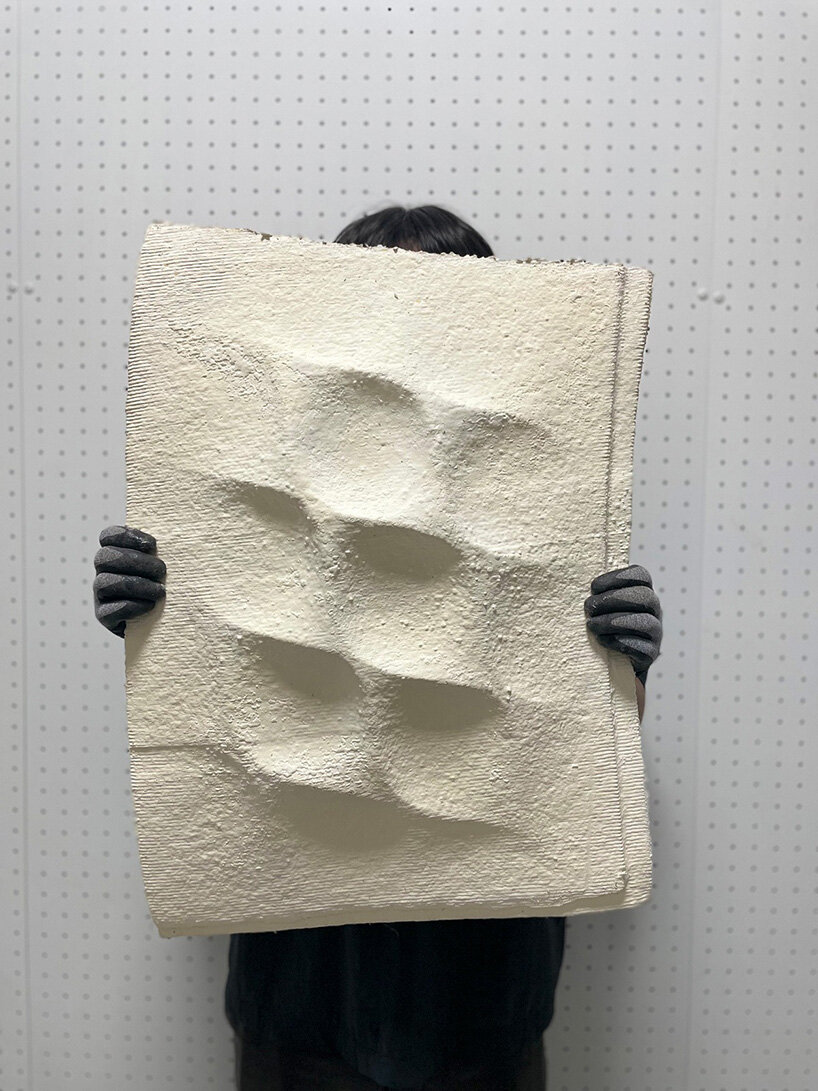
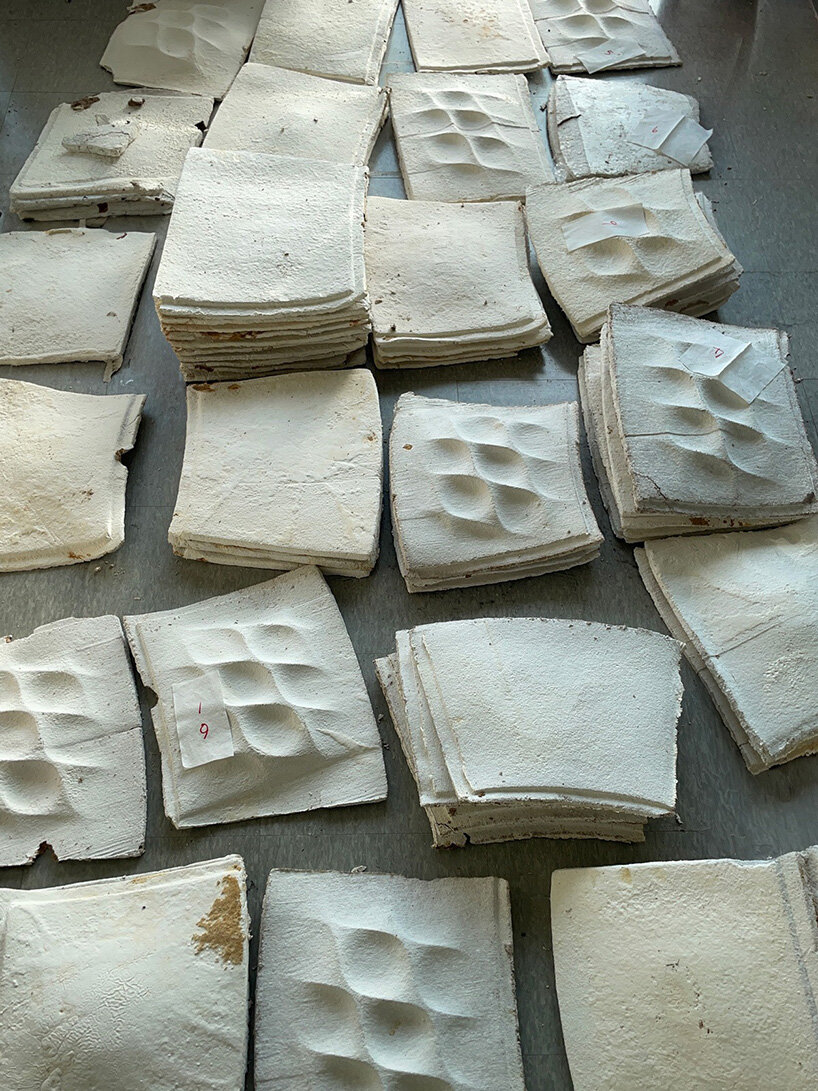
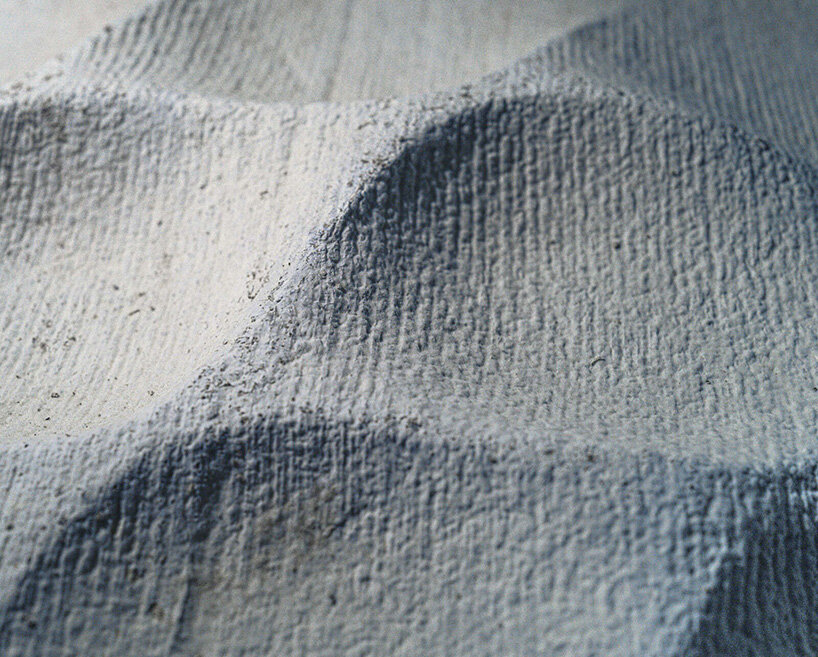
Structurally, the pavilion consists of a wooden frame that provides stability and a series of mycelium panels that form its enveloping skin. Each panel was grown inside a customized 3D printed mold, shaped by industrial robotic arms and filled with a selected substrate. Before this phase, the research team tested multiple types of mycelium mixtures, assessing their growth rates, density, and structural behavior.
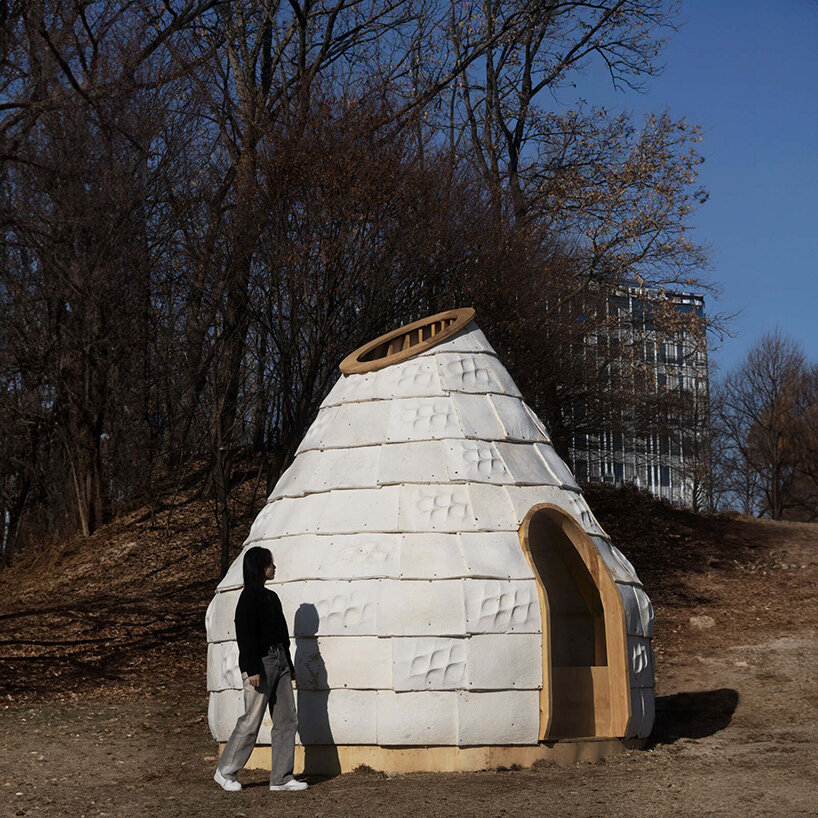
Mycelial Hut Grows, Breathes, and Decomposes with Nature
In an era when architecture and construction remain the largest global sources of carbon emissions, Mycelial Hut proposes a fundamental material shift. For much of the modern period, concrete and steel symbolized progress and economy, yet their environmental cost has become untenable. Seoul- and New York-based firm Yong Ju Lee Architecture’s pavilion turns toward organism-based composites, materials that are biodegradable, recyclable, and regenerative, to question the very premise of what makes a building sustainable.
Developed in collaboration with the Robotic Fabrication Studio (RFS) at Seoul National University of Science and Technology and installed in the open landscape of SeoulTech’s campus, Mycelial Hut embodies a vision of bio-integrated architecture that grows out of its environment. It makes the notion of eco-friendly design tangible, inviting visitors to imagine a future in which buildings are not manufactured but cultivated, alive, decomposable, and deeply entangled with the ecosystems that sustain them.
1/10
project info:
name: Mycelial Hut
architect: Yong Ju Lee Architecture | @yongjulee.arch
location: Campus of Seoul National University of Science and Technology, Seoul, South Korea
fabrication: Robotic Fabrication Studio (RFS), SeoulTech
team: Dachan Oh, Hakjoon Kim, Yejun Kim, Heon Lee, Wonseok Lee, Jeonggi Kim, Seonwoo Kim, Jaegong Choi, Seongmin Hong, Songju Yi, Seoyeon Bae, Thin Haythi Aung, DongUk Sohn, Yunjin Kim, Suhyeong You
shop
your own online design shop — no sales commission collected