yong ju lee embeds plant life into architecture with ‘moss tower’ prototype
the prototype looks past current construction materials and presents a direct approach of bringing nature into buildings.
prefer designboom on google[FEATURED]
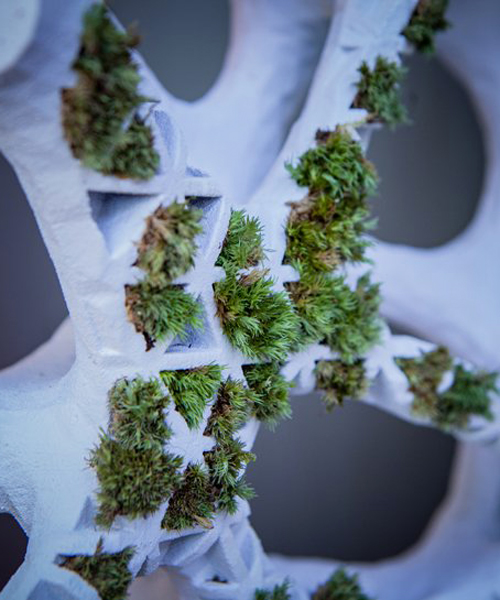
developed by the team at yong ju lee, ‘moss tower’ is a structural prototype that combines living organisms with architecture. inspired by new perspectives on the built environment following the COVID-19 pandemic, the research project looks past current construction materials and sustainable design methods, and presents a direct approach of bringing nature into buildings.

the organic 3D-printed tower with embedded moss
all images courtesy of yong ju lee architecture
yong ju lee used an algorithm to design a single structure that simulates a living cell. it was manufactured using a sand 3D printer, which is a binder-jetting type with formaldehyde-free adhesive. this structure is occupied and covered by shade moss inside. to embed moss into this frame, a triangulated pixel is subtracted from the structure without affecting its stability. physical sampling was executed to research how the moss takes root and how the visual effect looks for certain pixel types. after its use, the 3D printed structure decomposes into sand again when exposed to heat.

interior and exterior
this project intends to present a more active and radical solution to combine organic matter with inorganic matter through a single-body geometric system. moss tower proposes that people and plant life can interact with each other and exchange their product of respiration and photosynthesis. the final research model was built at a scale of 1:2.
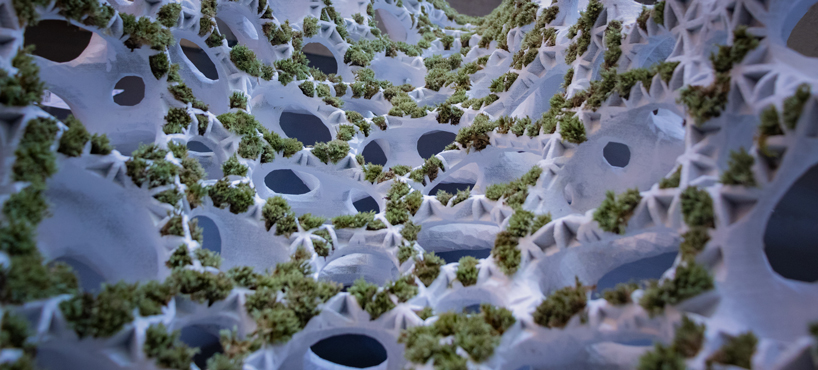
interior above view

embedded moss detail

pixelated greenery

exterior detail

embedded moss detail
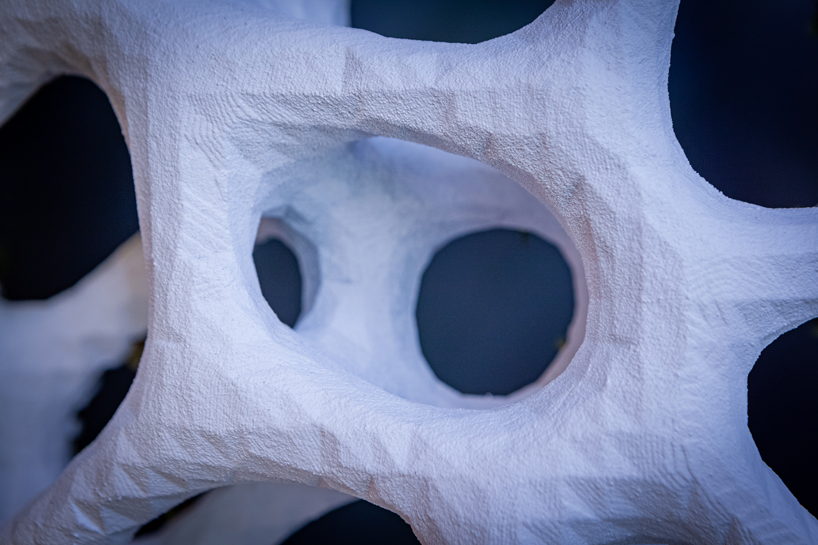
sand 3D-printed detail

sand 3D-printed structure

concept diagram

samples for the pixelated greenery

sand 3D-printing manufacturing
project info:
project name: moss tower
architecture firm: yong ju lee architecture
design team: juhyun maeng, sangha jeong
3D printing: sandgraphy
designboom has received this project from our ‘DIY submissions‘ feature, where we welcome our readers to submit their own work for publication. see more project submissions from our readers here.
shop
your own online design shop — no sales commission collected