
ADN FÓRUM turns madrid pink with art, design and a temporary ‘dry port’
ADN FÓRUM brings installation art, architecture and design to plaza de colón from september 24 to 27.
PLAZA DE COLÓN GETS A PINK TAKEOVER
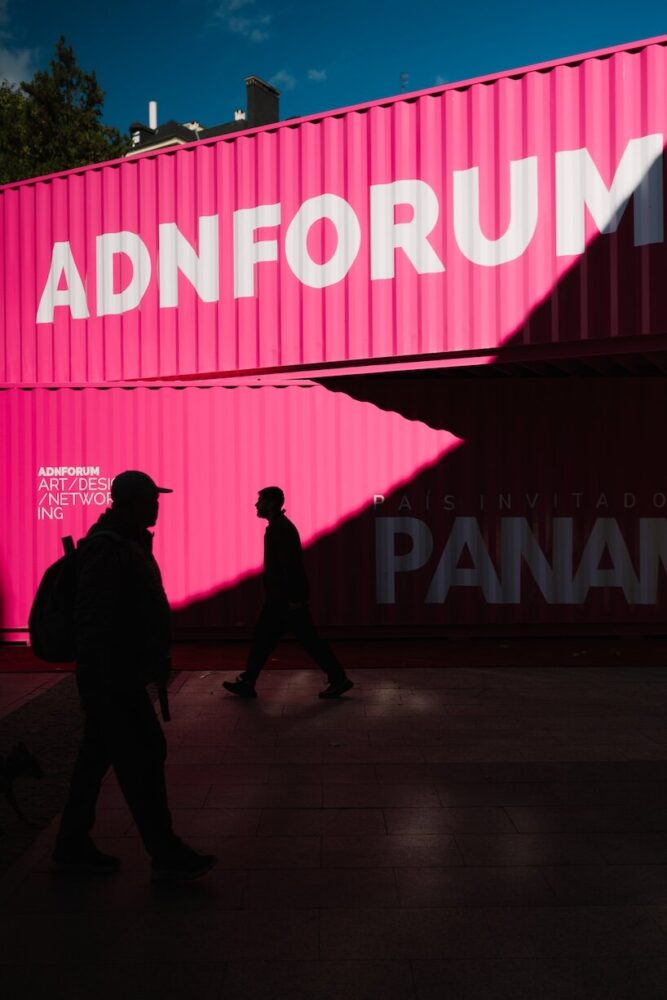
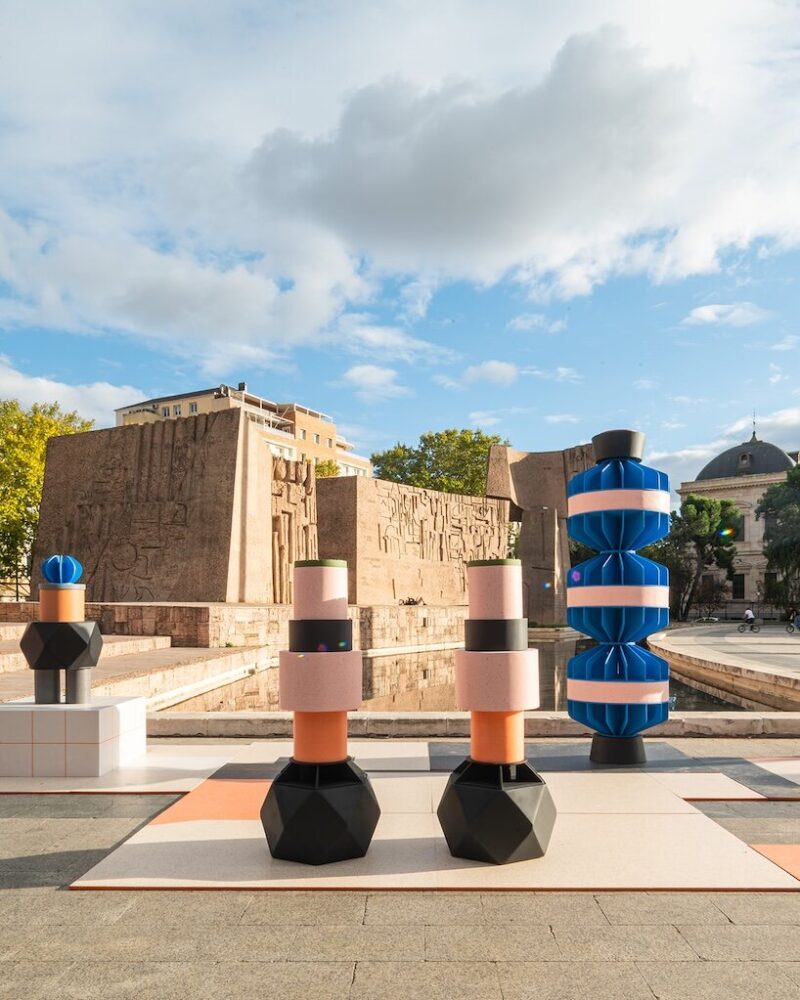
From September 24 to 27, ADN FÓRUM returns to Madrid for its fourth edition, transforming Plaza de Colón into an open-air landscape of art, design and temporary architecture. Positioned between the Salamanca district and the city’s Golden Mile, the free event takes over the square with a collection of signature shipping containers, installations and interventions developed by habitat and lifestyle brands together with artists, architects and designers. The organizers describe the temporary setting as a contemporary ‘dry port’ — though this one arrives coated, rather unapologetically, in pink.
Organized by Asociación ADN FÓRUM and presided over by Gabriel Castillo Admadé, the event uses public space as more than a backdrop for product display. Instead, participating brands are paired with creative practitioners to reinterpret materials, objects and identities through installations designed specifically for the forum. The 2026 edition is supported by Madrid City Council initiatives Todo está en Madrid and Madrid Capital de Moda, together with the Municipal District of Salamanca.
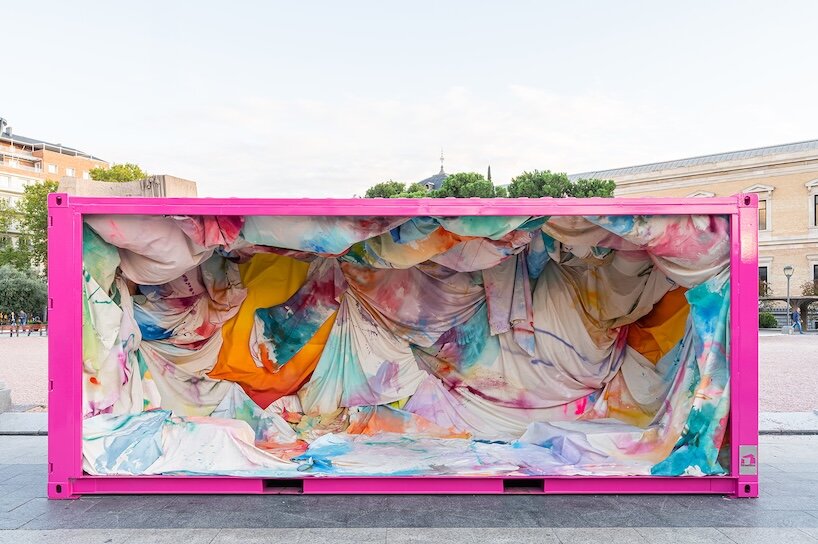
SHIPPING CONTAINERS BECOME SMALL WORLDS
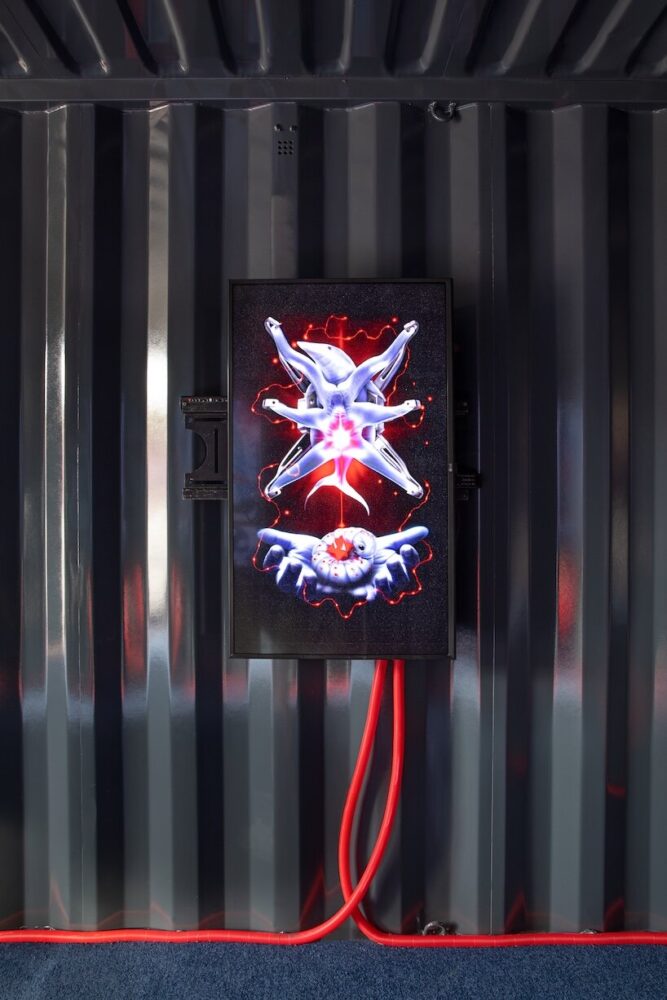
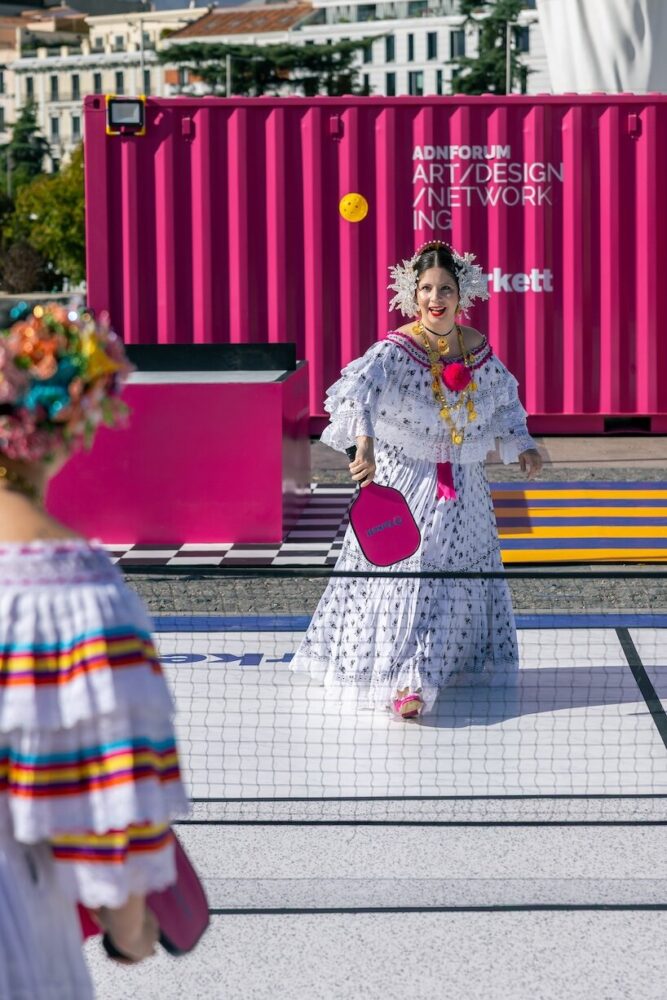
Among the collaborations, Tarkett teams up with creative studio Somos Carne for Siempre tuyo, el Universo, an interactive installation reflecting on human origins and the traces we leave behind. Pinturas Valentine works with Catalan studio HOC on a spatial and chromatic intervention, while WMF invites artist and interior designer Marta Lapeña to bring her site-specific painting practice into dialogue with culinary design.
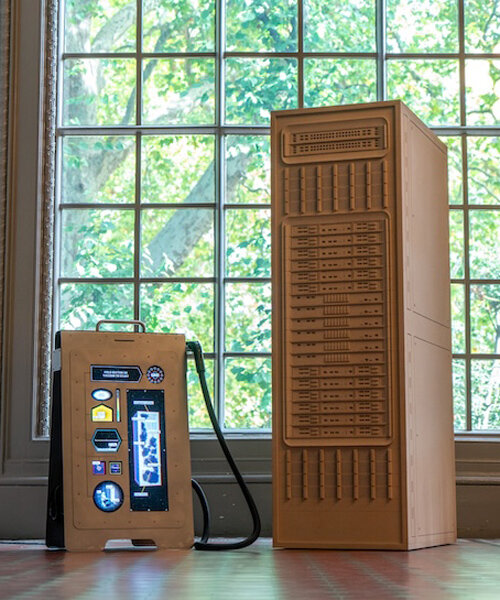
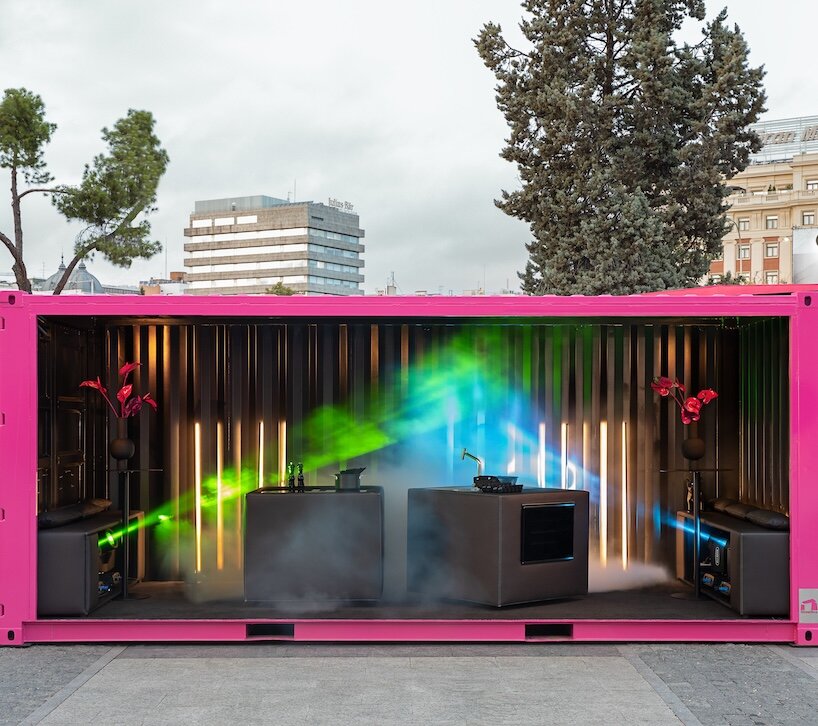
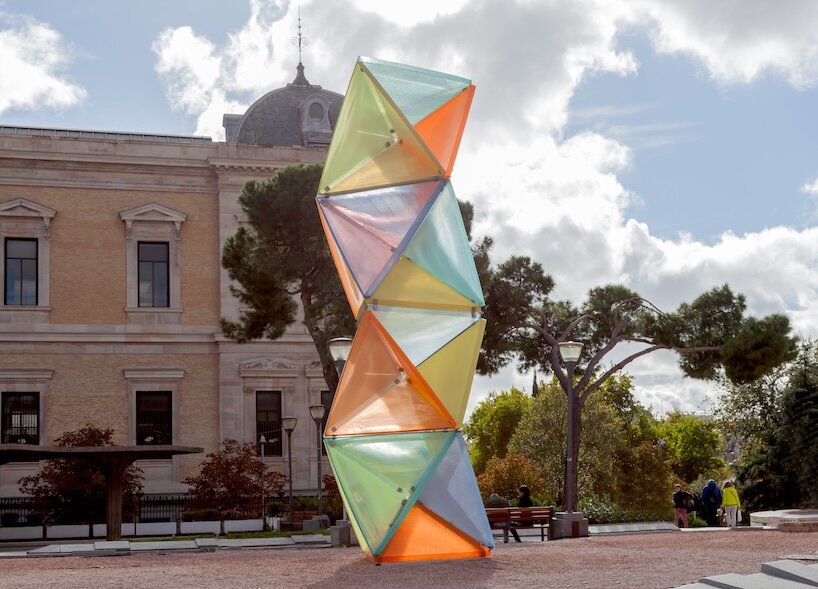
Elsewhere, Sub-Zero & Wolf and Bulthaup collaborate with Luz Moreno on a scenography informed by botanical textures and natural cycles. Neolith and architect-artist Alba de la Fuente present SHIFT: Transformable Interior Object, translating digital design processes into an architectural object designed to mutate before the viewer, while Geberit makes its ADN FÓRUM debut with Brollo Baldo Studio through an immersive installation centered on form, time and experience.
FROM CERAMIC MURALS TO A CENTURY-OLD TRIDENT
The program also traces how ideas move from drawings into built environments. Revista Interiores joins artist Sergio Mora for Del dibujo al espacio, revealing the process behind the ceramic murals created for Bazaar Mar in Miami, the restaurant conceived by Philippe Starck and Bruno Borrione for chef José Andrés. Sketches and ink drawings are presented alongside the story of their eventual transformation into an interior lined with thousands of handcrafted tiles.
Automotive design enters the mix through Maserati, headline partner of the 2026 edition as the marque marks 100 years since the creation of its Trident emblem in 1926. Alongside models including the Grecale, the brand will stage a live painting intervention by George Parra, while visitors will also be able to take part in Grecale test drives along Calle Serrano. The centenary provides a convenient excuse to bring a little horsepower to the plaza — as if all that pink needed help attracting attention.
DESIGN SPILLS INTO FOOD, FRAGRANCE AND COFFEE
The forum extends beyond objects and interiors with the return of Panama as Guest Country of Honor. Its Ventanas al Origen pavilion draws on the biodiversity of the isthmus through photography by Luis Carlos García, Luis Zamora / Wild Panama and others, while Panamanian Geisha coffee and a specially developed Rain Forest fragrance by Vila Hermanos broaden the installation into a more sensory portrait of place.
At the center of the event, ADN FÓRUM Café by Pinturas Valentine returns as Le Pavillon, designed by interior architect Fabián Ñíguez as a contemporary nod to classical French pavilions. Vibrant pink wraps a setting combining Cupa Stone surfaces and Tarkett flooring with violet sweets from historic Madrid confectioner La Pajarita, Panamanian coffee, matcha and pastries. Together, these installations turn Plaza de Colón into a temporary collection of rooms without quite building a building — an urban exhibition that asks visitors to wander in, look around and, occasionally, have something to eat.


shop
your own online design shop — no sales commission collected