arts at CERN translate the mechanics of the universe into creative installations
art and physics meet through works that translate invisible particles, experimental data, and abstract dimensions into sensory experiences.
prefer designboom on google[FEATURED]
Arts at CERN and beyond
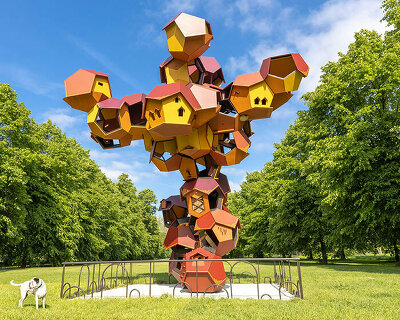
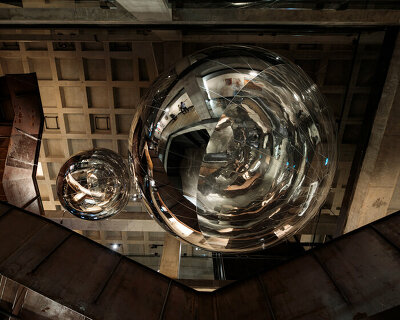
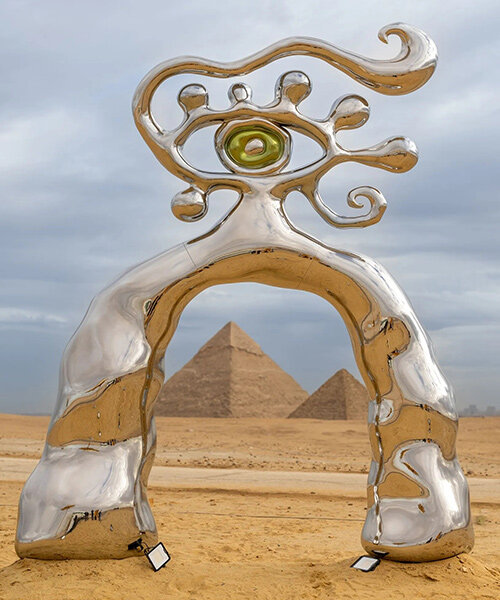
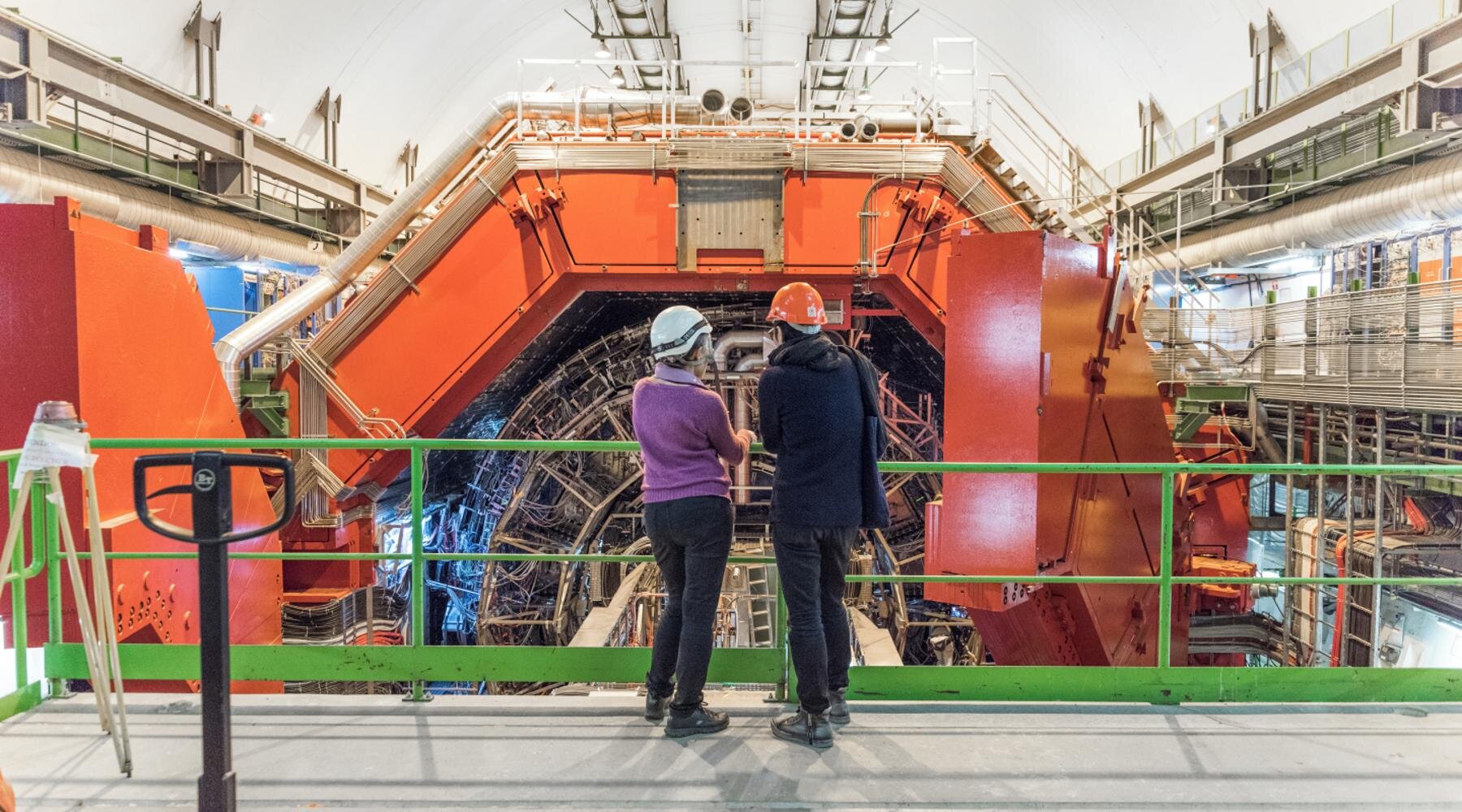
When asked, ‘What does CERN do?’ most people would probably scratch their heads and respond, ‘Physics.’ As the European Laboratory for Particle Physics in Geneva, it most certainly does physics, but another thing it does—alongside maintaining a Large Hadron Collider and developing inventions like the World Wide Web—is invite artists from around the world to produce work in tandem with the sciences. Through its artist residencies, commissions, and programs, it has invited the likes of Tomás Saraceno, Ryoji Ikeda, and other renowned artists to create works that, much like the laboratory’s research, demystify the world around us.
Where art and science collide
There’s a feeling that the principles of physics, especially the discoveries made during the 20th century, have unlocked the mysteries of the universe. Films like Oppenheimer (2023) and Interstellar (2014) attempt to show the power of these principles through atomic bombs, time dilation, and wormholes. Yet, when sitting in front of an equation like e=mc², how many of us know what to make of it? When peering into the wires, buttons, and lights of a laboratory, what signals make it through to the brain? This is where the power of art comes into play at CERN—not only can it help transform these ideas into comprehensible forms, but it can also, at times, suggest new applications for these scientific tools.
Visualizing the fourth dimension
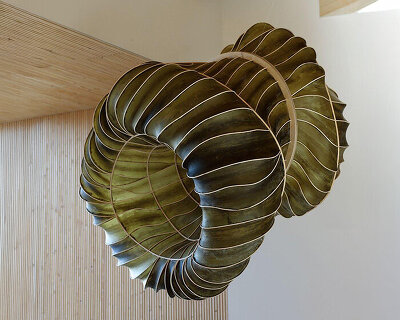
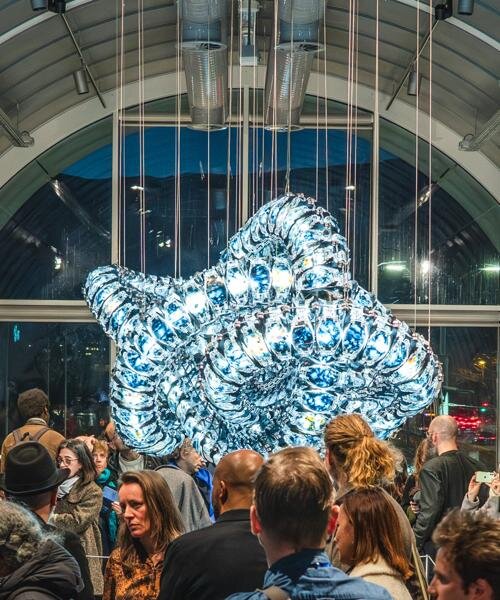
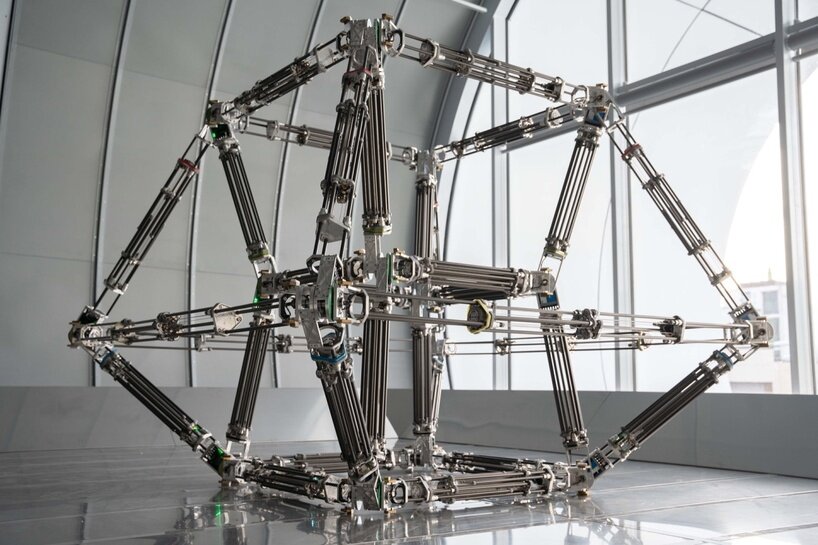
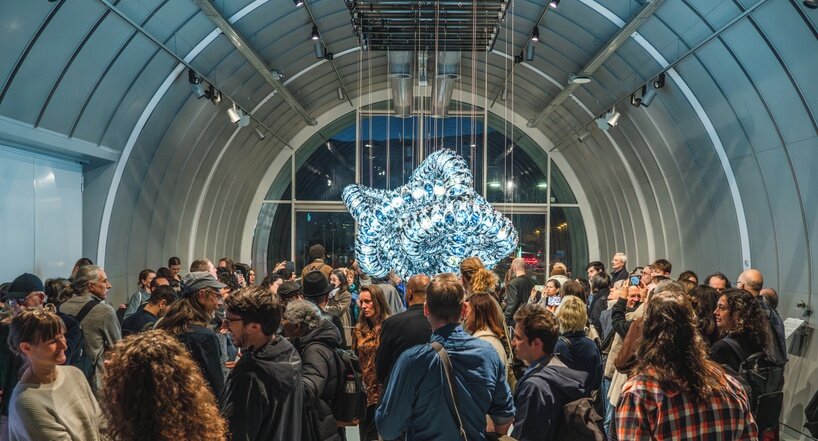
Take, for example, Julius von Bismarck’s 2023 sculpture, Round About Four Dimensions. The artist, who apprenticed at the Berlin Institute for Spatial Experiments, created a ‘tesseract,’ or essentially a ‘shadow’ of a four-dimensional cube. When describing the project—a webbed, cube-like structure made of aluminum, stainless steel, brass, polymers, and electronics—Arts at CERN says of von Bismarck’s work, ‘This three-dimensional revolving motion is a projection of a four-dimensional rotation, a phenomenon we cannot fully grasp. This previously intangible concept is brought to life by the kinetic tesseract sculpture, which wraps endlessly around itself.’
With 32 expanding and contracting lengths, or edges, the sculpture looks as though it swallows the form at its center or turns inside out. Using a series of software-programmed controls, the sculpture brings viewers closer to understanding the mechanics of four-dimensional objects.
Semiconductor navigates ATLAS
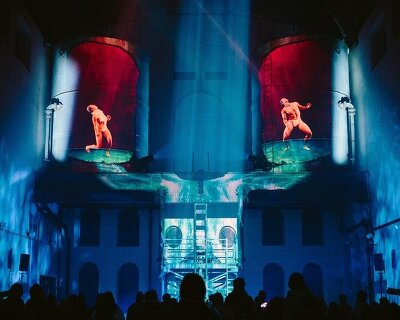
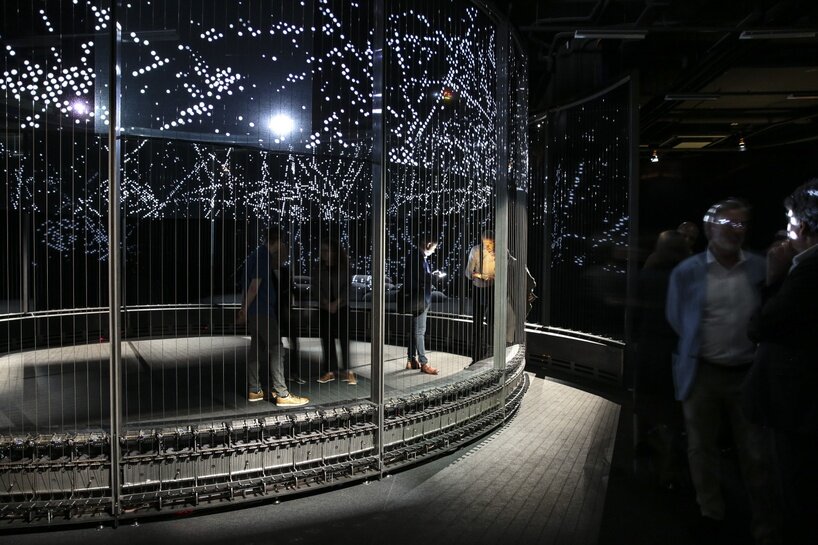
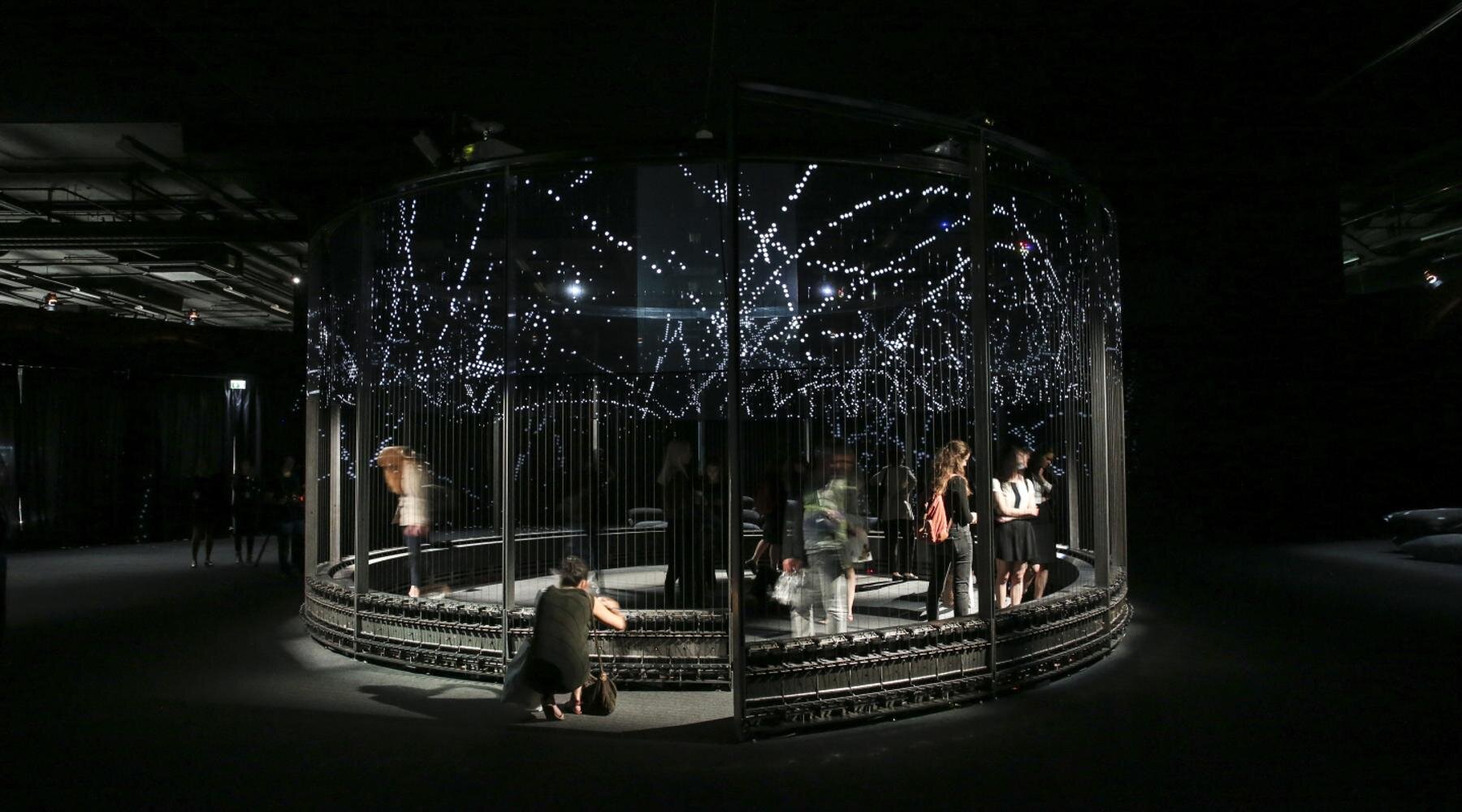
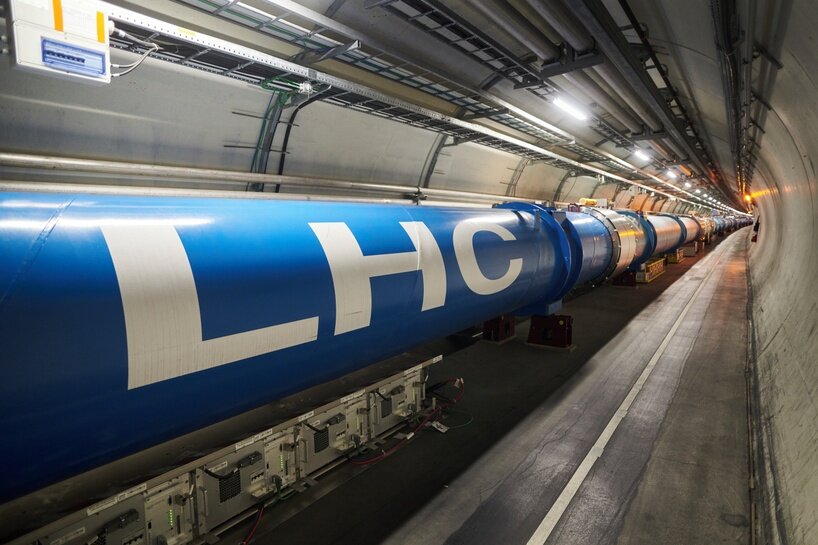
CERN is largely known for being home to the Large Hadron Collider, a machine that launches protons at nearly the speed of light. With this machine, researchers can pursue different experiments, like ALICE, which studies, ‘the physics of strongly interacting matter at extreme energy densities, where a phase of matter called quark-gluon plasma forms.’ For their 2018 project HALO, the artistic group Semiconductor created a work that sought to illustrate the experiments behind ATLAS, a ‘general-purpose detector,’ or a series of cameras and documentation equipment inside the Large Hadron Collider that tracks the results of experiments conducted within it.
Commissioned by Audemars Piguet in collaboration with CERN, HALO was a cylindrical installation that visualized the flow of data from ATLAS in an inhabitable installation that recalled the actual tube-like form of the machine. During their 2015 residency at CERN, the group became familiar with how the machines worked. In the 2018 work, they took the mass of information coming from ATLAS and slowed it down into sounds and flashes of light that are perceivable to the human eye.
Art Basel 2018 – Semiconductor’s artwork titled “HALO” | Audemars Piguet
The Collide Residency
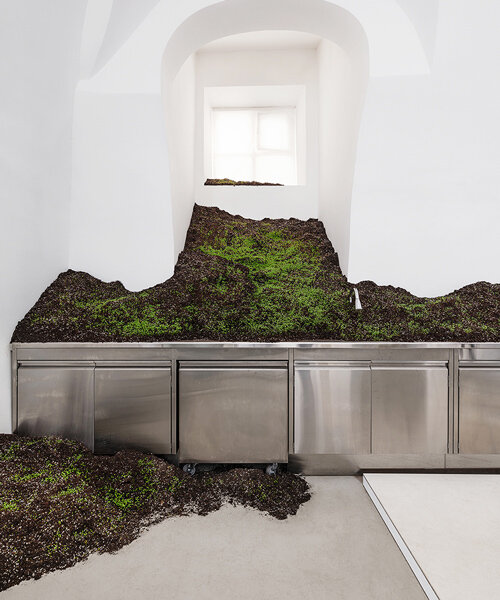
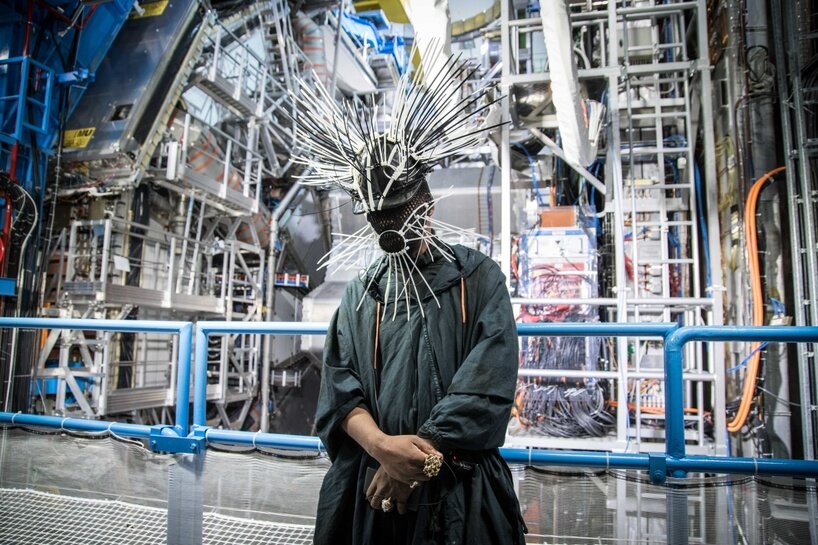
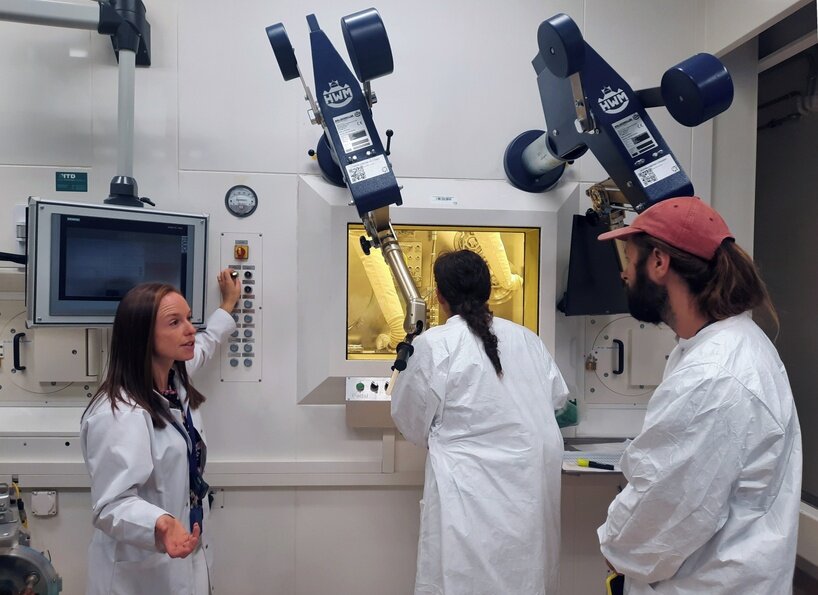
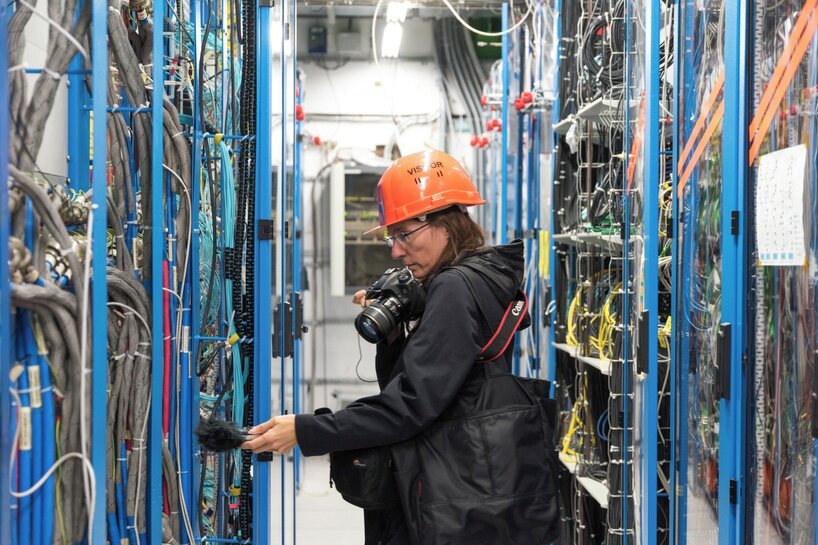
Alongside its commissions and exhibitions, CERN also organizes residencies that bring artists into contact with its advanced machinery, research facilities, and scientists. Most recently, in collaboration with the Nobel Prize Museum, it awarded Collide Stockholm, its international residency award, to Lithuanian-born artist Emilija Škarnulytė. CERN describes her practice as ‘rooted in the exploration of infrastructures that mediate between the visible and the invisible, the human and the post-human, the present and deep time.’ Through meditative moving images and immersive audiovisual installations, Škarnulytė explores the hidden systems and processes that shape the natural world, often shifting the viewer’s perspective beyond the limits of human perception.
understanding the universe through art
Ultimately, what these collaborations at CERN reveal is that art and science are not such distant disciplines. Both are driven by a desire to understand what lies beyond the limits of human perception, whether that means exploring the smallest particles of matter, imagining dimensions we cannot physically experience, or uncovering the hidden infrastructures of the natural world. By translating complex scientific processes into sensory, spatial, and immersive encounters, artists offer us new ways of relating to the universe. More than simply making science accessible, these collaborations challenge our understanding of humanity’s place within it, suggesting that seeing the world differently may be the first step towards understanding it.
project info:
name: Arts at CERN | @artsatcern
location: Geneva, Switzerland
This article is part of designboom’s POSTHUMAN UTOPIAS chapter, exploring what happens when humans are no longer the measure of all things. These stories rethink our relationship with the planet through interspecies architecture, living materials, regenerative landscapes and emerging technologies – learn more here! The chapter is presented in partnership with INDX|GLOBAL – a global cultural platform placing Indian architecture, design, and creative intelligence in conversation with the world.
Each designboom editorial series explores one theme in depth through projects, interviews, features and news across architecture, design, art and technology. Discover more chapters here, and get in touch if you’d like to submit a story through our submissions portal or contact form.
shop
your own online design shop — no sales commission collected