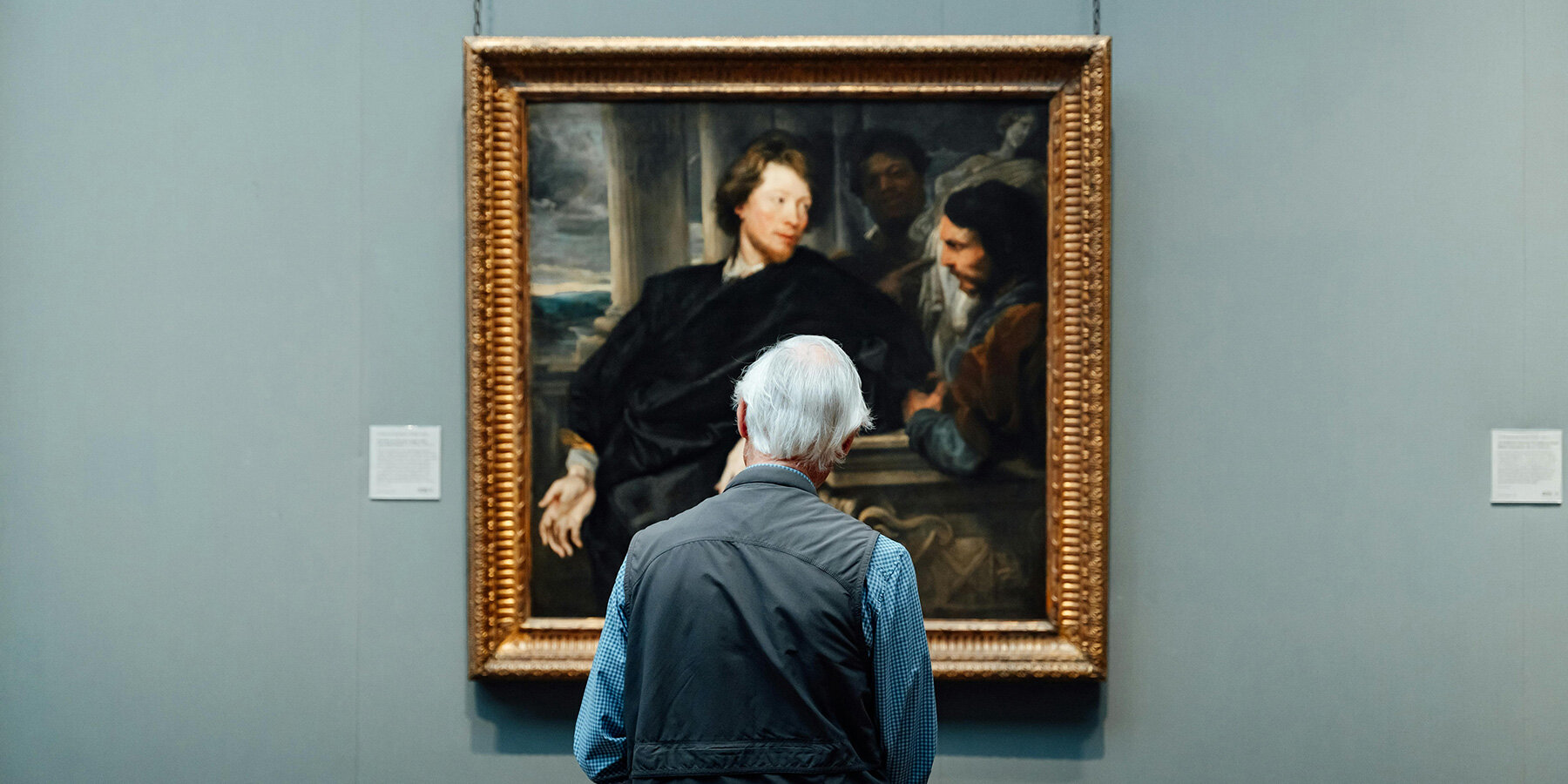
Daisy Fancourt’s Art Cure and the science behind creative health
What if engaging with art functioned as a measurable health intervention rather than cultural enrichment? In her most recent book, Art Cure: The Science of How the Arts Transform Our Health, Daisy Fancourt argues that engagement with the arts functions as a health intervention. Drawing on decades of neuroscience, epidemiology, immunology, and behavioral science, the UCL professor positions the arts as a foundational component of well-being, a ‘forgotten fifth pillar’ alongside diet, sleep, exercise, and nature.
Art Cure consolidates a body of research that treats creativity as an infrastructure for human health. From childhood brain development to resilience against dementia, from recovery after brain injury to reduced risk of loneliness and frailty, Fancourt’s work reframes cultural participation as a biological and social resource with tangible effects on how bodies and communities function.

teamLab, Universe of Water Particles on a Rock where People Gather, Courtesy teamLab Borderless Tokyo © teamLab | read more here
From cultural intuition to clinical evidence
Daisy Fancourt’s research career has been defined by its refusal to stay within disciplinary borders. Trained in both music and medicine, she began her work inside hospitals, where she observed patients’ anxiety easing and pain perception shifting during singing sessions and arts-based activities. These experiences pushed her beyond observation and into explanation. Her doctoral research in psychoneuroimmunology examined how artistic engagement alters stress hormones, immune responses, and neural activity, translating what many intuitively sense about art into quantifiable data.
That trajectory now underpins her role as Director of the WHO Collaborating Centre for Arts & Health and as a leading figure in global cultural health policy. Her work has helped move arts-in-health from small-scale pilots into the realm of population-level research, using longitudinal datasets, biomarkers, and randomized controlled trials to test how creative engagement influences both mental and physical outcomes.
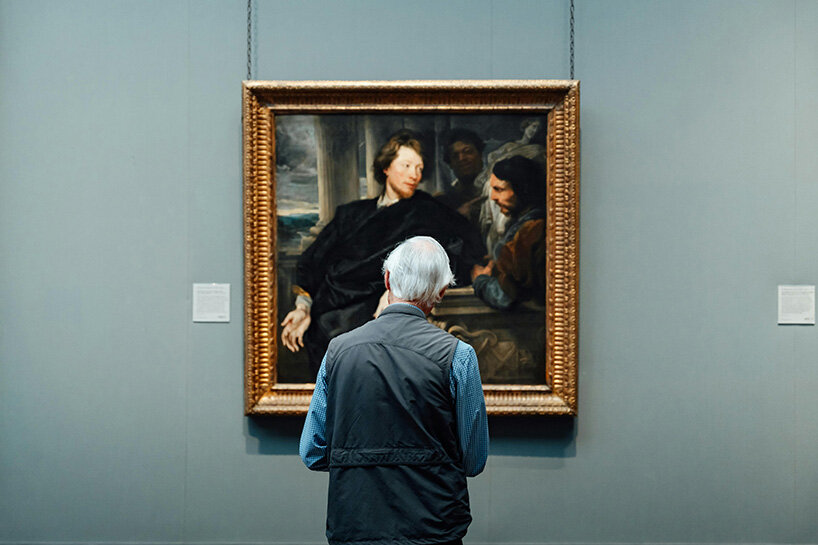
image by Miguel González via Pexels
What Art Cure brings together
Art Cure acts as a synthesis of her research, in which Fancourt draws on studies spanning neuroimaging, wearable sensors, molecular biomarkers, and large epidemiological cohorts to map how different forms of artistic engagement operate across the lifespan. Music is shown to support the architectural development of children’s brains; creative hobbies help maintain cognitive resilience against dementia; visual art and music reduce depression, stress, and pain in ways comparable to pharmacological treatments; and dance and movement-based practices help rebuild neural pathways after brain injury.
Importantly, Fancourt’s scope moves from classical music to pop concerts, from museums and theater to graffiti and community choirs. The mechanism is not refinement but engagement, including ‘cultural workouts’ that are immersive, meaningful, and socially or emotionally activating. Health benefits emerge not because art is ‘high culture,’ but because it activates psychological, biological, social, and behavioral systems at once.
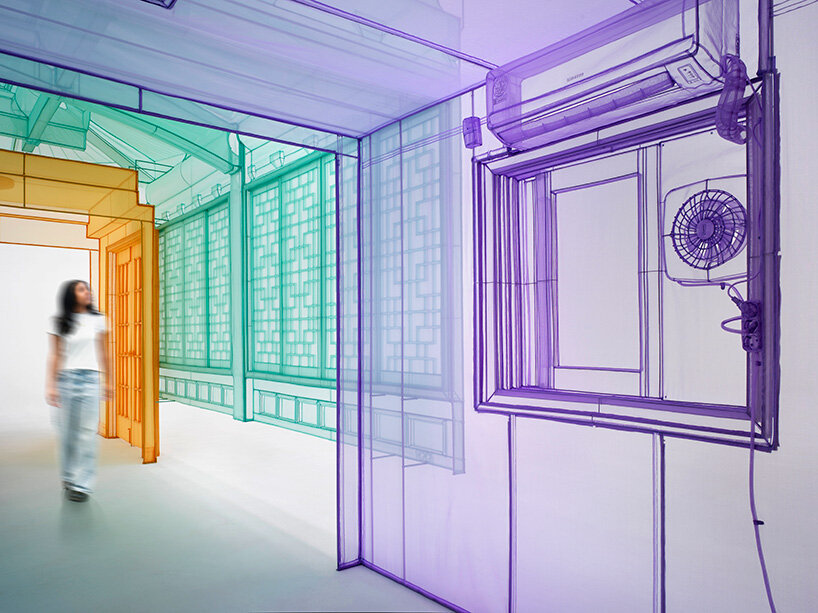
Do Ho Suh, Nest/s, 2024, polyester, stainless steel, 410.1 x 375.4 x 2148.7 cm | courtesy the artist and Lehmann Maupin New York, Seoul and London, image by Jeon Taeg Su © Do Ho Suh | read more here
Arts engagement, longevity, and public health
Some of the most striking evidence anchoring Art Cure comes from Fancourt’s epidemiological studies on ageing. Longitudinal analyses show that people who regularly attend museums, galleries, concerts, or the theater have a significantly lower risk of developing depression later in life, with more frequent engagement correlating with stronger protective effects.
Beyond mental health, her research links arts participation with longevity itself. Older adults who engage in cultural activities are statistically less likely to die over long follow-up periods, even after controlling for income, baseline health, mobility, and social class.
These findings underpin the growing legitimacy of social prescribing, the practice of referring patients to cultural and community activities as part of healthcare pathways. If evidence shows that visiting exhibitions, singing in groups, or attending performances reduces healthcare use and improves outcomes, then excluding the arts from health systems becomes increasingly illogical.
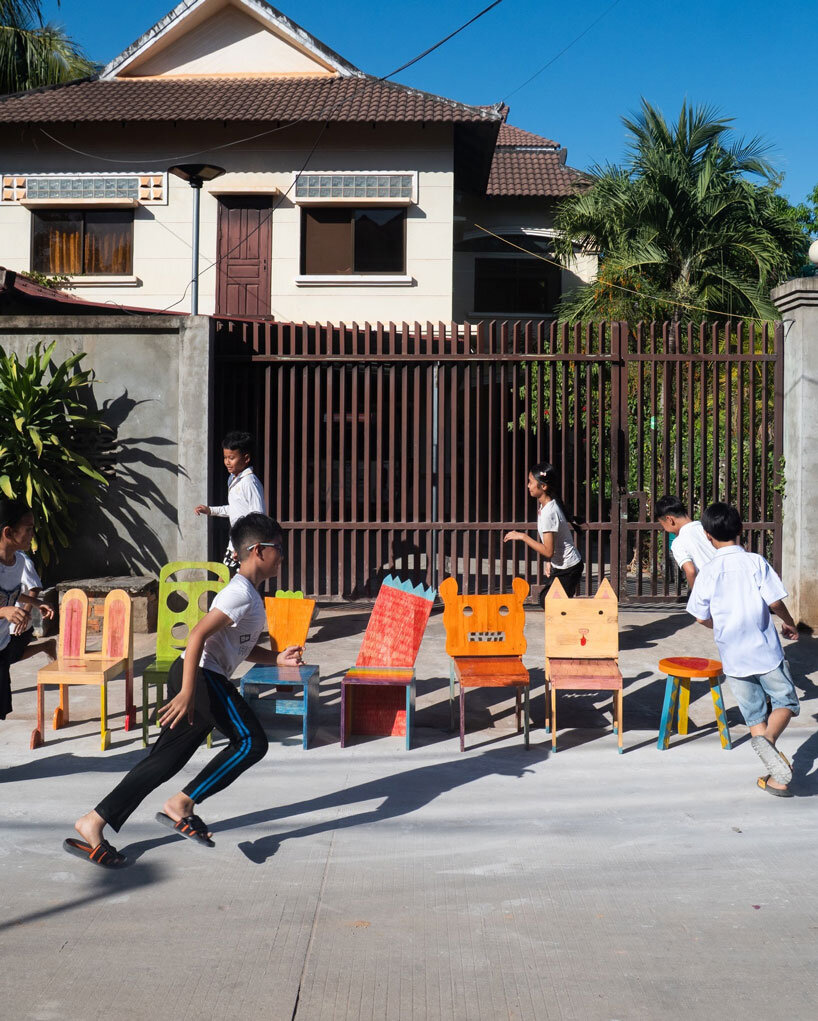
Chair for Kids | image by Taekhan Yun
A shift in how we value culture
One of Fancourt’s most design-relevant contributions lies in her analysis of how arts interventions work. Her research identifies multiple ‘active ingredients’ that determine effectiveness: duration, consistency, facilitation quality, group dynamics, and, crucially, spatial and environmental context. Lighting, acoustics, accessibility, and atmosphere directly shape whether an intervention reduces stress or reinforces it.
This has implications far beyond healthcare programming. Museums, cultural venues, hospitals, and community spaces become part of the health ecosystem, not neutral containers. In this framework, architecture and exhibition design are participants in health outcomes, capable of amplifying or undermining the therapeutic potential of art.
What Art Cure ultimately proposes is not that art replaces medicine, but that it complements it in ways today’s healthcare often ignores. Fancourt’s work dismantles the idea that culture is expendable when resources are tight, presenting the arts as low-cost, low-risk, and high-impact tools for prevention, recovery, and resilience.
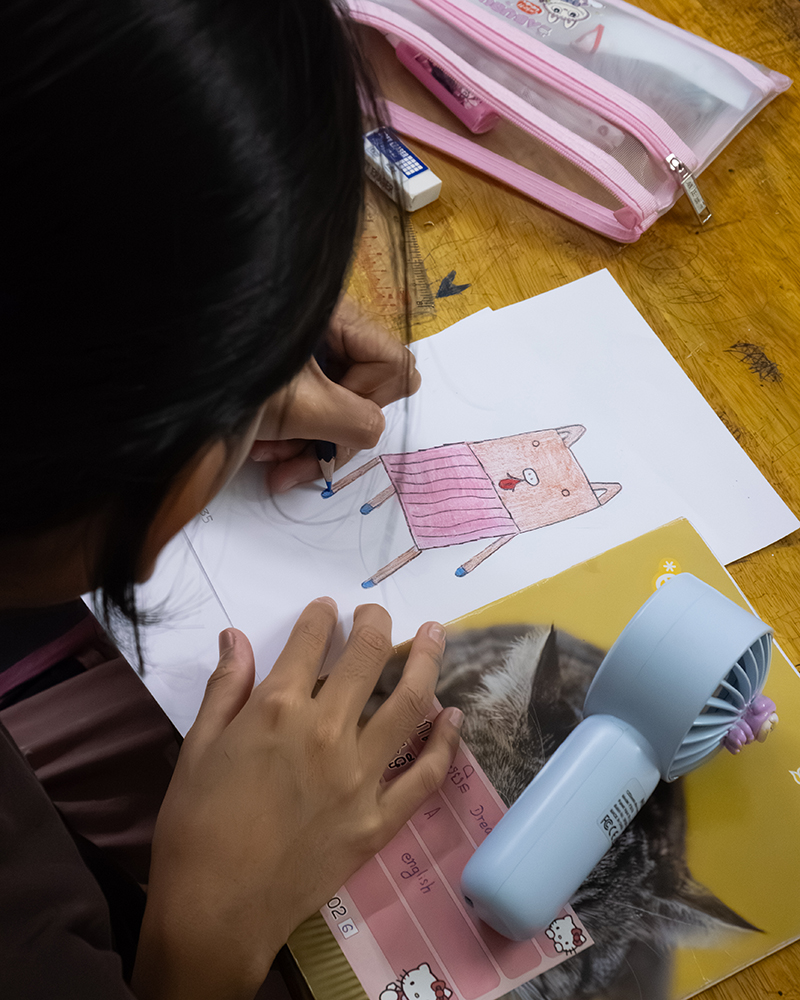
children drew their own chair designs | image by Taekhan Yun
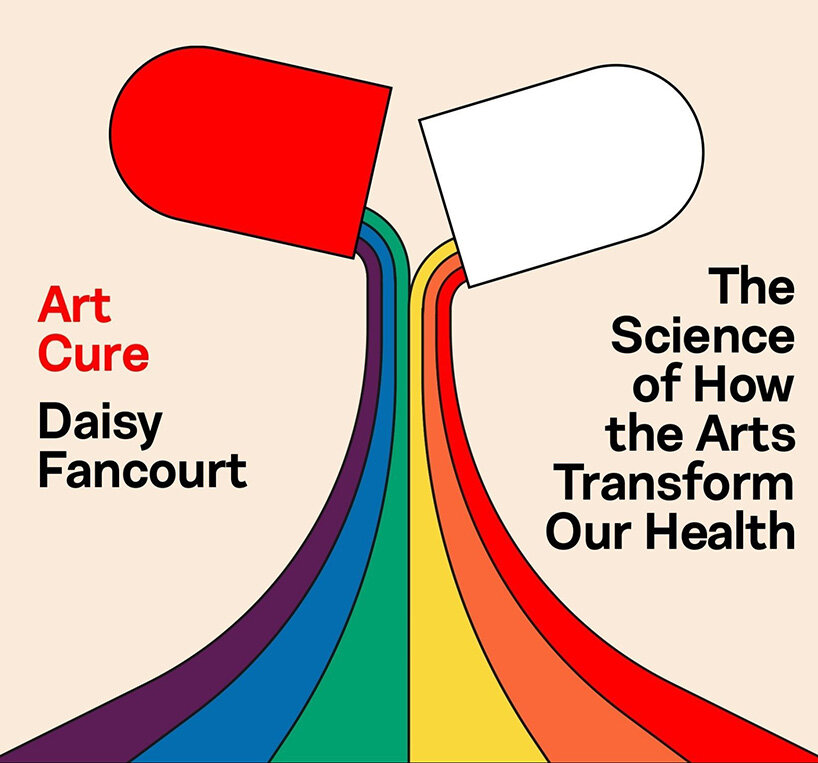
Art Cure Penguin cover via SBRG
project info:
name: Art Cure: The Science of How the Arts Transform Our Health
author: Daisy Fancourt
release date: January 8th, 2026
designboom book reports (232)

 Feb 05, 2026
 Jan 22, 2026
 Jan 01, 2026
 Nov 27, 2025