
when bees become collaborators, artists learn to make by listening
working with bees, these artists sculpt through patience and living systems of interspecies collaboration.
prefer designboom on googleinside the hive
Artists collaborating with bees offer a softer model of making that’s shaped by patience, shared labor, and a willingness to let another species enter the work. Inside the warm dark of a hive, sculpture begins with a surface, a cavity, or a frame left open to a world that moves by scent, temperature, and collective instinct.
The artist may prepare the form, coat it in wax, place a queen at its center, or set an object among thousands of workers, but from that point the work starts to belong to a different order of making.

making room for another species
This is where the work begins to connect with themes of soft world-making. The process calls for patience, restraint, and attention to rhythms outside the human schedule. These artists are still making decisions, sometimes very precise ones, but the finished object depends on a colony’s behavior, its appetite for a certain cavity, its comfort with a surface, its response to gravity, and, not to mention, its will to build.
The works can be read as craft, sculpture, design, or ecological experiment, but method is the real subject. Each artist creates a condition where bees can act within the work. A sculpture becomes a place of negotiation — a vase becomes a hive, a human figure grows a second skin, and a found object is slowly claimed by honeycomb.

anna hulačová’s living interiors
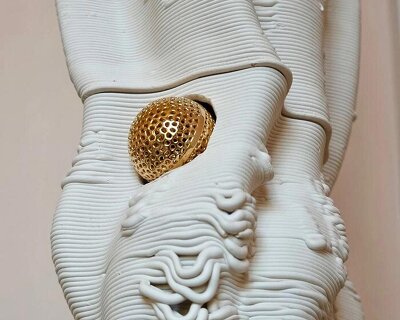
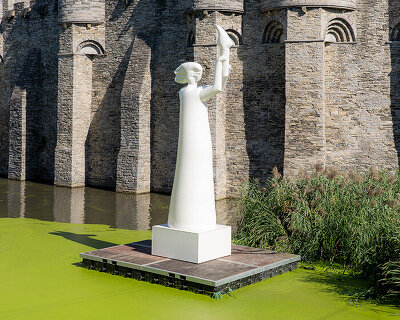
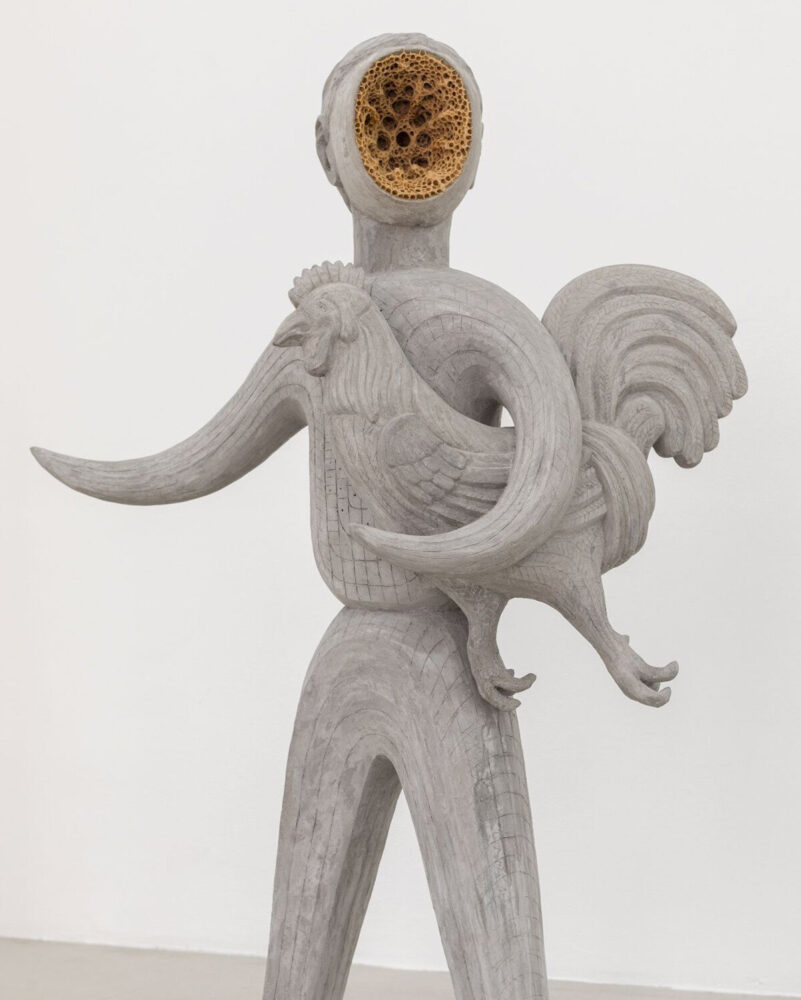
Anna Hulačová works from a place that’s bodily and symbolic, as her sculptures draw from agriculture, folklore, and beekeeping practices. She often uses concrete, wood, and honeycomb to create figures that feel part vessel and part organism. In a recent interview, Hulačová explains that she has worked with bees in sculpture for more than ten years, leaving it up to the bees to decide whether a cavity is attractive enough for them to expand into.
Her method often involves carving cavities into the facial or abdominal areas of sculptural bodies. During swarming season, bees can enter these spaces and build honeycomb within them. The comb reads like an inner organ, a materialized spirit, or a living structure held inside the body. In Hulačová’s work, collaboration feels intimate. The sculpture gives the hive a space to enter, and the bees give the figure an interior life.

garnett puett and the apisculpture
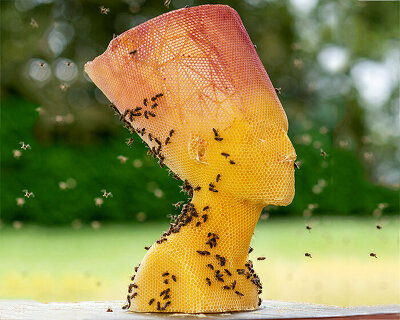
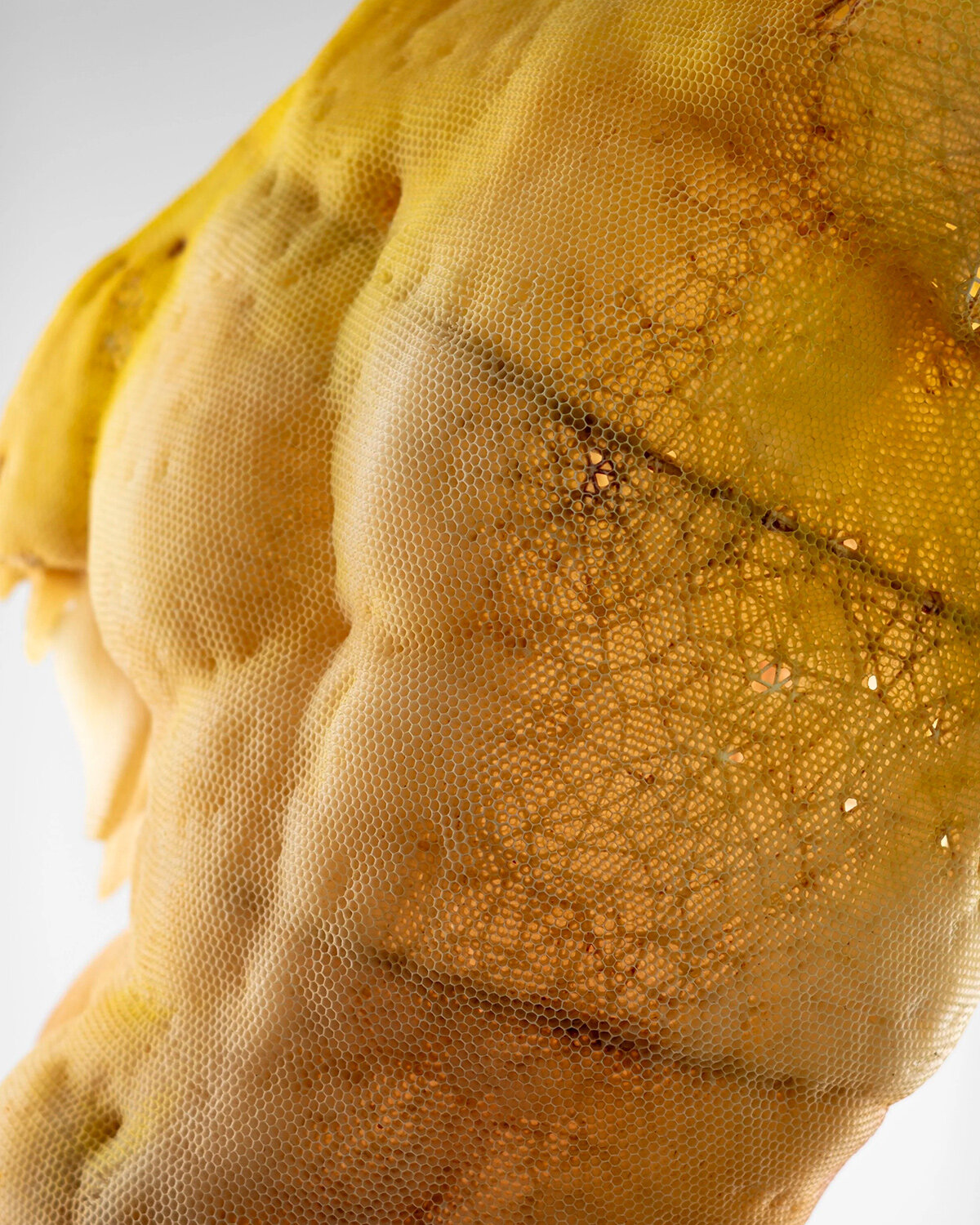
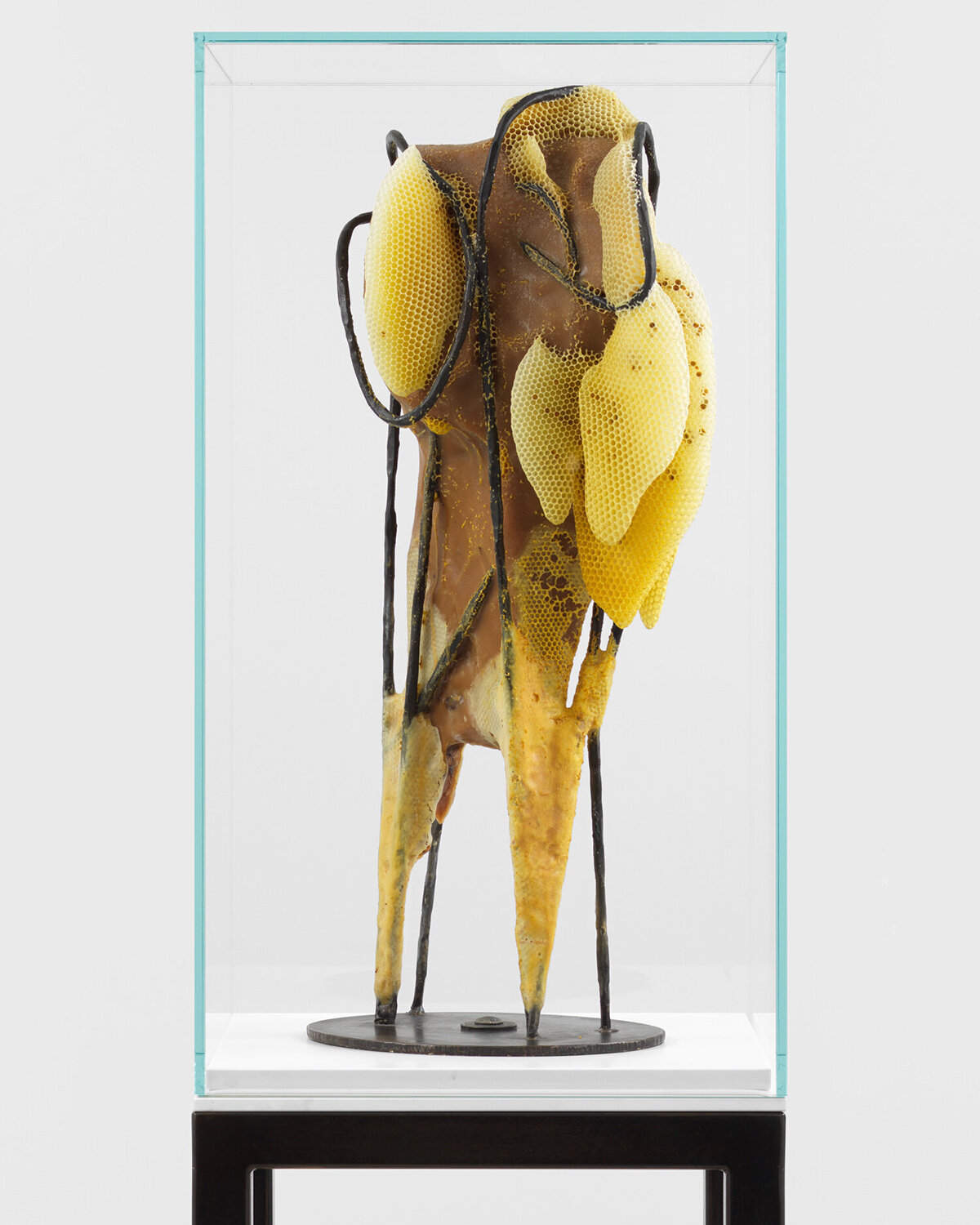
Garnett Puett brings this conversation close to beekeeping itself. Born in Hahira, Georgia, and now based in Kona, Hawaii, Puett is a fourth-generation beekeeper whose works, which he calls apisculptures, bring sculpture, performance, and bee partnership into a single process. His gallery describes the bees as artistic collaborators, a phrasing that feels especially direct in his case because the method comes from long familiarity with the hive.
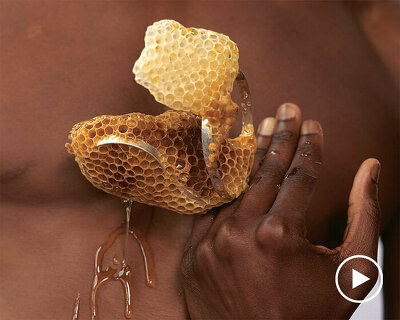
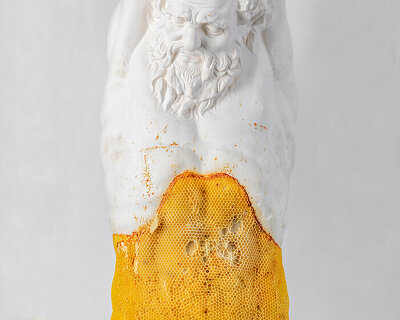
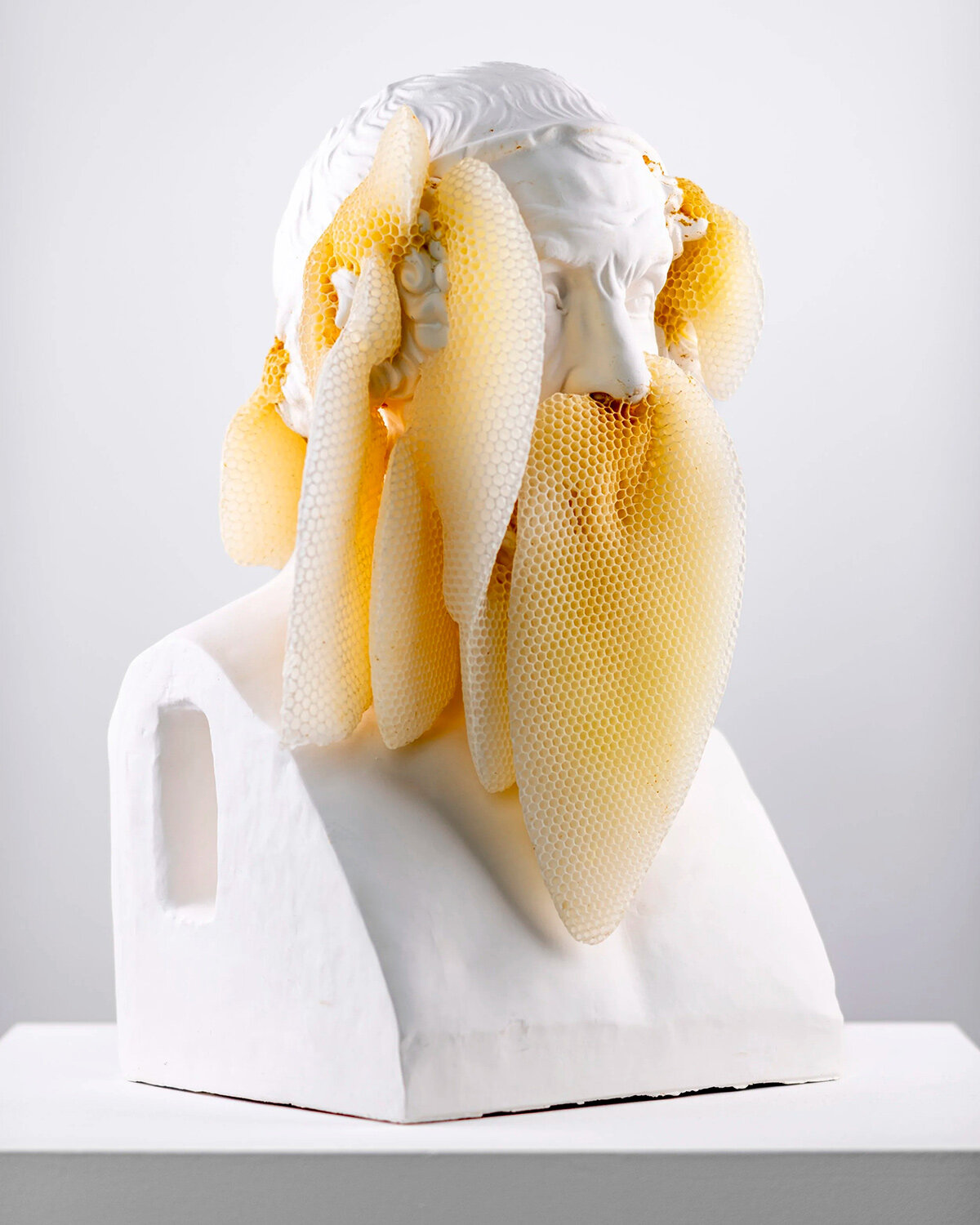
Puett often begins with a figurative armature. The body is shaped, coated with beeswax, and placed inside a bee environment, where the colony adds comb across the form. The bees soften the contours and interrupt the human figure with their own architecture. What starts as a body becomes a shared surface, part sculpture and part record of hive activity.

ren yue and the limits of control
Beijing-based artist and beekeeper Ren Yue, also known as Ren Ri, works with bees to occupy hollow geometric vessels. The artist places a queen bee at the center of a transparent geometric structure. The worker bees build around her, following the social logic of the colony. Every seven days, Ren changes the position of the box through a roll of the dice, altering gravity and disrupting the direction of the growing comb.
The method makes collaboration feel charged. Human control is present, even theatrical, yet the bees still build according to their own behavior. The finished forms hold that tension inside their waxy geometry. Ren’s work is useful here because it avoids an overly gentle reading of interspecies practice. Working with another species can
involve guidance, pressure, accident, and unease.

hilary berseth’s programmed hives
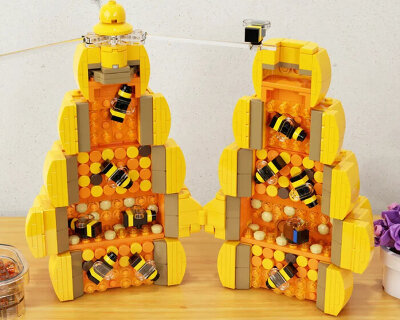
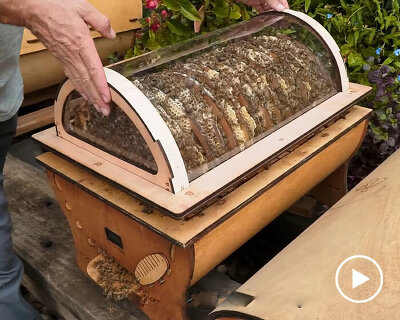
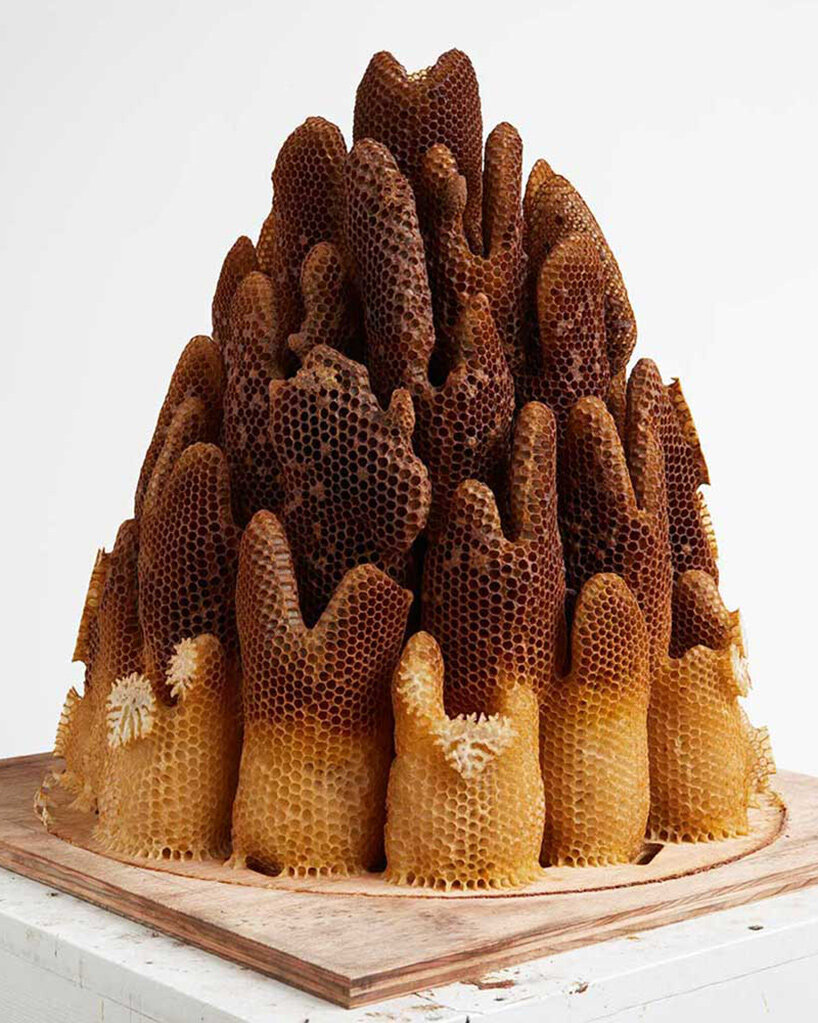
Hilary Berseth approaches the hive through structure. In his Programmed Hive series, he designs frameworks out of materials such as plywood and polystyrene foam, then introduces honeybees into the structure so they can complete the work through comb building. The phrase “programmed hive” matters because it points to the split between human planning and insect construction.
Berseth’s works have an architectural quality. The artist draws the first condition, almost like a plan, while the bees resolve the form through instinctive labor. Their additions can be dense, uneven, and strangely exact. The final sculpture records both systems at once: the framework imposed by the artist and the collective intelligence of the colony.
tomáš libertíny’s slow prototype
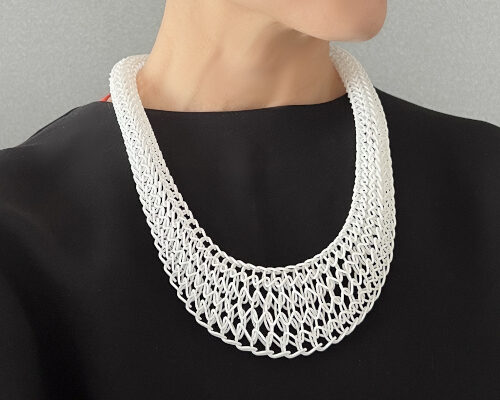
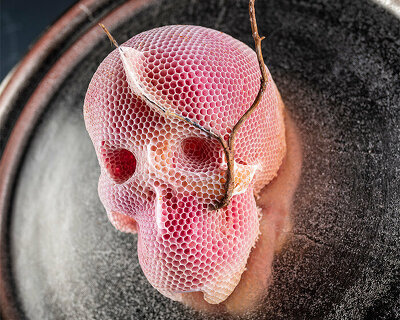
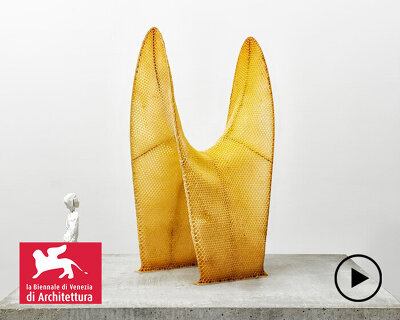
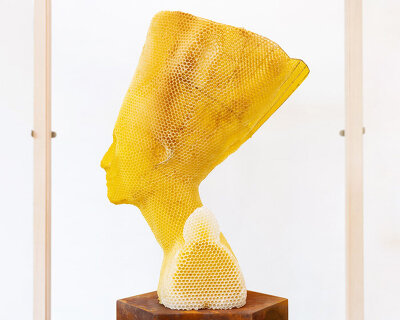
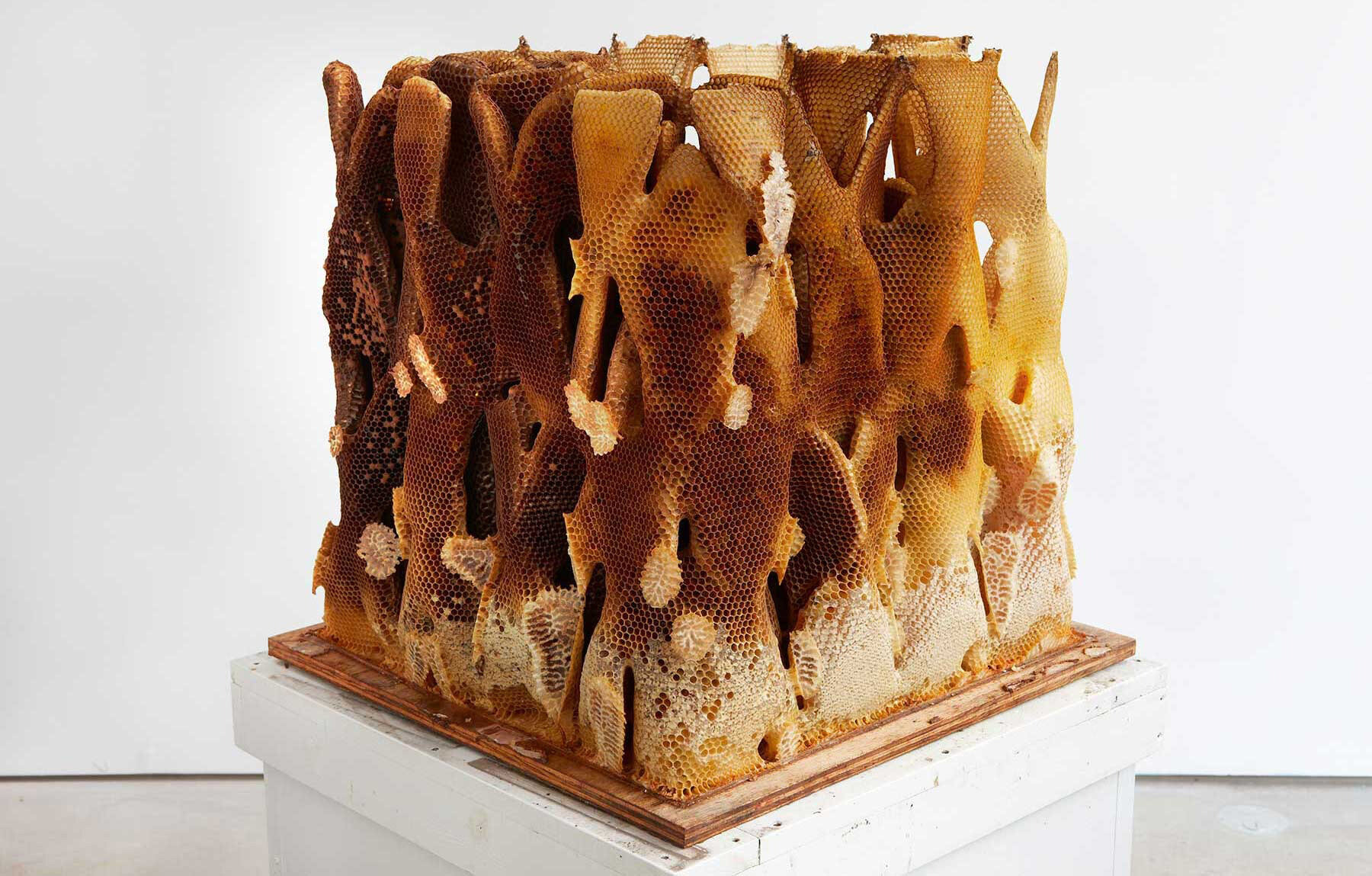
Tomáš Libertíny‘s practice turns the hive into a living workshop, where design begins as a framework and continues through the collective intelligence of bees. Working through Studio Libertíny, the Rotterdam-based artist has spent years developing his Made by Bees series, from vessels and busts to architectural forms, often creating scaffolds that guide the colony without fully controlling the final surface.
His process has been described as ‘slow prototyping,’ and that phrase fits the work well: the artist sets a shape, then waits as thousands of bees build in wax according to their own spatial logic. At the 2021 Venice Architecture Biennale, his Architecture by Bees exhibition brought this method into an architectural context, presenting honeycomb as a form grown through cooperation, repetition, and time.
The work feels precise without losing its living irregularity. It asks what design can become when the maker steps back from the tool and lets another species complete the structure.
aganetha dyck and ‘the power of the small’
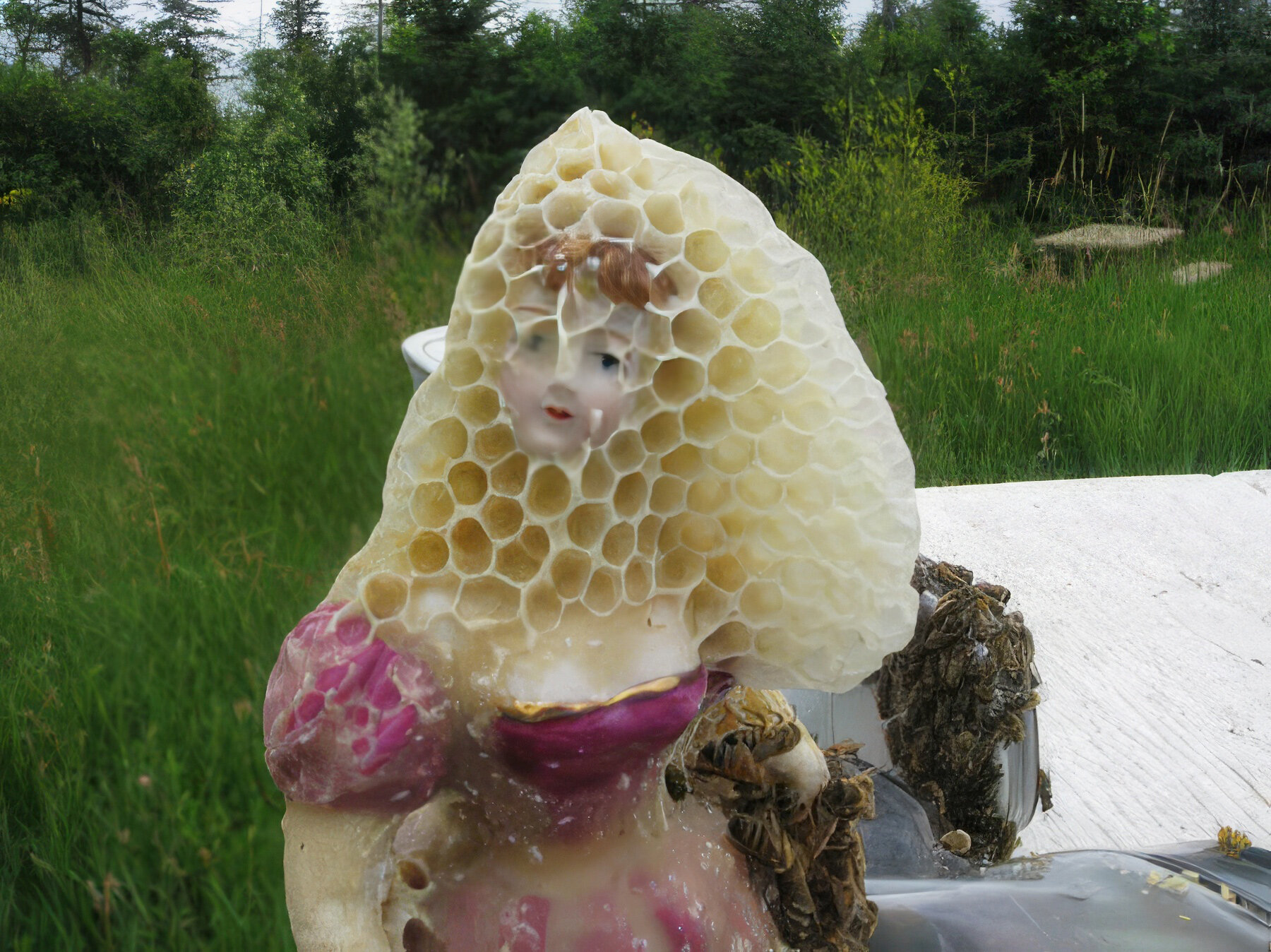
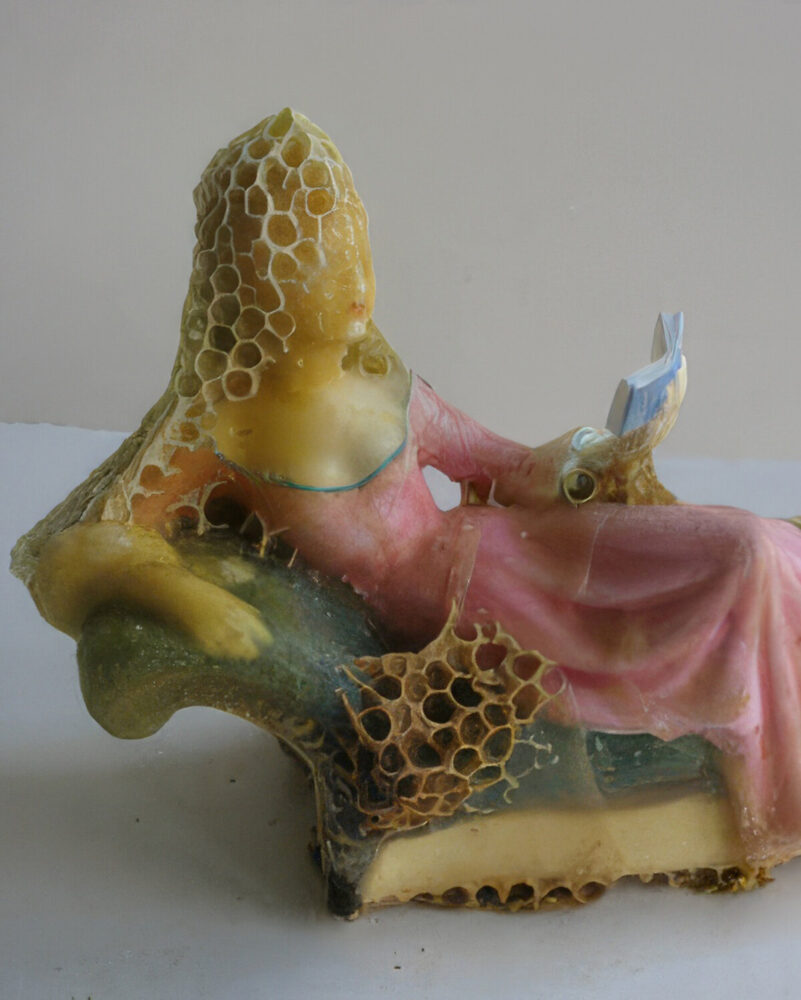
Aganetha Dyck remains one of the clearest precedents for this kind of interspecies making. Before she passed away at the age of 87 in 2025, the Canadian artist became known for placing human-made objects into beehives and allowing honeybees to partially transform them with comb. Her practice began in the late 1980s and often involved collaboration with beekeepers and entomologists, extending across several seasons for some works.
Dyck’s objects often begin close to the domestic world: shoes, garments, figurines, tools, and other familiar items. Inside the hive, their use value changes. Bees add wax, pattern, and density, turning each object into a strange conversation between human culture and insect labor. The work carries humor and concern at once. It asks viewers to see bees as makers whose small actions can remake the scale of an object.
authorship as a shared condition
Together, these artists offer six different ways of giving up control. Puett works through beekeeping knowledge and the human figure. Libertíny turns design into a biological process. Hulačová opens sculptural bodies to living interiors. Dyck places ordinary objects inside the hive. Ren Yue uses chance and gravity to shift the bees’ construction, and Berseth creates frameworks that bees complete from within.
The ethical weight sits in the method. The beauty of the comb is easy to admire, but the more important question is how the bees are invited, handled, protected, and understood. In the strongest examples, the artist’s role shifts from maker to caretaker of conditions. The work becomes a record of attention as much as form.
a softer model of making
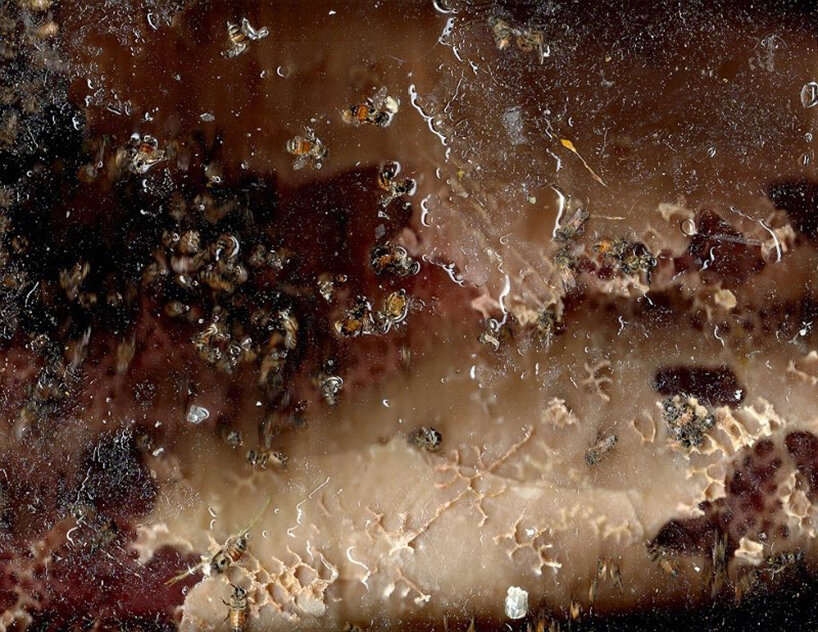
At a moment when design is often discussed through acceleration, efficiency, and new systems of control, these bee-led practices move at the pace of a colony. They ask for time. They depend on weather, season, touch, and trust in a nonhuman process. The artwork arrives through labor that can be guided but never fully owned.
These works do more than just turn honeycomb into sculpture. Instead, they suggest a different model for making, one where humans enter a living system with enough humility to let that system answer back.
1/5
project info:
artists: Anna Hulačová, Garnett Puett, Ren Yue, Hilary Berseth, Tomáš Libertíny, Aganetha Dyck
shop
your own online design shop — no sales commission collected