This article is part of designboom’s PLAY chapter, exploring what would happen if form didn’t follow function, but pleasure. Discover more stories that celebrate joy, imagination and playfulness here.

‘bomb scars bring the wall back to rock’: artist pavel rotts maps war through climbing
bright resin holds turn fragments of wartime architecture into a climbable map of collective loss.
prefer designboom on googleclimbing across the remains of narva, estonia
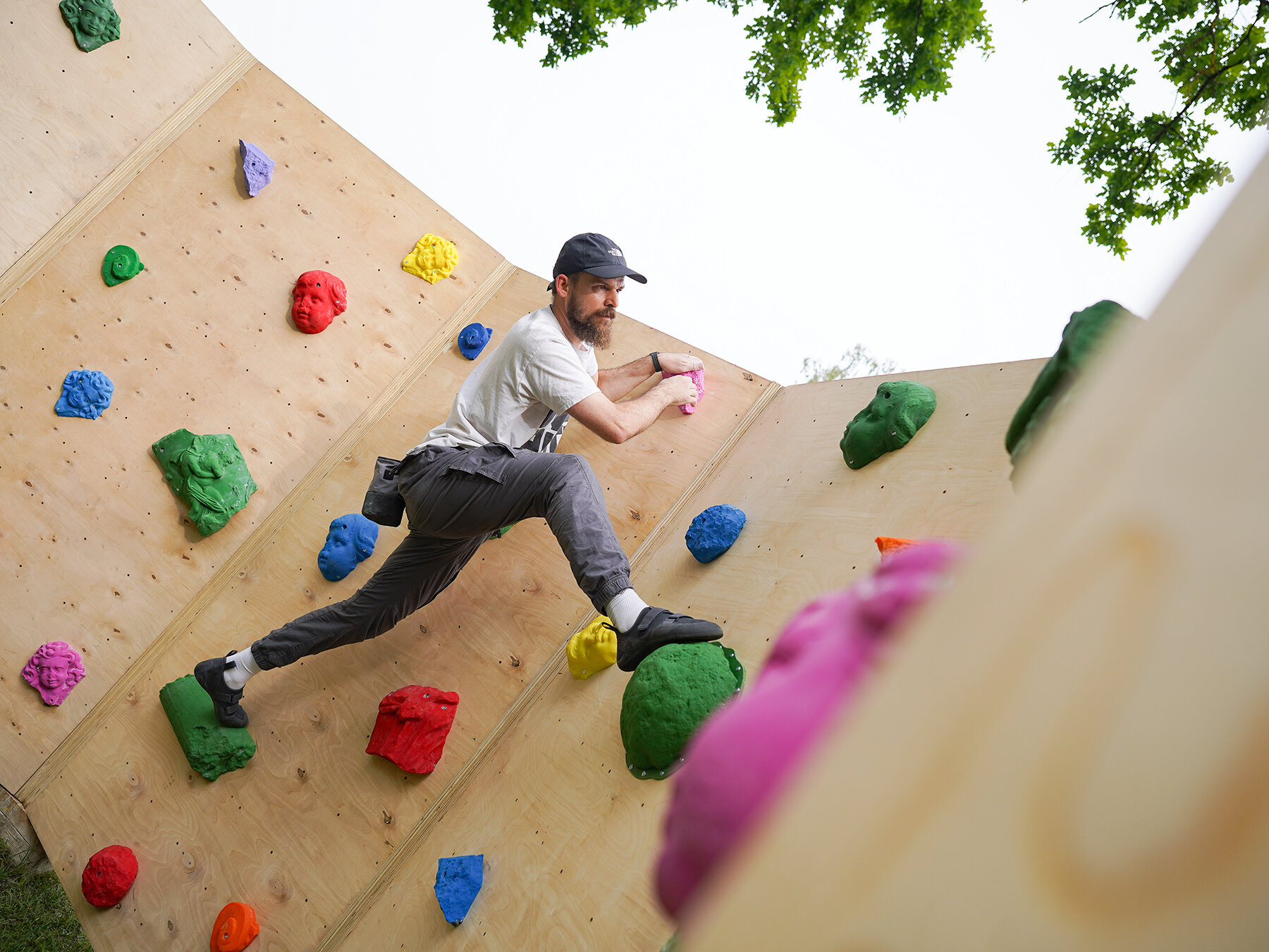
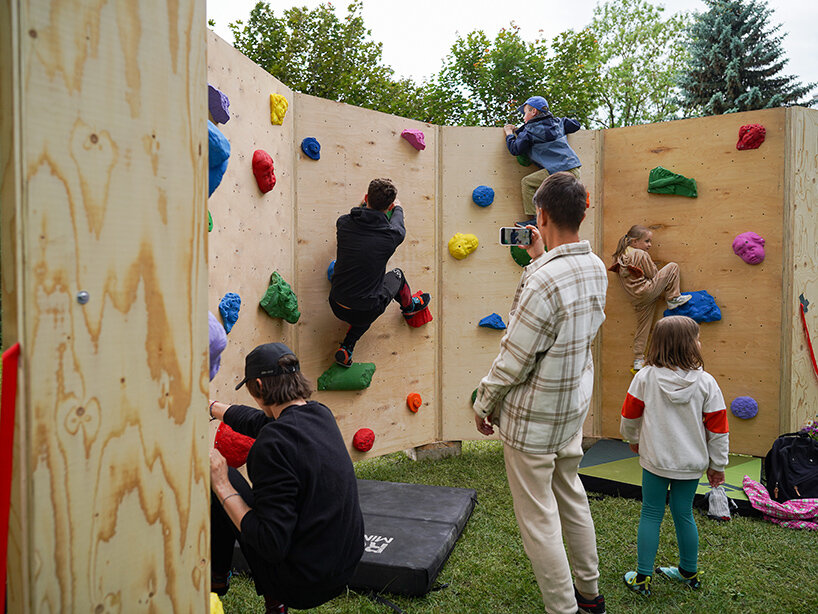
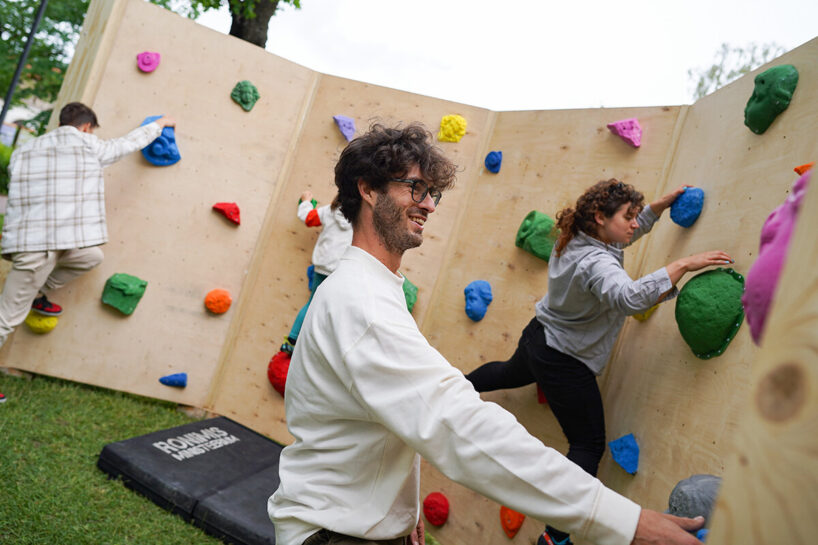
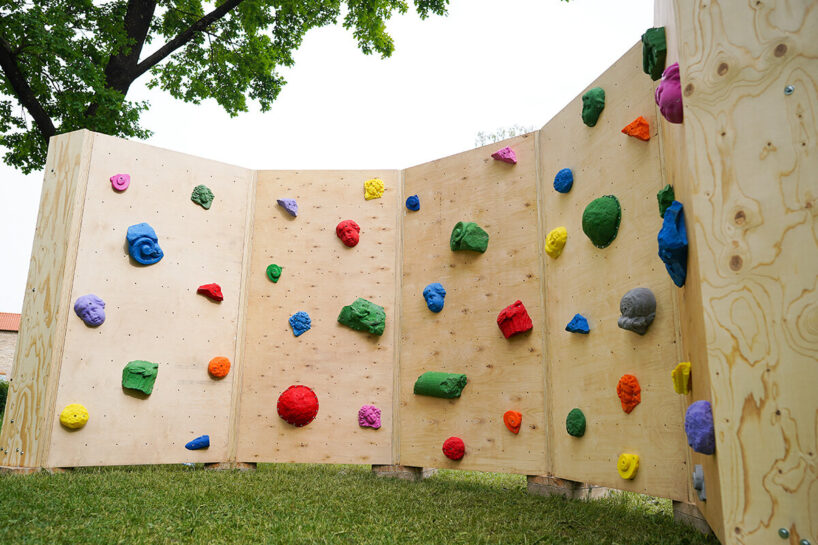
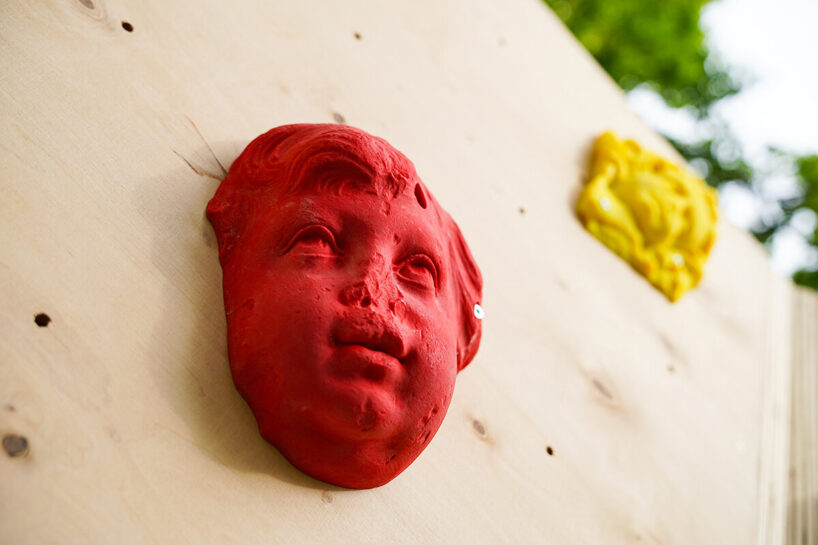
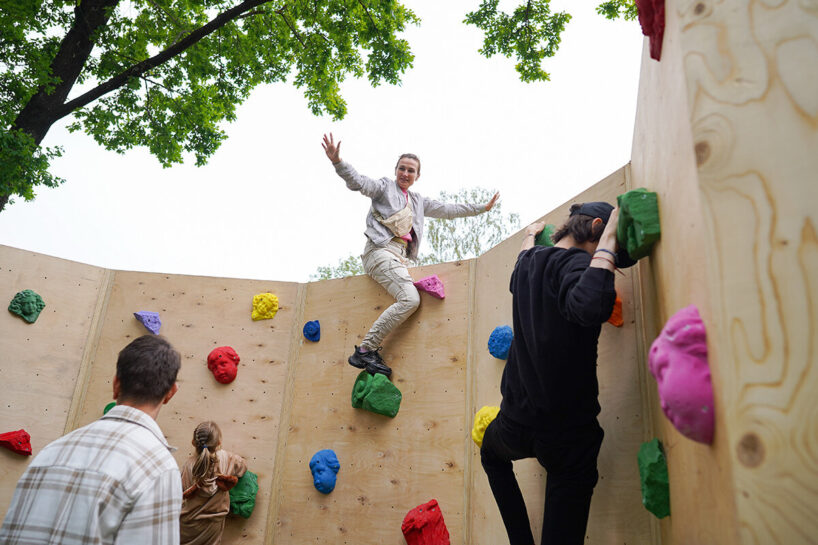
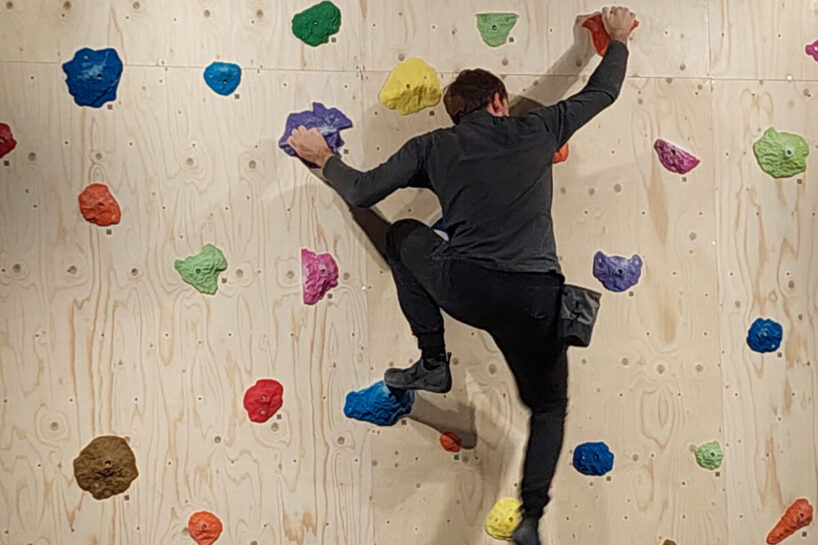
In Estonia’s Narva Castle Park, a child reaches for the cast of an angel’s head and pulls upward, using a fragment of carved stone under one foot. The holds are bright enough to belong in a climbing gym, yet their shapes come from a city that largely disappeared during World War II. Families gathered around Pavel Rotts’ installation throughout its run, and children climbed so often that the grass surrounding the wall wore away. What begins as a familiar and playful encounter soon turns into contact with the broken architecture of Baroque Narva.
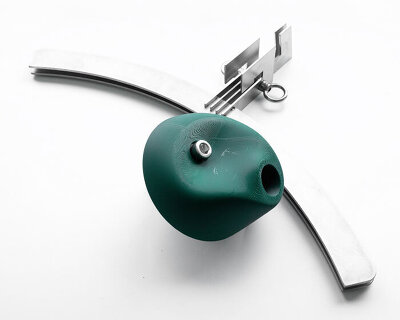
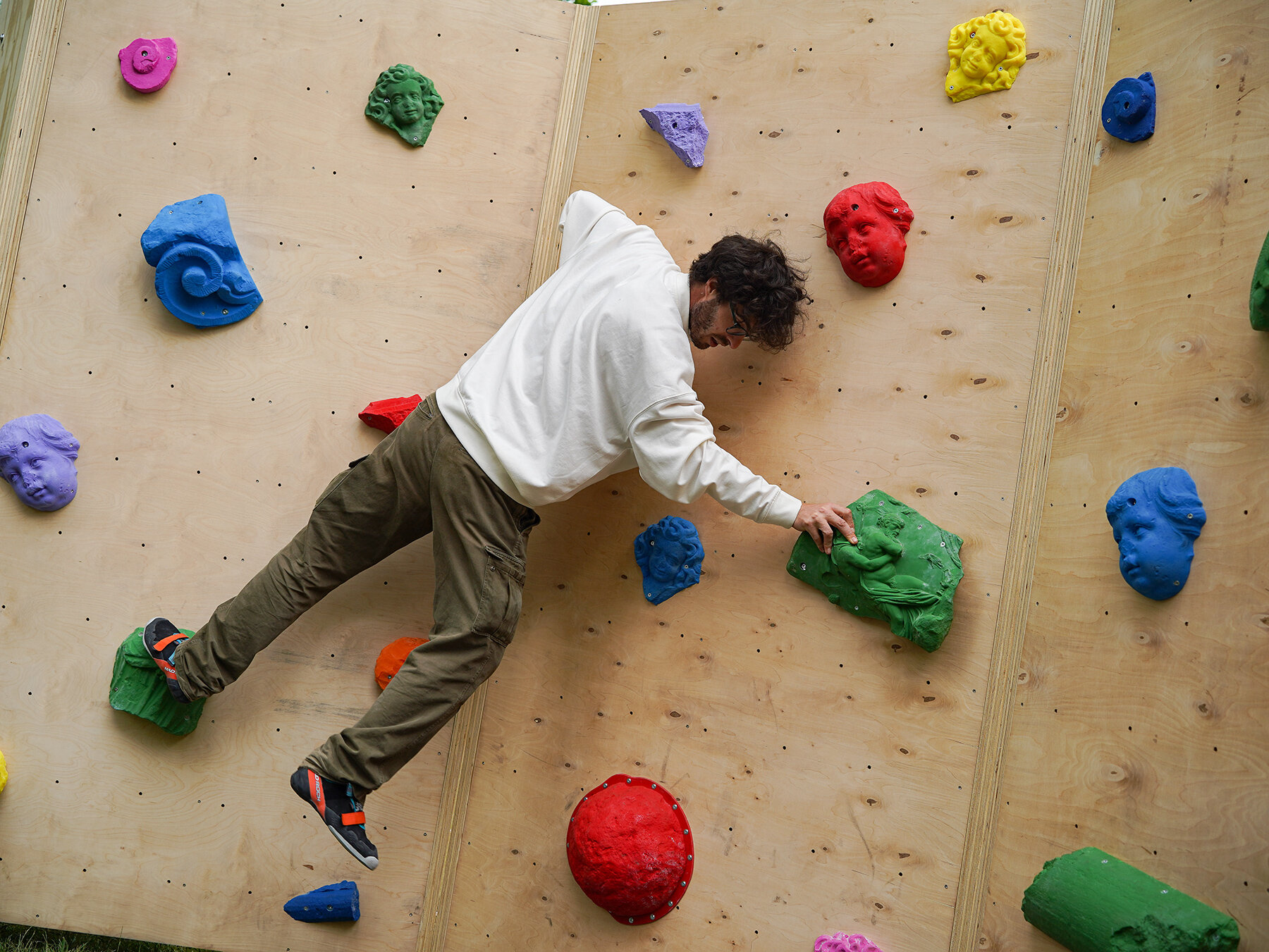
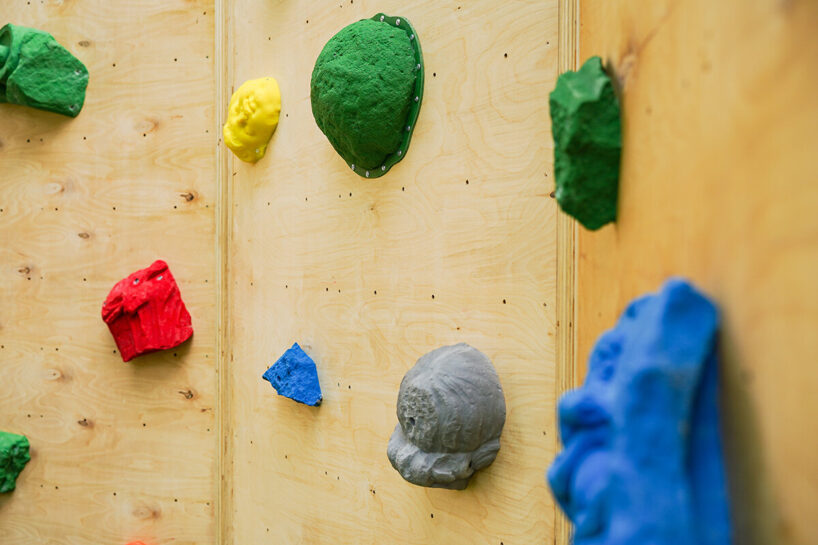
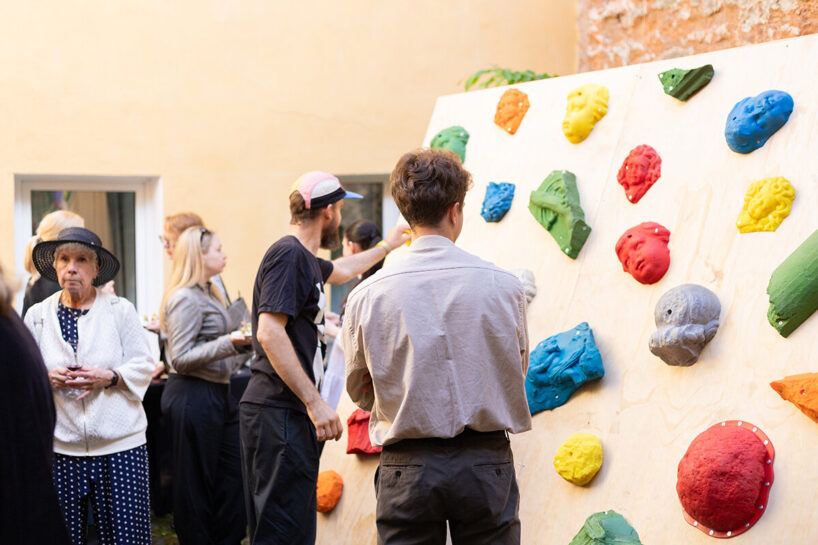
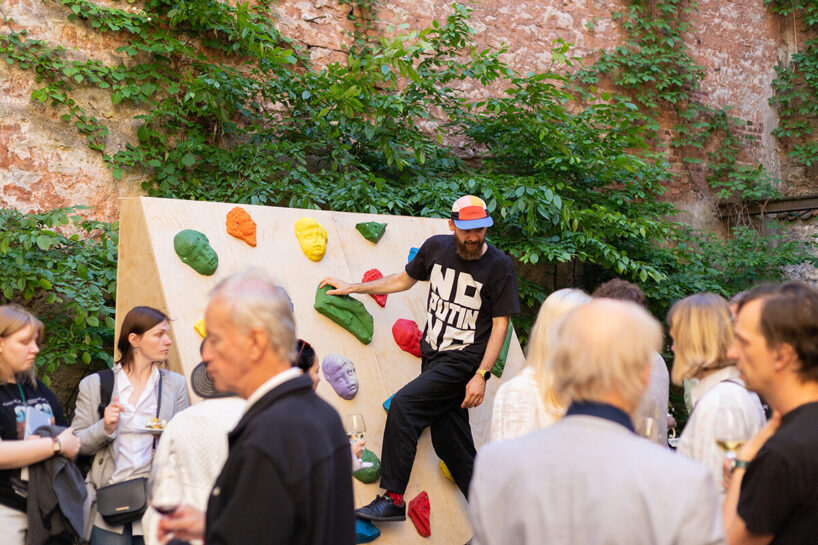
Pavel Rotts made molds of architectural fragments held by Narva Museum and recast them in the plastic resin used for climbing holds. A putto’s face sits beside a curled volute — pieces that once belonged to separate facades now share one vertical field. As visitors move between them, their bodies form temporary connections across a city assembled from absence. ‘In a way, it becomes a journey through an imaginary city with your own body,‘ the artist tells designboom.

a bomb scar becomes a handhold
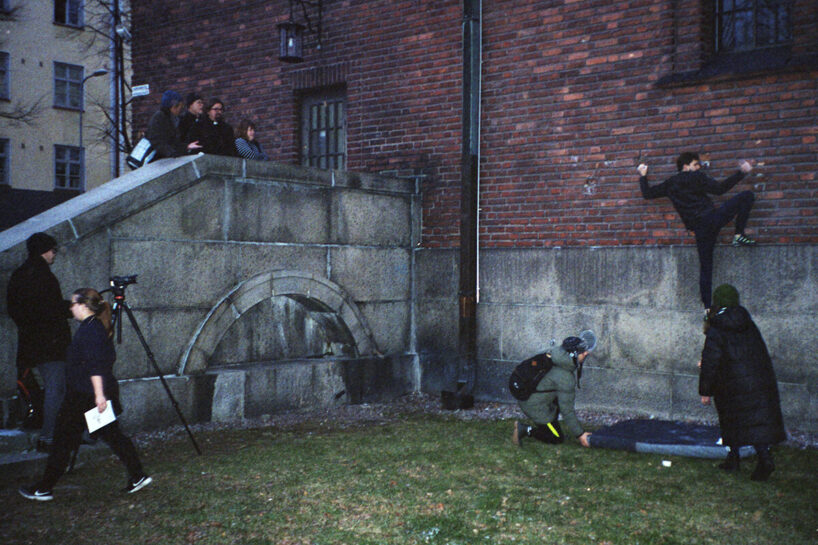
The project begins in Helsinki in 2018, several years after Pavel Rotts moved to Finland from Russia as an Ingrian Finn. His family history crosses the same wartime border he studies through the city’s surfaces. One grandfather experienced Soviet attacks in Finland, while the other survived Finnish air raids in Petrozavodsk. Rotts had wanted to work with Helsinki’s remaining scars for years, though his first approaches stayed visual. Climbing opened a physical route into the subject. ‘I’m a climber. I like to climb,‘ the artist says. ‘It’s an urge that lives in my body.‘
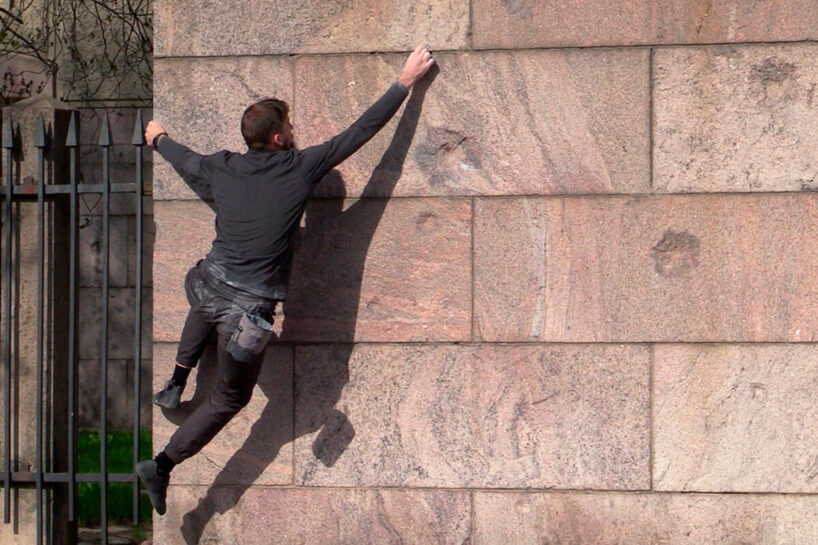
Standing at Pitkäsilta, the granite bridge between Kallio and central Helsinki, Rotts noticed how bomb damage interrupted an otherwise flat wall. The small craters created edges for fingers and feet. ‘These bomb scars bring this architectural wall back to rock,‘ he explains. That observation ties the project to climbing’s older relationship with risk, where a tiny chipped surface can support a person’s full weight. For Rotts, the intensity held in such a feature echoes the charge of a wartime trace, a mark left at the point where a shell struck stone.

the logic of a climbing gym
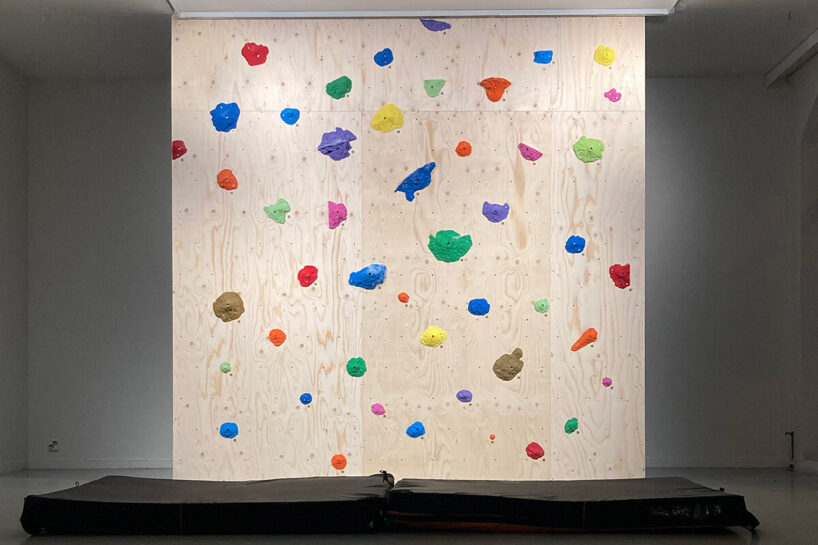
Although the wall operates as sculpture, its routes grow from the functional language of climbing. Rotts borrows the bright color coding used in gyms, where a route reads through the holds assigned to it. ‘Their appearance grows out of how they are meant to be climbed,‘ he explains. For larger works, he collaborates with professional route setters who consider reach and difficulty. The upcoming Helsinki edition at Forum Box is developed with Felix Damsky of KiipeilyAreena, who shapes each route through his knowledge of how bodies move across a wall.
Smaller gallery versions often follow the logic of a spray wall, with holds scattered across the surface in a dense, irregular arrangement. Rotts compares this format to a Jackson Pollock painting, where a pattern begins to emerge through attention. ‘Only in your mind do you begin to connect them,‘ he says. The same idea returns to the broken city. Fragments gather on one surface, and visitors join them through their own movement. ‘They come together on one wall,‘ Rotts adds, ‘and visitors can physically reconnect them with their own bodies through climbing.‘

where play changes the conversation
Visitors often begin by discussing the holds themselves, whether a slab feels comfortable or a crimp offers enough purchase. Then the vocabulary shifts. ‘You suddenly realize that we are actually talking about different kinds of war damage on the wall,‘ Rotts says. Some people begin recalling scars they have passed elsewhere in the city, while others suggest repaired sites where visible traces have disappeared. The wall gives those conversations a physical starting point, reached through fingertips and shifting weight.
Rotts resists broad claims about what each visitor learns, though he sees value in the way the work moves beyond words. He wants ‘what is already embedded in the world to become expressible,’ especially when the emotional charge of a place feels difficult to describe. ‘Climbing offers one possible way of channeling these emotions through bodily movement instead of language or purely visual representation,‘ he says. His wider research also follows climbing as a therapeutic practice, drawn to the concentration it demands and what he calls ‘a deep integration of body and mind.’

back to the streets of helsinki
The project now returns to Helsinki, where casts taken from the city’s war-damaged architecture form a public climbing wall across the facade of Forum Box. On view from August 7th to September 27th, 2026, the installation is activated through public climbing events, bringing Rotts’ early encounters with bomb scars back into the urban space where the work began. The colorful resin holds reproduce craters and missing pieces from walls that many residents pass without seeing.
Across its different versions, Climbing a Memory treats the surface of a city as something the body can read. A crater becomes a grip. A broken ornament becomes a foothold, while an absent building returns as a sequence of movements. ‘The act of climbing for me is a way of understanding,‘ Rotts writes. His walls leave history unresolved, though they give visitors a way to approach it together, one reach at a time.
a playful wall in a divided border city
When Climbing a Memory opened in Narva in 2024, the work entered a city where interpretations of wartime history remain politically charged. The installation formed part of a larger program marking 80 years since the March Bombing of 1944, which destroyed much of Narva. Rotts says other parts of the commemoration drew hostility from sections of the pro-Russian audience, and some people expected the public wall to become a target for conflict.
The wall drew families instead. Children returned throughout the exhibition, treating its historical fragments as a route to solve with their hands and feet. Rotts believes ‘the playfulness of the work’ shaped that response, along with an approach that ‘avoids assigning blame.’ The installation presents the fact of destroyed architecture and leaves space for people to enter through action. By the end of its run, the worn grass around the structure offered the clearest record of how fully the work had been used.
1/11
project info:
project: Climbing a Memory
artist: Pavel Rotts | @pavel_rotts
project initiated: 2018
Narva installation: Narva Castle Park, Narva, Estonia
curator: Kerly Ritval
architect: Marco Manfredino
graphic design: Ljuba Terukov
shop
your own online design shop — no sales commission collected