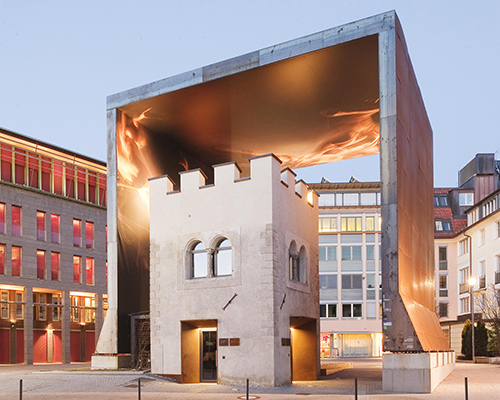
stefan hitthaler houses bolzano’s ‘gunpowder tower’ in a corporeal landscape
the tower's mysterious and vague historical background sets the stage for a creative exploration into the relationship between human beings and the ancient architectural monument.
stefan hitthaler houses bolzano’s ‘gunpowder tower’ in a corporeal landscape
all photography by christof theurer
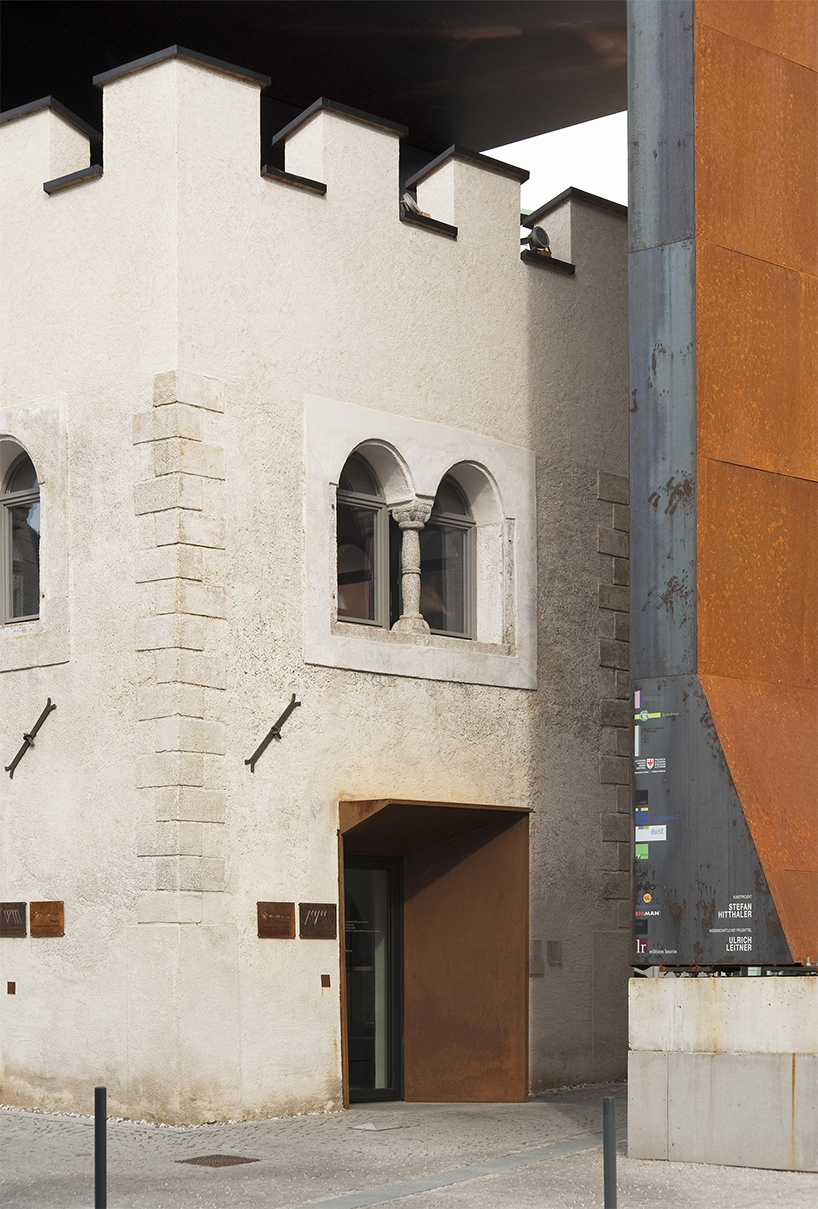
the historic, valley town of bruneck in the bolzano province of northern italy hosts an artistic and scientific intervention dedicated to the relationship between spaces, bodies and objects. architect stefan hitthaler, in collaboration with ulrich leitner of the university of innsbruck, has realized ‘corpus intra muros’ around a 16th century landmark known as ‘the gunpowder tower’ in the heart of the town. the tower’s mysterious and vague historical background sets the stage for a creative exploration into the relationship between human beings and the ancient architectural monument.
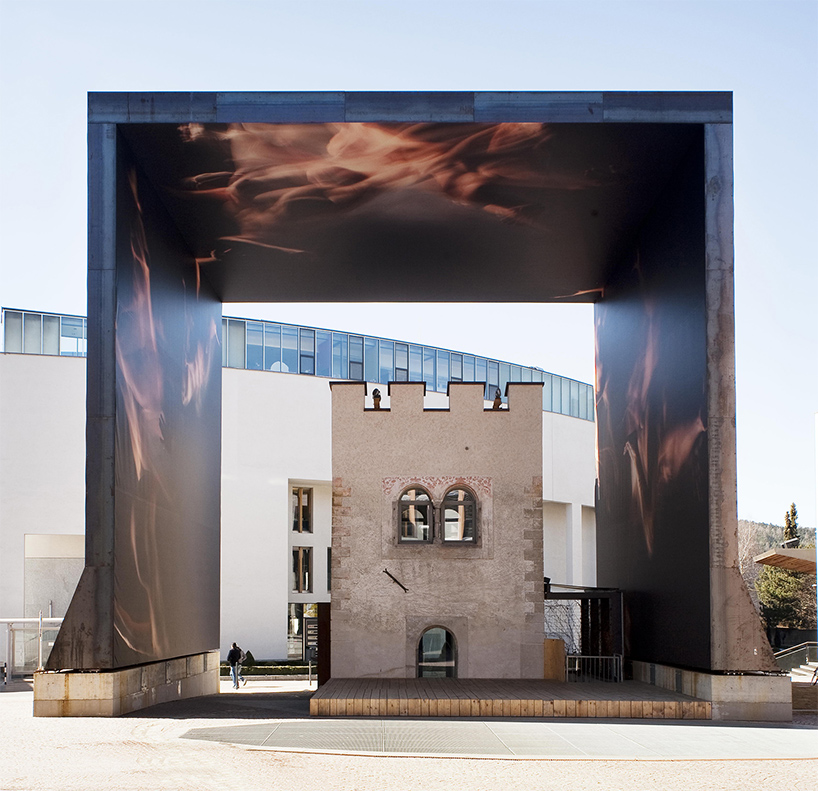
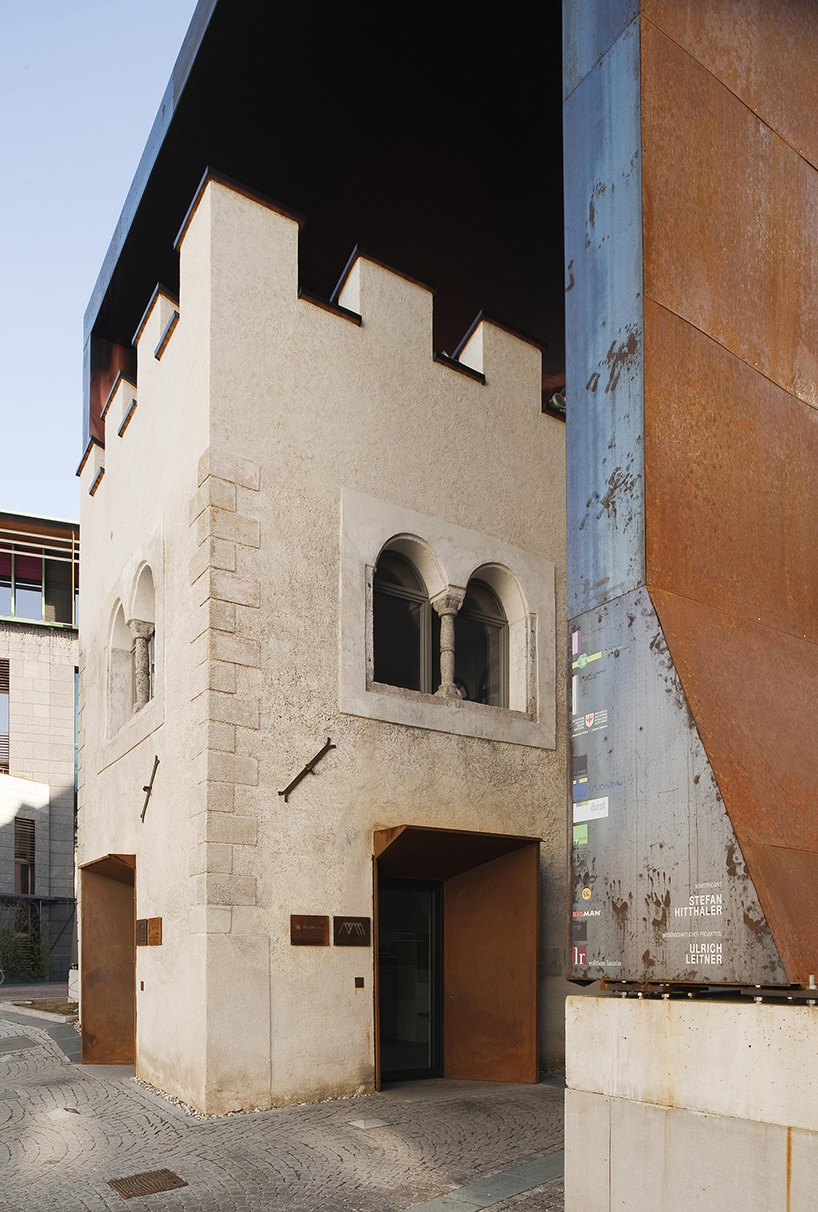
the installation is realized over ‘the gunpowder tower’ in the heart of the town
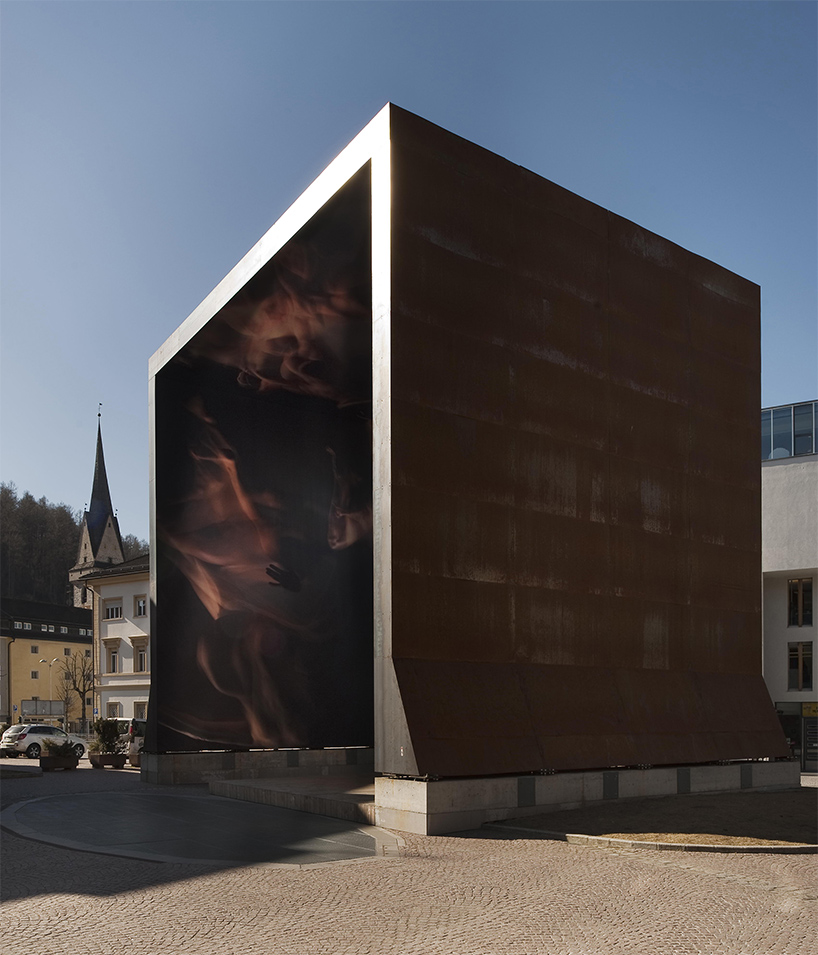
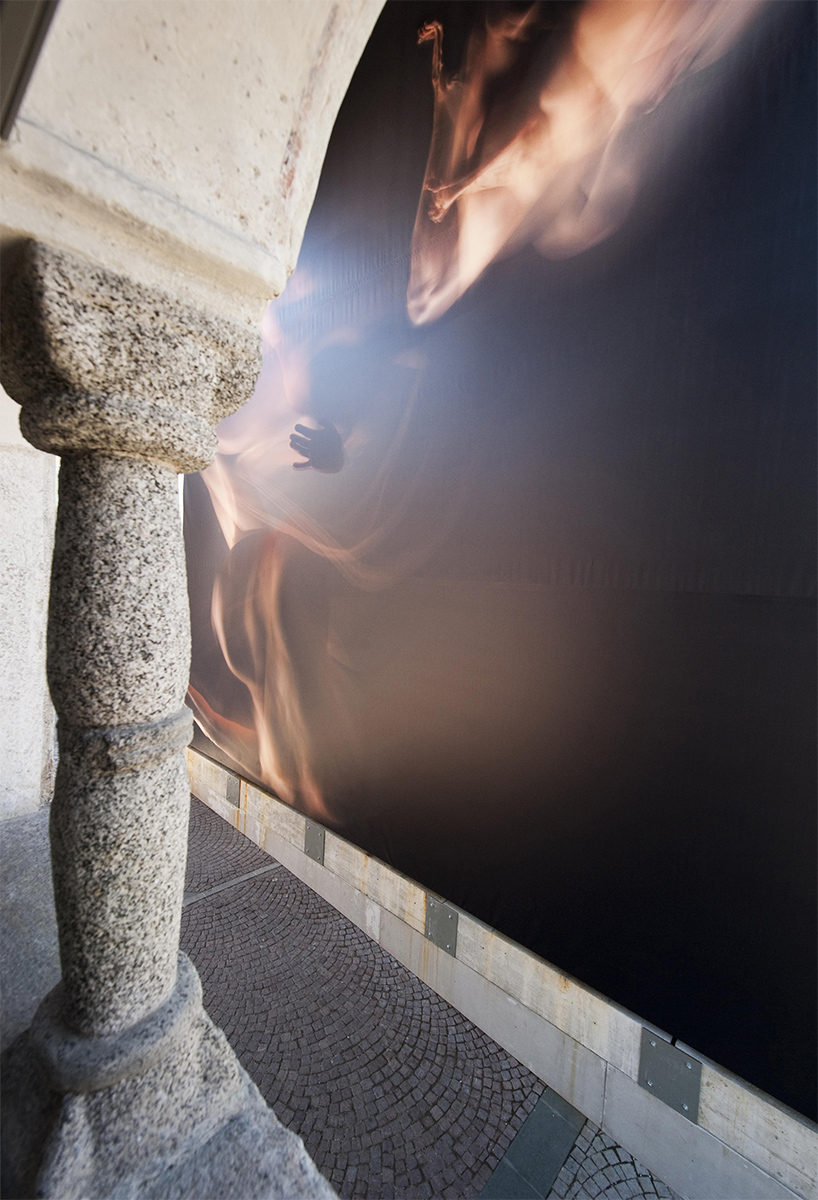
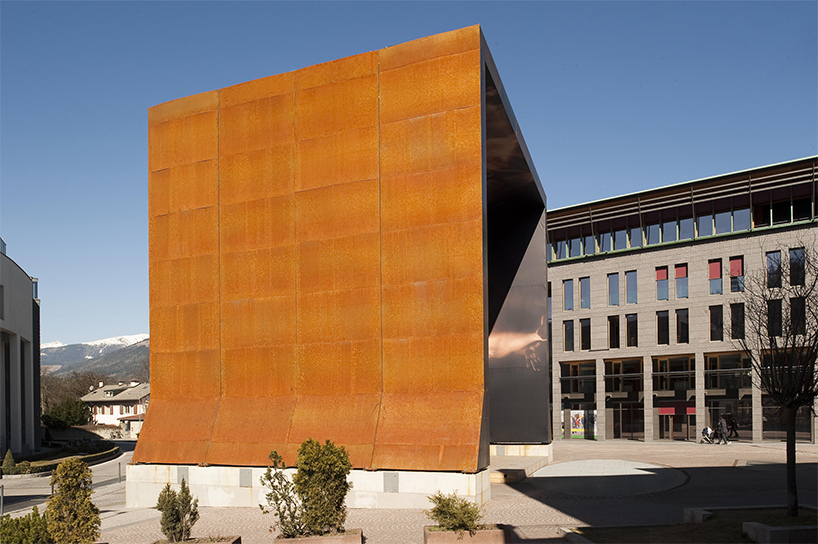
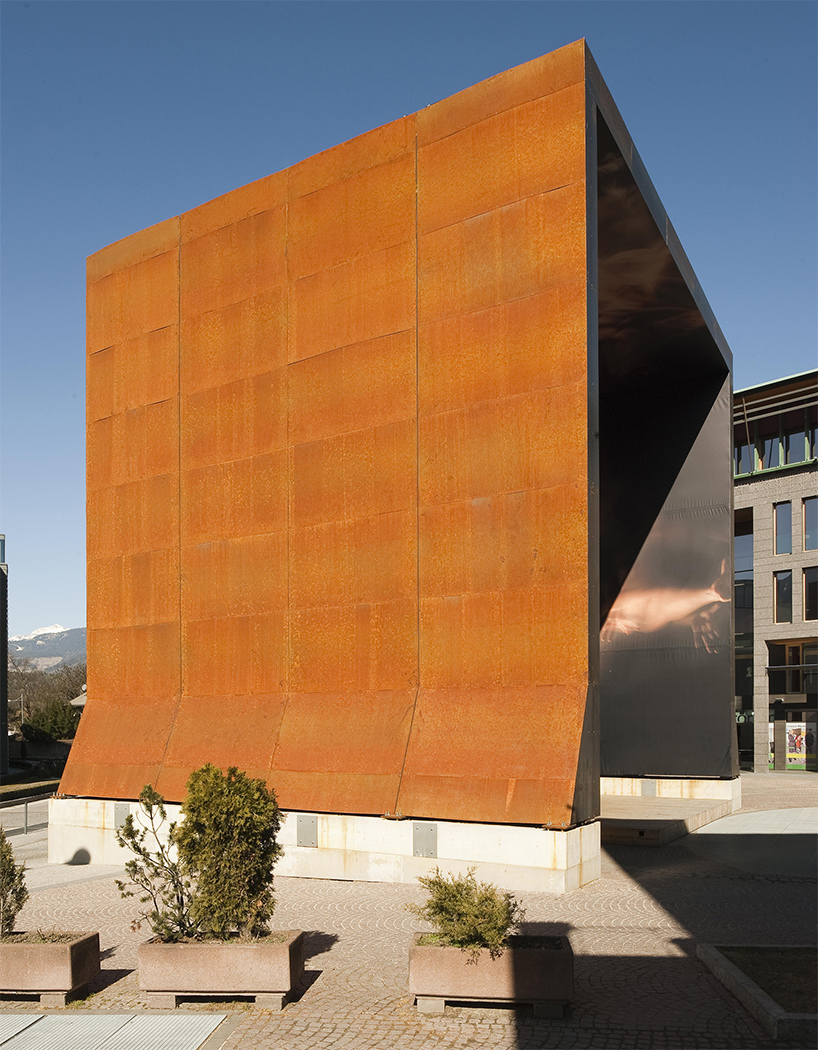
hitthaler has conceived a monumental, external shelter that ‘houses’ the historic structure beneath by an illustrative portrayal of ‘bodies inside walls’. the monolithic canopy rising high above the tower walls features an exoskeleton defined by a rusted metal material, while its interior is canvassed by a dynamic painterly composition. a large-format, photographic representation shows robed human bodies appearing to push through a dark, continuous background, forming a narrative between the tower and the installation that surrounds it.
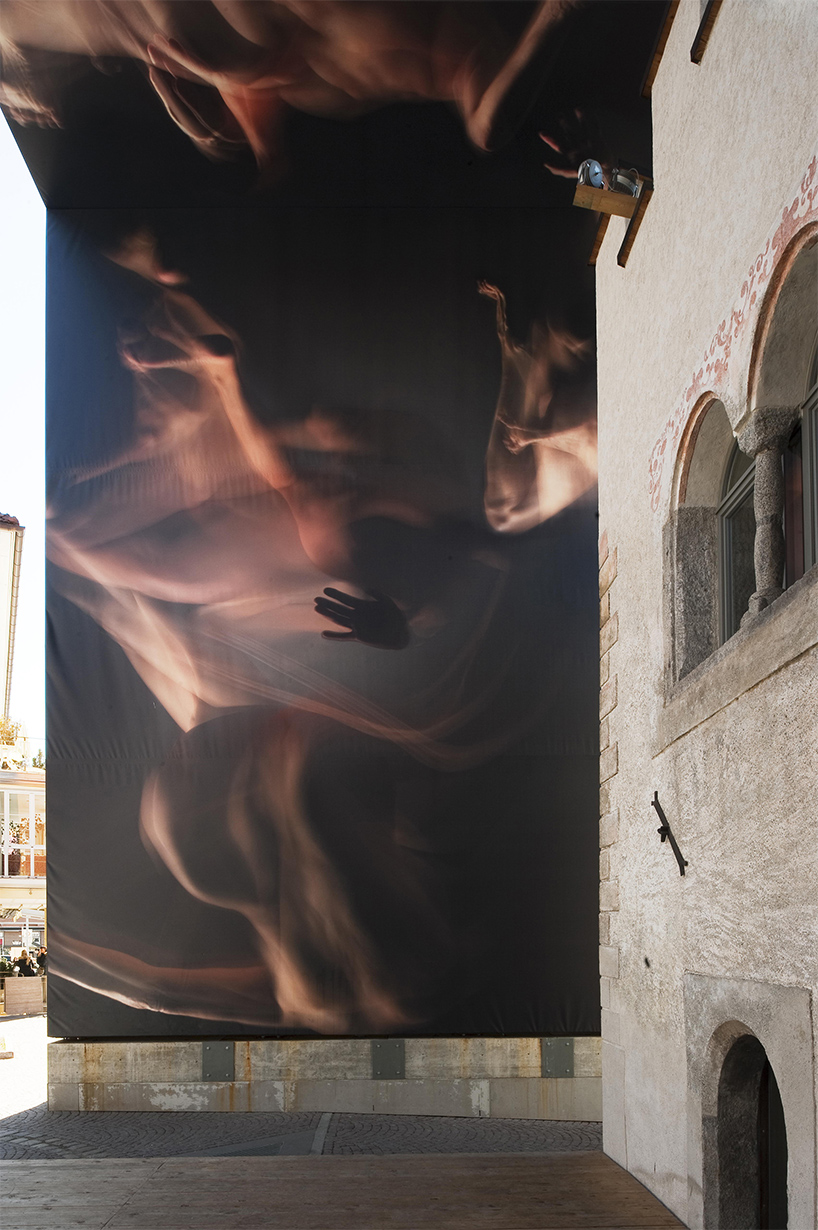
a photographic representation shows robed human bodies appearing to push through a dark background
‘spaces and objects contain within them the presence of human beings. human bodies imprint themselves on the very walls between which they live and along which they walk’, hitthaler says. ‘landscape can thus be read as a topography of invisible layers left behind by humans. so what would happen if we were to inquire after those human traces spaces and objects leave in human beings? the walls would influence the human bodies that had once created them, and the objects form the people who used them.’
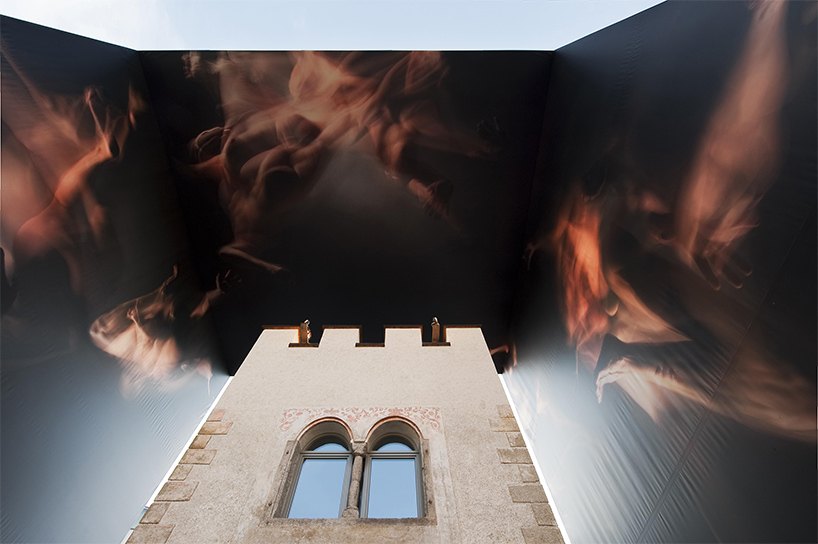
looking up, a dynamic photographic composition canvasses the interior of the installation
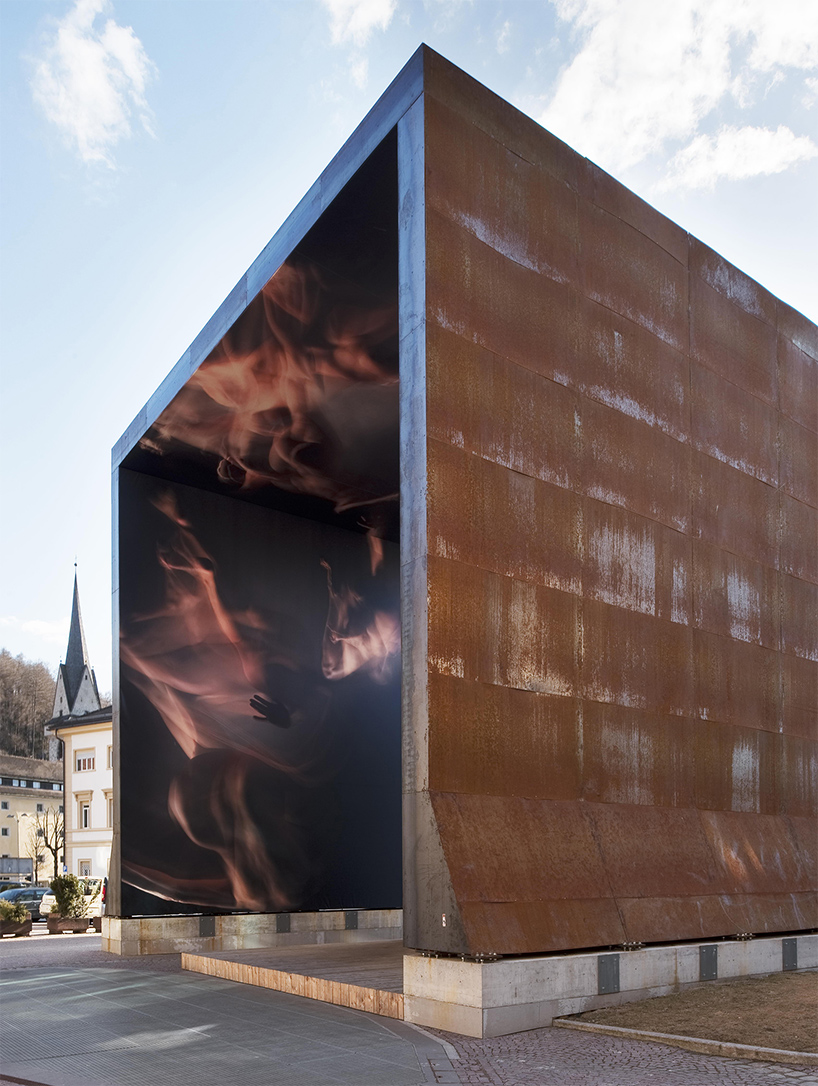
the juxtaposition of materials highlights the relationship between spaces, bodies and objects
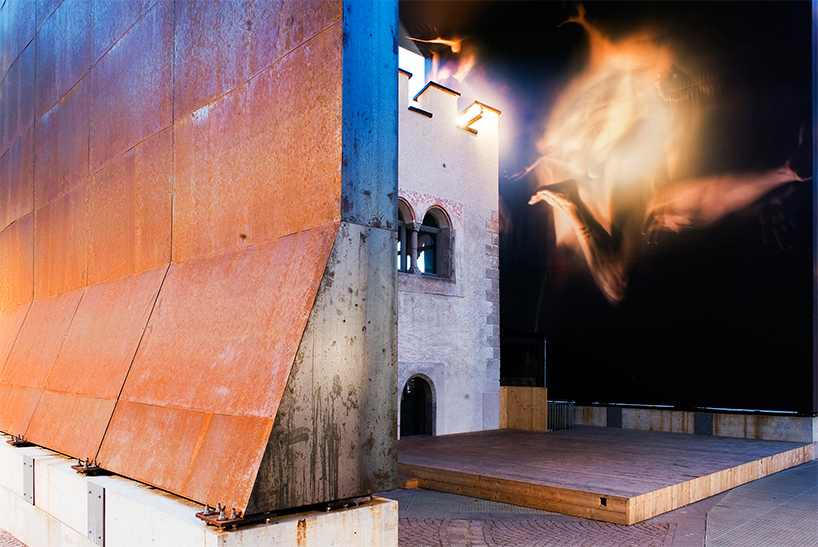
the dark internal panels are illuminated from within
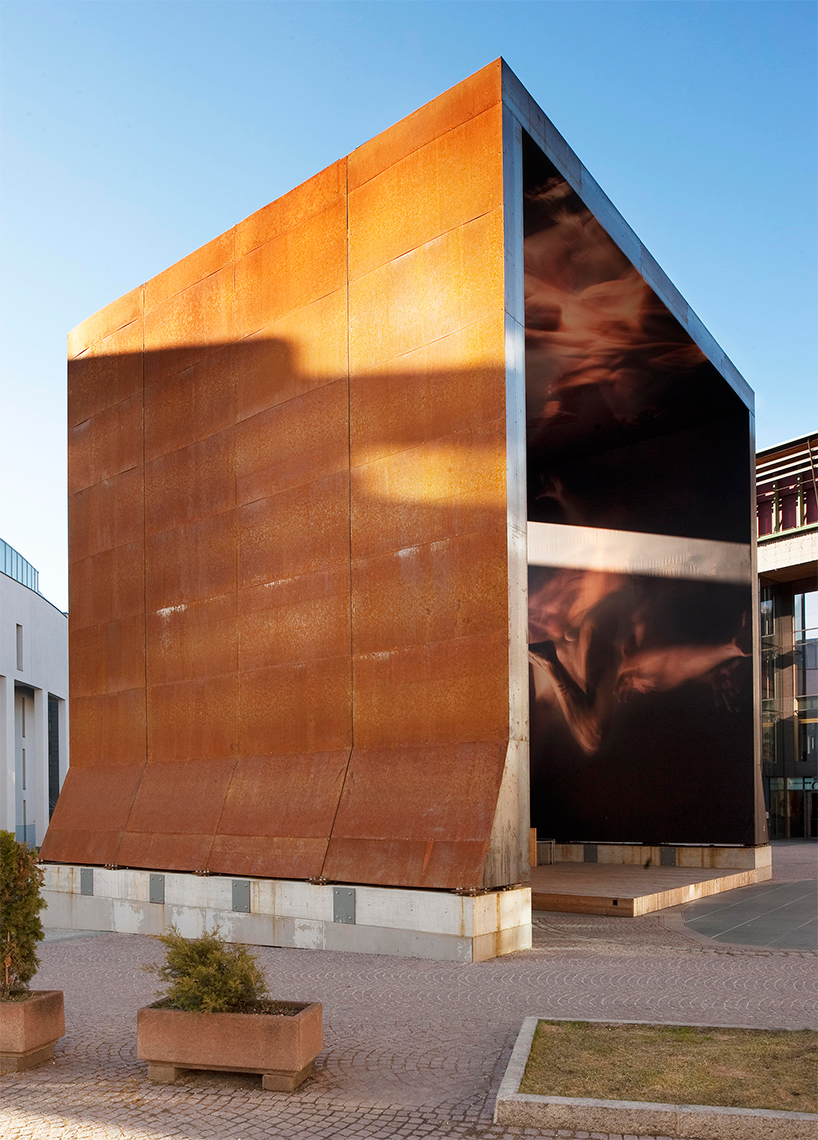
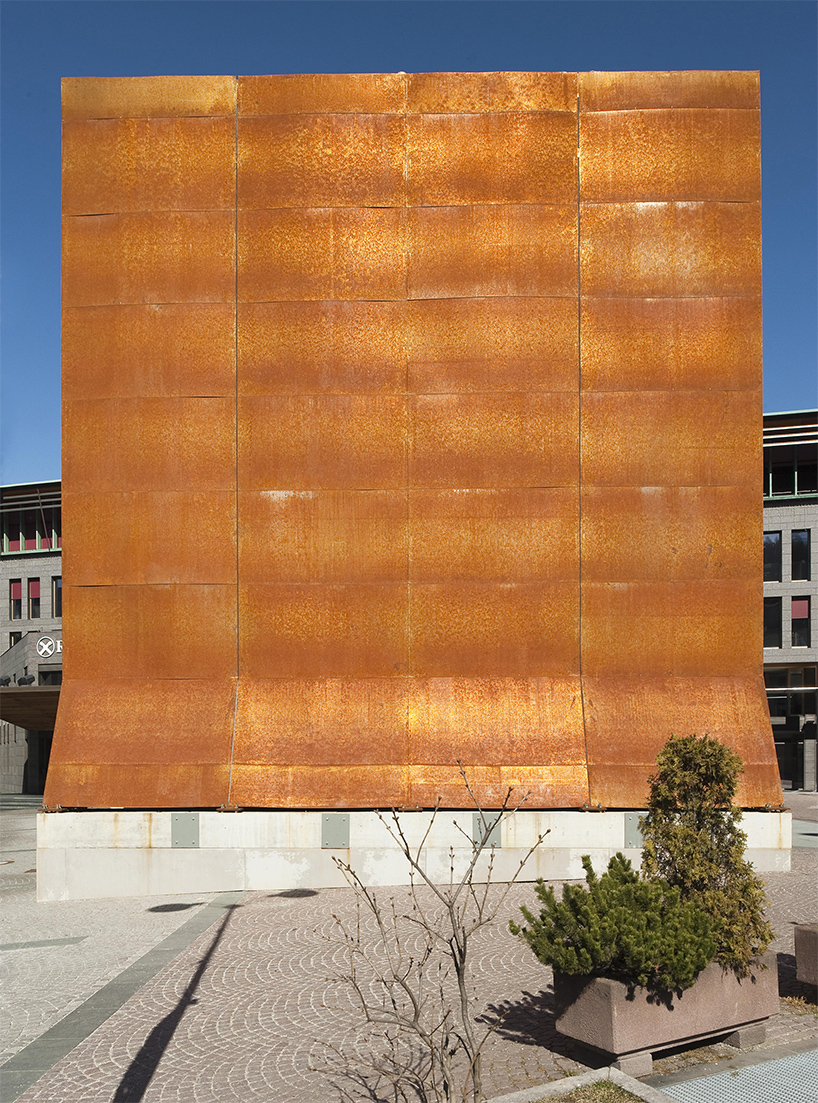
a rusted metal façade surrounds the exterior of the artistic intervention
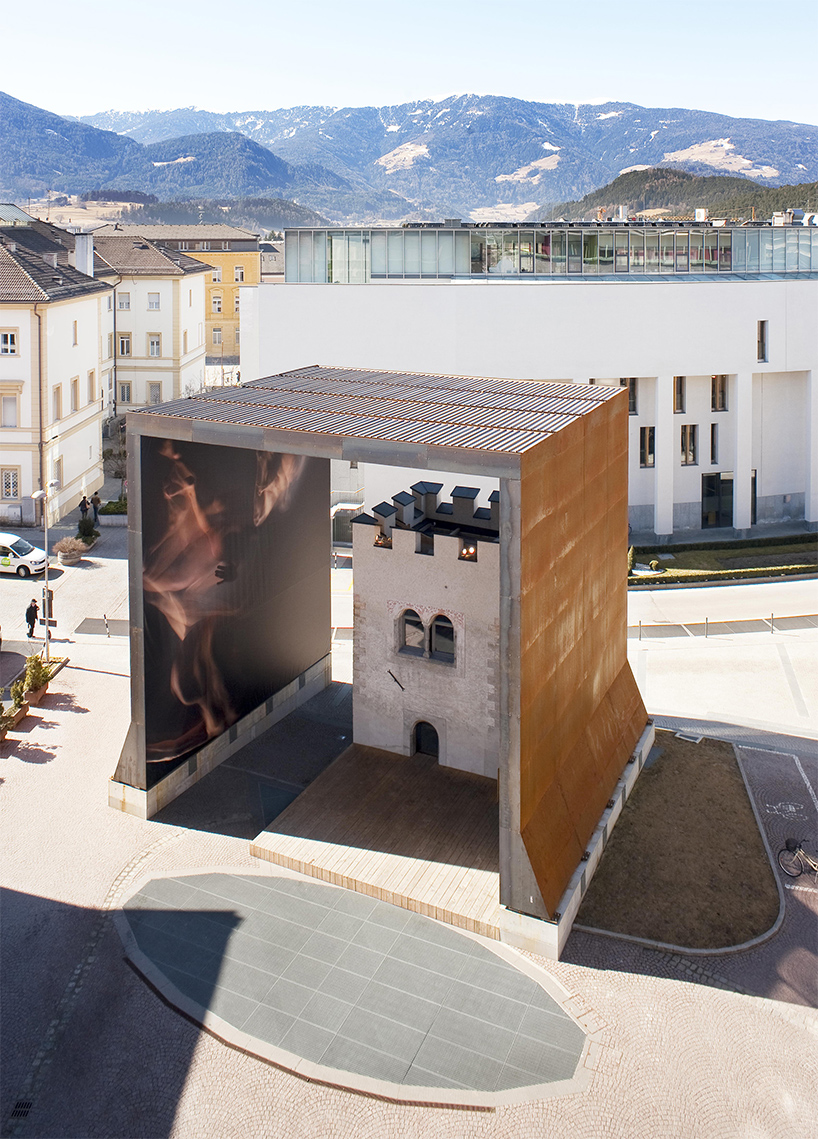
‘corpus intra muros’ is set in the historic, valley town of bruneck in the bolzano province of northern italy
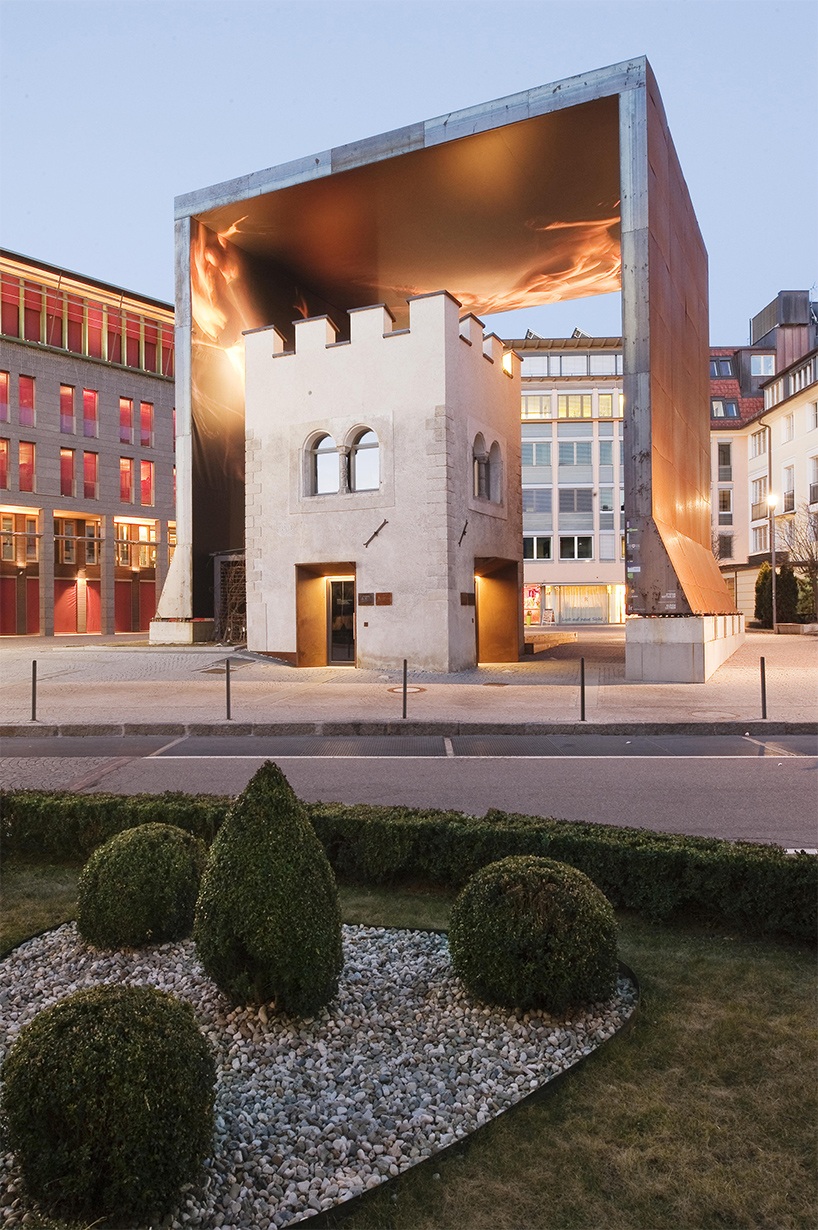
illuminated by night
 1/6
1/6
shop
your own online design shop — no sales commission collected