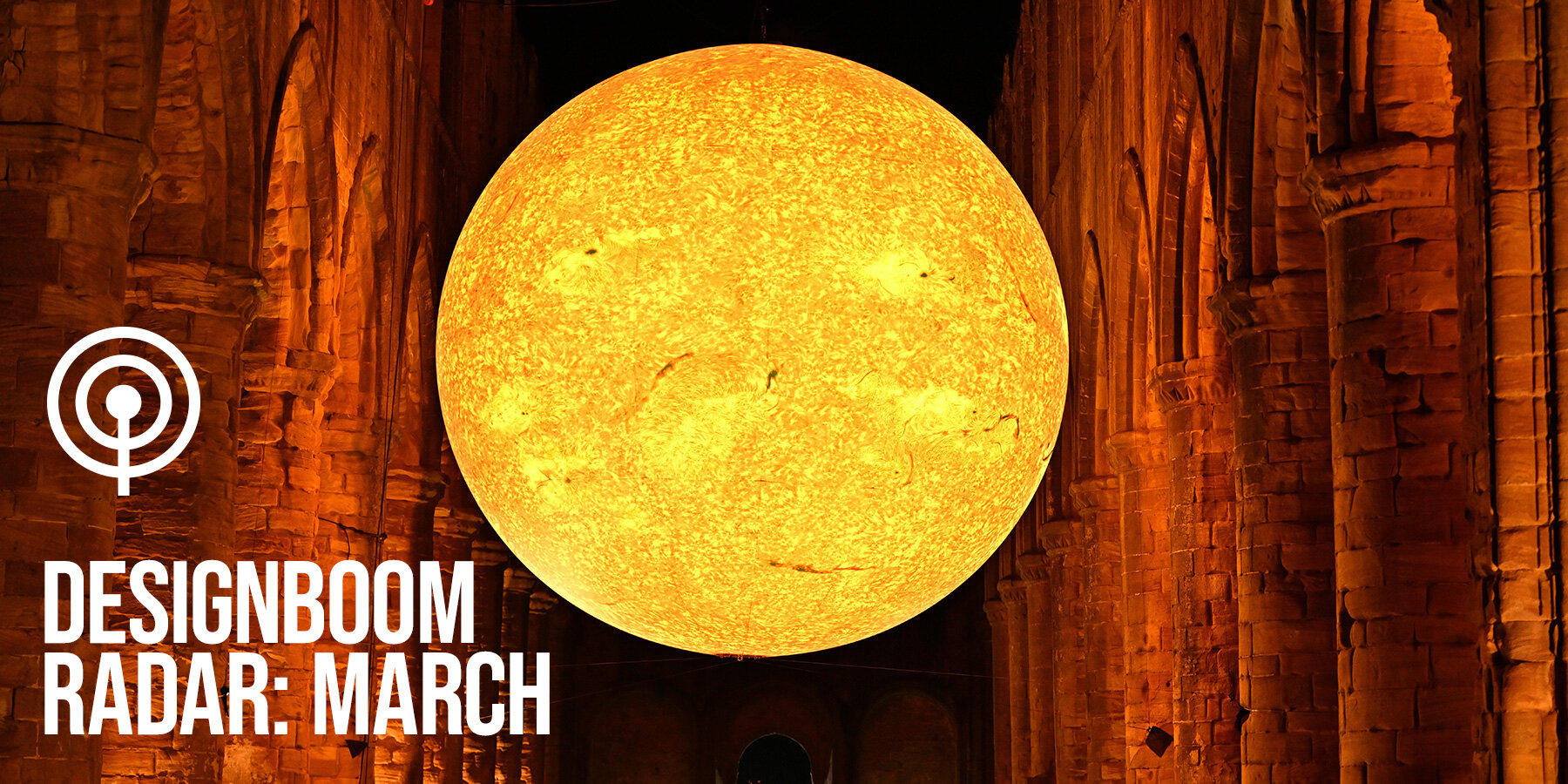
March exhibitions from DESIGNBOOM RADAR
March’s standout exhibitions place architecture and material at the center of the experience. In São Paulo, ABERTO5 opens Eduardo Longo’s Casa Bola, using the spherical ferrocement house as the setting for site-responsive works. In Tashkent, the Centre for Contemporary Arts debuts with Hikmah, where new commissions engage Studio KO’s transformation of a 1912 tram depot. In Tokyo, Roppongi Crossing 2025: What Passes Is Time. We Are Eternal. brings more than 100 works together under the theme of time.
Light and scale drive other highlights. At Paris’ Bourse de Commerce, Clair-obscur traces chiaroscuro from early modern painting to contemporary installation, while Luke Jerram’s Helios in Auckland presents a six-meter illuminated sun built from scientific imagery. Home Sweet Home rethinks the birdhouse as experimental design, and at the Guggenheim, Carol Bove fills the rotunda with steel sculptures that recalibrate the spiral architecture.
Some of the exhibitions highlighted in earlier radars and listings on our dedicated events guide remain on view, giving designboom readers more time to encounter them around the globe.
Schiaparelli: Fashion Becomes Art
The Victoria and Albert Museum in London is set to present Schiaparelli: Fashion Becomes Art as the first UK exhibition dedicated to Elsa Schiaparelli. Spanning from the 1920s to the present, the show traces the evolution of the house from its early interwar experiments to its current direction under creative director Daniel Roseberry.
More than 200 objects will be on view, including garments, accessories, jewellery, paintings, photographs, sculpture, furniture, perfumes, and archival material. Highlights from the V&A’s collection include the ‘Skeleton’ dress and the ‘Tears’ dress, developed with Salvador Dalí, along with works by Pablo Picasso, Jean Cocteau, and Man Ray. The exhibition also considers Schiaparelli’s influence on film and theatre costume, as well as the contemporary direction of the house today.
name: Schiaparelli: Fashion Becomes Art
designer: Elsa Schiaparelli
museum: V&A South Kensington
location: London, UK
dates: March 28th — November 8th, 2026
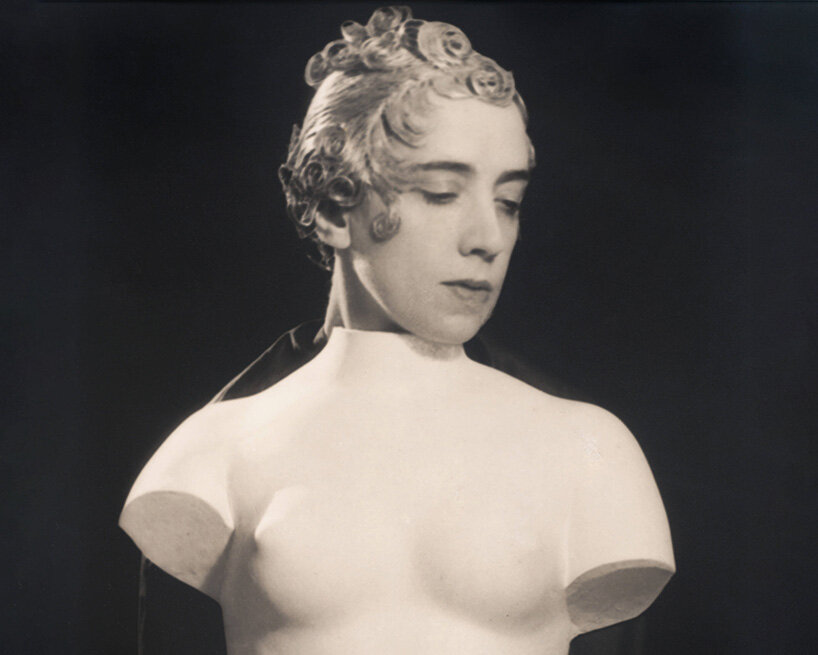
portrait of Elsa Schiaparelli, by Man Ray, 1933 © 2025 Man Ray 2015 Trust. DACS, London. photo Collection SFMOMA
Lella and Massimo Vignelli: a language of Clarity
This retrospective examines the work of Lella Vignelli and Massimo Vignelli, tracing their influence on international design and graphic culture. A focused selection of furniture, interiors, drawings, models, photographs, manuals, trademarks, and publications maps the breadth of their practice while outlining the ideas that shaped it. The exhibition follows their trajectory from postwar Milan to New York, where they established their studio in 1965 and developed a transatlantic presence within a growing design discourse.
Organized in collaboration with the Vignelli Center for Design Studies at the Rochester Institute of Technology, which houses more than 750,000 documents and artifacts related to their work, the exhibition draws extensively on archival material to situate the couple’s output within the broader cultural networks that informed it. The project was also developed with the Vignelli family, contributing firsthand insight into a partnership that spanned more than five decades.
name: Lella and Massimo Vignelli: A Language of Clarity
artist: Lella and Massimo Vignelli
museum: Triennale Milano
location: Milan, Italy
dates: March 25th — September 6th, 2026
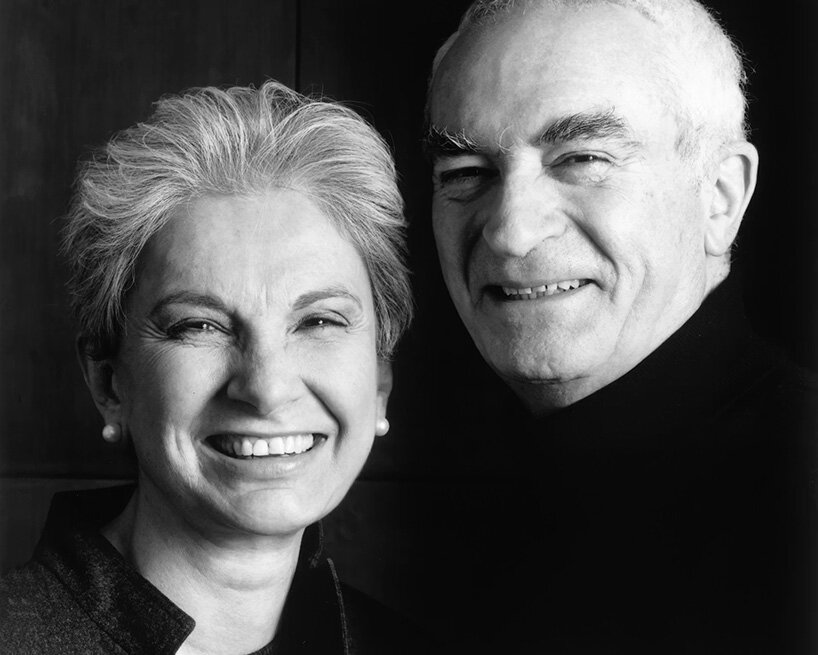
portrait of Lella and Massimo Vignelli, photo by Luca Vignelli
Home Sweet Home: birdhouses
Home Sweet Home is an exhibition at MAD Brussels curated by Connie Hüsser that examines the concept of home through the typology of the birdhouse. The project brings together more than 75 birdhouse designs by Belgian and international designers, including Sabine Marcelis, Muller Van Severen, Max Lamb, Philippe Malouin, and others. The show positions the birdhouse as a design object that connects architecture, care, and coexistence across species.
In uncertain times, when the world seems to be faltering on many levels, the idea of home takes on a deeper and more poignant meaning. A home is more than a physical place; it is a refuge, a space of safety, identity, and care. But what does ‘home’ mean today? And for whom does it truly exist? Home Sweet Home starts from these fundamental questions and focuses on a small yet meaningful object: the birdhouse. What initially appears to be a modest functional item is transformed into a powerful symbol of coexistence, care, and empathy.
‘A small object like a bird’s nest can evoke an entire world,’ says Dieter Van Den Storm, Artistic Director of MAD Brussels. ‘It is both fragile and strong at the same time, just like the idea of home itself. After all, there really is no place like home.’
name: Home Sweet Home: birdhouses
museum: MAD Brussels
location: Brussels, Belgium
dates: March 11th — April 25th, 2026
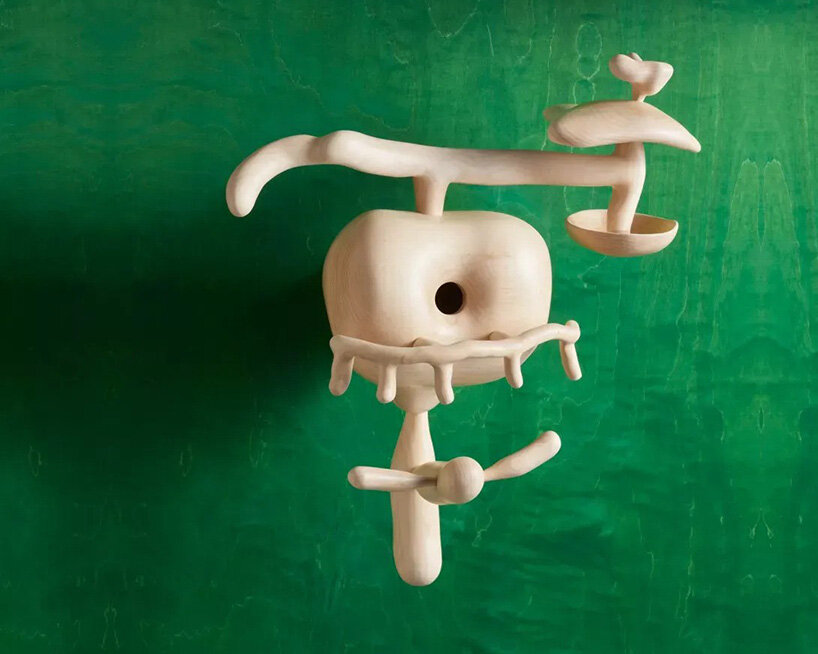
Audrey Large, image © Heinz Unger
YUKO MOHRI: Entanglements
YUKO MOHRI: Entanglements presents the most extensive European solo exhibition to date by Japanese artist Yuko Mohri, who lives and works in Tokyo. Her practice centers on site-specific kinetic sculptures assembled from found objects and modified musical instruments linked through electronic circuits. Mohri draws on a lineage that includes Marcel Duchamp, activating everyday materials through systems that respond to gravity, magnetism, heat, and humidity. Air currents, dust, and shifts in temperature influence each installation, generating sound as an integral component of the work.
The show examines the interdependence of objects, forces, and viewers within evolving spatial arrangements. Each sculpture operates as a provisional network in which energy circulates through wires, surfaces, and resonant elements. Mohri’s constructions register subtle environmental changes while embedding references that range from philosophy to pop culture, as well as from kinetic art to experimental music.
name: YUKO MOHRI: Entanglements
artist: Yuko Mohri
museum: Centro Botín
location: Santander, Spain
dates: March 28th — September 6th, 2026
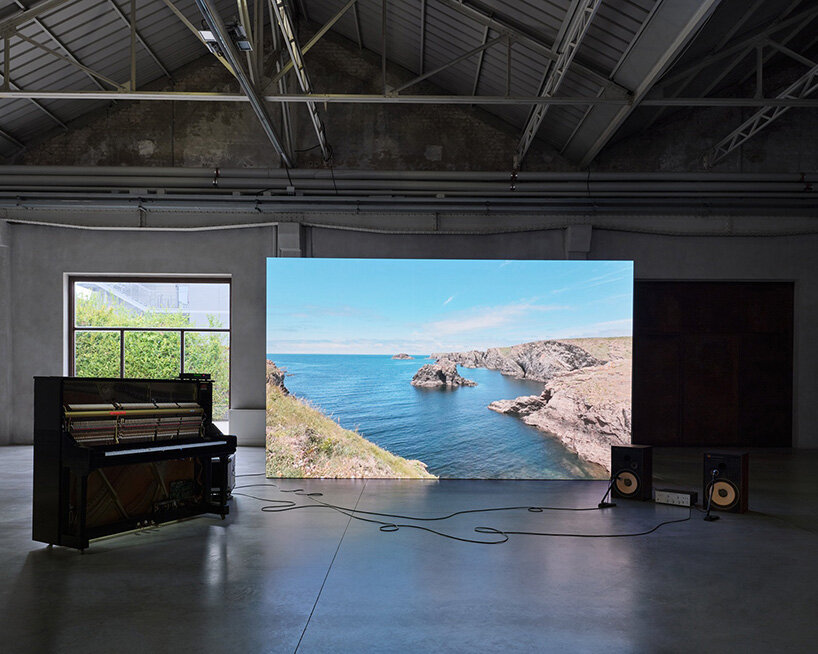
image © Centro Botín
ABERTO5 at Casa Bola
For its fifth edition, ABERTO will take place at Casa Bola, Eduardo Longo’s spherical residence in São Paulo, opening the architect’s private home to the public. The itinerant exhibition series, which previously occupied Le Corbusier’s Maison La Roche in Paris, continues its focus on architecturally significant houses as settings for contemporary art and design.
Built between 1974 and 1979, Casa Bola rises as an eight meter diameter sphere set above a concrete base. From the street, the reflective volume appears suspended, its curved ferrocement shell catching light in soft tonal shifts. A narrow stair traces the perimeter before leading into a continuous interior shaped by the same material throughout. Constructed by hand over a mesh of recycled steel tubes, the house integrates walls, furniture, lighting, and fixtures into a single spatial system where surfaces bend and partitions tilt.
name: ABERTO5 | Casa Bola
program: ABERTO
location: São Paulo, Brazil
dates: March 8th — May 31st, 2026
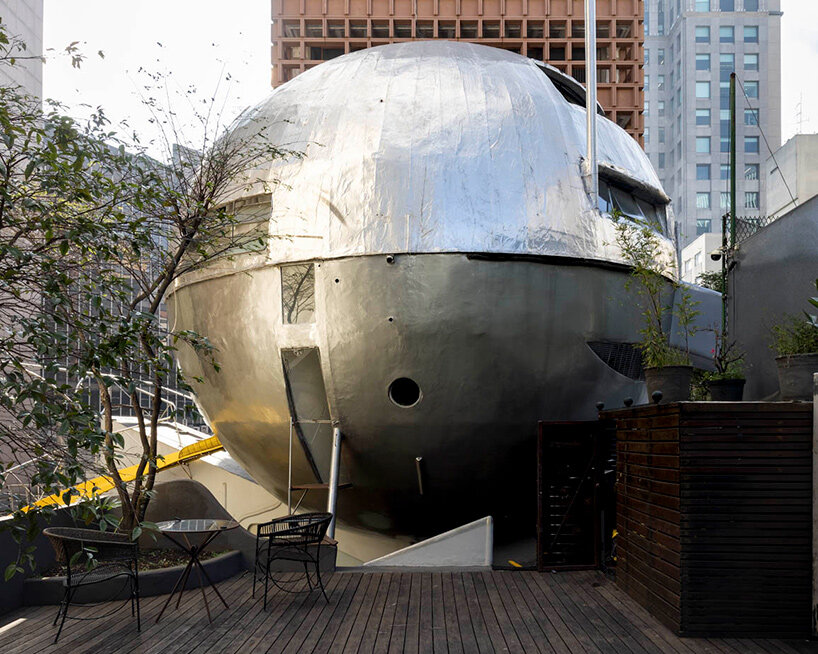
Casa Bola, designed by Eduardo Longo, image courtesy ABERTO
tRoppongi Crossing 2025: What Passes Is Time. We Are Eternal.
At the Mori Art Museum in Tokyo, the eighth edition of Roppongi Crossing assembles 21 artists and artist groups to map Japan’s contemporary art scene through the single, elastic concept of time. First launched in 2004 as a recurring snapshot of the present moment, the triennial returns with the subtitle, What Passes Is Time. We Are Eternal., bringing together more than 100 works across painting, sculpture, video, craft, sound, zines, and community-based practices.
Materially and conceptually, time unfolds in radically different registers. A.A.Murakami presents an immersive installation governed by an AI-written operating system. Kuwata Takuro’s large-scale ceramics push traditional techniques toward rupture. Kelly Akashi’s bronze and glass sculptures draw on familial memory and histories of internment.
name: Roppongi Crossing 2025: What Passes Is Time. We Are Eternal.
museum: Mori Art Museum
location: Tokyo, Japan
dates: until March 29th, 2026
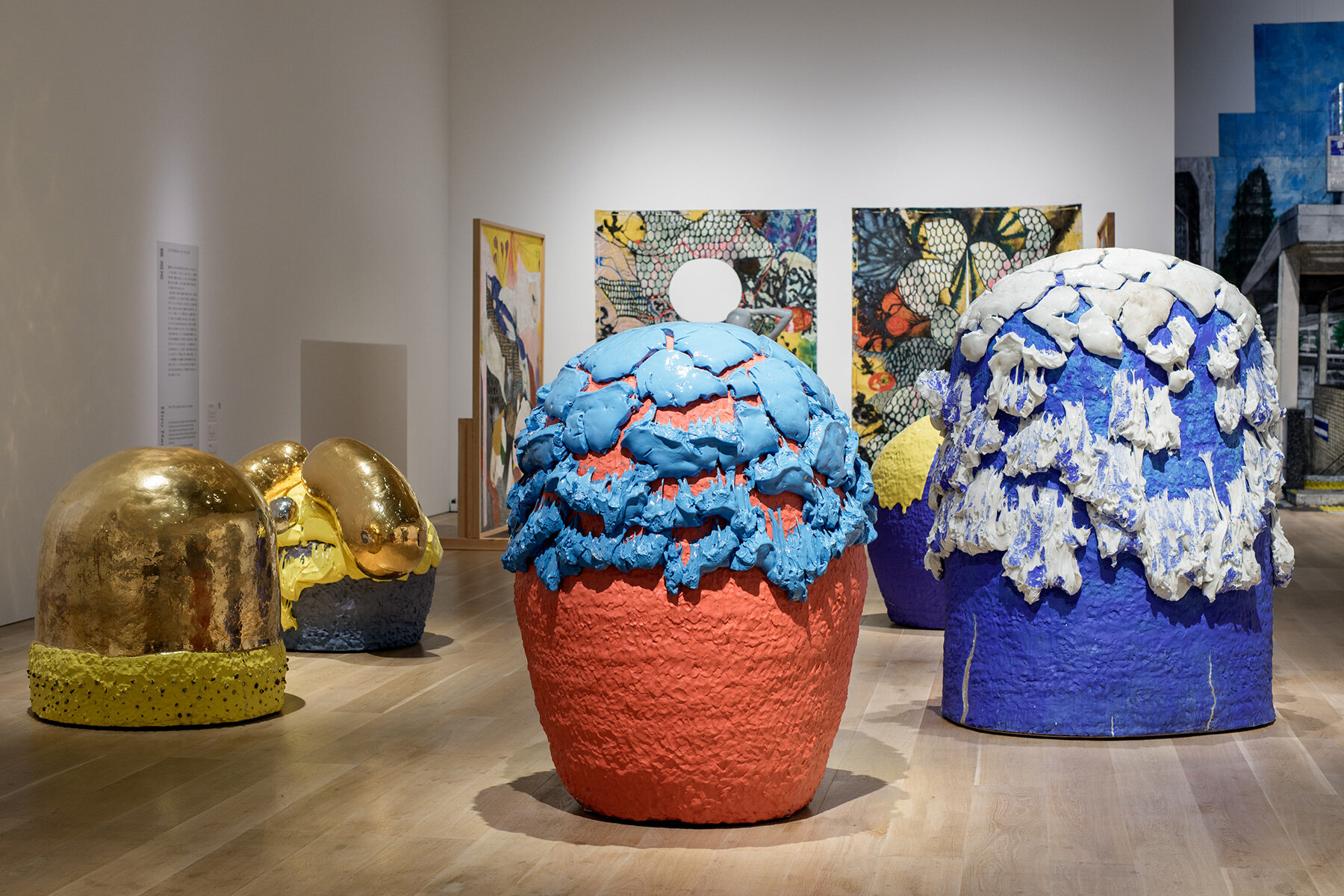
installation view, Roppongi Crossing 2025: What Passes Is Time. We Are Eternal., Mori Art Museum, Tokyo
Yorgos Lanthimos: Photographs
Onassis Stegi presents the first exhibition in Greece dedicated to the photography of filmmaker Yorgos Lanthimos, bringing together 182 images produced over the past five years. The selection includes three series developed alongside his films, photographed at locations in New Orleans and Atlanta, as well as on constructed sets in Budapest. Many of these works appear in his recent publications Dear God, the Parthenon Is Still Broken (2024), i shall sing these songs beautifully (2024), and VISCIN (2026), featuring images from the set of Bugonia (2025).
A fourth body of work debuts here, comprising personal photographs taken in Greece during solitary walks around Athens and on visits to Aegean islands. Installed within an exhibition design modeled on a classical Greek temple, the presentation positions 110 new works in a central, altar-like space, while the perimeter galleries trace the film-related series.
name: Yorgos Lanthimos: Photographs
artist: Yorgos Lanthimos
museum: Onassis Stegi
location: Athens, Greece
dates: March 7th — May 17th, 2026
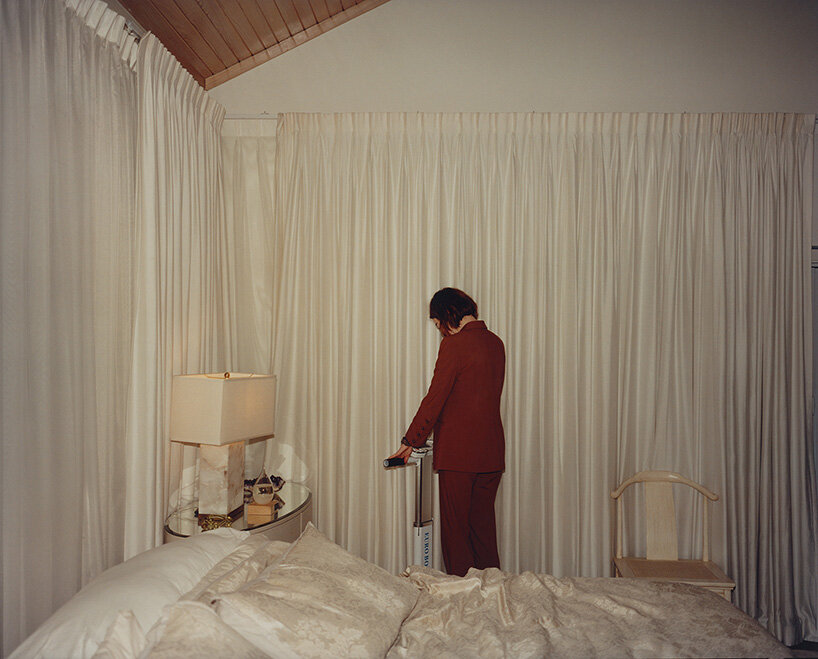
Yorgos Lanthimos, ‘i shall sing these songs beautifully’ (2024), image courtesy Yorgos Lanthimos / MACK
Clair-obscur
Drawing on works by around twenty modern and contemporary artists from the Pinault Collection, Clair-obscur examines the legacy of chiaroscuro from the sixteenth century to the present. The exhibition transforms the museum into a shifting landscape of shadow and illumination, inviting reflection on visibility, obscurity, and the material presence of light. Referencing Giorgio Agamben’s writing on contemporaneity and darkness, the show traces a lineage from Caravaggio’s heightened contrasts and Goya’s exploration of humanity’s darker impulses to contemporary practices that continue to engage with tonal depth and ambiguity.
Works by Sigmar Polke, Philippe Parreno, Victor Man, and Bill Viola demonstrate how chiaroscuro persists as both formal device and philosophical inquiry. Laura Lamiel presents installations conceived for the exhibition, placing objects and materials within illuminated vitrines that evoke memory and interior states. In the Rotunda, Pierre Huyghe’s Camata (2024), filmed in Chile’s Atacama Desert, stages a ritual within a circular, amphitheater-like setting beneath the museum’s dome.
name: Clair-obscur
museum: Bourse de Commerce
location: Paris, France
dates: March 4th — August 25th, 2026
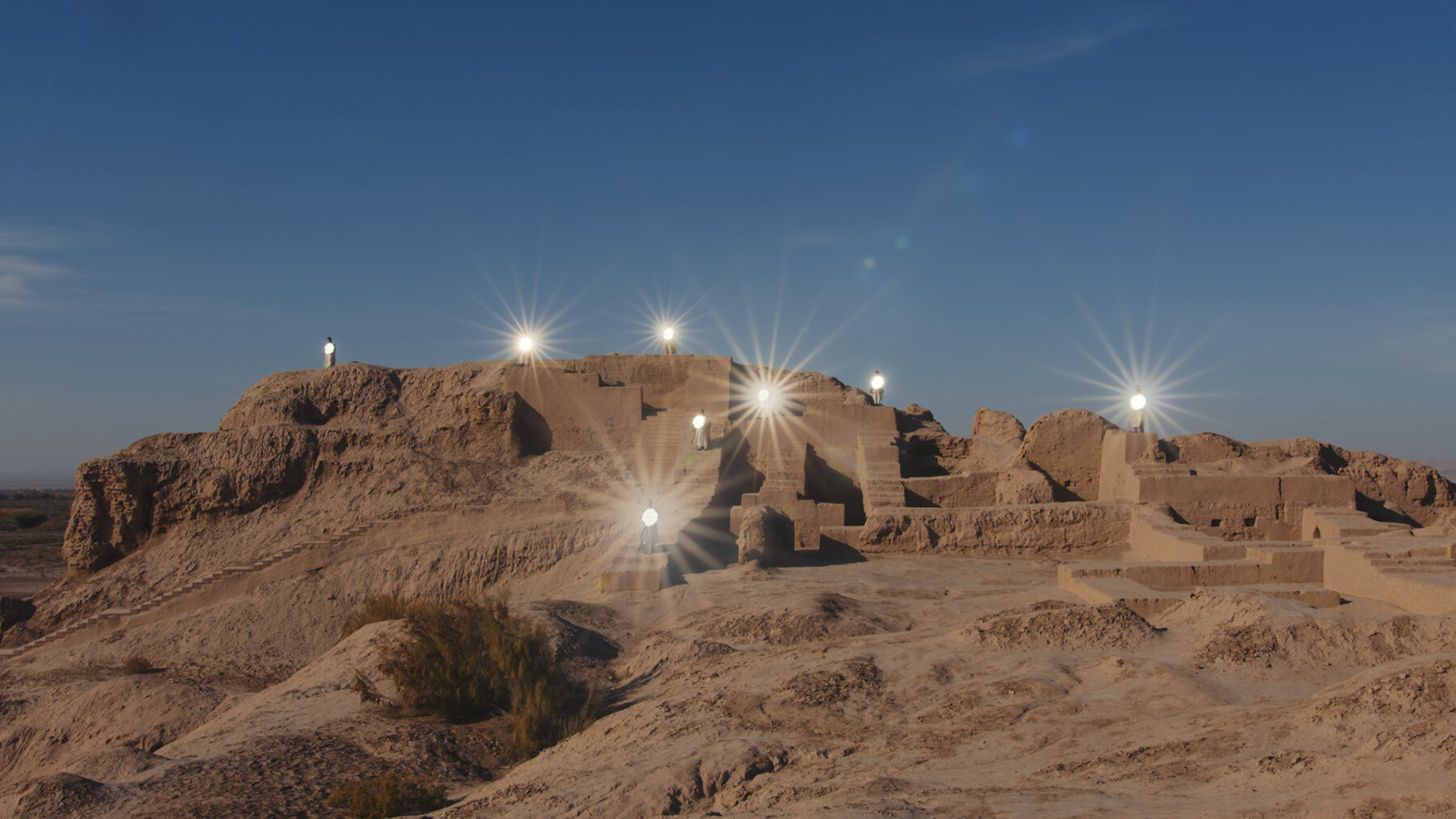
Saodat Ismailova, Melted into the Sun (still), 2024, image courtesy Bourse de Commerce
Ryuichi Sakamoto | seeing sound, hearing time
‘seeing sound, hearing time’ honors the legacy of Japanese composer and artist Ryuichi Sakamoto, whose work ranged from film scores to experimental collaborations. At its center is async–immersion (2023), a large-scale installation developed with artist Shiro Takatani and based on Sakamoto’s 2017 album ‘async.’
Conceived as ‘installation music,’ the project translates the album into spatial form. In ‘The Studio,’ Takatani presents filmed images of Sakamoto’s instruments, plants, and studio objects on a large LED screen, where they dissolve into bands of pixels before reconstituting. The visuals evolve independently from the multi-channel surround sound, establishing a parallel sense of duration within the gallery.
name: Ryuichi Sakamoto | seeing sound, hearing time
artist: Ryuichi Sakamoto
museum: M+ Museum
location: Hong Kong
dates: February 14th — July 5th, 2026
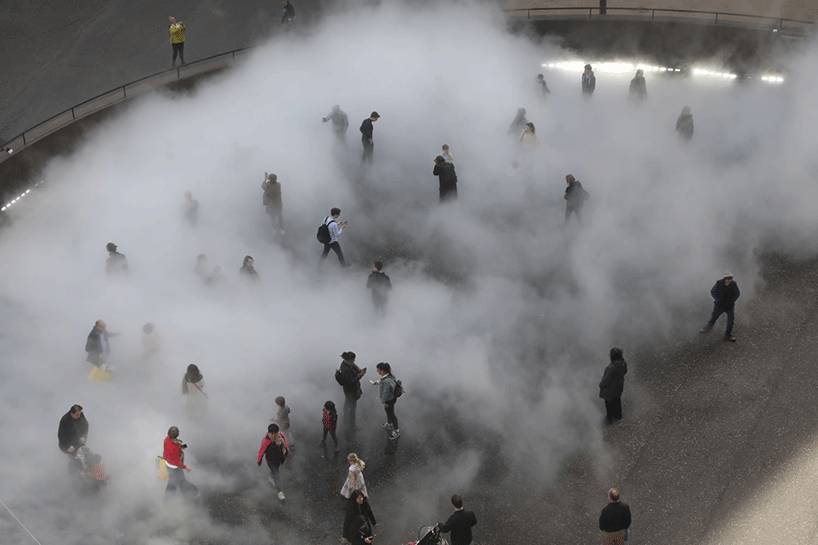
Nakaya Fujiko, London Fog, Fog Performance #03779, 2017, installation view from ‘BMW Tate Live Exhibition: Ten Days Six Nights,’ Tate Modern, London, UK, collaboration: Min Tanaka (Dance), Shiro Takatani (Lighting), Ryuichi Sakamoto (Music). photo by Noriko Koshida
Marc Newson
Spanning four decades of Marc Newson’s practice, this exhibition assembles fourteen works within the Oscar Niemeyer Pavilion at Château La Coste. Installed across interior galleries and the surrounding landscape, the presentation traces the evolution of Newson’s approach to form and material, placing his objects alongside Niemeyer’s curved concrete architecture.
Among the highlights is Lockheed Lounge (1988), the riveted aluminum chaise whose aerodynamic surface recalls aircraft engineering, positioned in conversation with the pavilion’s structural lines. Outdoors, Electra (1995), a six-meter-high sculpture shown publicly for the first time, stands against the Provençal hills, extending Newson’s sculptural vocabulary into the open terrain.
name: Marc Newson
artist: Marc Newson
museum: Gagosian
location: Château La Coste, Le Puy-Sainte-Réparade, France
dates: March 15th — June 21st, 2026
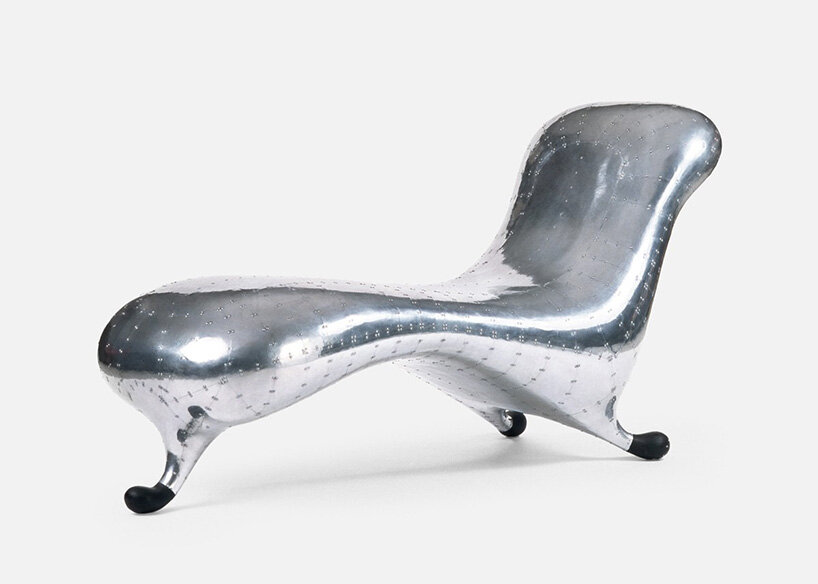
Marc Newson, Lockheed Lounge, 1988 © Marc Newson. photo: Karin Catt
City in the Cloud: Data in the Ground. The Architecture of Data
This exhibition at Pinakothek der Moderne investigates the material and political infrastructure behind the digital cloud, shifting attention from screens to data centers, submarine cables, and satellites. It traces the history of global communication networks and examines the raw materials that sustain the data economy, including lithium and tin, to highlight their environmental and geopolitical impact. Architectural research frames these systems as spatial constructs that shape contemporary life.
Structured around elemental, spatial, and temporal themes, the show considers how digital systems transform cities and architectural practice, including a case study developed with the Munich Digital Twin. A concluding section addresses storage, archives, AI training, and energy consumption, raising questions about memory, erasure, and the long-term consequences of infinite data retention.
name: City in the Cloud: Data in the Ground. The Architecture of Data
museum: Pinakothek der Moderne
location: Munich, Germany
dates: until March 8th, 2026
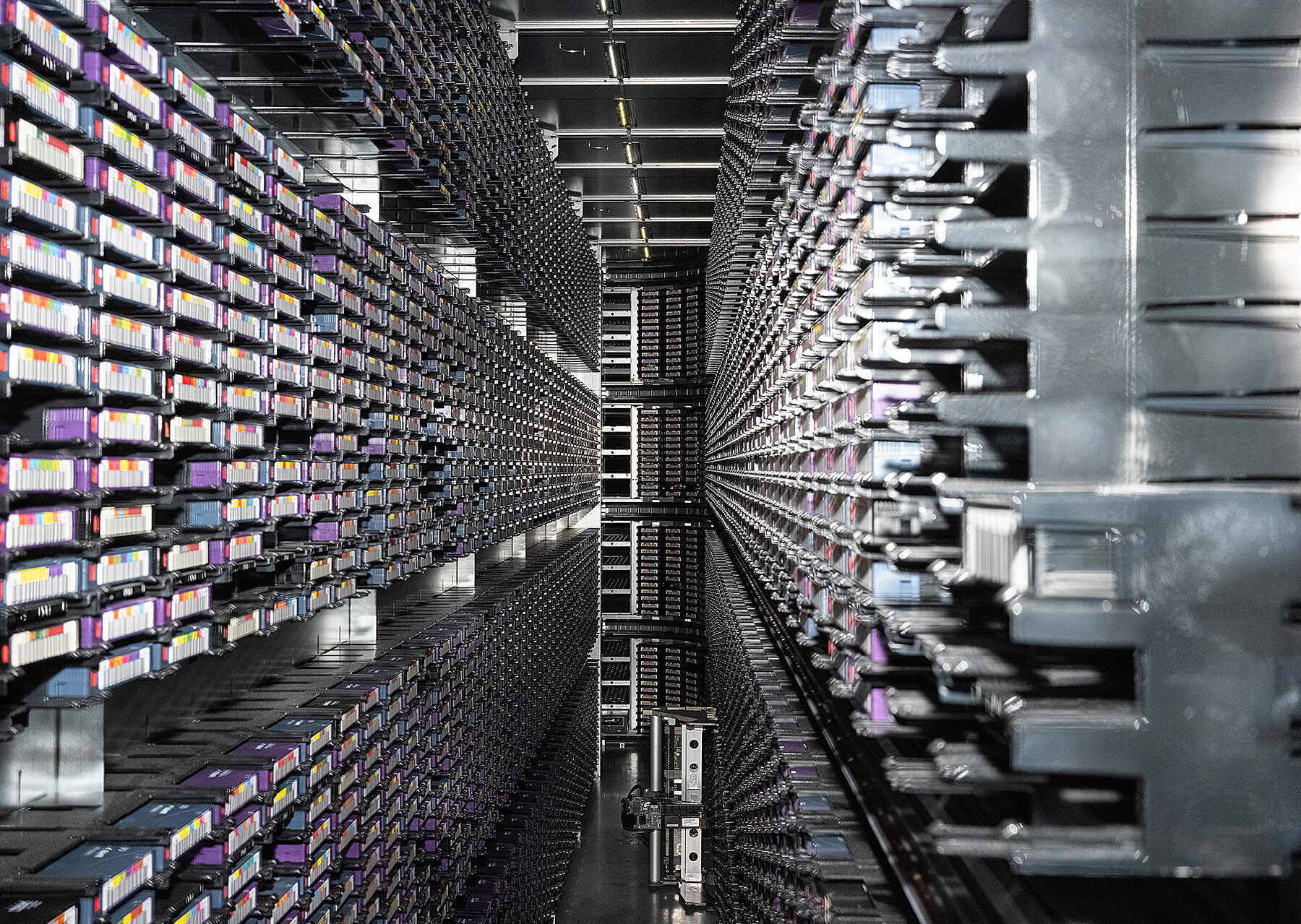
Leibniz-Rechenzentrum der Bayerischen Akademie der Wissenschaften, Munich, Germany, 2025, photo by Giulia Bruno
Lygia Clark Retrospective
Radical and participatory, Lygia Clark stands among the most significant figures of the South American avant-garde. As a central voice in Neoconcretismo, she redefined art as a lived experience, dissolving the divide between object and viewer. Her installations invite physical engagement, drawing audiences into direct interaction and challenging the museum framework that treats artworks as fixed forms.
From the 1960s onward, Clark moved from painting toward spatial propositions and eventually toward actions that displaced the object altogether. Her 1963 work Caminhando exemplifies this shift. Influenced by Max Bill’s exploration of the Möbius strip, Clark devised a simple instruction in which the act of cutting and continuing becomes the work itself, placing emphasis on process and embodied experience.
name: Lygia Clark: Retrospective
artist: Lygia Clark
museum: Kunsthaus Zürich
location: Zurich, Switzerland
dates: until March 8th, 2026
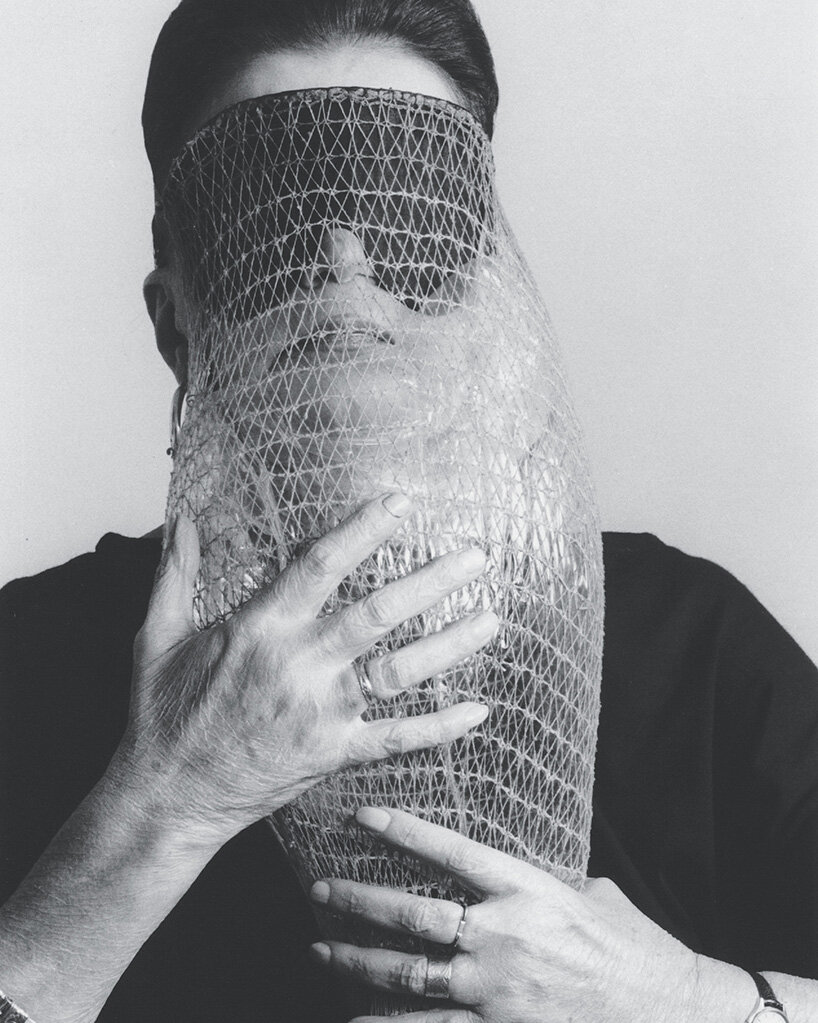
Lygia Clark with Máscara Abismo [Abyssal Mask], 1967, photo by Sérgio Zalis, © Associação Cultural Mundo de Lygia Clark
Helios
Auckland Live will present Helios, a large-scale traveling light art installation by UK artist Luke Jerram, in New Zealand for the first time. The six-meter spherical work is based on detailed solar imagery and offers a magnified view of the Sun at a scale of 1:230 million, with each centimeter representing 2,300 kilometers of its surface. Constructed from around 400,000 images combining astrophotography by Dr Stuart Green with NASA data, the internally lit structure reveals sunspots, filaments, and other solar features through high-resolution surface detail.
Helios will show within the Concert Chamber at Auckland Town Hall as part of the Auckland Arts Festival. Accompanied by a surround-sound composition by Duncan Speakman and Sarah Anderson, the installation pairs scientific imagery with a spatial audio environment. The project continues Jerram’s series of astronomical works, which include Museum of the Moon, Gaia, and Mars.
name: Helios
museum: Auckland Town Hall
location: Auckland, New Zealand
dates: March 7th — 15th, 2026
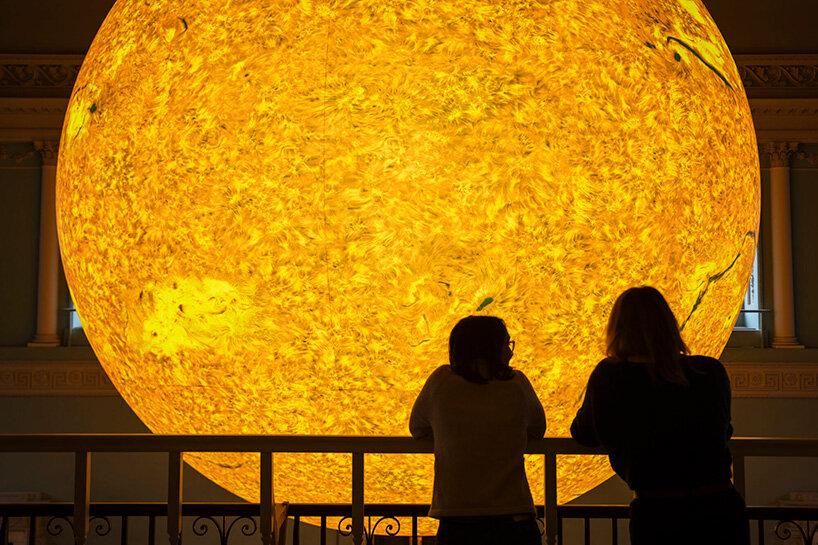
Helios at Bath Assembly Rooms, image by James Dobson © National Trust
Carol Bove
Carol Bove marks the first museum survey and most extensive presentation of the American artist’s work, occupying the full rotunda of the Frank Lloyd Wright–designed Guggenheim Museum. Spanning 25 years, the exhibition moves from early drawings and found-object assemblages to a new series of large-scale steel works described as ‘collage sculptures.’ Installed along the spiral ramps, the project adjusts the pace of circulation through the building, introducing moments for pause and closer engagement.
Across varied media, Bove’s practice centers on the relationship between material, scale, color, and space. Her sculptures situate industrial forms within broader cultural references, prompting attention to how objects shift in meaning through placement and perception.
name: Carol Bove
artist: Carol Bove
museum: Guggenheim New York | @guggenheim
location: New York, USA
dates: March 5th — August 2nd, 2026
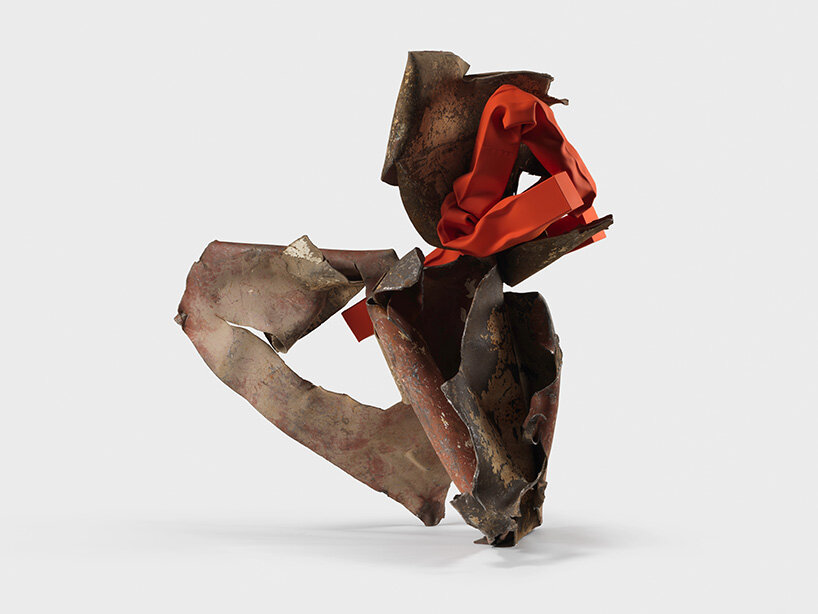
Carol Bove, Offenbach Barcarolle, 2019. Solomon R. Guggenheim Museum, New York, image by Maris Hutchinson © Carol Bove Studio LLC
David Hockney: A Year in Normandie and Some Other Thoughts about Painting
At Serpentine, David Hockney presents his first exhibition with the gallery, centered on new paintings made for the occasion. The display continues his sustained attention to perception and the experience of looking, focusing on scenes drawn from everyday surroundings and the passage of time.
For the first time, the exhibition brings the ninety-meter-long frieze, A Year in Normandie to London. Inspired by the Bayeux Tapestry, the work records seasonal shifts observed from Hockney’s former studio in Normandy. Installed at Serpentine, the panoramic painting enters into dialogue with the landscape of Kensington Gardens, aligning painted cycles of nature with the park beyond the gallery walls.
name: David Hockney: A Year in Normandie and Some Other Thoughts about Painting
artist: David Hockney
museum: Serpentine North Gallery
location: London, UK
dates: March 12th — August 23rd
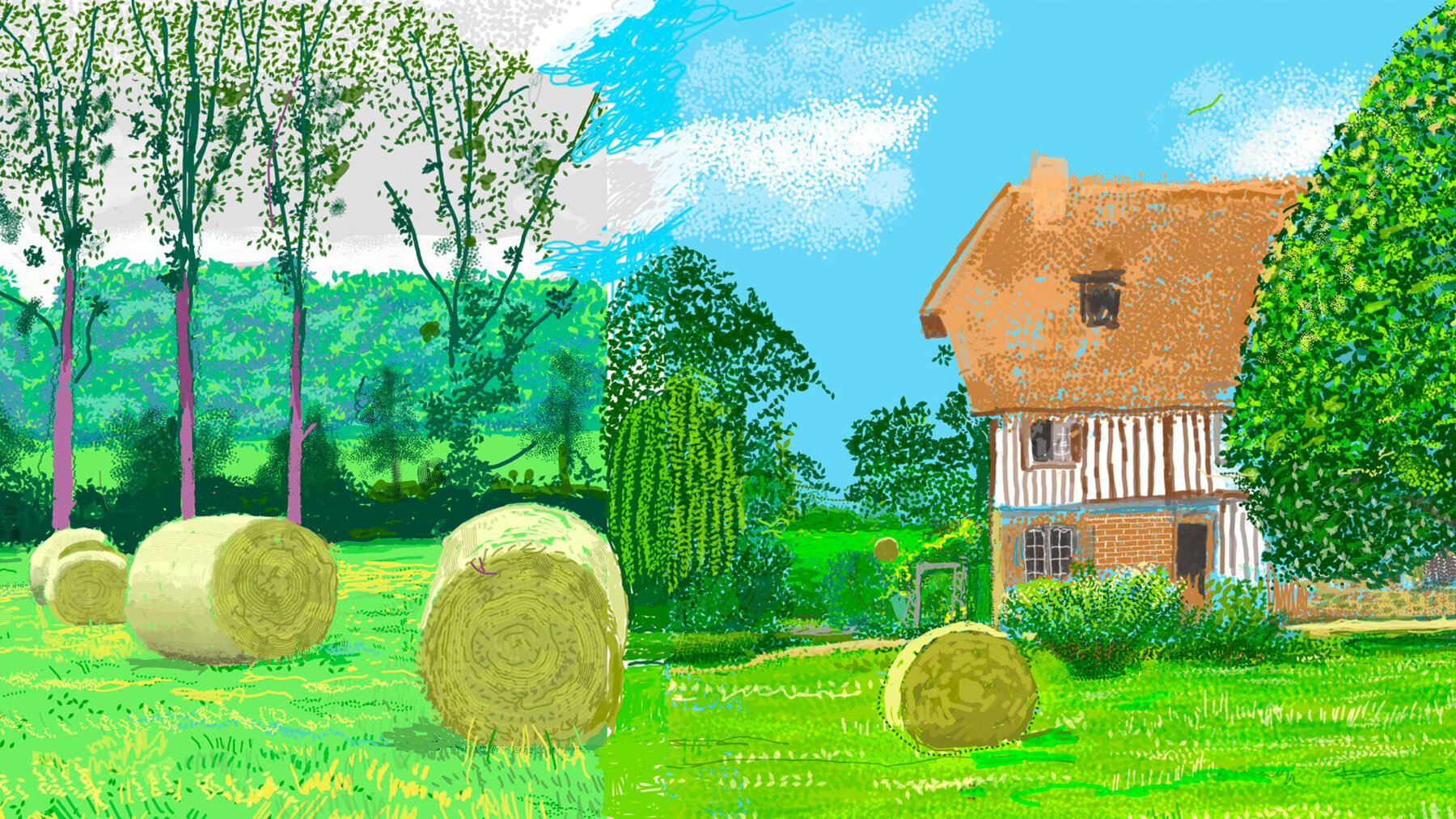
David Hockney, A Year in Normandie (detail), 2020-2021, Composite iPad painting © David Hockney
Frida and Diego The Last Dream
At MoMA, ‘Frida and Diego: The Last Dream’ brings together works by Frida Kahlo and Diego Rivera in collaboration with the Metropolitan Opera, presented alongside the Met’s new production of’ El Último Sueño de Frida y Diego’ (May 14th — June 5th, 2026). Composed by Gabriela Lena Frank with a libretto by Nilo Cruz, the opera is accompanied by an exhibition installation designed by Jon Bausor, who also serves as set and co-costume designer. The display incorporates visual motifs drawn from Kahlo’s and Rivera’s paintings, extending the theatrical language of the stage into the gallery.
Kahlo and Rivera played central roles in shaping post-revolutionary Mexican art, Rivera through large-scale murals and Kahlo through introspective self-portraits. Their relationship, which began in 1928 and continued until Kahlo’s death in 1954, informs the opera’s fictional premise, set three years after her passing, in which Rivera imagines her return during the Day of the Dead. The show situates their work within this narrative framework and emphasizes their ongoing influence across visual and performing arts.
name: Frida and Diego: The Last Dream
artists: Frida Kahlo, Diego Rivera
museum: Museum of Modern Art (MoMA) | @themuseumofmodernart
location: New York, USA
dates: March 21st — September 12th, 2026
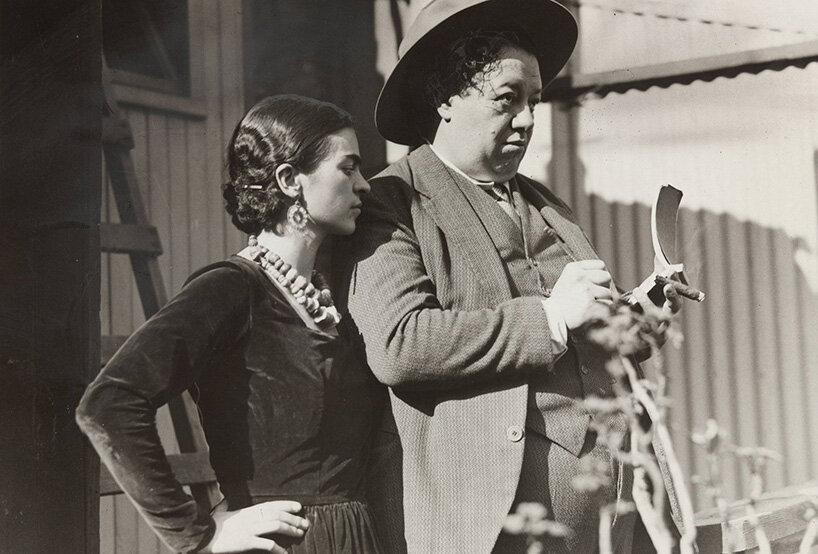
Frida Kahlo and Diego Rivera in San Francisco circa 1930, image courtesy MoMA
Hurvin Anderson
Hurvin Anderson’s first major solo exhibition assembles more than 80 paintings spanning his career, from student works to recent canvases. The presentation traces his movement between the UK and the Caribbean, shaped by his upbringing in Birmingham as the child of Jamaican parents. Across landscapes and interiors, Anderson reflects on migration, memory, and the experience of belonging.
Recurring motifs include barbershops, domestic spaces, and scenes drawn from family history. By revisiting and layering these sites, Anderson probes the instability of recollection and the complexities of cultural inheritance. His paintings engage with British landscape traditions while reworking them through saturated color and spatial ambiguity.
name: Hurvin Anderson
artist: Hurvin Anderson
museum: Tate Britain
location: London, UK
dates: March 26th — August 23rd, 2026
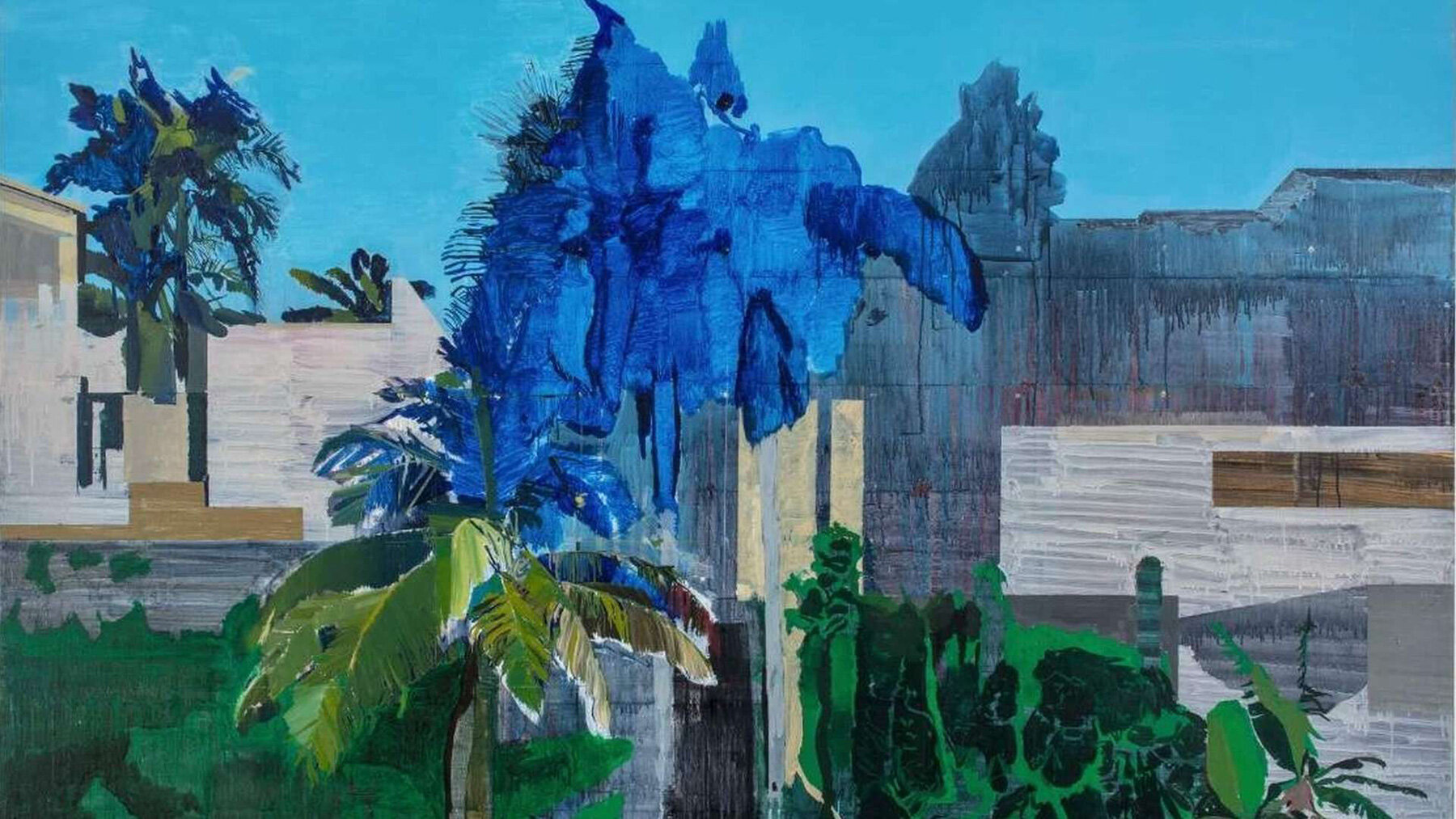
Hurvin Anderson, Hawksbill Bay, 2020. Tate: lent by Tate Americas Foundation, courtesy of Mala Gaonkar 2023. © Hurvin Anderson. courtesy the artist, Thomas Dane Gallery and VeneKlasen
Marina Abramović: Seven Deaths
Seven Deaths is a cinematic opera installation by Marina Abramović in which the artist stages death through seven canonical female roles from opera. Each chapter is set to an aria performed by Maria Callas, forming a sequence of filmed tableaux in which Abramović appears alongside Willem Dafoe. The work draws on opera’s heightened emotional register to examine love, loss, fate, and endurance.
Presented at Cisternerne, the seven films are shown consecutively in a continuous one-hour installation. The staging has been adapted specifically for the site’s dark subterranean chambers, where the setting intensifies the atmosphere of ritual and theatricality.
name: Marina Abramović: Seven Deaths
artist: Marina Abramović | @abramovicinstitute
museum: Frederiksbergmuseerne Cisternerne | @cisternerne
location: Frederiksberg, Denmark
dates: March 14th — November 30th, 2026
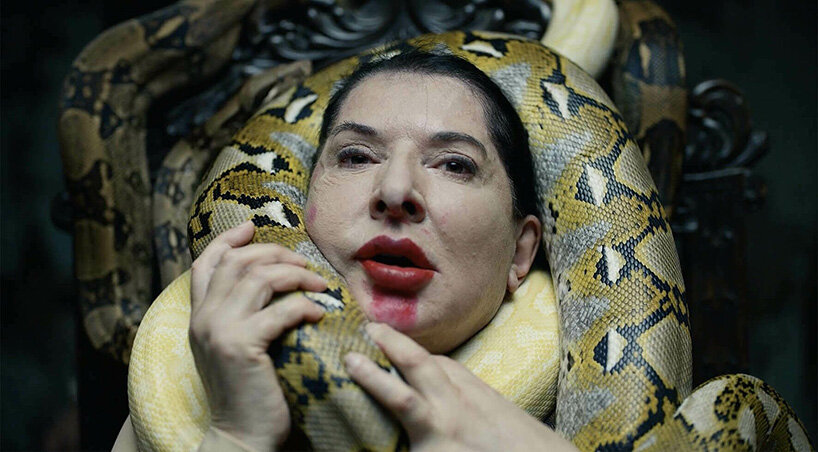
Marina Abramović, Seven Deaths, image courtesy Frederiksbergmuseerne
Hikmah
The Centre for Contemporary Arts Tashkent will open in March 2026 with its inaugural exhibition, Hikmah. The museum occupies a restored 1912 tram depot in Old Tashkent, transformed by Studio KO into a sequence of brick volumes, light-filtering screens, and courtyard spaces. Conceived as Uzbekistan’s first permanent institution dedicated to contemporary art, the CCA positions architecture as an active framework for exhibition-making, with galleries shaped by the former diesel station’s scale and material character.
The inaugural exhibition responds directly to this architecture. Taking its title from the Arabic and Uzbek term for ‘wisdom,’ the show presents site-specific commissions by Muhannad Shono, Nari Ward, Shokhrukh Rakhimov, and Tarik Kiswanson, alongside works by Kimsooja and Ali Cherri. The show uses the building’s vaulted spaces and industrial memory as conceptual ground for spiritual inquiry.
name: Hikmah
museum: Centre for Contemporary Art | @cca_tashkent
location: Tashkent, Uzbekistan
dates: March 21st — June 30th, 2026
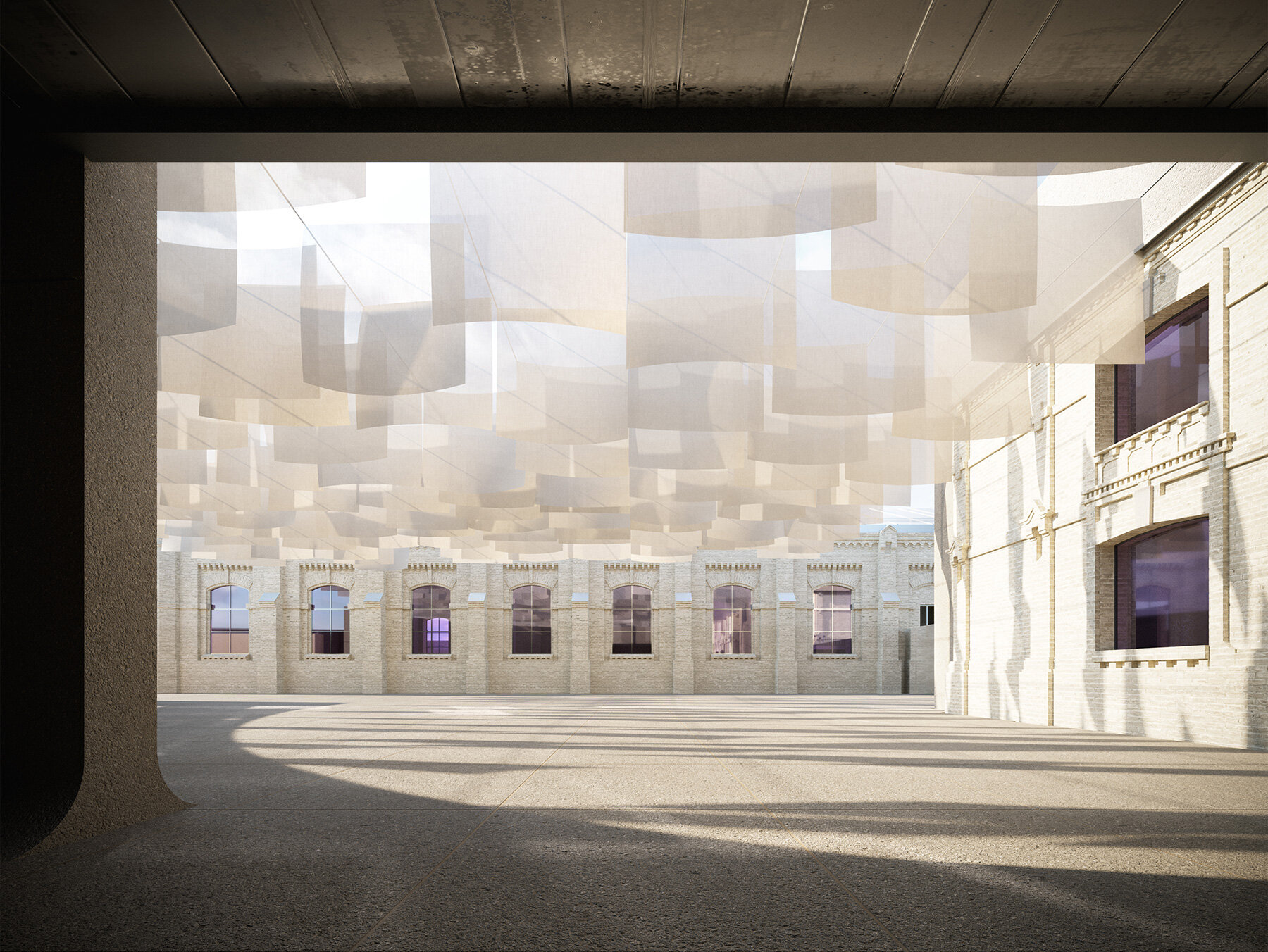
Centre for Contemporary Arts in Tashkent (CCA), view of the main courtyard, visualization © Studio KO, courtesy the Uzbekistan Art and Culture Development Foundation (ACDF)
My time here is brief
Lehmann Maupin London presents ‘My time here is brief’, an exhibition of new paintings by Freya Douglas-Morris. In these works, the artist develops a sequence of imagined landscapes shaped by memory and seasonal change. The paintings move from one scene to the next with subtle shifts in light and color, treating landscape as an emotional register rather than a fixed site.
Working in layered applications of opaque pigment, washes, and textured detail, Douglas-Morris builds luminous surfaces that balance structure and atmosphere. In ‘Rush of autumn’ (2026), trees in saturated orange edged with fluorescent pink stand against natural greens, heightening the tension between observation and invention.
‘Olive grove’ (2026) introduces elongated, cathedral-like forms aligned with a mountainous horizon beneath a deep violet sky. Her largest canvas to date, ‘We went on a walk to celebrate, the land stretched on unending’ (2026), arranges rolling hills and a reflective lake in bands of shifting color, where moonlight and dusk tones bind the composition.
name: My time here is brief
artist: Freya Douglas-Morris | @freyadouglasmorris
museum: Lehmann Maupin | @lehmannmaupin
location: London, UK
dates: until March 28th, 2026
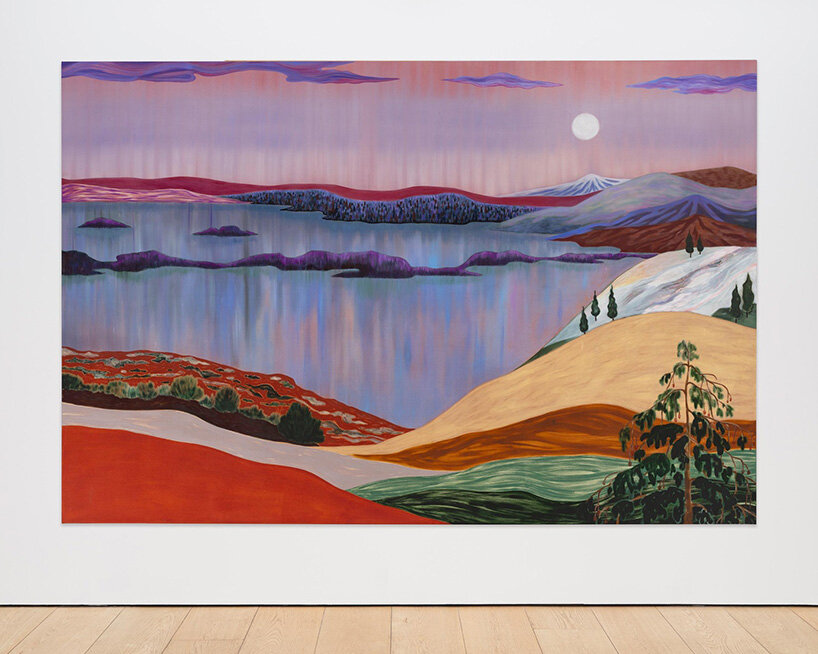
Freya Douglas-Morris, We went on a walk to celebrate, the land stretched on unending, 2026, image © Freya Douglas-Morris
Run the Code
Run the Code examines how algorithms and data function as artistic material. Drawing from the Thoma Foundation’s Digital and Media Art Collection, the exhibition presents works by artists including Refik Anadol, Jenny Holzer, Rafael Lozano-Hemmer, teamLab, and Leo Villareal. Across immersive installations and screen-based systems, code generates shifting images, responsive environments, and reconfigured archives.
Several works rely on custom software that produces images in real time, while others incorporate sensors that react to a visitor’s movement or presence. Generative landscapes draw on environmental data, and machine processes reinterpret historical paintings and cultural records. Rather than treating technology as a neutral instrument, the exhibition frames it as a medium that shapes authorship and the circulation of information.
name: Run the Code
museum: Blanton Museum of Art | @blantonmuseum
location: Austin, Texas, USA
dates: March 8th — August 2nd, 2026
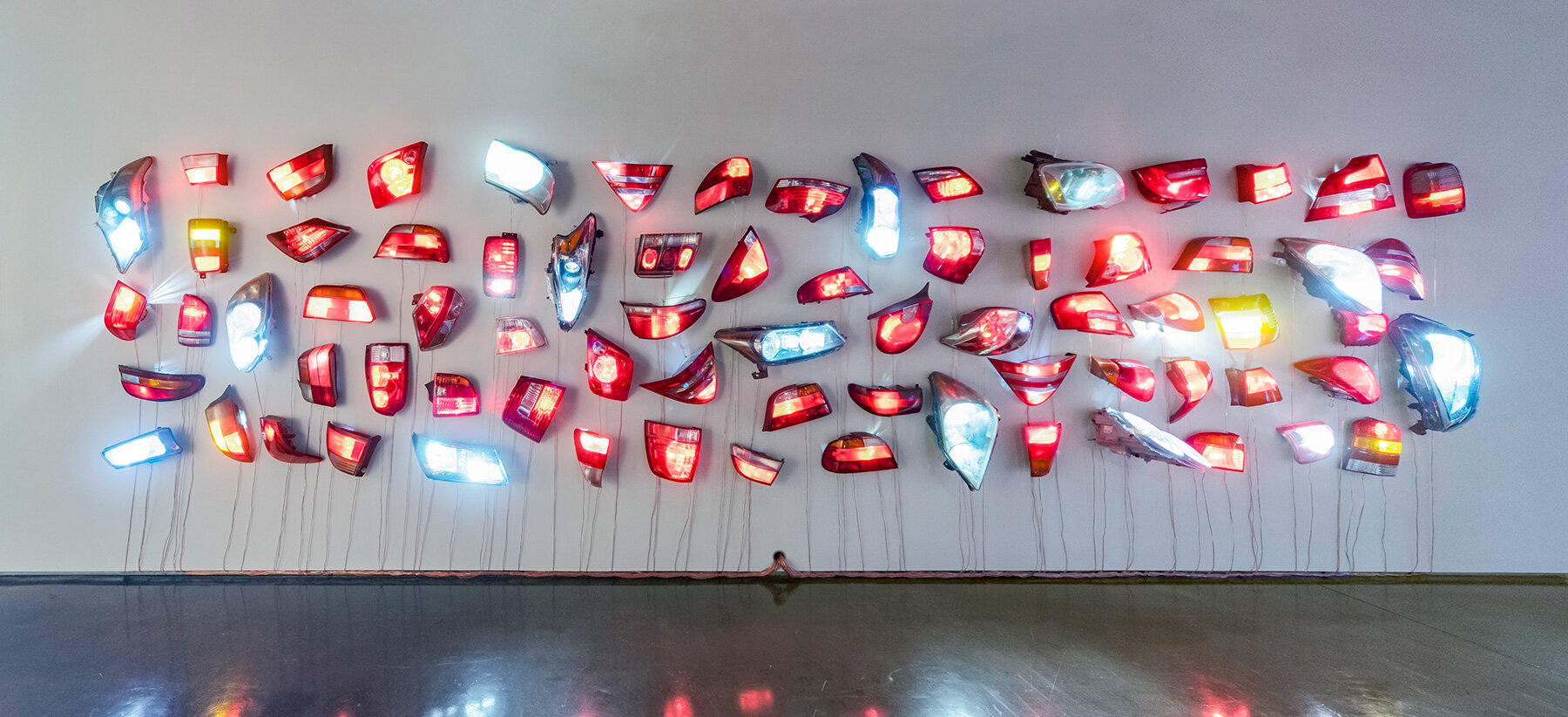
Madeline Hollander, Heads/Tails: Walker & Broadway 4, 2020, 73 Automobile headlights and taillights customized with LEDs and real-time software program, infinite, collection of the Carl & Marilynn Thoma Foundation
designboom radar (7)
 Feb 02, 2026
 Jan 01, 2026
 Dec 03, 2025
 Nov 01, 2025
 Oct 02, 2025
exhibitions (186)
 Feb 25, 2026
 Feb 24, 2026
 Feb 20, 2026
 Feb 16, 2026
 Feb 13, 2026
 Feb 05, 2026
 Jan 22, 2026
 Jan 01, 2026
 Nov 27, 2025