forgotten computer floppy disks return to life as large-scale portrait paintings
hand-assembled into the canvas, hundreds of these materials become the base for screen-printed and painted portraits of cultural figures.
prefer designboom on google[FEATURED]
Painting made of recycled computer floppy disks
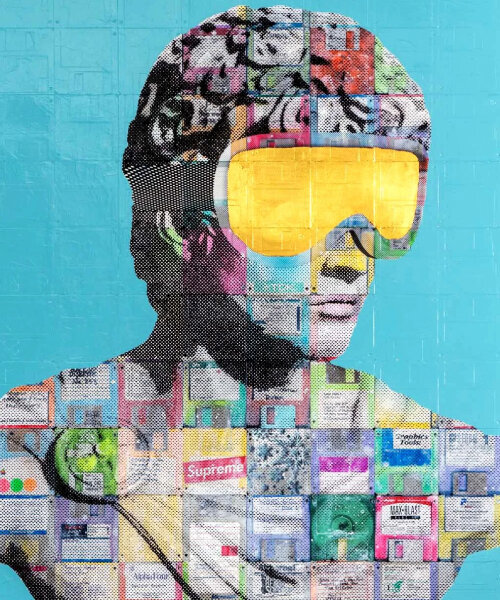
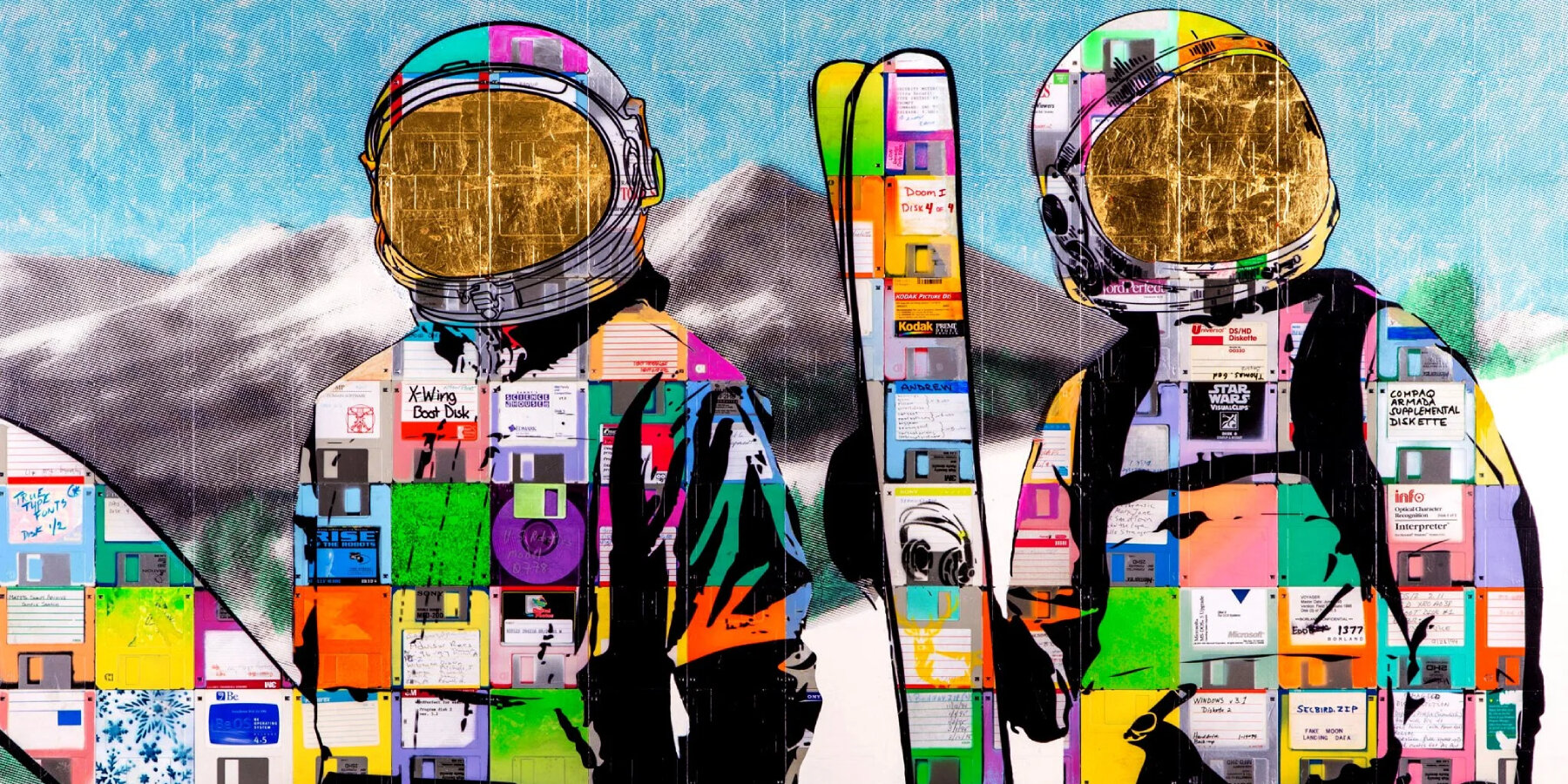
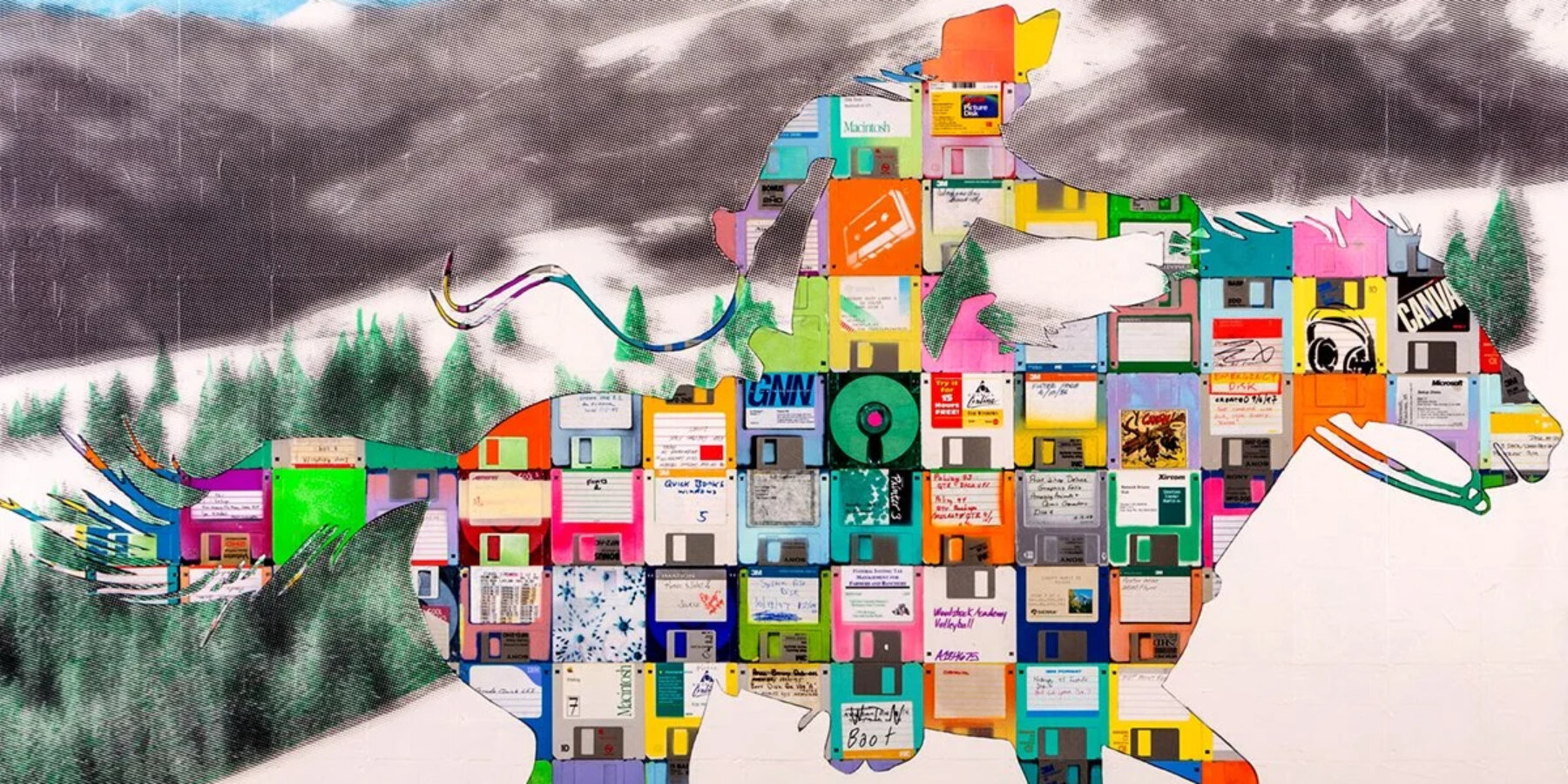
Artist Taylor Smith turns obsolete computer floppy disks into large-scale portrait paintings made up of these recycled storage devices. Hand-assembled into the canvas, hundreds of these materials become the base for screen-printed and painted portraits of figures, from Marilyn Monroe and Audrey Hepburn to David Bowie and Abraham Lincoln. The result sits between mosaic, pop art, and archives using recycled computer floppy disks.
In each artwork, the faces and bodies are from a grid of floppy disks, each one a different color, each one carrying its own printed label. If viewers look closely, they can (almost) read the labels on the recycled computer floppy disks: Supreme, 911, MacBooks, Adobe Photoshop, Kodak, TDK, Microsoft, and more. A screen-printed paint layers directly over the physical disks, adding a burst of color to the already vibrant large-scale portrait paintings.

still readable labels on the magnetic storage devices
Artist Taylor Smith’s practice offers a renewed ending for these obsolete objects. By sourcing salvaged disks and making them into permanent artworks, she removes them from the waste stream. Each painting locks hundreds of recycled computer floppy disks, but this time, their lives may last far longer than the data they once carried and trash bins they were once in. And the labels on each disk, still readable, still carrying the names of old software and handwritten notes, become part of the artwork’s meaning. The artist calls it a collaboration between herself and the original owners of the data whose digital lives now form the texture of artworks hanging on walls.
The present generation may not know, but the 3.5-inch floppy disk was introduced by Sony in 1981 and became the global standard for storing and sharing digital files through the 1980s and 1990s. The outer shell is rigid plastic made of acrylonitrile butadiene styrene, the same family of plastic used in LEGO bricks. Inside, a thin circular disc coated in magnetic iron oxide particles stores data by magnetizing regions in patterns that a computer can read. By the early 2000s, they were obsolete, but that plastic shell, that magnetic coating, that small metal shutter couldn’t go into standard recycling. Most facilities won’t take them, and specialist e-waste processing is required to safely separate the materials, so most floppy disks have simply been thrown into landfill, where the plastic shell takes centuries to break down, and the iron oxide coating can leach into soil over time. Taylor Smith takes them back, and under her artisanship, the recycled computer floppy disks, as it turns out, have more files left to store.







project info:
name: Recycled Computer Floppy Diskette Paintings
artist: Taylor Smith | @taylorsmithstudio
shop
your own online design shop — no sales commission collected