luma foundation unveils richter’s strip tower in engadin
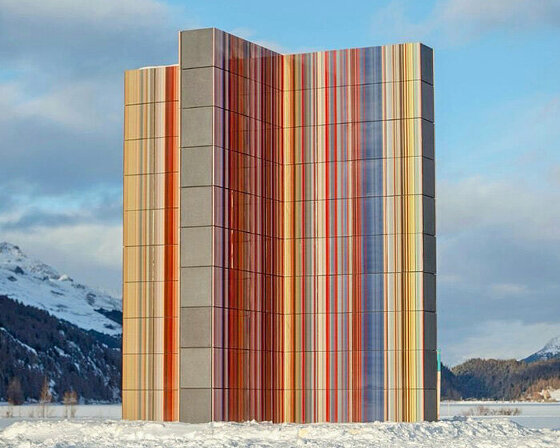
Presented by the Luma Foundation in Engadin, Switzerland, as part of Elevation 1049, STRIP TOWER (962) brings Gerhard Richter’s long-running investigations into the Alpine landscape, extending his practice beyond the canvas and into three-dimensional space. On view until the spring of 2029, the work draws from the methodology of his Strip Paintings, where a single painted gesture is subjected to successive acts of photographing, scanning, digital slicing, and stretching. What begins as an analogue mark is transformed into a system of color bands governed by repetition and chance. In the tower, this process leaves the flat surface behind entirely, becoming architectural and spatial.
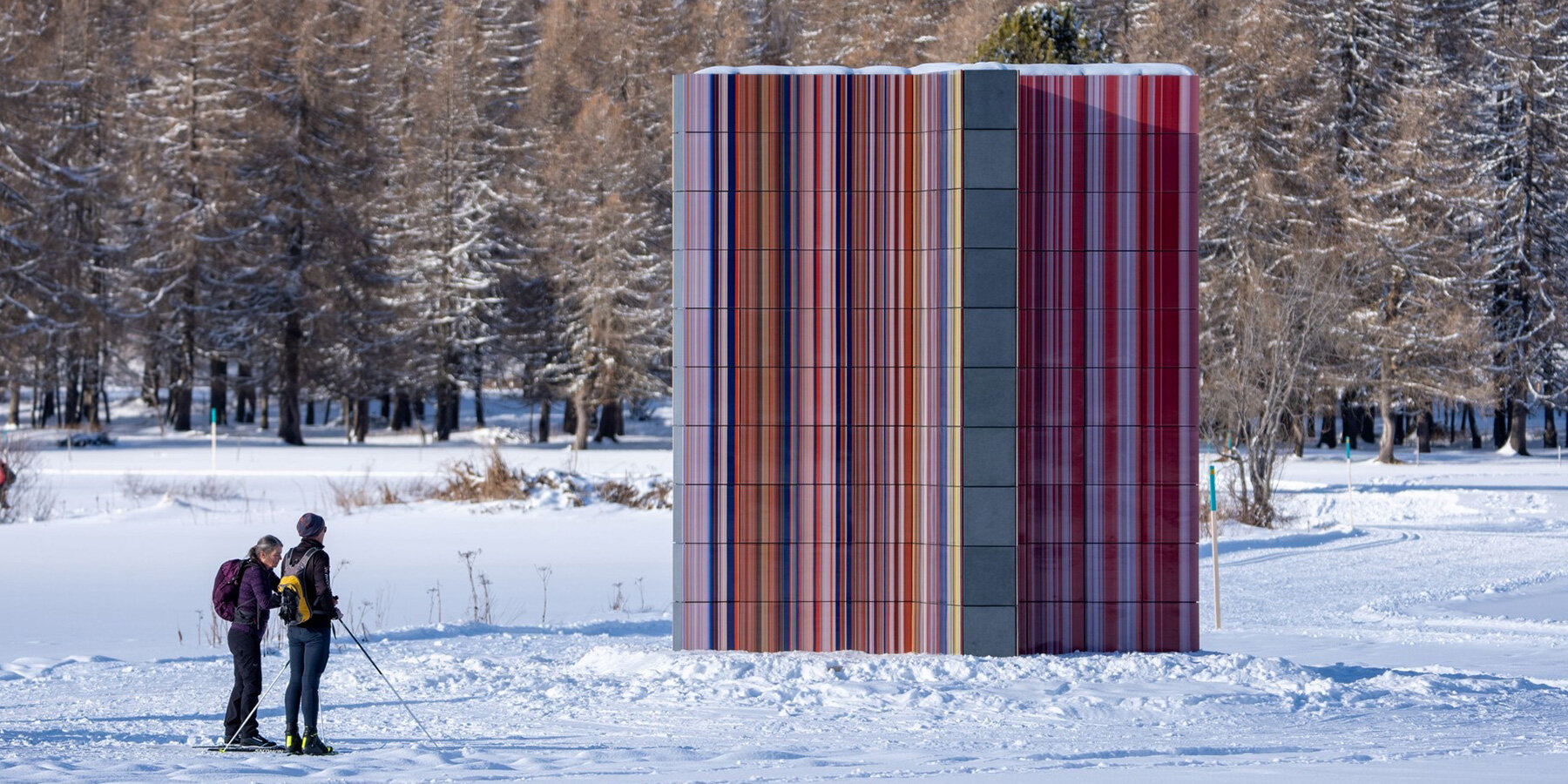
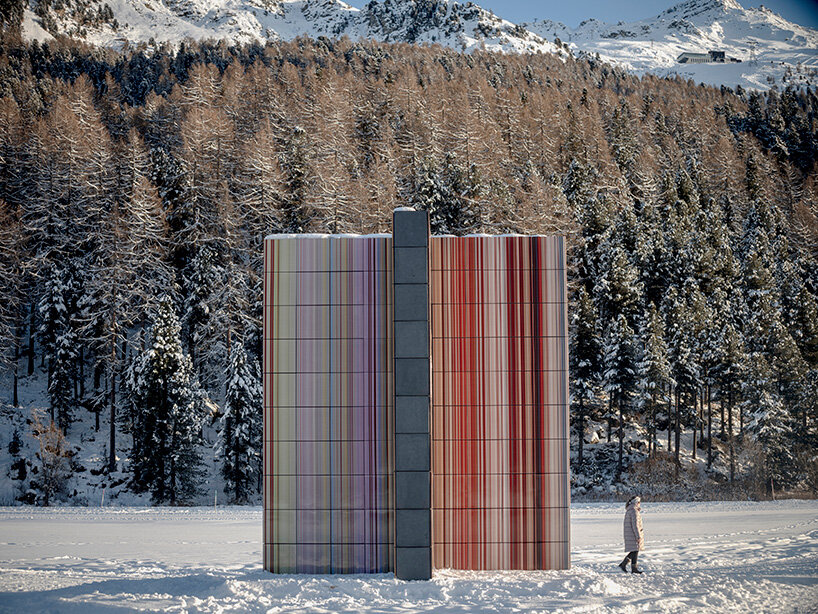
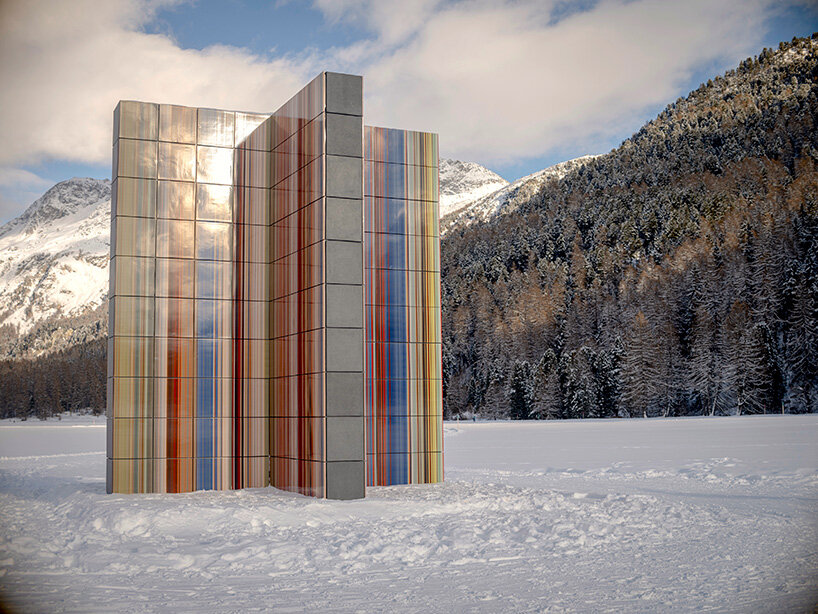
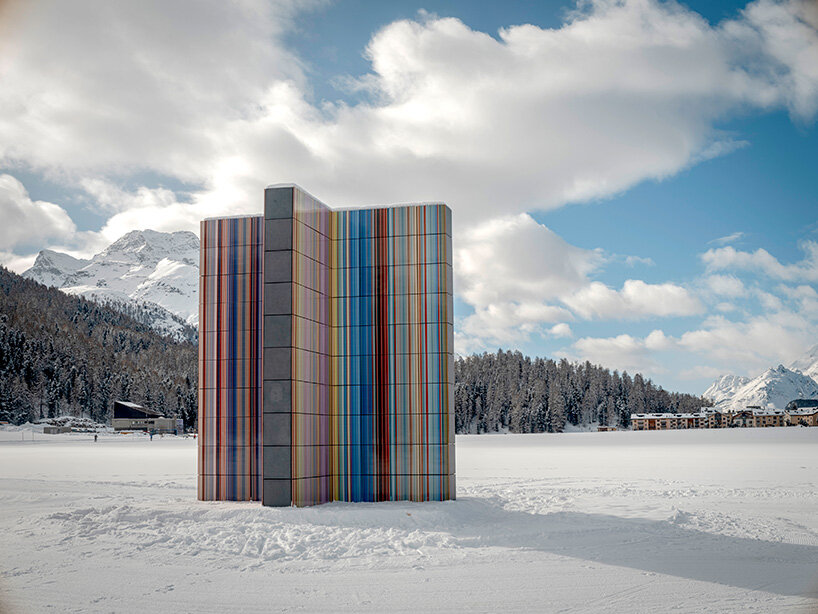
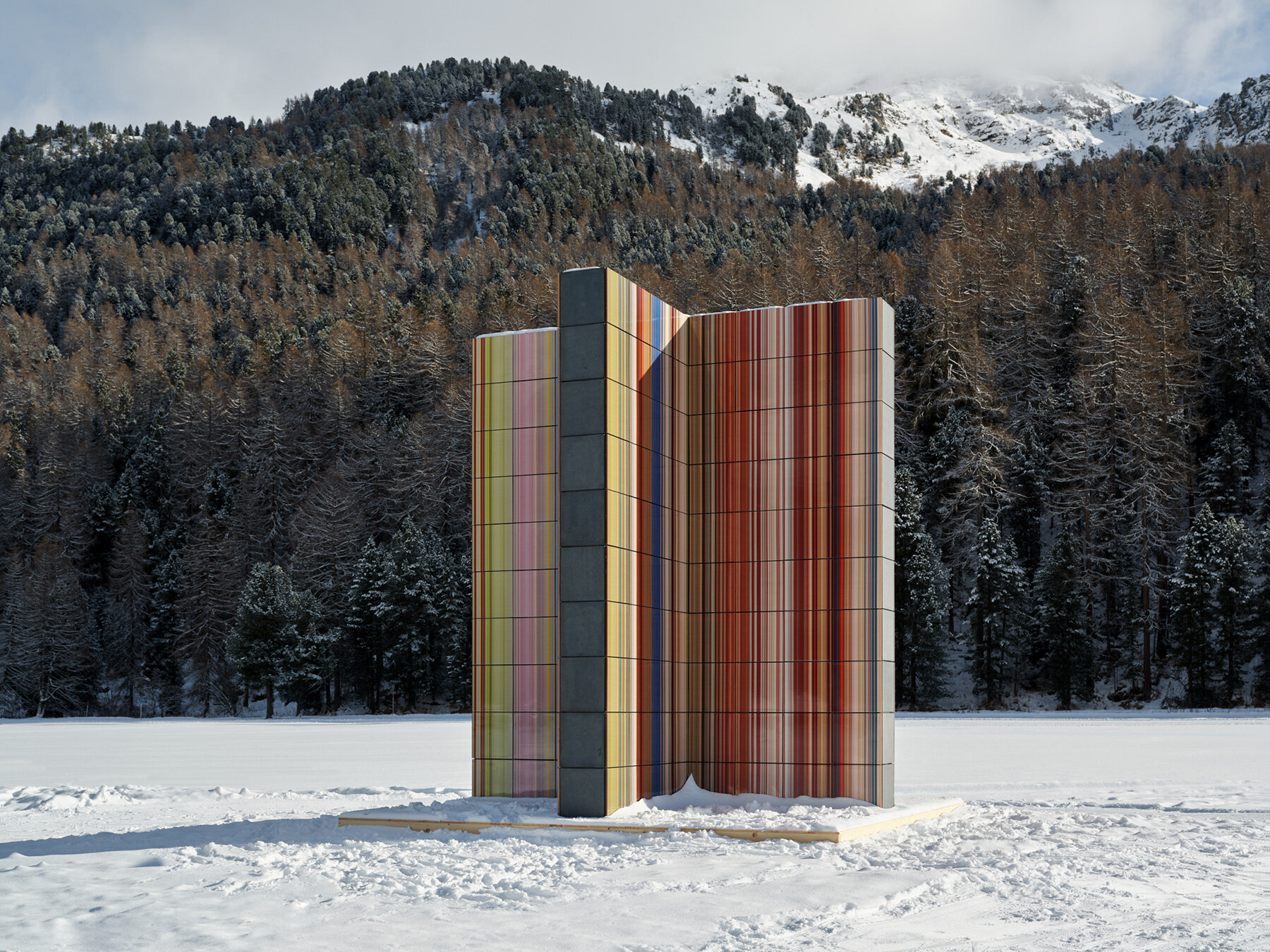
Rising over five meters, the sculpture, recently presented at Serpentine, London, consists of eight perpendicular panels clad in glazed ceramic tiles, each carrying vertically elongated color stripes. The intersecting panels allow people to walk between the surfaces, shifting the encounter from distant viewing to bodily experience. Light reflects off the glossy surfaces, while weather, cloud cover, snow, and seasonal shifts continuously recompose the work.
all images by Luzi Seiler courtesy of Gerhard Richter Kunststiftung and Luma Foundation, unless stated otherwise
STRIP TOWER (962): site, repetition, and slow looking
Richter’s relationship with Sils Maria stretches back decades. He first visited the village in 1989 and has returned regularly since, drawn to its distinctive light and contemplative atmosphere. Long associated with intellectual retreat and sustained reflection, the site offers a fitting context for a work that resists instant legibility. STRIP TOWER (962) encourages repeated visits and incremental perception, asking viewers to notice subtle variations rather than dramatic gestures.
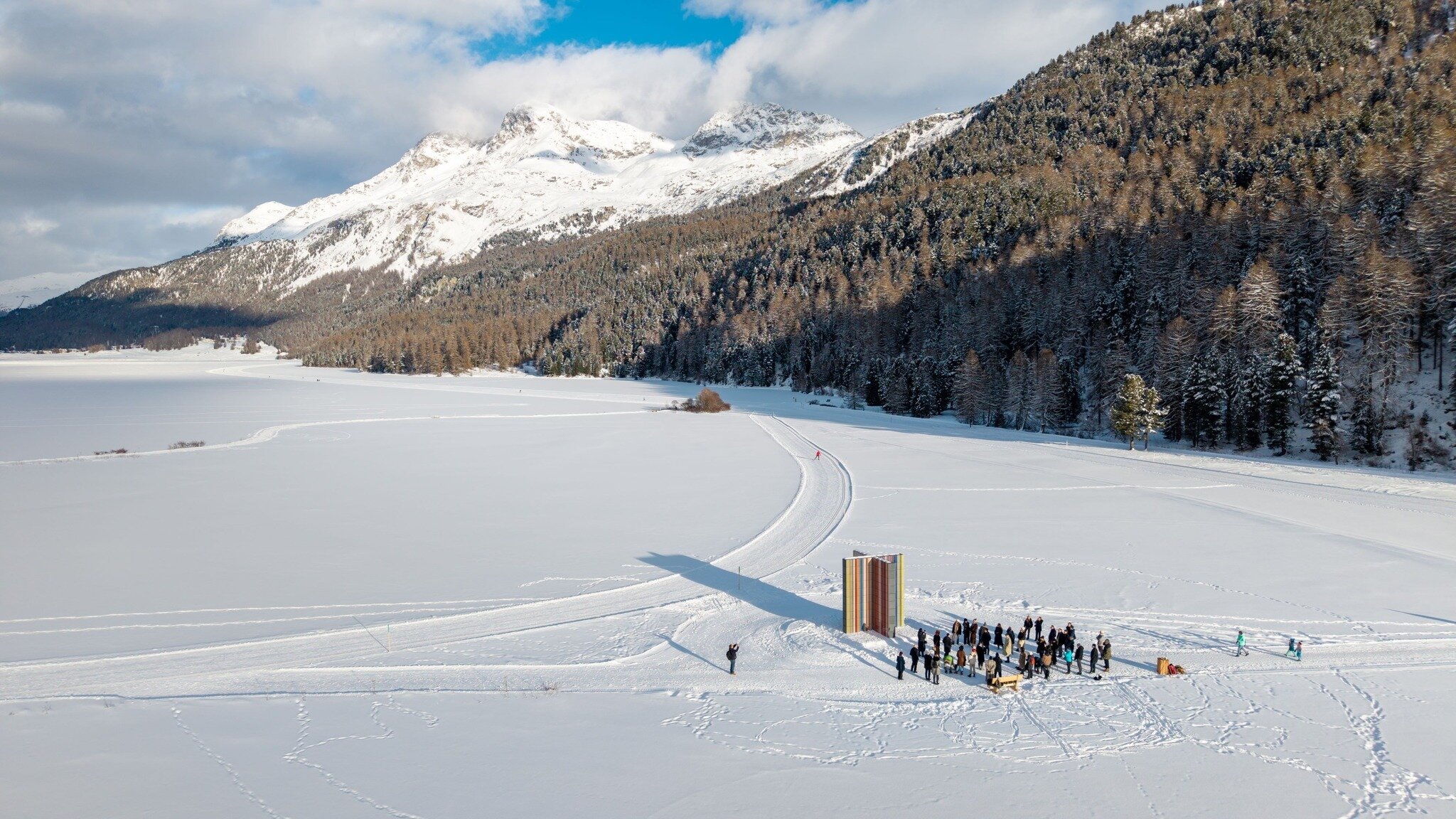
The placement of the sculpture near Lake Silvaplana embeds it directly within the Alpine ecosystem. Its ceramic skin responds to moisture and temperature, while its colors shift under changing skies. The experience of the work unfolds over time, aligning with the German artist’s broader concerns with uncertainty, reflection, and the instability of visual certainty.
With this installation, the Luma Foundation tests how contemporary art can operate outside conventional exhibition formats, proposing the Alps as a landscape where artistic experimentation unfolds over time. Elevation 1049 will return to Gstaad and the Saanenland in 2027, curated by Mohamed Almusibli, but in the Engadin, Richter’s tower will remain, marking the landscape with color, light, and duration.
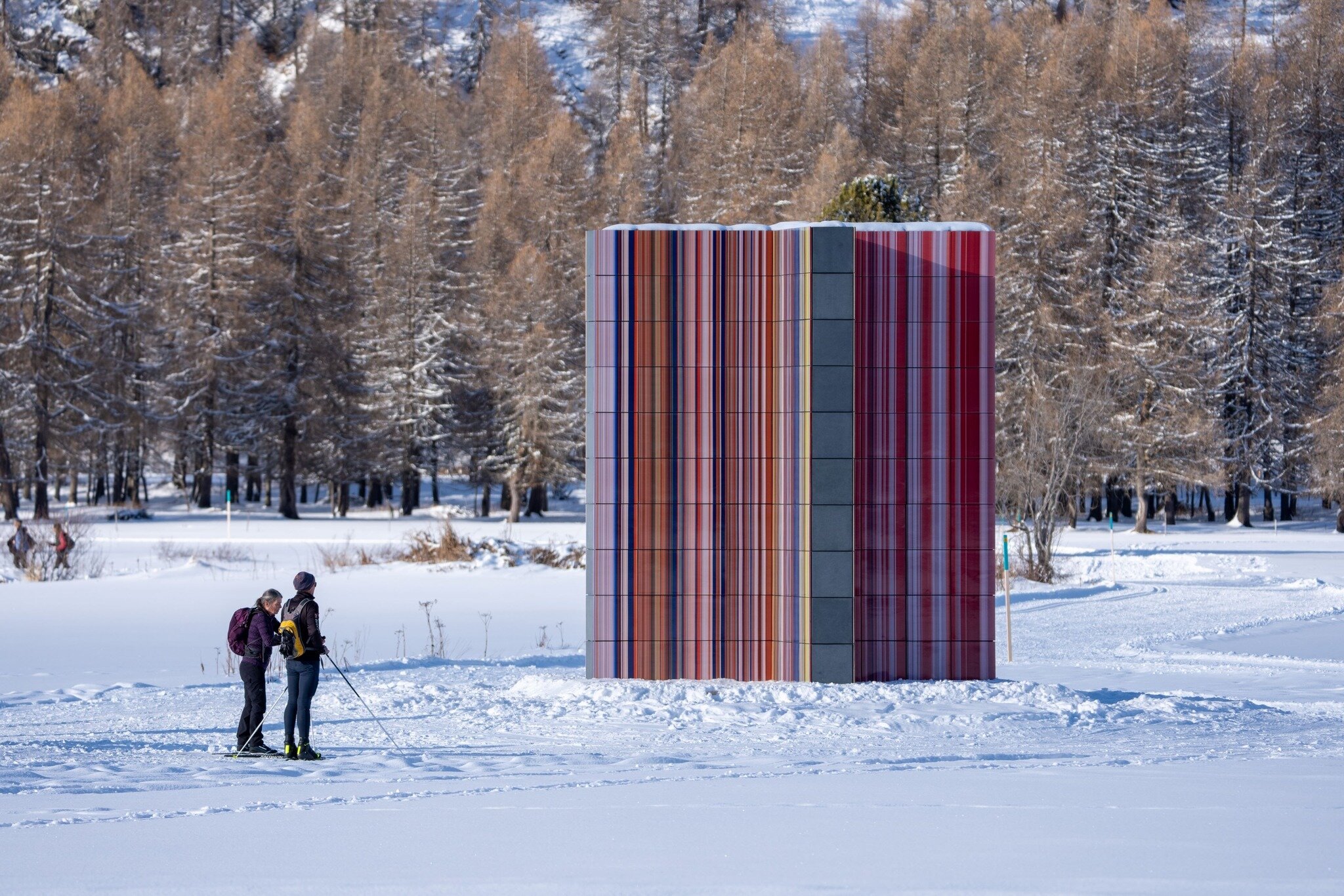
the work draws from the methodology of Gerhard Richter’s Strip Paintings
elevation 1049 and the alpine landscape as a thinking field
Since its inception in 2014, Elevation 1049 has approached the Alps as an intellectual and ecological field. Through site-responsive commissions, the initiative has explored the relationship between contemporary art and geography, climate, history, and local communities beyond institutional settings. The installation of STRIP TOWER (962) in the Engadin demonstrates how long-term artworks can foster sustained public engagement.
Maja Hoffmann, Founder and President of the Luma Foundation, frames the project as part of a broader commitment to situating significant artistic voices in contexts that demand attentiveness and responsibility. She describes the work as ‘a rare synthesis of conceptual rigor, formal clarity, and material precision,’ noting how its presence affirms the Alps as a site of serious cultural production rather than passive scenery.
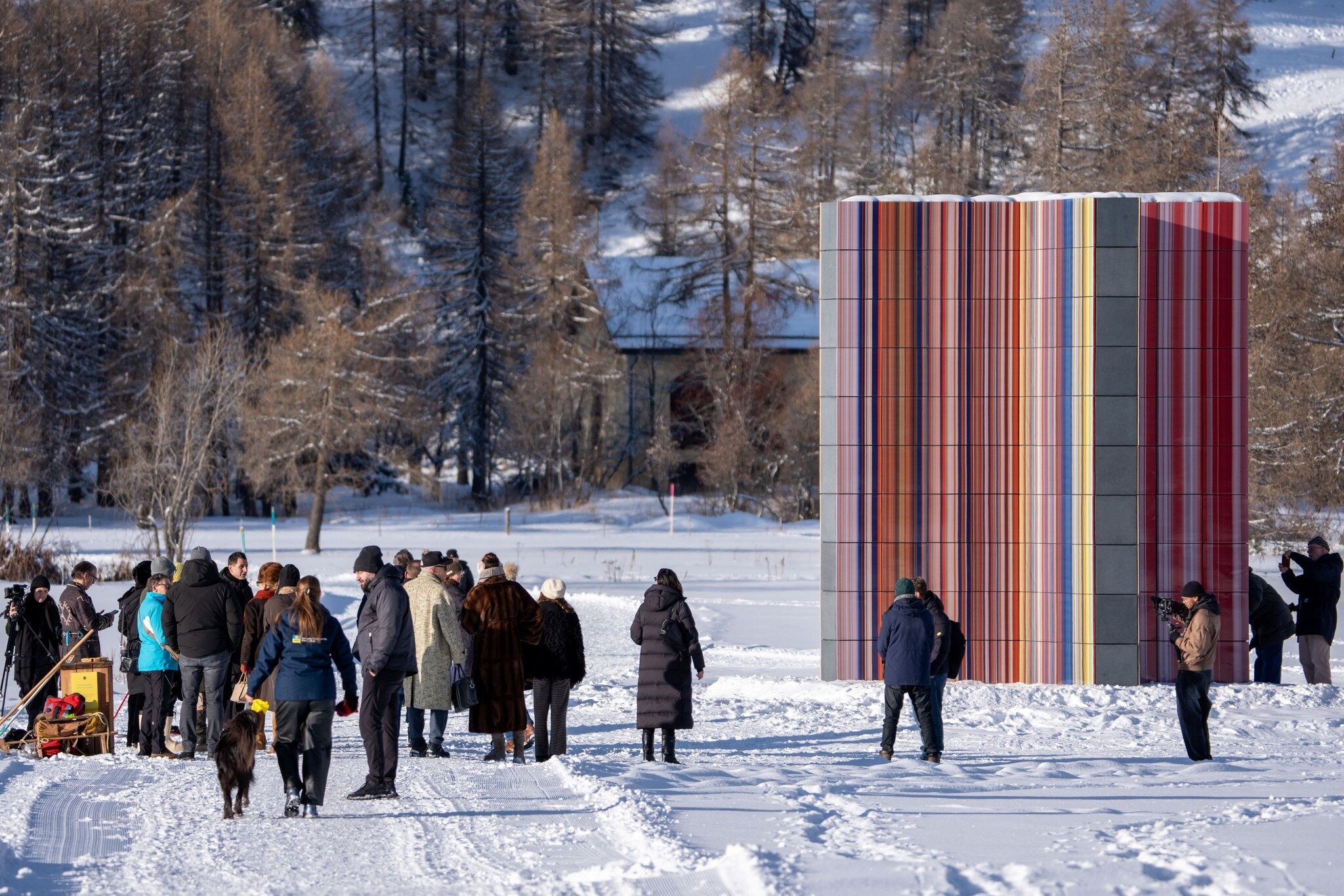
Installed for an initial period of three years, STRIP TOWER (962) emphasizes art as a shared public experience unfolding gradually and in dialogue with place. Visitors can walk through the sculpture, pause within its interior, and return under different conditions, encountering a work that is both monumental and quietly responsive. Its scale does not overwhelm the landscape but frames it, inviting reflection on how perception itself is shaped by environment.
the sculpture consists of eight perpendicular panels clad in glazed ceramic tiles
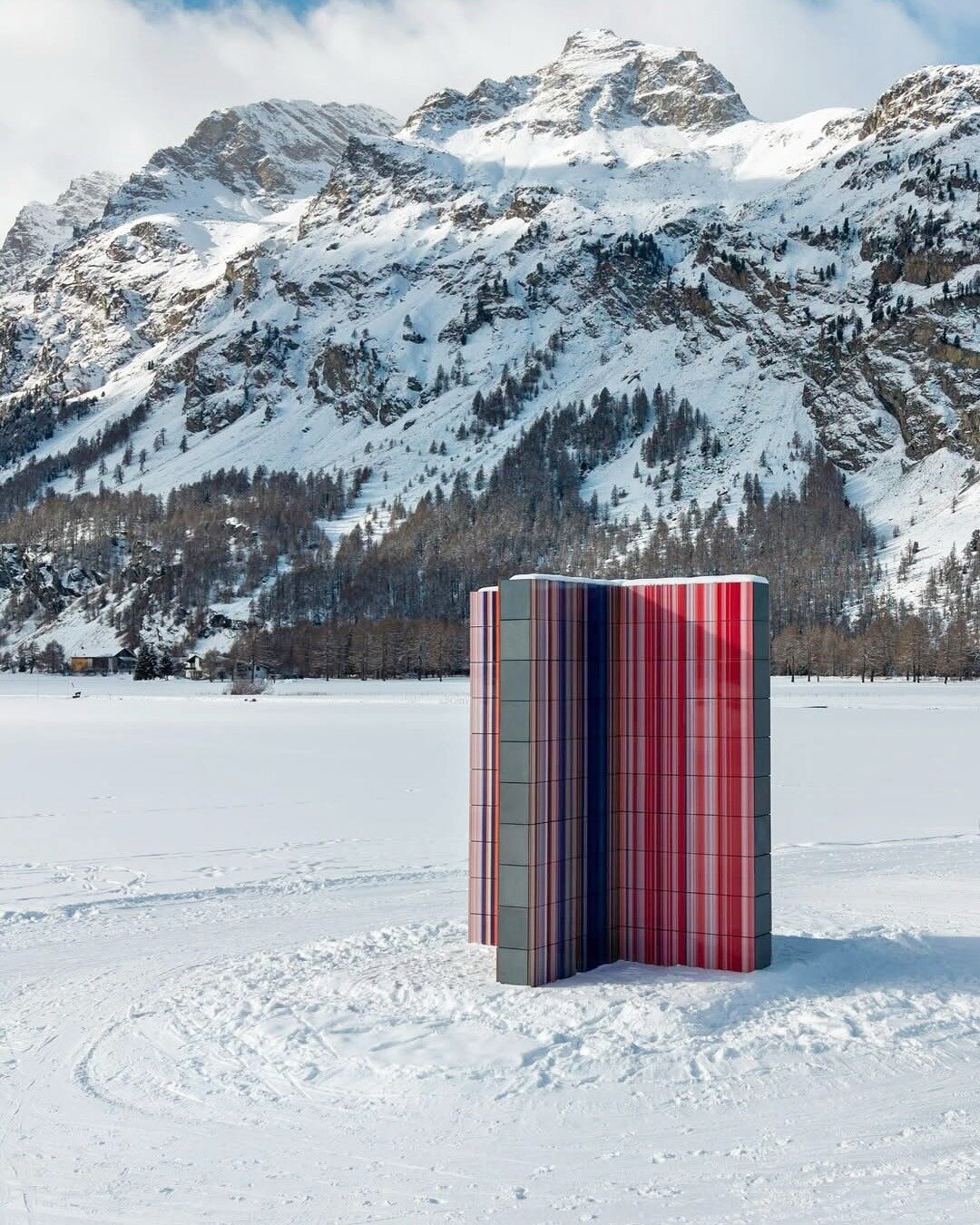
light reflects off the glossy surfaces
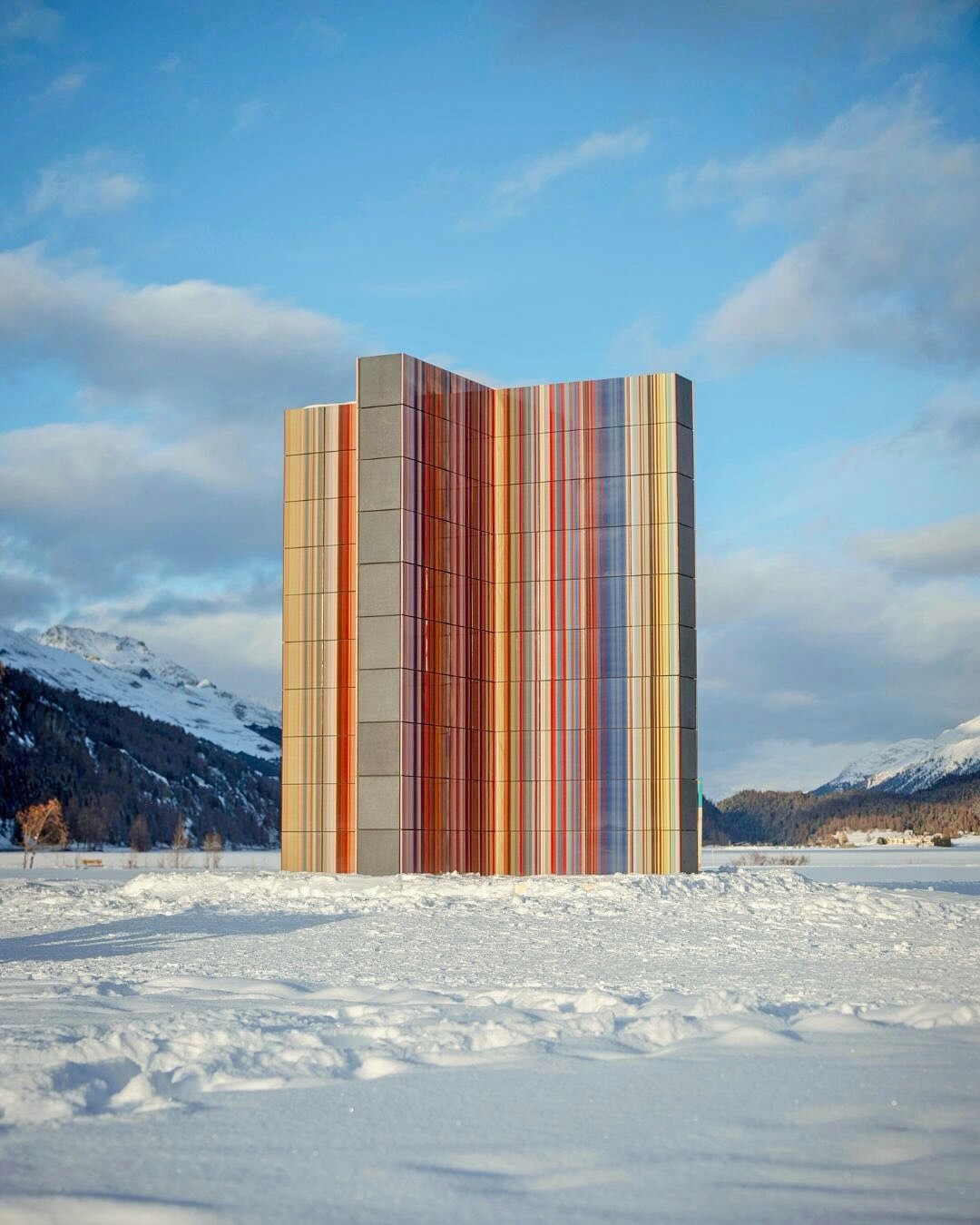
sharpening attention to color, light, and movement | image courtesy of Elevation 1049
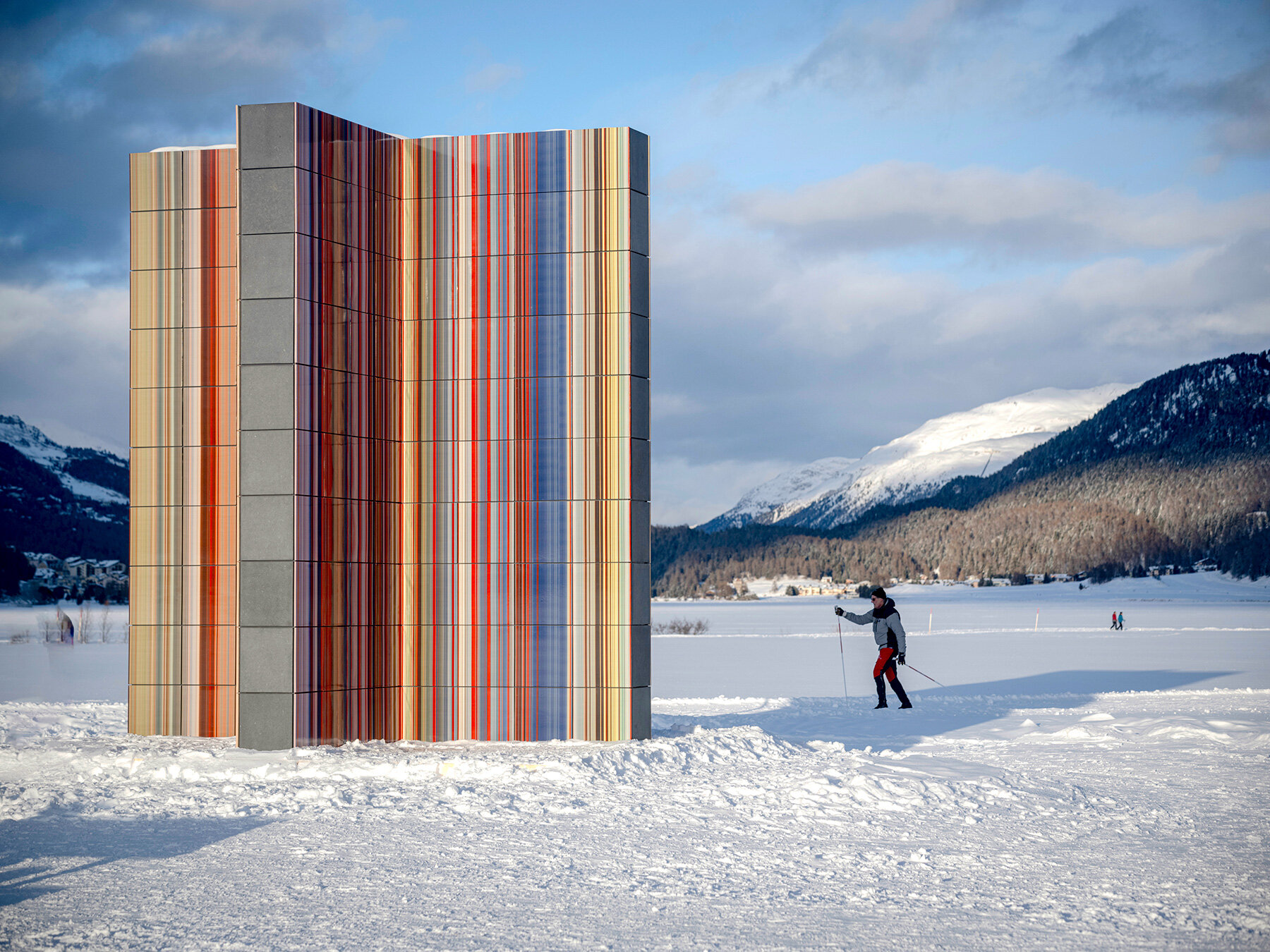
image by Victor & Simon / Joana Luz, courtesy of Gerhard Richter Kunststiftung and Luma Foundation
the intersecting panels allow people to walk between the surfaces | image by Victor & Simon / Joana Luz, courtesy of Gerhard Richter Kunststiftung and Luma Foundation
shifting the encounter from distant viewing to bodily experience | image by Victor & Simon / Joana Luz, courtesy of Gerhard Richter Kunststiftung and Luma Foundation
seasonal shifts continuously recompose the work | image by Victor & Simon / Joana Luz, courtesy of Gerhard Richter Kunststiftung and Luma Foundation
colors shift under changing skies | image by Schaub Stierli, courtesy of Gerhard Richter Kunststiftung and Luma Foundation Fotografie
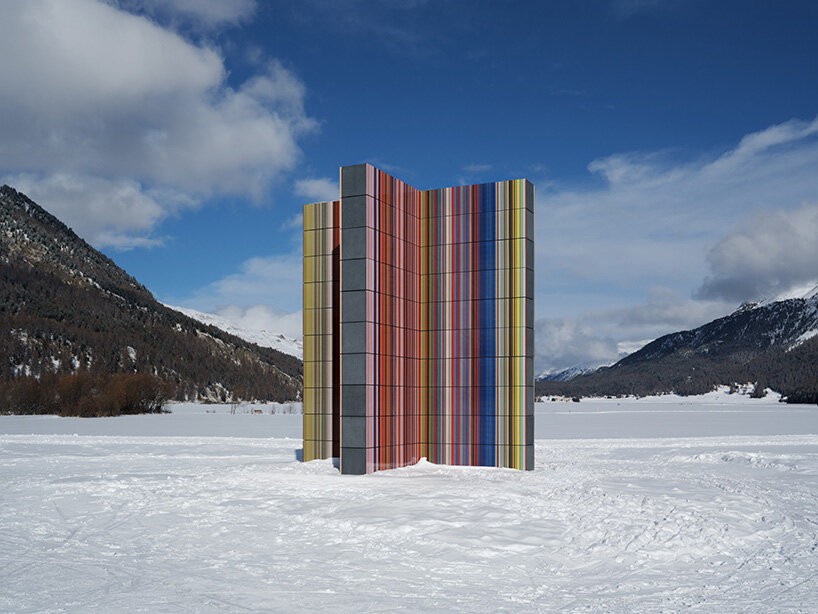
proposing the Alps as a landscape where artistic experimentation unfolds over time | image by Schaub Stierli, courtesy of Gerhard Richter Kunststiftung and Luma Foundation Fotografie
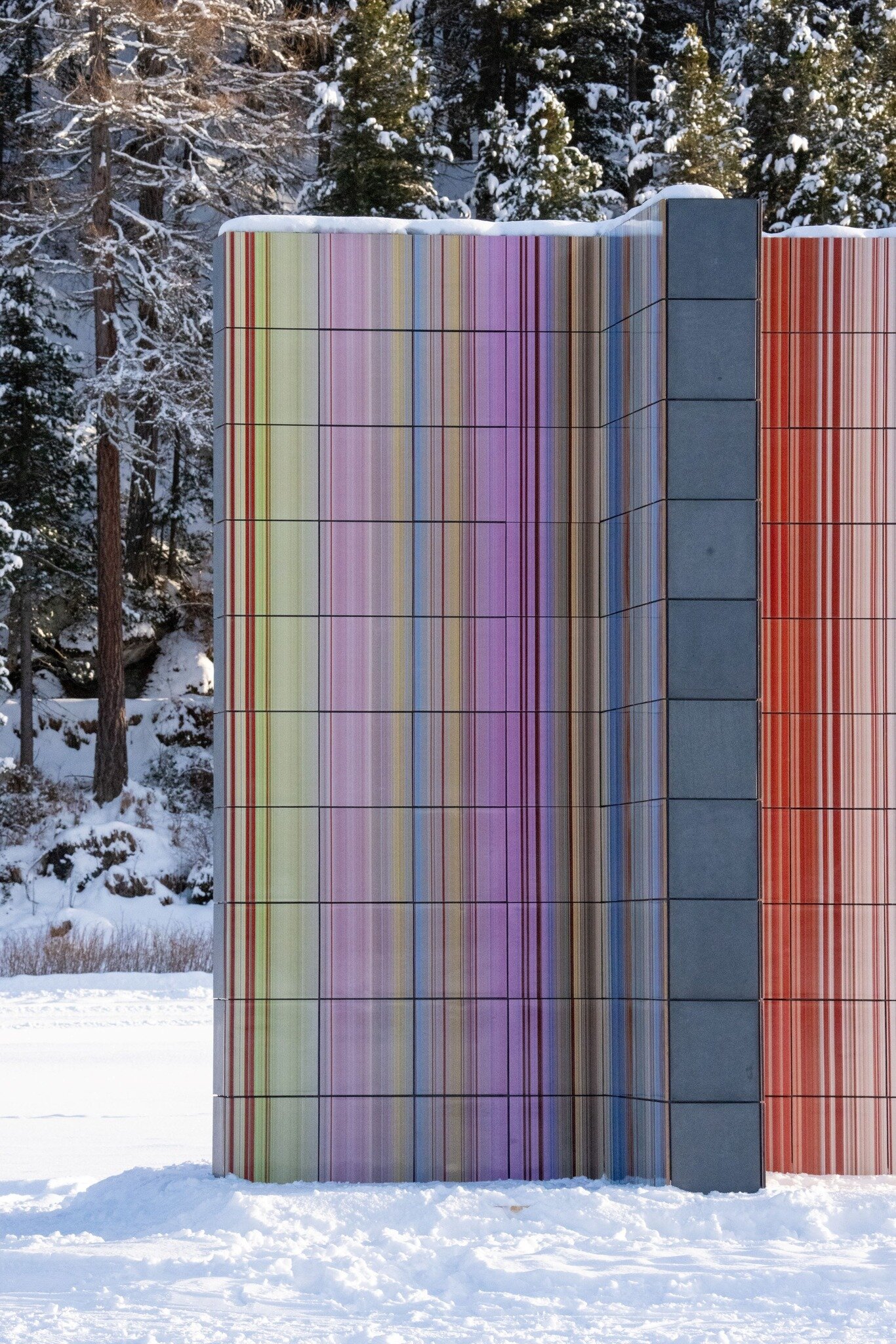
the site offers a fitting context for a work that resists instant legibility
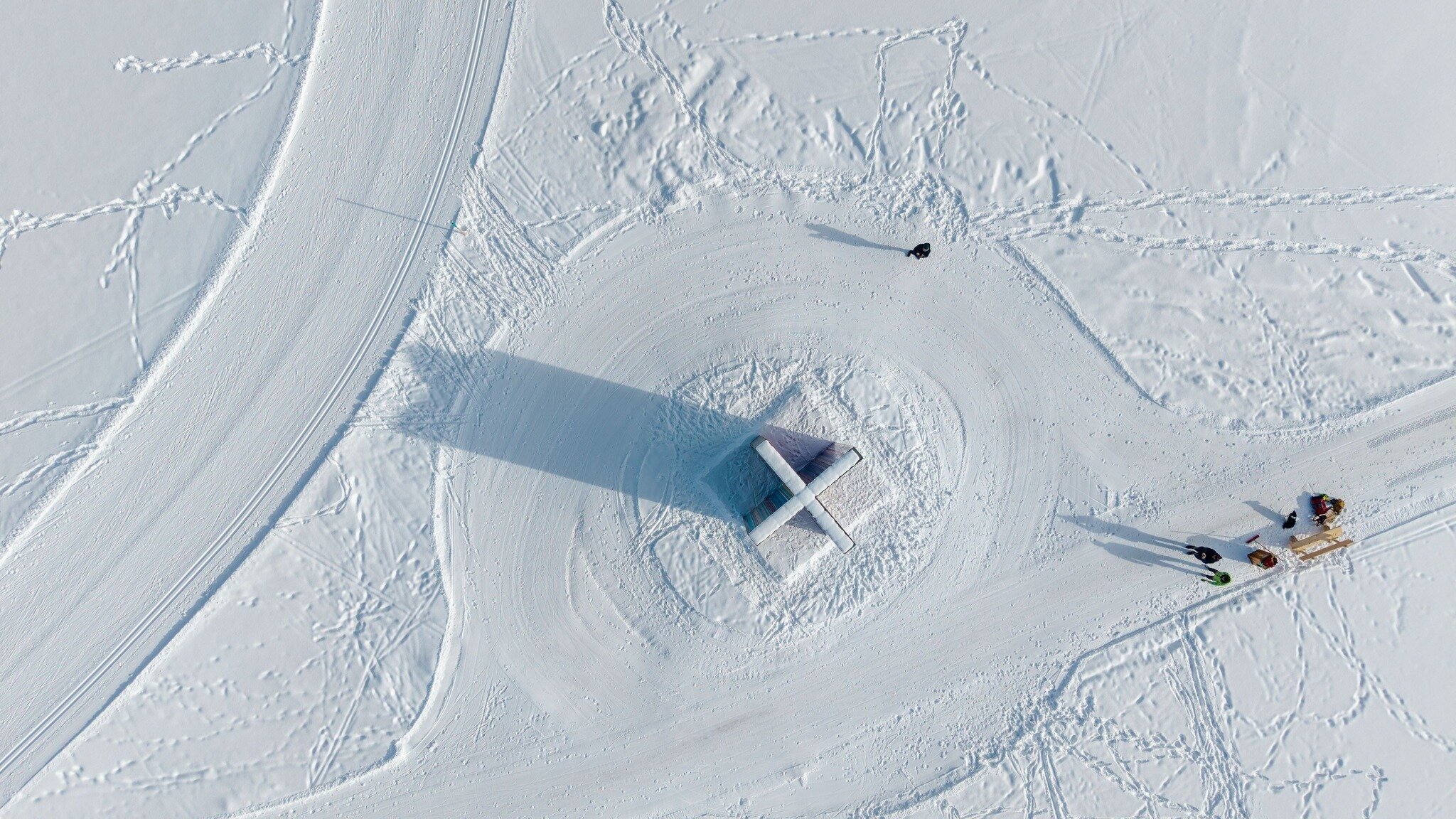
the placement of the sculpture near Lake Silvaplana embeds it directly within the Alpine ecosystem
project info:
name: STRIP TOWER (962)
artist: Gerhard Richter
location: Via d’Lej, 7514 Sils Maria, Engadin, Switzerland
dates: January 27th, 2026 – Spring 2029
presented by: Luma Foundation | @luma_arles as part of Elevation 1049 | @elevation1049
ceramic art and design (245)
 Feb 14, 2026
 Feb 12, 2026
 Feb 04, 2026
 Jan 27, 2026
 Dec 19, 2025
gerhard richter (2)
 Feb 18, 2009
LUMA arles (12)
 Jul 08, 2025
 May 31, 2025
 Jul 11, 2024
 Jun 08, 2024
sculpture (515)
 Feb 20, 2026
 Feb 18, 2026
 Feb 15, 2026
 Feb 13, 2026
 Feb 05, 2026
 Jan 22, 2026
 Jan 01, 2026
 Nov 27, 2025