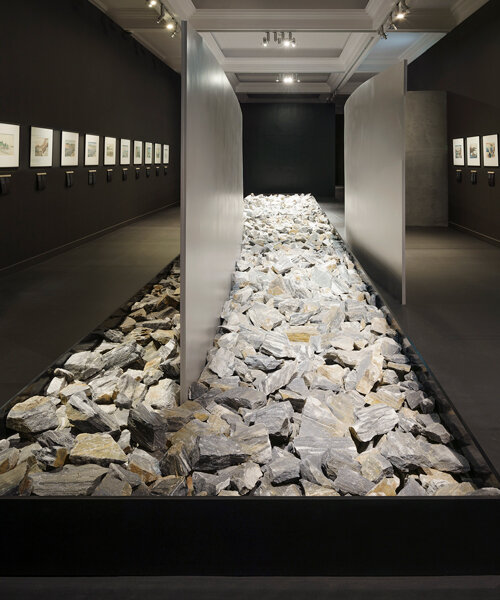
NArchitekTURA designs ‘hokusai. passages…’ exhibition like a meandering japanese garden
the metallic screens and stone garden invites visitors to gradually discover an unfolding view.
prefer designboom on google[FEATURED]
japanese influence in krakow
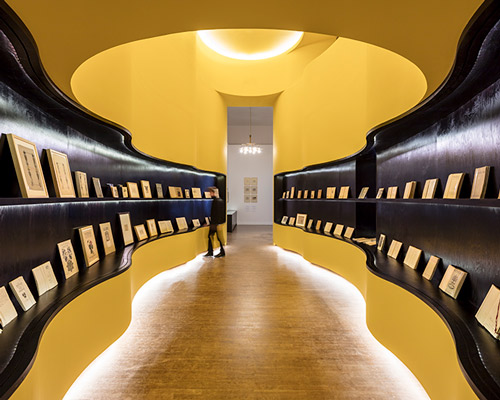
polish studio NArchitekTURA presents the design of an exhibition dubbed hokusai. passages… at the the national museum in krakow. the space seeks merge art, architecture and nature within museum galleries, taking inspiration by unique woodblock prints by katsushika hokusai (1760-1849) as well as different motifs from japanese tradition, culture and aesthetics reinterpreted using modern means of expression.
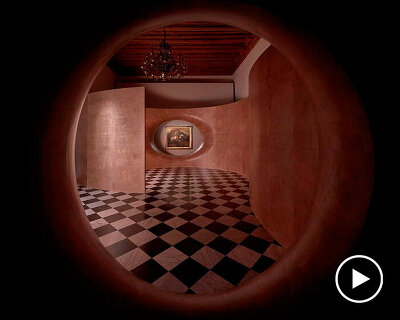
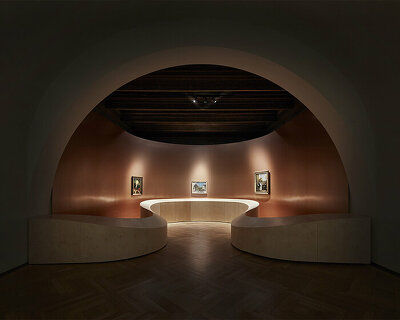
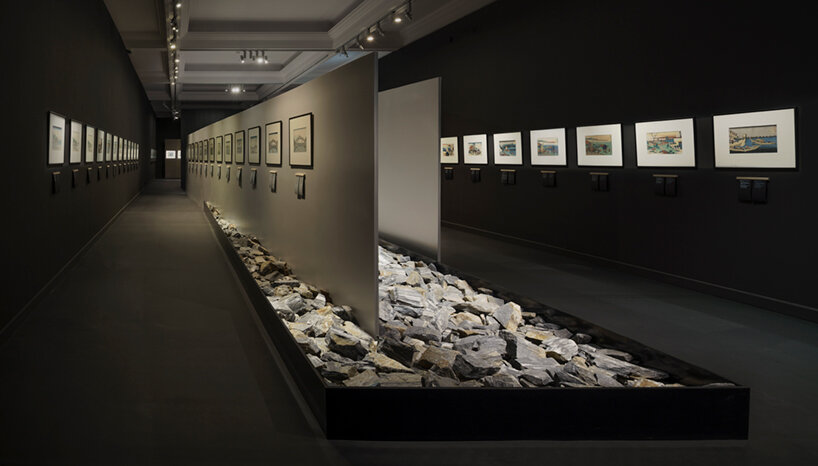
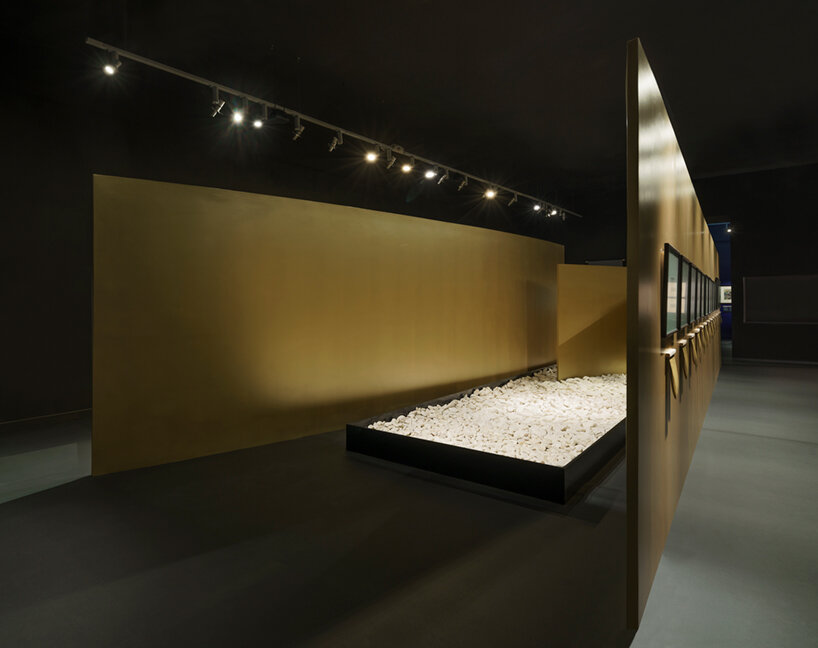
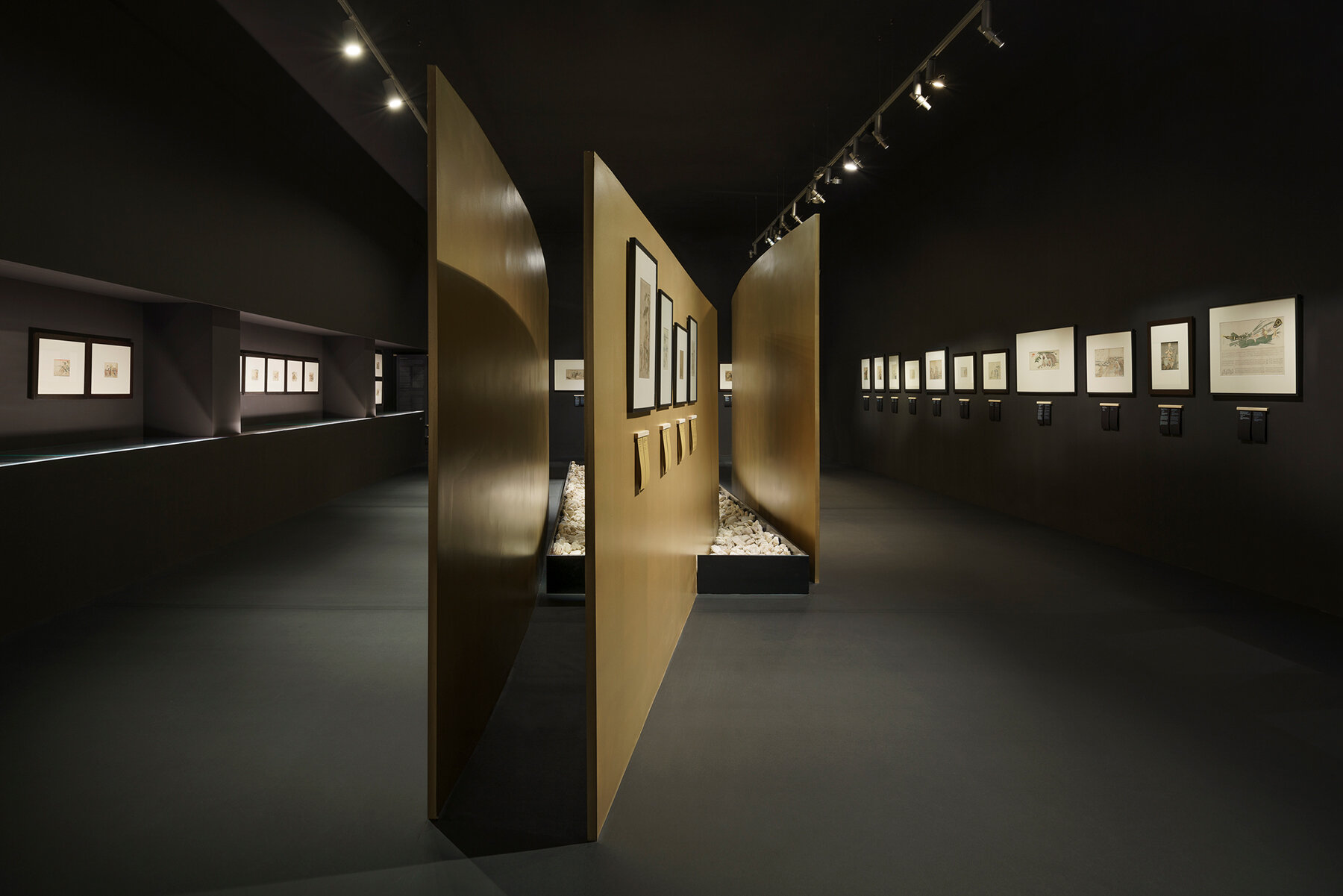
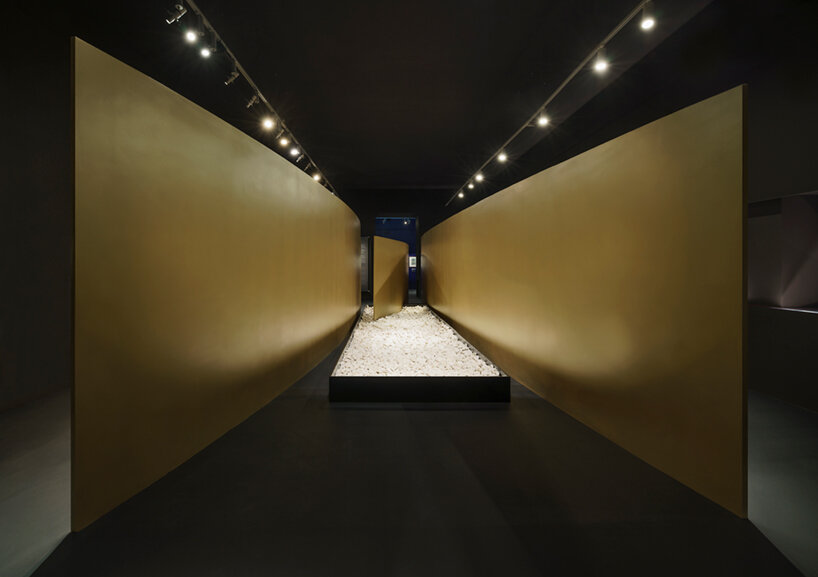
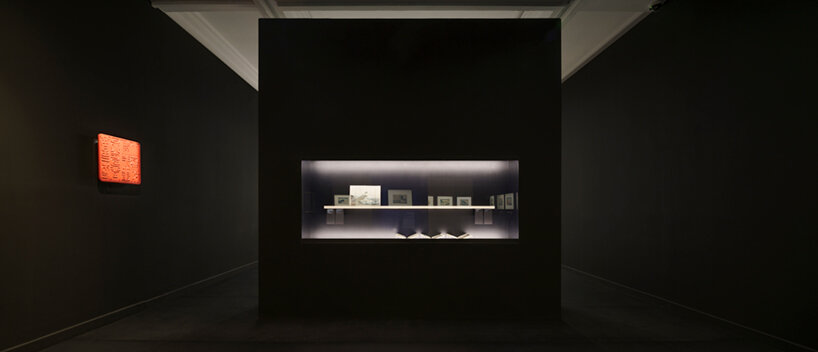
the layout of the ‘hokusai. passages…’ exhibition is organized to follow the concept of ‘hiding and gradually discovering the view’ (miegakure). this layout brings to mind historic temples, palaces, gardens, and houses of ‘the land of cherry blossoms.’ low walls made out of various materials separate individual interiors and suggest the itinerary of the visit, guiding guests to the subsequent groups of works of art.
 images © jakub certowicz | @jakubcertowicz
metallic screening
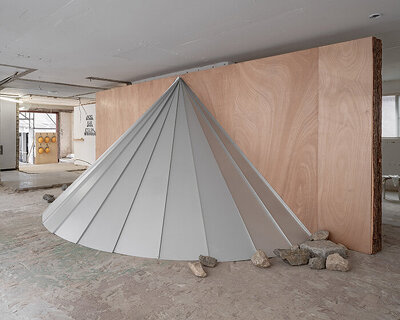
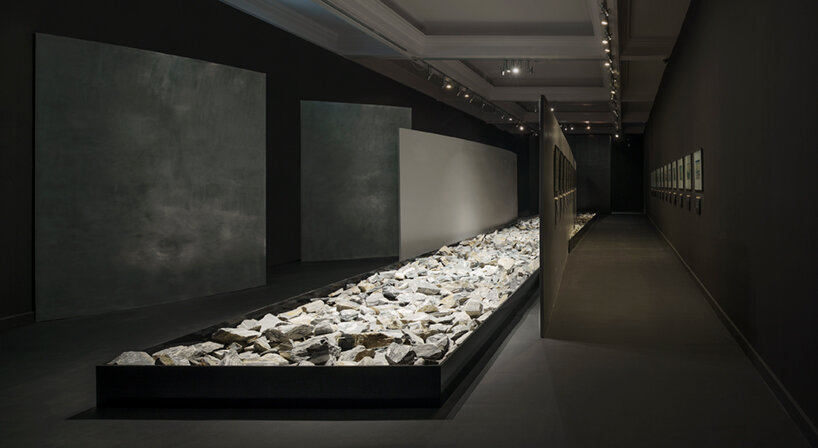
at NArchitekTURA’s hokusai. passages… exhibition, the rectangular interiors are divided by diagonal screens painted with silver and gold varnish. the architects integrate these subdued, metallic hues as a reference to similar colors used in japanese art (fuki bokashi — shading, silver plating and gilding in woodblock printing, maki-e — craft gold plating) and architecture (hishibuki — wiping off zinc sheets). seven freestanding narrow walls disturb the regularity of the layout and symmetrical enfilade arrangement. the team notes that in plan, this assemblage may resemble calligraphic brush strokes or cuts in woodblocks.
NArchitekTURA’s japanese garden
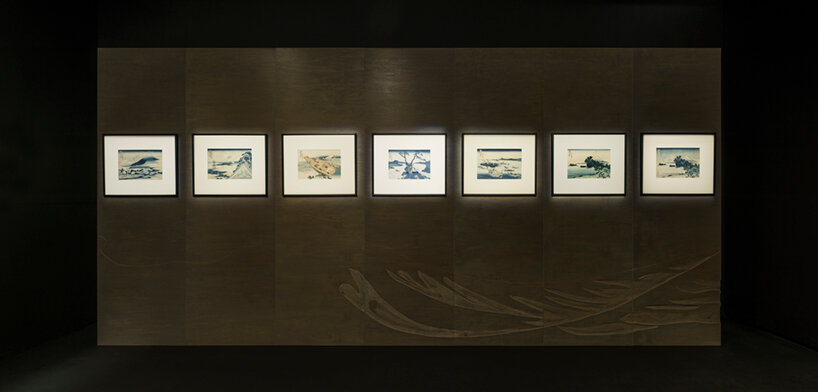
NArchitekTURA designed smaller separating elements individually. the wall with likely two of the most famous works by hokusai (‘the great wave off kanagawa’ and ‘fine wind, clear morning’) stands on a specially selected boulder, which may suggest a reference to historical solutions in the shaping of japanese gardens (keiseki stones) and architecture (soseki stones). the background for this free-standing display is a screen for selected works from the series ‘thirty-six views of mount fuji.’
the panel boards, hand-dyed grey, are cut by an engraving which is an enlargement of a few lines from the ‘great wave’ exposed in front of it. this gesture was intended to illustrate the woodblock carving technique on a larger scale and strengthen the relationship between the work of art and its background.
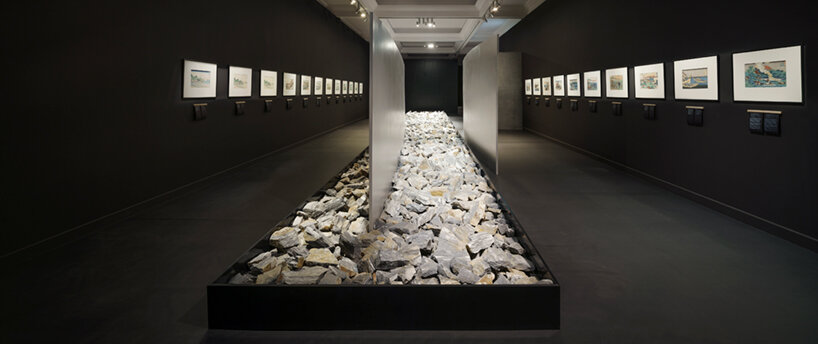
hokusai. passages…
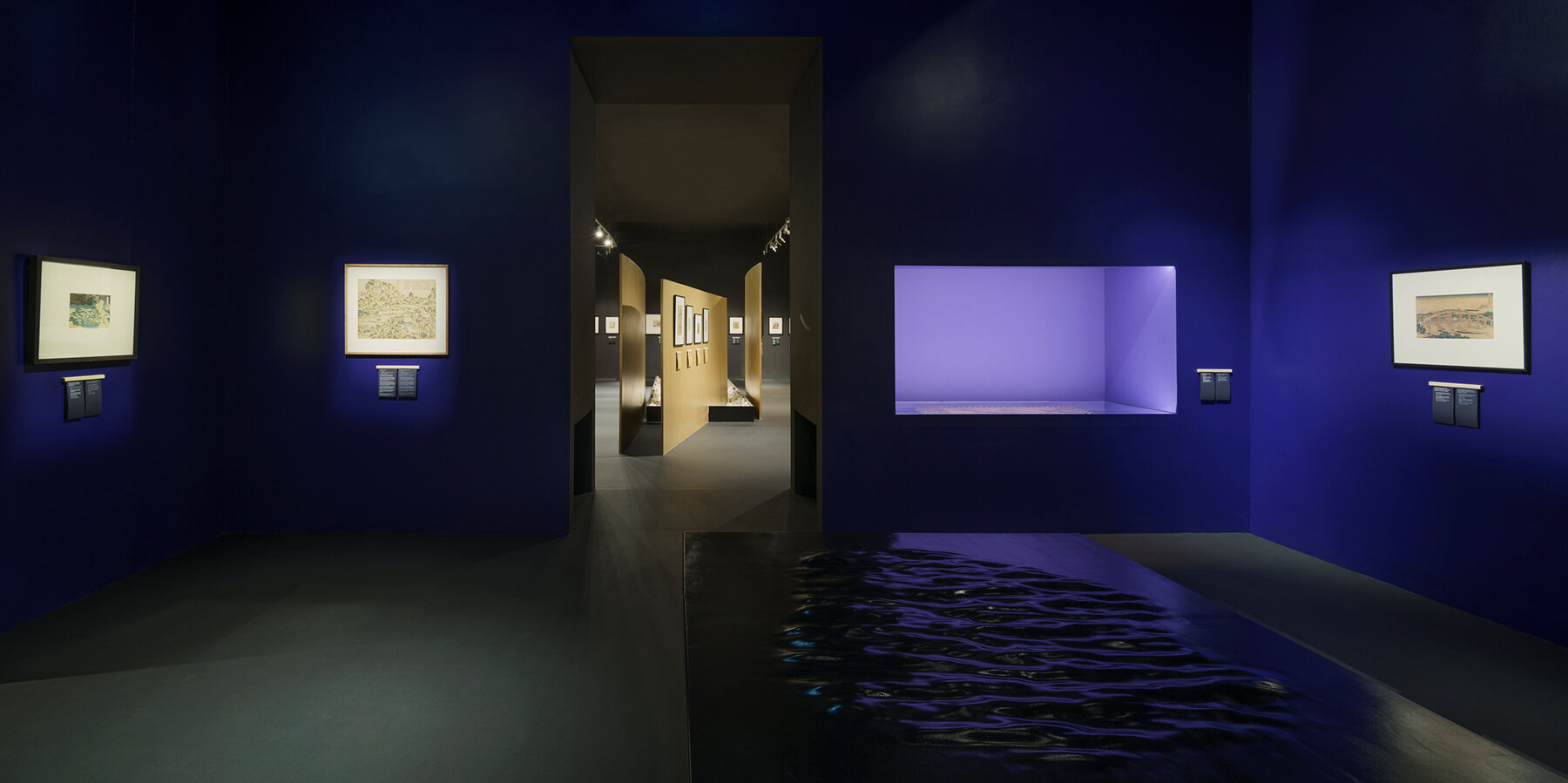
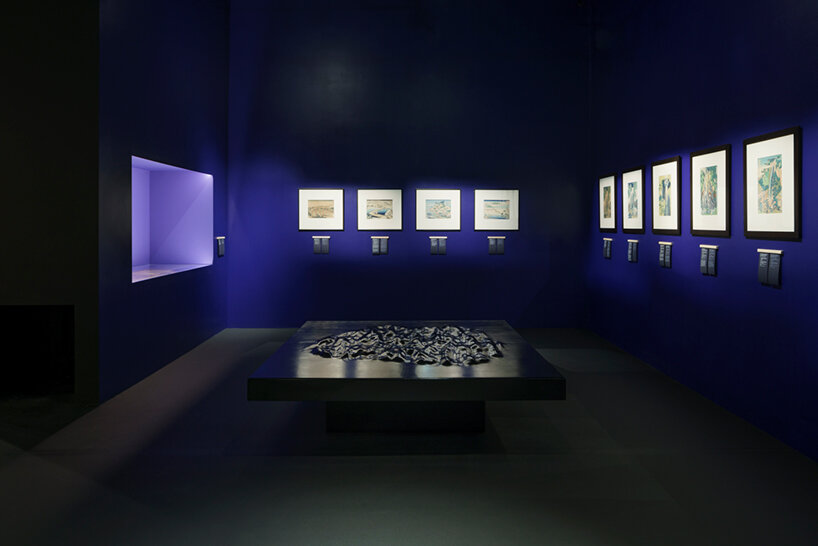
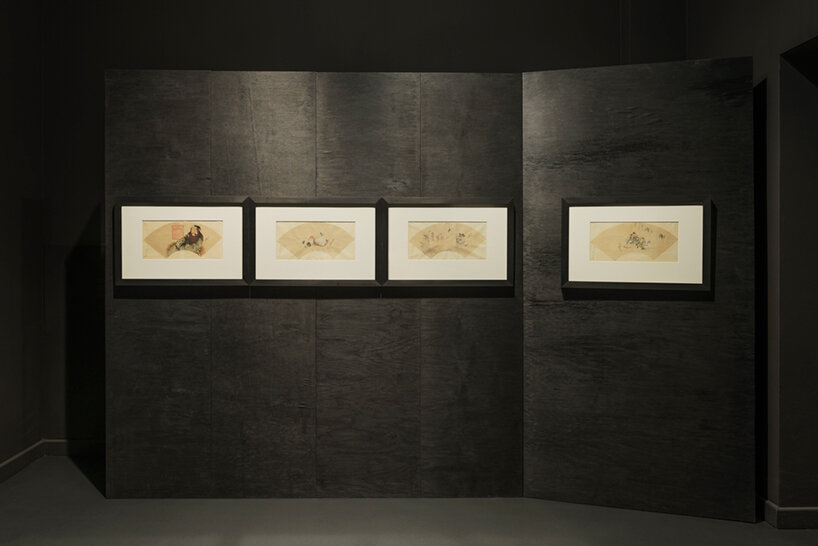
in subsequent spaces at the NArchitekTURA-designed hokusai. passages… exhibition, selection of colors and materials is also based on specific works by hokusai. in the room with the representations of ‘ghosts and apparitions,’ free-standing frames with woodblock prints appear in a camouflaged ‘garden’ filled with pieces of turquoise sintered glass. in turn, in the dark blue room with illustrations of waterfalls and bridges, a spatial installation inspired by the surface of water is placed in the central point.
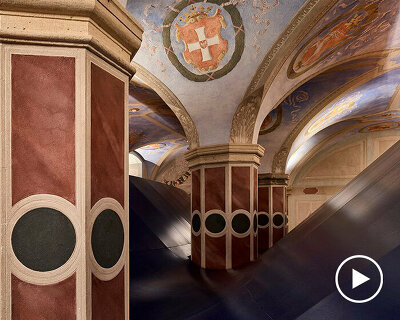
this attempt to capture something elusive in a permanent form fits in with the concept of ukiyo-e, describing old japanese art as ‘images of the floating world.’ this idea is present in many elements of the exhibition arrangement, including the intangible ones — discreet music, moving projections, or the smell of various natural materials (wood, stone, canvas, paper).

1/4
exhibition info:
exhibition title: hokusai. passages…
location: the main building of the national museum in krakow
design: NArchitekTURA / bartosz haduch
design team: bartosz haduch, łukasz marjański, michał haduch
exhibition graphics: studio widok
curator: beata romanowicz
coordinators: katarzyna stolarz, kamila hyska, alicja głuszek
contractor: section for the implementation of exhibitions of the national museum in krakow
contractor of carpentry elements: CNC farm / jan żurek
completion: 2021
photography: © jakub certowicz | @jakubcertowicz
shop
your own online design shop — no sales commission collected