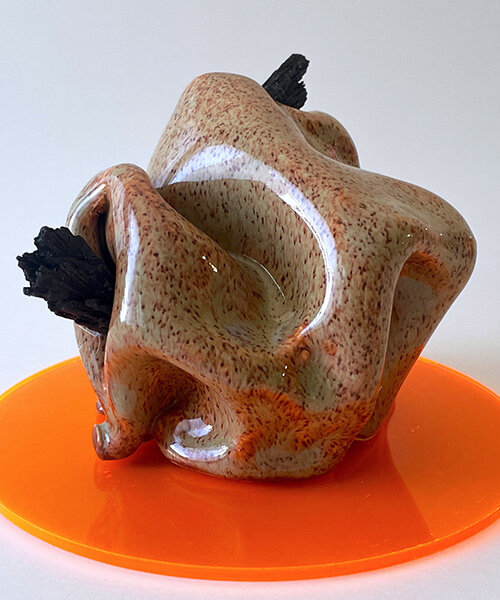
as humanity dreams of mars, artist mari nagem asks us to reconsider life on earth
the artist questions whether humanity would carry its extractive relationship with nature into the worlds it hopes to colonize.
prefer designboom on google[FEATURED]
mari nagem questions humanity’s visions of the future
At New York’s CUE Art, Brazilian artist Mari Nagem draws a connection between humanity’s dreams of colonizing Mars and the ecosystems we are struggling to sustain on Earth. Her work explores a curious contradiction in our relationship with technology: we are developing increasingly sophisticated ways to survive on distant planets while overlooking the extraordinary systems of life that already exist around us.
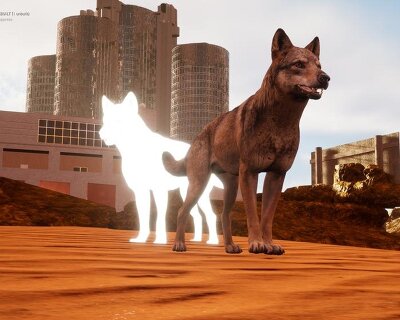
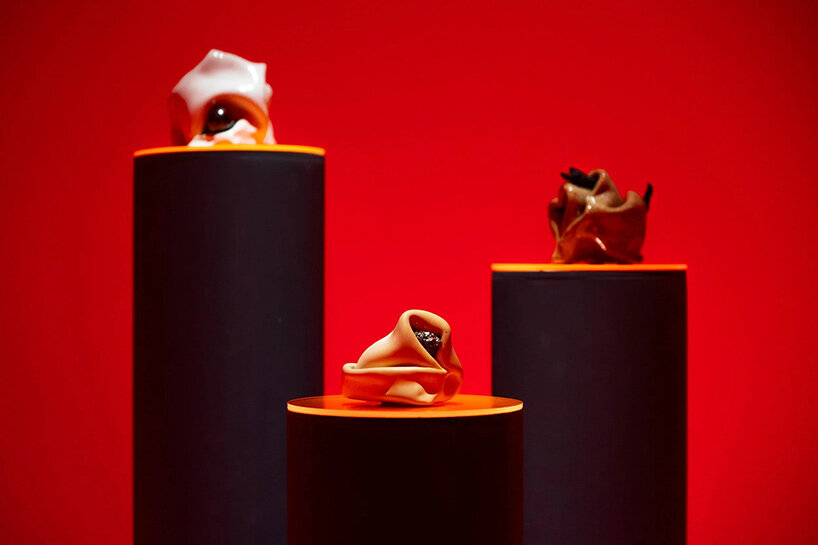
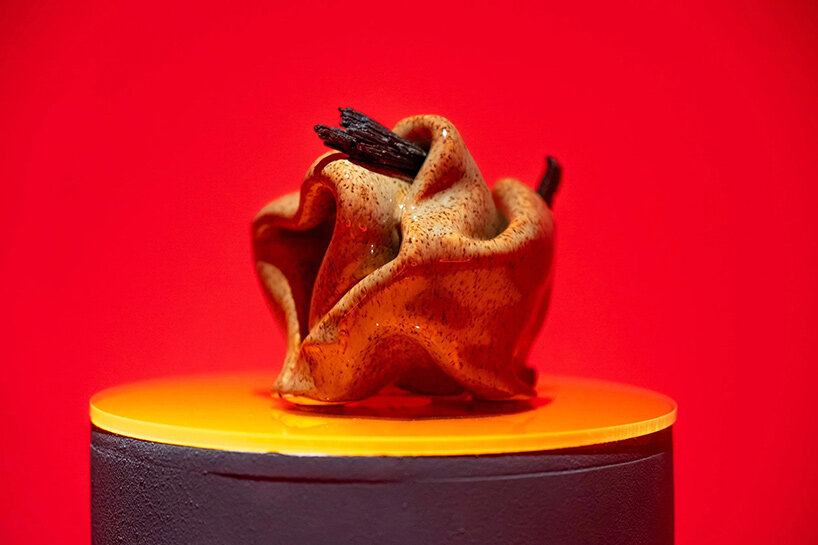
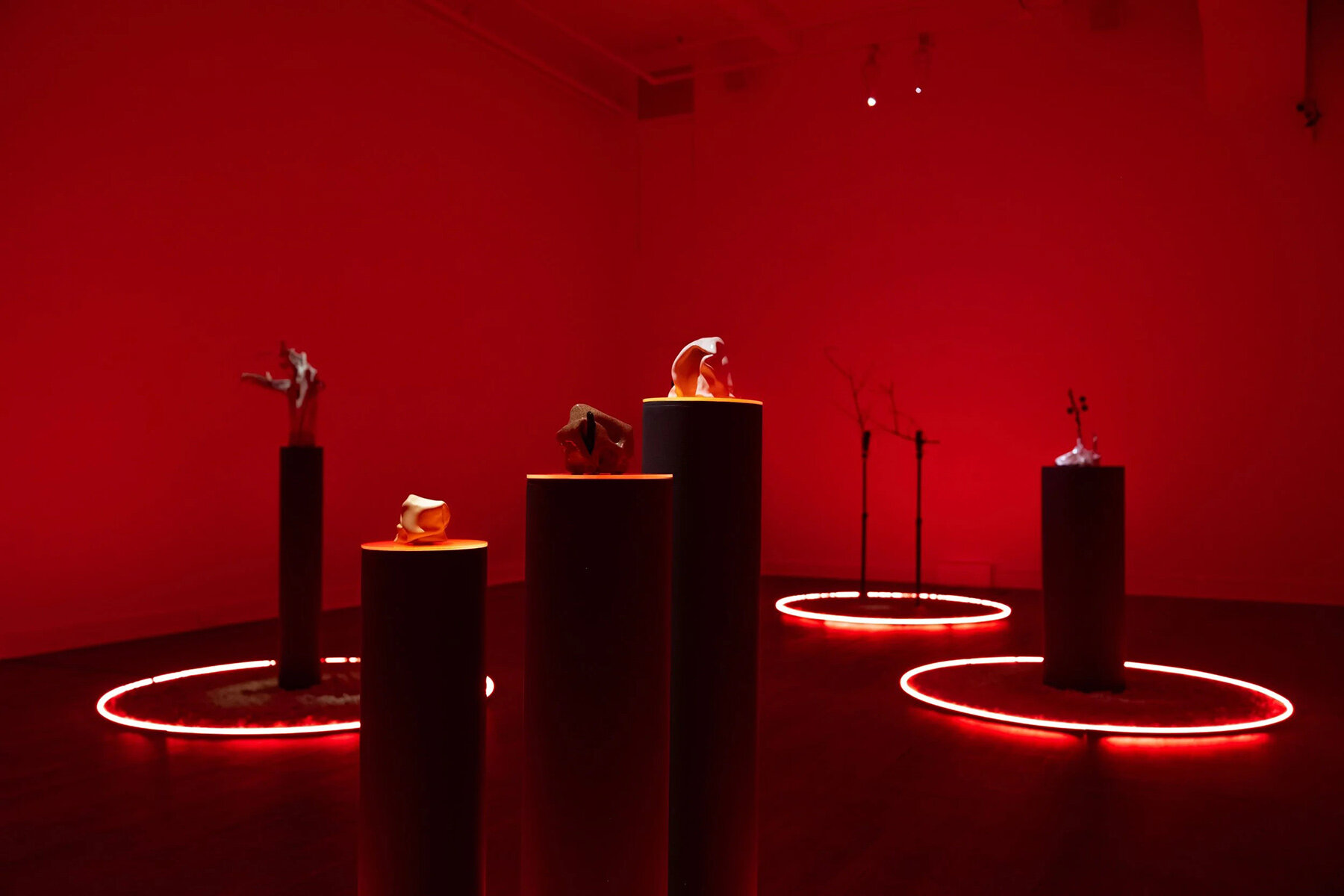
In her show, The Tropics, The Moon, and Mars, Nagem imagines what such a future might look like. Saturated red light fills the gallery, illuminating sculptural motorized branches and small ceramic formations. The installation recalls an unfamiliar planetary landscape, but its materials and references actually come from Earth’s changing environments. Slightly unsettling, the effect brings the promise of extraterrestrial exploration into conversation with the ecological crises happening here on Earth.
imagining the future from a changing earth
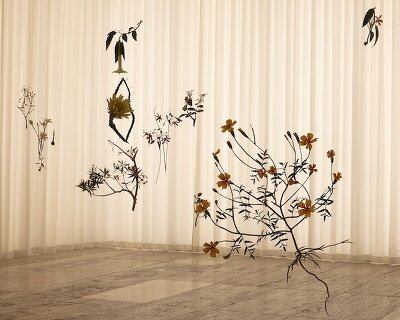
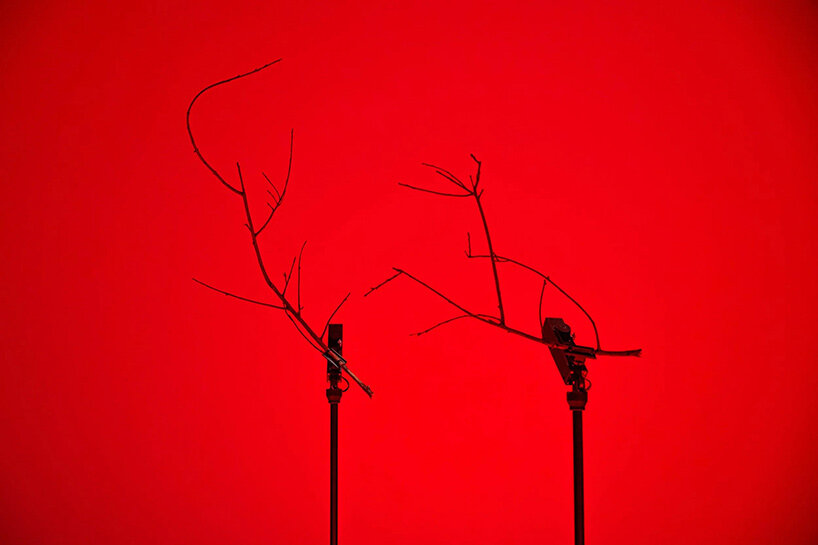
Much of Mari Nagem’s practice begins with scientific research, which she interprets through sculpture and digital media. In Flora Futura (The Survival Dance), bare branches mounted on motorized stands move slowly against a red-lit backdrop. The work draws on ESECAFLOR, a long-running experiment in the Brazilian Amazon where researchers divert rainfall from sections of forest to study how trees respond to prolonged drought.
The artist takes this question of survival into an imagined future. The branches sway and cast shifting shadows, their movements suggesting both growth and decline. It’s difficult to tell whether these strange mechanical plants are adapting to their environment or slowly dying. The uncertainty reflects the experiment’s larger concern: how might forests continue to survive as their climate changes?
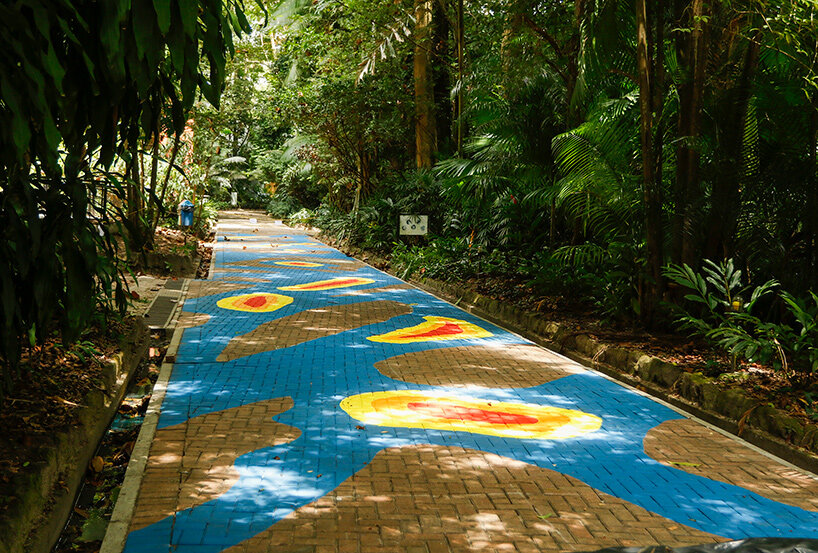
The relationship between technological experimentation and environmental change also appears in 41°C (2025), a 43-meter-long ground painting created for the Emílio Goeldi Zoobotanical Park in Belém during COP30. Its vivid colors trace the Tefé River, where water temperatures reached 41°C during the devastating Amazonian drought of 2023, contributing to the deaths of hundreds of river dolphins.
Drawing on satellite imagery and thermal data, Nagem transforms an environmental event into something visitors can encounter at the scale of their own bodies.
Both works make processes that are difficult to observe feel unusually immediate. One animates a forest under stress, while the other gives physical form to an extreme temperature. Through these translations, Nagem considers how scientific tools might change the way we perceive the living world.
what if nature is already our most advanced technology?
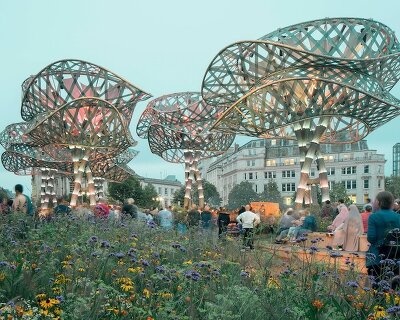
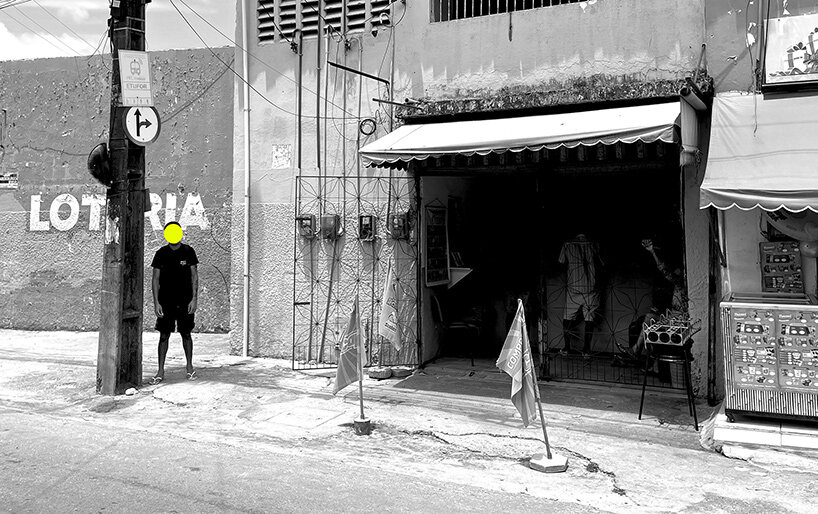
This question becomes especially interesting in The Right to Shade (2026), which examines access to shade in Fortaleza, Brazil. Using satellite imagery and AI-assisted analysis, Nagem and her collaborators map the distribution of trees and buildings across the city, revealing how exposure to intense sunlight varies between neighborhoods.
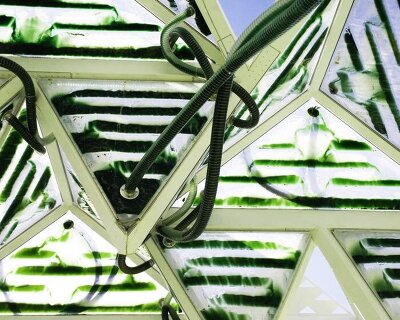
The project began with an interest in architectural solutions for cooling urban environments, including a new version of the traditional Brazilian cobogó, a perforated brick that filters sunlight. Yet the research eventually turned toward something far older and more complex: trees. Their canopies provide cooling through an intricate biological system, raising questions about why cities continue to develop artificial solutions while neglecting the living infrastructure already available.
Nagem uses advanced computational tools to draw attention to forms of intelligence that developed long before human technology. It suggests a different way of imagining the future, one in which architectural and technological progress begins by understanding our dependence on other living organisms.
learning to listen beyond the human world
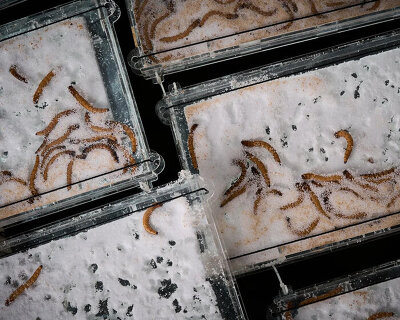
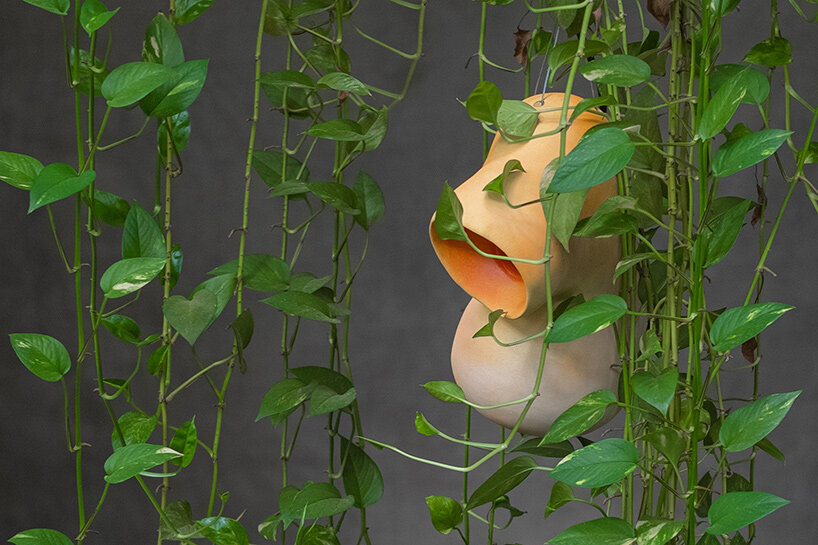
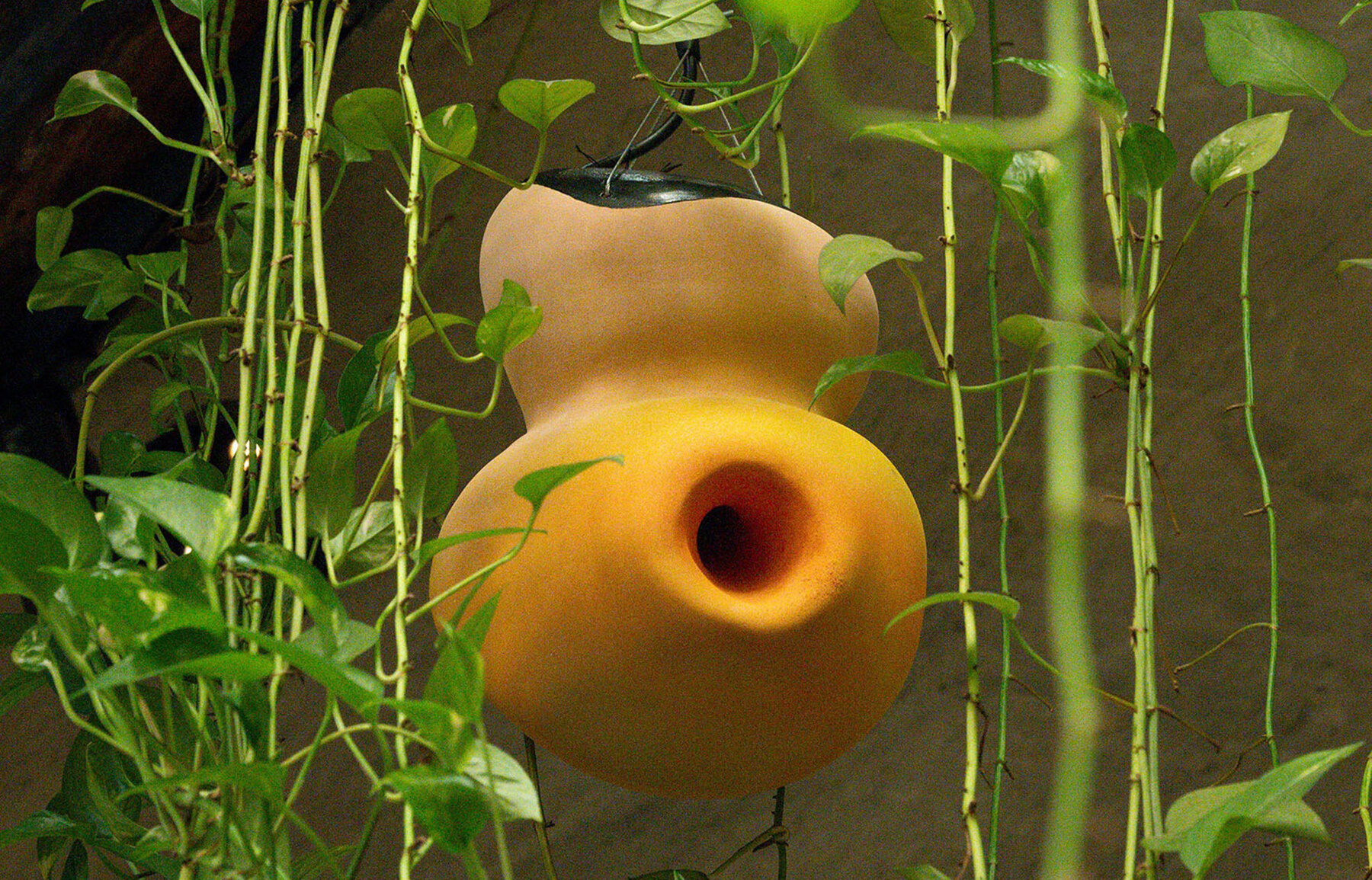
Elsewhere, Nagem considers what happens when those organisms disappear altogether. In Siren (2024), created with Leandro Lima for SFER IK Museion in Mexico, artificial intelligence is used to imagine the songs of extinct South American birds. The sounds emerge from sculptural speakers resembling nests, combining digitally fabricated ceramics with traditional handcraft.
The installation raises an uneasy possibility. Technology might allow us to imagine the voices of vanished species, although the actual birds and their ecological relationships remain lost. The work sits between scientific speculation and a kind of synthetic remembrance, questioning what it means to recreate traces of nature through machines.
Across her practice, Nagem returns to the distance between what humans can invent and what we have learned to understand. From artificial birdsong to the complex intelligence of a tree canopy, her work encourages us to reconsider the place of technology within the natural world.
As visions of future settlements on the Moon and Mars grow increasingly detailed, she brings our attention back to the species and environments with which we already share a planet.
project info:
artist: Mari Nagem | @mari_nagem
project: The Tropics, The Moon, and Mars, alongside selected works from 2024–2026
exhibition venue: CUE Art, New York, USA
exhibition dates: July 11th — October 10th, 2026
This article is part of designboom’s POSTHUMAN UTOPIAS chapter, exploring what happens when humans are no longer the measure of all things. These stories rethink our relationship with the planet through interspecies architecture, living materials, regenerative landscapes and emerging technologies – learn more here! The chapter is presented in partnership with INDX|GLOBAL – a global cultural platform placing Indian architecture, design, and creative intelligence in conversation with the world.
Each designboom editorial series explores one theme in depth through projects, interviews, features and news across architecture, design, art and technology. Discover more chapters here, and get in touch if you’d like to submit a story through our submissions portal or contact form.