‘art must reflect the times we live in’: ibrahim mahama on his fondation cartier exhibition
from abandoned factories in ghana to his major exhibition in paris, the artist uses repair to rethink how we relate to history, labor, and one another, arguing that what we inherit can become a resource for building something new.
prefer designboom on googleIbrahim Mahama brings Ghanaian industrial histories to paris
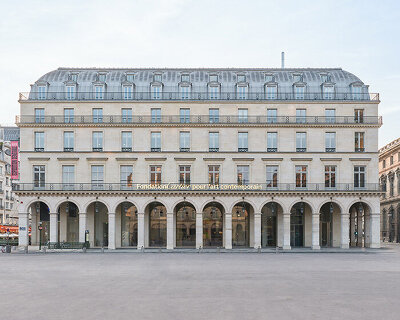
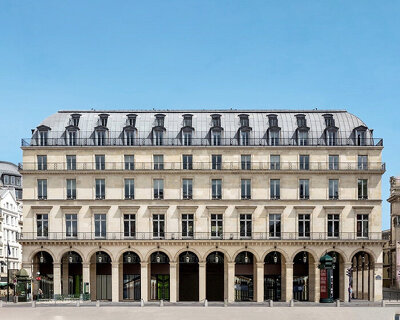
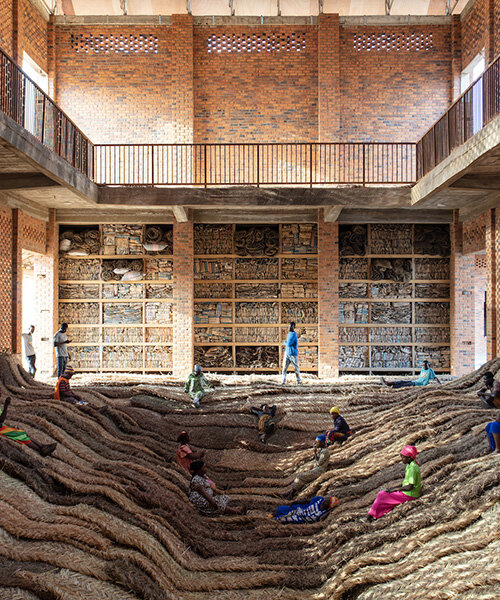
Ibrahim Mahama has spent years collecting, dismantling, and rebuilding things that could be considered beyond repair. Old trains, airplanes, factory structures, wooden stools, and industrial materials shape a practice that looks at what societies leave behind and what can be done with it. His work is rooted in northern Ghana, where the history of colonial exploitation continues to shape the region, but his questions reach far beyond it: who gets to shape the future, what do we do with the past, and how can art create something useful for the people around it? These questions come together in The Harvest Season, Mahama’s major exhibition at Fondation Cartier in Paris, on view from October 22nd, 2026, to February 28th, 2027. Developed with nine artists and collectives connected to the Ghanaian art scene, the presentation brings together installations, industrial remnants, and spaces for public activity.
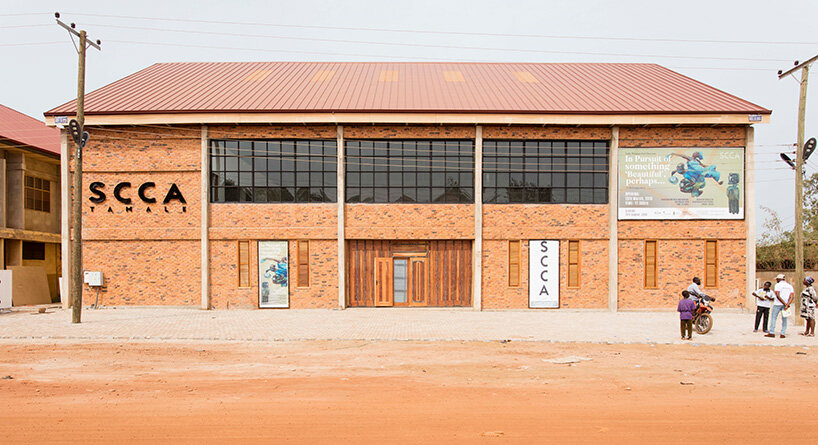
The artist wants the museum to be a space for people to meet, learn, and share ideas. This builds on his work in Tamale, where he has founded three art centers that bring contemporary art into education and community life. For Mahama, this commitment began with a question about the place he comes from. Growing up in northern Ghana, he saw how difficult circumstances could become a reason to leave. An idea from one of his art school mentors offered another way to think about it. ‘We need to see art as a gift,’ the artist recalls being taught during our discussion. ‘Sometimes even the conditions which we inherit or we are born in are a gift in themselves. Sometimes you can inherit a bad gift. But then the question is, how do you transform this gift into a promise for other people?’ This idea is central to Mahama’s practice. He works with what the past leaves behind, finding ways to give old materials, structures, and histories a new role rather than letting them disappear. ‘Contemporary art is not just meant to produce beautiful, fancy exhibitions. The idea is that even if we’re going to deal with the question of aesthetics and beauty, it has to deeply reflect the times that we live in or the question of time itself.’ he tells designboom.
‘The Harvest Season’ at Fondation Cartier
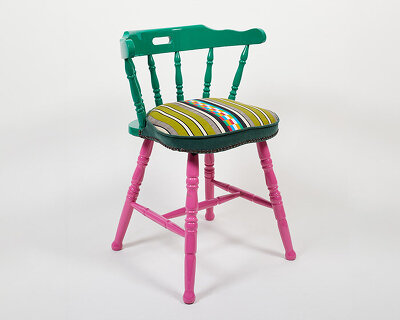
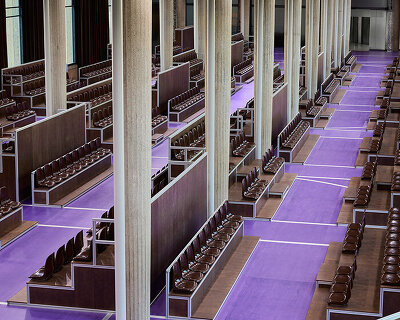
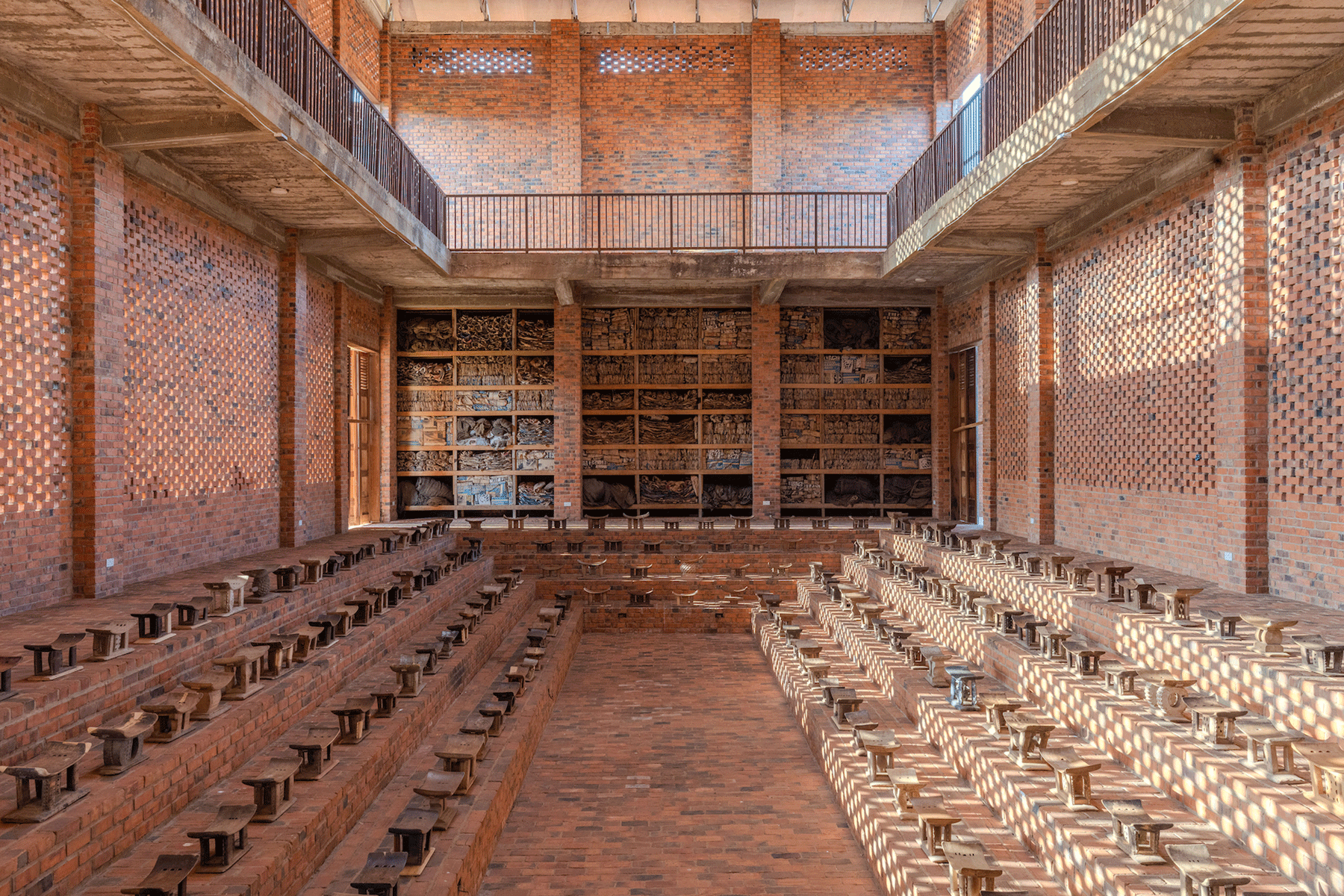
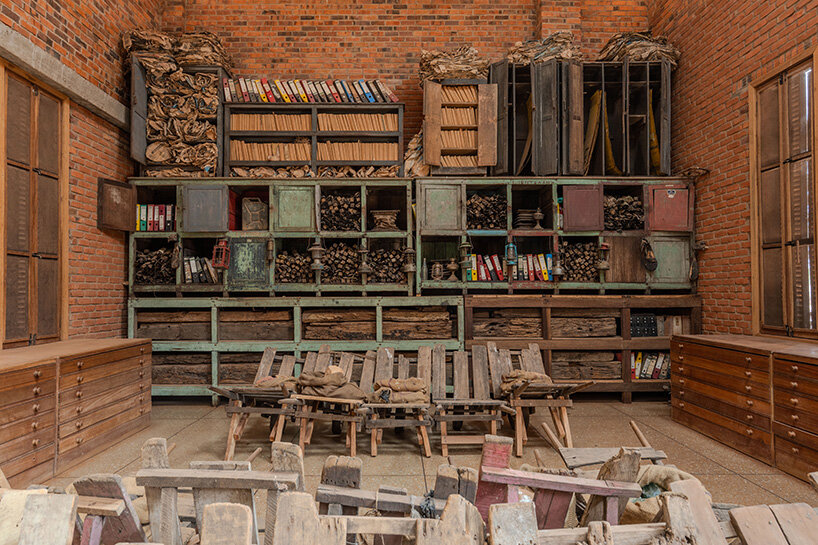
One of the central installations in Ibrahim Mahama’s The Harvest Season at Fondation Cartier is Parliament of Ghosts, an assembly of traditional Asante wooden stools collected in Ghana, some damaged and in need of repair. The stools carry cultural significance beyond their function as objects of everyday use. As Mahama explains, they can mark important moments in a person’s life, from birth to the installation of a chief or queen, and are traditionally carved by craftspeople who inherit these skills across generations. Some African objects, including stools of this kind, were taken during the colonial period and now sit in Western museum collections, where they are often displayed as ethnographic objects behind glass. Mahama argues that removing them from their original contexts changes their status. ‘They no longer lived as they were meant to live,’ he shares with us. To give them another life, he negotiated with their owners to bring the stools to his Red Clay art center in Tamale, where they were repaired with the participation of schoolchildren. The children were invited to watch the process and sit on the stools as the work progressed. ‘We were not thinking of these objects as ethnographic objects. We’re just thinking of them as living beings,’ he reflects. Mahama compares their restoration to the healing of an injured person, who seeks medicine, recovers, and continues living. ‘We wanted these stools to do the same.’
Τhe marks left by damage and restoration are, for Mahama, part of their continuing history. ‘What does it mean for these objects to continue living even in the precarious conditions in which they find themselves in?’ Ibrahim Mahama asks. Bringing the stools to Paris carries a particular significance. As the artist points out, objects of this kind have historically entered European collections through colonial looting. This time, they travel to Europe through a different process, becoming the basis for a parliamentary arrangement where visitors can gather and discuss questions about history, culture, and the present. By giving these objects a new role within the museum, Mahama also challenges what an art institution can be and the kinds of conversations it should make possible. ‘Sometimes, when artists try to present certain ideas in museums, the response sometimes is, “No, we cannot. This is too radical.” But where is art supposed to exist? I thought art was supposed to be the safe space for radicality.’ he comments.
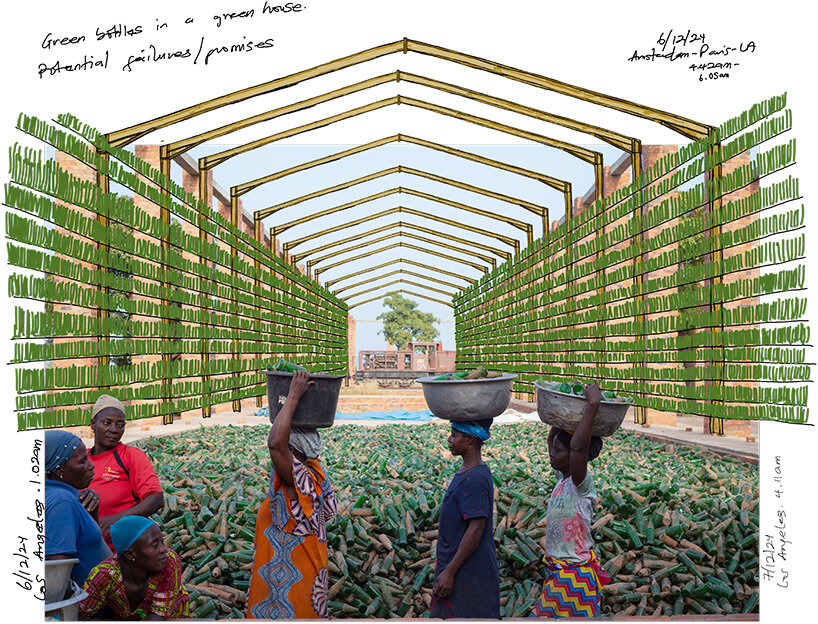
A FORMER GHANAIAN GLASS bottle FACTORY FINDS A NEW LIFE
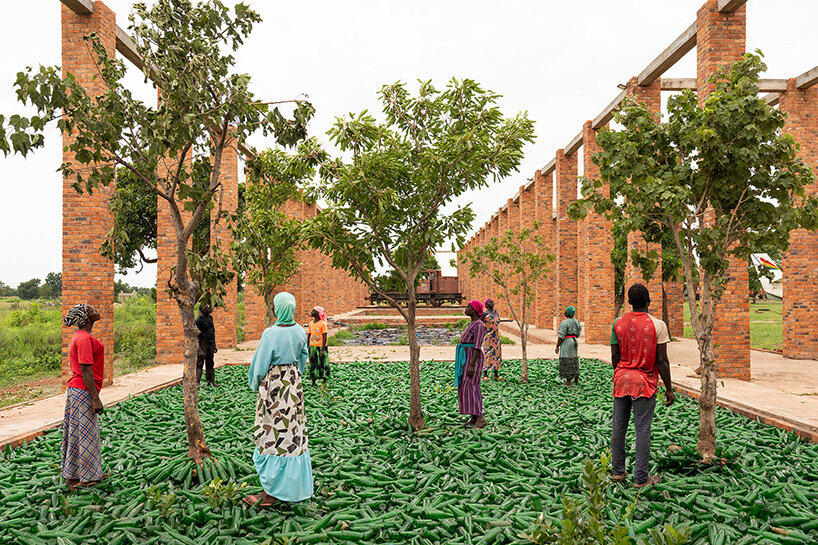
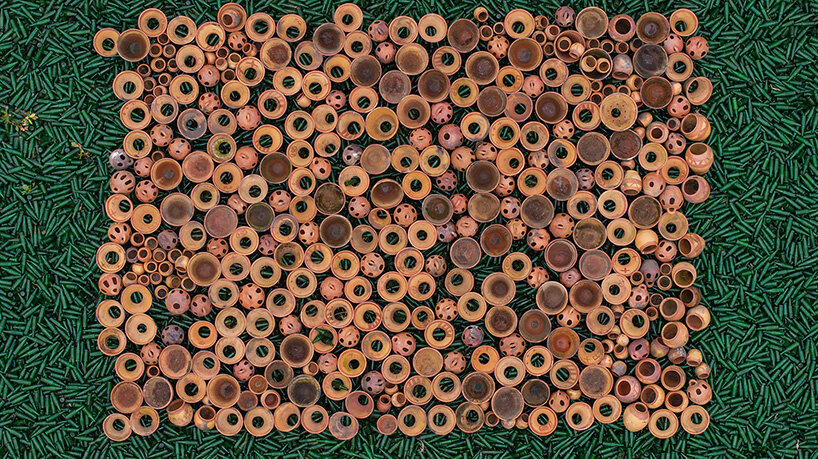
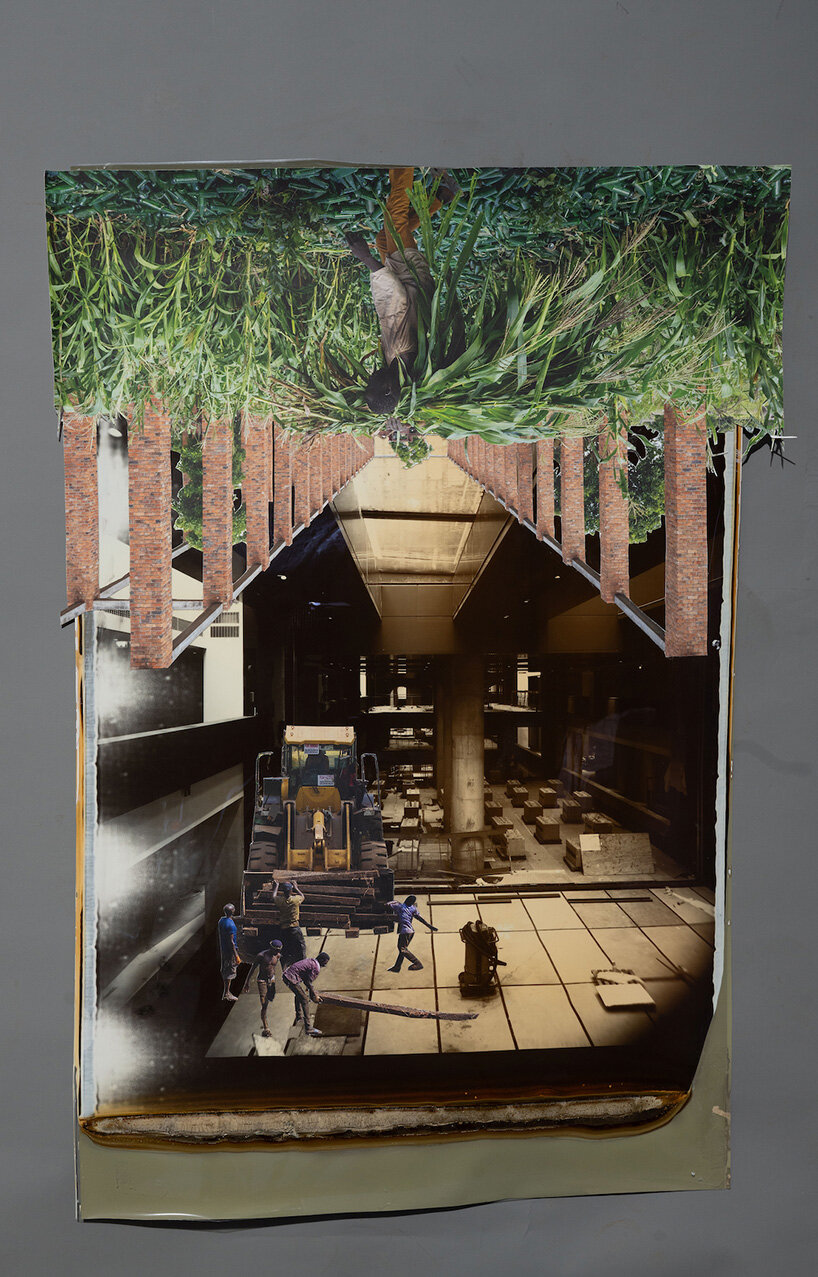
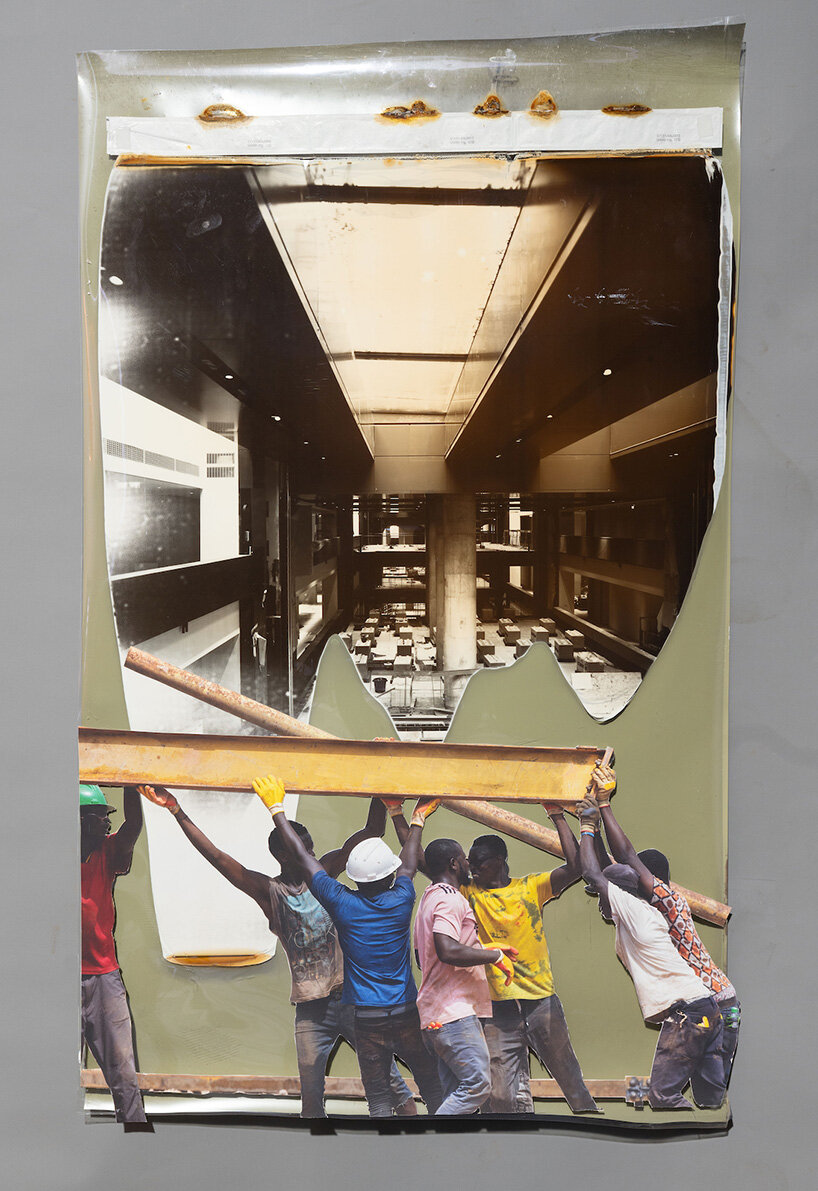
Mahama applies this approach to architecture, too, working with a former glass bottle factory built in Ghana between 1961 and 1966. Originally designed in Czechoslovakia and manufactured in Germany, the factory formed part of the industrial development of the country following independence. It opened in 1966, just 19 days before Ghana’s first president, Kwame Nkrumah, was overthrown in a military coup. The factory continued operating for decades before being decommissioned and sold for scrap. Mahama used funds from Fondation Cartier to buy back part of the structure and bring it to France, where his team reassembled it as a pavilion. He also acquired approximately 300,000 abandoned glass bottles that were destined for destruction, along with the factory’s sign. Working with metalsmiths, the team restored damaged and rusted components, leaving traces of their previous life visible. For Mahama, the factory connects the industrial ambitions of post-independence Ghana with the political and economic difficulties that followed. ‘What does it mean to confront the decays of history?’ the artist asks. He sees this confrontation as part of art’s role, particularly when the past is painful or difficult to acknowledge. ‘Art is meant to allow us to see the rot that exists within the world,’ he points out, ‘and then when we are confronted by it, maybe we will take a different position on things.’
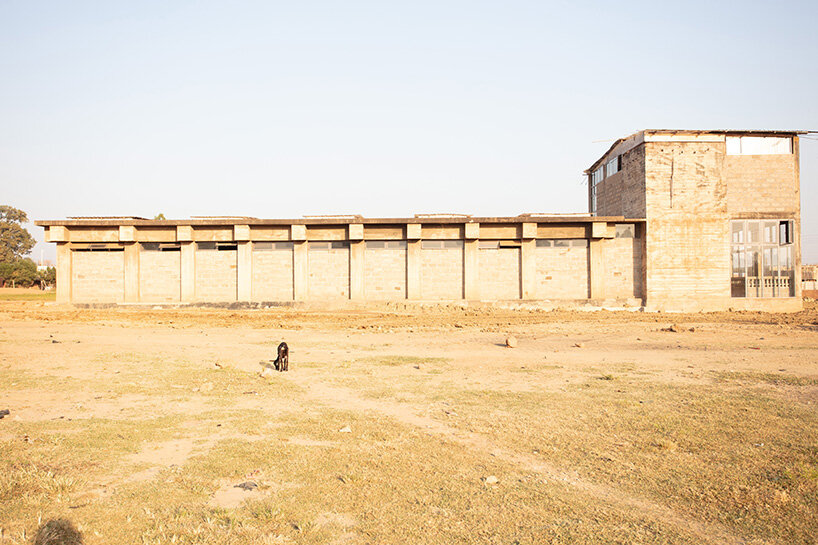
The structure will serve as a classroom and space for performances and drawing classes, while retaining the marks and imperfections of its former life. ‘We want people to see the scars and learn from them,’ Mahama says, seeing the marks of the factory as traces of its history. ‘Sometimes repair is not just physical. It might also be some kind of historical gap and all that historical deficit.’ In Tamale, the artist has applied this thinking to old trains, airplanes, and other structures, reassembling them for new uses. For him, moving an object from one place to another can be a form of repair too, prompting questions about its history and the relationships it carries. ‘‘Even the act of transferring an object from one place to another, I think, raises the question of repair,’ he highlights. ‘It’s almost as if we’re asking ourselves: how do you repair your relationship with something?’
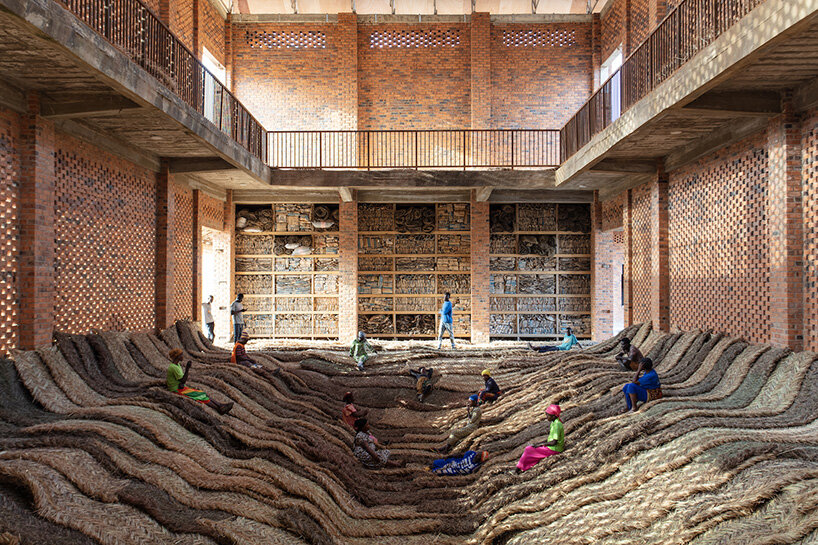
From the museum to the city
In Tamale, Ibrahim Mahama has established the Savannah Centre for Contemporary Art, Red Clay, and Nkrumah Voli-ni. These three cultural spaces host exhibitions, research, educational activities, and public gatherings. At Fondation Cartier, he wants to bring some of that same energy into the museum, with talks, performances, and workshops taking place alongside the exhibition. ‘I think one of the things I’m most looking forward to is the discussions that would transpire in this period within the exhibition,’ the Ghanaian tells us. He hopes the show will attract people who might not ordinarily visit a contemporary art museum and give them an opportunity to engage with the work on their own terms. He also wants to challenge assumptions about contemporary art from Africa. ‘A lot of people maybe wouldn’t think that in Africa, contemporary art is this significant or this ambitious,’ he continues.
Alongside Ibrahim Mahama’s works, The Harvest Season features nine artists and collectives connected to Ghana’s art scene, including Dorothy Akpene Amenuke, Gideon Appah, James Barnor, Cercle d’Art des Travailleurs de Plantation Congolaise (CATPC), Courage Dzidula Kpodo, Postbox Ghana, Zohra Opoku, Tjaša Rener, and Feda Wardak. Their inclusion also reflects the artist’s interest in collaboration. His experience with the Black Star Lines Collective, which grew out of connections among university professors, students, and other affiliates, shaped his questions about how artists can work together when opportunities and resources are limited. ‘How do we work with each other? How do we help one another?’ Mahama recalls asking as a student. He points to the pressures of an art world where opportunities and resources can be limited and the importance of finding ways to support one another. ‘I might be doing it from a singular artist’s point of view, but the questions that are raised within it are very plural and are very open,’ he argues. ‘Sometimes through the individual artist’s practice, we can be able to ask much more tangible, bigger, collective concerns.’
A future built from what remains
A recent experience in Tamale shows how Ibrahim Mahama’s work can extend beyond the art world. He had been trying to gain access to an old cemetery where Eastern European engineers involved in the construction of grain silos were buried. ‘Some Eastern European engineers who worked in the city, building silos, were buried there,’ the artist explains. The cemetery had long been unused, and his attempts to obtain the land through the state had proved difficult. Eventually, traditional chiefs with authority over the land granted it to him so he could transform it into a public space. ‘It was beautiful to realize that the work we do has developed to a point where people at the local and traditional political levels recognize its significance and are willing to support it,’ he reflects. For Ibrahim Mahama, the gesture demonstrated how contemporary art can become relevant within a local context, where its value is measured through what it makes possible for the community.
An unused cemetery, like an abandoned factory, can become a place for people to gather and reconsider how a community uses its land and remembers its history. This is one of the questions at the center of The Harvest Season at Fondation Cartier: what can be done with what remains, and who might benefit from giving it another life?
project info:
artist: Ibrahim Mahama | @ibrahimmahama3
exhibition: The Harvest Season
location: Fondation Cartier pour l’art contemporain | @fondationcartier, Paris, France
dates: October 22nd, 2026 – February 28th, 2027
participating artists and collectives: Dorothy Akpene Amenuke, Gideon Appah, James Barnor, Cercle d’Art des Travailleurs de Plantation Congolaise (CATPC), Courage Dzidula Kpodo, Postbox Ghana, Zohra Opoku, Tjaša Rener, and Feda Wardak.
This article is part of designboom’s SPECTATOR AND SPECTACLE chapter, asking how wonder gets built, and how it might return some mystery to a world that has measured most of it away. Presented in partnership with SolidNature, the stories in this chapter turn onlookers into participants, alter perception and disrupt the everyday – learn more here!
Each designboom chapter explores one theme in depth through projects, interviews, features and news across architecture, design, art and technology. Discover more chapters here, and get in touch if you’d like to submit a story through our submissions portal or contact form.
shop
your own online design shop — no sales commission collected