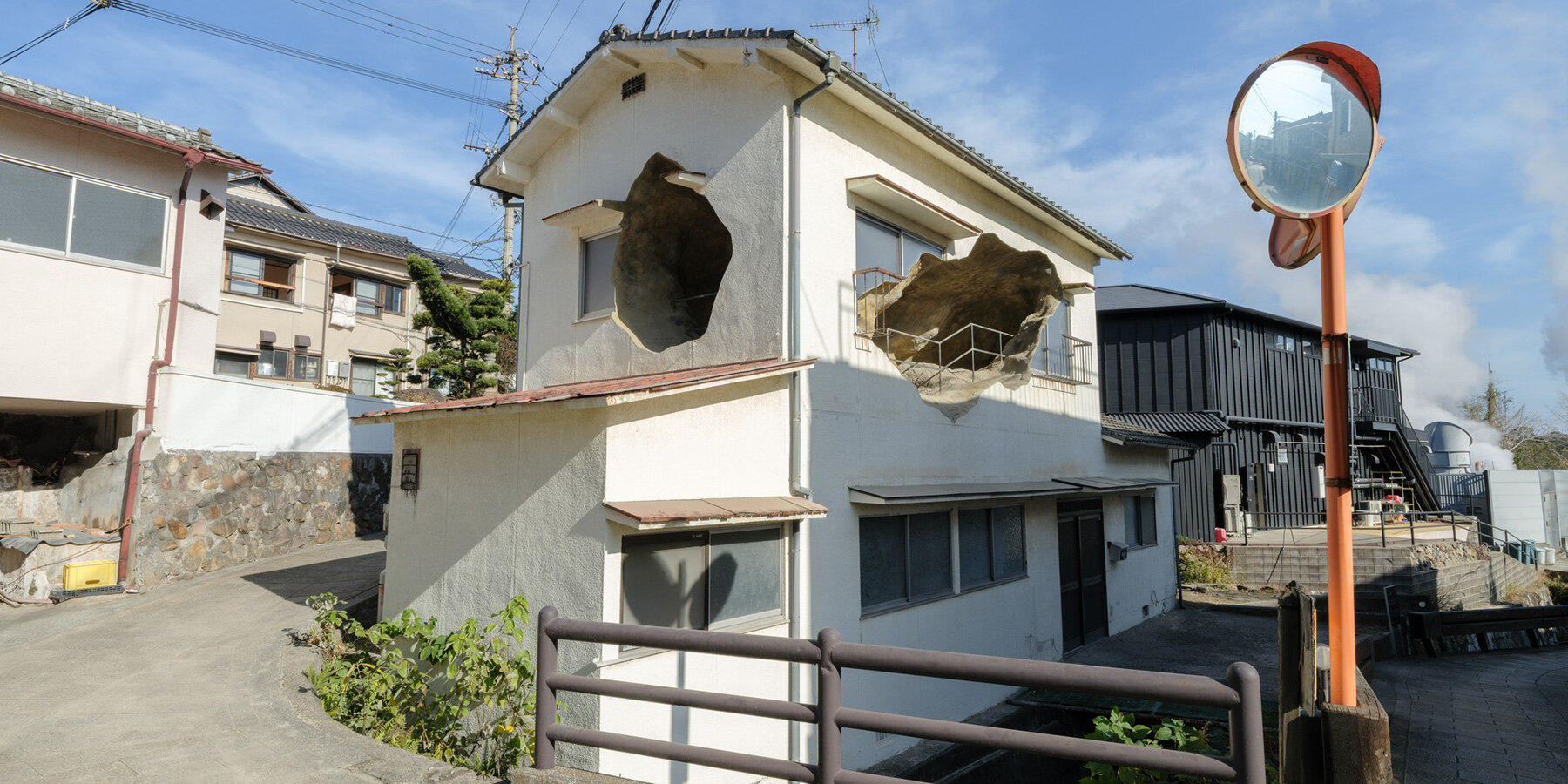
目 [mé] cuts a ‘hole in the world’ through a residence in japan
In the geothermal town of Kannawa in Beppu, Oita Prefecture, Japan, art collective 目 [mé] presents Space II (2025), an architectural-scale installation inside a private house. The residence is punctured by irregular voids, their edges rough and geological, as if the building has been excavated from the inside out. What opens up beyond the facade is not an interior room but a cavern, a rupture that feels closer to a natural formation than a human-made space.
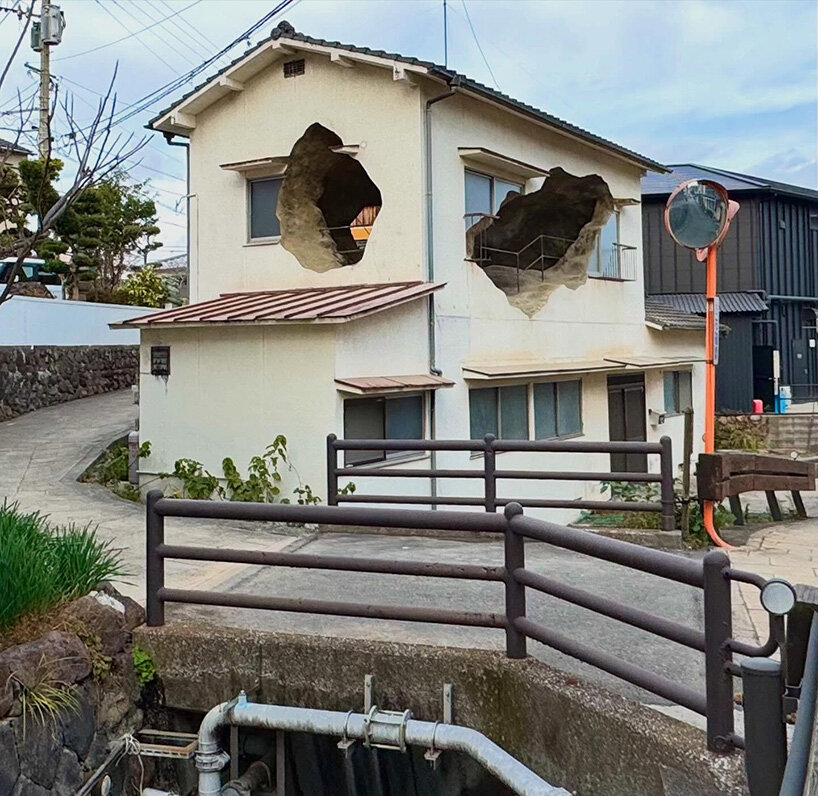
all images via @mouthplustwo
architecture as perception, not enclosure
The Japanese artists of 目 [mé] remove volume from the building instead of adding to it to create the installation. Walls and floors dissolve into a continuous, cave-like void whose textured surfaces recall eroded stone and volcanic strata. Minimal handrails trace the path through the cavity, offering just enough guidance to move without neutralizing the experience.
Light seeps in through the openings, pulling fragments of Kannawa, rooftops, streets, and passing bodies into the darkness. Visitors are invited to look back out at the world through the holes, encountering the familiar as something momentarily strange.
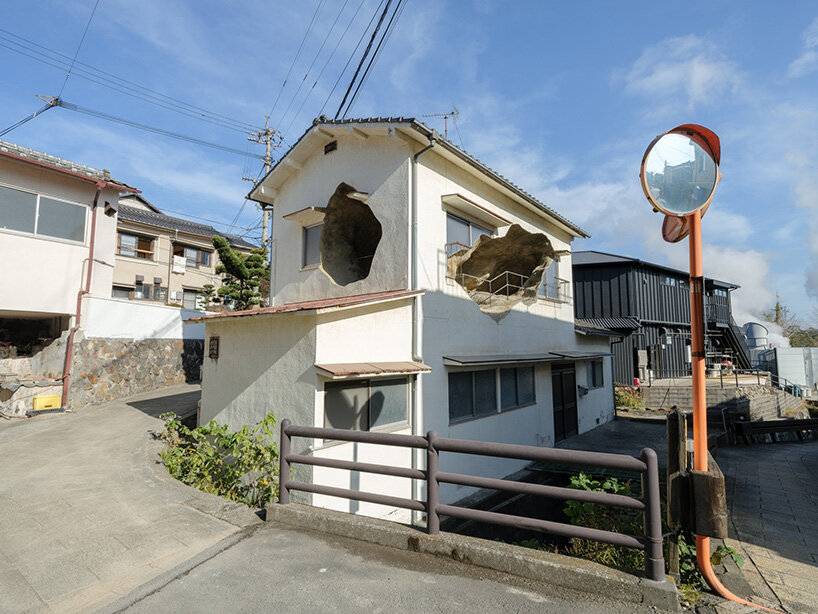
Space II is rooted in Beppu’s geological and cultural history | image via @as_beppu
a cavern shaped by beppu’s volcanic memory
Installed at the Geothermal Tourism Lab ENMA Annex, Space II is rooted in Beppu’s geological and cultural history. Kannawa is a place formed through repeated eruptions and transformations, once feared as hell, later rebranded as a site of healing through hot springs. 目 [mé] taps into this unstable lineage, imagining a moment when the land was still actively forming, before it was stabilized by language, tourism, or infrastructure.
The cavern reflects the town, its houses, its people, and its surrounding nature, while also allowing visitors to momentarily step outside of it.
Space II follows 目 [mé]’s earlier project space (2020) at Towada Art Center, where a pristine, museum-like exhibition room was abruptly inserted into an old snack bar. In this project, the strategy shifts, and the team, instead of overlaying one context onto another, removes context altogether.
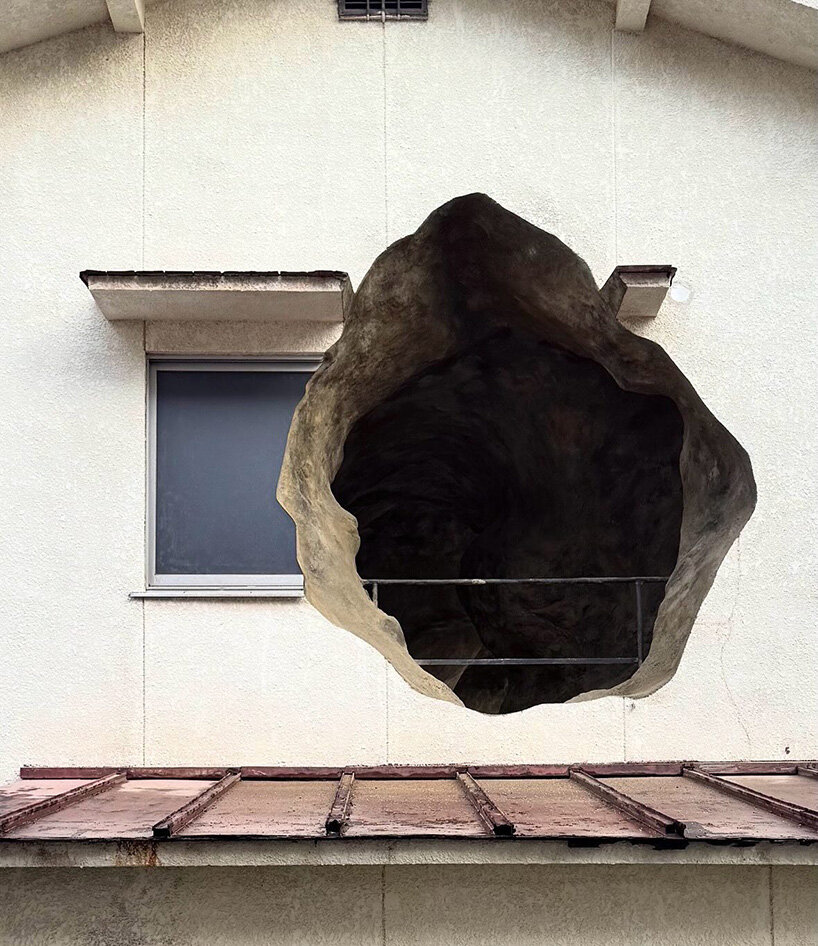
an architectural-scale installation inside a private house
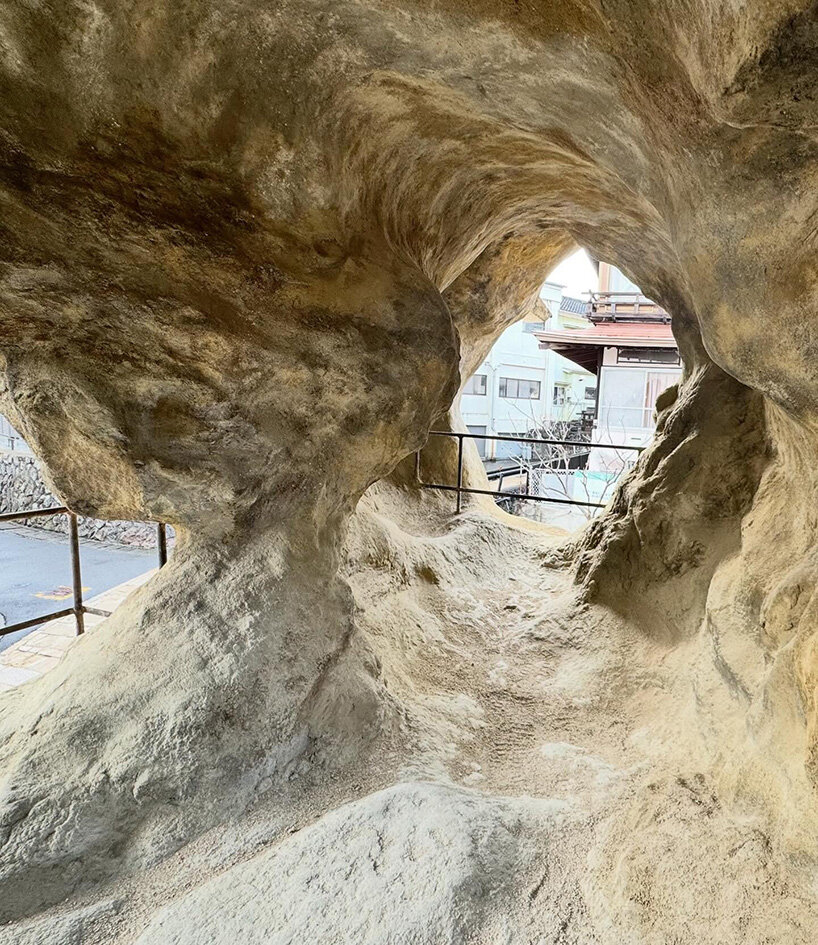
the residence is punctured by irregular voids
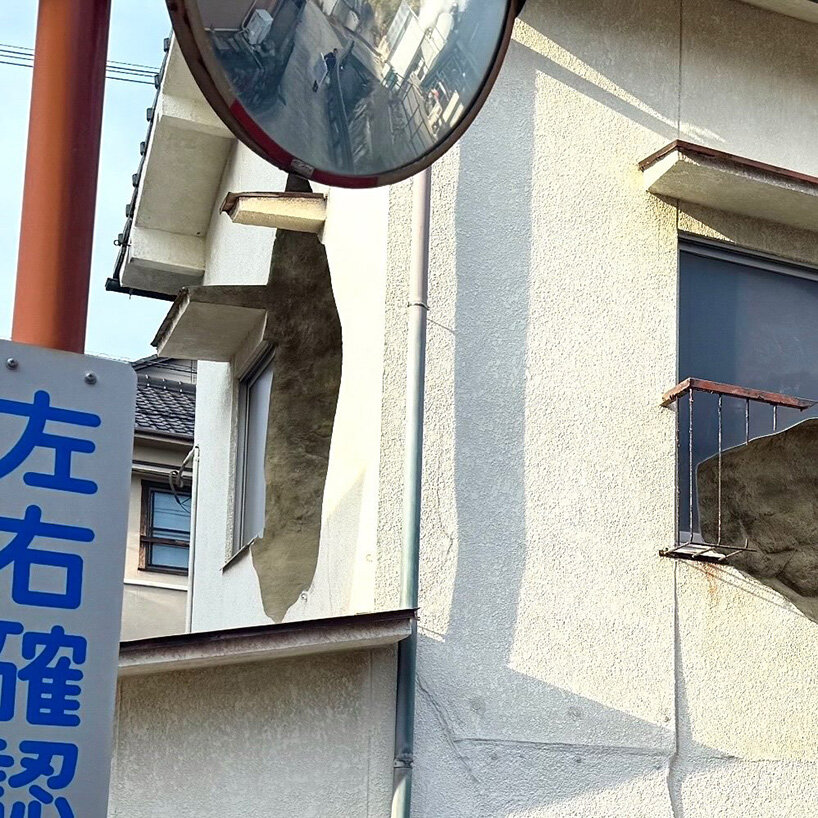
a rupture that feels closer to a natural formation than a human-made space
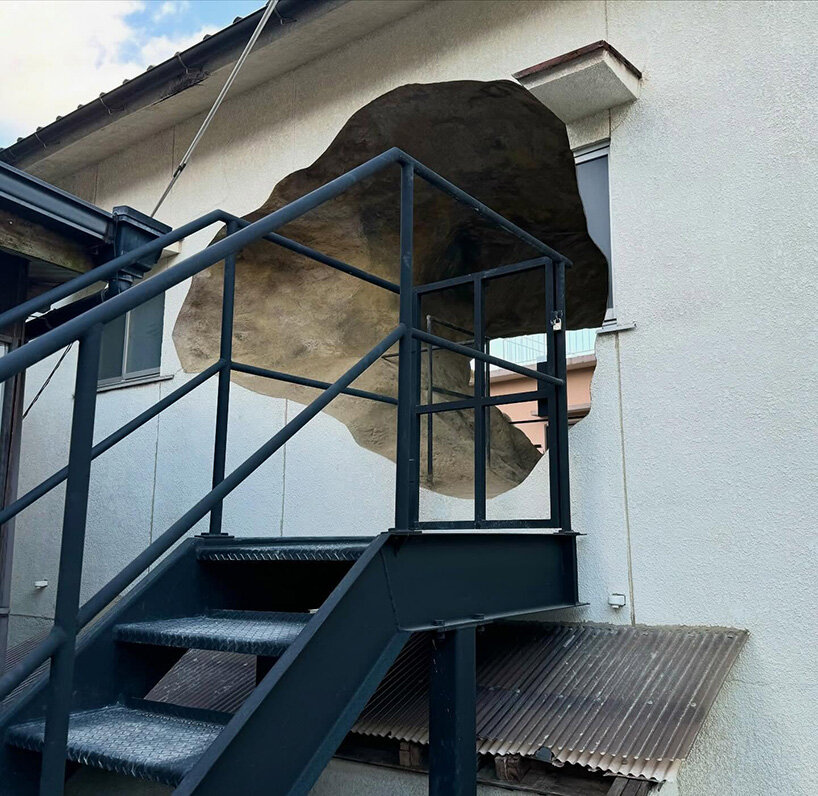
encountering the familiar as something momentarily strange
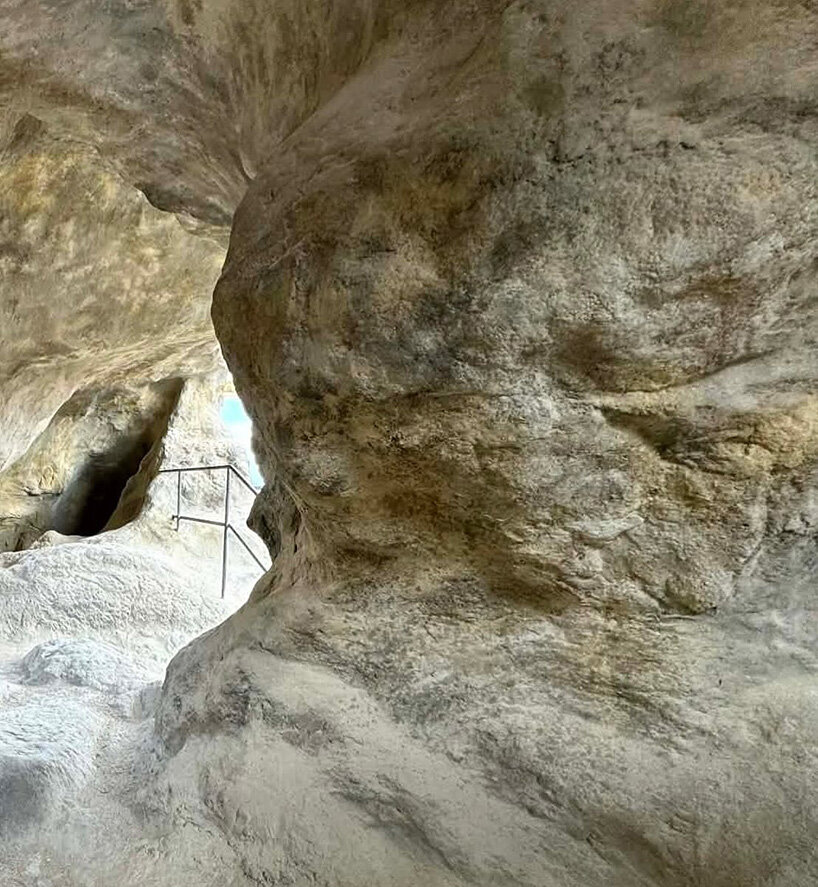
walls and floors dissolve into a continuous, cave-like void
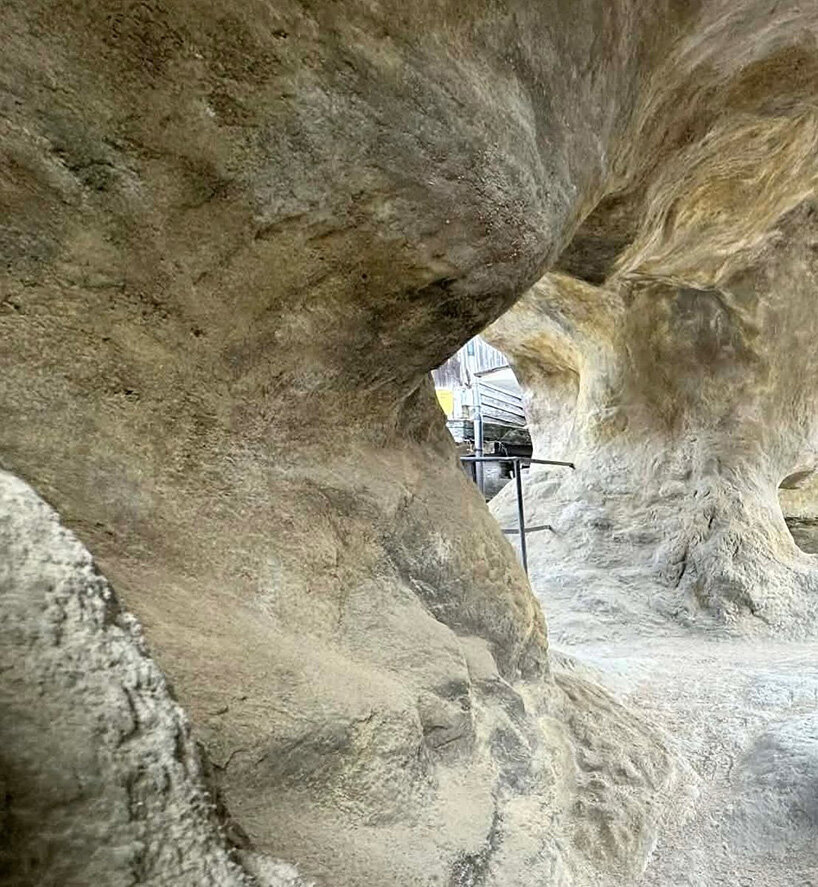
the cavern reflects the town, its houses, its people, and its surrounding nature
project info:
name: space II
artist: 目 [mé] | @mouthplustwo
location: 205-1 Oaza Tsurumi Kitanaka, Beppu City, Oita Prefecture, Japan
venue: Geothermal Tourism Lab ENMA Annex
host: Mixed Bathing World Executive Committee
director: Jun’ya Yamaide (Yamaide Art Office Inc.)
construction: Tsujita Kenki Co., Ltd.
installer: Keiji Iwase, Yuya Obata, Gentaro Fukano, Daigo Honma
production assistants: Ryo Abe, Nobutaka Otsuka, Mutsumi Otsuka, Takumi Toukairin (Yamanokakera), Shusuke Nishimatsu, Nobuaki Yamada
cooperation: Kannawa Tourism Exchange Center; NPO Kannawa Yukemuri Club; Chikuzenya Sanso; Yuko Naka; Takashi Yoshino; and local collaborators
architecture in japan (1702)
 Feb 22, 2026
 Feb 19, 2026
 Feb 12, 2026
 Feb 10, 2026
 Feb 08, 2026
interactive installation (534)
 Feb 20, 2026
 Feb 18, 2026
 Feb 16, 2026
 Feb 12, 2026
 Feb 05, 2026
 Jan 22, 2026
 Jan 01, 2026
 Nov 27, 2025