jean tinguely at hangarbicocca: inside the artist’s most in-depth retrospective since his death
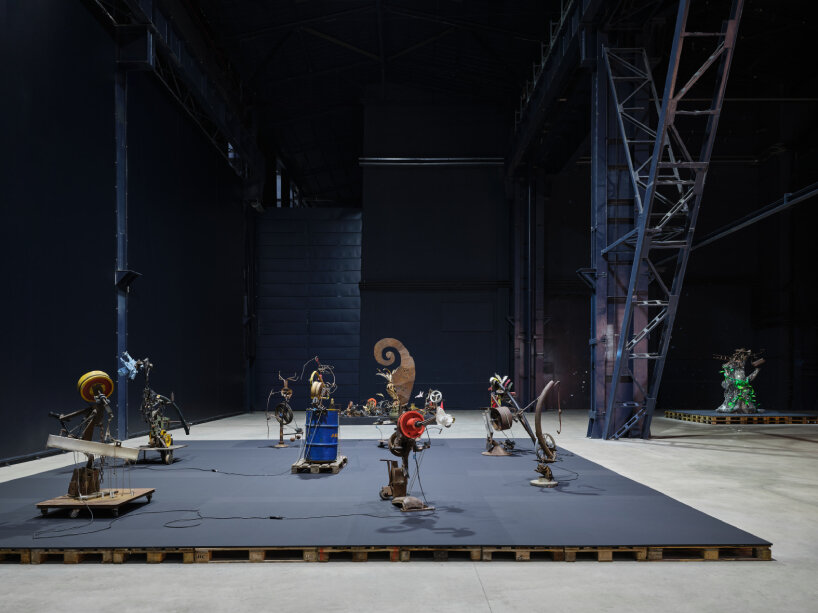
40 works that the late artist made between 1950s and 1990s fill the 5,000 square meters of space of the Navate area inside the foundation.
prefer designboom on google[FEATURED]
Jean Tinguely exhibition at Pirelli HangarBicocca in Milan
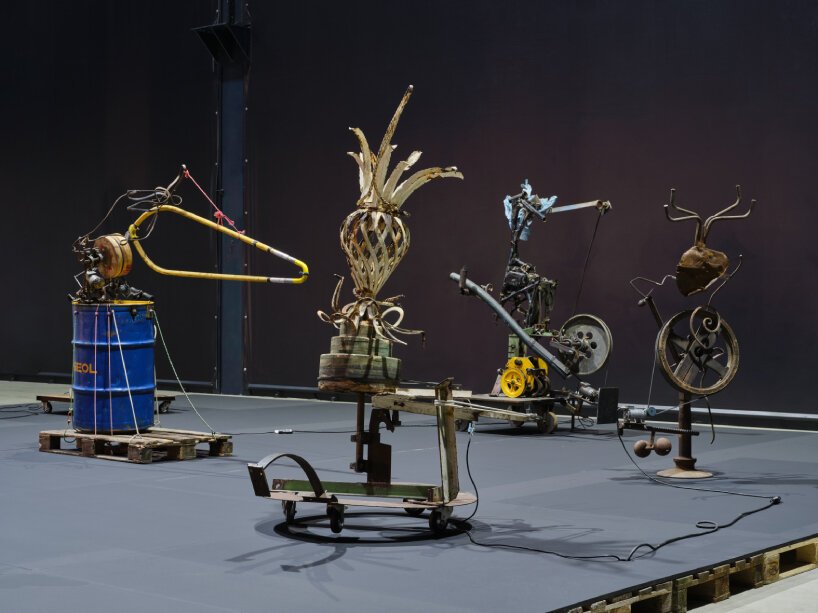
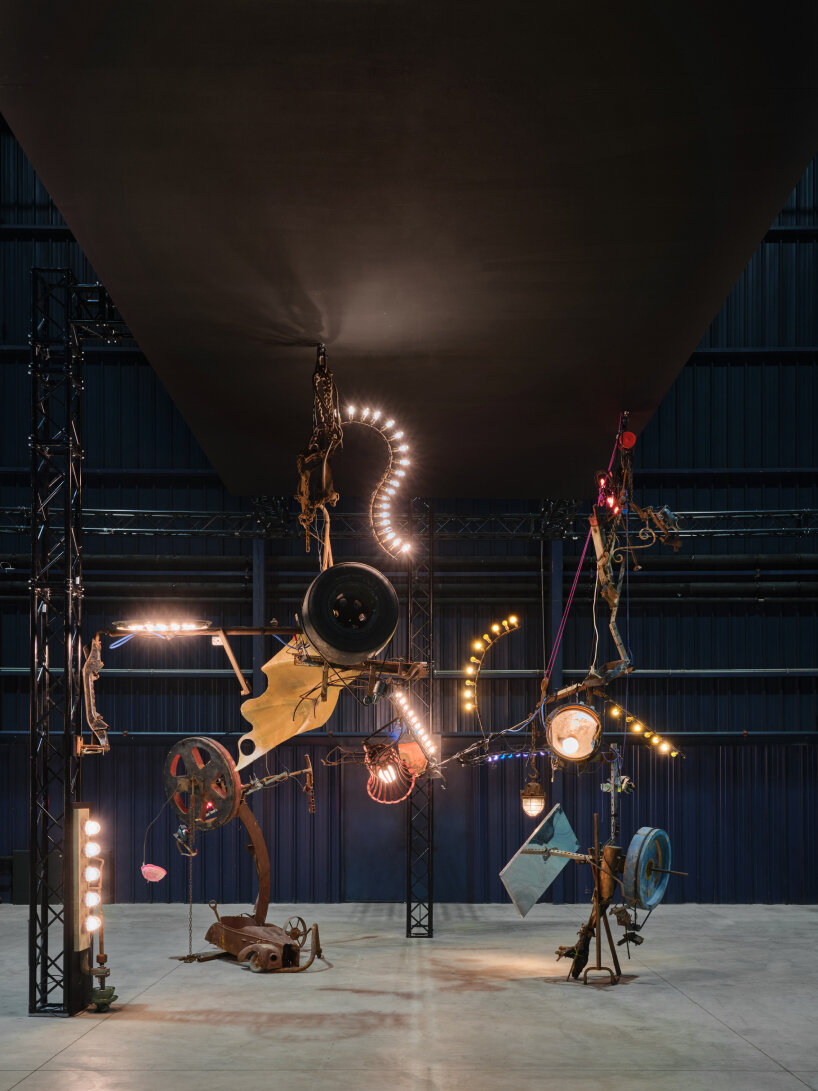
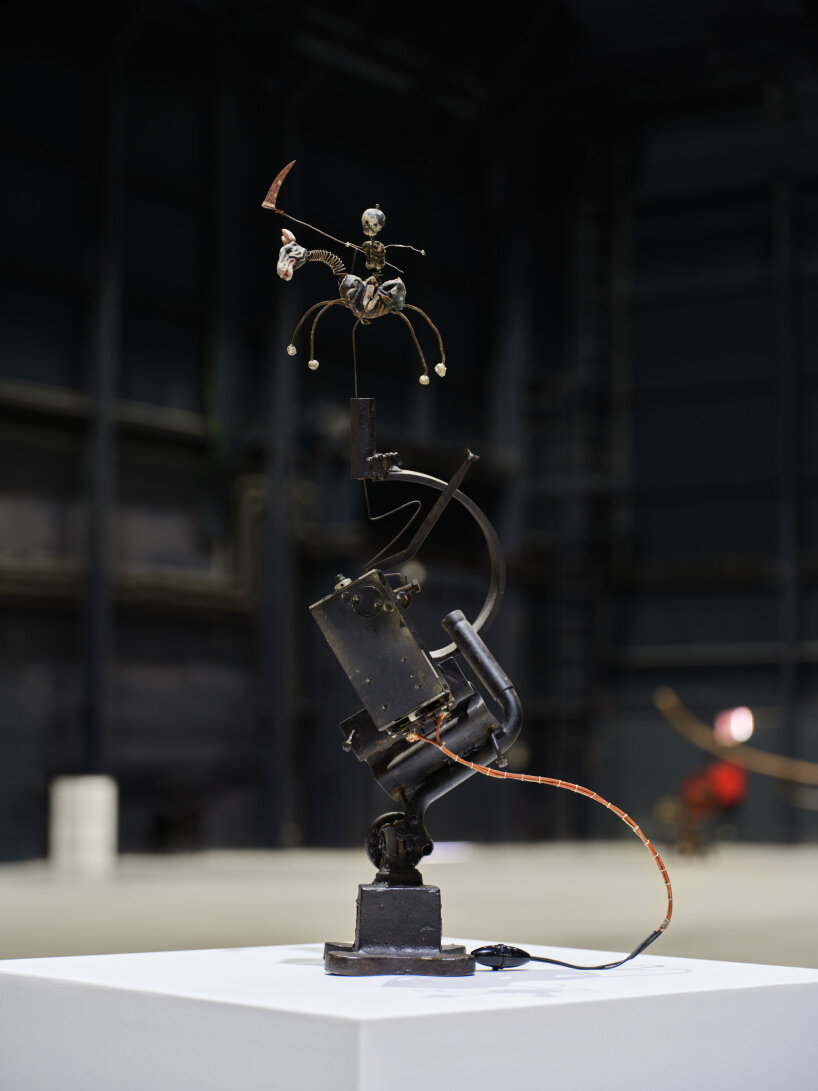
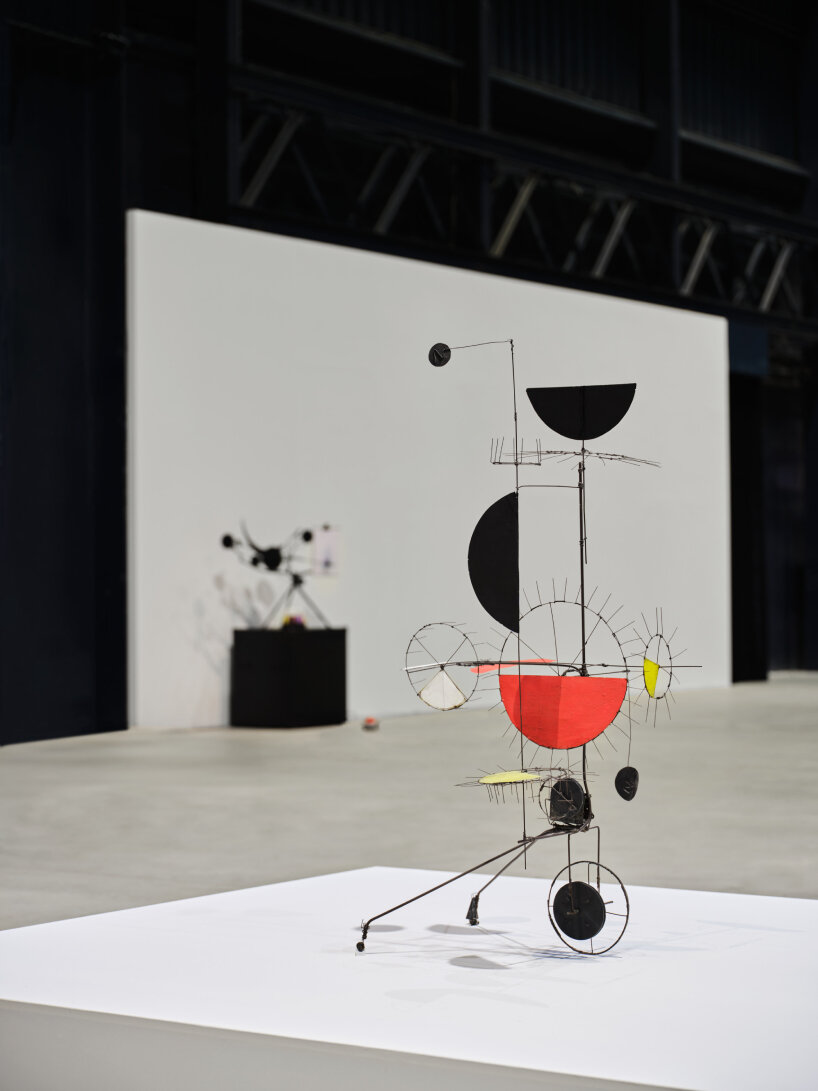
Pirelli HangarBicocca exhibits ‘Jean Tinguely,’ the late artist’s most comprehensive retrospective held in Italy since his death in 1991. The 40 works that he made between 1950s and 1990s fill the 5,000 square meters of space of the Navate area inside the foundation, spanning from his kinetic sculptures to his monumental machines. The exhibition runs from October 10th, 2024 through February 2nd, 2025 in Milan, in time for the 100th anniversary of the artist’s birth in 2025. It is organized by Pirelli HangarBicocca in collaboration with Museum Tinguely, Basel, and curated by Camille Morineau, Lucia Pesapane, and Vicente Todolí with Fiammetta Griccioli. Throughout the honoring retrospective, viewers are afforded the history and making of the majority of the late artist’s works.
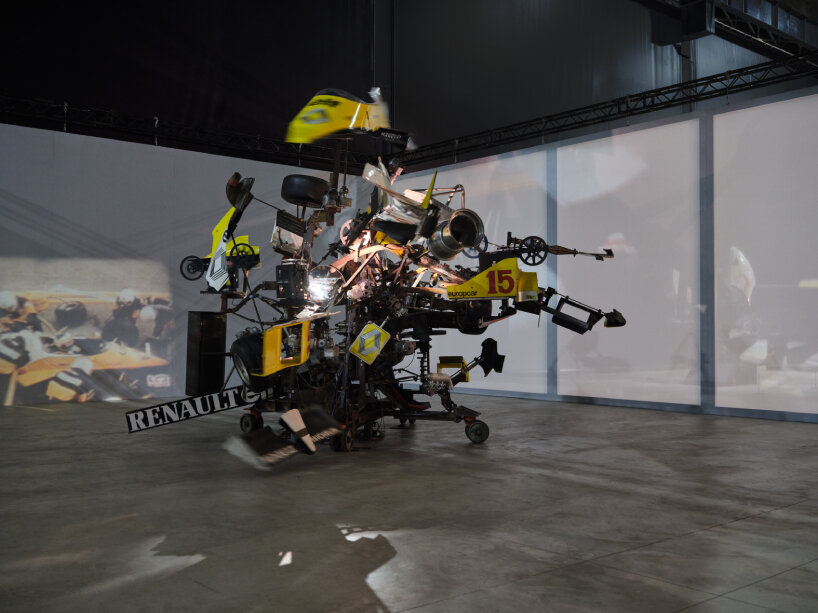
In the midst of these all, they’re enveloped with an audio-visual environment and, at times, the sounds of his own machines. ‘Jean Tinguely’ also looks into the close relationship the late artist had with Milan. An example of his ties to the city was La Vittoria (1970), a performance he organized in front of the Duomo on the night of November 28th 1970. Visitors dropping by the Lab room at Pirelli HangarBicocca can see how the event unfolded, where a ten-meter, phallic-shaped structure called The Suicide of the Machine by Tinguely fired fireworks into the night sky for half an hour. Backstories like this accompany the sculptures and machines on view, a way for the foundation to reconnect the late artist with his newer audience.
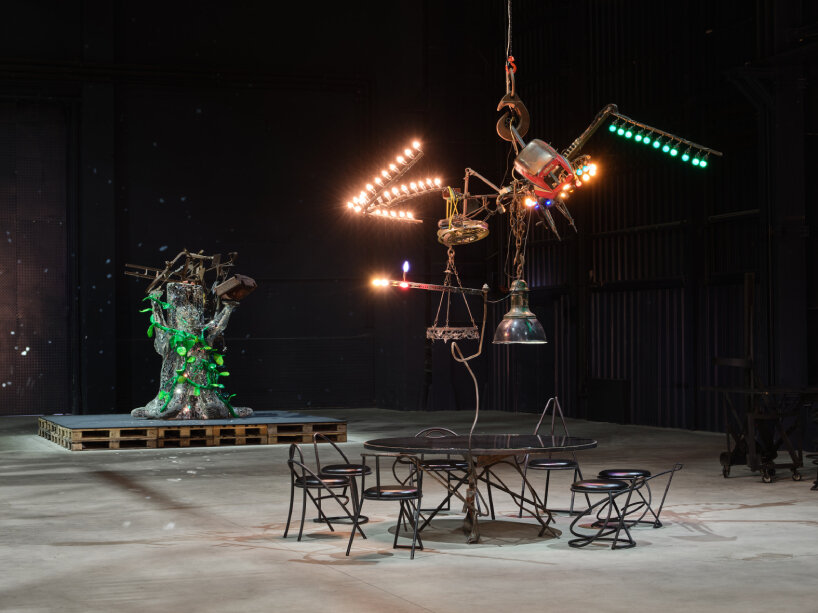
Powered machines and discarded objects in the retrospective
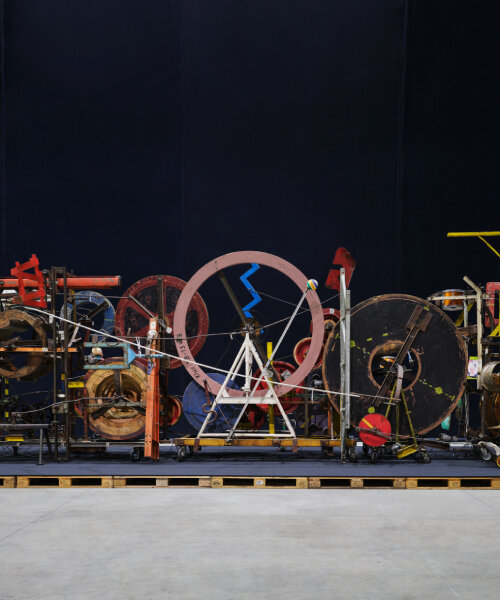
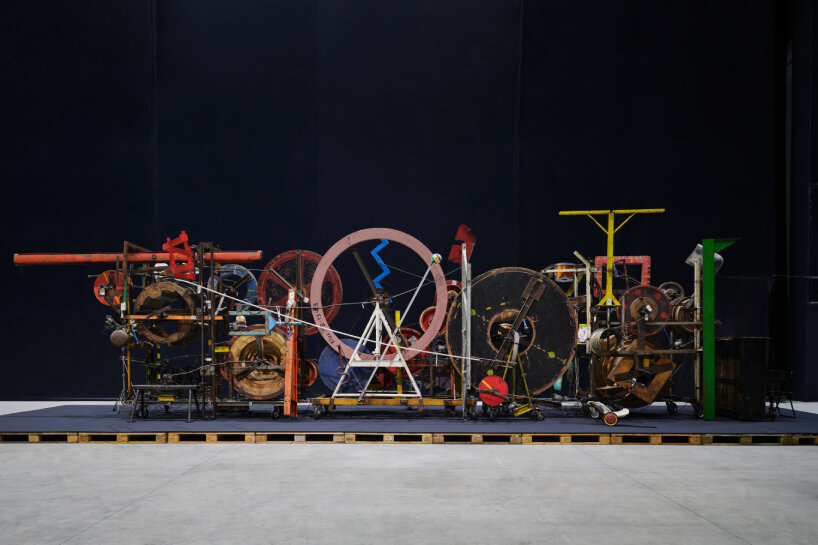
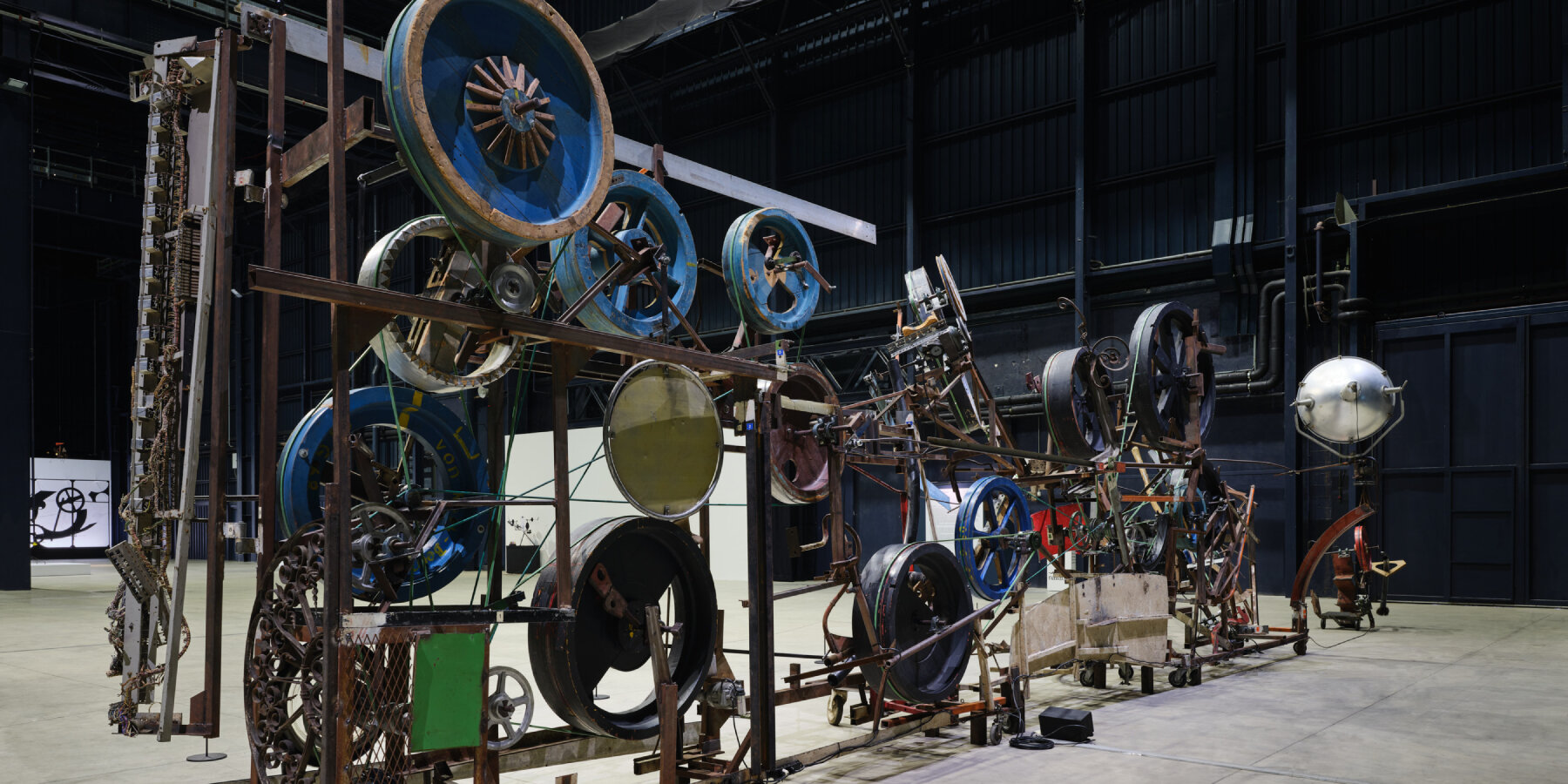
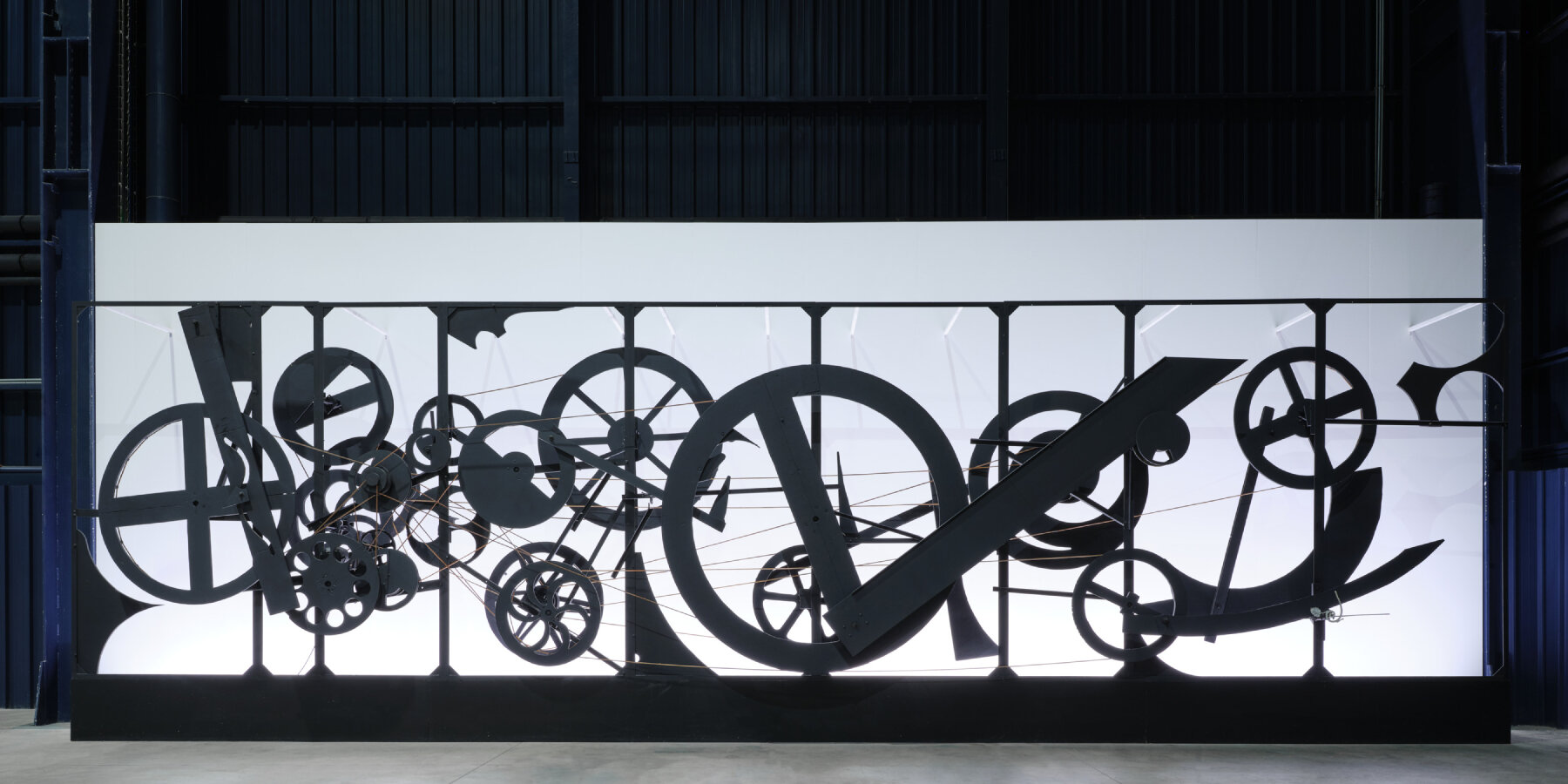
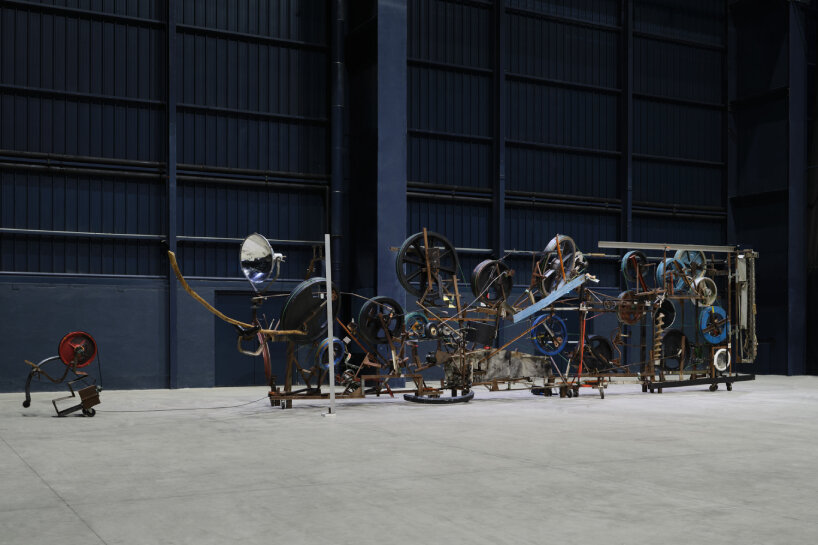
The retrospective ‘Jean Tinguely’ at Pirelli HangarBicocca in Milan begins with two of his towering sculptures from the 1980s and ends with one of the last works he did with his life partner, artist Niki de Saint Phalle. The former, named Cercle et carré-éclatés (1981) and Méta-Maxi (1986), evokes the concept of the assembly line and its noise with the use of wheels, belts, electric motors, and mechanical components. The latter, named Le Champignon magique (1989), peeks through his relationship with his partner as the sculpture takes the shape of a mushroom stalk divided into two distinct parts: Jean Tinguely was the movement, and Niki de Saint Phalle was the color.
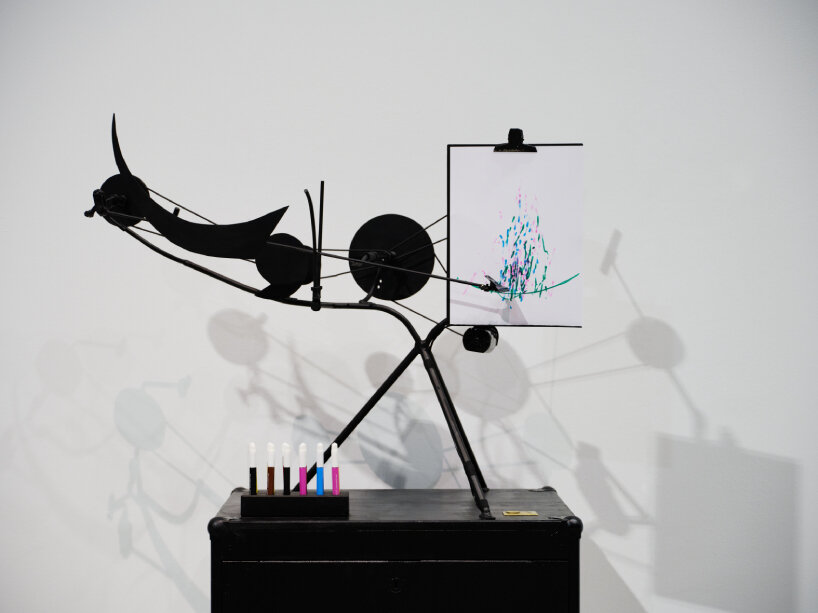
Between these two, several other sculptures and machinery are on view in chronological order. One of them is Méta-Matic No. 10 (1959-2024), where a machine powered by small mechanical motors creates abstract drawings on paper using colored felt-tip pens. At times, the sculptural works become a passageway to knowing the life of Jean Tinguely and his socio-political takes. He used to be a set designer, and his ability to work on massive sculptures appears visible in the monumental wheel mechanism of Requiem pour une feuille morte (1967). In his days, he had also already brought forward what consumerism looked like for people back then using discarded objects and scrap materials in L’appareil à faire des sculptures and Gismo (both made in 1960).
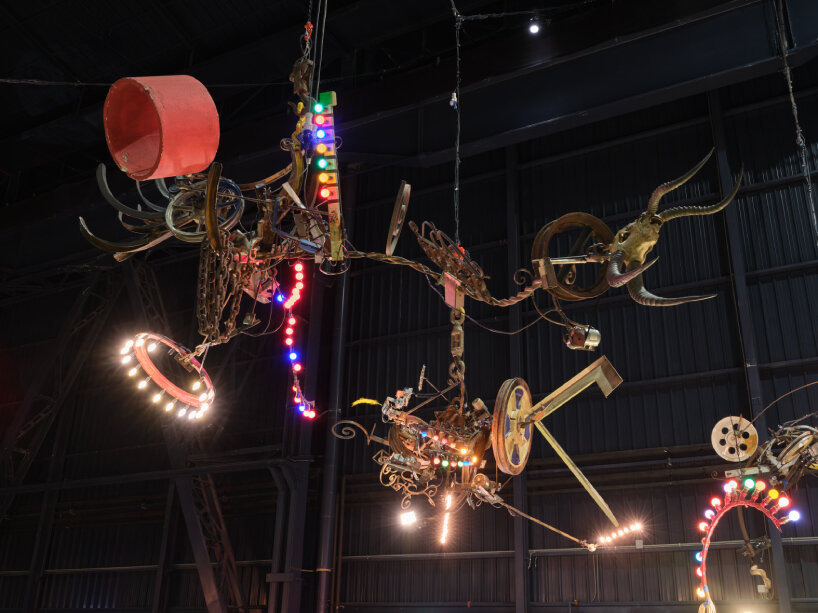
Jean Tinguely describes himself as a movement artist
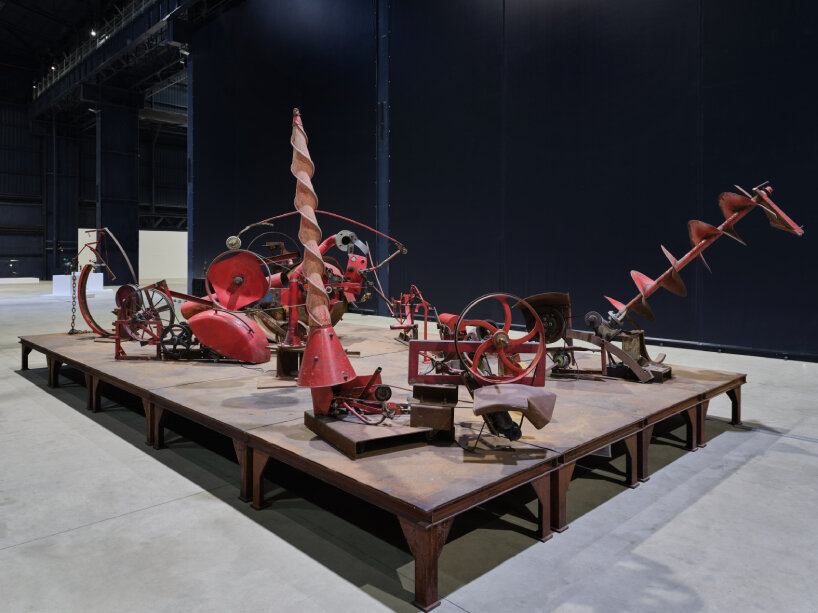
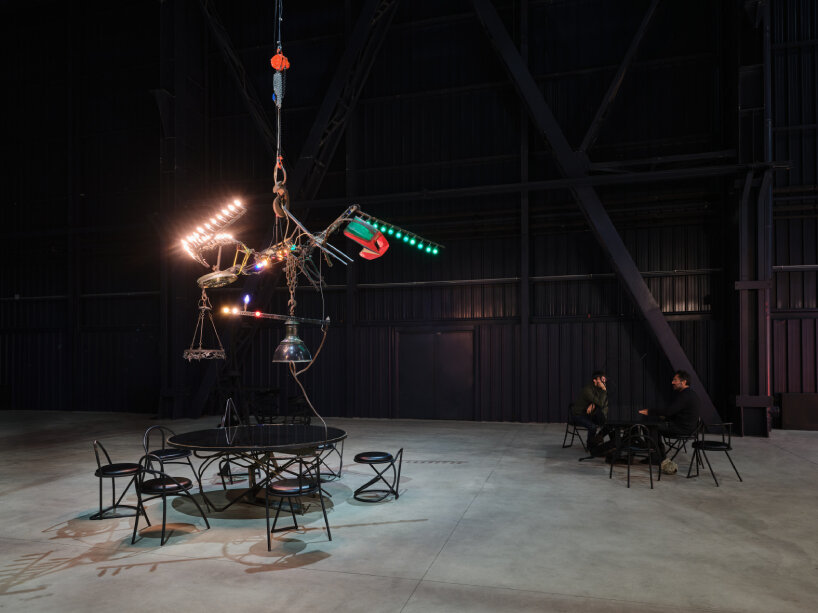
For visitors who appreciate more the visual side of art, the Jean Tinguely retrospective at Pirelli HangarBicocca shows them the ways the artist repurposed domestic objects. Metal bells and pots are suspended in wires in Ballet des pauvres (1961). There’s a long table with small objects made from discarded materials, toys and other tools. It’s the Maschinenbar (1960 – 1985), and these sculptures are electrically operated using buttons placed in front of the work. Other objects include a conveyor belt that breaks bottles, as seen in the installation Rotozaza No. 2 (1967), or agricultural machinery on a large iron base with Plateau agriculturel (1978).
In an interview broadcasted by Belgian Radio Television on December 13, 1982, Jean Tinguely described himself as a movement artist, a hint at his bodies of work focusing more on objects and their motion and other purposes. Nothing was permanent for the artist, albeit his works may be cyclical, and his experiments with everyday objects earned him the recognition of being one of the great pioneering artists of the 20th century. He explored machines, their functions and movements, their noises and sounds. He found objects, gears, and tools, welding them together to produce sculptural working machines equipped with real motors. At Pirelli HangarBicocca, he and his machines regain an nth life so visitors can know him even without physically shaking his hands.
1/5
project info:
exhibition name: Jean Tinguely
site: Pirelli HangarBicocca | @pirelli_hangarbicocca
address: Via Chiese, 2, 20126 Milan, Italy
dates: October 10th, 2024 through February 2nd, 2025
collaboration: Museum Tinguely in Basel | @museumtinguely
curation: Camille Morineau, Lucia Pesapane, Vicente Todolí, Fiammetta Griccioli
photography: Agostino Osio | @agostinoosio
shop
your own online design shop — no sales commission collected