jenny holzer transforms musée d’orsay with monumental light projections and engraved stone
the american artist digs into musée d’orsay’s archives to uncover the conflicts, contradictions, and uncomfortable truths of the past.
prefer designboom on googleJENNY HOLZER ILLUMINATES MUSÉE D’ORSAY WITH WORDS FROM THE PAST
The walls of Paris’ Musée d’Orsay have plenty to say, and Jenny Holzer is giving them a voice. For J’ai Vu (I Saw), opening October 20, 2026, the American artist transforms the former railway station into a vast canvas of illuminated words, moving texts, and engraved stone sculptures. Developed in collaboration with the museum, the exhibition draws on writings from the period represented in its collections, bringing together artistic correspondence, political commentary, and historical accounts. Rather than simply revisiting the 19th century, Holzer lets its voices confront the present, proving that some conversations are far from over.
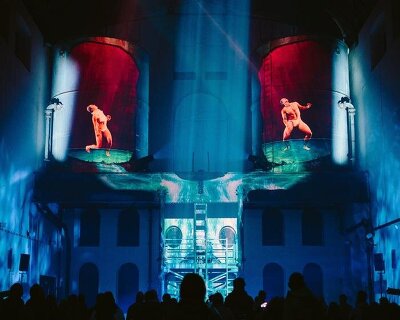
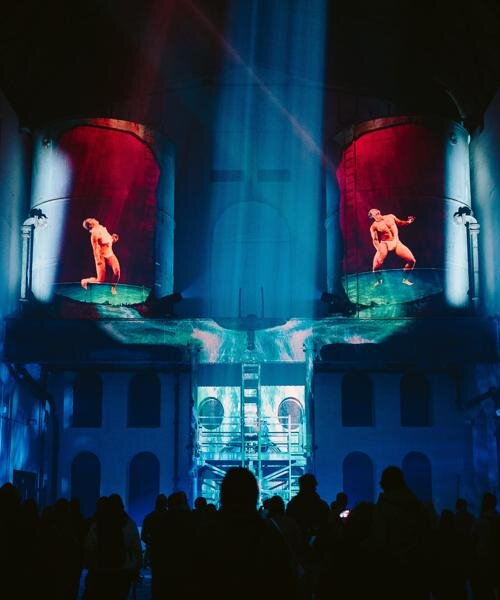
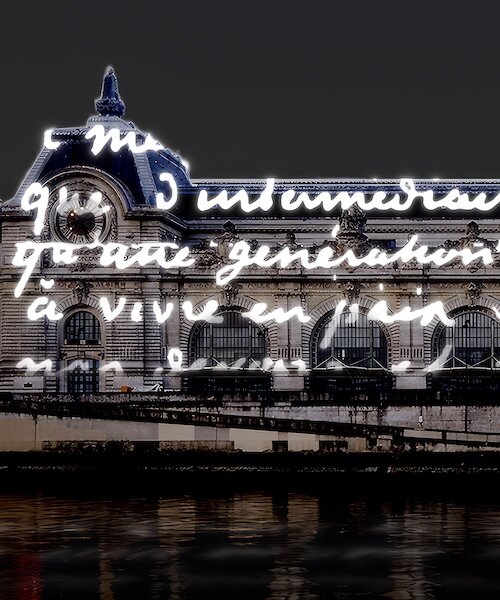
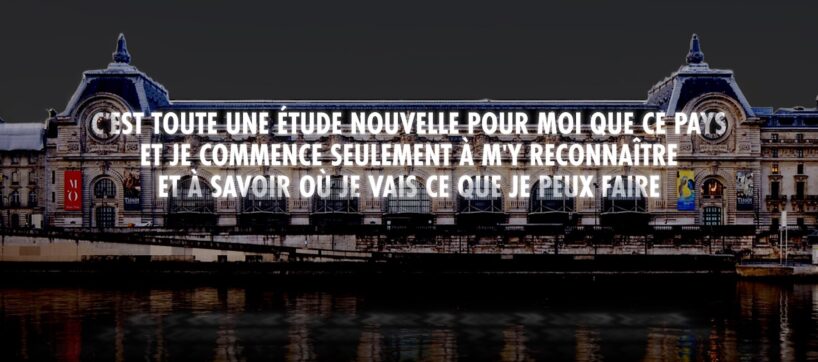
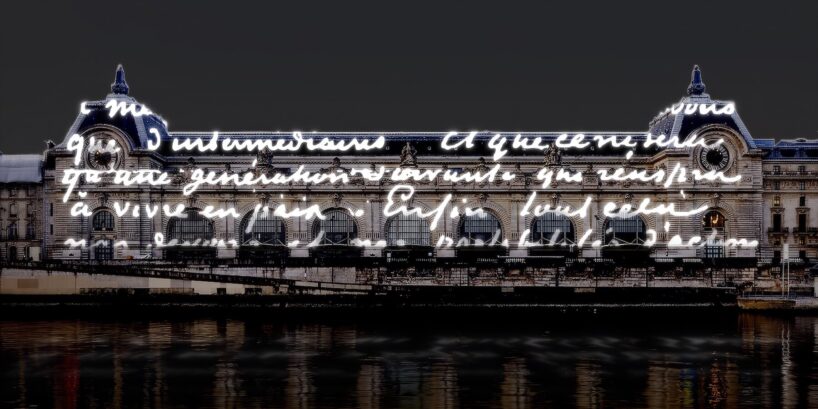
The intervention begins outside, where the museum’s Seine-facing facade becomes the setting for ÉCLAIRÉ, a series of monumental light projections presented from October 18 to 22, between 7 pm and 11 pm. Drawing on approximately 250 excerpts by 34 authors, including writings by Vincent van Gogh, Paul Cézanne, Gustave Flaubert, and Émile Zola, Holzer covers the historic architecture with luminous words that can be experienced freely from the riverbanks. Letters, literary passages, and political reflections unfold across the building, temporarily turning one of Paris’ most recognizable cultural landmarks into a public display of history in motion.
MONUMENTAL LED INSTALLATIONS TRANSFORM MUSÉE D’ORSAY
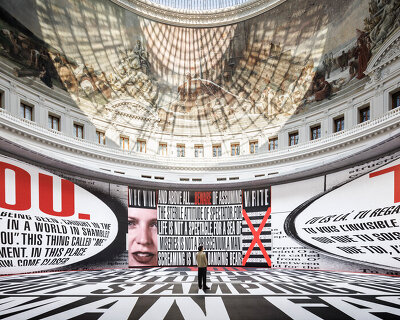
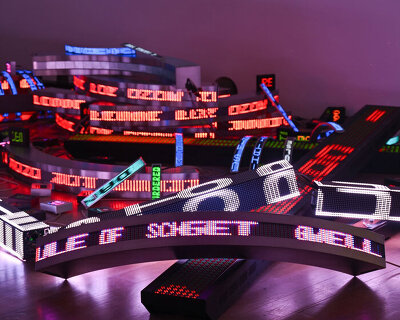
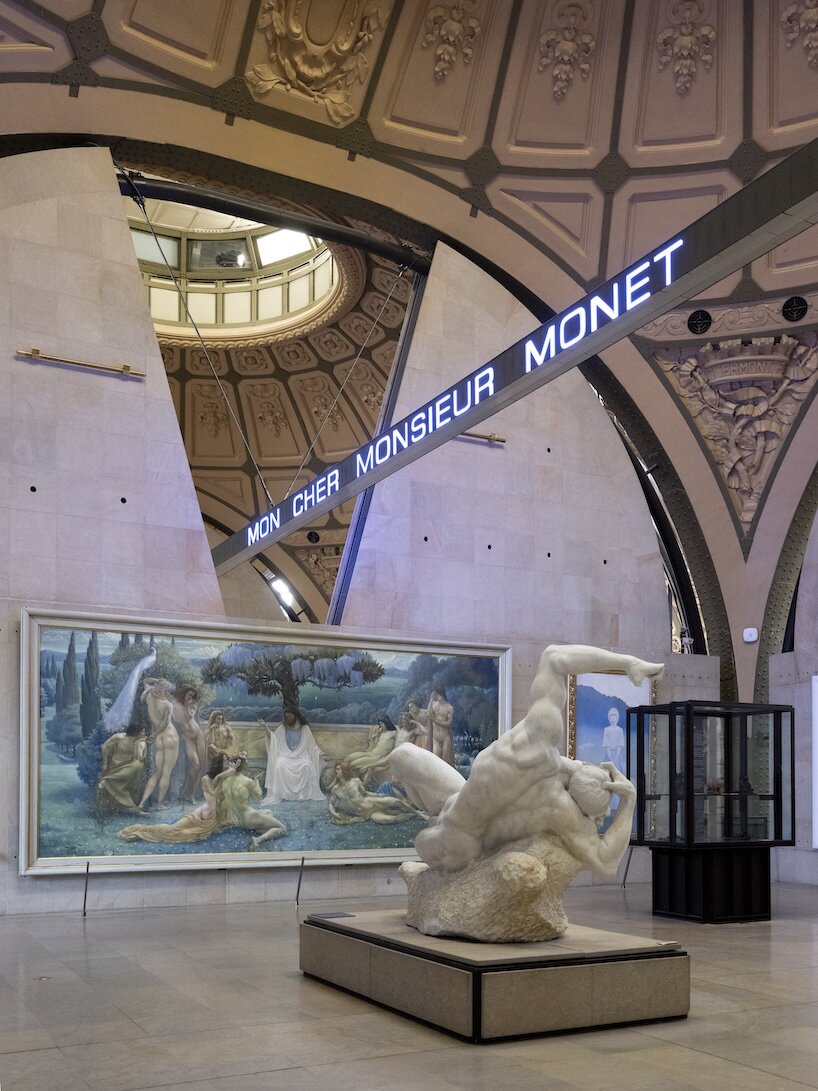
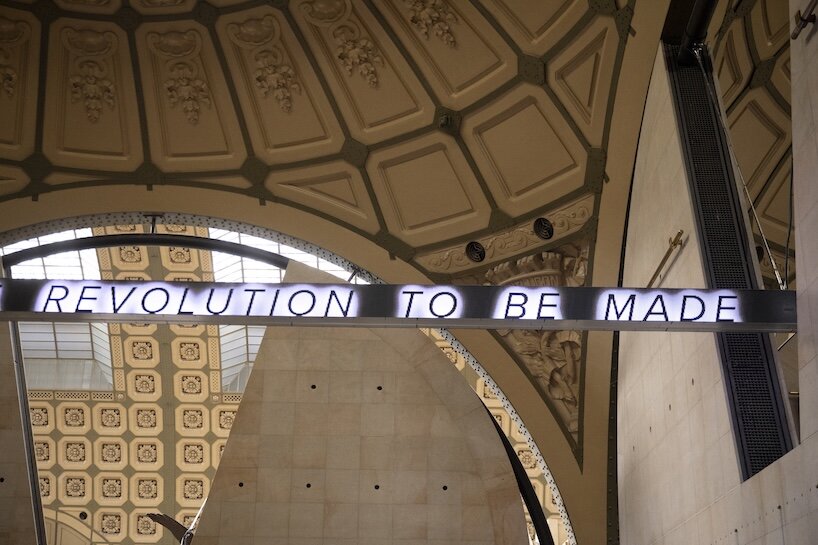
Inside the Musée d’Orsay, a monumental, site-specific LED installation by Jenny Holzer carries the exhibition through four galleries dedicated to history painting, naturalism, symbolism, and Gustave Courbet. Streams of brightly colored text move through the spaces, introducing historical voices into rooms traditionally dominated by paintings and sculptures. The installation responds to the architecture and the circulation of visitors, recalling the building’s original function as a bustling 19th-century railway station. Once a place for moving passengers, the former Gare d’Orsay now finds itself transporting words instead.
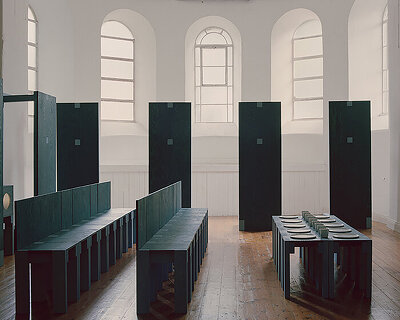
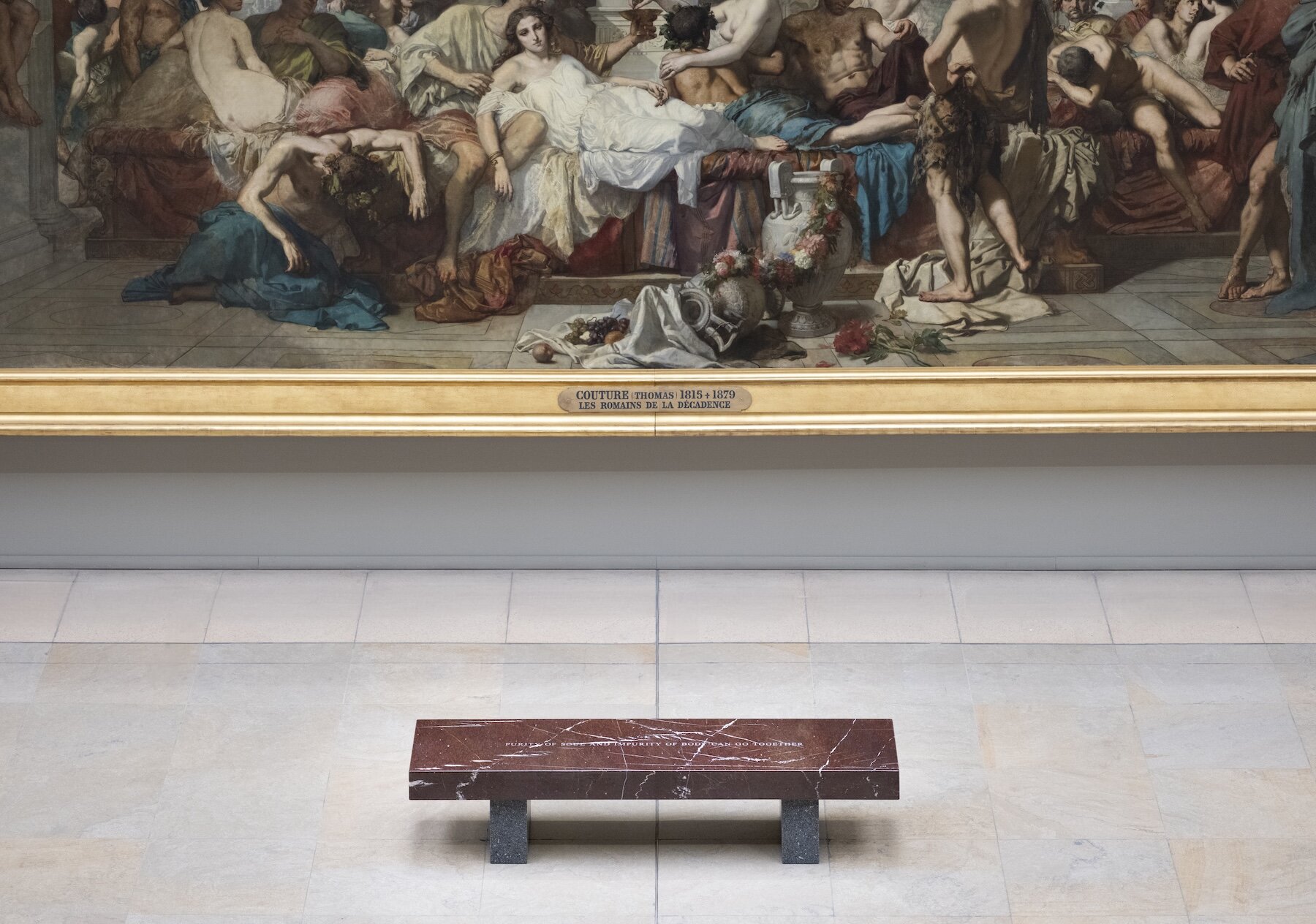
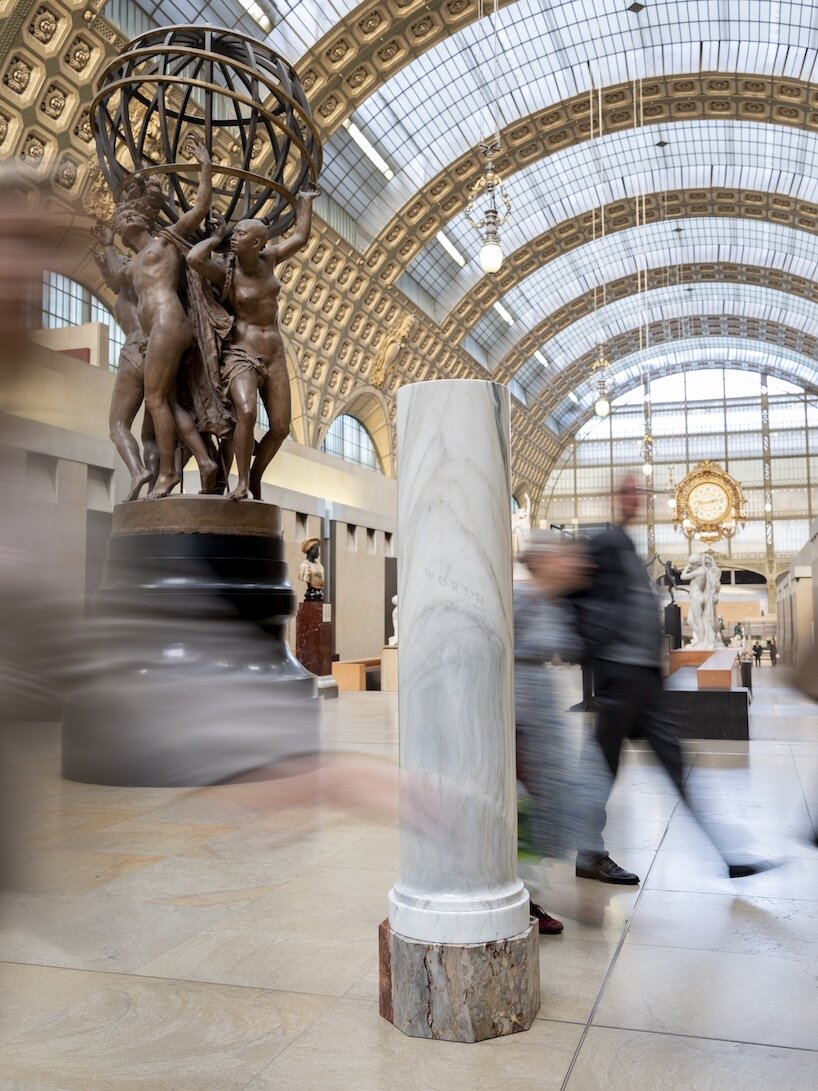
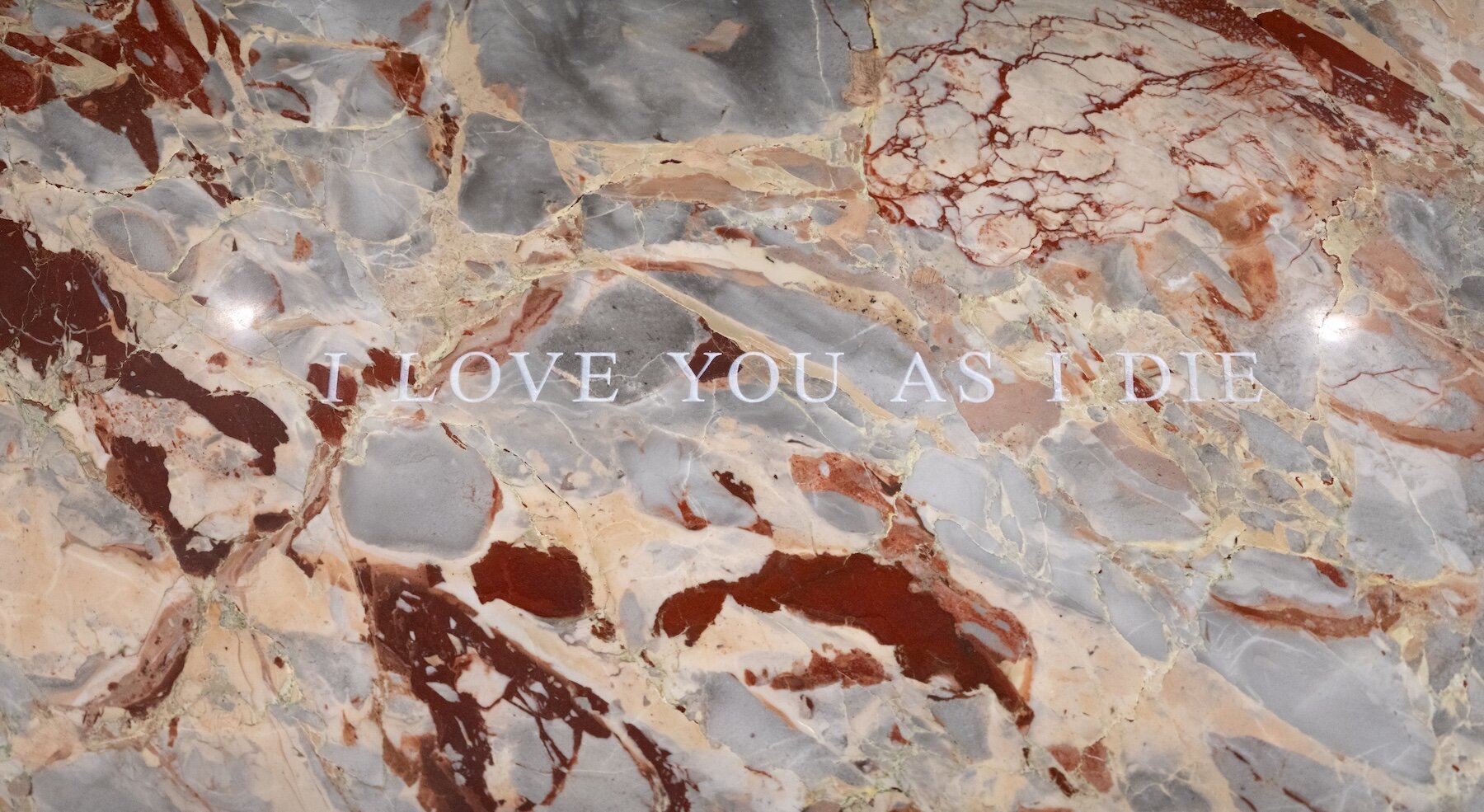
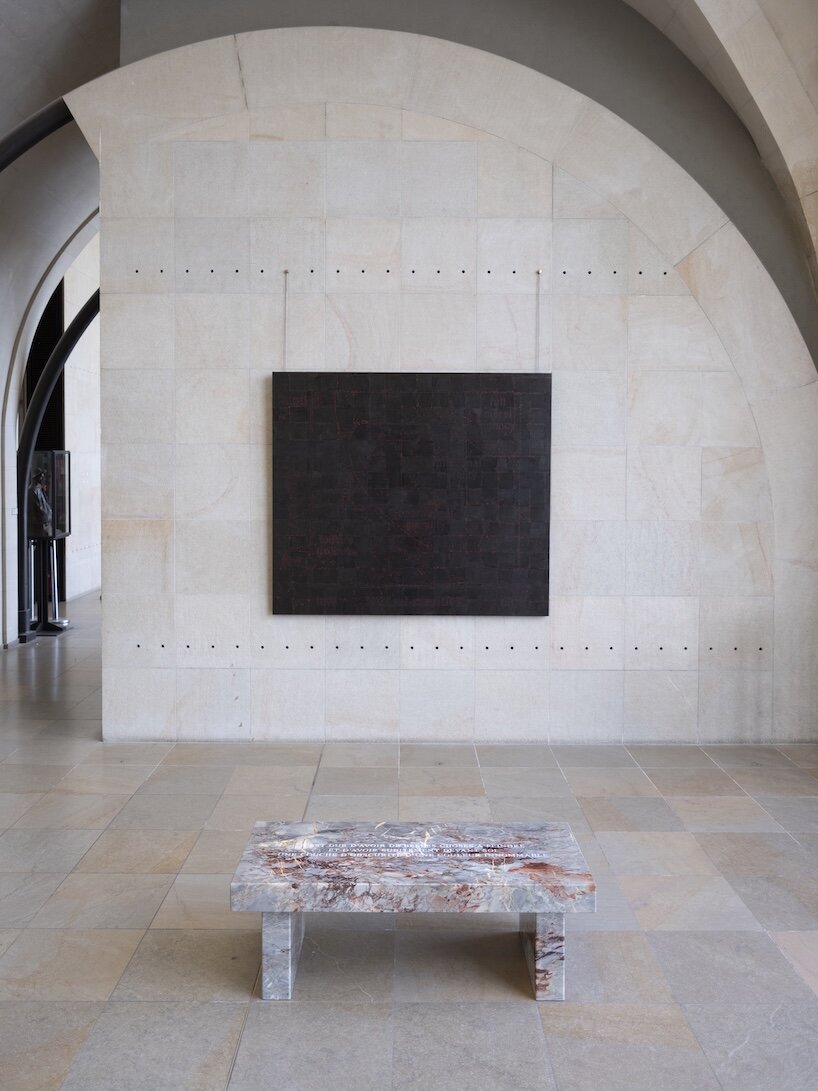
Jenny Holzer also introduces 19 stone sculptures, comprising 17 benches and two columns, distributed throughout the museum’s ground-floor galleries and public spaces. Created specifically for the exhibition, these works feature engraved texts largely dating from 1848 to 1914. Their carefully selected varieties of stone, each researched for its origin and character, establish a material dialogue with the museum’s existing sculptures and pedestals. Unlike the moving LED displays, these inscriptions invite a slower encounter with language, transforming familiar architectural elements into objects that demand a closer reading.
HOLZER CONFRONTS WAR, SECRECY AND CENSORSHIP THROUGH ART
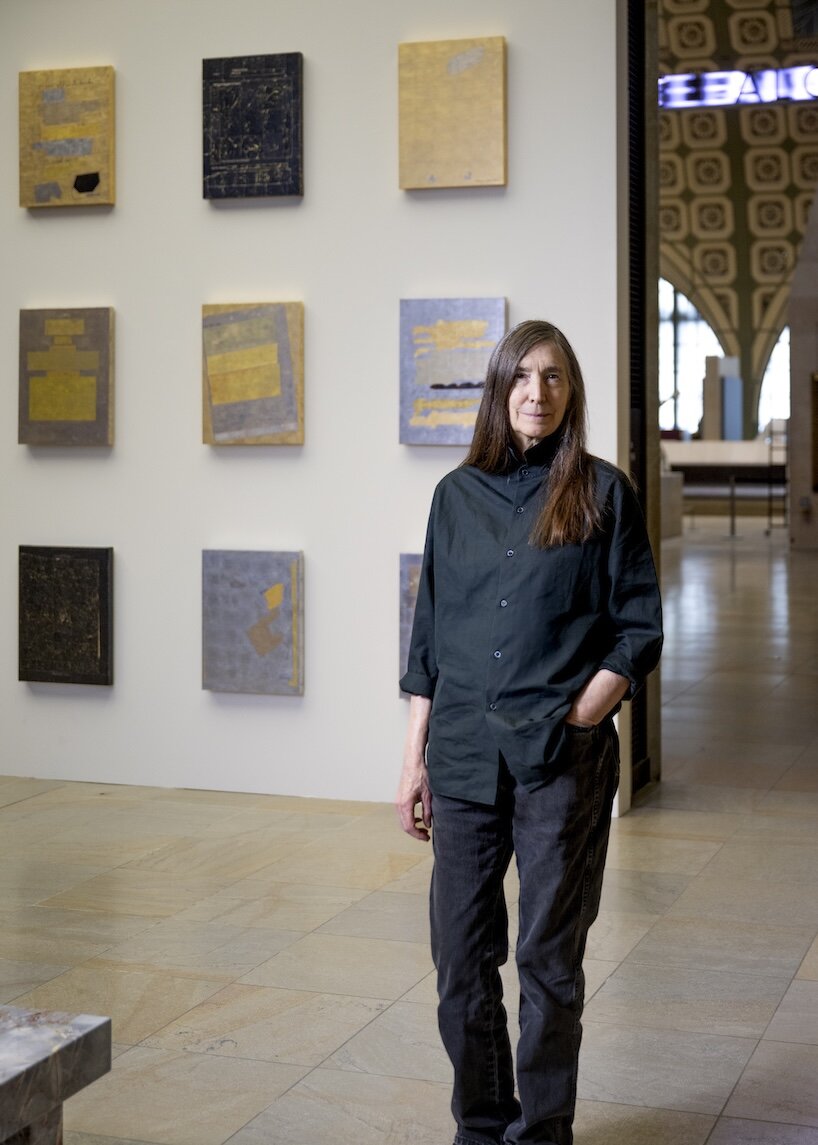
The exhibition takes a more explicitly political turn in the museum’s history painting gallery, where Holzer has developed a new presentation centered on war and conflict. Historical works from the permanent collection appear alongside her own paintings, made with gold, platinum, and palladium leaf, which reference recent international conflicts. Based on partially redacted documents, these metallic surfaces conceal substantial portions of their original texts, leaving visible fragments that raise questions about secrecy, accountability, and the boundaries between legitimate confidentiality and the concealment of wrongdoing. A separate gallery overlooking the Seine extends the presentation, allowing natural light to transform the reflective surfaces throughout the day.
Altogether, J’ai Vu brings together more than 750 distinct texts from 424 sources and 73 authors, potentially making it Holzer’s most extensive selection of written material for a single exhibition. The subjects range from the Franco-Prussian War and the Paris Commune to colonialism, anarchism, labor movements, military corruption, and the everyday realities of Haussmann-era Paris. By bringing these competing perspectives into the same space, Holzer constructs a portrait of history that resists any single interpretation. Projected in light, carved into stone, or partially erased beneath precious metals, the words expose how closely the anxieties of the past resemble those of the present. History, it seems, has never been particularly good at keeping quiet.
project info:
name: J’ai Vu
artist: Jenny Holzer | @jennyholzerstudio
location: Musée d’Orsay | @museeorsay
dates: October 20, 2026 – February 21, 2027
shop
your own online design shop — no sales commission collected