ji yong ho: mutant mythos tire sculptures
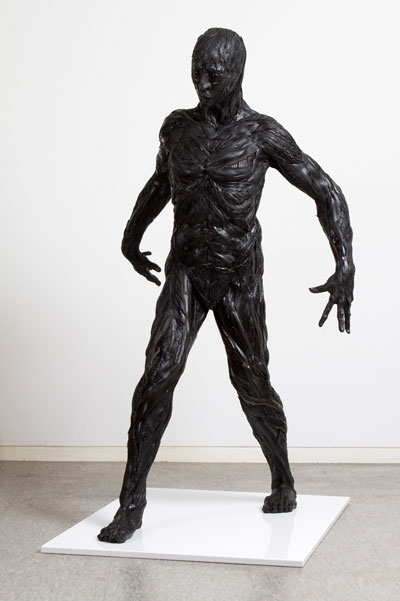
'mutant mythos' is a collection of sculptures by korean artist ji yong-ho. the 20 pieces made by hand from recycled tires include animals, humans, and combinations of both.
‘deer head 3’ tire, steel, wood, styrofoam 29x21x38 in. (74x53x97 cm) 2007 (image: gana art)
‘mutant mythos‘ is a collection of sculptures by korean artist ji yong-ho. the pieces are made by hand from recycled tires and include animals, humans, and combinations of both. ji calls his variations ‘mutants’ to refer to both their hybrid forms and the mutation of media that their creation requires. sizes vary from an eleven-inch-high dog, to a wild goat with horns that is five-feet-tall to a 10-foot-long hammerhead shark. the pieces were first exhibited at gana art, new york in 2008 and have since been shown around the world.
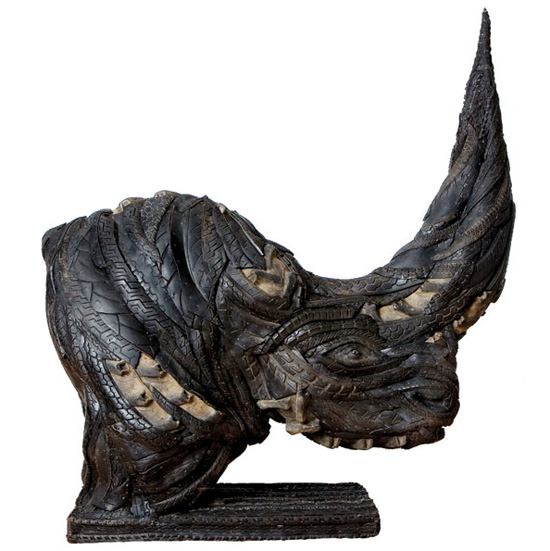 ‘rhino head 1’ tire, steel, wood, styrofoam, 2008 (image: gana art) ‘my concept is mutation—mutants. the product is from nature, from the white sap of latex trees but here it’s changed. the color is black. the look is scary. rubber is very flexible, like skin, like muscles’ – YHJ
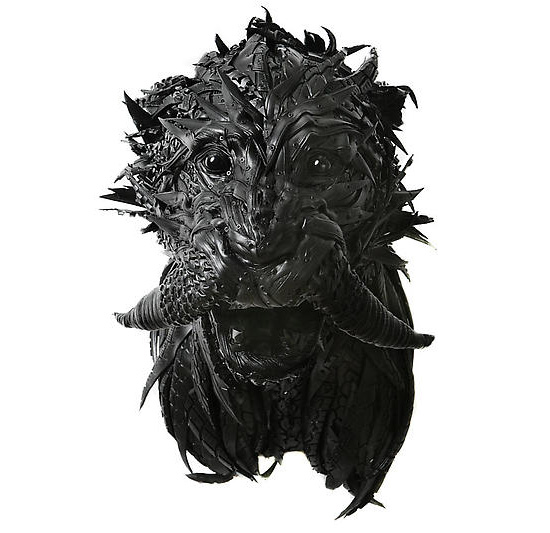
‘tiger head 1’ tire, steel, wood, styrofoam 35x18x35 in. (89x46x89 cm) 2008 (image: gana art) ‘classified by the artist into carnivorous, herbivorous and omnivorous animals, as well as arthropods, fish and hybrids, the animal sculptures take the forms of sharks and spiders, boars, wildebeests and wolves, as well as crossbred combinations of species. by pasting strips of used tires onto molds and frames he makes himself, ji mimics the way real muscles hang on animal skeletons. the realistic effect of this process points to the influence of 19th century french sculptor auguste rodin on ji’s practice, especially with respect to articulation of powerful, exaggerated postures.’
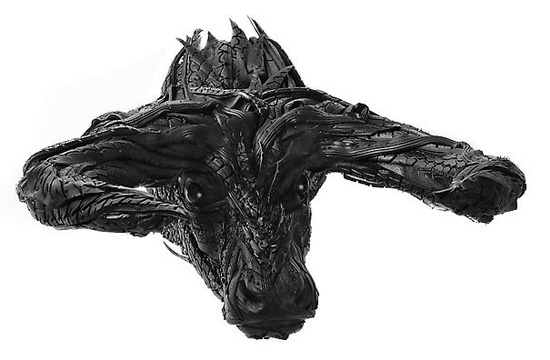 ‘bull head 4’ tire, steel, wood, styrofoam 34x48x28 in. (86x122x71 cm) 2008 (image: gana art) ‘another seminal influence on ji’s mutant series is charles darwin’s the origin of species, which emphasizes the need for living things to adapt in order to survive. ji’s belief in continuous transformation can be witnessed in the evolution of his chosen material, from natural rubber to industrial product to discarded by-product to re-imagined artwork.’
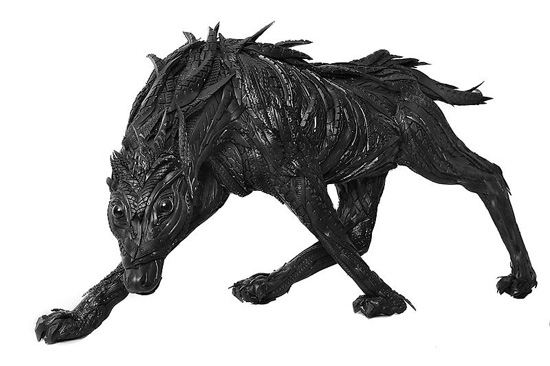 ‘wild dog 4’ tire, synthetic resins 65x30x33 in. (165x76x84 cm) 2008 (image: gana art) ‘the medium itself poses questions about the values of modern society, whose constant production of new tires can be seen as a symbol of consumerism. at the same time, ji’s altered animals raise issues about the human desire to challenge nature through technologies such as genetic engineering.’
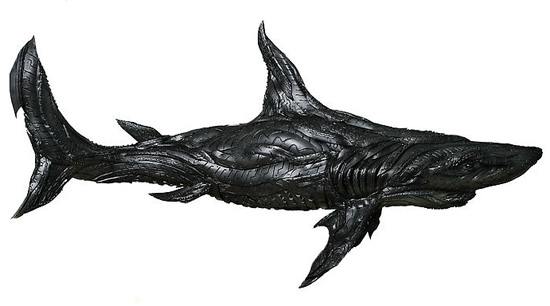
‘shark 6’ tire, steel, wood, styrofoam 106x54x59 in. (269x137x150 cm) 2008 (image: gana art) ‘the medium itself poses questions about the values of modern society, whose constant production of new tires can be seen as a symbol of consumerism. at the same time, ji’s altered animals raise issues about the human desire to challenge nature through technologies such as genetic engineering.’
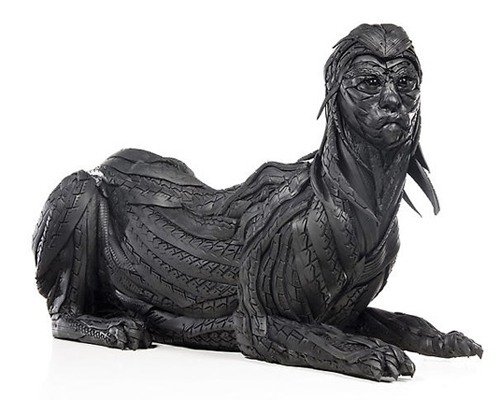
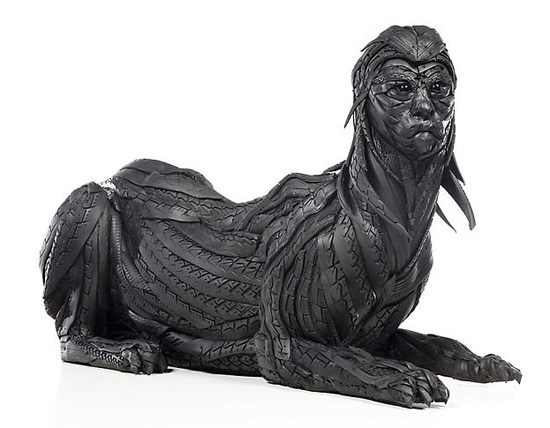 ‘lion woman 1’ tire, synthetic resins 47x19x30 in. (120x48x76 cm) 2007 (image: gana art) ‘the sculptures’ precarious identities evoke both the natural process of transformation and the mythical status of hybrid creatures like the centaur or the sphinx.’
see more images from the ‘mutant mythos’ show here
via kitsunenoir