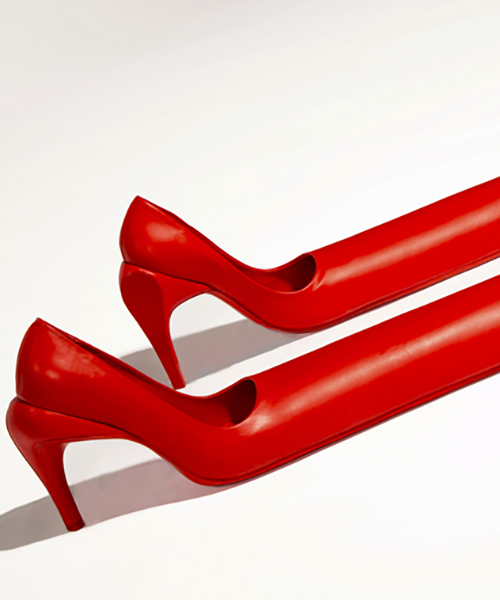
jo cope’s ‘the language of feet’ stretches the art of the cobbler to its limit
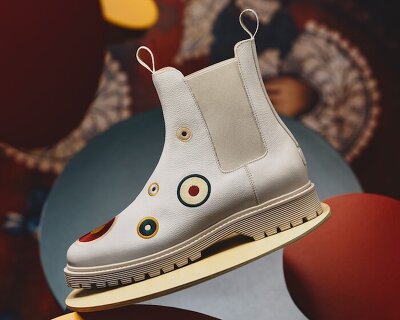
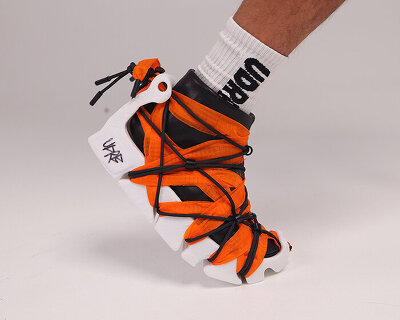
jo cope moulds the common shoe into new and bizarre shapes, engaging, creatively reimagining the iconic red slipper.
prefer designboom on google[FEATURED]
as a conceptually motivated designer from a fashion background, jo cope took a year out from her practice where she had previously been working on commissions with galleries to see how far she could push the boundaries of footwear. completing an MA in fashion artefacts at the london college of fashion, cope produced the series ‘the language of feet in the walk of life’, a creative and dynamic reimagining of the form, that quite literally pushes the art of the cobbler to its limits.
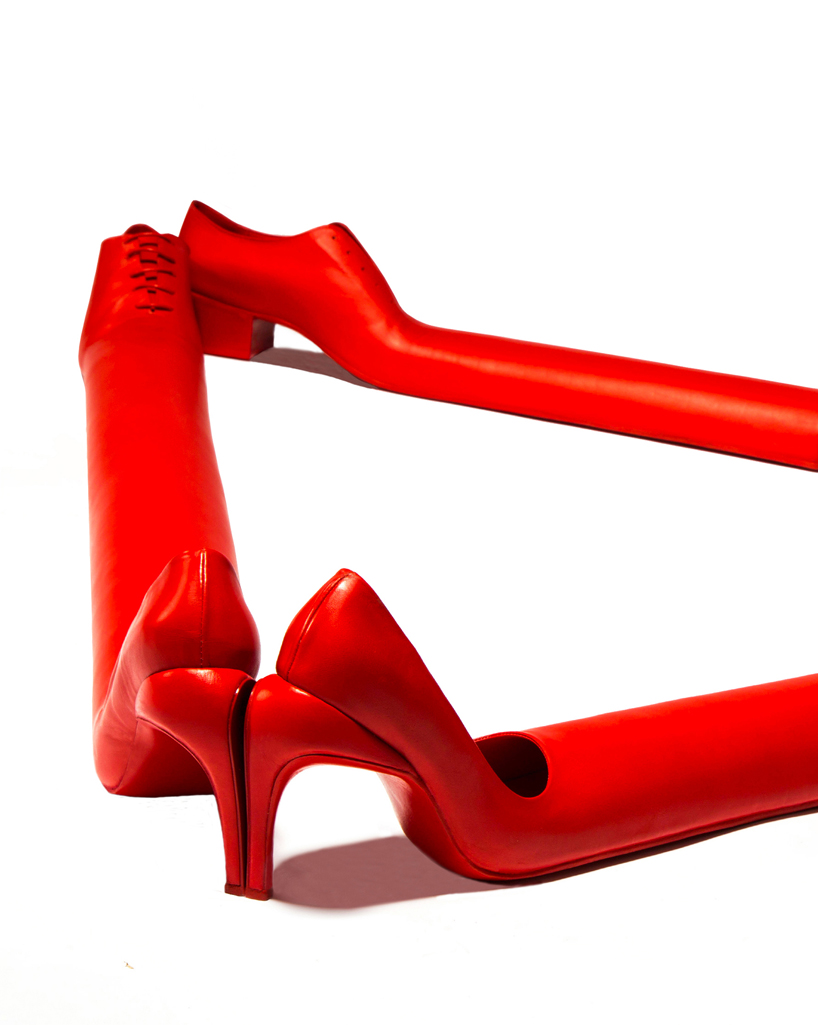
the language of feet in the walk of life’ is a creative and dynamic reimagining of the common shoe
jo cope started by constructing huge extended wooden footwear lasts which, symbols of the invisible connections found in the hidden body language of feet. using specialist baked and coated leathers she worked to stretch and mould seam-free forms with brute strength and heat machinery, slowly relaxing the skins to create completely hollow extended shoe forms.

cope started by constructing huge extended wooden footwear lasts
‘I remember it was on the 5th time of stretching the shoe upper, ian white who was technically assisting me on the project hanging off the end of the end of the last pulling the leather with all of his body weight. sweat was dripping off of him and at some stages i thought i was going to kill him off’, says cope of the experience. all of the pieces in the collection pay homage to the history of traditional shoe making craft where many people gave their entire lives — including members of cope’s family, who were cobblers and heel coverers — working relentless 18 hour days.
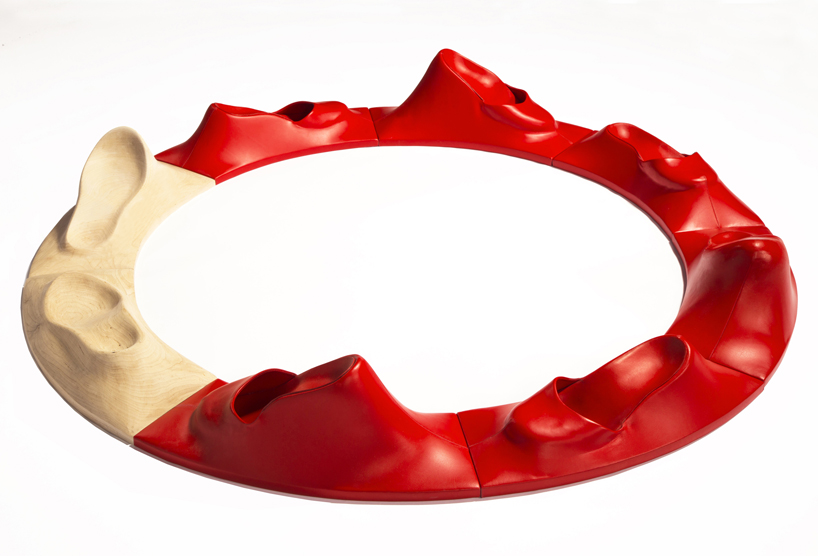
‘sweat was dripping off of him and at some stages i thought i was going to kill him off’
‘what I learnt about shoes is that you really have to pay them the respect they deserve’, continues the artist, ‘6 long months in the construction, my aim was to make conceptual objects that had a purposeful voice within art but that you can also admire for their beauty as artefacts’. the piece ‘walking in circles’ is the materialization of the walking gait phase, the invisible step sequence in which these shoes become a materialisation of their own action.
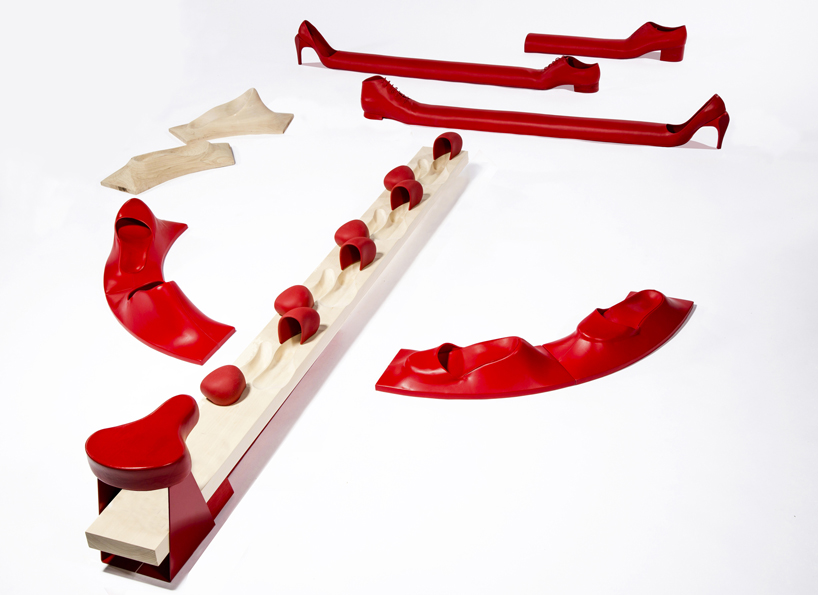
the series is the culmination of cope’s studies in fashion artefacts at the london college of fashion
the production worked with new technology as a reverse process; starting by 3D scanning the feet and CAD generating foot extensions, cope found the result to be too soulless. returning full circle, cope built around the feet in using plaster bandages and hand sculpting techniques. when finally happy with the forms they were laser scanned and then finally turned into CAD files. finally, the shoes are milled in oak wood, making them stable enough to actually walk on.
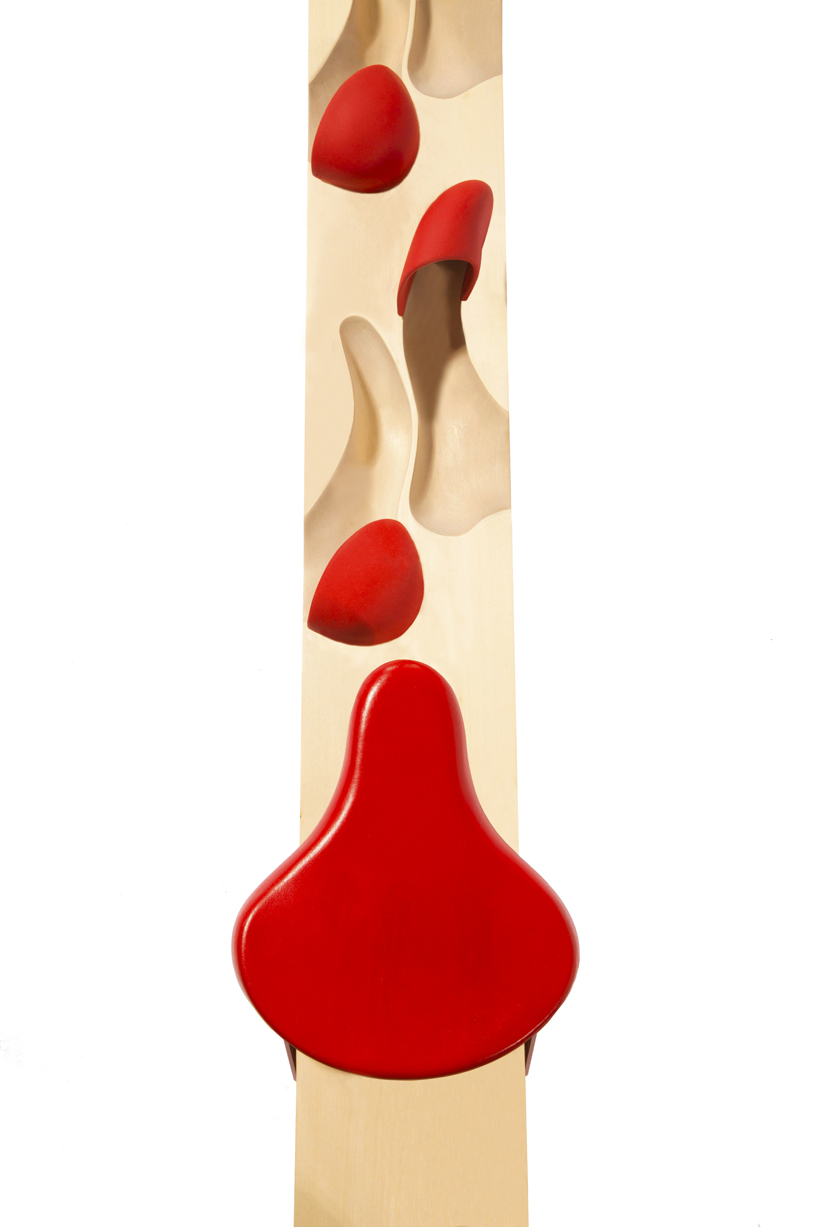
the production worked with new technology as a reverse process
in making the shoes, cope wanted to address and engage with the world of imagination far removed from that of practicality and logic but just as real and important to artists. ‘walking for me is a mesmerising act and one that can hold much symbolism in life with reference to the journey and relationship with the self,’ she explains. you may not be able to wear these shoes to the groceries store, but they still embody real life metaphors and human experience. the work is intended as installation pieces in a gallery environment, and although the physical body has been removed, each can be worn as easily as your favourite pair of slippers.
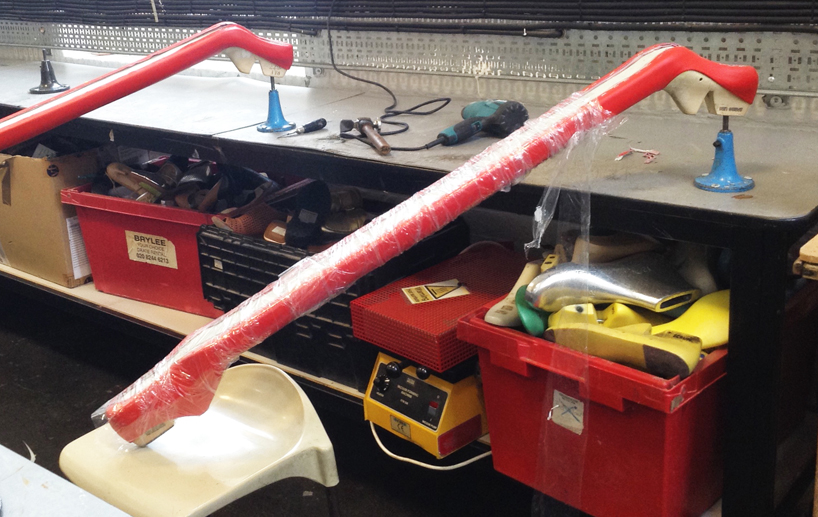
in making the shoes, cope wanted to engage with the world of imagination far removed from that of practicality
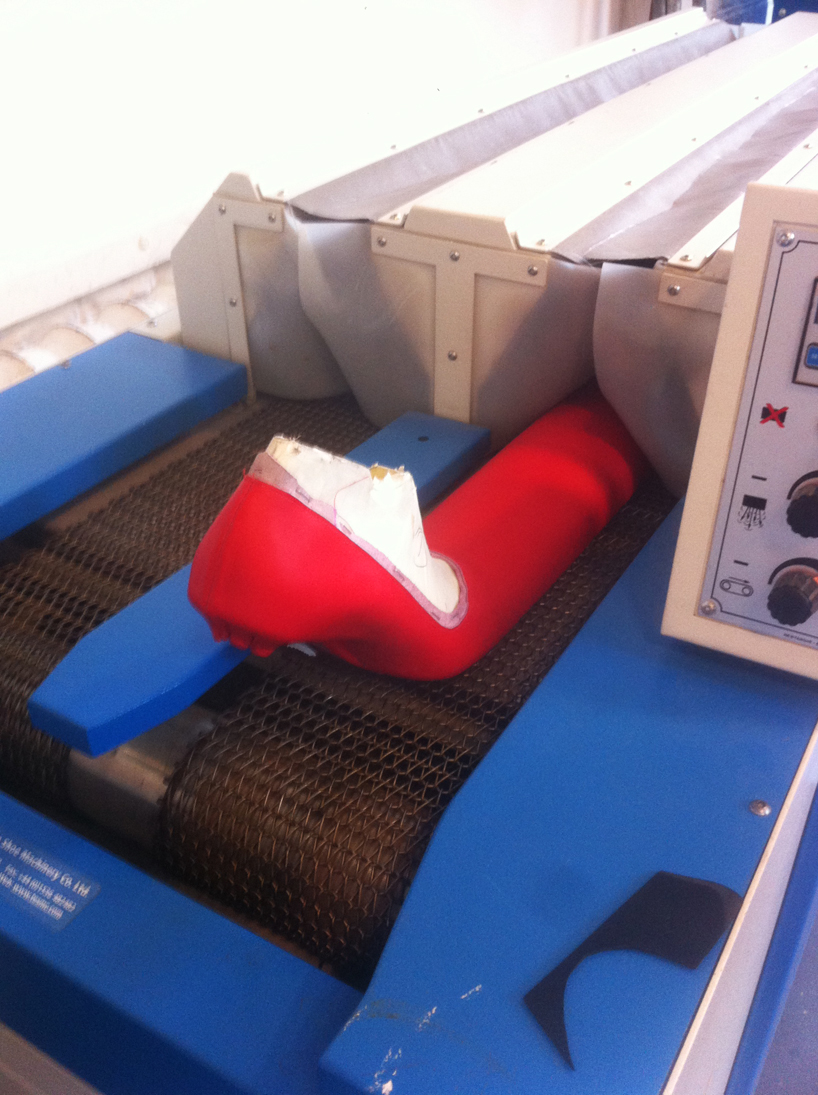
heat machinery was used to relax the leather
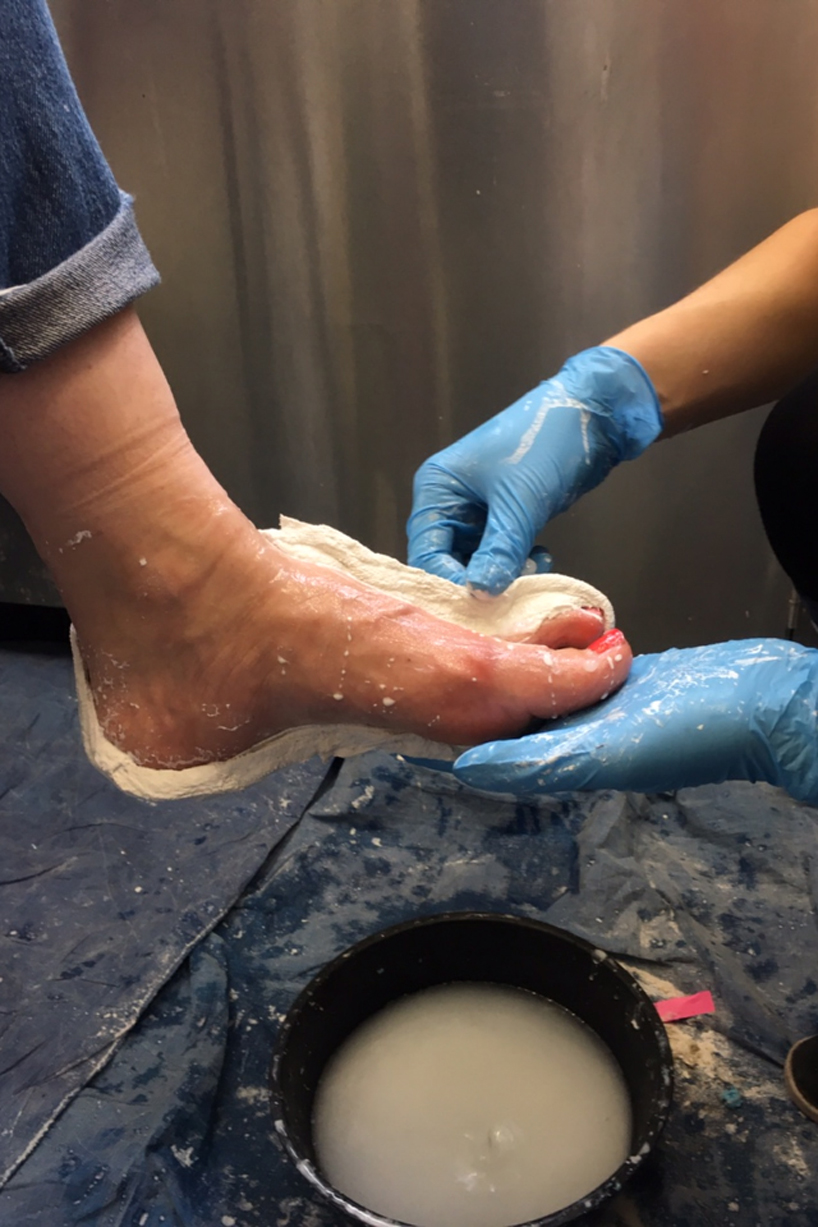
foot casting for a perfect fit
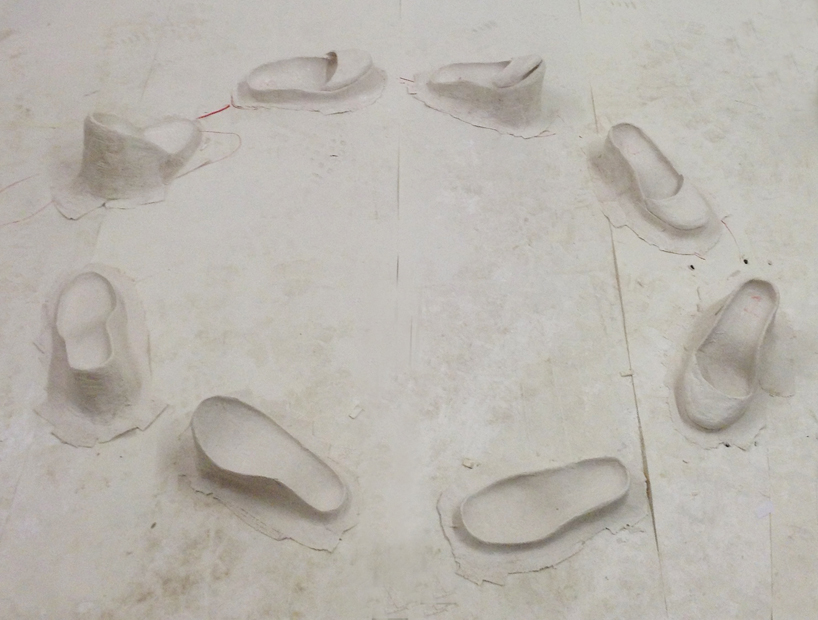
you may not be able to wear these shoes to the groceries store, but they still embody real life human experience
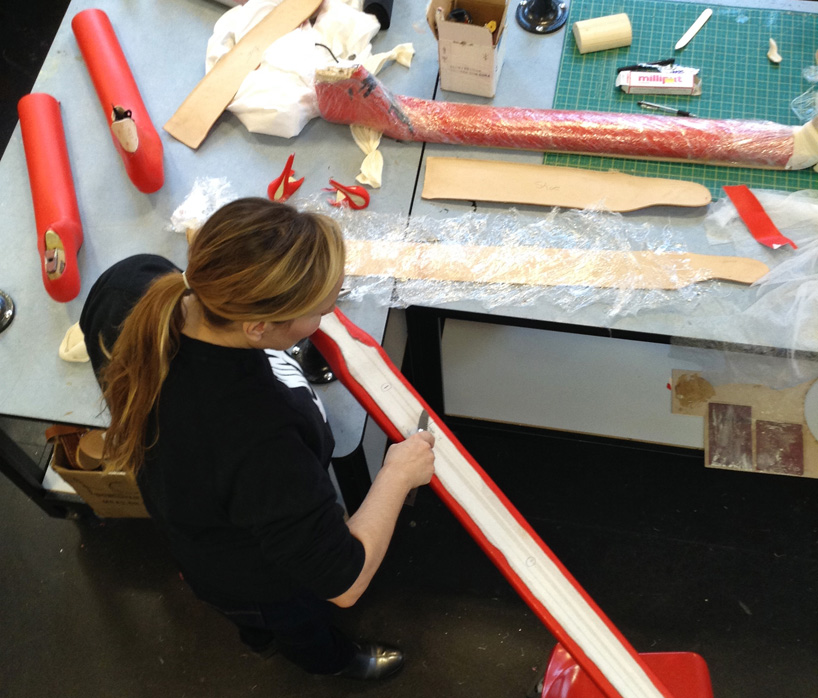
although not functional, each pair can be worn like a normal shoe
designboom has received this project from our ‘DIY submissions‘ feature, where we welcome our readers to submit their own work for publication. see more project submissions from our readers here.
shop
your own online design shop — no sales commission collected