
lilla tabasso sculpts the melancholy of botanical decay in hyperrealistic murano glass
combining scientific observation with extraordinary technical skill, the milan-based artist transforms fleeting natural phenomena into enduring reflections on time and change.
prefer designboom on google[FEATURED]
Lilla Tabasso captures nature’s fleeting moments in glass
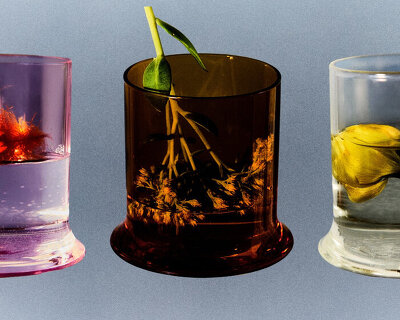
At first glance, Lilla Tabasso’s installation at Fondazione Dries Van Noten’s inaugural exhibition in Venice appears to be a living garden. Wildflowers emerge from clumps of earth, stems bend under their own weight, and tangled roots spread through the soil as though freshly unearthed. Only after a closer look does the illusion break, and the visitors realize that nothing is alive. Every petal, leaf, stem, and root has been painstakingly sculpted from Murano glass.
The Milan-based artist’s works are currently on view as part of The Only True Protest Is Beauty, the foundation’s opening exhibition at Palazzo Pisani Moretta. Among more than 200 works celebrating craftsmanship and artistic expression, Tabasso’s fragile botanical landscapes stand out for their uncanny realism.

Beyond botanical perfection
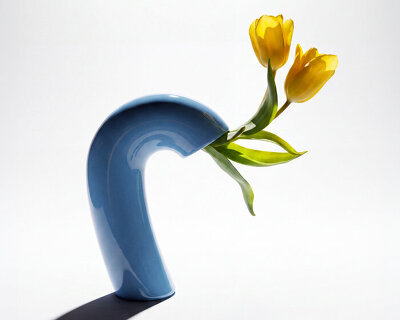
For Tabasso, beauty does not reside in perfection. Her attention is drawn to flowers at the end of their life cycle: a tulip bowing toward the ground, a petal bruised by time, a leaf beginning to dry and fold into itself. These small transformations become the subject of her intricate glass sculptures, inviting viewers to linger on moments that are usually overlooked.
Working with the centuries-old Murano technique of lampworking, The Italian artist uses glass to immortalize what is inherently temporary. Delicate blooms that would normally wither within days are preserved indefinitely, creating a tension between permanence and decay, strength and vulnerability.

Where biology meets craft
Before dedicating herself to glass, Tabasso studied biology. Scientific observation remains central to her work, informing the extraordinary level of detail visible in every leaf and blossom. Her sculptures move beyond documentation, initially resembling botanical specimens and ultimately functioning as emotional portraits of natural processes.
The artist taught herself lampworking after finding little encouragement within the traditionally male-dominated world of Murano glassmaking. Working directly at the torch, she manipulates colored glass rods into remarkably lifelike forms, building subtle tonal variations layer by layer.

Crafting impermanence
Tabasso’s work belongs to a long lineage of vanitas imagery that uses flowers as reminders of life’s temporality. At a moment marked by environmental uncertainty and growing disconnection from nature, her sculptures ask viewers to pay attention to moments that are often overlooked: the flower after its bloom, the leaf as it dries, the root hidden beneath the surface.
Through her perspective and practice, the artist presents a compelling vision of what craft can become, utilizing inherited techniques to address contemporary concerns. The artist demonstrates how centuries-old knowledge can remain relevant by helping us understand transformation, vulnerability, and our relationship with the living world.


project info:
artist: Lilla Tabasso | @lilla.tabasso
This article is part of designboom’s Crafting the Future chapter, exploring what it means to be a maker in today’s world and the future of craftsmanship. Discover more related stories here.
shop
your own online design shop — no sales commission collected