
manifesta 16 and the past, present, and future of ruhr’s churches
twelve churches across four cities in germany come alive with contemporary art, performances, and community events.
This is not a church
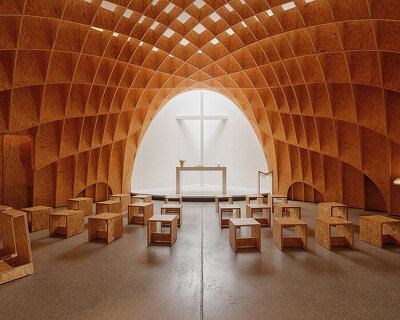
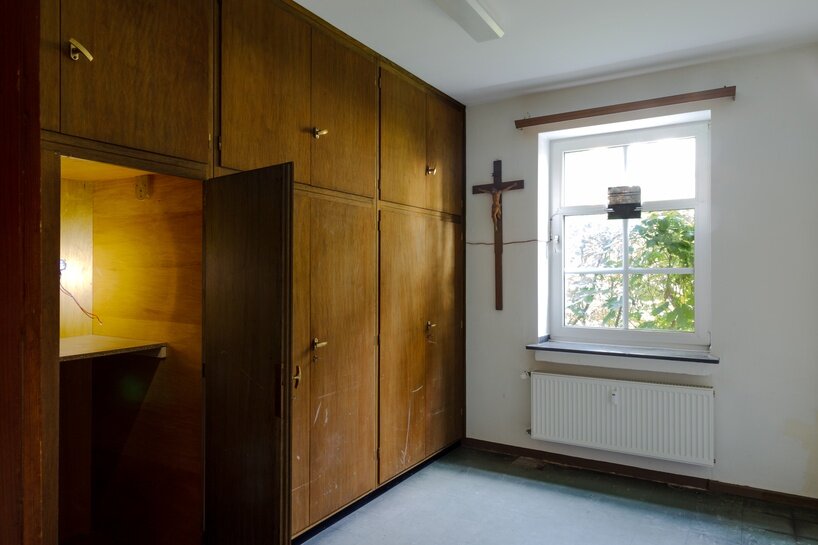
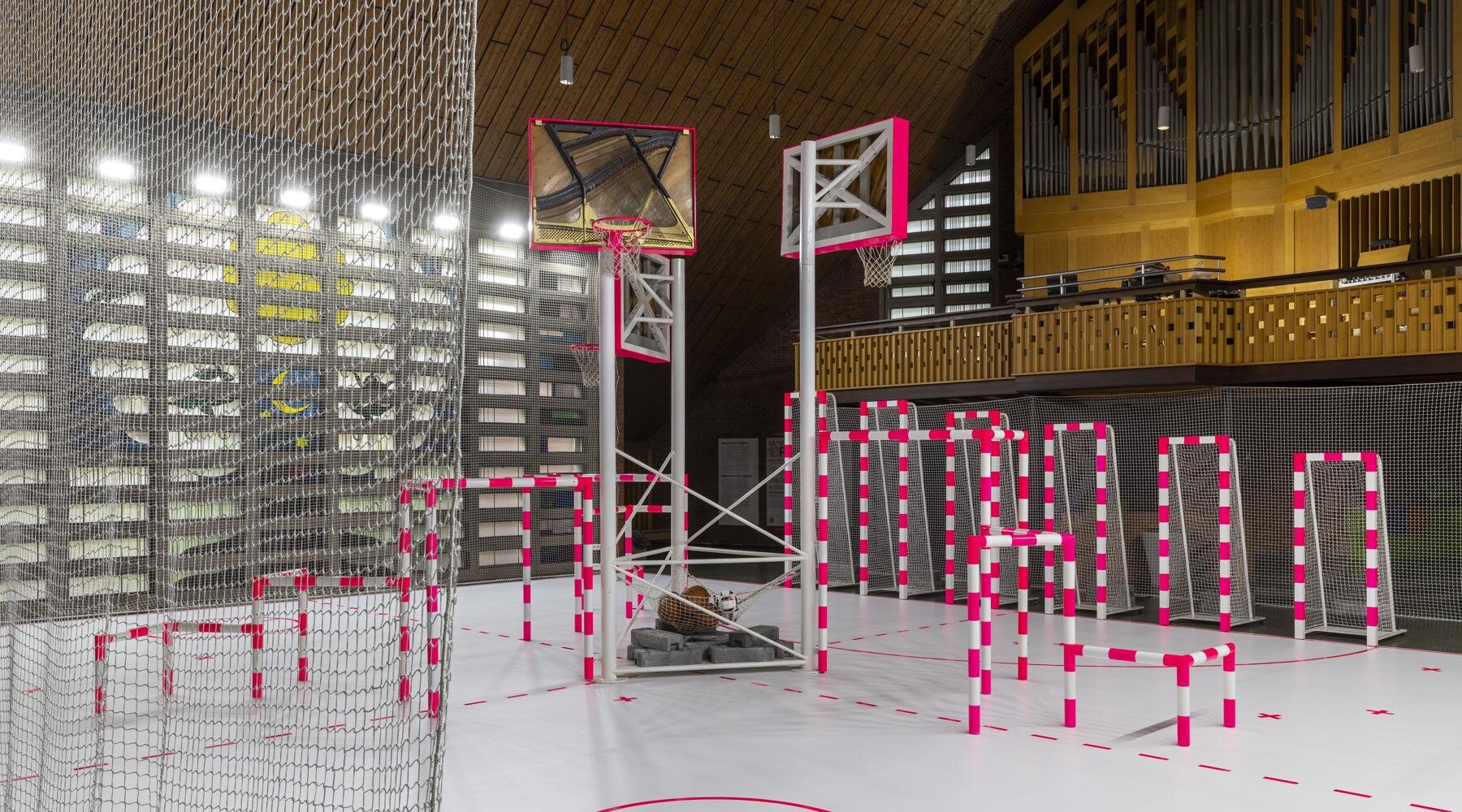
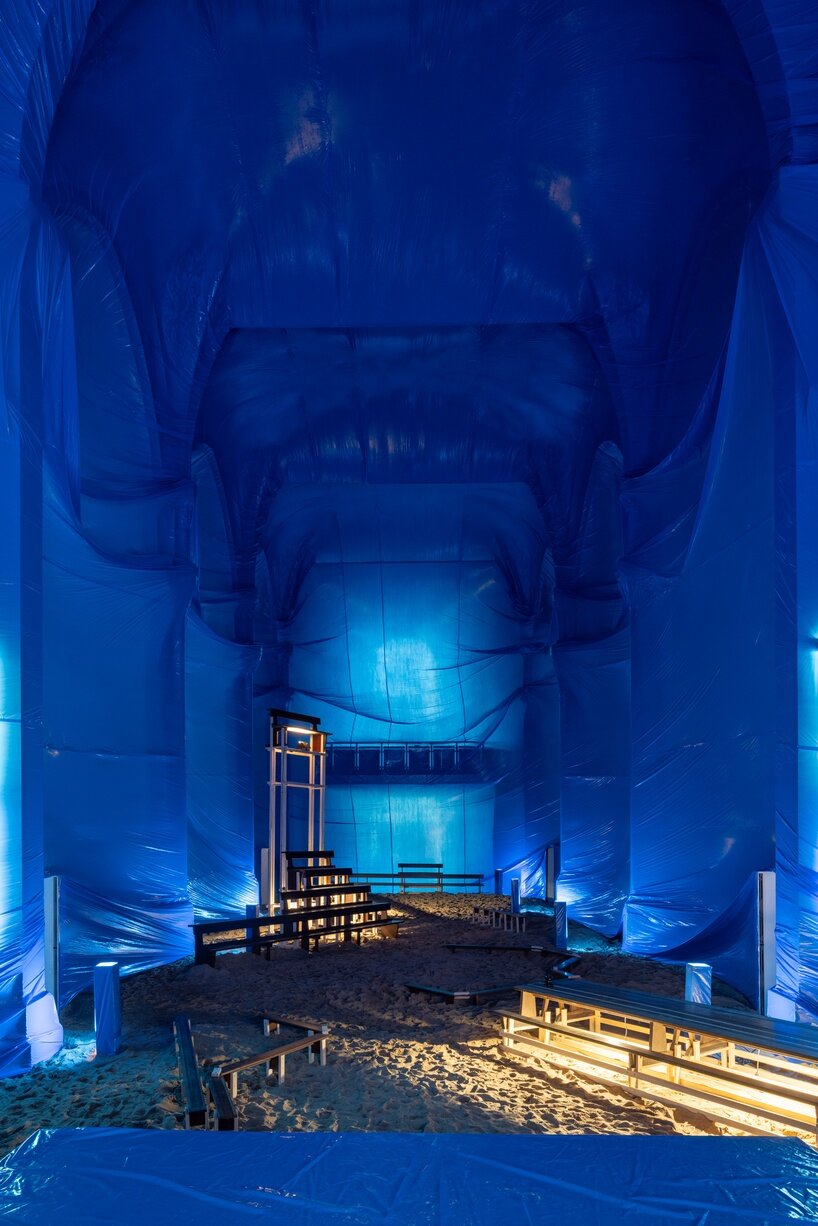
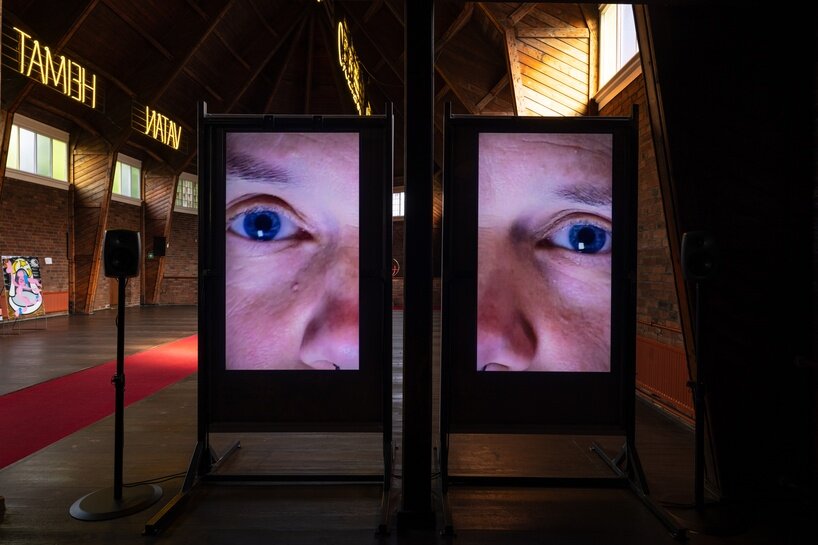
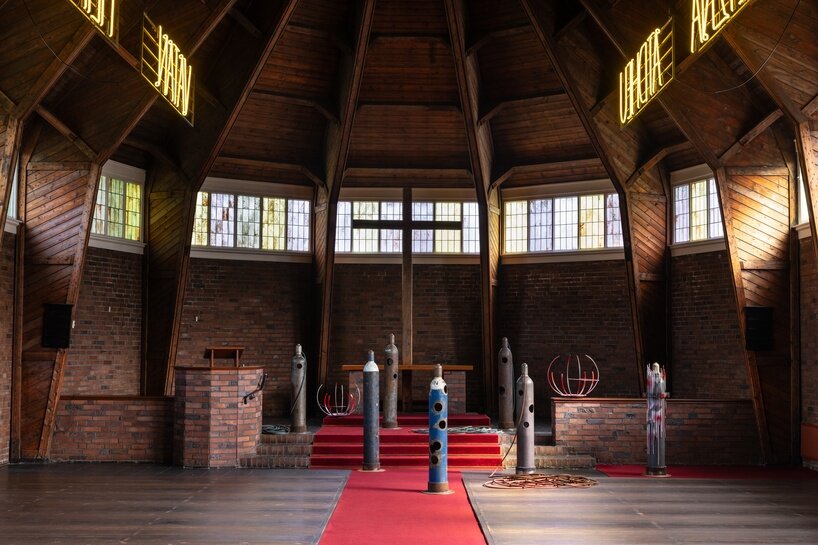
Manifest 16, the ‘European Nomadic Biennial,’ found its home in Germany’s Ruhr area. More specifically, it activated twelve churches across the cities of Essen, Gelsenkirchen, Duisburg, and Bochum, transforming them into hybrid exhibition and community places that cheekily spoke to the title of its 30th edition: ‘This is not a church.’ Through contemporary art, walks through these cities, architectural interventions, and a bit of basketball, the event proposed new ways to inhabit the numerous churches in the region that have wavered in and out of use.
The European Nomadic Biennial comes to Ruhr
To speak of the Ruhr region and its many churches requires a conversation about its very landscape. It sits at the meeting point of the Ruhr and the Rhine waterways, making it logistically advantageous as an inland port. The town of Bochum is guarded by The German Mining Museum’s towering light blue headframe, formely used to lift workers and coal in and out of the ground. To get around from city to city, the Manifesta Guide recommends biking the Erzbahntrasse, a former freight line turned bike path. A cycle through the region gives visitors a chance to see the infrastructural evolution that it has experienced in the decades since closing its famous coal mines, while also offering a glimpse at the Rhine-Herne Canal.
‘Pantoffelkirchen’ and other types of churches
Each of the twelve churches that make up Manifesta’s program opens with a bit of history that explains how the structure came to be. Bochum’s Gethsemane-Kirche has written that the modest structure, whose entrance is reached only after passing through a small path lined by a dense garden, was designed by architect Otto Bartning for Protestants after World War II. The goal was not to have a grand structure, but a simple place for worship. Because of this, these churches were built close to their parishoners, earning them the title of ‘pantoffelkirchen,’ or slipper churches, as in the place is so close, you could reach it in your slippers.
An inviting inflatable bell
Gethsemane-Kirche was shaped by Anda Rottenberg & Krzysztof Kosciuczuk, two of the eight ‘creative mediators’ of Manifesta 16’s. The term ‘creative mediators’ is what the institution uses to refer to their curator-like organizers who guide the formation of the event. This church was still in use as a place of worship, which was not a given for all of the event’s sites. With that in mind, they decided to create interventions in the space that reflected the active community around the church.
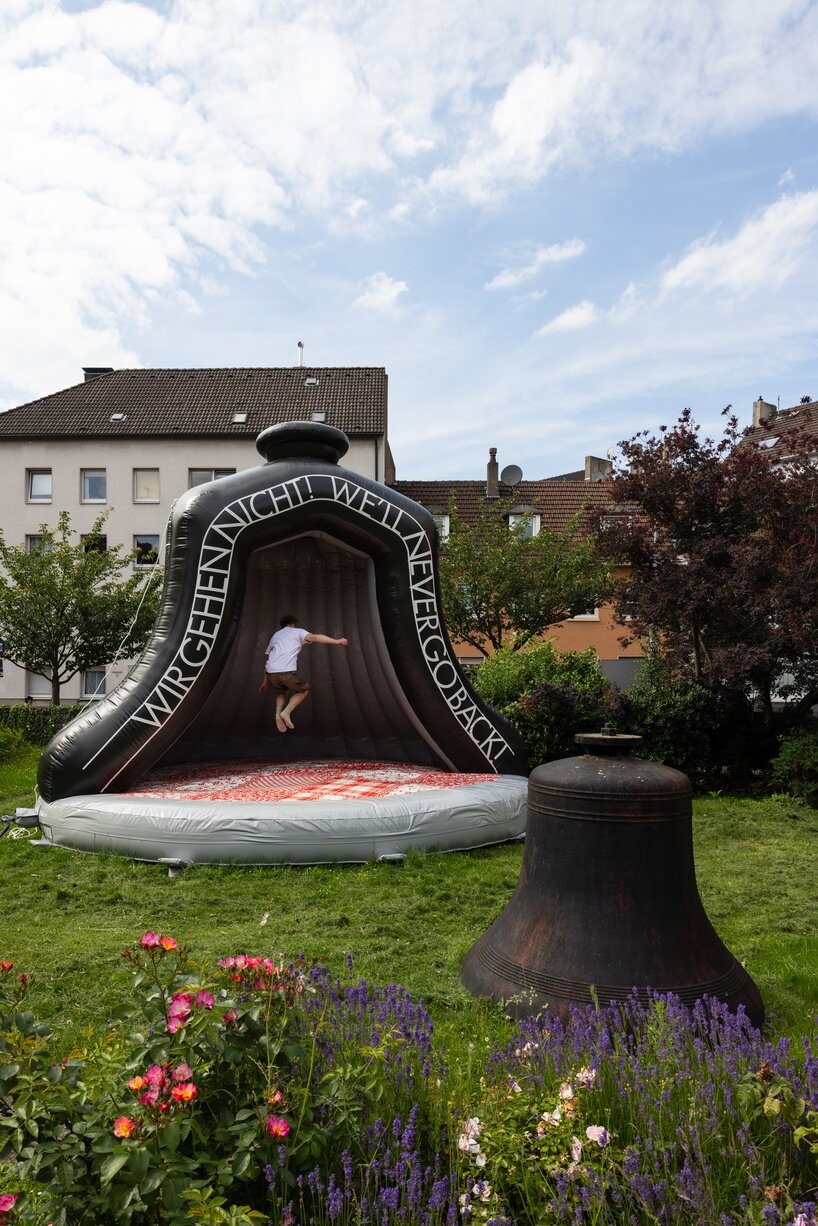
One activation came in the form of Marina Naprushkina’s inflatable bell-shaped bouncy house that sits in the front lawn of the space. The bell is the ‘advertising symbol of the Bochumer Verein company,’ which had produced rail wheels in the area. The playful sculpture invites people to interact with the work while also opening a dialogue about labor in the region. Inside, Mehtap Baydu’s, Anali Kazli – With Mothers with Daughters, is a performance-based work that invites eleven women from the city to cook meals for a large audience. In it, she reflects on the tendency within the Turkish language to name food after women and body parts. Within the piece, she opens a community-oriented discussion on food, femininity, and semiotic constructs.
An unused church in the north of Essen
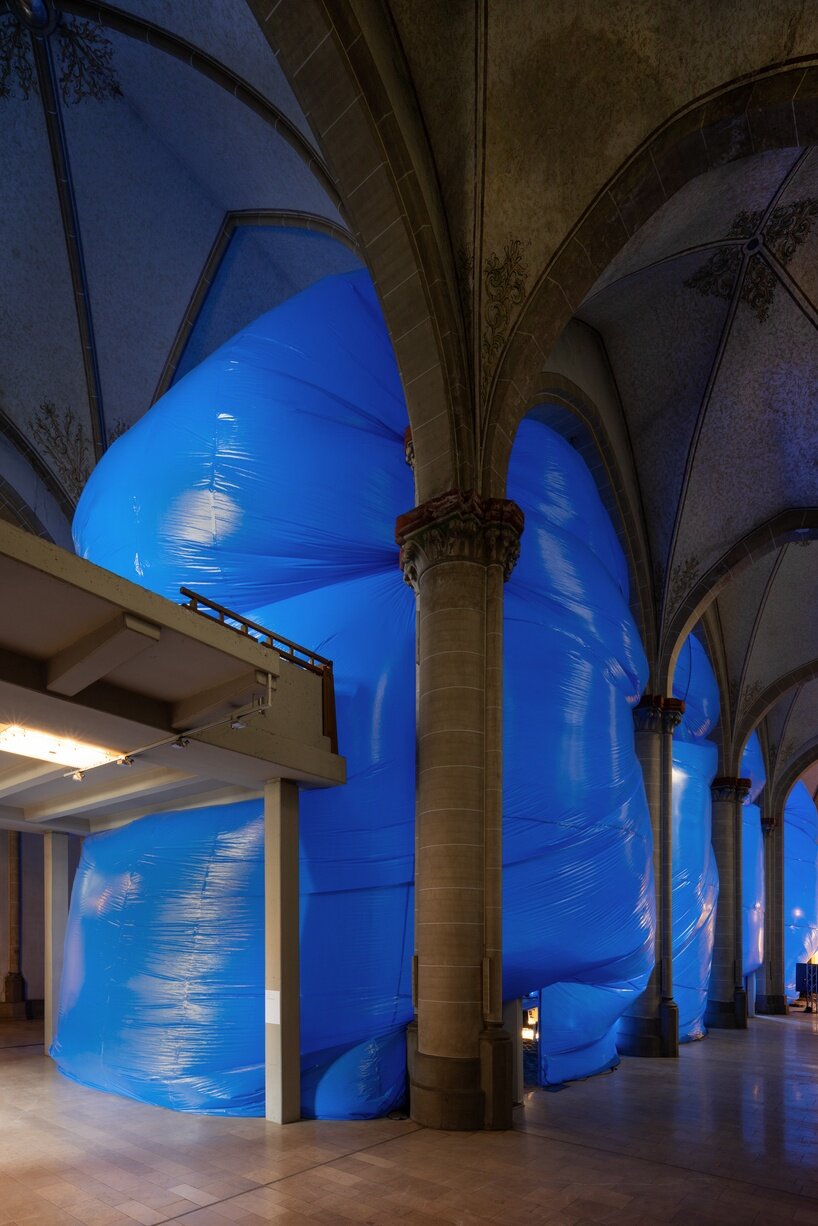
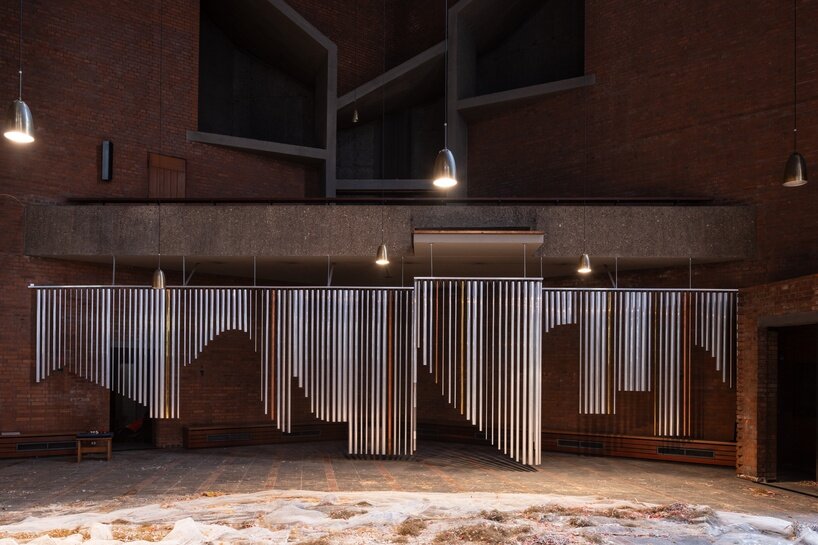
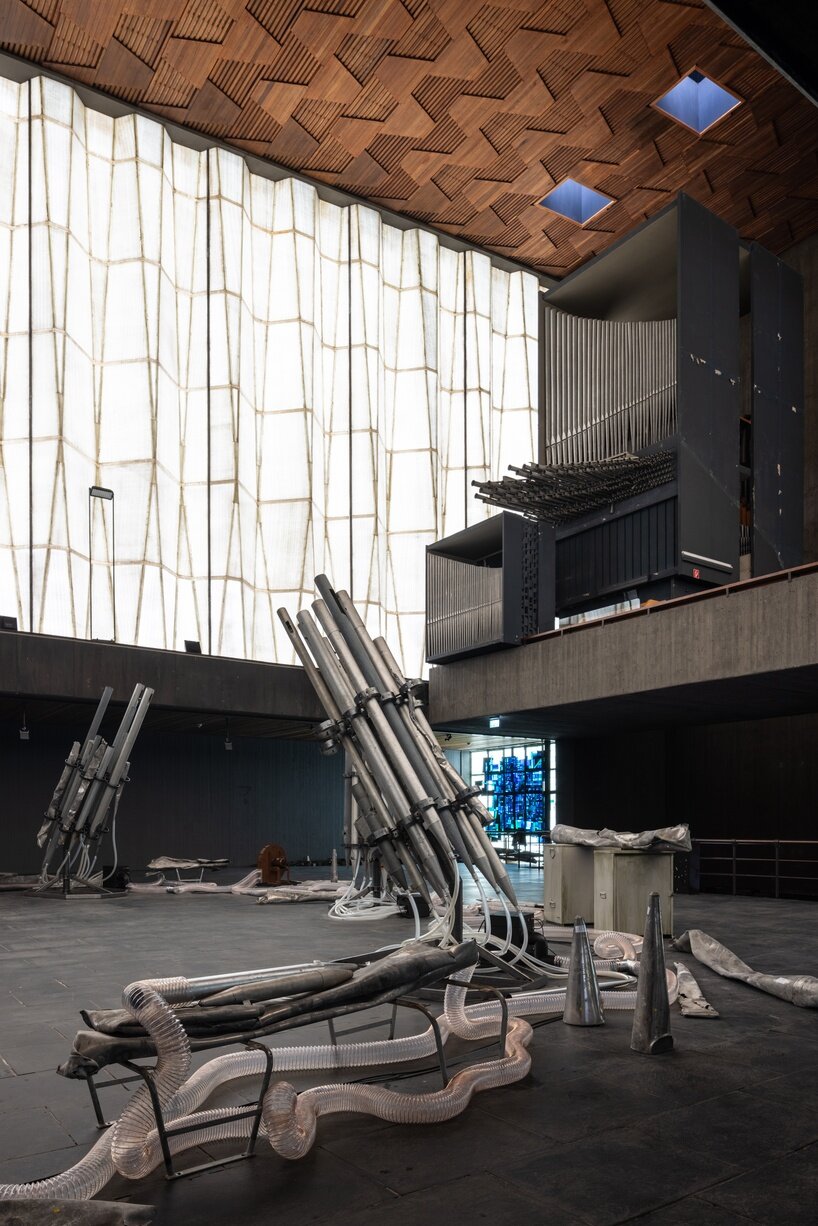
In the North of Essen, there is St. Marien which, in contrast to Gethsemane-Kirche, has fallen into a state of disrepair and is no longer an active church. The space is a towering brick building almost hiding behind a park. Pieces of the roof are missing, and parts of the stained-glass windows have broken off. Within, works by Alicja Kwade, SUPERFLEX, Jason Dodge, and others reinvigorate the unused space. One piece in particular is William Engelen’s Variation on Godspeed in 4/4 (2026), which consists of tubes hanging down into the space, recalling the church organ. Another interpretation of this instrument can also be found in Abbas Zahedi’s work, Ouranophobia 47051 (2026), located in Duisburg’s Kulturkirche Liebrauen.
What the churches reveal about Ruhr
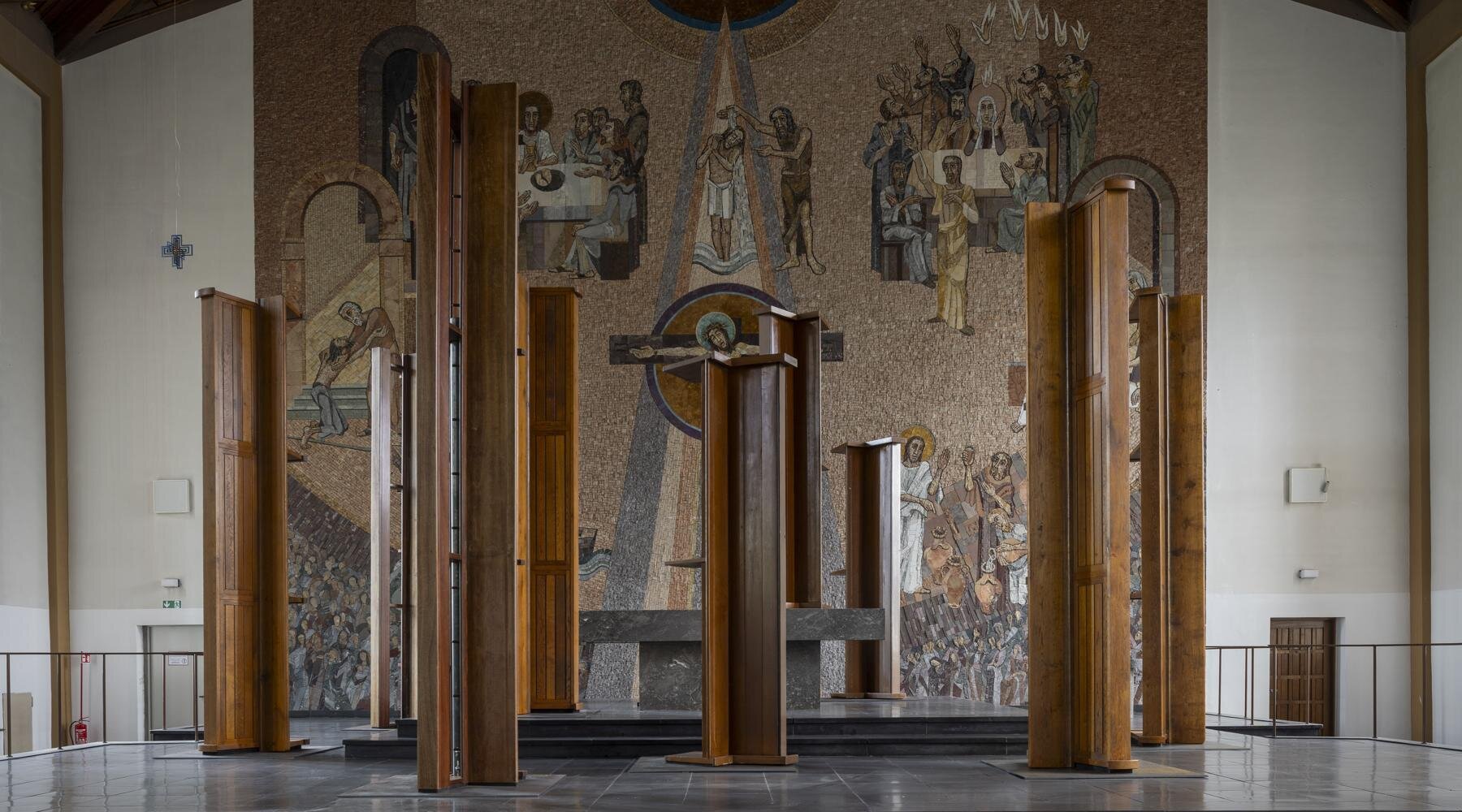
Making your way to each church requires a grand tour through the Ruhr region. Traveling by bike reveals the dense foliage that seems to touch every corner. Going by public transport exposes the shifting face of western Germany. With every site, a new view of the region comes into view—one that has long been on the precipice of change, yet holds onto relics of the past. By bringing these religious spaces into view, Manifesta 16 reveals the history of this European region through art, participation, and community.
1/3
project info:
name: Manifesta 16, This is not a church
date: June 21 – October 4, 2026
location: Ruhr region, Germany
creative mediators: Anda Rottenberg, Krzysztof Kosciuczuk, Josep Bohigas, Gürsoy Doğtaş, René Block, Henry Meyric Hughes, Leonie Herweg, and Michael Kurtz
This article is part of designboom’s MODES OF HABITATION chapter, exploring how the spaces we inhabit can reshape the ways we live together. Discover more stories rethinking domesticity, shared living, and the many forms a home can take here.
shop
your own online design shop — no sales commission collected