marguerite humeau brings her kinetic, divinatory ‘orisons’ sculptures to frieze london 2023
humeau expands upon her 160-acre earthwork orisons in colorado's san luis valley, transforming an arid plot into a place of reverence.
prefer designboom on google[FEATURED]
french artist marguerite humeau at frieze london 2023
Using a meticulous research process and driven by a thirst for arcane knowledge often shrouded by official narratives, French visual artist Marguerite Humeau creates intricate works that offer a glimpse into alternative or parallel worlds. Spanning a great temporal divide from prehistory to speculative futures, Humeau unpicks human and non-human mysteries, extracting scientific facts and evidence as well as oral histories and mythologies. For Frieze London 2023, she expands upon her 160-acre earthwork Orisons in Colorado’s San Luis Valley, transforming an arid plot into a place of reverence. According to Humeau, this was the ‘largest earth work ever made by a woman artist. […] my work is moving even more towards thinking about sculptures as portals, and as agents that can create relationships between different things,‘ she told designboom in a 2022 interview.
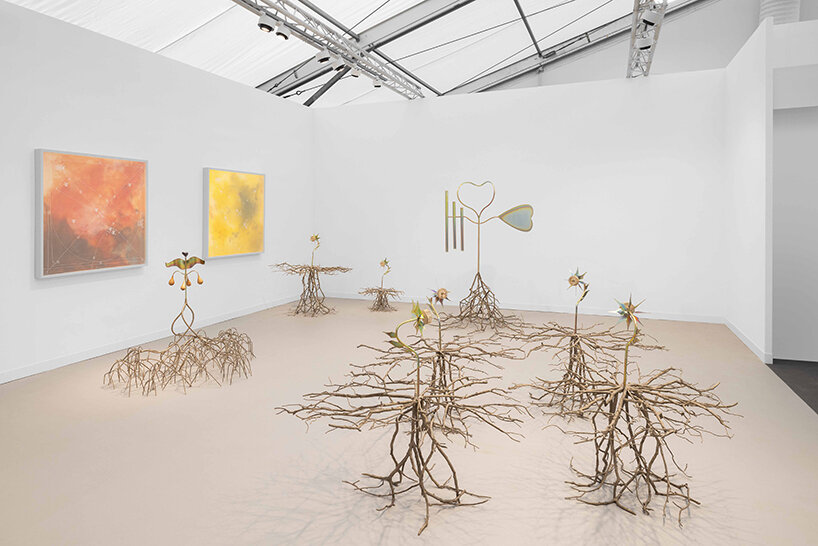
Like a fragment of the monumental outdoor work, the environment shown at Frieze opens up a door for viewers onto the problematics and poetry in which Humeau’s recent practice is rooted: a paradigm shift that demands we stop thinking about forever producing anew and instead designate specific contexts as artworks themselves.
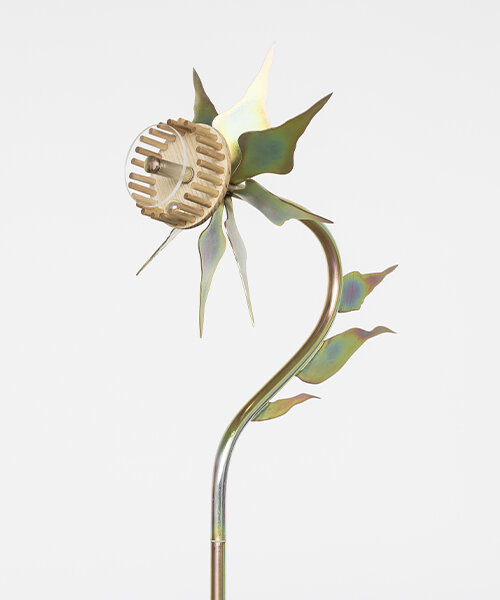
wind-activated sculptures made of steel, hardwood & stone
Interested in the visible and invisible histories of the area of Orisons, the artist reached out to an array of collaborators to explore together what had happened on the land, including a 20-year megadrought and other climate change-related issues. Conservationists, historians, ornithologists, indigenous communities, and geomancers visited and mapped the land with Humeau, honoring its history, existing ecosystem, and speculative futures. This research phase culminated in creating a diagram of the circular plot, acknowledging invisible entities, energy flows, and the relationships between them. Once the territory charted, Humeau began to think about how she could help it regenerate itself while celebrating the resilience of lives that traverse or inhabit the land. To do so, she installed a series of more than 80 kinetic, divinatory sculptures.
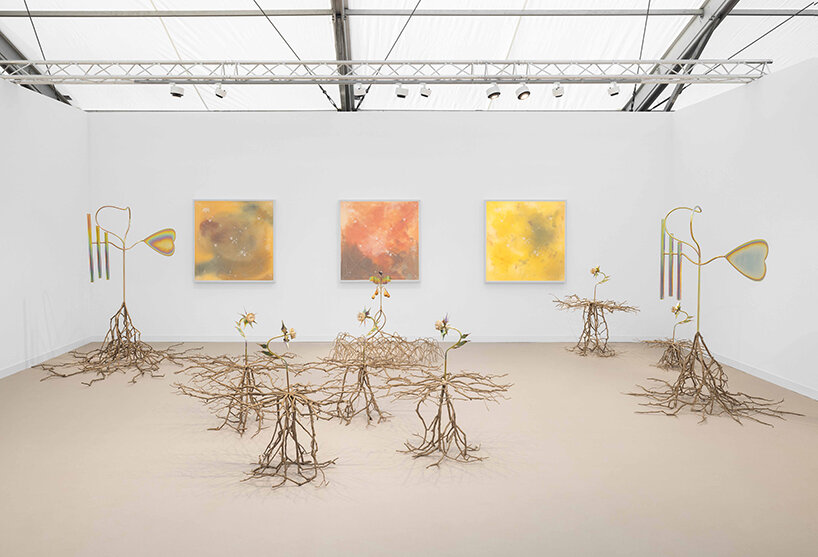
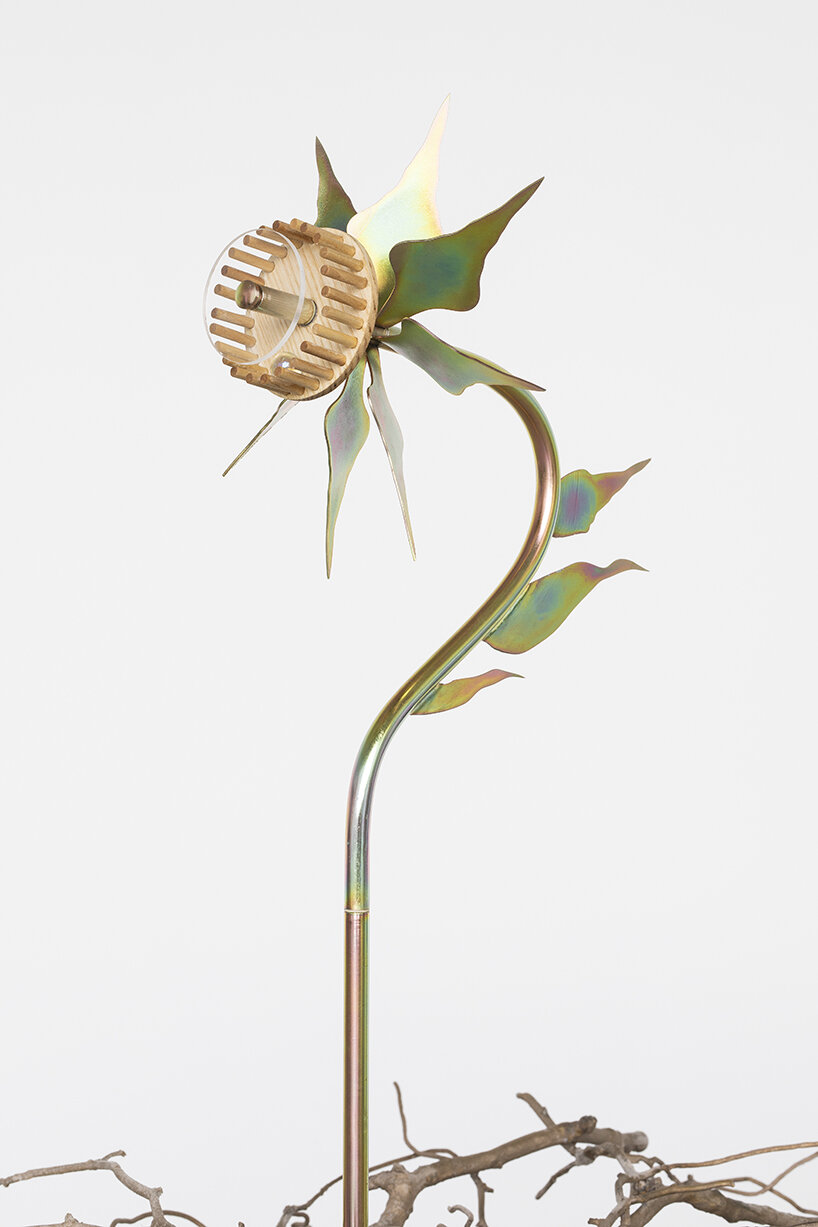
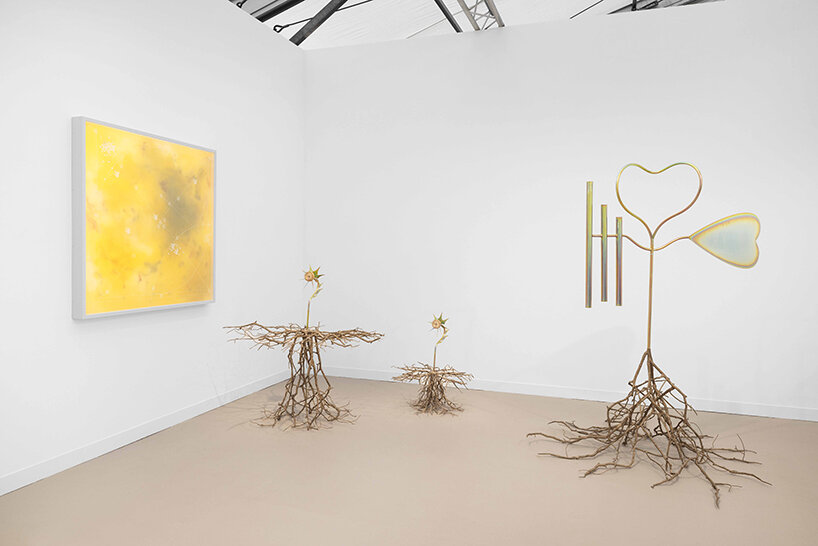
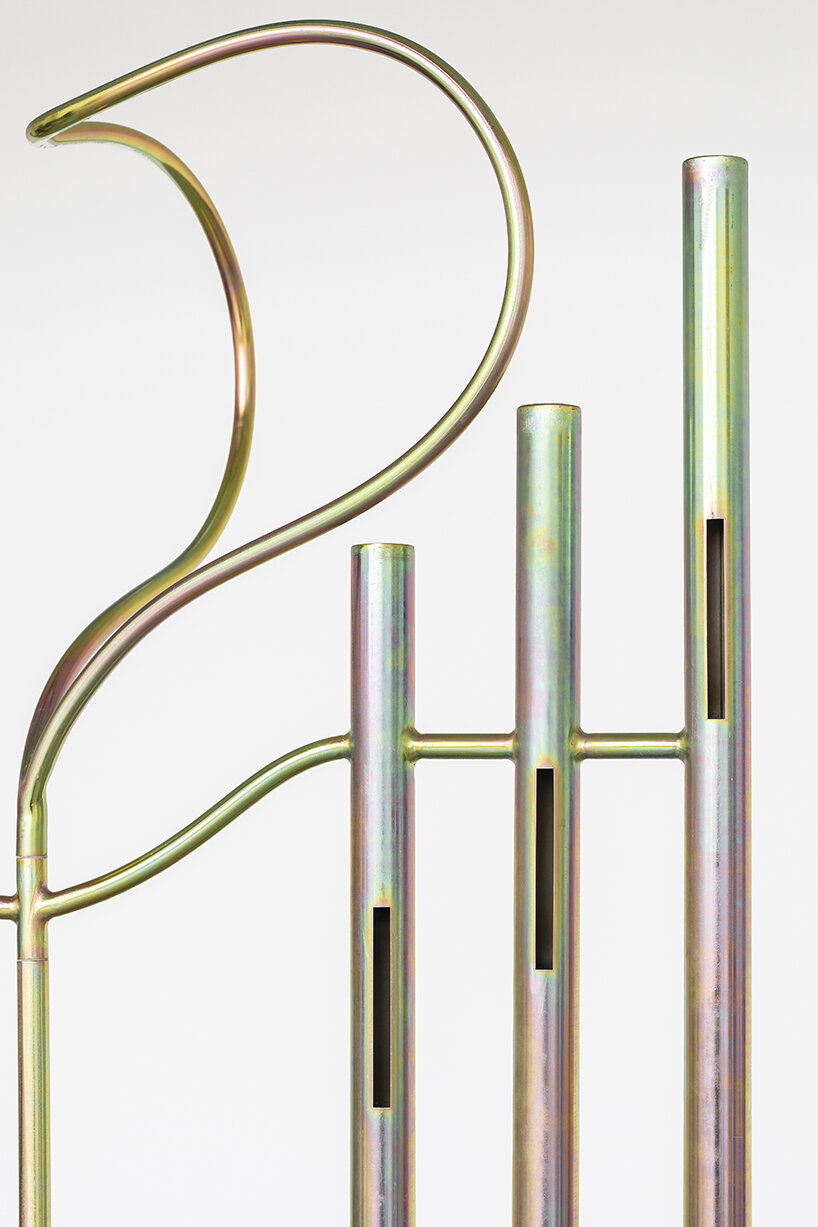
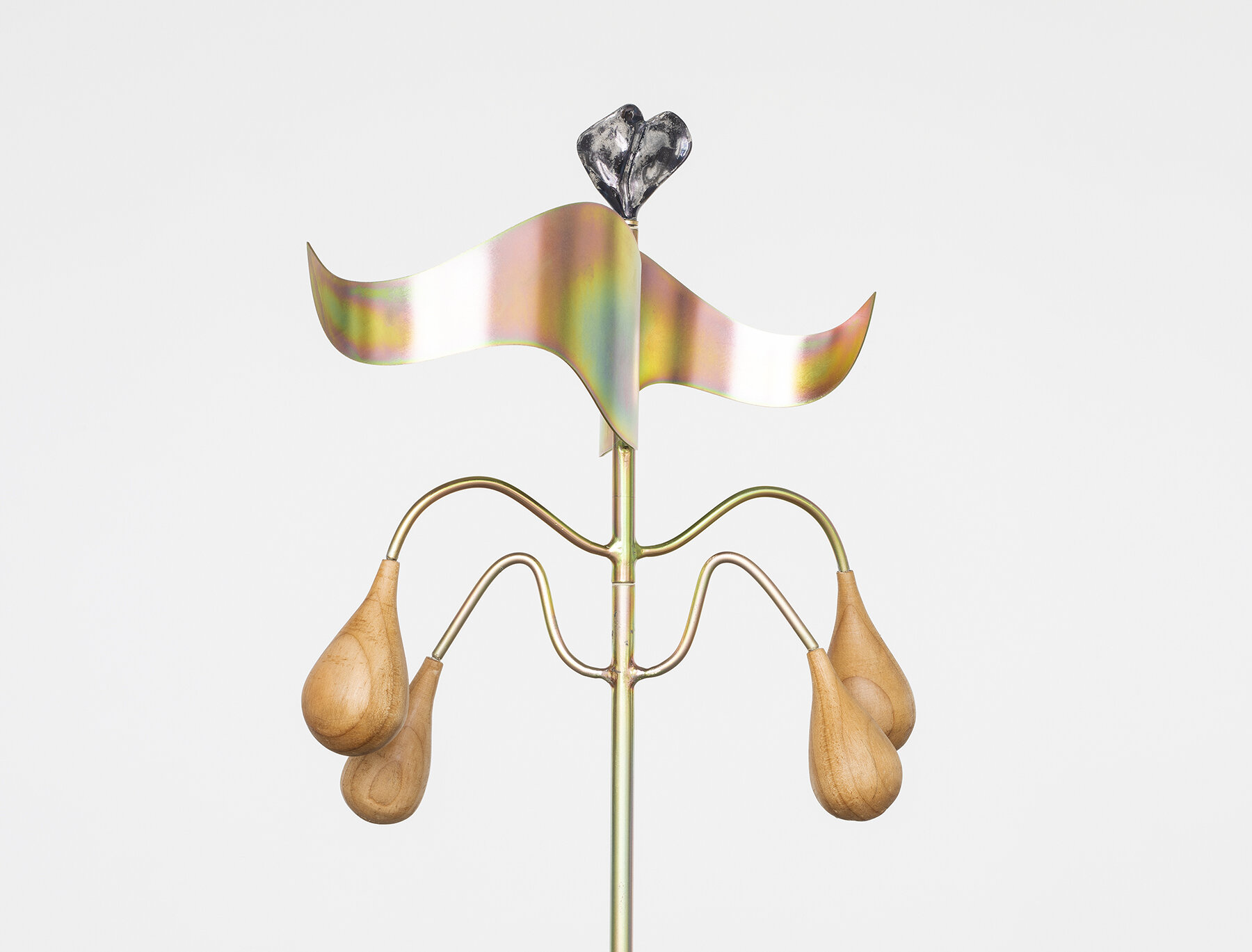
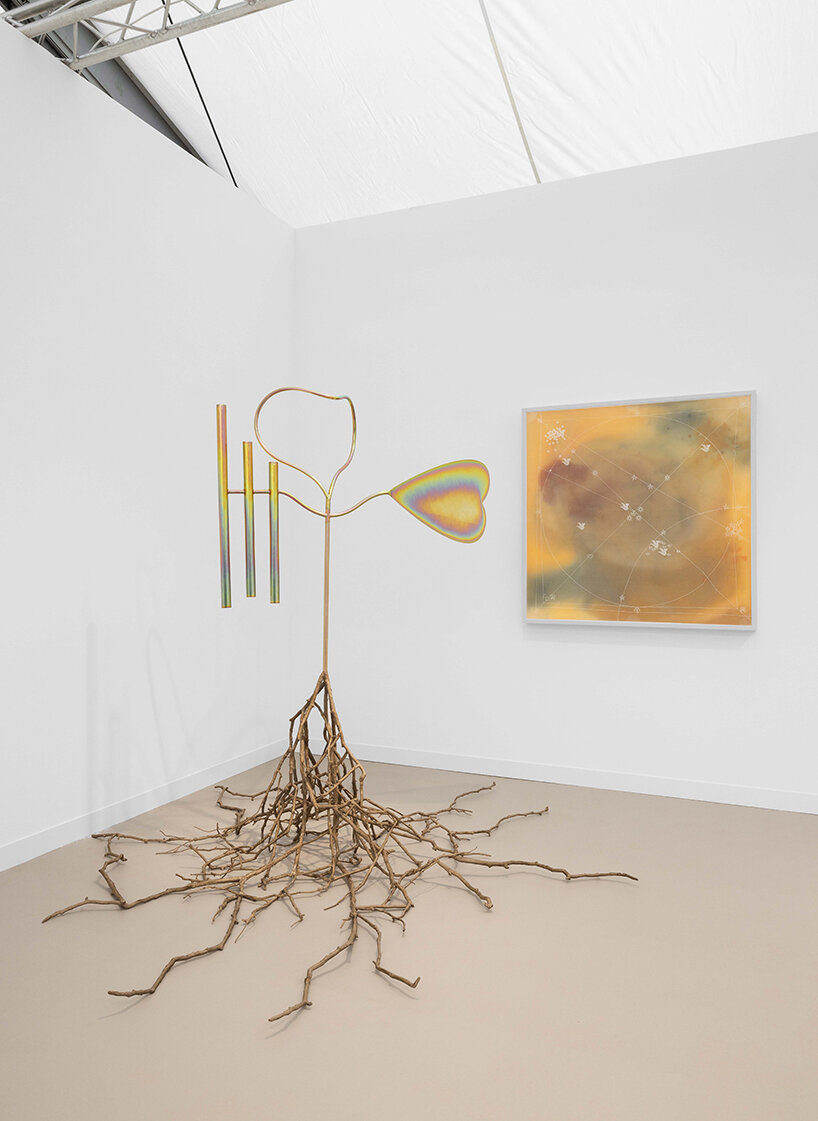
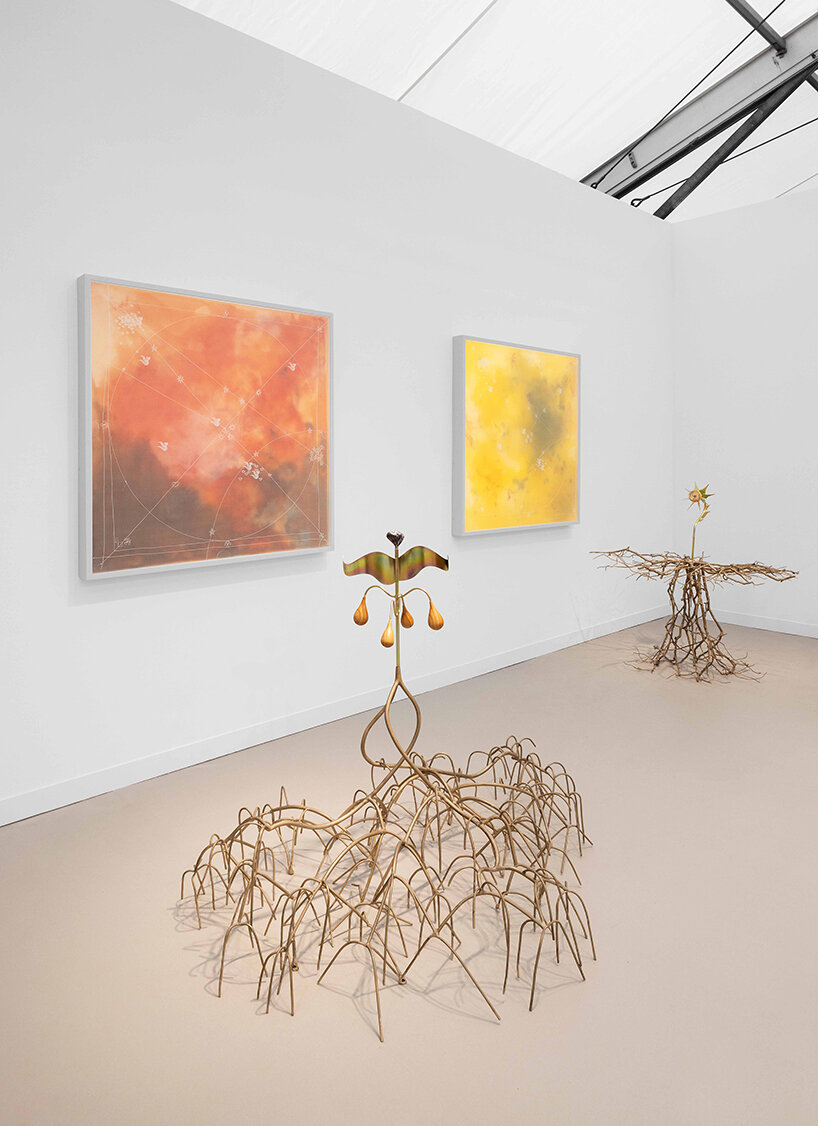
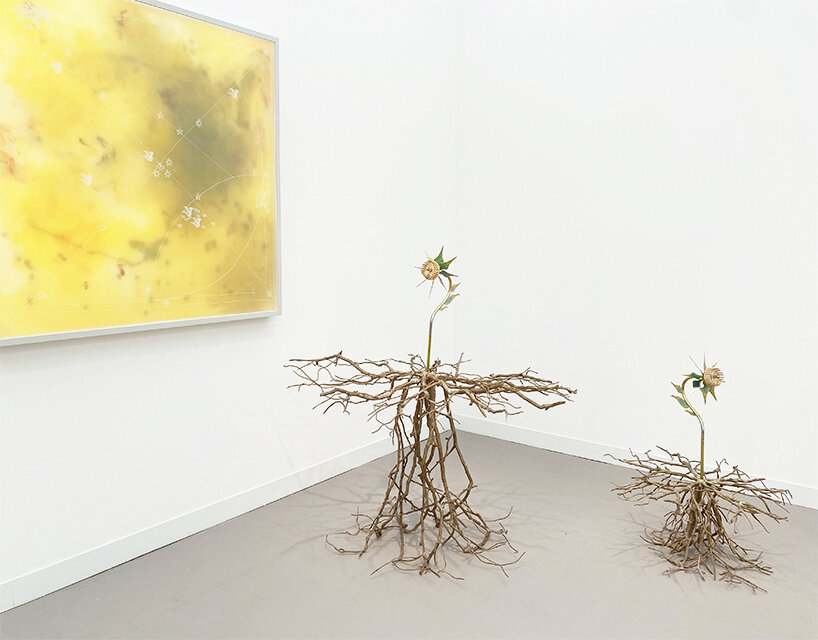
The works presented at Frieze London 2023 mirror those on the Colorado plains on a 1:1 scale. Each of the sculptures, crafted from zinc-passivated recycled steel, hand-carved hardwood, stoneware, and luster glaze, is intended as beneficial in its way. These wind-activated divination instruments are like acupuncture needles for the landscape, releasing spirits, untwisting knots, regenerating the soil, and inducing transmigration. Contrary to historical earthworks that sought to reshape the land, capitalize on spectacular weather phenomena, or harness the Earth’s energy flows, Marguerite Humeau’s interventions celebrate what has come before and alleviate the pain inflicted upon the land by invasive human activities.
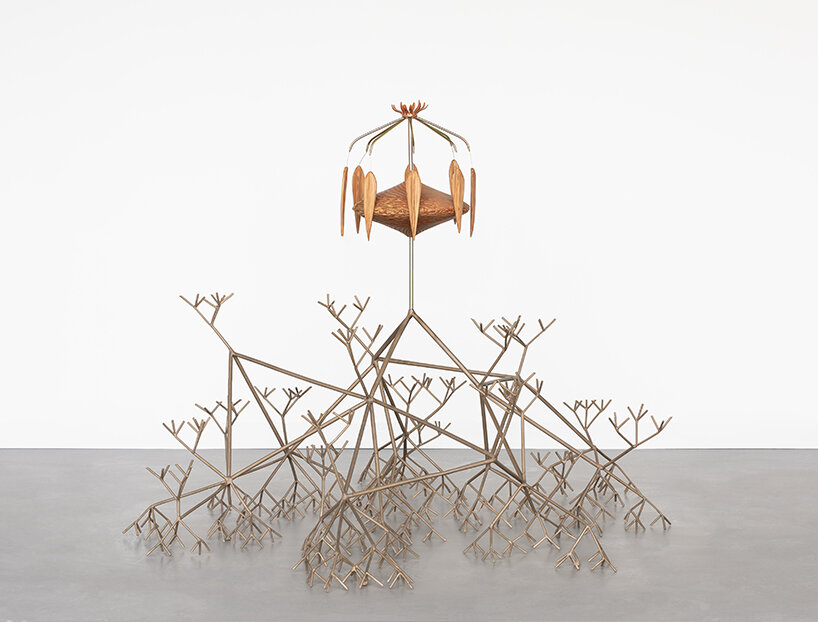
orisons: exposing the roots
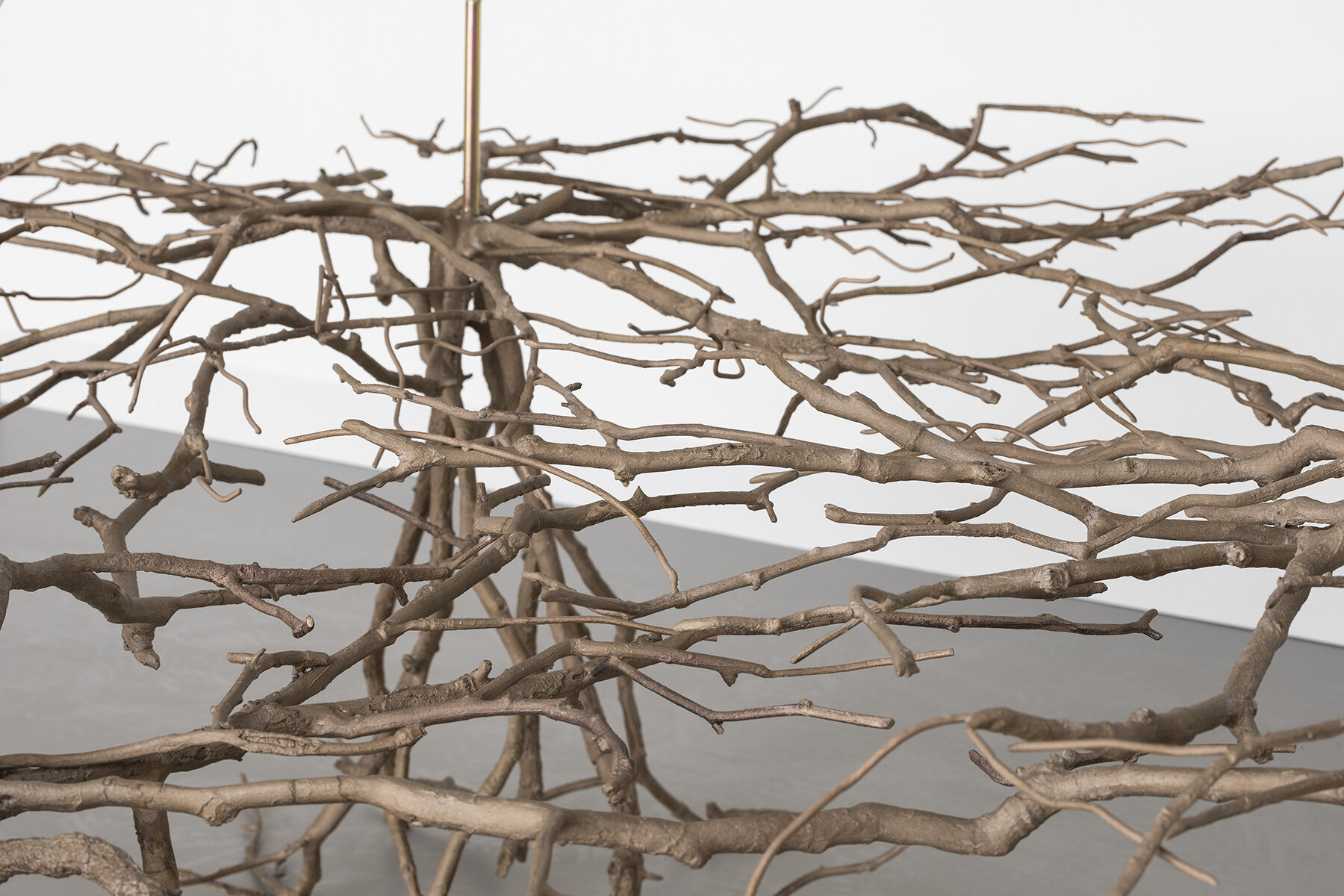
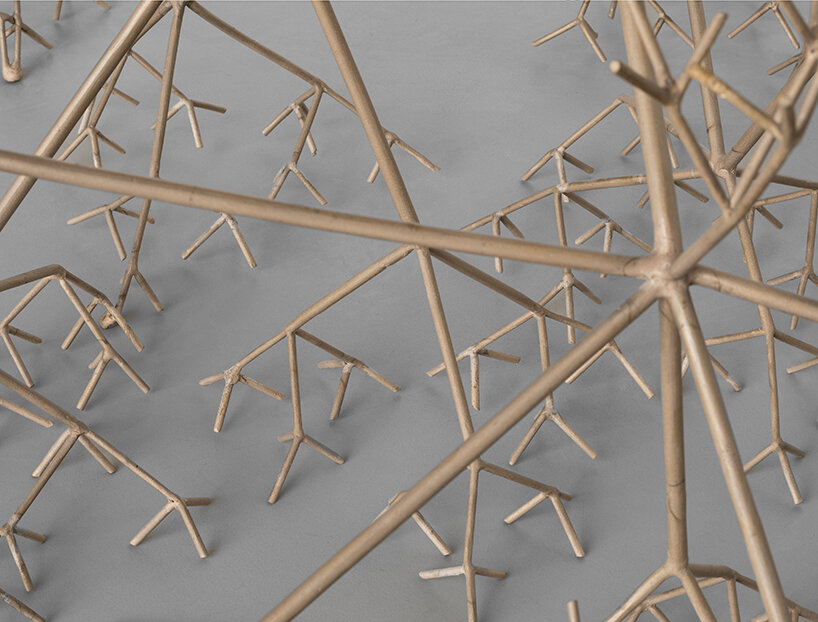
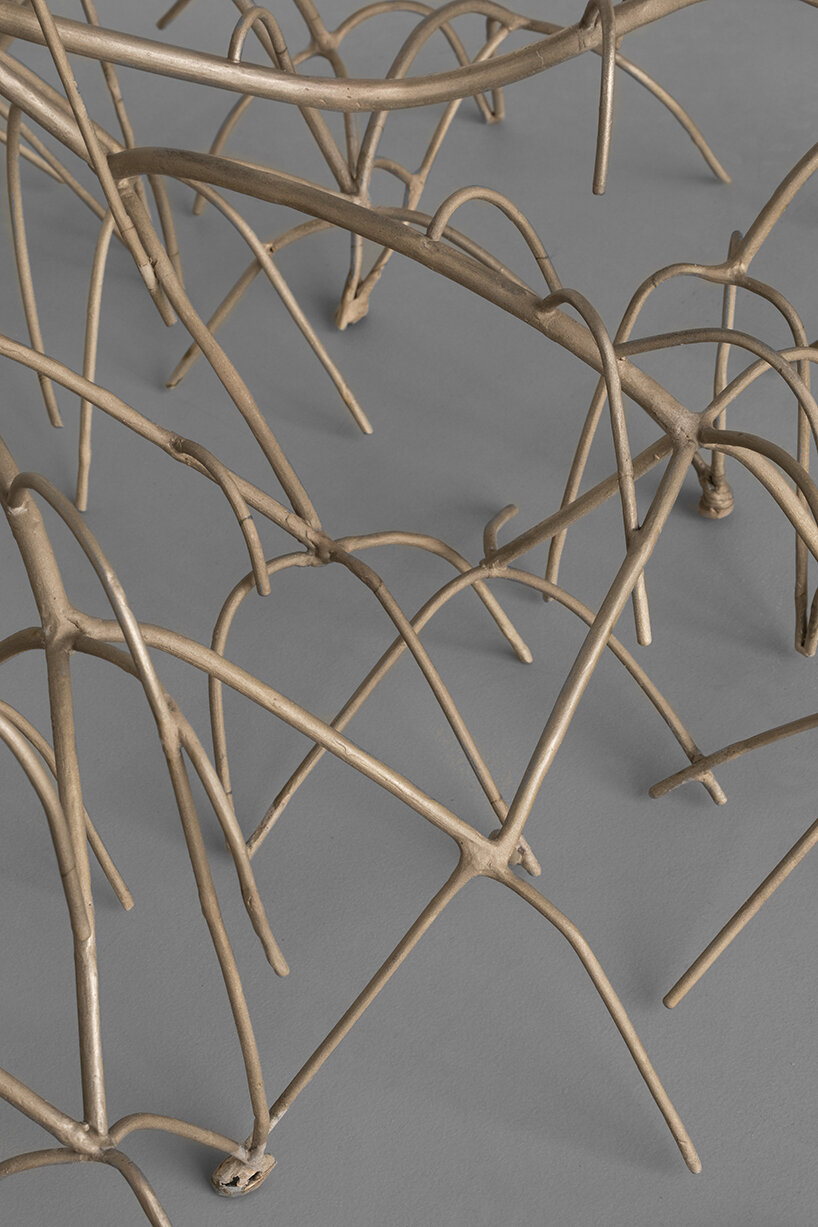
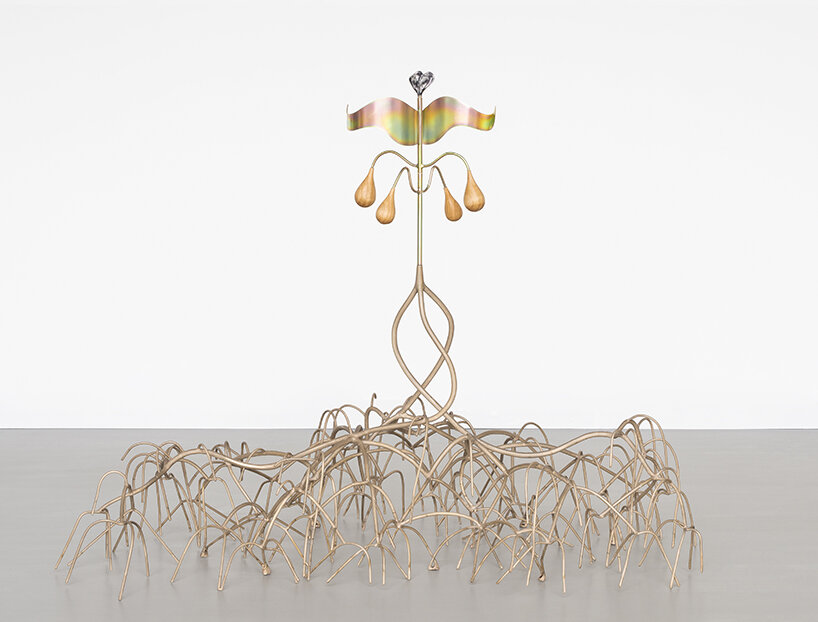
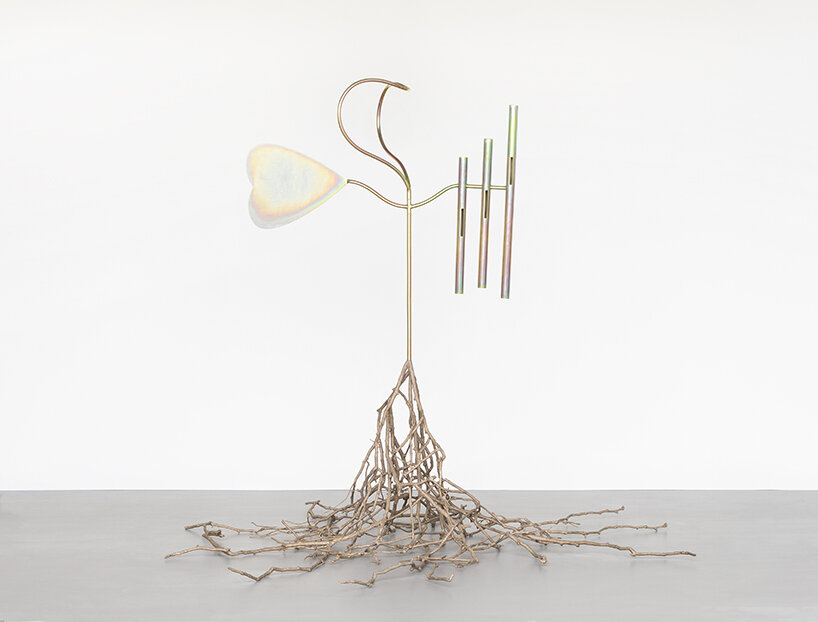
For Frieze, the artist has unearthed these sculptures to reveal their roots as if they had been pulled up from the sandy desert soil and transposed here. To create the underground rhizomes, Humeau reached out to programmers who ‘grew’ the roots in an immaterial space using auto-generative algorithms, eschewing control over the design process. They were then created in wax, cast in bronze, and assembled to form the entangled network of roots that spread across the booth floor, creating a potentially ever-evolving landscape. With these works, Marguerite Humeau once again revisits the Doctrine of Signatures. This little-known medieval theory explains how humans discovered medicinal uses of some plants based on the physical characteristics that hint at their benefits. In a mystical take on the modernist adage ‘form-follows-function’, each type of wind instrument is inspired by specific plants foraged or animals found on the land and is assigned a healing purpose or ‘signature’ by the artist. The roots are then based on the actual root systems of each plant.
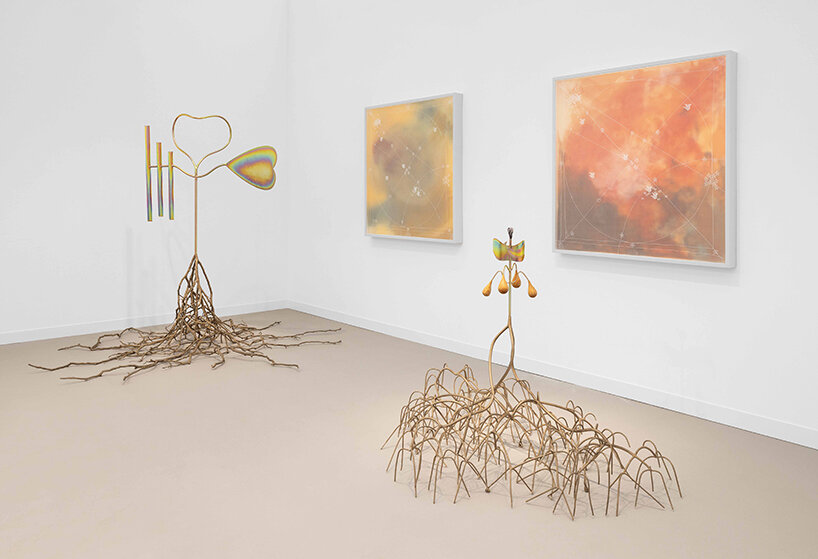
The Spurge Dances comprise an upper part akin to a flower whose shape recalls fallopian tubes symbolizing reproduction. At the same time, its roots spread like a mangrove, unfolding in generous curves as if dancing and spinning. The Russian Thistle Spins are based on Russian Thistle (or tumbleweed) seeds. Like the plant, it is anchored by only a few roots and can take off on long journeys. The nomadic nature of the plant is recalled by the vertical roots (holding a weight or keeping the piece grounded) and horizontal, almost dancing beneath the surface, ready to take off once again. The cosmos is present in the Horseweed Pendulum; its flowers are like small stars that together form massive constellations. Its roots correspondingly resemble lightning or the lines drawn between celestial bodies.
The Sandhill Crane Songs instrument acts as a flute echoing the endemic Sandhill crane’s cry, while its roots take on the form of cells and conjure up images of interconnection and neural networks. When considered in its entirety, this network of roots speaks to what the artist calls an ‘inhabited loneliness’: a feeling experienced while in Colorado, that one is alone yet entangled and connected to a network of life spanning a universe so vast one cannot comprehend it.
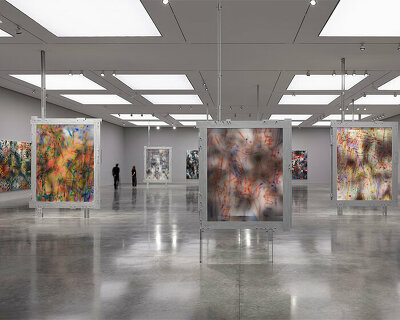
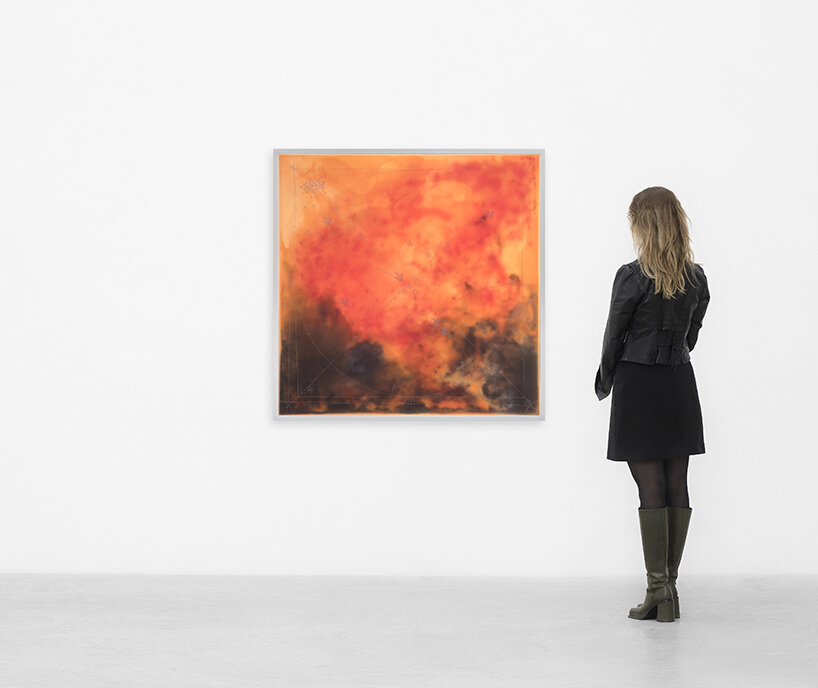
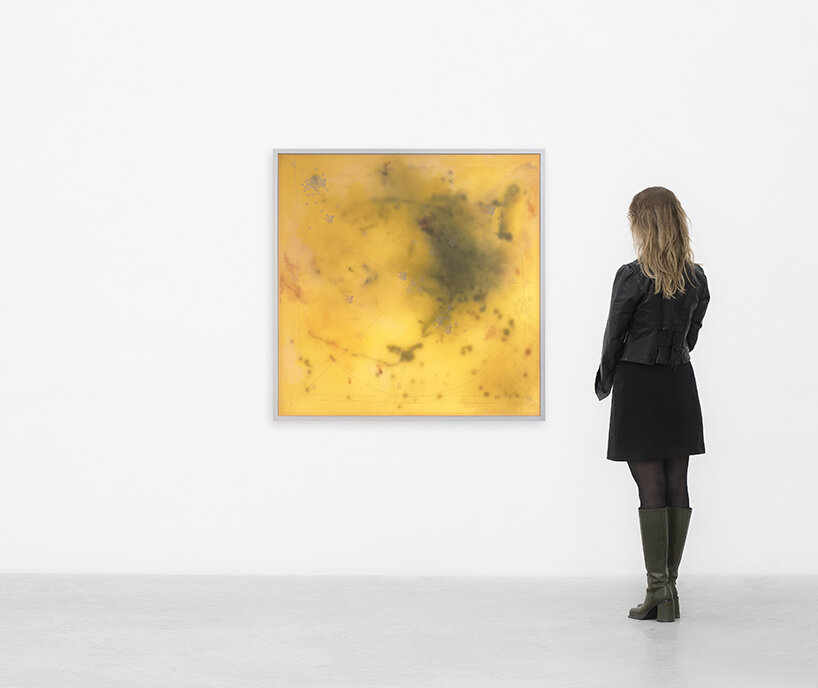
On the booth walls of Frieze London 2023 hang a series of works combining hand-cast wax and fine embroidery. Humeau used the map created for Orisons as a departure point, which echoes astrological charts and their lines or ‘aspects’ marking the relationships between planets. Rather than the celestial vault, Humeau is attempting to annotate the land, its spirit, its inhabitants, and its feelings: ‘Water ley lines’, ‘pipelines’, and ‘cattle enclosures’ are traversed by ‘mixed emotions’, dotted by ‘dying alone animal graveyards’, and skirted by ‘a portal to the spirits’. Here, the artist has recreated symbols and diagrams sewn onto mesh textiles, removing all occurrences of text. Each drawing is suspended in translucent layers of hand-colored and cast wax that simultaneously evoke shifting rain and weather patterns and light changes above Orisons’ land.
The swirling colors and superimposition of forms create a glow from within, reminiscent of crystal balls or aura readings, while the delicate lines recall palmistry diagrams blurred through an extra layer of sediment. This environment allows visitors to Frieze to experience in part the immensity of Marguerite Humeau’s ambitious project; in her words, the work is about universal themes of ‘transience and resilience, life and death,’ as well as ‘coming from and returning to dust.’ Viewers are invited to immerse themselves in an attempt to celebrate life, be it human or non-human, and reconnect and rebuild age-old bonds that have become forgotten, damaged, or broken.
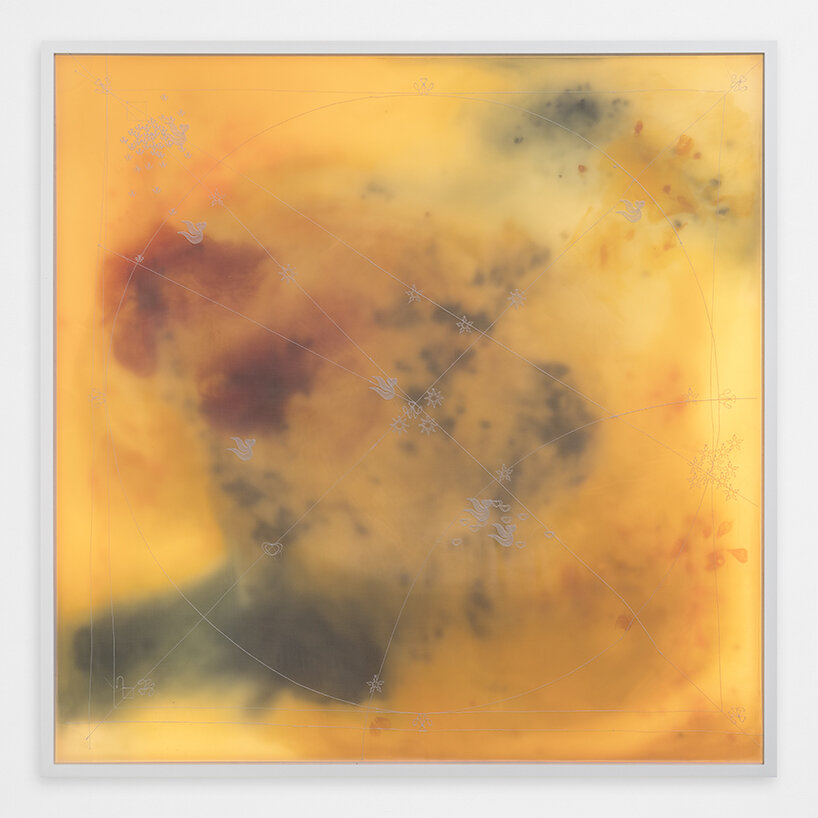
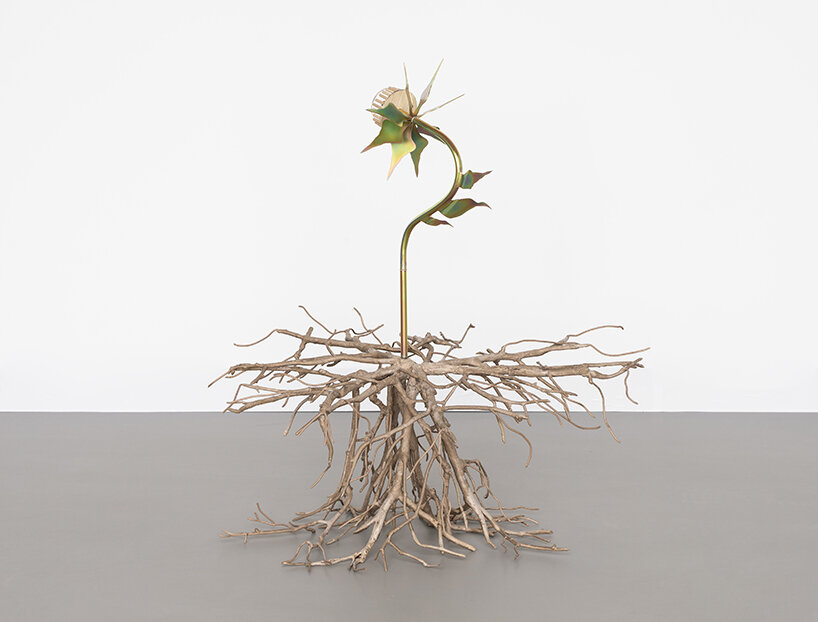
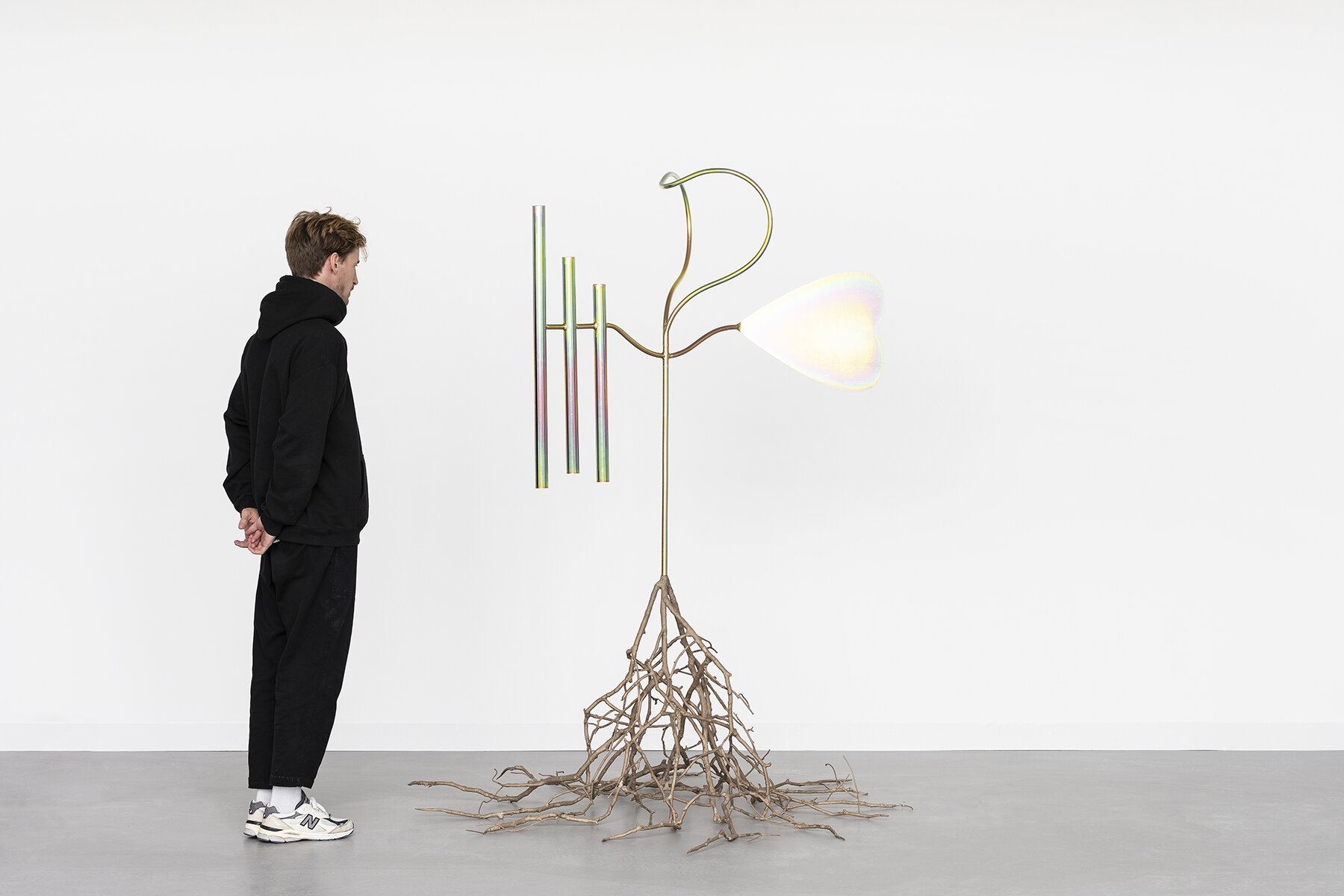
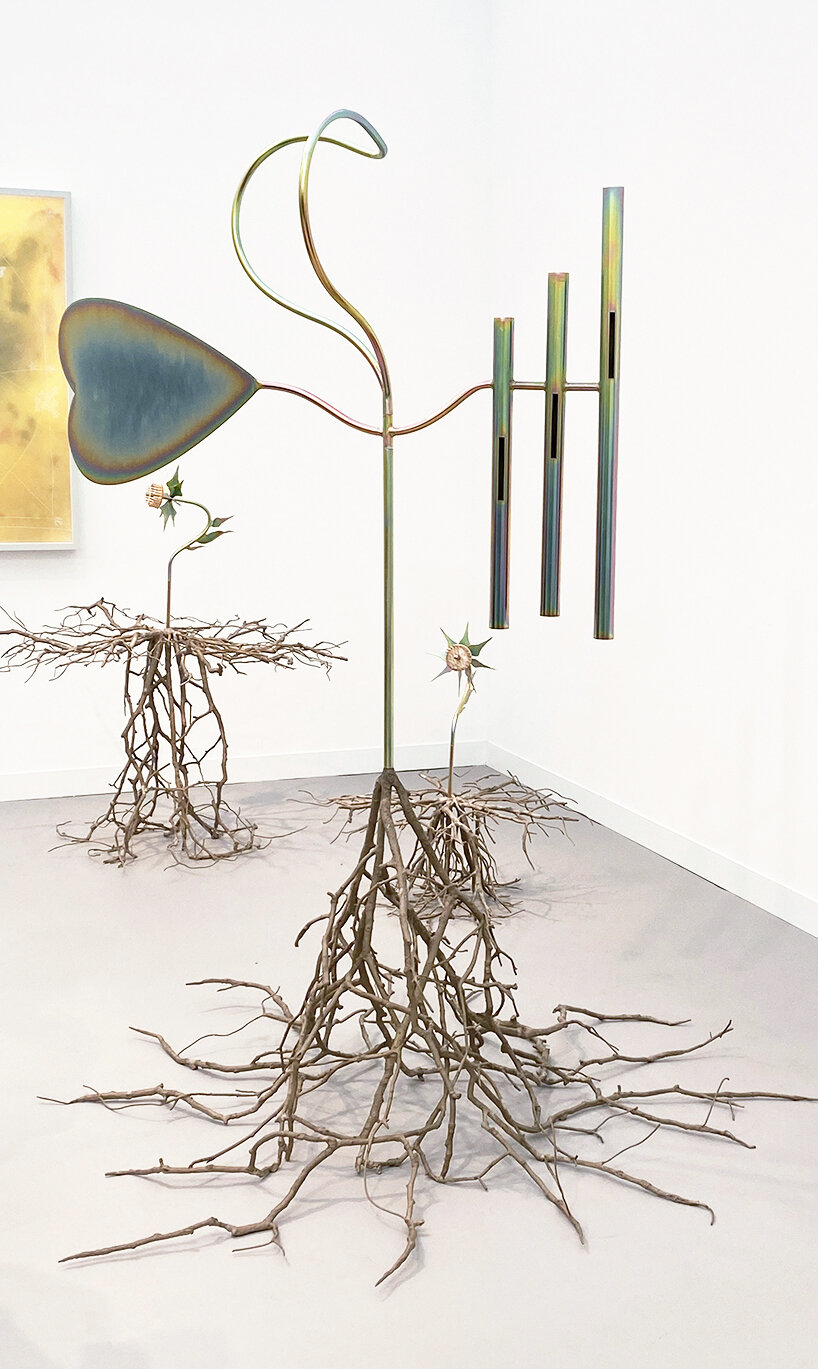
image © designboom




1/13
project info:
name: Orisons
artist: Marguerite Humeau
program: Frieze London 2023 | @friezeofficial
shop
your own online design shop — no sales commission collected