
monuments of memory: standout installations at art basel unlimited 2026
monumental sculptures, installations, and ambitious environments spill across the exhibition hall, inviting visitors to experience art as a space to inhabit.
prefer designboom on googlemonumental installations take over art basel unlimited 2026
Art Basel Unlimited has long been the fair’s testing ground for works that exceed the limits of the traditional booth. Monumental sculptures, interactive installations, and ambitious environments spill across the vast exhibition hall, inviting visitors to experience art not as an object on display but as a space to inhabit. This year’s edition demonstrates that scale alone is no longer enough. Instead, many of the strongest presentations use their physical presence to explore intimacy, vulnerability, and collective memory.
From labyrinthine architectures and suspended textile landscapes to reclaimed hospital sheets and ritual vessels, the featured projects transform familiar materials into contemplative monuments. Together, they suggest that contemporary monumentality is less concerned with permanence than with the stories objects carry and the bodies that move among them.

bruce nauman turns architecture into psychological space
Bruce Nauman’s ‘Dead End Tunnel Folded into Four Arms with Common Walls’ (1980) remains one of the exhibition’s most compelling encounters. The sprawling sculptural model unfolds into four twisting corridors that taper, expand, and ultimately lead nowhere, creating a space that is simultaneously architectural and deeply psychological. By frustrating orientation and movement, Nauman transforms the simple act of walking into an experience of uncertainty, reminding viewers that physical space can profoundly shape perception.

theaster gates builds an archive through ritual
In ‘A libation in Uncertain Times’ (2024), Theaster Gates assembles more than 1,000 sake bottles across traditional wooden shelving, creating a monumental still life that reads as both archive and offering. The subtle variations in glaze and arrangement elevate everyday vessels into symbols of remembrance and cultural continuity. Through accumulation and careful composition, Gates demonstrates how ritual objects can become repositories of history, community, and resilience.

maria loizidou weaves migration into space
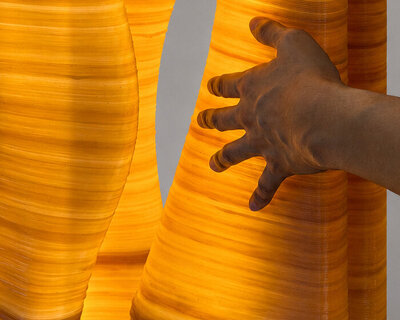
Maria Loizidou’s ‘Where Am I Now?’ (2025) suspends hand-woven stainless-steel mesh and aluminum forms into an ethereal environment that blurs the boundaries between architecture and textile. The work evokes migratory routes, fragile ecosystems, and networks of belonging, while its translucent surfaces shift constantly with the viewer’s movement. Monumentality here emerges not through mass but through delicacy, inviting contemplation rather than spectacle.

zahrah alghamdi transforms textiles into landscapes
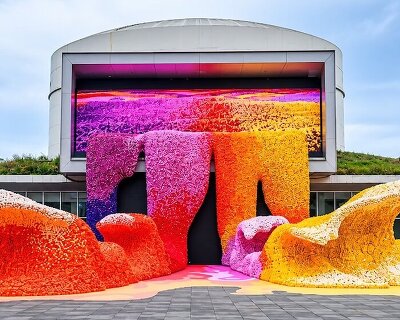
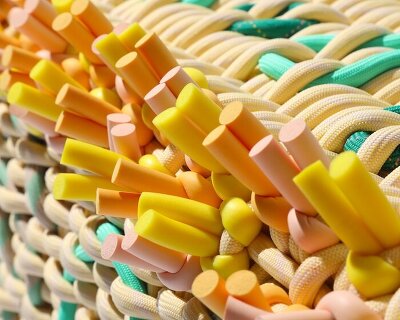
Stretching across the exhibition floor, Zahrah Alghamdi’s ‘Streams Move Oceans’ (2026) assembles lacquered woven fabrics into an expansive terrain that recalls geological formations and shifting borders. The artist’s repeated gestures accumulate into a meditative landscape where threads become topographies and tactile surfaces evoke both endurance and vulnerability. The installation turns humble materials into an immersive reflection on memory and place.

antony gormley dissolves boundaries between body and building
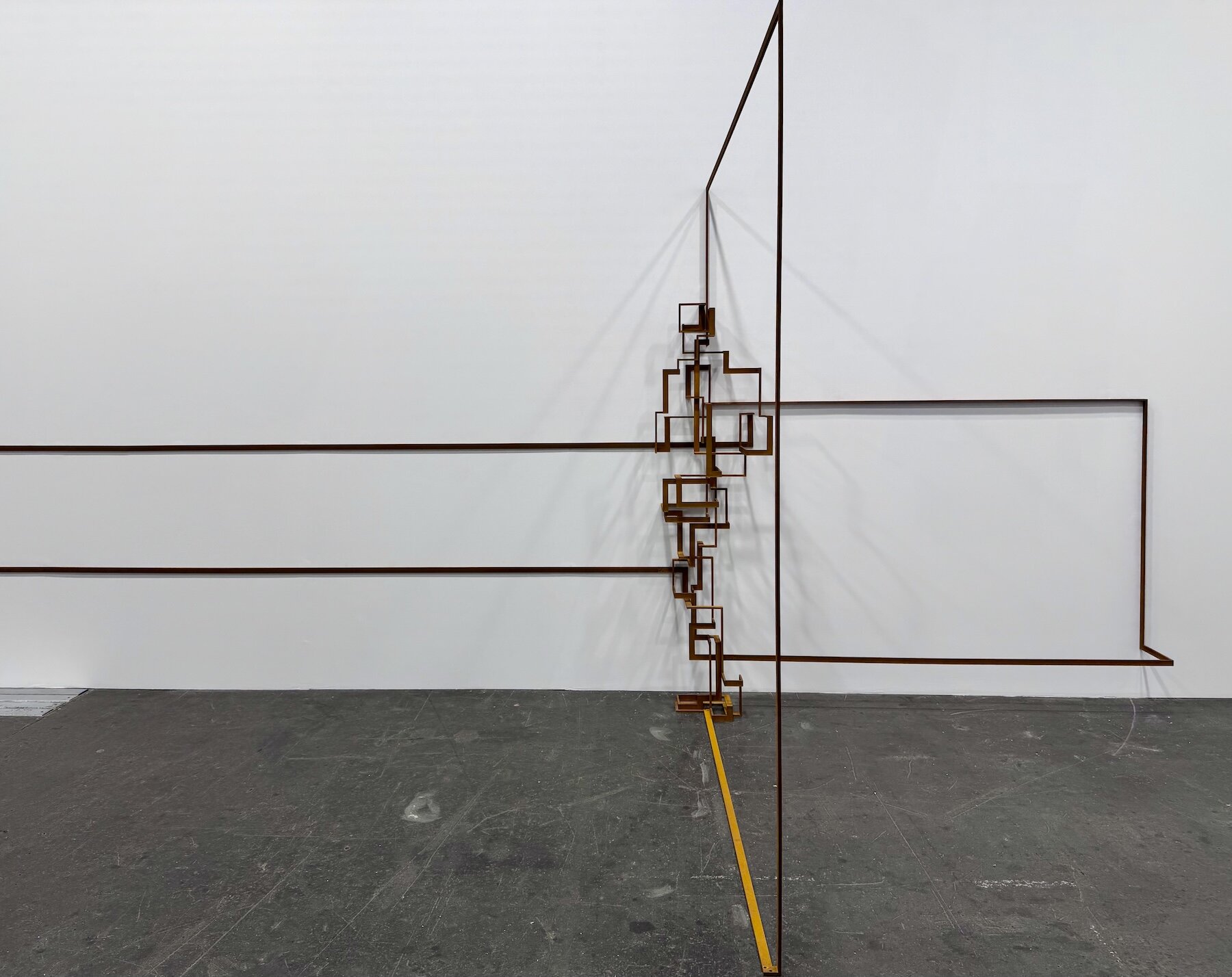
With ‘HERE and NOW’ (2024), Antony Gormley extends his long-standing investigation into the relationship between the human body and architecture. Ribbon-like corten steel traces the outline of a figure while simultaneously reaching into the surrounding space, allowing sculpture and environment to merge. The result is less a static object than a drawing in three dimensions, encouraging visitors to reconsider where the body ends and architecture begins.
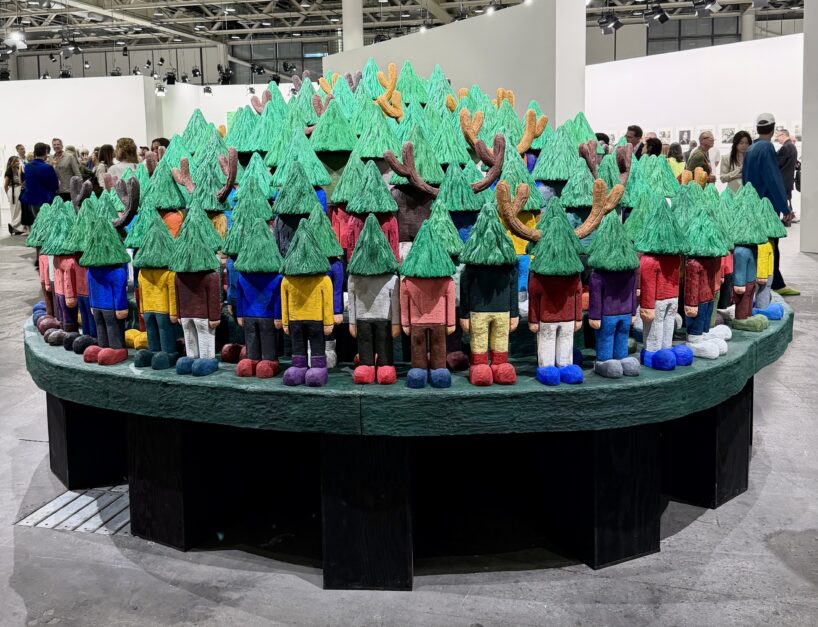
yuichi hirako blurs nature and humanity
Yuichi Hirako’s ‘Tree, Forest, Mountain’ (2025) populates Unlimited with more than 7,500 hybrid figures whose human bodies sprout tree-like forms in place of heads, creating a sprawling ecosystem that is at once playful and unsettling. Drawing on the artist’s recurring motif of botanical-human hybrids, the installation questions anthropocentric ideas of progress by envisioning a world in which nature quietly reclaims its agency. As visitors weave through the densely assembled forms, the work shifts between sculpture and landscape, transforming the exhibition floor into an immersive meditation on coexistence, ecological imbalance, and humanity’s increasingly precarious relationship with the natural world.
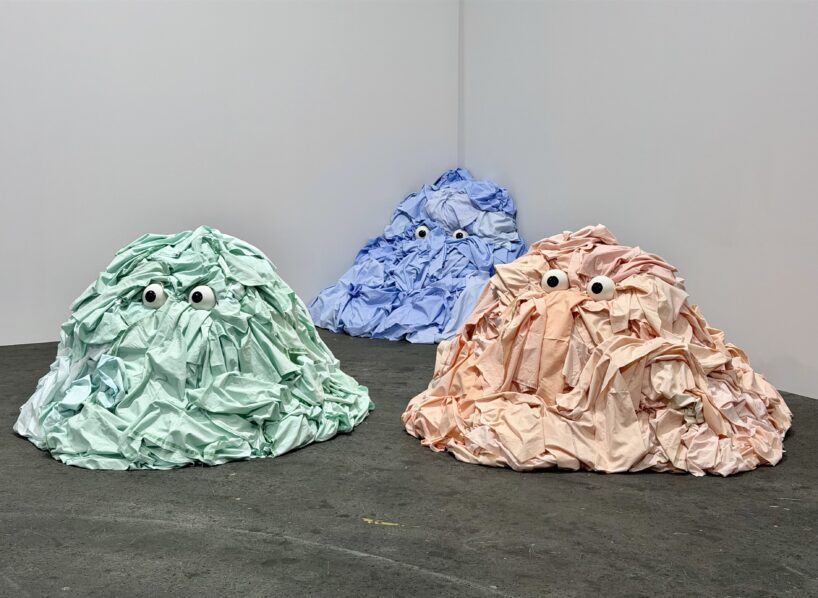
benoît piéron finds wonder in hospital sheets
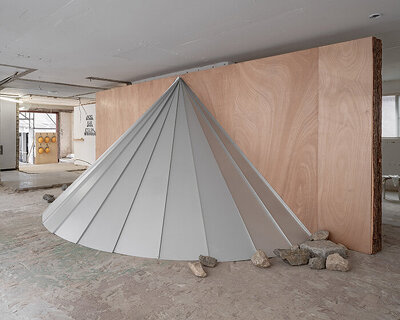
Benoît Piéron’s ‘Cairns’ (2026) transforms recycled hospital bedsheets into softly folded mounds that resemble navigational markers scattered across the landscape. Embedded ceramic eyes emerge playfully from the fabric, infusing the installation with an uncanny sense of personality. By reclaiming materials associated with illness and recovery, Piéron creates an environment where vulnerability is reimagined as imagination and care becomes monumental.
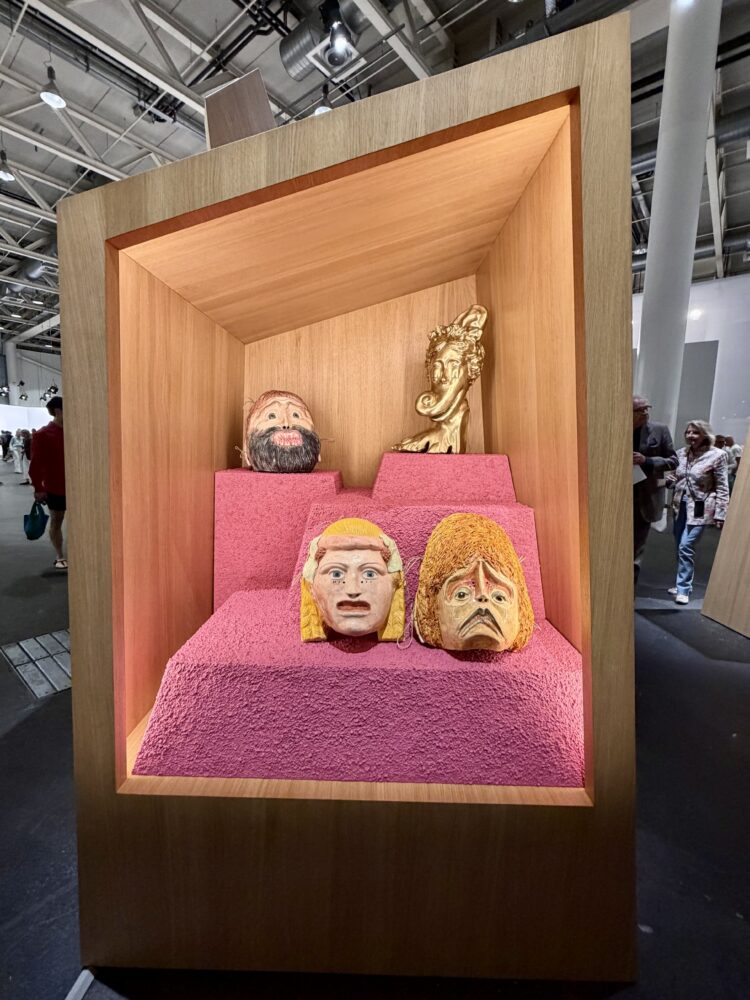
wael shawky reconstructs mythology for the present
Wael Shawky’s ‘I Am Hymns of the New Temples’ (2023-2026) expands his exploration of historical narratives into a sculptural environment populated by six monumental figures. Drawing on Greco-Roman mythology while questioning fixed interpretations of history, the installation blurs ancient and contemporary worlds. Through its theatrical scale, Shawky proposes mythology not as a relic of the past but as a living framework through which societies continue to understand themselves.
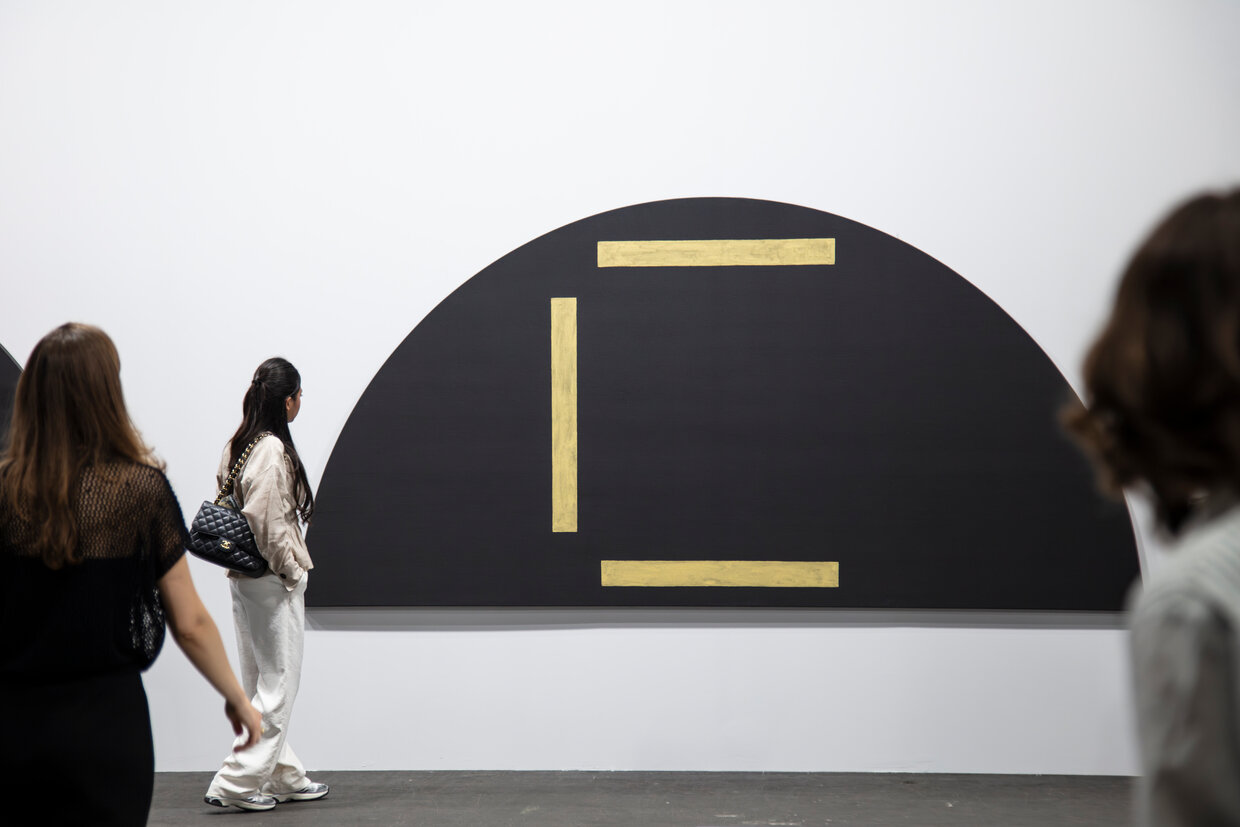
ed ruscha revisits the alphabet
Ed Ruscha’s ‘A, B, C’ (1985) transforms the building blocks of language into a monumental installation, distilling communication down to its most fundamental elements. The work reflects the artist’s enduring fascination with typography and the visual power of words, using scale and repetition to encourage fresh ways of seeing the familiar. By isolating the first three letters of the alphabet, Ruscha turns an everyday sequence into a quietly playful meditation on meaning, perception, and cultural memory.
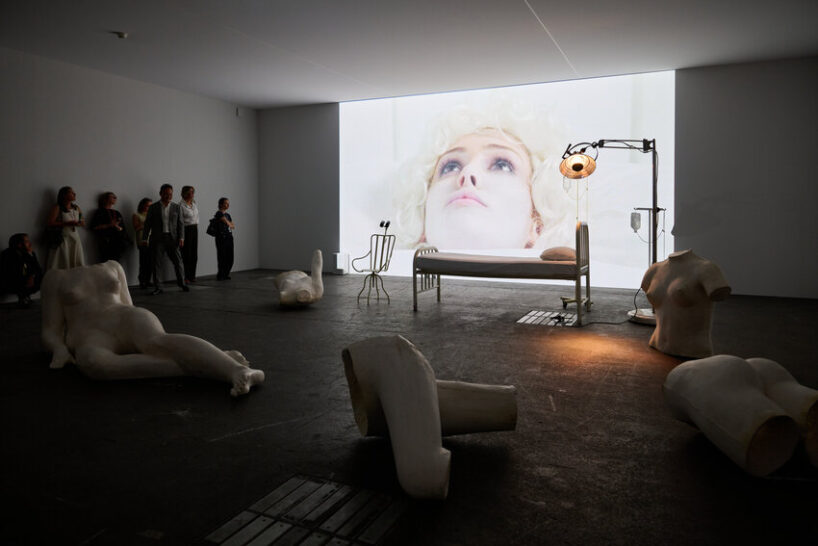
vanessa beecroft choreographs a contemporary myth
Drawing inspiration from the Japanese goddess of creation and death, Vanessa Beecroft’s ‘Untitled (Izanami)’ (2026) unfolds as a live tableau where performance, sculpture, and ritual converge. The carefully orchestrated composition explores themes of femininity, rebirth, and vulnerability, inviting viewers into a space that feels both timeless and deeply theatrical. By referencing mythology through the living body, Beecroft transforms Unlimited into a stage where ancient narratives are reimagined for the present.
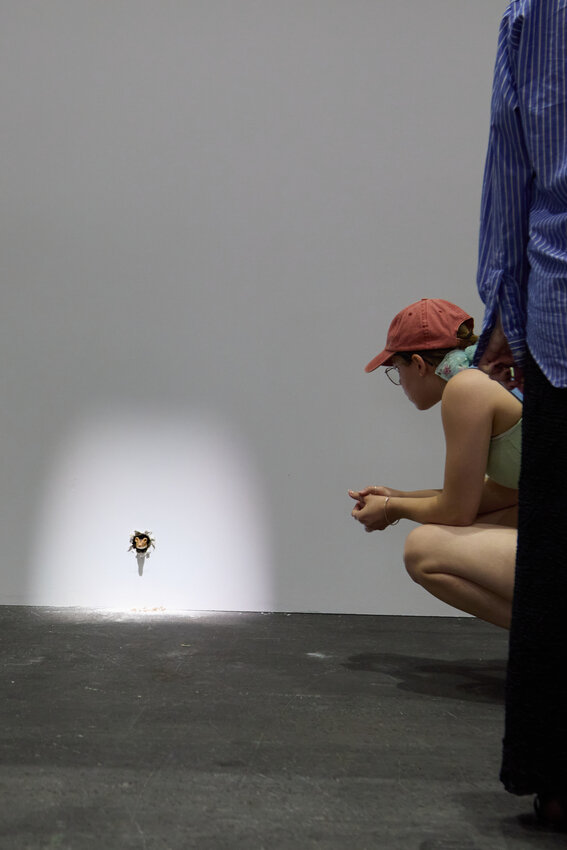
ryan gander lets chance lead the way
Ryan Gander presents ‘I’ve felt everything I’m going to feel – The Unspeakable World’ (2026), the latest work in his celebrated series of animatronic mice. Emerging from the debris of a hole in the wall, a striped field mouse delivers a philosophical monologue exploring the nature of language, consciousness and attention. Voiced by the artist’s twelve-year-old daughter, the work transforms an intimate encounter into a meditation on perception, inviting viewers to kneel and listen rather than be overwhelmed by spectacle.
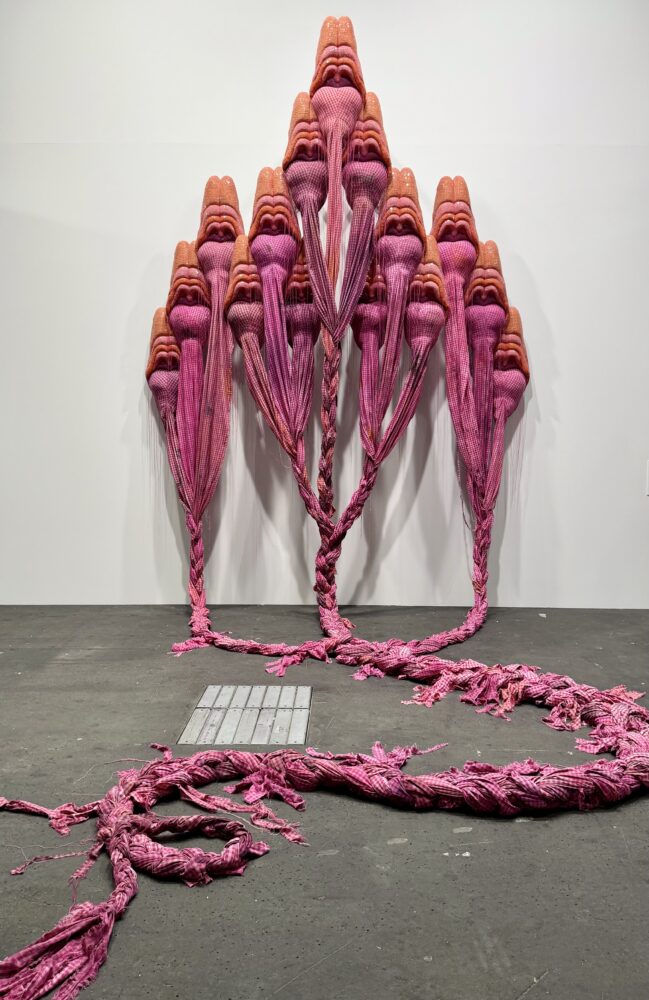
zsófia keresztes gives language a physical form
In ‘Mother Tongue II.’ (2026), Zsófia Keresztes imagines language as a tactile organism. Glass mosaic reliefs open to reveal braided textile tongues that emerge into space, suggesting communication as something inherited through touch, intimacy, and shared experience rather than grammar alone. The work’s vibrant materiality transforms abstraction into embodiment, making language itself feel sculptural.
marius steiger freezes motion into monument
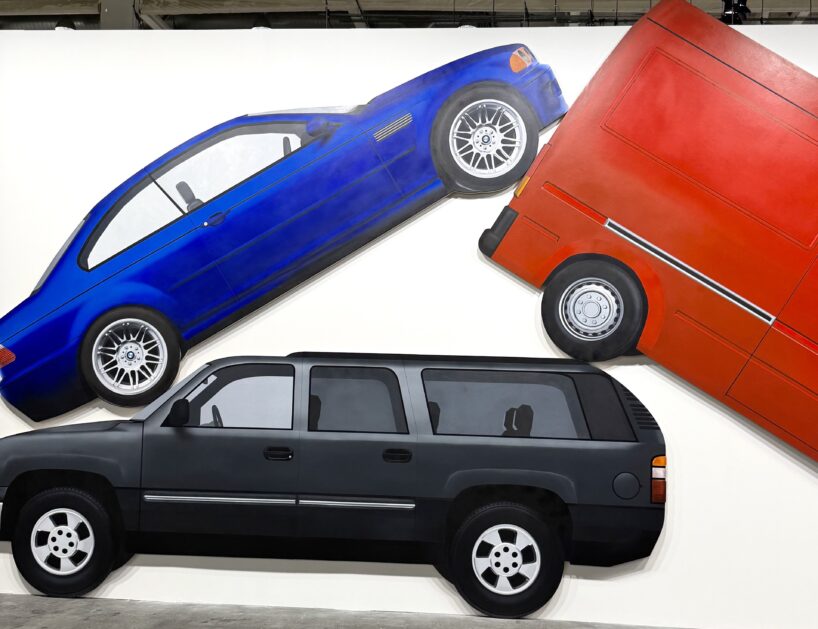
Marius Steiger’s ‘Five Cars (Terror Management)’ (2026) presents five life-sized shaped paintings of automobiles locked into a precarious cantilevered formation. Immobilized and suspended, the vehicles abandon their function as machines of movement to become symbols of aspiration, identity, and mortality. By freezing icons of speed into still life, Steiger creates a contemporary vanitas that questions society’s obsession with progress and consumption.
andreas lolis monumentalizes the overlooked
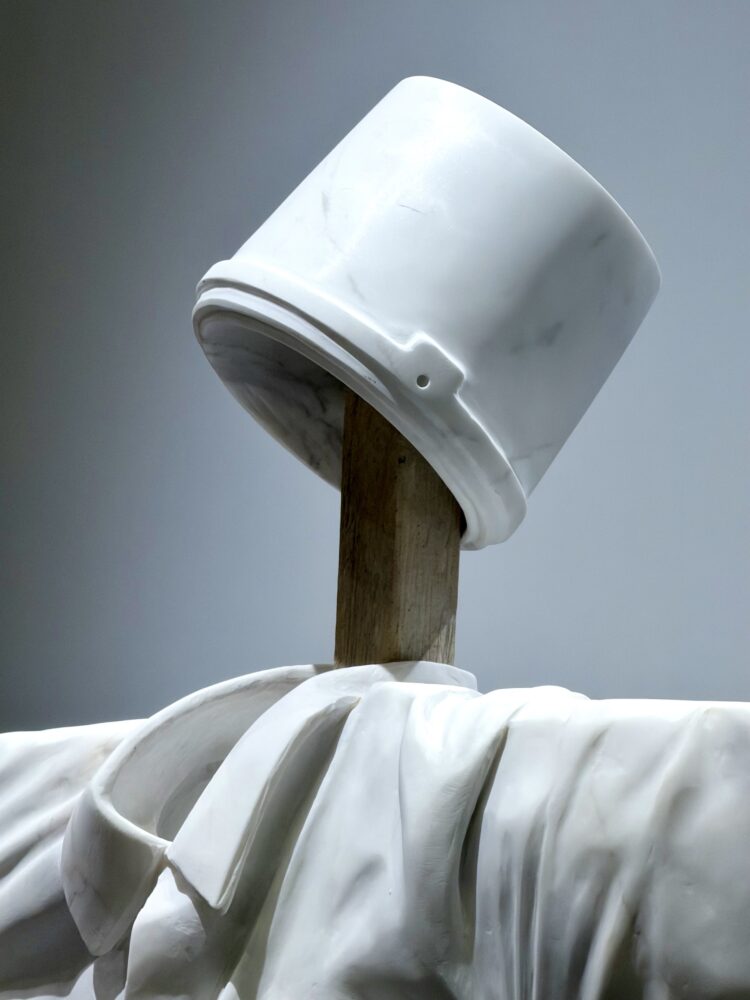
Andreas Lolis’s ‘Army of Scarecrows’ (2026) elevates improvised rural figures into meticulously carved marble sculptures. Constructed from garments, wood, and discarded materials before being translated into stone, the scarecrows occupy an unexpected space between permanence and fragility. The installation quietly honors labor and everyday ingenuity while challenging conventional hierarchies of monument and memorial.
rochelle goldberg unravels cycles of resurrection
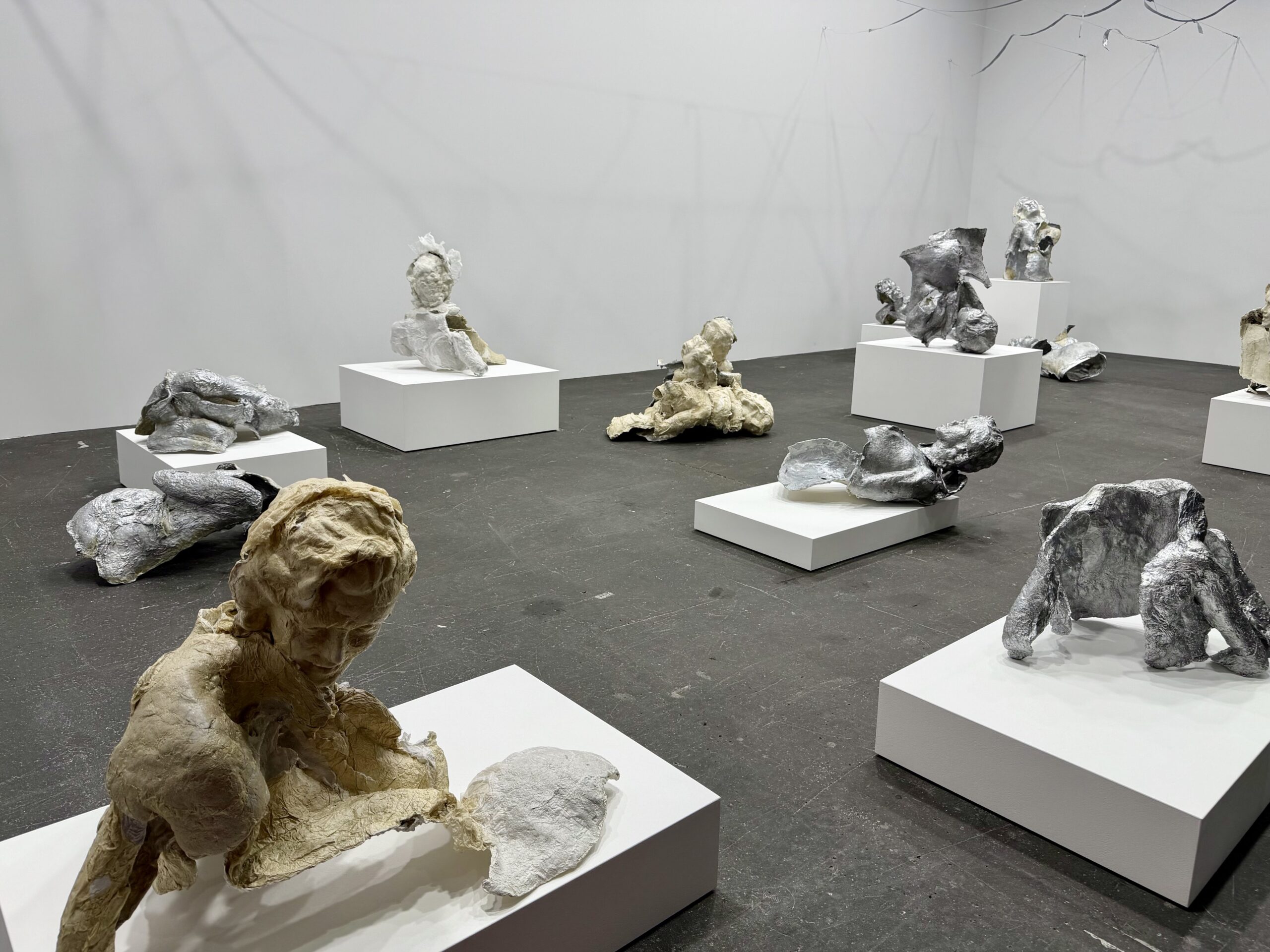
Rochelle Goldberg’s ‘precious stones’ (2026) examines transformation through a layered sculptural vocabulary that draws connections between historical representation, bodily reproduction, and symbolic renewal. Referencing both Mary Magdalene and the fallen tower, the installation refuses singular interpretation, instead presenting monumentality as an evolving process shaped by accumulation and reinterpretation across time.
a new language of monumentality
Taken together, these projects reveal an edition of Art Basel Unlimited that privileges emotional resonance over sheer scale. Cars become meditations on mortality, hospital sheets become navigational markers, woven threads become landscapes, and ritual vessels become archives of collective memory. Rather than celebrating monumentality as power, the exhibition embraces it as a means of making fragile histories visible.
In doing so, Unlimited demonstrates that the most expansive gestures in contemporary art are often those that create room for reflection. Across architecture, textiles, sculpture, and installation, this year’s standout works invite visitors not only to witness monumental forms but to move through them, inhabit them, and ultimately see themselves within them.
exhibition info:
name: Unlimited
fair: Art Basel 2026
public days: 18-21 June, 2026
shop
your own online design shop — no sales commission collected