nari ward traces history with copper for breathing directions at lehmann maupin
the exhibition serves as an investigation into the context, history, materials, objects and phenomena of places.
prefer designboom on google[FEATURED]
from now until november 7, 2015, lehmann maupin, new york presents the exhibition ‘breathing directions’ by nari ward as an investigation into the context, history, materials, objects and phenomena of places. ward’s new ‘breathing panels’, among other works, trace the meaning of various symbols and personal journeys, questioning how such signs can be simultaneously visible and unfamiliar to those unaware of their meaning.
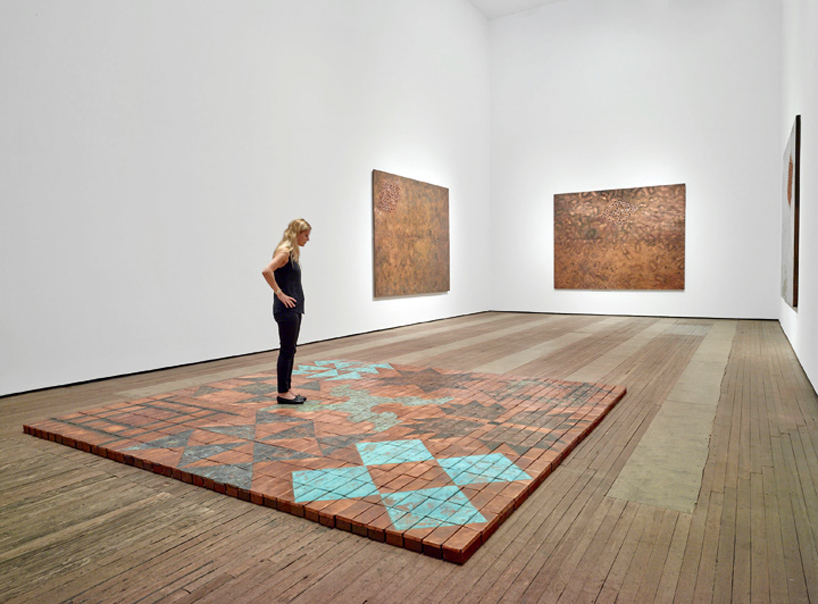
‘ground’ is composed of over seven hundred masonry bricks covered in sheets of copper
all photography by max yawney / courtesy the artist and lehmann maupin, new york and hong kong
sited throughout the gallery’s inner walls are the ‘breathing panels’. these large-scale abstract works on copper each include an imprint, which ward has created by applying darkening patina to the bottom of his shoes and stepping on the copper panels, leaving a trace of his performative gesture. ward has punctured geometric patterns into each panel, which reference traditional congolese ‘cosmograms,’ an ancient prayer symbol that represents the cycle of birth, death, and rebirth.
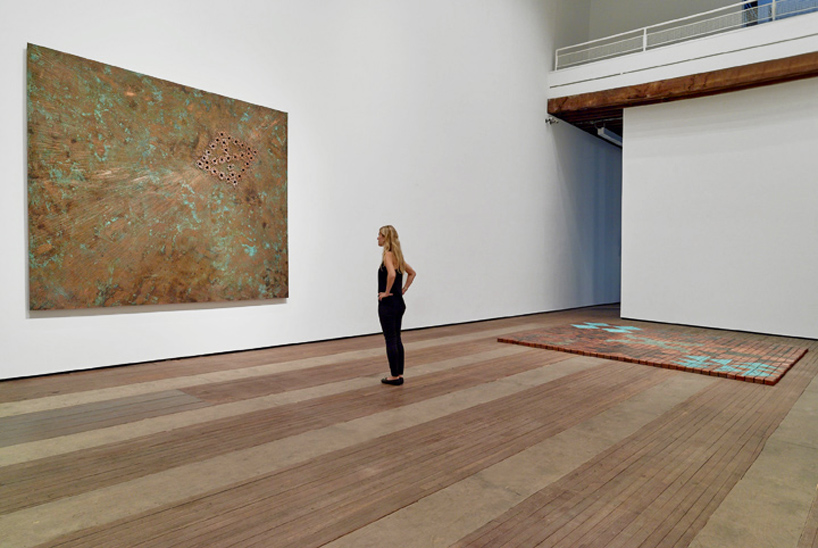
works on copper are created by applying darkening patina to the bottom of shoes and stepping on the canvas
the artist’s first encounter with these symbols came during a visit to the first african baptist church in savannah, georgia — part of the underground railroad — and where he came upon 26 distinct sets of patterns. holes were cut in the floorboards to allow escaping slaves to breathe as they moved secretly under the church. the patterns included on the ‘breathing panels’ are surrounded by copper nails and thin lines excised into the sheets, drawing the viewer’s attention to the seemingly deep voids. the three panels in the exhibition act together as a sort of compass, with each ‘cosmogram’ oriented in a different direction, referencing the escaping slaves’ northern journeys. in this work, ward utilizes the imagery to poignantly call attention to american history, issues of race, identity and politics that remain relevant today.
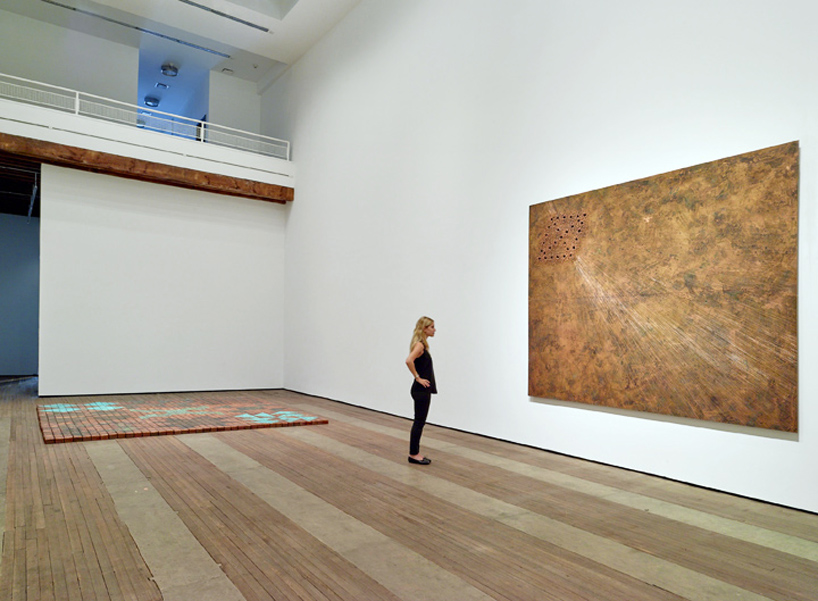
ward has punctured geometric patterns into each panel, which reference traditional congolese ‘cosmograms’
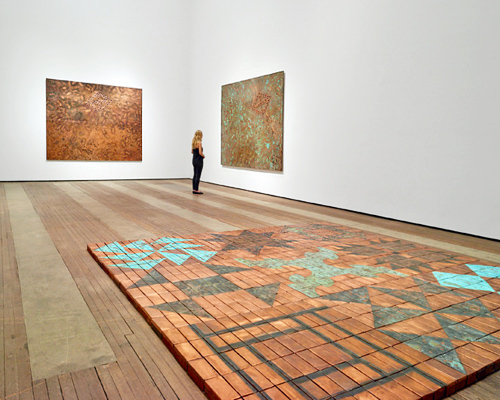
additionally, ward presents ‘ground’, a new sculptural installation composed of over seven hundred masonry bricks covered in sheets of copper and laid flat on the gallery floor. the work references informational symbols found on quilts, used on the underground railroad by travelers making their way to freedom. as in the ‘breathing panels,’ ward uses patina to re-create the patterns and directional signs, translating a vital, coded language that would have been understood only by an intended informed audience.
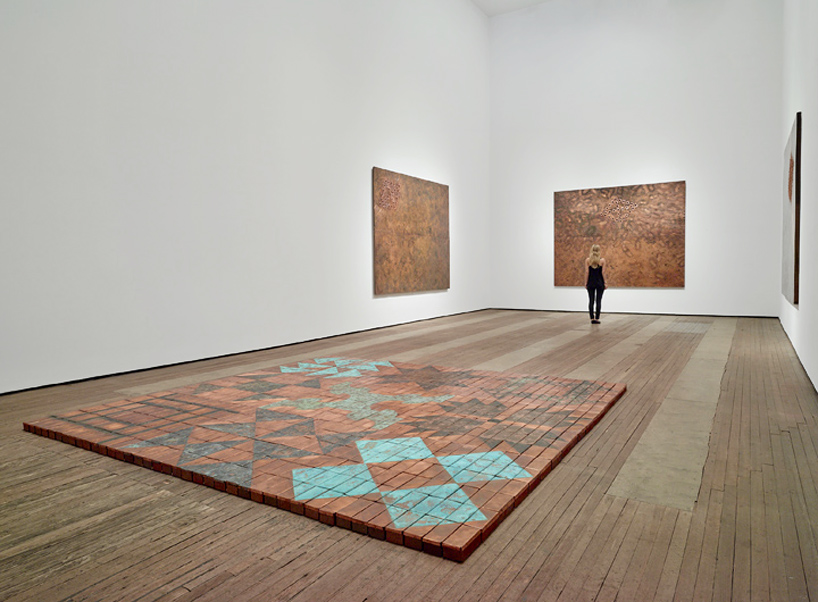
the punctures reference the holes cut in the floorboards to allow escaping slaves to breathe
also included in the exhibition is ward’s ‘spellbound’, a used, upright piano covered in hundreds of keys, each hanging on a nail embedded in the wood. for the artist, the keys symbolize inaccessible places and historical events that are forgotten or no longer acknowledged. the work includes a film that incorporates the sounds and symbols of forgotten histories, which plays on a monitor affixed to the back of the instrument.
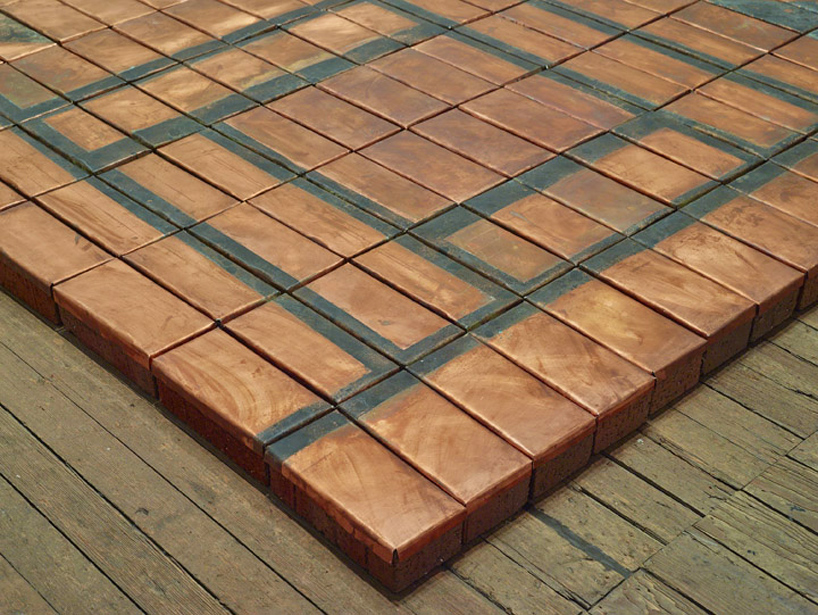
‘ground’ references informational symbols found on quilts used on the underground railroad
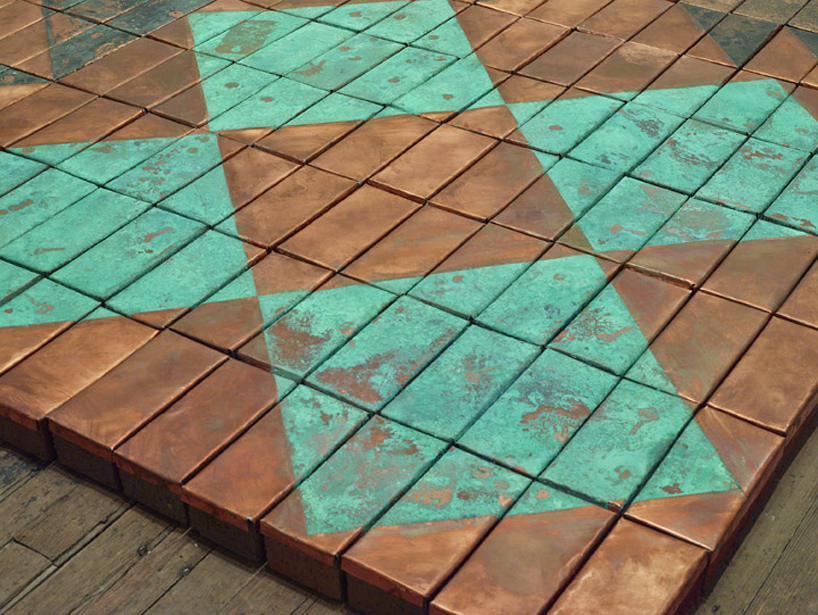
the patterns were used by travelers making their way to freedom
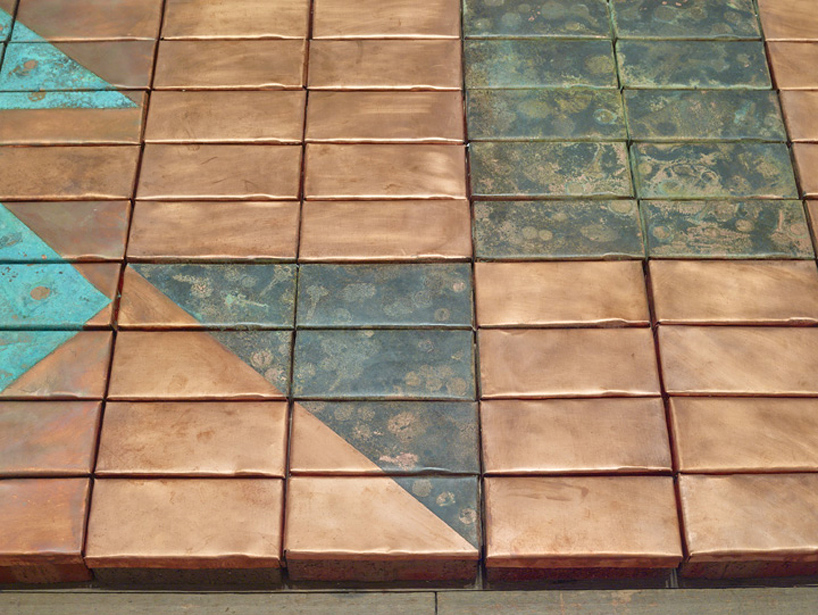
ward uses patina to re-create the patterns and directional signs
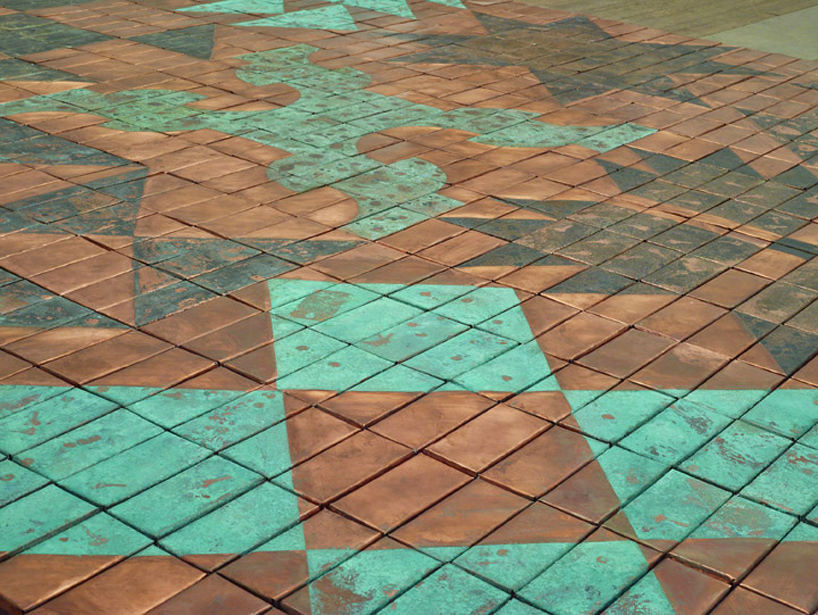
ward translates a coded language that would have been understood only by an intended informed audience
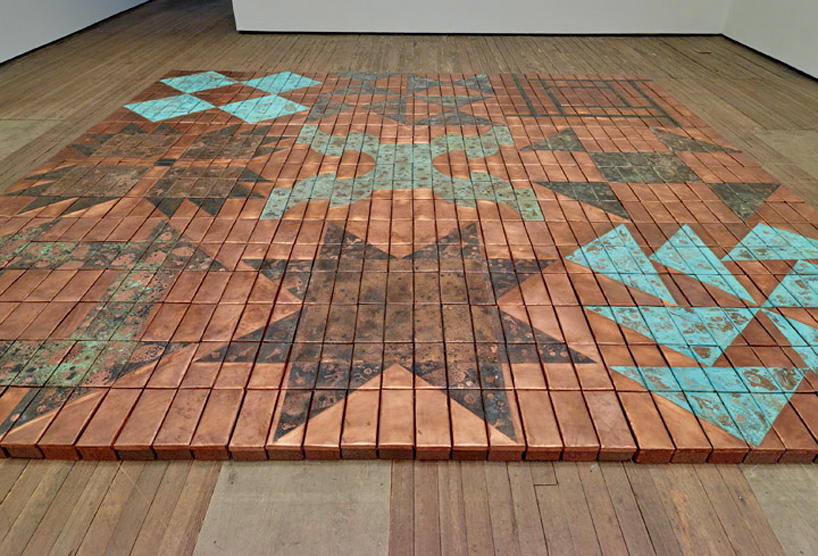
‘ground’ is exhibited on the gallery floor at lehmann maupin, new york
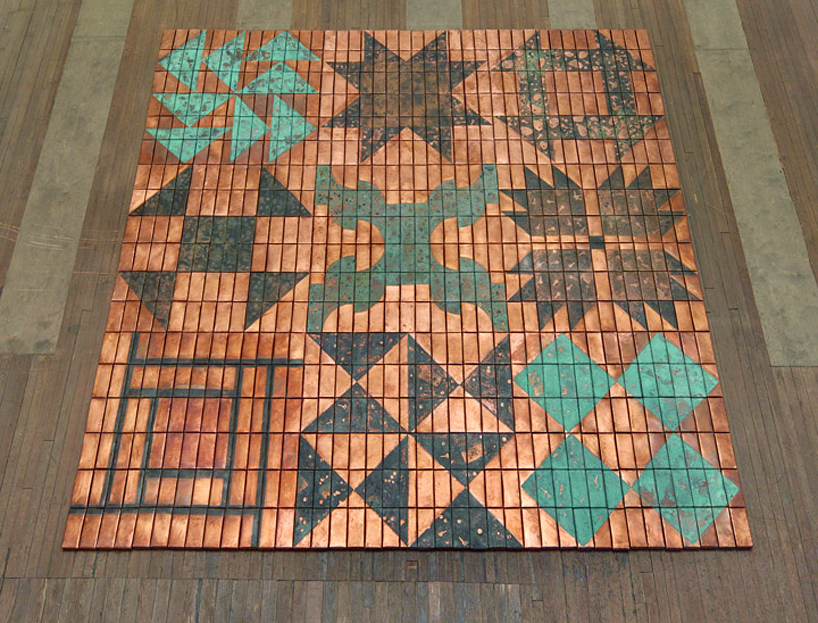
the directional signs are reinterpreted on copper for the sculptural installation
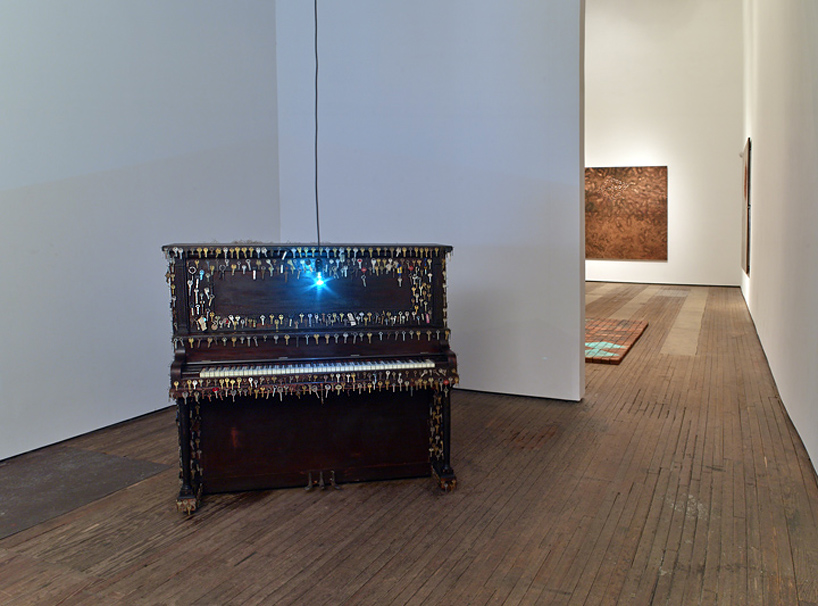
ward has included the installation ‘spellbound’ in the exhibition
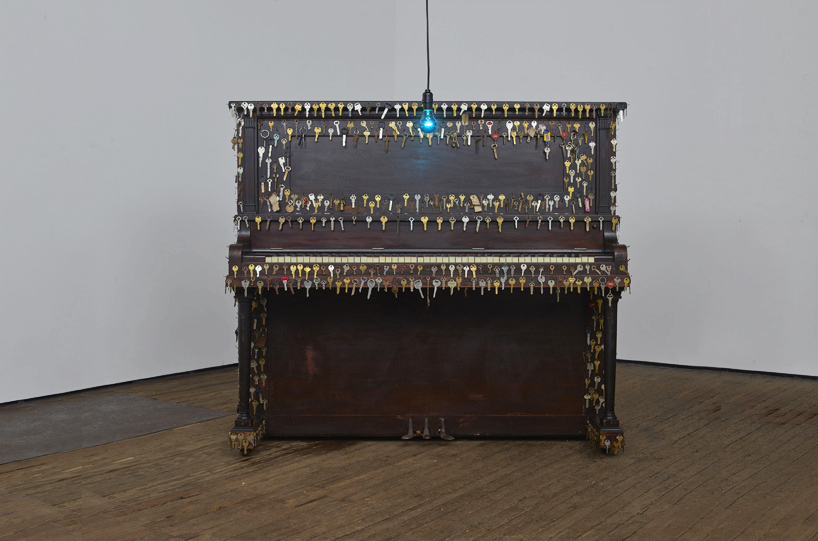
a used, upright piano is covered in hundreds of keys, each hanging on a nail embedded in the wood
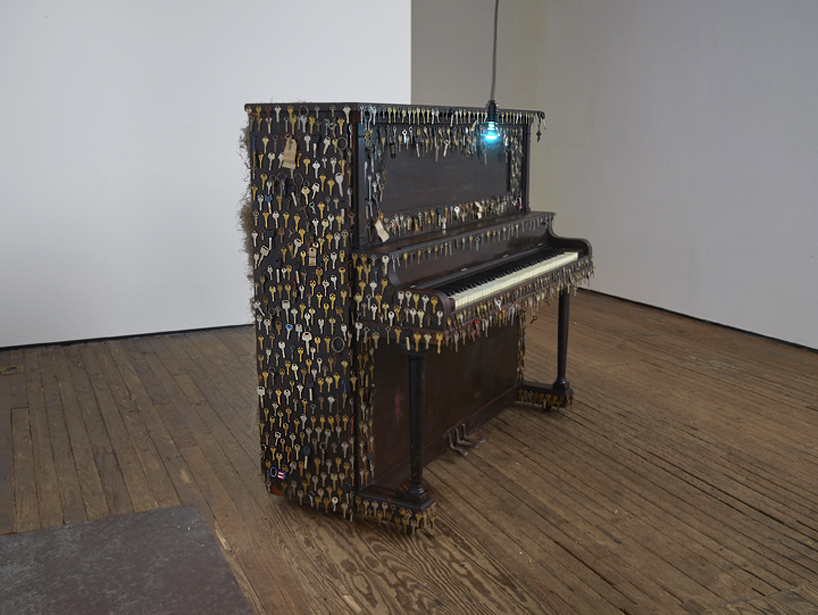
the keys symbolize inaccessible places and historical events that are forgotten or no longer acknowledged
nari ward: breathing directions
now through november 7, 2015
lehmann maupin, new york