‘these organisms are 100% real’: timothy boomer captures nature’s alien architecture
tiny wasps transform oak trees into living nurseries, creating strange architectures shaped by multiple species.
prefer designboom on google[FEATURED]
plant galls through timothy boomer’s macrophotography
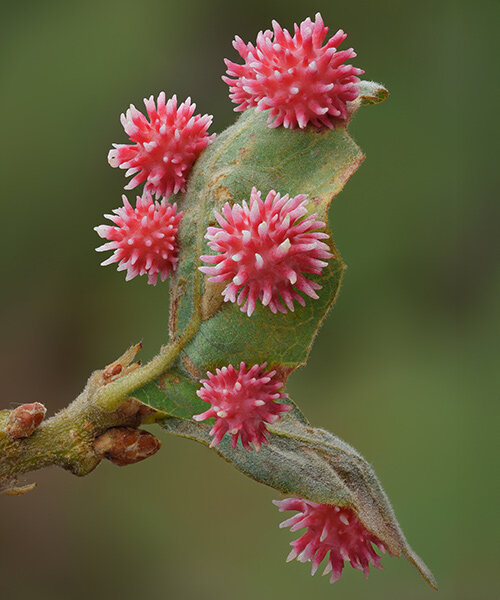
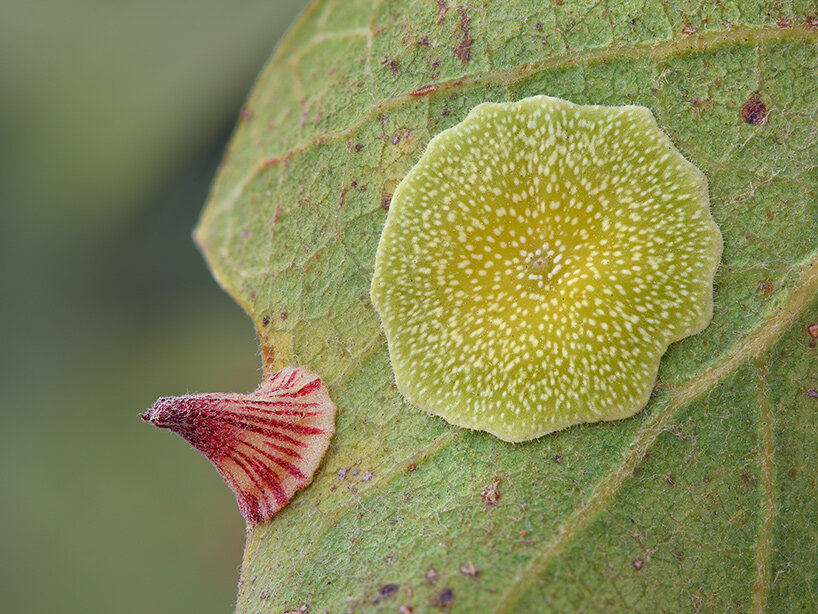
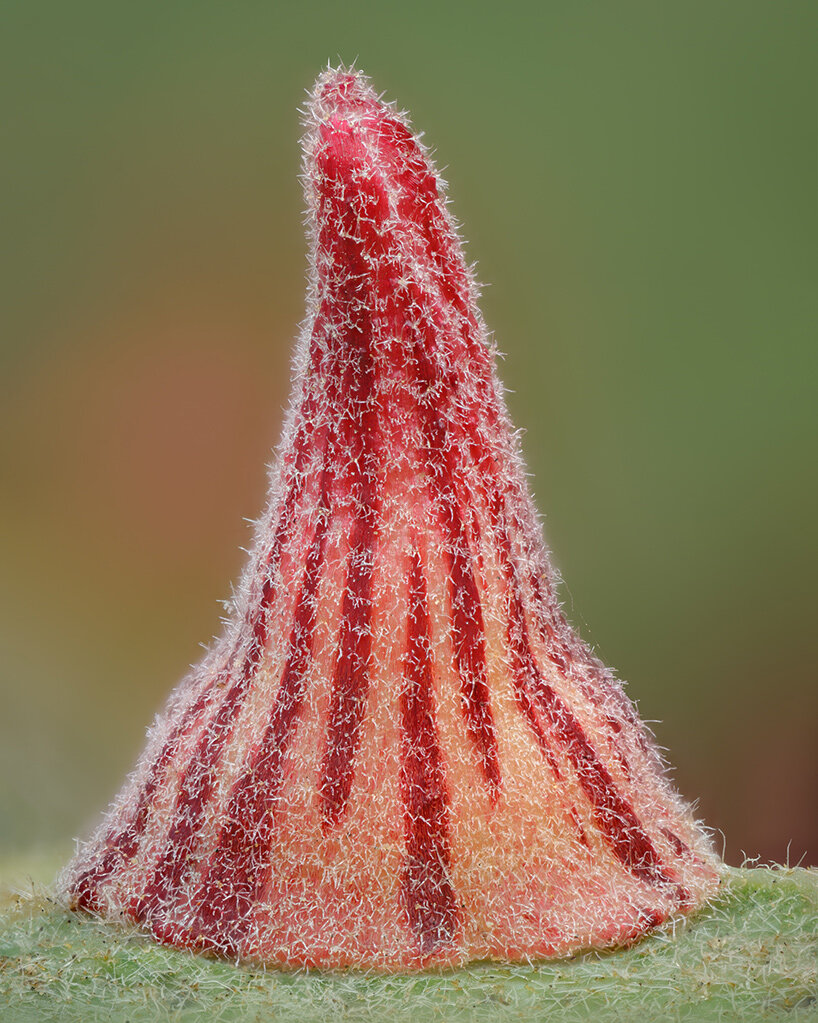
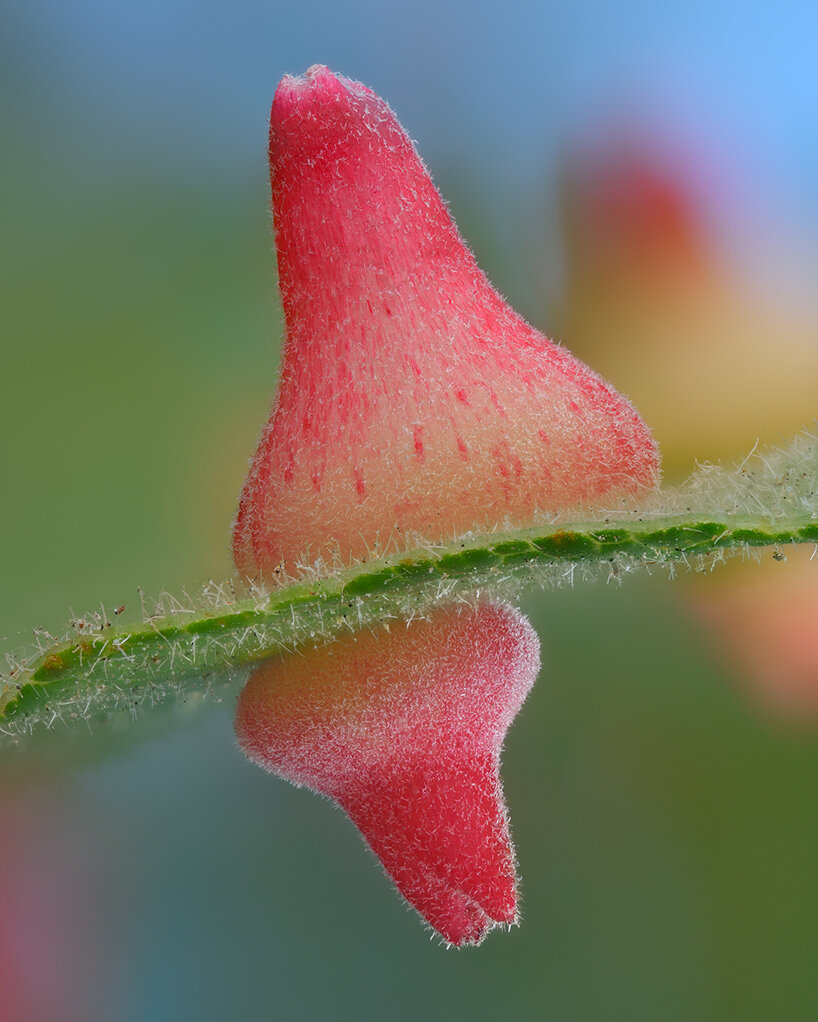
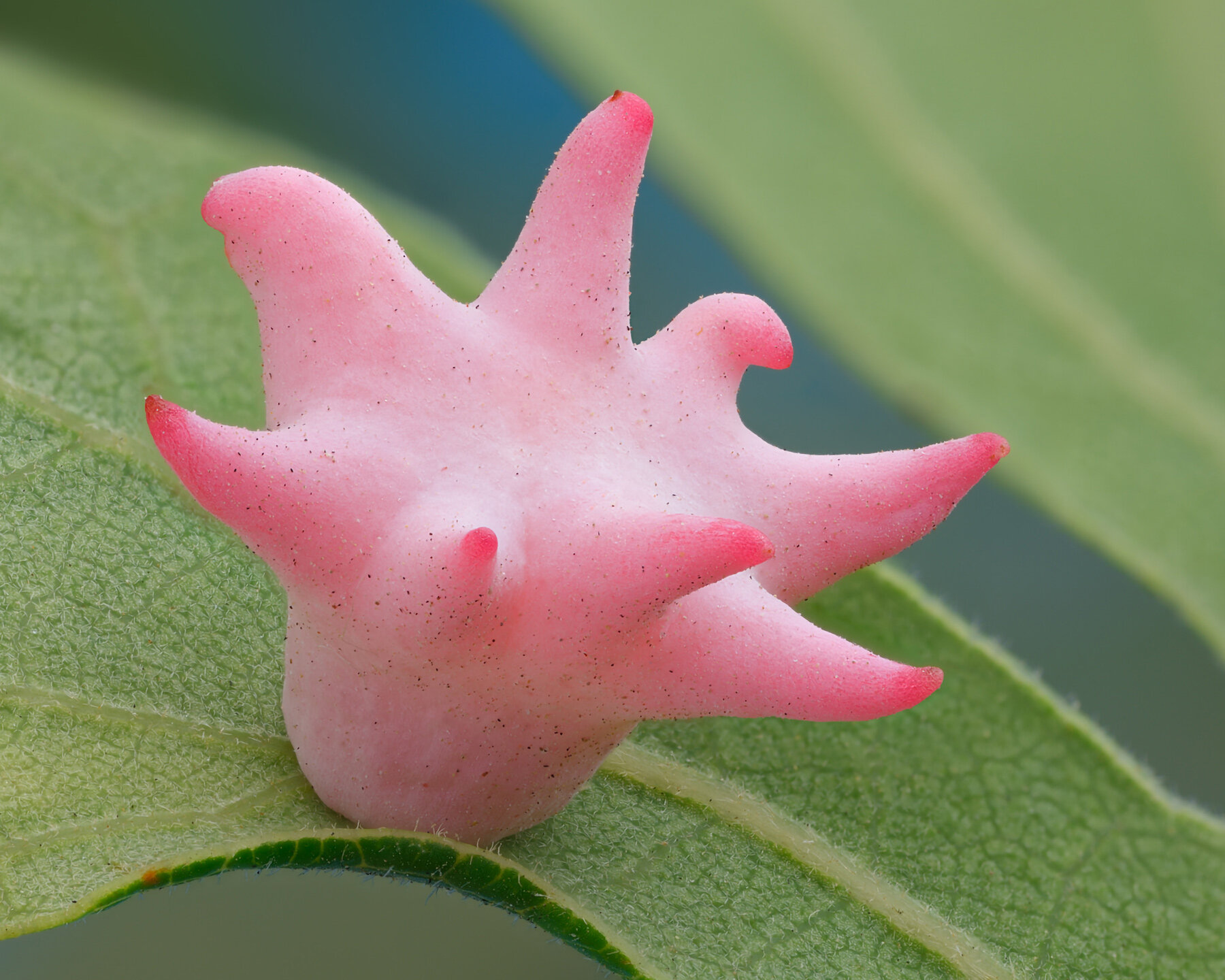
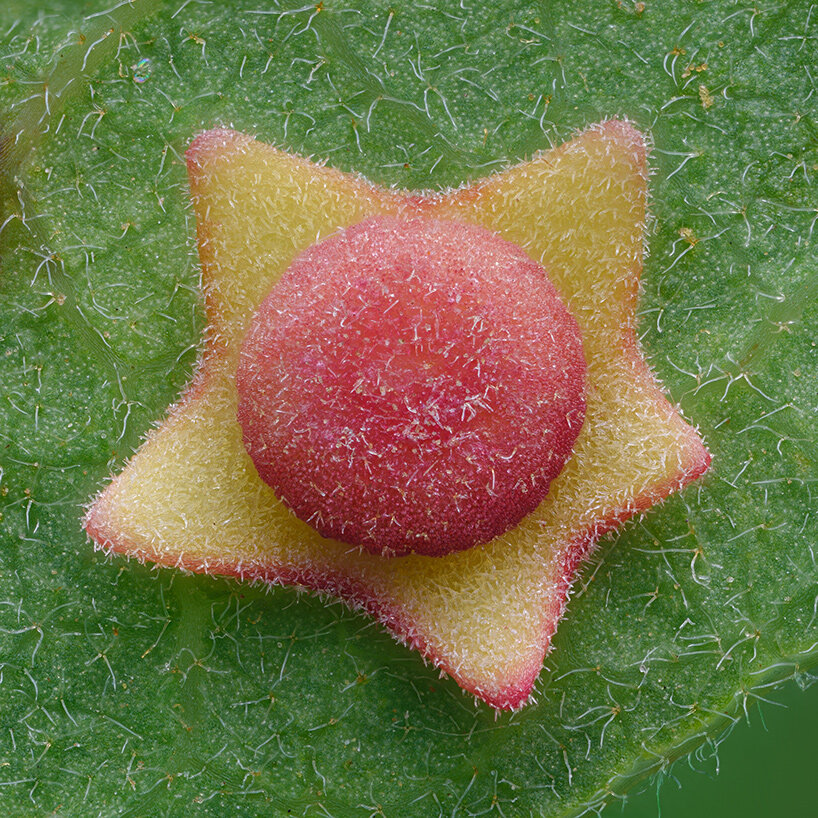
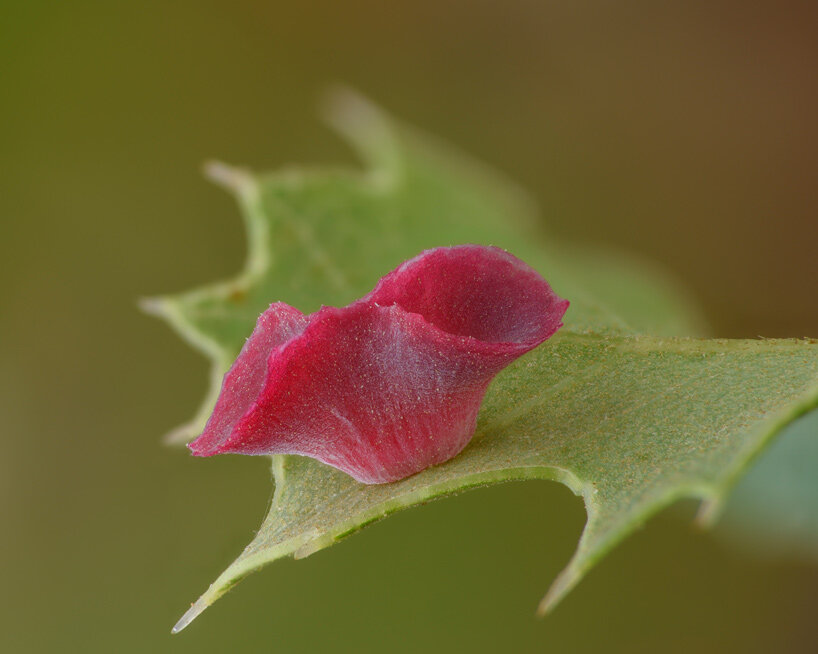
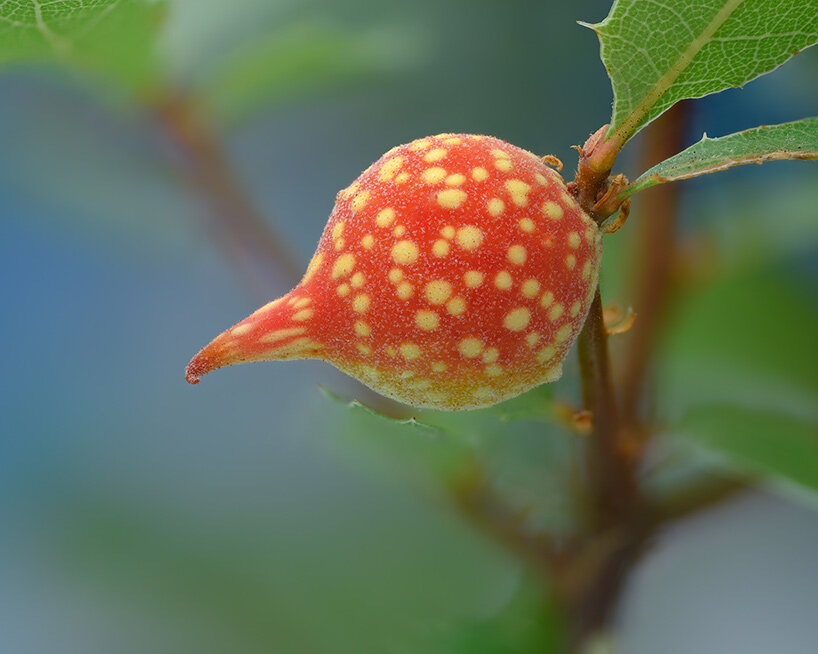
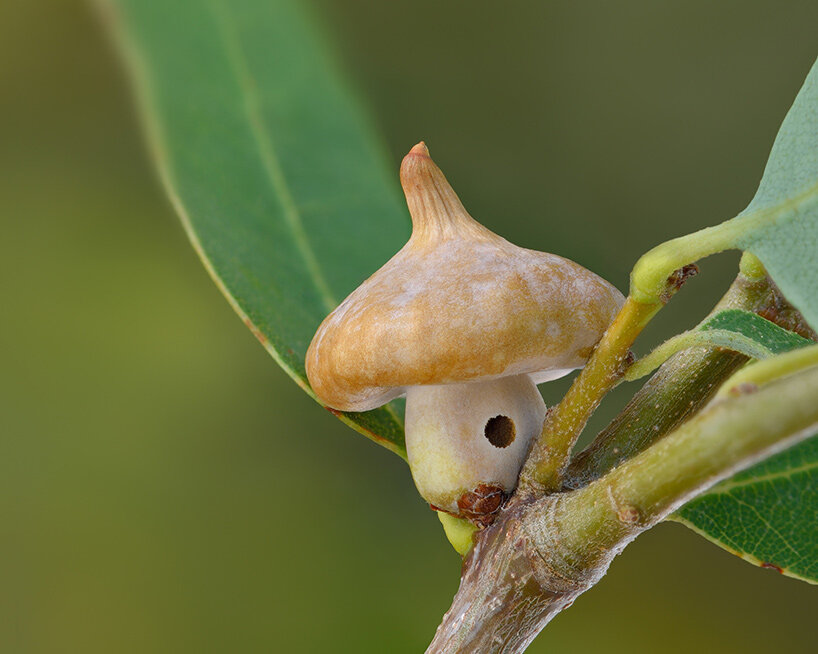
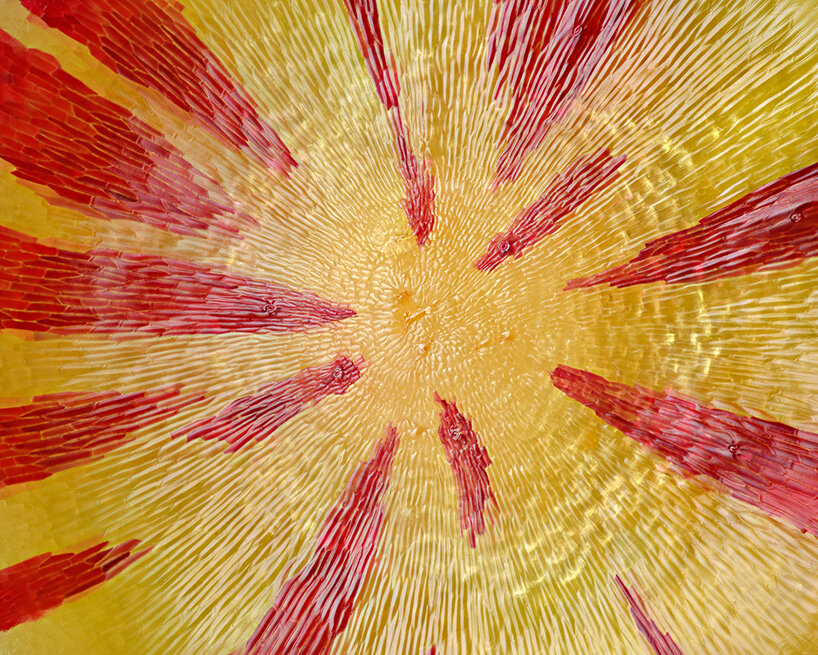
Through macrophotography, Timothy Boomer reveals an unlikely collection of miniature structures hidden among the oak leaves of Northern California. Bright pink spikes protrude from leafy surfaces, while striped cones and peculiar rounded forms appear to have sprouted from another planet. His photographs reveal the extraordinary world of plant galls, tiny growths shaped through the interaction of insects and their host plants. Each one serves as a living nursery, built by the plant in response to another organism.
Despite their exotic appearance, these structures are surprisingly easy to find. ‘With how exotic-looking these structures are, one might assume that I travel to tropical rainforests or the bottom of the ocean to find them,‘ Boomer tells designboom. ‘But the truth is that most of these galls are quite common on the native oaks where I live in Solano County, California.‘ Sometimes, he adds, a stroll around the neighborhood or even his own front yard is enough.
when a wasp persuades a tree to build
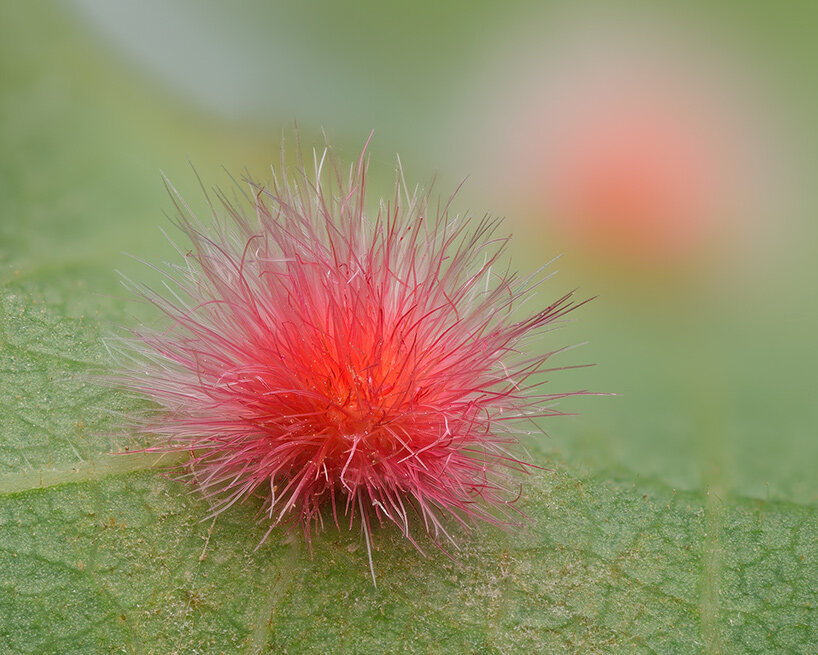
Plant galls can form in response to various organisms, though Timothy Boomer is particularly drawn to those induced by cynipid wasps, which he considers ‘the most visually stunning.’ When a female wasp deposits an egg along with chemicals into a host plant, the plant begins redirecting nutrients toward the development of new tissue. As the larva grows and feeds, this tissue develops into an enclosure that provides both nourishment and protection.
‘The larva will continue to mature as it feeds on the inside of its ‘nursery’ until it reaches the exterior,‘ the photographer explains. Eventually, the mature wasp emerges to continue the life cycle, ‘that is, if all goes as planned.‘
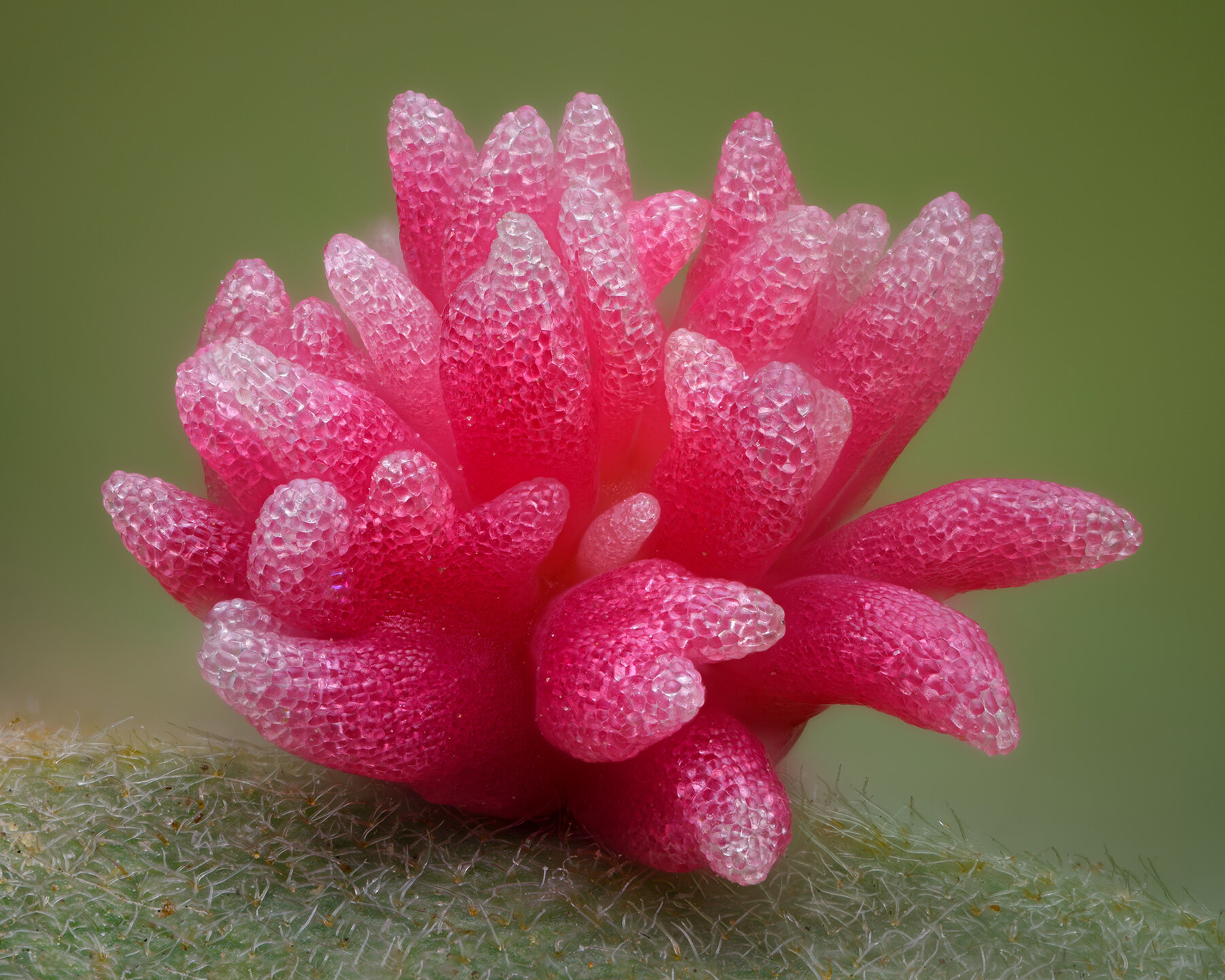
The resulting forms vary enormously. Urchin galls resemble tiny sea creatures, their pink spines radiating outward, while striped volcano galls rise in colorful, conical formations. Others take the shape of flattened discs or fuzzy spheres. Each is produced through a specific biological relationship, with the insect influencing how the plant grows. The wasp initiates the process, and the plant supplies the material and builds the structure.
a home invasion that changes the architecture
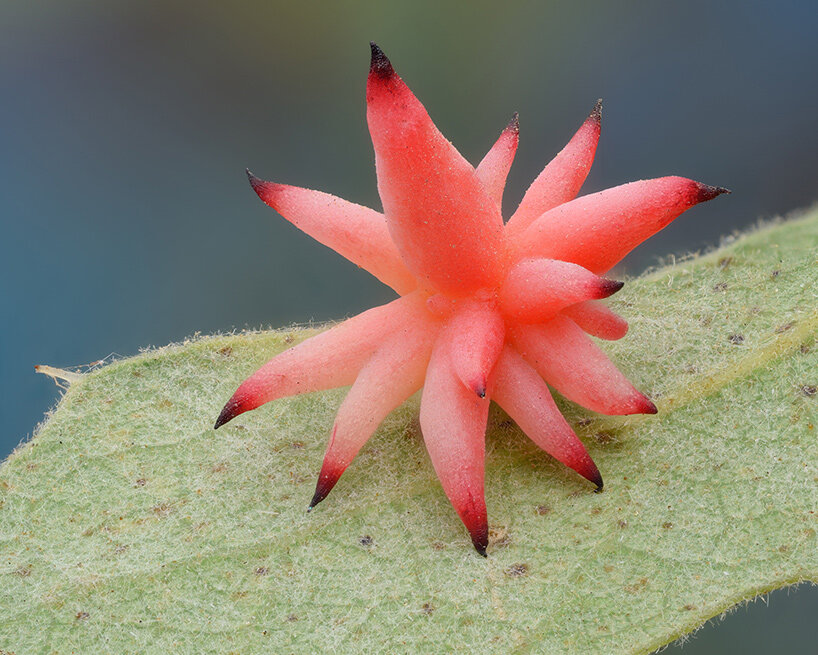
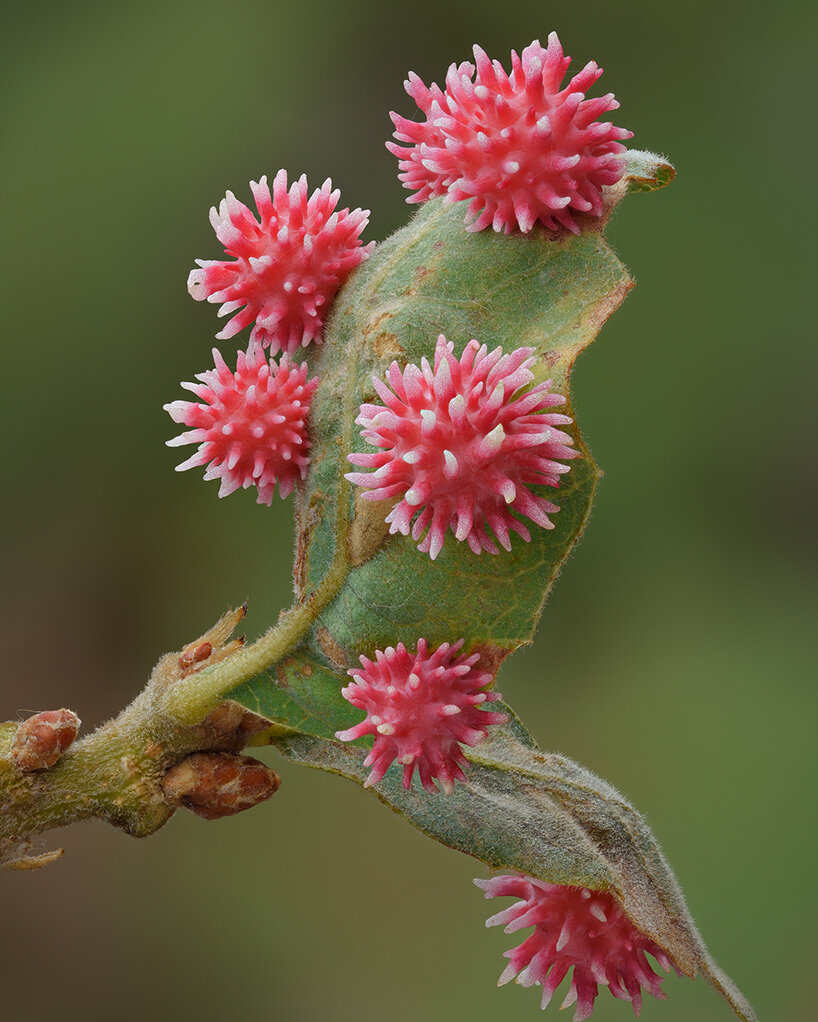
Among Boomer’s photographs, two variations of the spined turban gall offer a particularly fascinating comparison. The typical specimen is bubblegum-pink, with several spines extending outward from a relatively flat crown. Another appears coral-colored, with darkened tips and segmented spikes projecting in every direction.
According to Boomer, the unusual second form developed after another insect, a non-inducer belonging to the genus Eurytoma, entered the gall during its early stages and interrupted its development. ‘I’m not a scientist so I won’t pretend to fully comprehend the intricacies of how all this plays out,‘ he admits, ‘but I think of it as a ‘home invasion’ that actually alters the home.‘
The comparison introduces another dimension to these miniature architectures. Their forms emerge from relationships between living organisms, and even after construction has begun, a new occupant can influence how the structure develops.
bringing an invisible world into focus
Capturing such intricate subjects requires specialized macro lenses and microscope objectives. At these magnifications, the depth of field becomes extremely shallow, so Boomer relies on a technique known as focus stacking.
“I take dozens, hundreds, or even over a thousand exposures with tiny, incremental focus shifts and combine them so that the entire subject is sharp,” he explains. The resulting photographs reveal details otherwise difficult to perceive with the naked eye. Although he uses Photoshop to remove technical artifacts introduced by the stacking process, he is committed to preserving the specimens’ actual appearance.
“These organisms are 100% real, not AI-generated. Nature does not need to be ‘enhanced.'”
His photographs bring an extraordinary world of color and biological invention into view, hiding in the familiar landscapes of suburban California. Beyond their unusual appearance, these tiny structures offer another way of thinking about architecture, one in which an organism redirects the growth of another to create an inhabitable space, while the final form remains open to further intervention.
1/5
project info:
photography: © photographer | @wildmacro
This article is part of designboom’s POSTHUMAN UTOPIAS chapter, exploring what happens when humans are no longer the measure of all things. These stories rethink our relationship with the planet through interspecies architecture, living materials, regenerative landscapes and emerging technologies – learn more here! The chapter is presented in partnership with INDX|GLOBAL – a global cultural platform placing Indian architecture, design, and creative intelligence in conversation with the world.
Each designboom editorial series explores one theme in depth through projects, interviews, features and news across architecture, design, art and technology. Discover more chapters here, and get in touch if you’d like to submit a story through our submissions portal or contact form.
shop
your own online design shop — no sales commission collected