rune bosse puts living trees on life support in a vision of ecological collapse
equipped with respirators and artificial lighting, rune bosse's 'tree lungs' imagines a future where nature itself may need life support.
prefer designboom on google[FEATURED]
rune bosse’s lung trees imagine a forest on life support
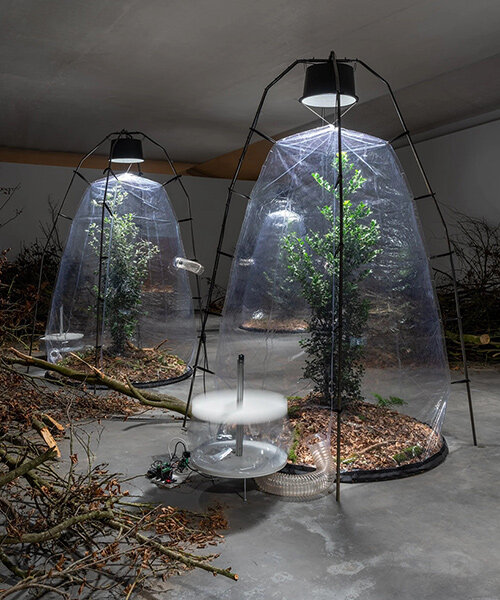
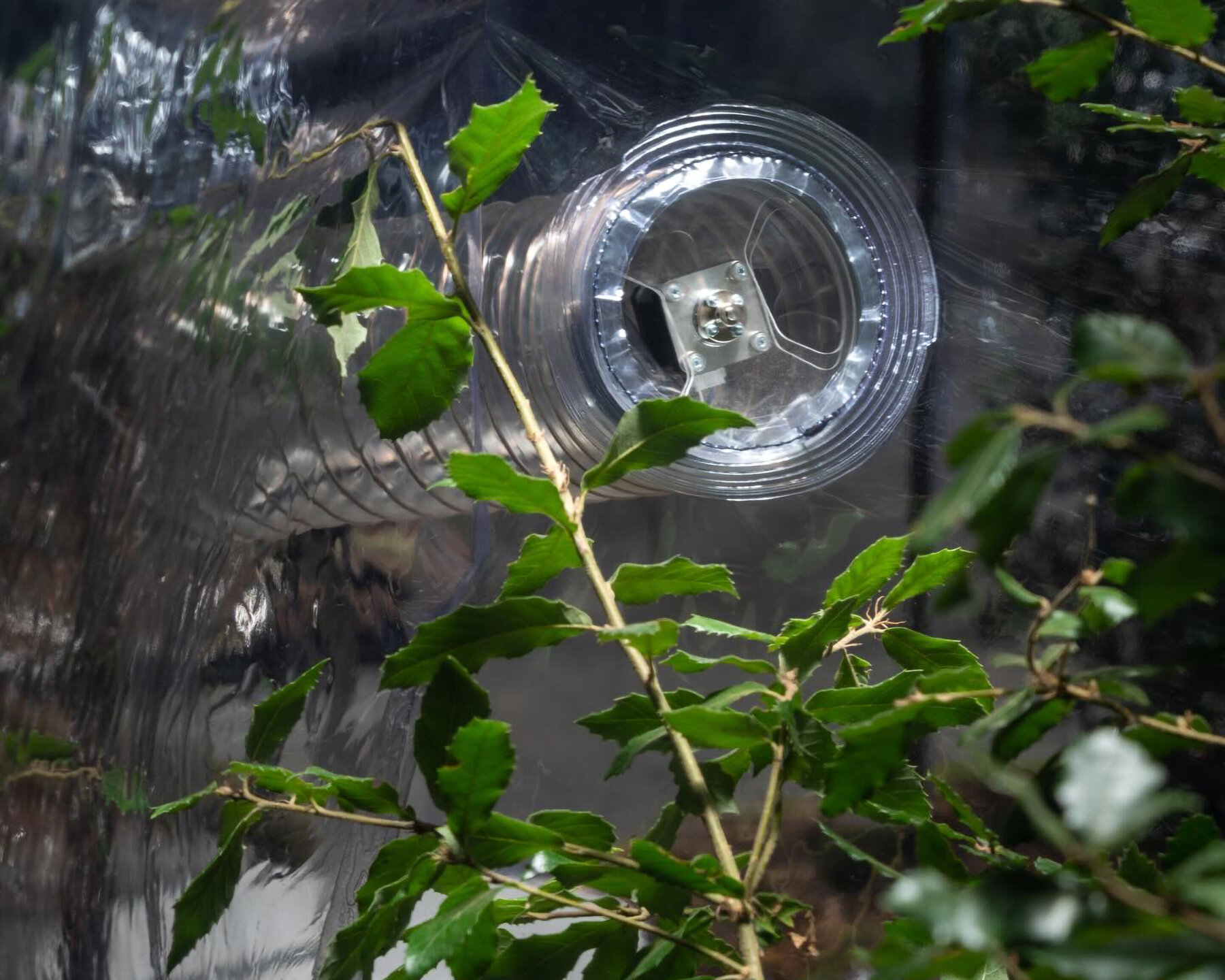
Danish artist Rune Bosse places living trees on artificial life support in Lung Trees, an installation presented at the Danish Architecture Center in Copenhagen as part of its Age of Nature exhibition, which ran through September 2026. Each tree stands inside a transparent, inflated plastic enclosure, and is surrounded by mechanical equipment and artificial lighting. With their branches reaching toward overhead lamps, each tree seems to have been removed from the forest and placed under intensive care.
The installation imagines a future in which trees might depend on technology to survive, even as humans continue to depend on the ecological systems that trees help sustain. It reverses a relationship we tend to take for granted. Forests have long been described as the lungs of the planet, absorbing carbon dioxide through photosynthesis and releasing oxygen. Here, Bosse gives those lungs a mechanical counterpart, and suggests a world in which the natural systems supporting human life might themselves require artificial support.
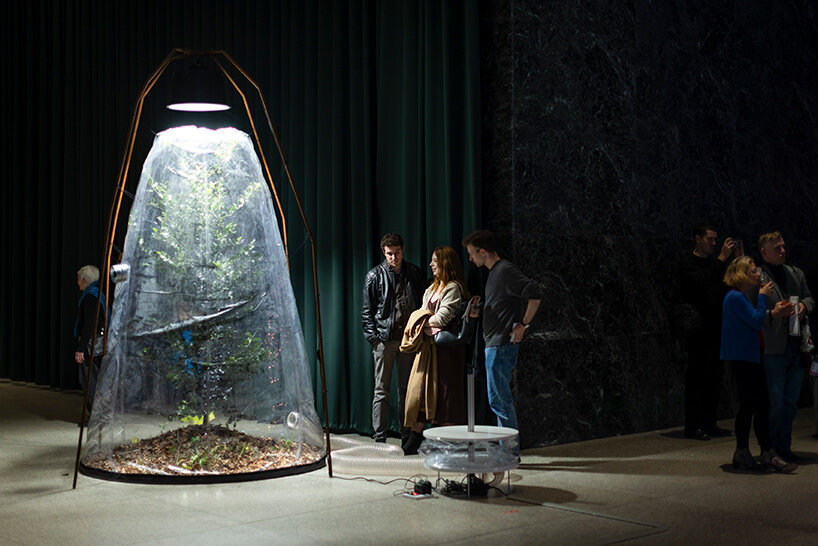
transparent chambers breathe around living trees
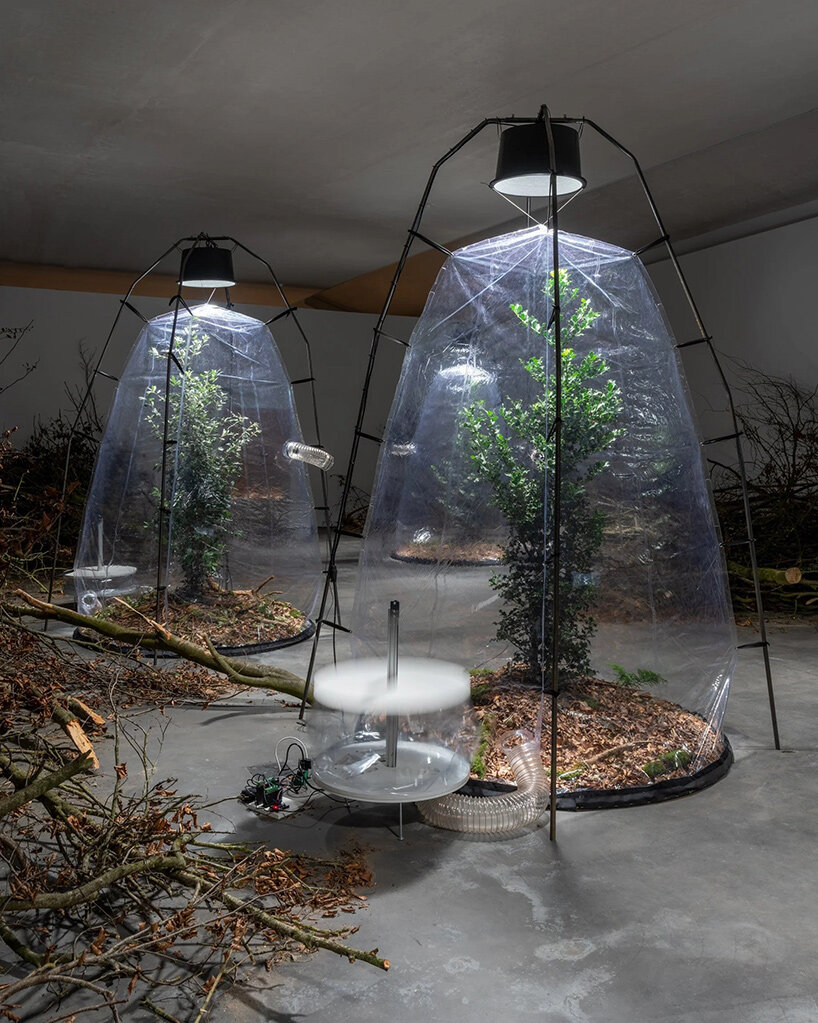
The installation brings together living vegetation and an exposed network of machines. Transparent plastic sheeting stretches over metal frames, enclosing the trees while allowing visitors to see the soil and branches inside. Artificial lights illuminate the foliage, while equipment supplies air to the enclosed environment. The temporary structures have the practical appearance of makeshift greenhouses, although their association with medical equipment gives them a more unsettling character.
In a related 2025 presentation at Berlin’s Neue Nationalgalerie, titled Lungetræ / Lungenbaum, Bosse made the breathing movement particularly visible. A living tree and a section of forest floor were enclosed within a flexible PVC membrane attached to a metal framework. At regular intervals, a respirator pushed air into the structure, causing the plastic to expand and slowly collapse around the tree. The movement resembles the inflation of a giant lung, giving physical form to the invisible exchange of gases between a tree and its surroundings.
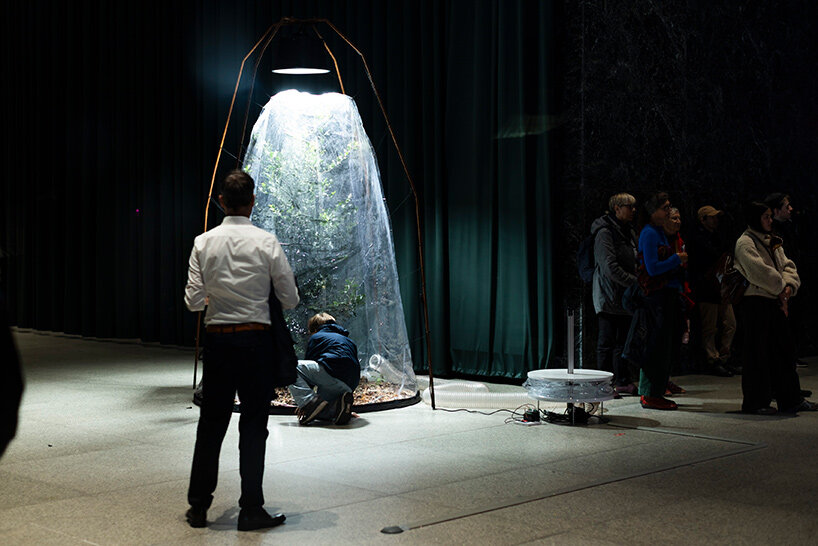
making art with living forests
Bosse’s interest in trees extends well beyond the gallery. Alongside his training at the Royal Danish Academy of Fine Arts, the artist studied forestry and nature management, developing a practice that follows the growth of living plants over time. At Oremandsgaard, an estate in southern Denmark, he has established an outdoor forest laboratory where he experiments with shaping trees as they grow. Some are bent into unusual forms, while others are guided to grow together. Their final shapes emerge over years, influenced by the conditions of the surrounding landscape.
This work grew partly from his frustration with bringing natural materials into museums, where plants often have to be cut, dried or preserved before they can be exhibited. His outdoor experiments allow trees to remain alive and continue changing long after the artist’s initial intervention. Lung Trees approaches the same relationship from a different direction. Inside the gallery, keeping the trees alive becomes part of the artwork itself, exposing the equipment and artificial conditions that make their temporary existence possible.
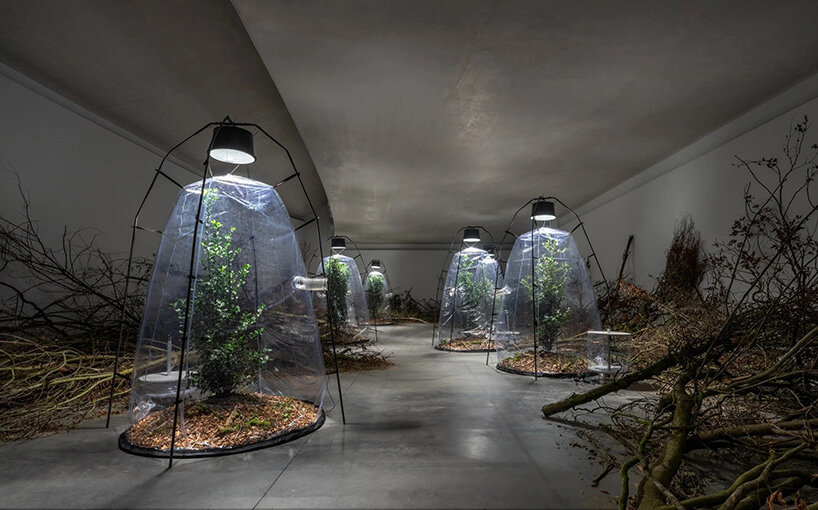
who keeps whom alive?
The installation touches on an uncomfortable contradiction in the way humans approach ecological preservation. By enclosing the trees and supplying them with artificial conditions, Bosse creates an image of protection that also suggests dependency. The machinery appears to care for the living organisms, yet the entire arrangement places their survival within a system designed and operated by humans. The trees remain living participants in the work, although their relationship with the surrounding environment has been fundamentally altered.
Bosse first developed Lungetræer in 2019, and its more recent presentations give the work a continuing relevance amid growing concerns about biodiversity loss and the deterioration of ecosystems. The installation offers a speculative glimpse of what technological preservation might look like when ecological conditions can no longer support life on their own. Its most unsettling quality comes from the simplicity of the scene.
A living tree stands inside a plastic chamber while a machine pushes air around it. The visitor watches the artificial lung expand and contract, confronted with the possibility that the relationship between humans and forests could one day become this fragile.
project info:
name: Tree Lungs
artist: Rune Bosse | @runebosse
exhibitions: Age of Nature, Danish Architecture Center, Copenhagen, Denmark (2025-26) & Lungetræ / Lungenbaum, Neue Nationalgalerie, Berlin, Germany (2025)
This article is part of designboom’s POSTHUMAN UTOPIAS chapter, exploring what happens when humans are no longer the measure of all things. These stories rethink our relationship with the planet through interspecies architecture, living materials, regenerative landscapes and emerging technologies – learn more here! The chapter is presented in partnership with INDX|GLOBAL – a global cultural platform placing Indian architecture, design, and creative intelligence in conversation with the world.
Each designboom editorial series explores one theme in depth through projects, interviews, features and news across architecture, design, art and technology. Discover more chapters here, and get in touch if you’d like to submit a story through our submissions portal or contact form.
shop
your own online design shop — no sales commission collected