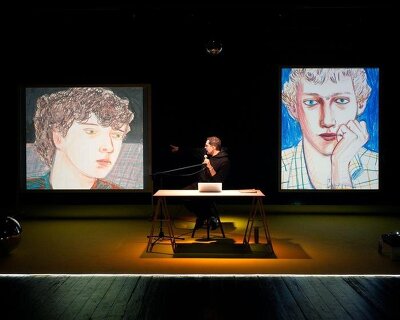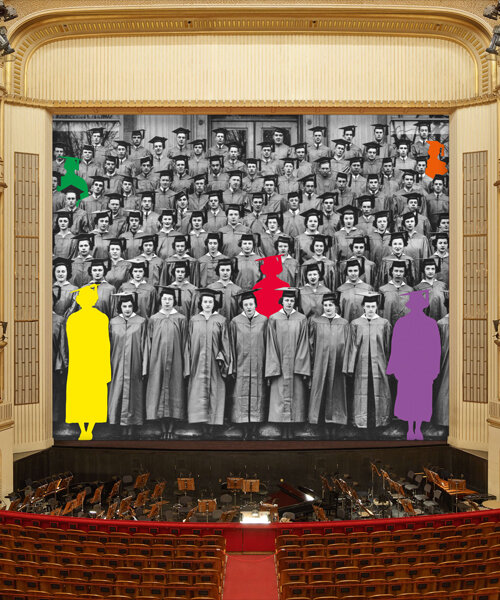
each season, vienna state opera turns its safety curtain into a work of contemporary art
from anselm kiefer to david hockney, the series invites leading contemporary artists to transform the boundary between audience and stage since 1998.
prefer designboom on google[FEATURED]
Safety Curtain series at the Vienna State Opera
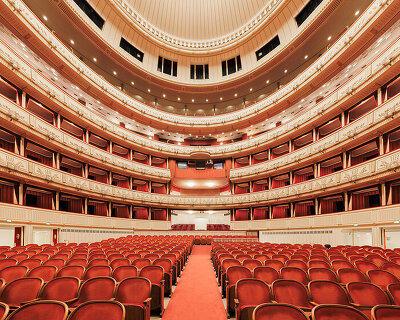
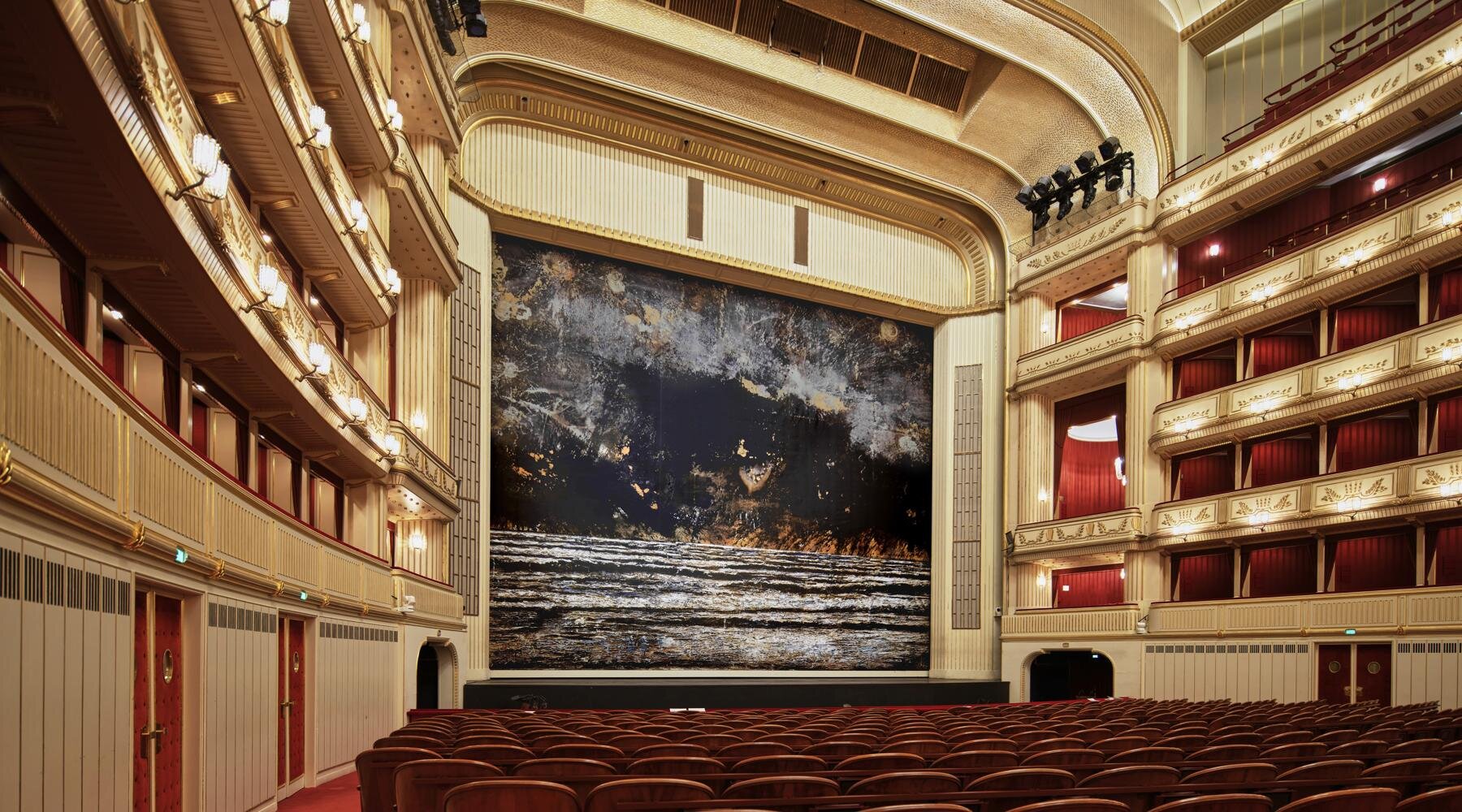
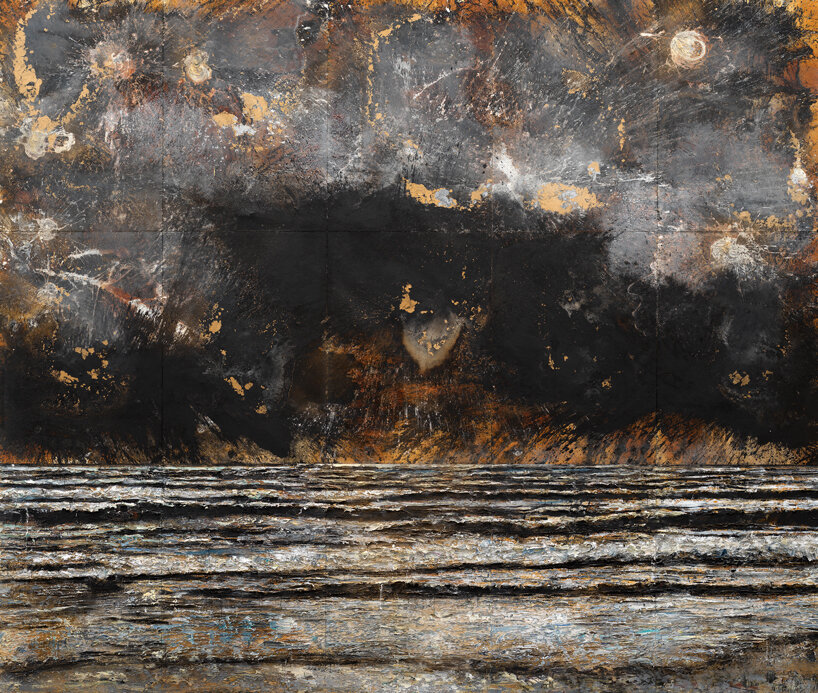
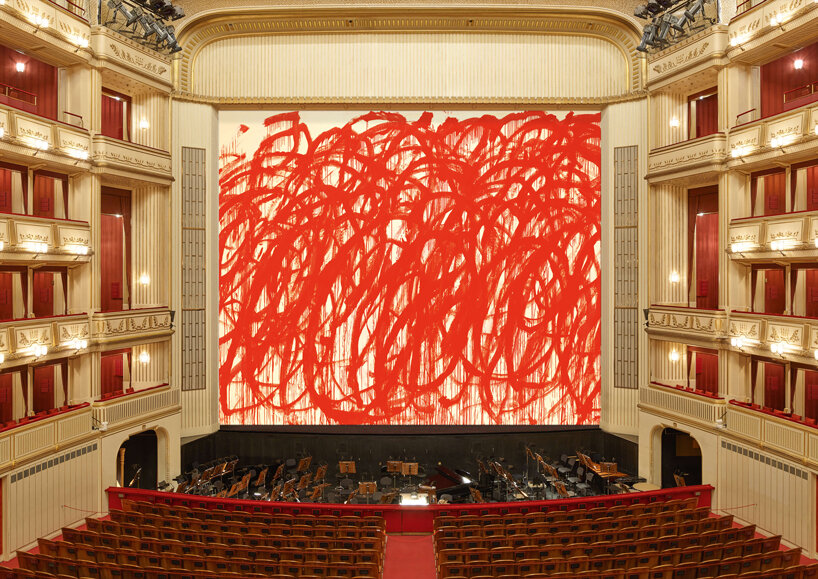
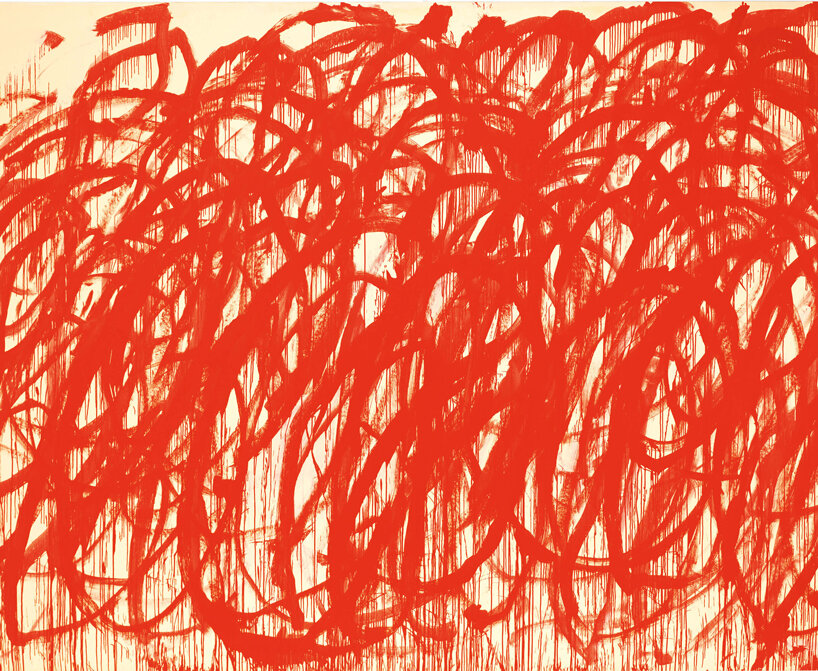
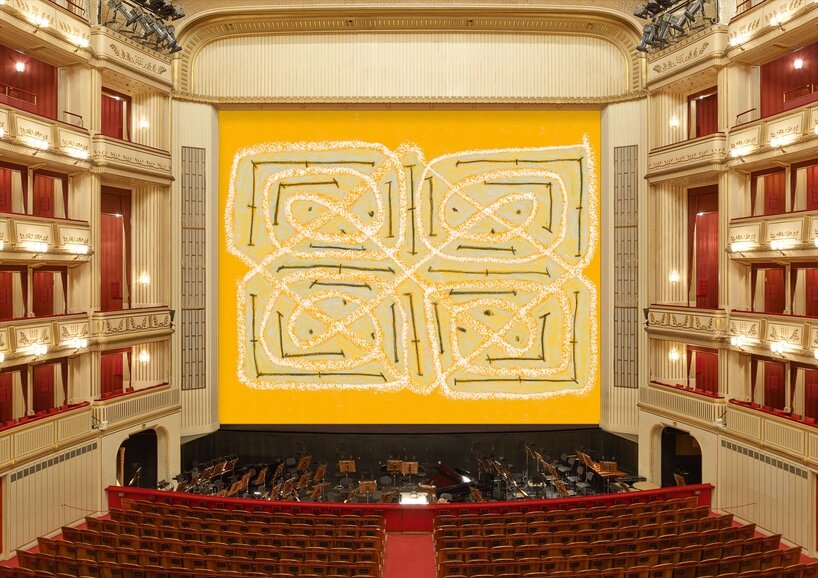
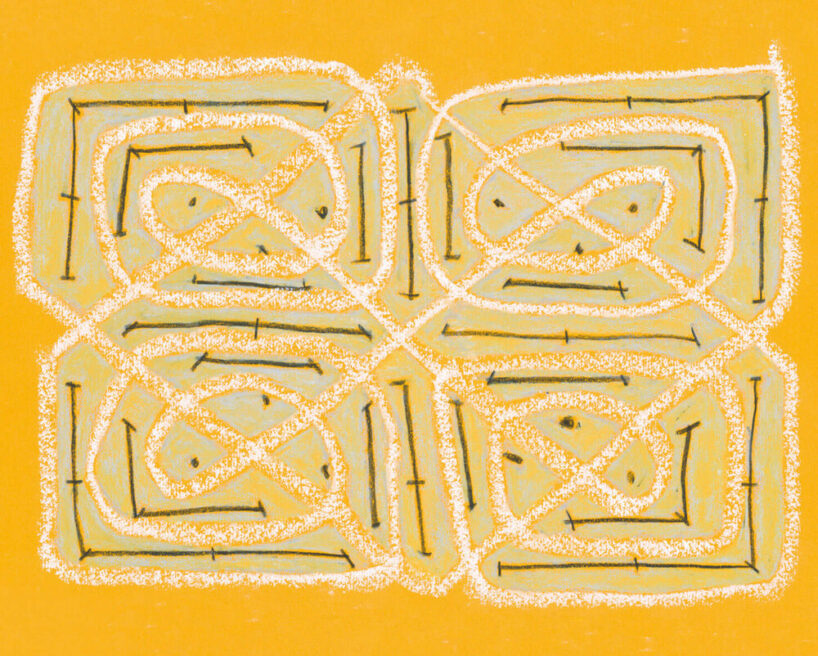
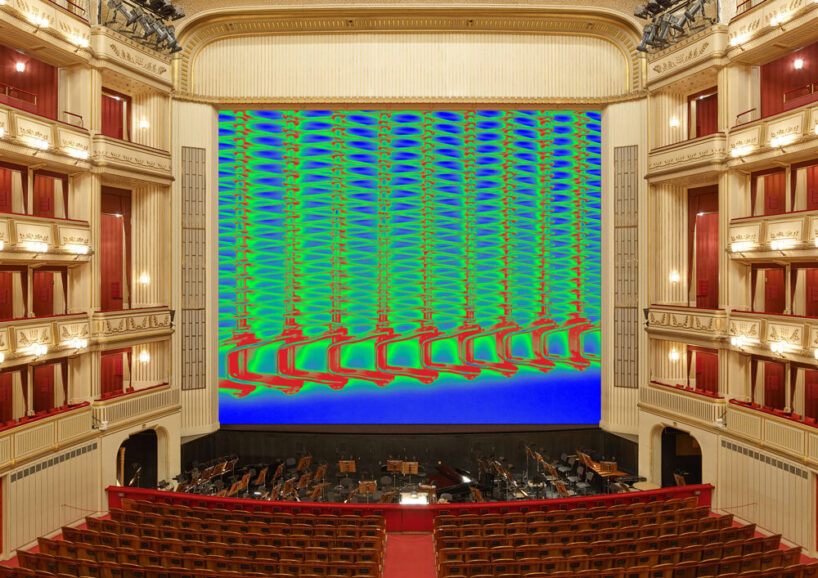
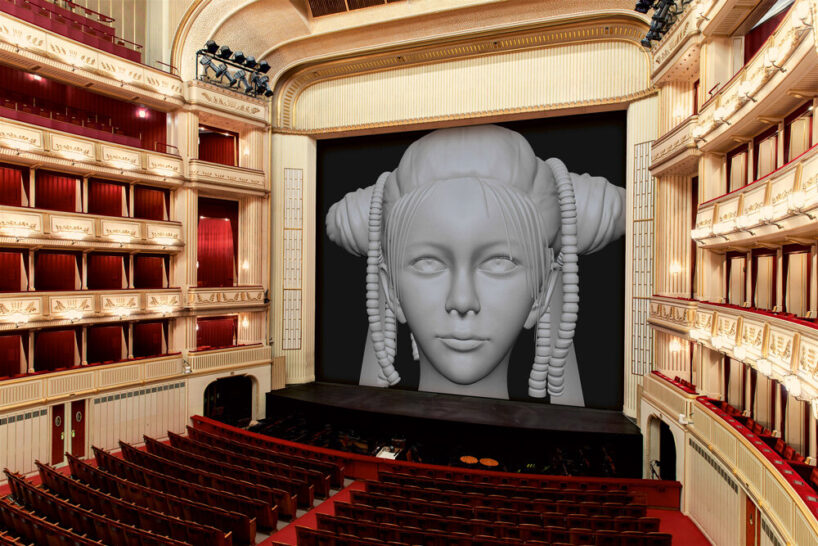
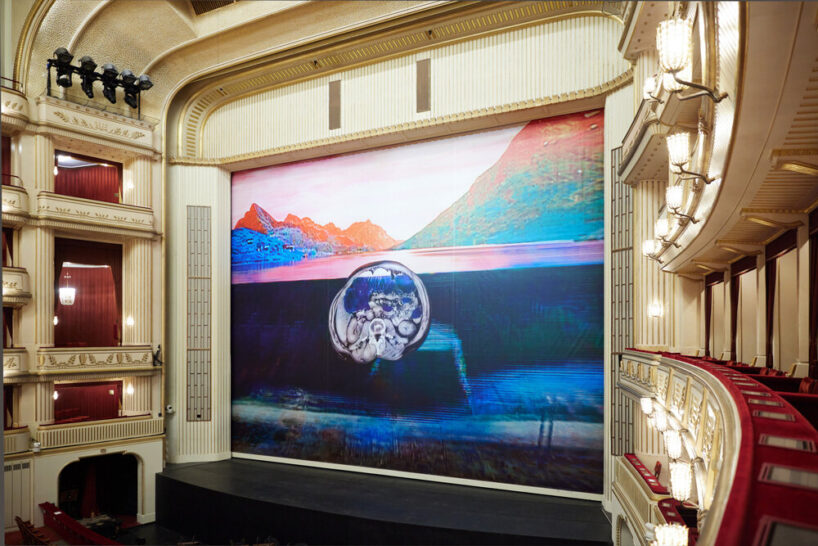
For nearly three decades, museum in progress and the Vienna State Opera have brought contemporary art into the theater with their Safety Curtain series. In traditional theaters, the safety curtain is the heavy barrier that separates the stage from the audience in the case of an emergency. Looking at the four borders of the curtain conjures the idea of a picture frame or a typical quadrilateral canvas that contains works of visual art. Seeing this as a site of opportunity, Safety Curtain has welcomed the likes of Anselm Kiefer, David Hockney, and Cao Fei, facilitating an annual encounter between the performing and visual arts.
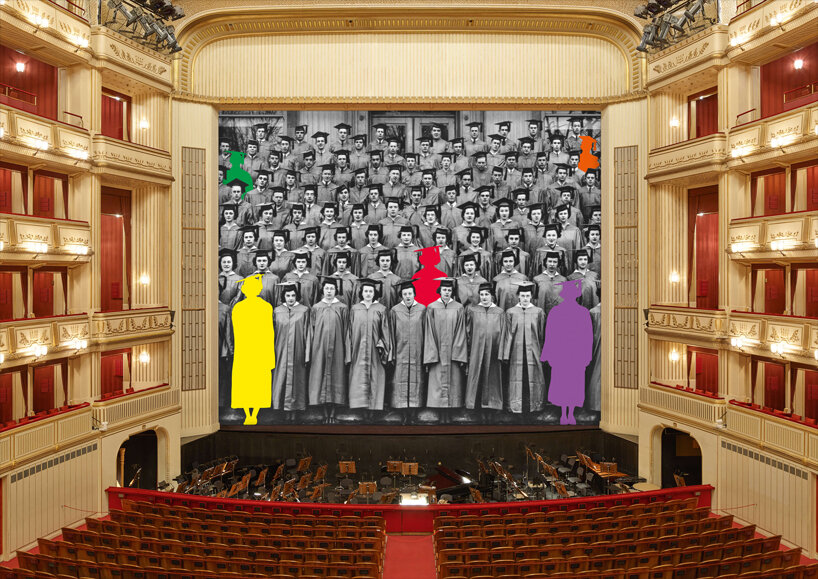
the first Safety Curtain in the 1998/1999 season
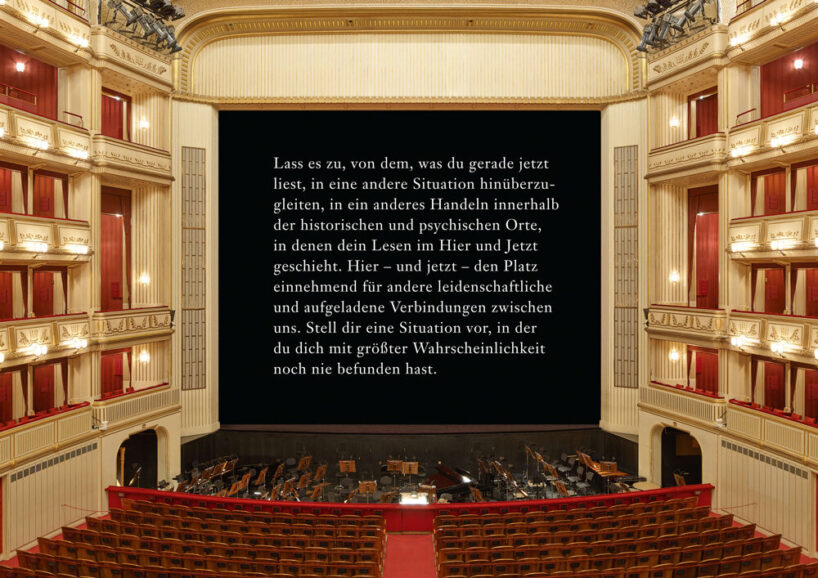
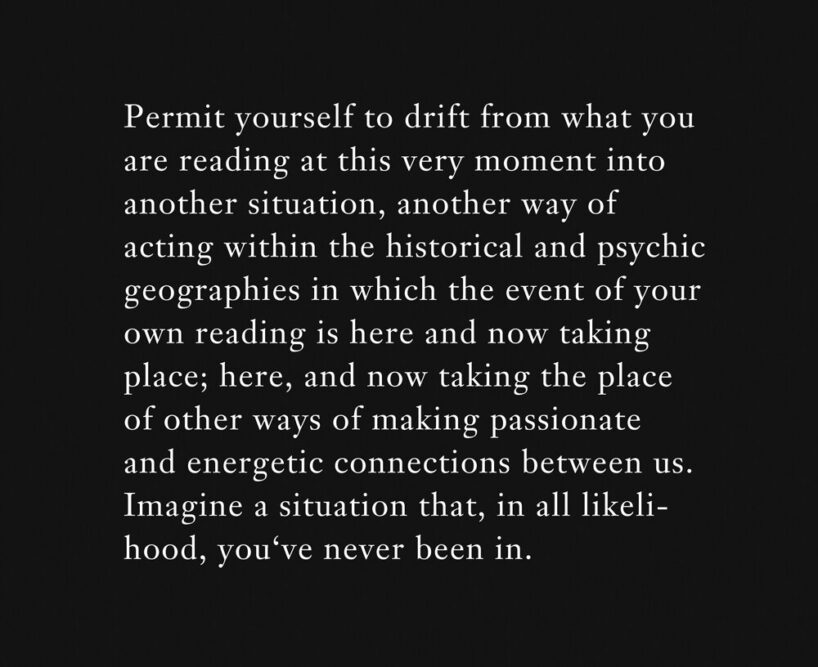
The inaugural project in the Safety Curtain series came in the 1998/1999 season with Kara Walker’s installation. The American artist’s work often confronts the country’s violent history with slavery, most notably leveraging silhouetted figures that reflect on narratives of Blackness in the antebellum South. Typically, the Safety Curtains are accompanied by texts and interviews that contextualize the work within the Opera and the artist’s greater practice. In 1998, curator Nancy Spector wrote on Walker’s work, explaining its relationship to minstrel shows, the American Civil War, and Blackness in America. She writes, ‘Walker’s approach to her subject matter operates on the level of “entertainment” – it is raucously humorous and bitterly sarcastic. Her commission to design a curtain for the Vienna State Opera brings her own sources in early American theater tantalizingly to the surface.’
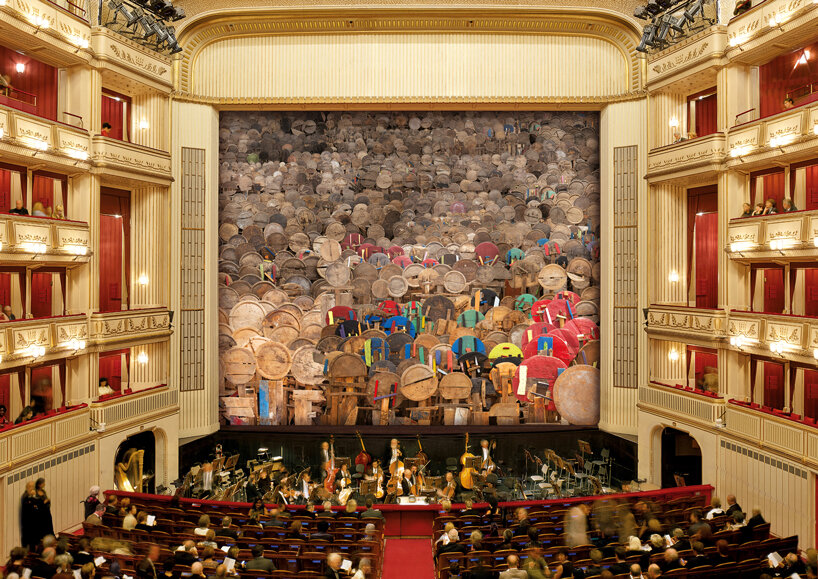
Creating Visual Work in a Space for Performance
In highlighting how Walker leveraged the theatrical setting in her piece, Spector foreshadows what will be a defining element of the Safety Curtain series: artists making use of the scale and dramatics of the operatic setting. In 2017, curator and critic Bice Curiger, in another essay written in conjunction with the project, maps the terrain the Curtains exist within, discussing artists that have made use of this peculiar, yet ripe, visual space. She identifies the Safety Curtain as occupying the same terrain as the ‘fourth wall,’ the metaphorical and physical barrier between spectator and stage. Additionally, the expectant audience and the preparation ahead of a show can be a landscape of distractions.
Given this, Curiger acknowledges that, ‘The conditions for confronting the work are nevertheless excellent: at the very least, the viewer is dealing with non-authoritative, unconventional monumentality. In spite of this power, however, the pictorial message has to come through, not least because of the potential for distraction and the heterogeneous audience.’
Herbert Brandl for the 2026/2027 Season
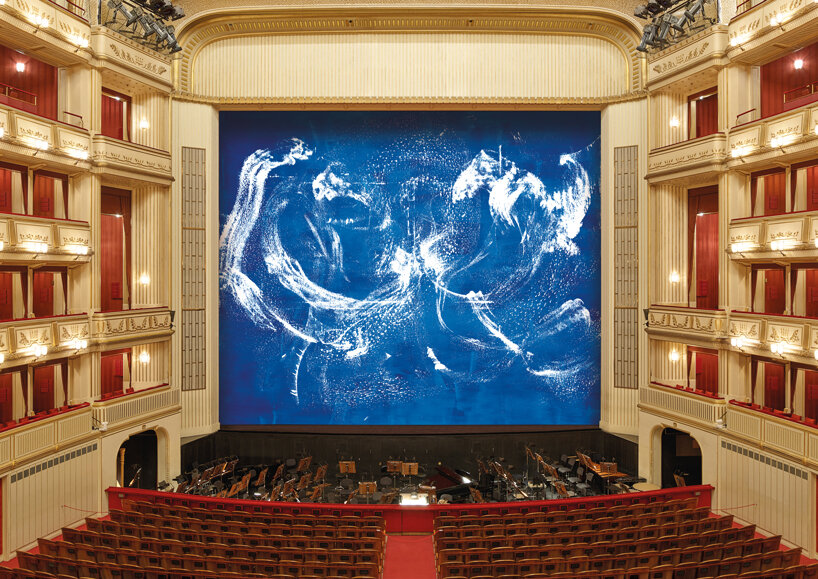
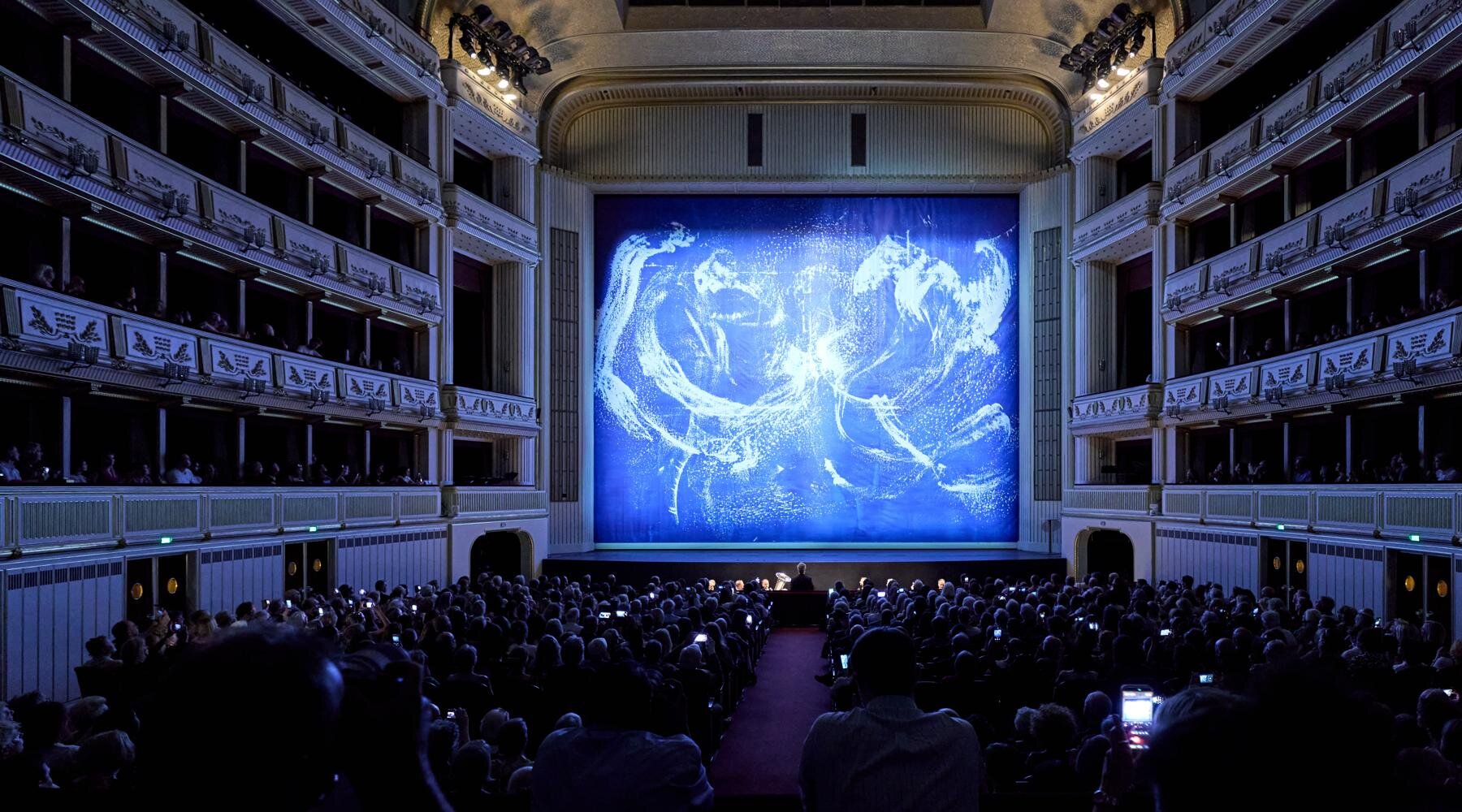
In 2026, Herbert Brandl joins the ranks of the Safety Curtain’s lineup of contemporary artists. The jury—Daniel Birnbaum, Bice Curiger, and Hans-Ulrich Obrist—selected the late Austrian painter, who contributed a massive blue-and-white work for the Opera’s stage. The curtains remain throughout the entire season, starting from the fall and continuing into the summer of the following year. It’s visible before the performance, during intermission, and after the curtains close, giving audiences three opportunities within the span of the show to view the work.
In her analysis of Brandl’s curtain, curator Cathérine Hug identifies within the duochromatic painting its origins in space exploration and the depiction of the Blue Marble, or the capturing of Earth from the perspective of space. ‘It is this change in perspective achieved by leaving the Earth and flying above it, the so-called “overview effect”, that so fascinated Herbert Brandl and enables us to reflect collectively on the fragility of life,’ she writes, decoding the swirling whites that appear upon the stage.
The Legacy of the Curtains
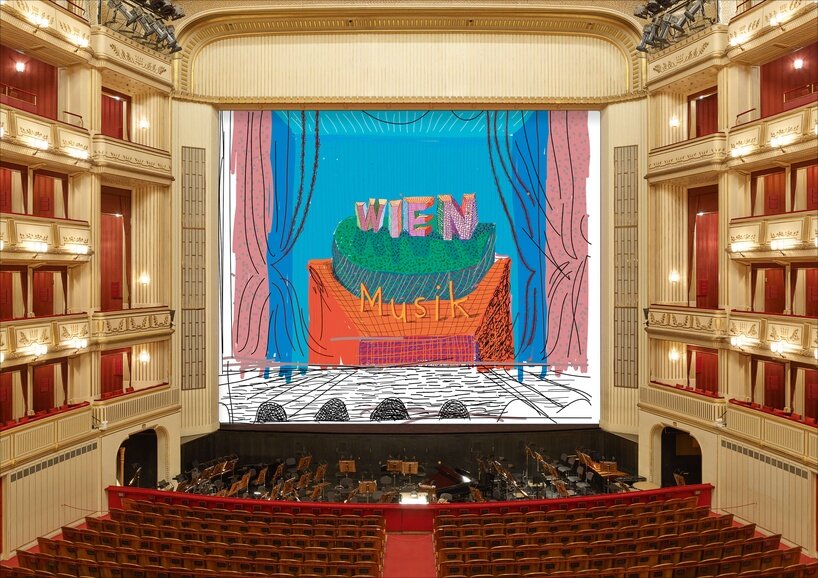
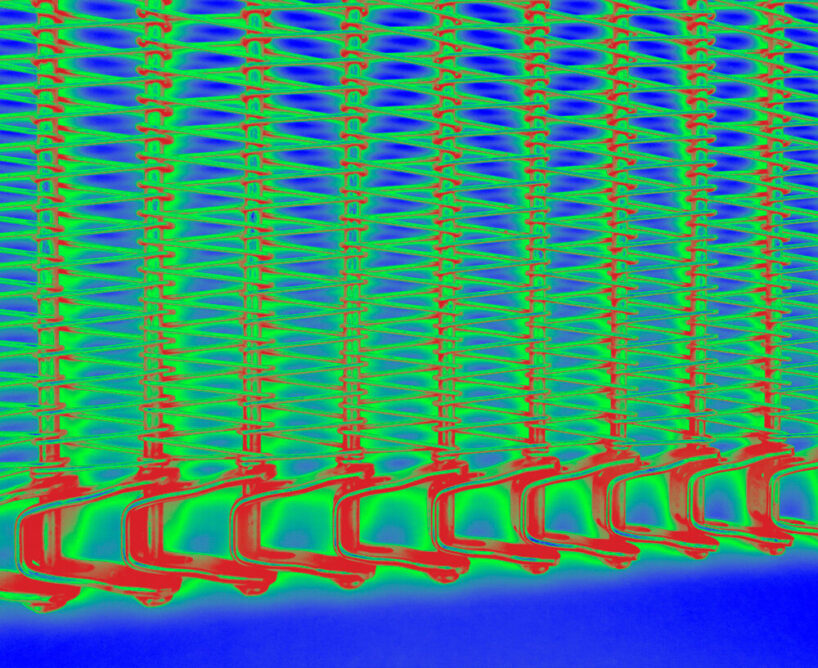
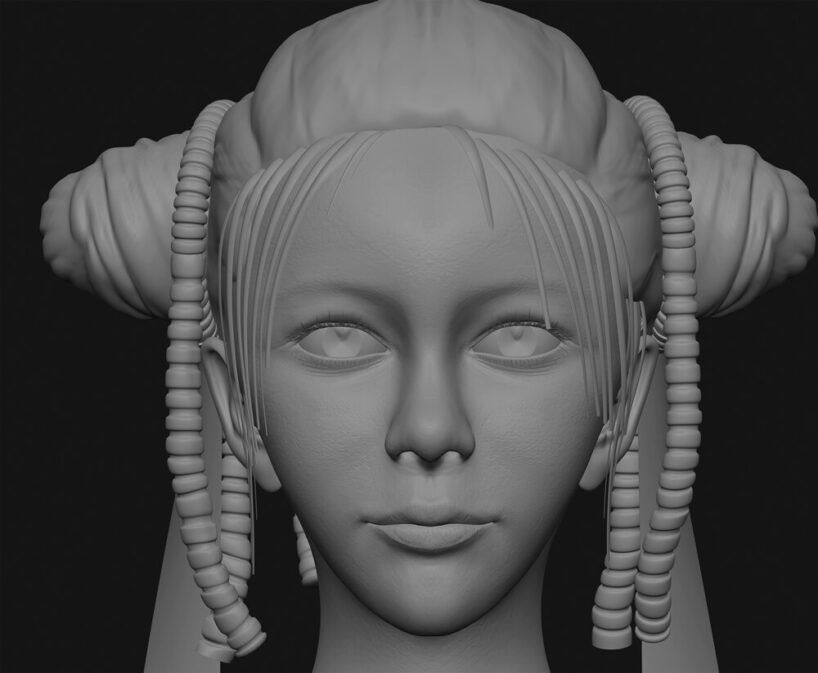
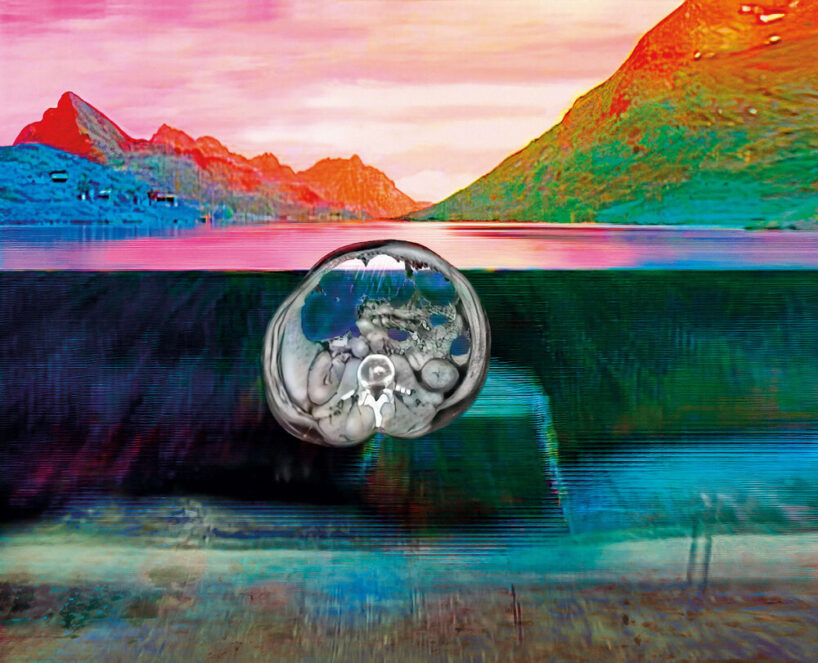
In the decade since its inception, Safety Curtain works have played with, subverted, and reinvented the frame upon which the Vienna State Opera’s performances take place. There’s Rirkrit Tiravanija’s 2006/2007 work Fear Eats the Soul, which makes use of the rainbow television test card, invoking the Rainer Werner Fassbinder film Ali: Fear Eats the Soul, or in its original German, ‘Angst essen Seele auf,’ which appears on the curtain itself. Similarly calling on the language of media, David Hockney’s 2012/2013 piece, created on an iPad, depicts a theater within a theater, loose curtains depicted in curving lines open up to reveal a stage with the words ‘Wien Musik’ dancing across a pile of colorful geometries. In each iteration, these art-world actors stage an exhibition that continues to advance the conversation on art, spectacle, and performance.
1/9
project info:
name: Safety Curtain
location: Vienna State Opera, Austria | @wienerstaatsoper
conceived by: museum in progress | @museuminprogress
date: 1998 – ongoing
29th safety curtain artist: Herbert Brandl
29th safety curtain jury: Daniel Birnbaum, Bice Curiger and Hans-Ulrich Obrist
This article is part of designboom’s SPECTATOR AND SPECTACLE chapter, asking how wonder gets built, and how it might return some mystery to a world that has measured most of it away. Presented in partnership with SolidNature, the stories in this chapter turn onlookers into participants, alter perception and disrupt the everyday – learn more here!
Each designboom chapter explores one theme in depth through projects, interviews, features and news across architecture, design, art and technology. Discover more chapters here, and get in touch if you’d like to submit a story through our submissions portal or contact form.
shop
your own online design shop — no sales commission collected