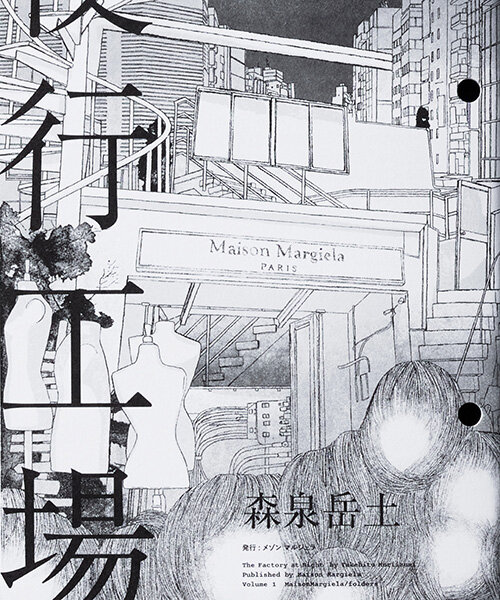
toothpick-drawn manga celebrates maison margiela tokyo flagship anniversary
an abandoned electronics factory, strange signals, and a group of researchers set the scene for the factory at night, an illustrated story that explores transformation without erasing the past.
prefer designboom on google[FEATURED]
maison margiela turns tokyo flagship’s past into a manga
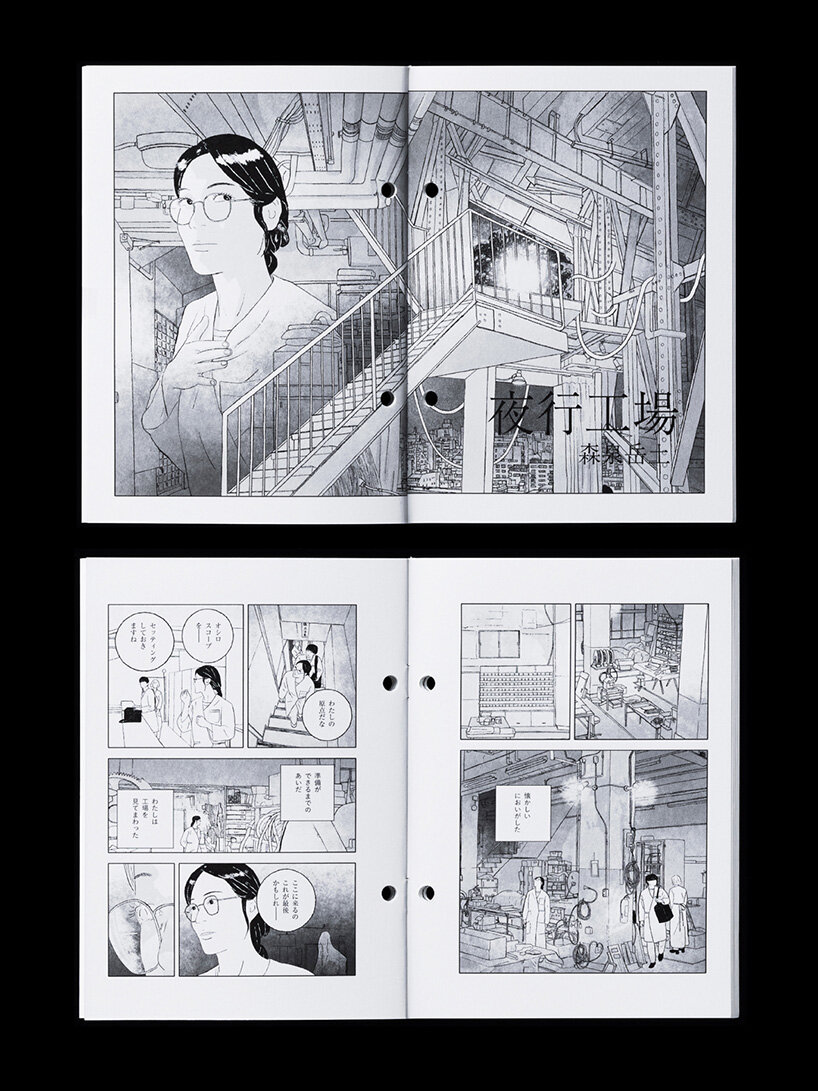
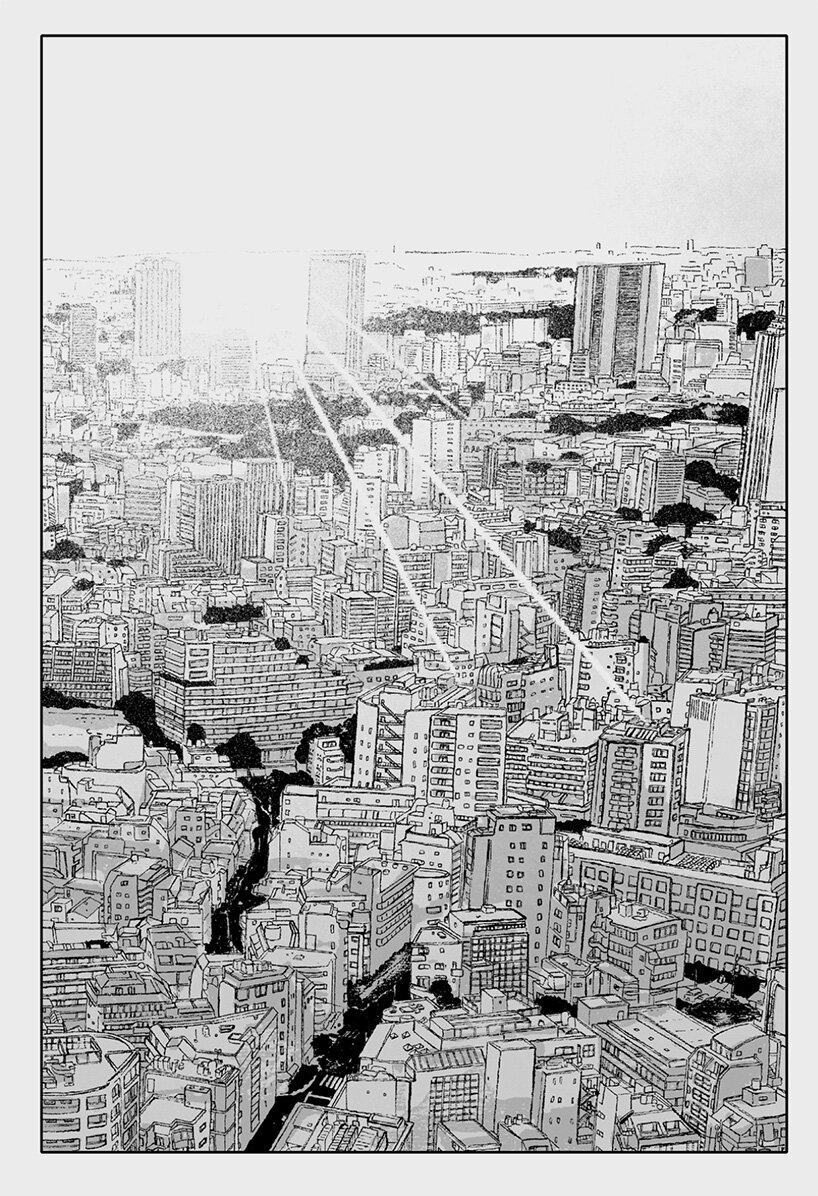
A former electronics factory, strange signals, and a group of researchers investigating an abandoned building set the scene for The Factory at Night, an original manga commissioned by Maison Margiela for the 20th anniversary of its Tokyo flagship in Ebisu. Created by Tokyo-based artist Takehito Moriizumi, the science-fiction story translates the history of the building into an illustrated narrative, with an unusual detail defining its visual identity: the manga is drawn using a toothpick. The limited-edition zine brings together illustration, architecture, fashion, and storytelling, extending the anniversary celebrations of the house.
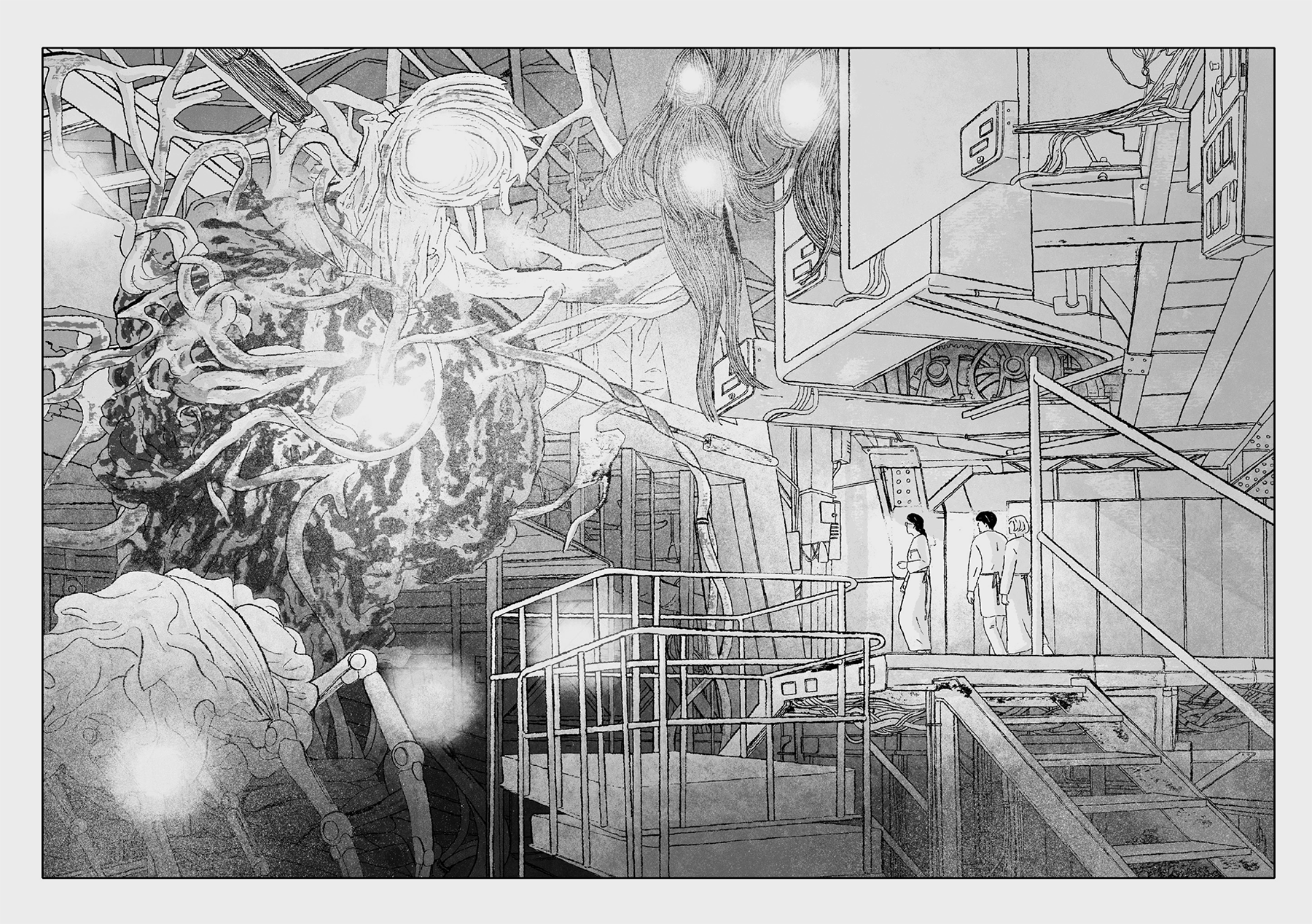
The narrative begins when a group of electrical engineering researchers visits an abandoned electronics factory to investigate strange signals recently detected inside. As they move through the building, they encounter an environment that seems to hold traces of its former life. Machinery, exposed wiring, industrial structures, staircases, and fragments of everyday objects populate the pages. Their investigation eventually leads to a transformation that introduces something entirely new without completely erasing what existed before.
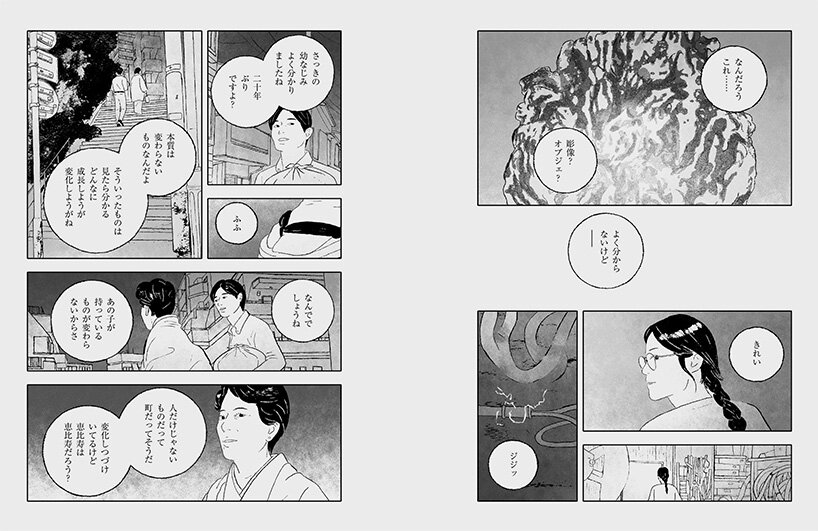
takehito moriizumi draws ‘The Factory at Night’ using a toothpick
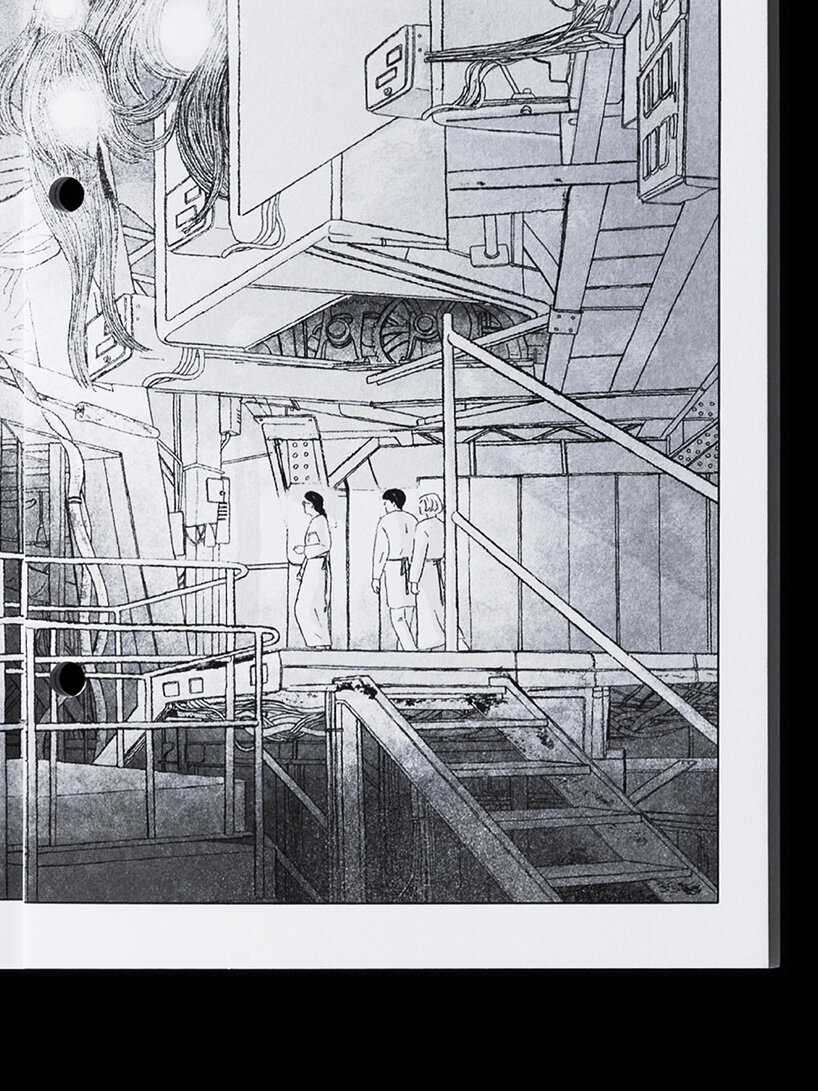
The visual language of the manga is built around detailed black-and-white illustrations. Architectural elements often dominate the compositions, with complicated structural frameworks, overlapping staircases, suspended platforms, and exposed technical infrastructure creating a dense environment around the characters. The factory feels almost like a character in its own right, its architecture providing both the atmosphere and the narrative framework for the researchers’ investigation.
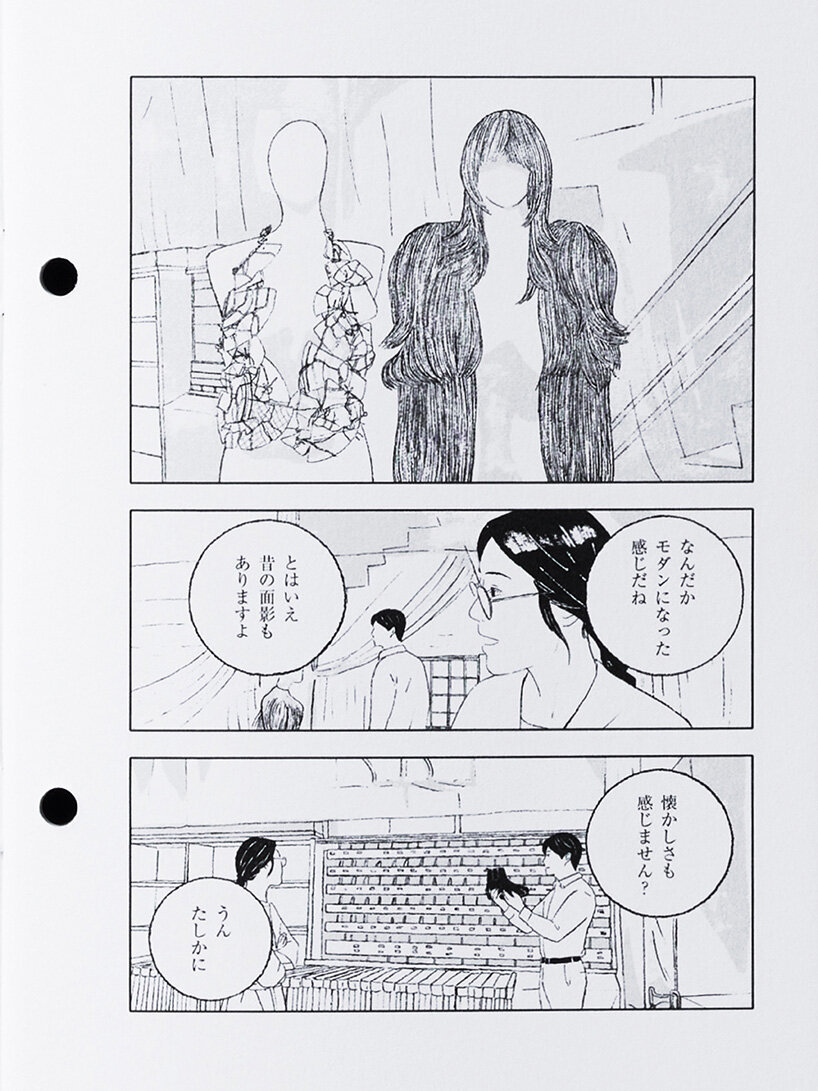
Moriizumi moves between expansive architectural scenes and more intimate manga panels, introducing the people who inhabit this unusual environment. The illustrations bring fashion into the fictional world through mannequins, garments, and references to the history of the house. The decision to work with a toothpick adds an unexpected material dimension to the publication. At a time when digital illustration, generative imagery, and increasingly automated creative processes are becoming part of visual production, the choice of an unconventional drawing tool invites a closer look at the act of making.
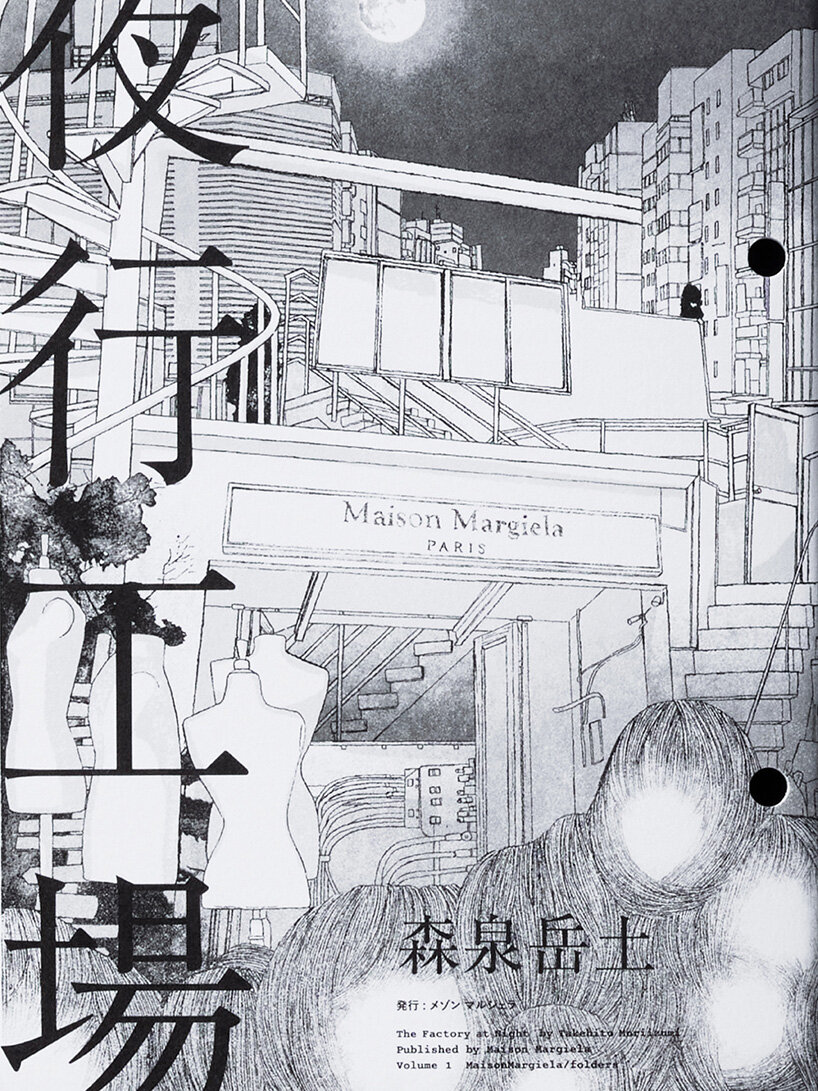
from an electronics factory to maison margiela’s tokyo flagship
The Maison Margiela Tokyo store occupies a former electrical control equipment manufacturing factory at 2-8-13 Ebisu Minami, a building the house took over in 2006. Its history began six years earlier, when Martin Margiela selected a 1940s traditional Japanese residence in the same neighborhood for the brand’s first-ever retail store. The original boutique opened in September 2000, in an unexpected location away from Tokyo’s established luxury shopping districts of Ginza and Omotesando. The choice reflected the designer’s longstanding relationship with Japan, a country he and the Antwerp Six had regularly visited throughout the 1980s and 1990s.
The house was transformed through one of the Maison’s most recognizable design gestures: Bianchetto, the practice of painting objects and surfaces white. Furniture, architectural elements, and even the property’s tree stumps were covered in white paint, while the original bathroom and shared spaces were retained. When the store had to relocate in 2006, Maison Margiela chose another unconventional building just a five-minute walk away. The former factory offered a different setting, but the approach remained consistent, with the house incorporating elements of its industrial history into the new retail environment rather than erasing its previous function.
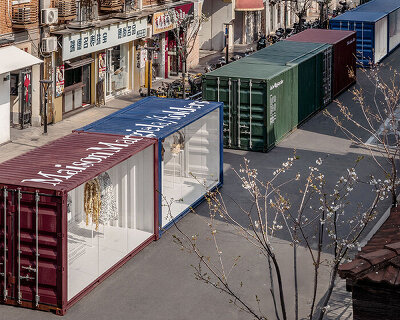
The original industrial goods elevator became fitting rooms, a shipping container housed the men’s collection, and a corridor leading to the shoes was constructed entirely from used shoeboxes. Furniture, doors, and display cases salvaged from flea markets and shops across Europe were brought to Tokyo. Parts of the original residential boutique, including its old family bathroom, were also reconstructed inside the new location, creating a physical connection between the two buildings.
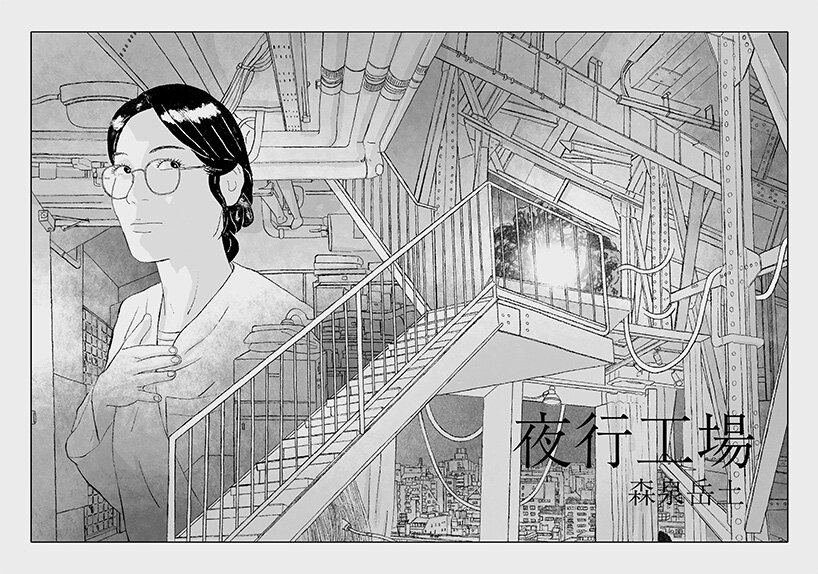
an anniversary told through a fictional story
Published as part of MaisonMargiela/folders, the manga forms one part of a broader initiative documenting the house’s history, creative identity, and relationship with its surroundings. The first volume of The Factory at Night is released on November 5, 2026, as a limited-edition zine available at selected newsstands across Ebisu and at the Maison Margiela Tokyo store. A digital edition is also being made available internationally through Dropbox.
project info:
name: The Factory at Night
artist: Takehito Moriizumi | @moriizumi_takehito
commissioned by: Maison Margiela | @maisonmargiela
publisher: Maison Margiela
publication: MaisonMargiela/folders, Volume 1