
LOOKING BACK AT THE TOP 10 photography stories OF THE YEAR
Moments from 2025 were captured through the lenses of photographers across the globe, showcasing a diverse range of projects that caught our eye here at designboom. Spanning expansive volumes and standalone series, artists offered compelling glimpses of the world, from Christopher Herwig’s vibrant documentation of South Asia’s trucks and tuk-tuks to Romain Jacquet-Lagrèze’s daring portraits of bamboo scaffolding workers navigating the heights of Hong Kong. The year also brought haunting aerial compositions by Reuben Wu, who combined drones, lasers, and long exposures to mesmerizing effect, alongside a collection of unusual houses around the world, documented in a book published by Hoxton Mini Press.
After revisiting the striking photography projects we covered over the past 12 months, we’ve curated a selection of the top 10 that continue to inspire us. Read on to explore the full list.
REUBEN WU’S AERIAL GEOMETRIES ACROSS REMOTE LANDSCAPES
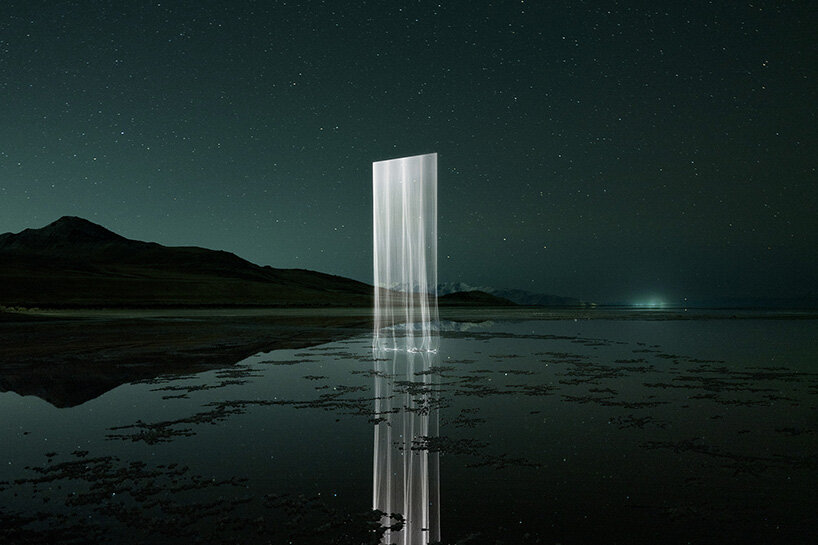
image by Reuben Wu
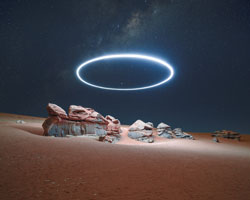
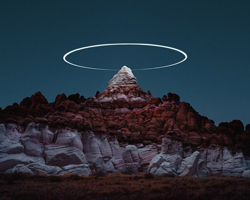
In his series Thin Places, multidisciplinary visual artist, photographer, and director Reuben Wu inscribes light onto remote natural environments through experimental photographic interventions. Known for his haunting aerial compositions using drones, lasers, and long exposures, the artist has developed a unique visual language that brings photography, design, and speculative technology together. In Thin Places, Wu frames landscapes where artificial light and natural terrain seem to meet halfway. The images are captured entirely on-site, in single exposures, using drones and lasers to trace fleeting geometries into the environment.
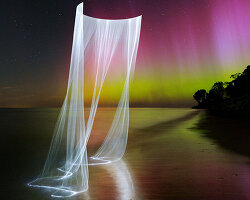
One standout work from the series, Surface Tension, was photographed at a remote salt lake under a moonless sky. Using a custom aerial laser swept just above the water’s surface, Wu renders a floating curtain of light, revealing crystalline salt structures caught between the stars above and their reflections below.
read more here
ROMAIN JACQUET-LAGRÈZE’S HONG KONG SCAFFOLDING WORKERS
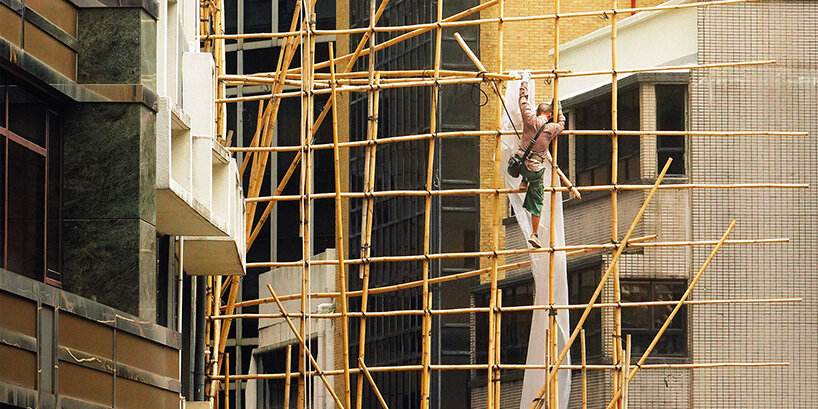
image by Romain Jacquet-Lagrèze
While Reuben Wu illuminates remote landscapes with ethereal light, Romain Jacquet-Lagrèze turns his gaze to human skill and labor within Hong Kong’s dense urban fabric. In Echoing Above, he documents the extraordinary practice of bamboo scaffolding, focusing on its structural and spatial nuances and the precision required to navigate it safely. Bamboo scaffolding, particularly the Fei Paang (飛棚, or ‘flying shed’) type, remains a defining feature of renovation work in compact residential areas. Assembled directly onto building exteriors with minimal anchoring, it allows workers to perform targeted maintenance tasks, from air conditioning repairs to facade cleaning. Suspended at dizzying heights, they move along narrow ledges and supports, often holding long bamboo poles in a single hand, showcasing remarkable agility and dexterity.
read more here
THE LOUVRE THROUGH FRANCK BOHBOT’S LENS

image © Franck Bohbot
From Hong Kong’s soaring scaffolds, the focus shifts to the hushed interiors of one of Europe’s most iconic cultural landmarks. Franck Bohbot turns to Paris’s Musée du Louvre, capturing a side of the institution rarely seen by its millions of annual visitors. In his series, Bohbot presents an unusually tranquil, architecturally attentive portrait of the museum. Granted rare carte-blanche access, the French-born, New York–based photographer explores the Louvre’s interiors with a quiet precision, revealing its structural rhythm and enduring material presence. Part of his broader Parisian Interiors project, the work reframes the Louvre not as a global destination but as what Bohbot calls ‘a living architectural organism.’ His images distill the museum into a sequence of calm spatial encounters, captured entirely in natural or available light. Daylight subtly gradients across galleries, vanishing lines draw the eye through layered histories, and the textures of stone, wood, and marble anchor each composition in a sense of stillness and permanence.
read more here
GAURI GILL PHOTOGRAPHS INDIA’S ADAPTABLE PROTEST SHELTERS
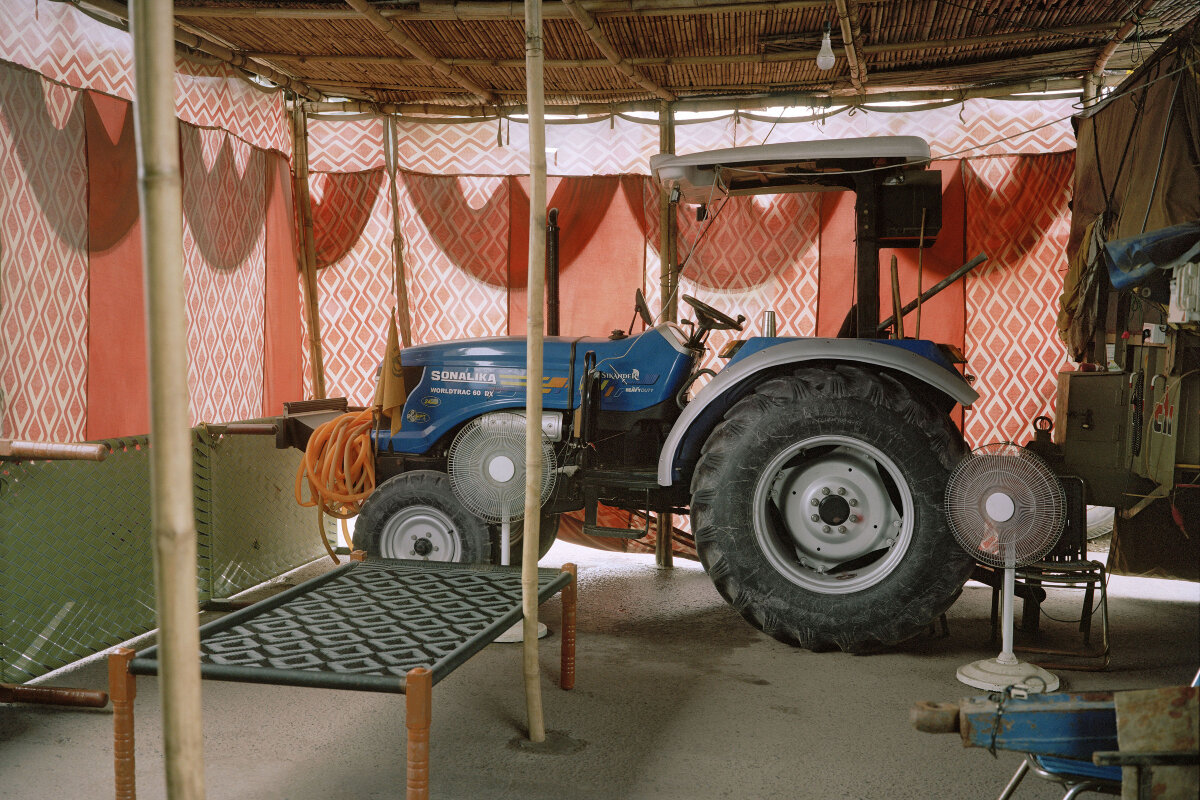
image © Gauri Gill | courtesy of the artist and Vadehra Art Gallery
From the stillness of the Louvre’s monumental interiors, the list shifts to a landscape shaped by collective action and improvisation. In The Village on the Highway, Gauri Gill documents the improvised shelters built by India’s protesting farmers, revealing a terrain defined by resilience and resourcefulness. Exhibited at Vadehra Art Gallery in New Delhi, the series comprises 90 large-format analog photographs tracing how roadside encampments evolved into self-sustaining settlements. Farming vehicles became shelters, tarpaulin and bamboo formed walls and partitions, and fabric enclosures were cut to create makeshift doors, creating spaces adapted for rest, cooking, bathing, and gathering.
Even the road became a site of cultivation, with small vegetable plots providing sustenance. Everyday objects such as pots, coolers, and mosquito nets take on sculptural presence in Gill’s images, underscoring the ingenuity of these lived environments and the realities facing India’s marginalized farmers.
read more here
SOUTH ASIA’S TRUCKS AND TUK TUKS BY CHRISTOPHER HERWIG
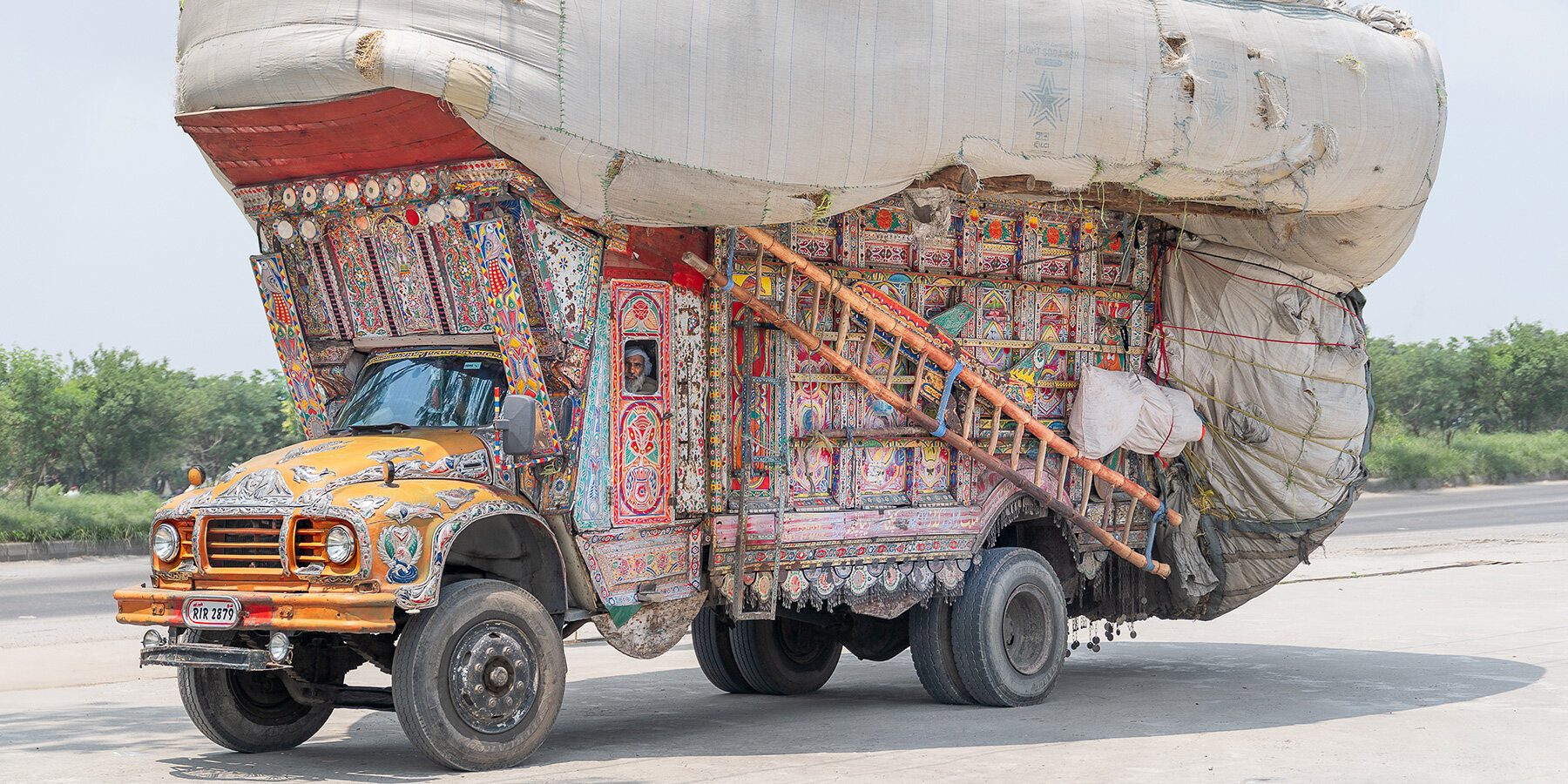
image by Christopher Herwig
Leaving India’s improvised protest structures behind, we move to the bustling streets of South Asia where Christopher Herwig captures a vibrant, often-overlooked form of mobile artistry. Trucks and tuk tuks, ordinary vehicles for daily transport, are transformed by their drivers into moving canvases, adorned with intricate patterns, bold colors, and personal motifs that express identity, pride, and aspiration. Herwig’s book Trucks and Tuks, published by FUEL, draws on four years and 10,000 kilometers of travel across the region. The series documents not just the visual details of the vehicles themselves, but also the culture, communities, and stories that animate them.
read more here
‘WEIRD BUILDINGS’ SNAPSHOTS ARCHITECTURE AT ITS STRANGEST
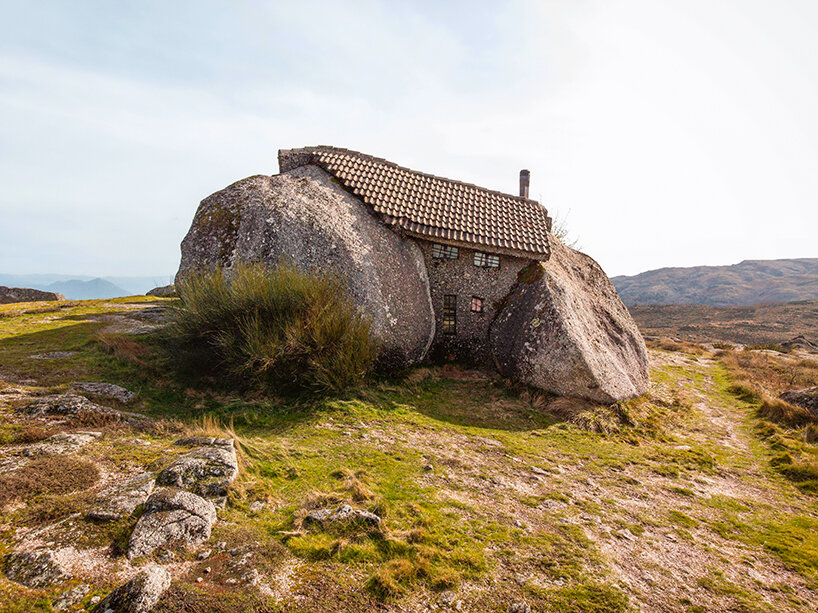
Casa do Penedo | image © Marc-Philipp Keller / Alamy
Weird Buildings, a new photo book from Hoxton Mini Press, gathers some of the most unconventional structures in the world, featuring places where architecture slips into humor, surrealism, or pure creative refusal. From sculptural homes to roadside mascots, the book documents buildings that bend logic, ignore convention, and embrace a sense of play.
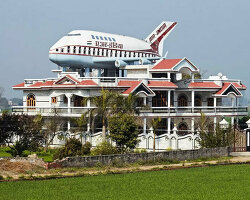
The selection spans global oddities: Portugal’s Casa do Penedo, wedged between massive boulders; the Inntel Hotel in Zaandam, a 12-story stack of traditional facades; Lebanon’s Airplane House shaped like an Airbus A380; New York’s iconic Big Duck roadside shop; and Robert Bruno’s rust-colored Steel House in Texas, a spaceship-like form welded over three decades. Weird Buildings frames these structures as expressions of personal vision and architectural risk-taking. Some exist as local landmarks, others as private passions or experiments in form and material. Together, they highlight a lineage of designers, from Gaudí to Gehry to contemporary studios like BIG, who stretch architecture into the unexpected.
read more here
GREG GIRARD DOCUMENTS JAPAN’S FADING SAKURA SNACK BARS
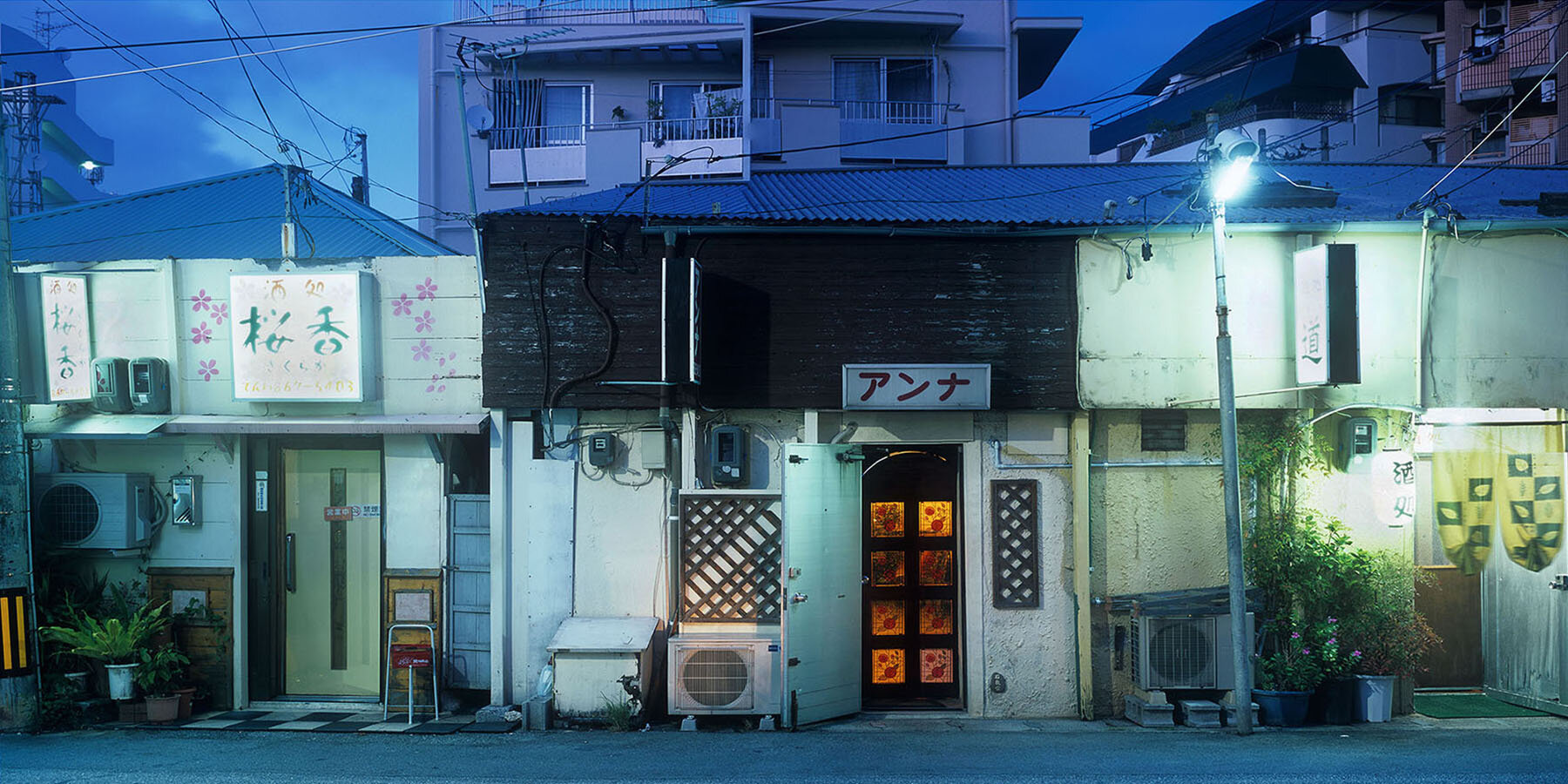
Snacks in Naha, Okinawa | images courtesy of Greg Girard
In Snack Sakura, photographer Greg Girard traces a thread running through Japan’s nightlife and frames the countless small ‘snack’ bars of the country, many of which share the same name: Sakura. Shot over six years across all 47 prefectures, the series captures the intimate, low-lit interiors where regulars gather around a counter, guided by a mama or master who anchors the room with conversation, karaoke, and routine.
Originating in the 1960s as bars that skirted midnight curfews by serving food, snacks evolved into hyper-local refuges for older clientele, often hidden from the digital world. Girard’s discovery that Sakura is the most common snack name becomes the backbone of the project, sending him to locate, photograph, and sometimes simply record the traces of these elusive establishments, many of which are unlisted, renamed, or demolished. His images reveal a culture defined by soft neon, vinyl stools, quiet rituals, and the small communities that form inside.
read more here
FOX & KNORR TRACE EVERYDAY AMERICA ALONG ROUTE 1
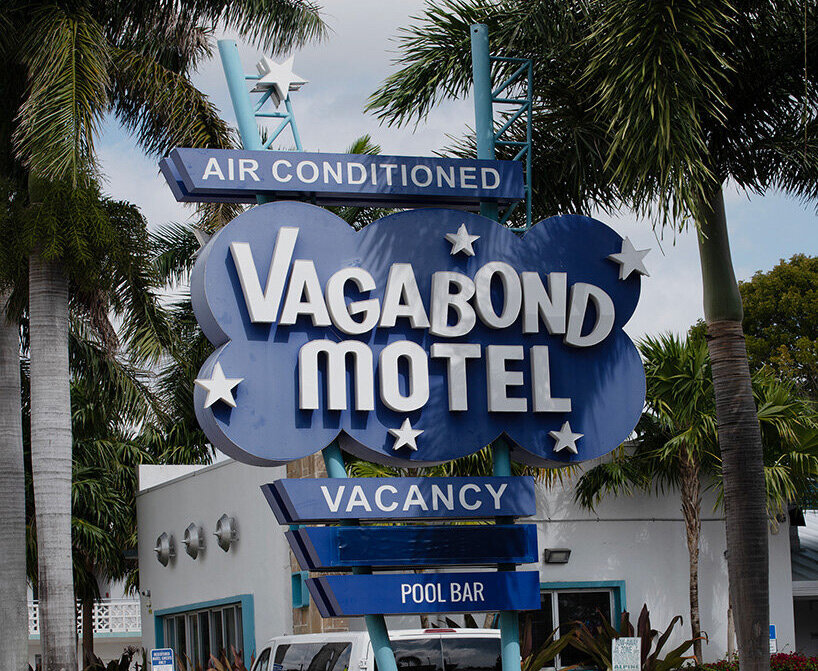
Karen Knorr and Anna Fox, Biscayne, Blvd 2025
For Rencontres d’Arles 2025, Anna Fox and Karen Knorr revisit U.S. Route 1, the 2,400-mile corridor first photographed by Berenice Abbott in 1954, to examine how the cultural landscape of the road has shifted in a fractured political era. Moving from the Florida Keys to Maine, the duo documents motels, diners, storefronts, signage, and small-town detritus, using the highway as a barometer of present-day American identity. Their photographs echo Abbott’s original journey but sidestep nostalgia, capturing the subdued, uneasy quiet that lingers along Route 1 today, embodied in shuttered businesses, hyperlocal politics, faded optimism, and the architecture of economic decline. The work blends DSLR, medium format, and iPhone images, reflecting how visual culture now circulates across devices and feeds. That digital reality enters the project directly, with Fox and Knorr incorporating social media, sourced images, including scenes from the January 6th Capitol riot, to underscore how public life is increasingly mediated.
read more here
RAPHAËLLE PERIA SCULPTS DECAY DIRECTLY INTO HER IMAGES
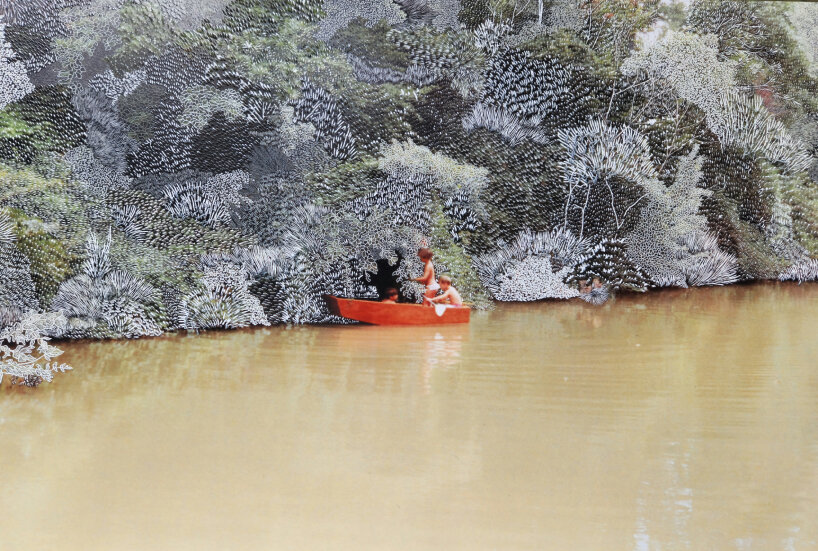
Cueillir les murmures by Raphaëlle Peria
Raphaëlle Peria debuts Traversée du fragment manquant at BMW’s Rencontres d’Arles 2025 exhibition, a photographic series curated by Fanny Robin that revisits her childhood images of the Canal du Midi, a landscape now devastated by canker stain, the fungus that has already killed tens of thousands of its historic plane trees. Working from her father’s archives, Peria engraves, scratches, and carves directly onto the photographs, revealing the white substrate beneath or, for the first time, printing on plexiglas to create transparent, sculptural surfaces.
Copper leaf appears throughout the series, echoing the copper-toned discoloration of the infected trees and marking the gradual takeover of the fungus. Seen from one angle, the works read as photographs; from another, they resemble drawings or etched reliefs, bringing together Peria’s background in engraving with her photographic practice. The series becomes a meditation on disappearance, the before-and-after of a landscape recorded by chance in childhood images and revisited now through material erasure.
read more here
DRUTEL PHOTOGRAPHS METROS AS SERENE MIRRORED SPACES
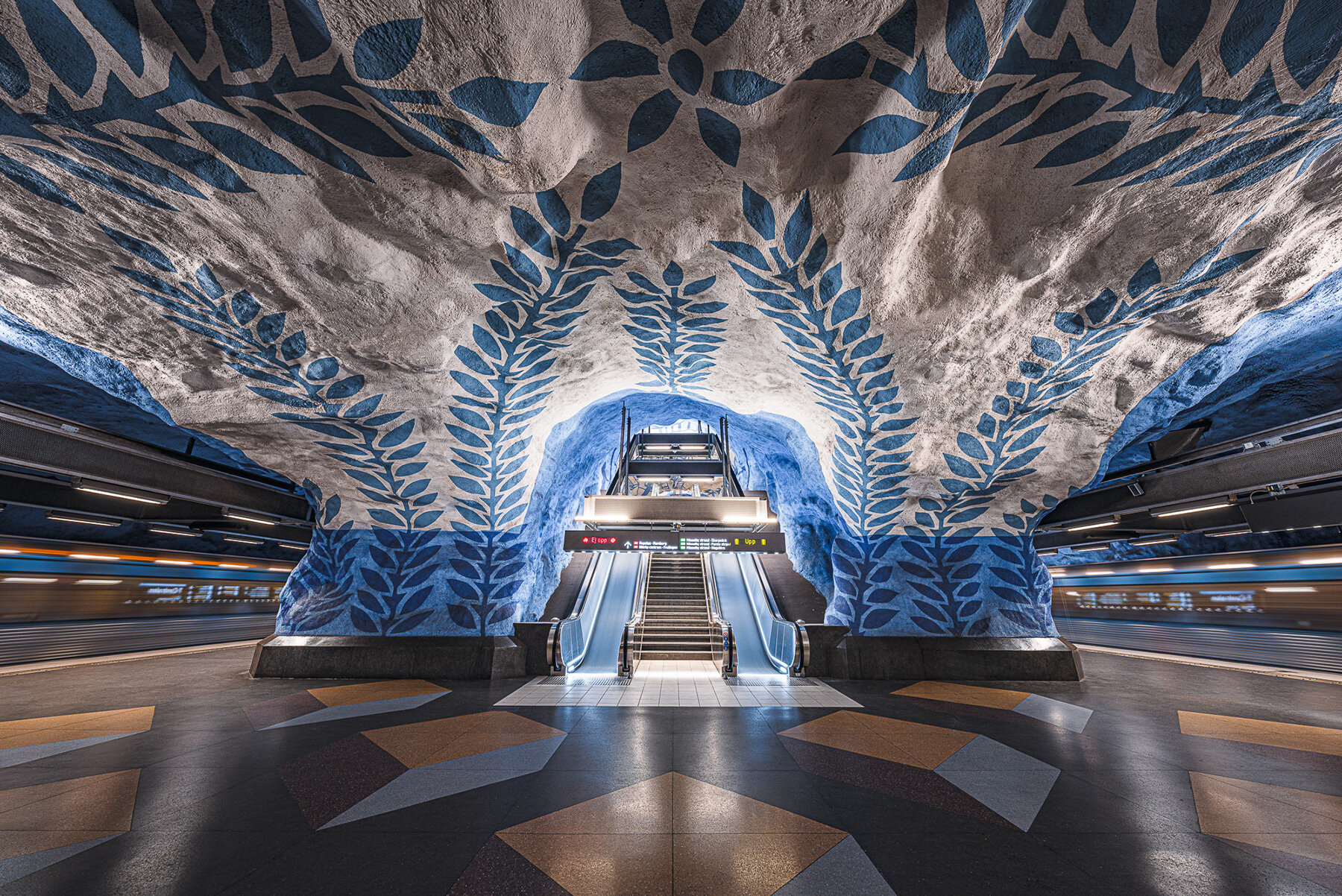
Stockholm | image by Thibault Drutel
designboom book reports (232)
franck bohbot (9)
 Jul 14, 2025
 May 01, 2025
 Feb 28, 2025
 Feb 15, 2021
les rencontres de la photographie d'arles (8)
 Jul 26, 2025
 Jul 16, 2025
 Jul 08, 2025
 Aug 21, 2024
 Jul 08, 2024
musée du louvre (22)
 Oct 17, 2025 Jul 14, 2025
 Jul 01, 2025
 Feb 23, 2024
 Oct 30, 2022
photography (444)
 Jan 31, 2026
 Jan 14, 2026
 Dec 28, 2025
 Dec 22, 2025
reuben wu (6)
 Jul 29, 2025
 Nov 26, 2020
 Oct 08, 2019
 Mar 09, 2018
 Apr 20, 2015
TOP 10 LISTS OF 2025 - BIG STORIES (11)
 Dec 31, 2025
 Dec 30, 2025
 Dec 29, 2025
 Dec 26, 2025
 Dec 24, 2025
 Feb 05, 2026
 Jan 22, 2026
 Jan 01, 2026
 Nov 27, 2025