ivy-clad vanished house in wuhan cemetery encapsulates feelings of remembrance
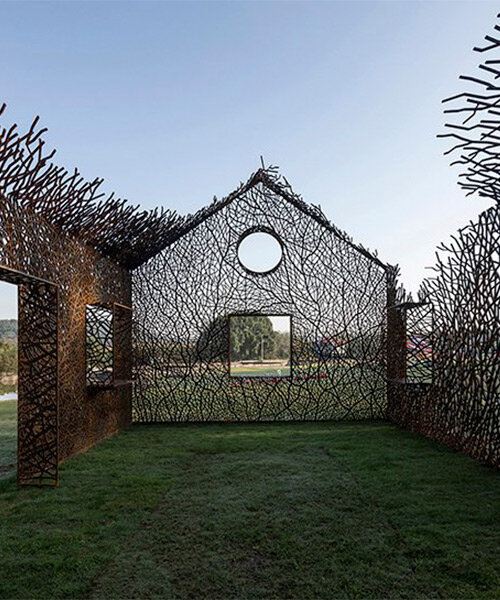
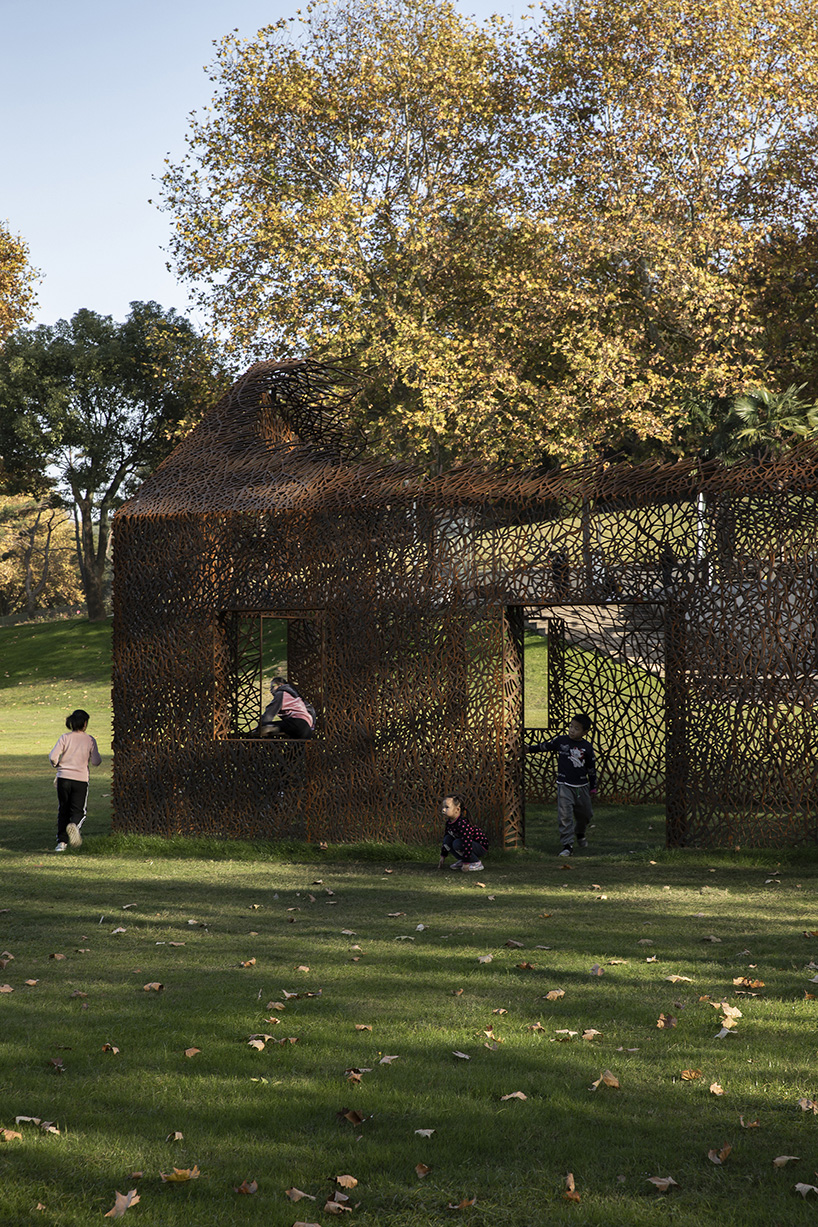
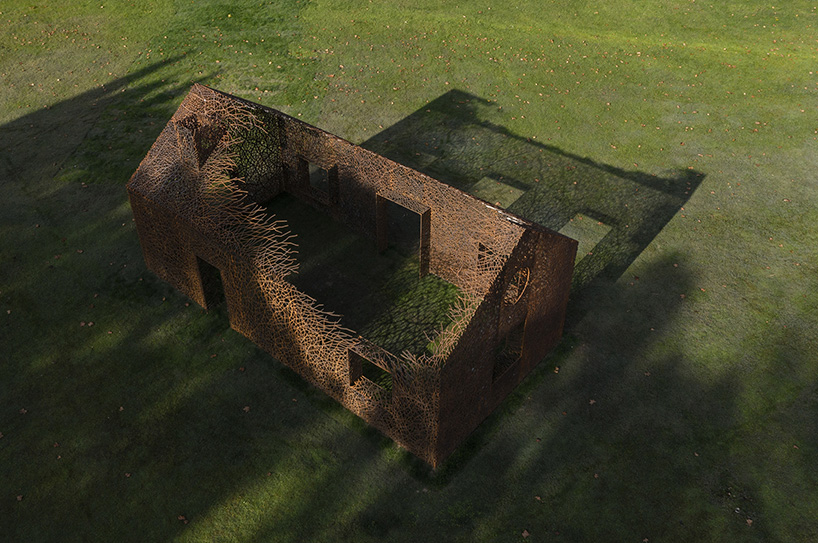
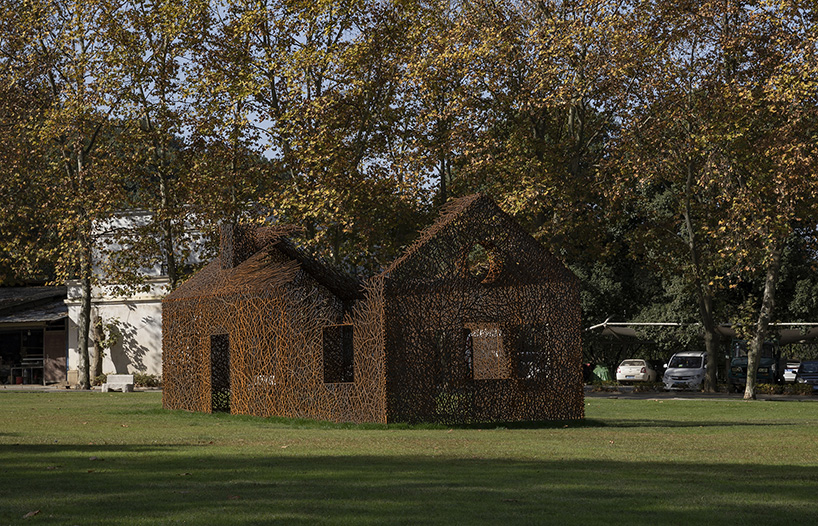
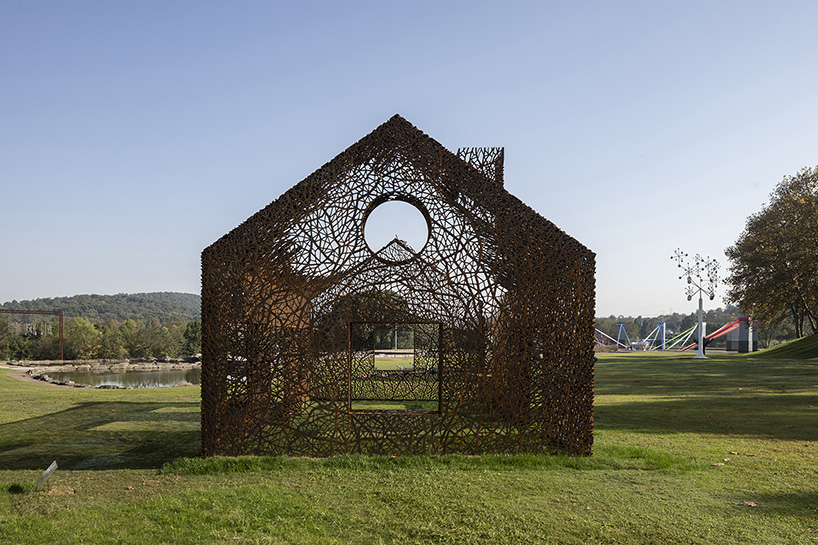
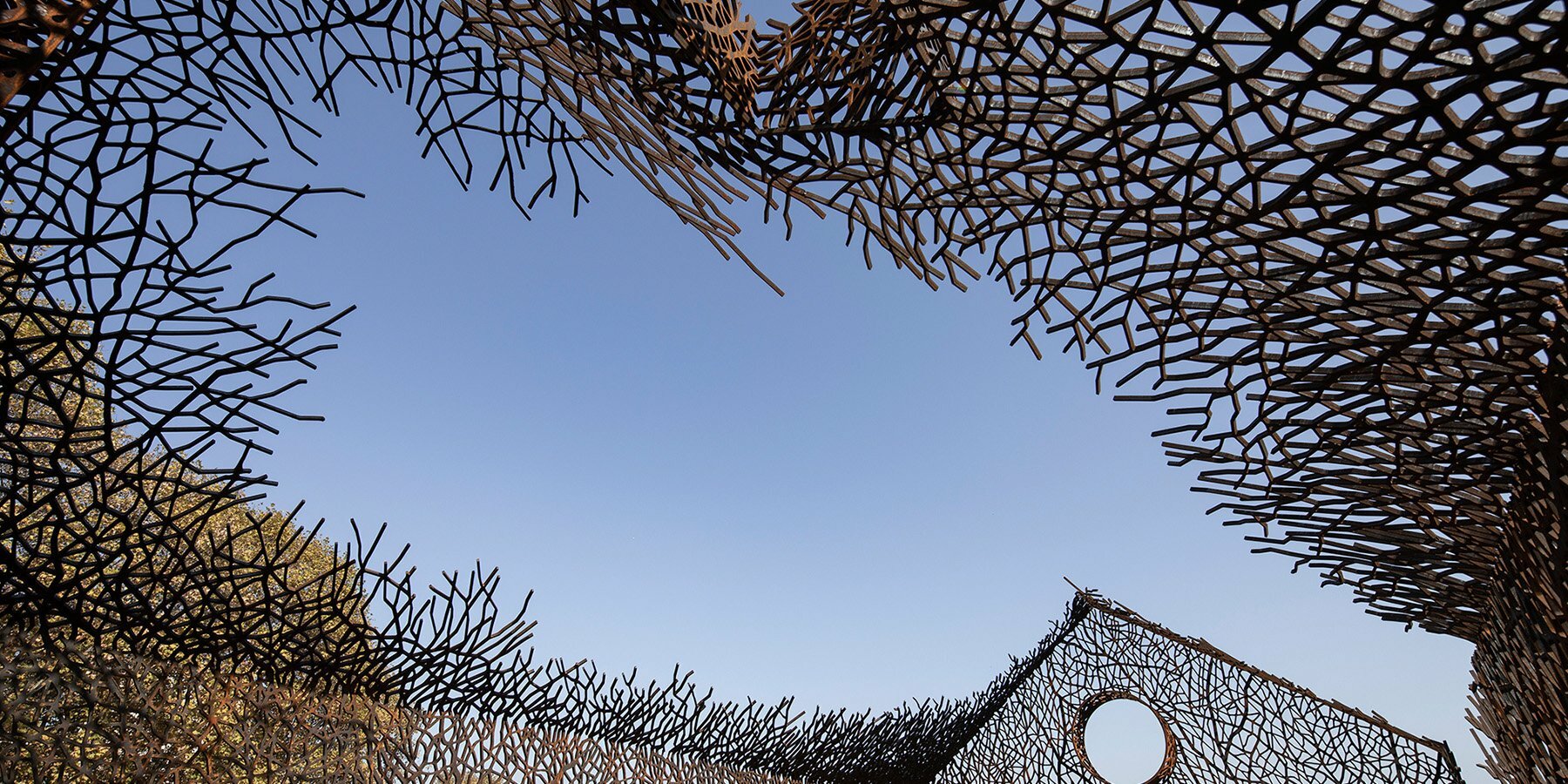
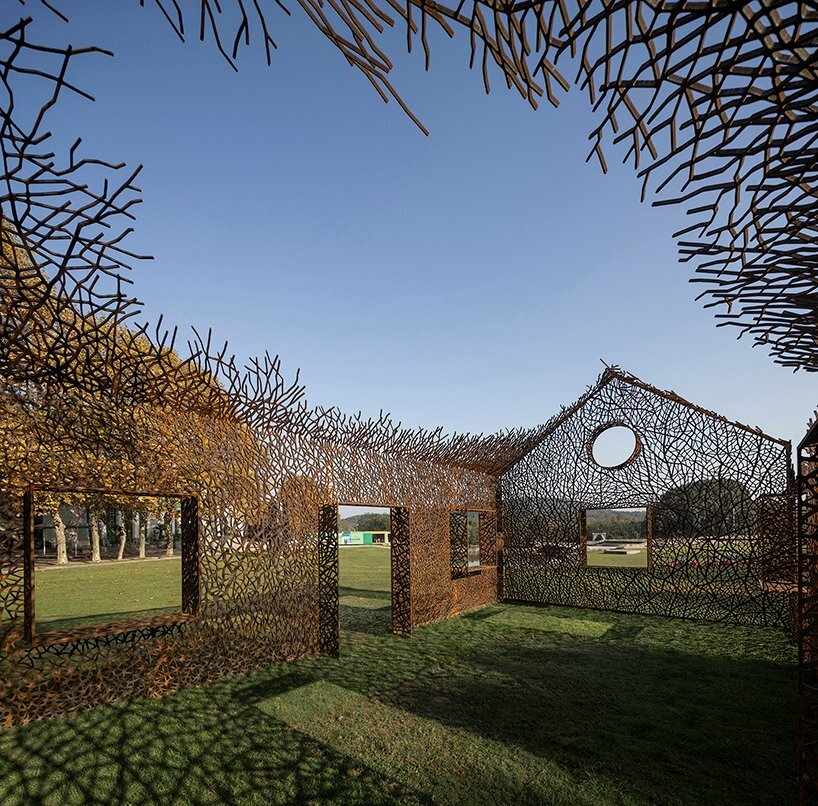
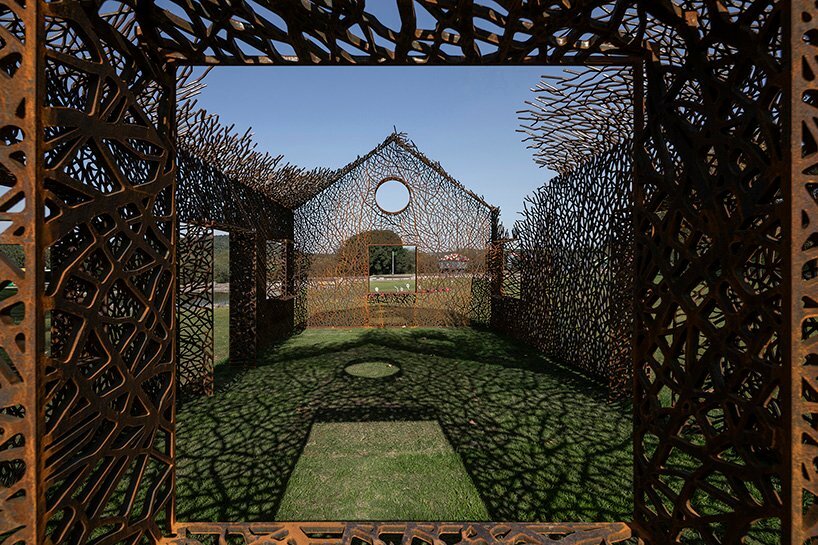
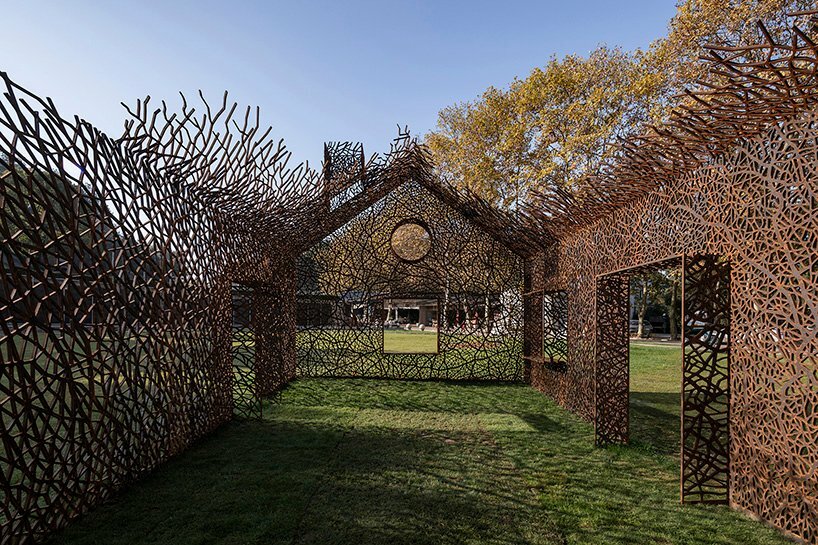
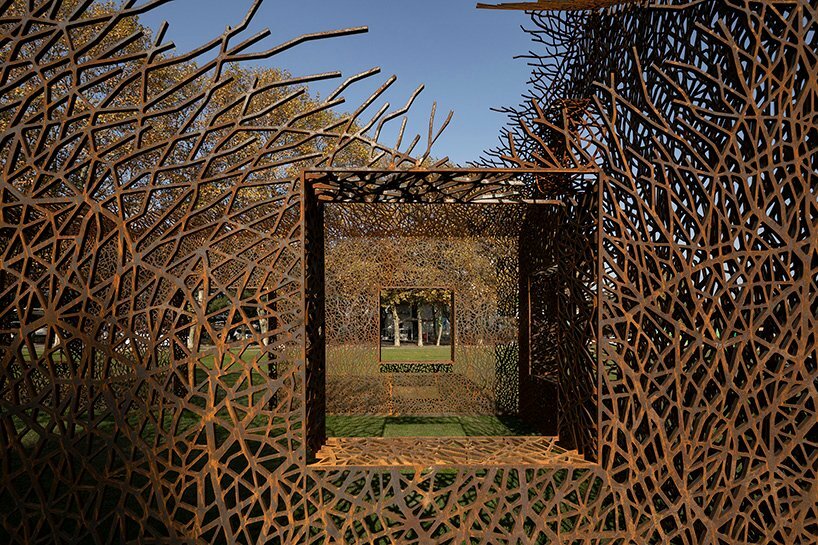
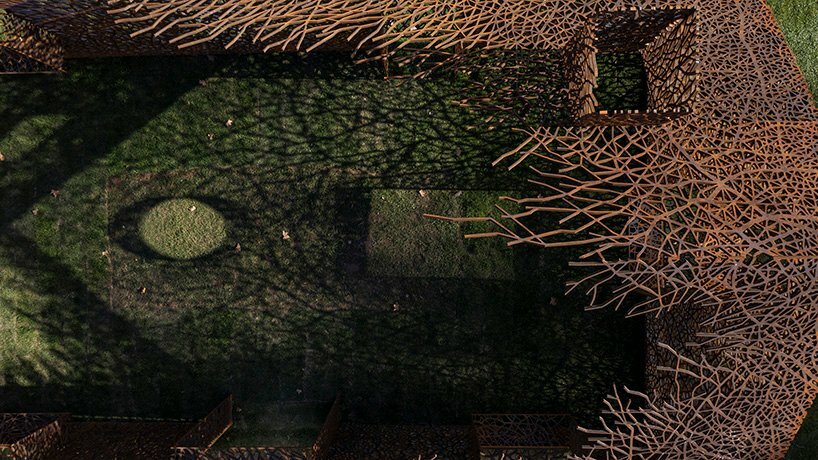
the corten sculpture takes the shape of a house covered in sprawling ivy, serving as a symbol of a home that's fading away.
prefer designboom on google[FEATURED]
the vanished house by Hu Quanchun
Designer Hu Quanchun of Field Conforming Studio introduces Vanished House, a memorial installation created for the second East Lake International Ecological Sculpture Biennale held in Wuhan in 2021. Set in the Wuhan Shimenfeng Memorial Park, a cemetery with a tranquil spatial atmosphere, the sculptural piece takes the shape of a house covered in sprawling ivy, serving as a symbol of a home that’s fading away. Seeking to evoke feelings of remembrance, the artwork fits harmoniously within the site and generates a peaceful ambiance suitable for mourning activities.

all images by Jin Weiqi
a simple house typology
After settling on the concept of a vanished house to resonate with the exhibition venue, the key question for Hu Quanchun and the team at Field Conforming Studio (find more here) was what kind of house to choose. In the beginning, they thought about choosing a typology with features specific to Wuhan architecture, in order to represent locality. After research, however, they found that the city’s old buildings, especially residential ones, didn’t have obvious local features, while public constructions representative of Wuhan were not reasonable choices for such an environment.
Finally, the team decided to choose the simplest image that a house could be. Involving neither locality nor extra symbols, it was just a simple house that resembled a child’s sketch. The form adds more simplicity and purity to the work, while the patterns of the sprawling creepers introduce more sophistication.
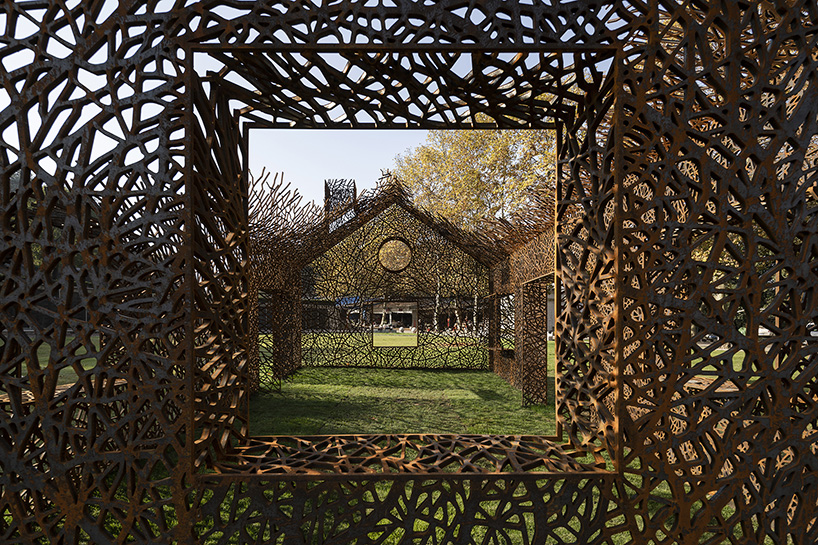
sketching the sprawling ivies one by one
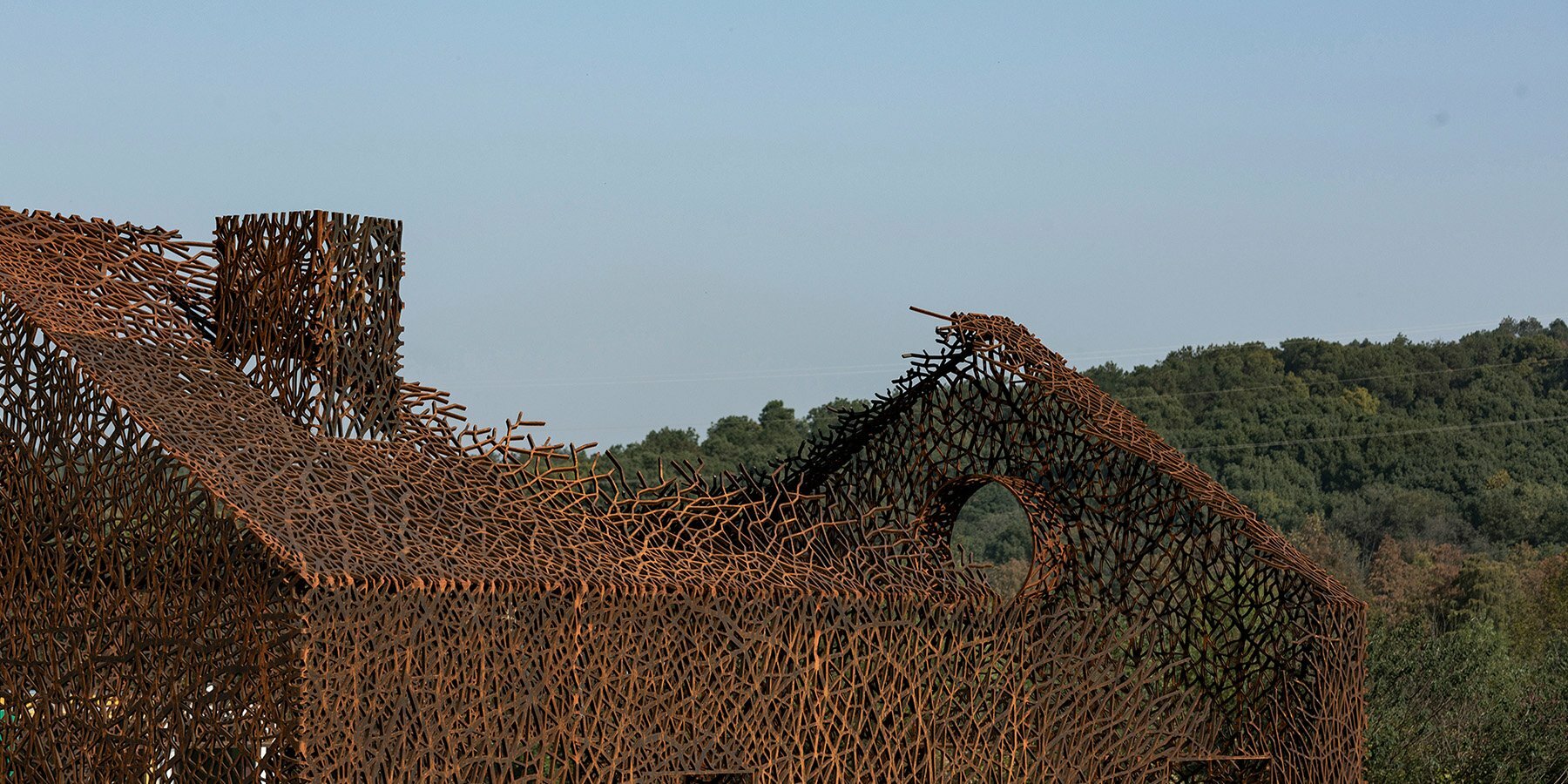
After the spatial form was confirmed, the designers had to figure out how to convey the sense of a vanished house through the status of the creepers. To achieve this, they made a 1:10 miniature of the house with cardboard and sketched ivies on the model to present the growing status of the plants. In this way, the designers could control the density and size of the vines, as well as the twists, turns, and joints. The process of sketching was the most sentimental part of the creation, and has brought a distinctive feature of handicrafts and paintings to the work.
After the vines were sketched on the miniature, the designers converted them into vector files. As the final work would be realized through laser engraving on Corten steel, they broke down the model for high-resolution scanning and then manually converted the scanned files into vector files available for laser engraving. In addition to drawing the lines one by one, the most important procedure was dealing with the connections where the lines turned. All details were meticulously modified until manufacturing started in the factory.
made of durable corten steel
The material used for the piece is Corten steel, and it was chosen for two specific reasons. Firstly, the color that Cortn steel adopts after rusting, which is a crimson tone that can well express the texture of the creepers’ vines. Secondly, the durability of the material, which can help the structure support itself efficiently. Over time, the color of the Corten steel plates will get darker with sunshine and rain, and the presence of the piece will become increasingly prominent.

1/5
project info:
name: The Vanished House
designer: Field Conforming Studio
chief designer: Hu Quanchun
design execution: Xiang Yu, Chen Songlin
size: 9.8m×5.1m×4.8m
material: 2cm-thick Corten steel plate
exhibition curator: Sun Zhenhua
academic moderators: Lu Hong, Ji Shaofeng
exhibition art director: Fu Zhongwang
exhibition organizers: Zhi Art Space, Hubei Museum of Art, United Art Museum
exhibition support units: Wuhan Institute of Design and Sciences / School of Public Art, Wuhan Creative Industry Development Co., Ltd.
exhibition sponsors: Wuhan Shimenfeng Memorial Park Co., Ltd., Wuhan Tianyu Hengxin Investment Management Co., Ltd.
designboom has received this project from our ‘DIY submissions‘ feature, where we welcome our readers to submit their own work for publication. see more project submissions from our readers here.
shop
your own online design shop — no sales commission collected