tsibi geva wraps the israeli pavilion in tire walls for the venice art biennale
the site-specific installation forms a protective layer over the structure, turning it into a sculptural event on the grounds of venice's giardini.
prefer designboom on google
tsibi geva wraps the israeli pavilion in tire walls during the venice art biennale
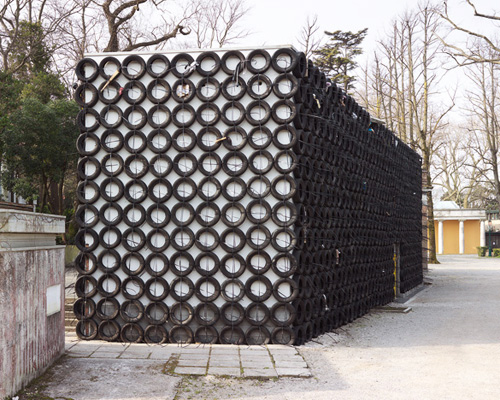
(above) ‘tire walls’, 2015
tires, cables, found materials
all photos by elad sarig
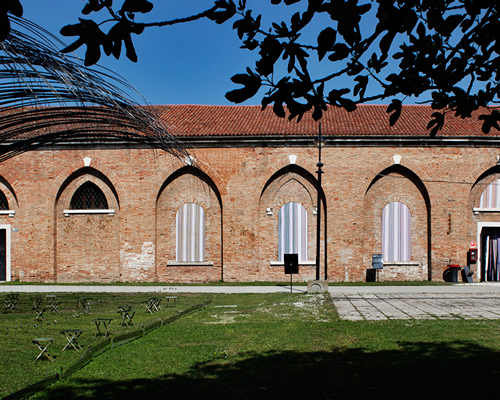
during the venice art biennale 2015, tsibi geva extends ‘archeology of the present’ across the exterior of the israeli pavilion building as well as through its interior. the site-specific installation sees the entire pavilion canvassed with over a thousand used black tires, tightly interlocked with cables to create a stippled grid. brought in from israel, the used tires, permeated with a distinct odor, forms a protective layer over the structure, turning it into a sculptural event on the grounds of venice’s giardini. ‘tire walls’ form an organized network of holes that appear to defend the building from danger, visually communicating an urgent political statement.
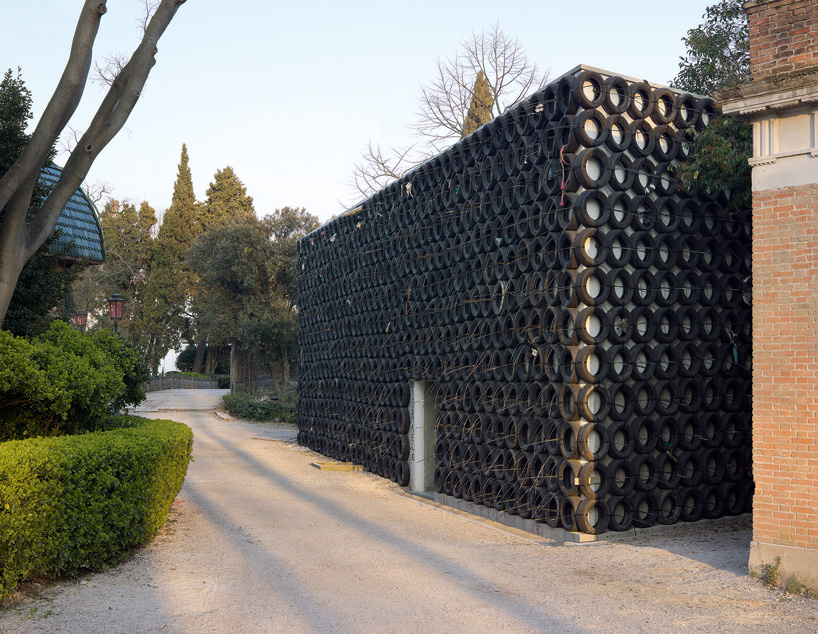
installation view of ‘tire walls’ for the israeli pavillon at the 56th international art exhibition
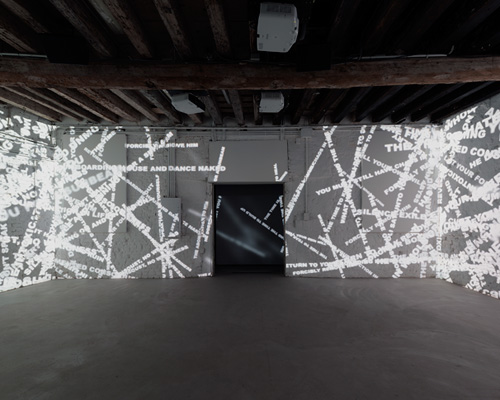
upon entering the pavilion, an interior installation meets visitors, comprising paintings, sculptural elements, and found objects. the exhibition overall embodies the israeli artist’s ongoing concern with ideas related to the notion of ‘home’. the use of terrazzo tiles, windows, shutters, lattices, and cement blocks exist as fragments of could constitute a place of habitation.
‘the project encompasses the thematic and formal characteristics that have come to define geva’s work over time. using the exterior as well as the interior of the pavilion, it destabilizes familiar divisions between inside and outside, the functional and the representational, high and low, abandoned, found, and modified elements’, describes hadas maor, curator of the israeli pavillon at the art biennale 2015. ‘it raises self-reflexive artistic concerns and epistemological questions, as well as political and cultural questions pertaining to locality and immigration, hybrid identity, existential anxiety and existence in an age of instability.’
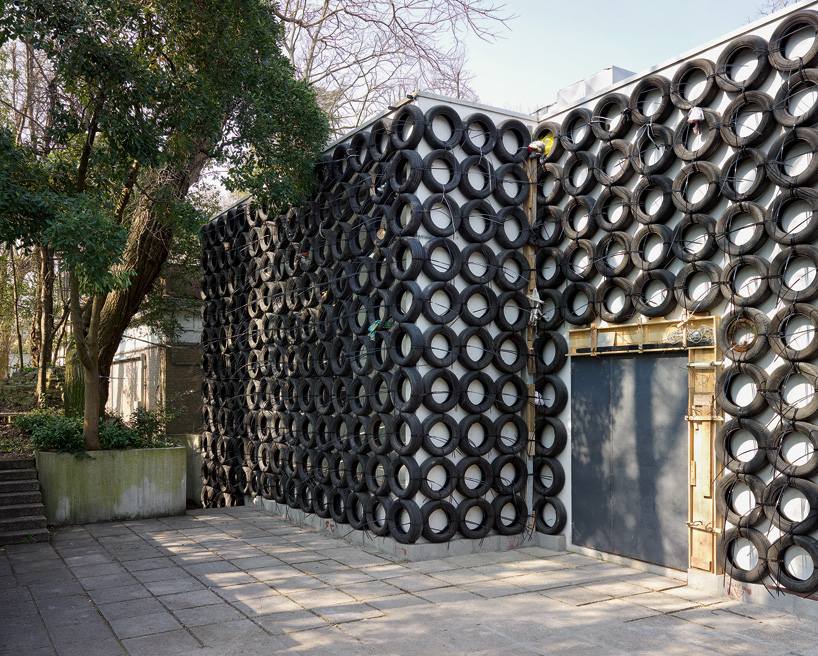
the exterior of the israeli pavillon is wrapped by ‘tire walls’
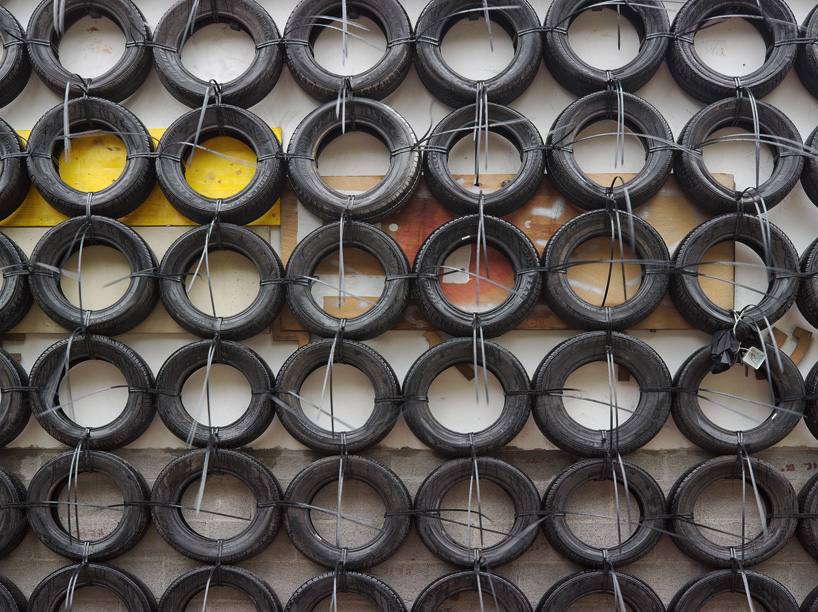
tires, cables and found materials comprise the installation of the building’s façade
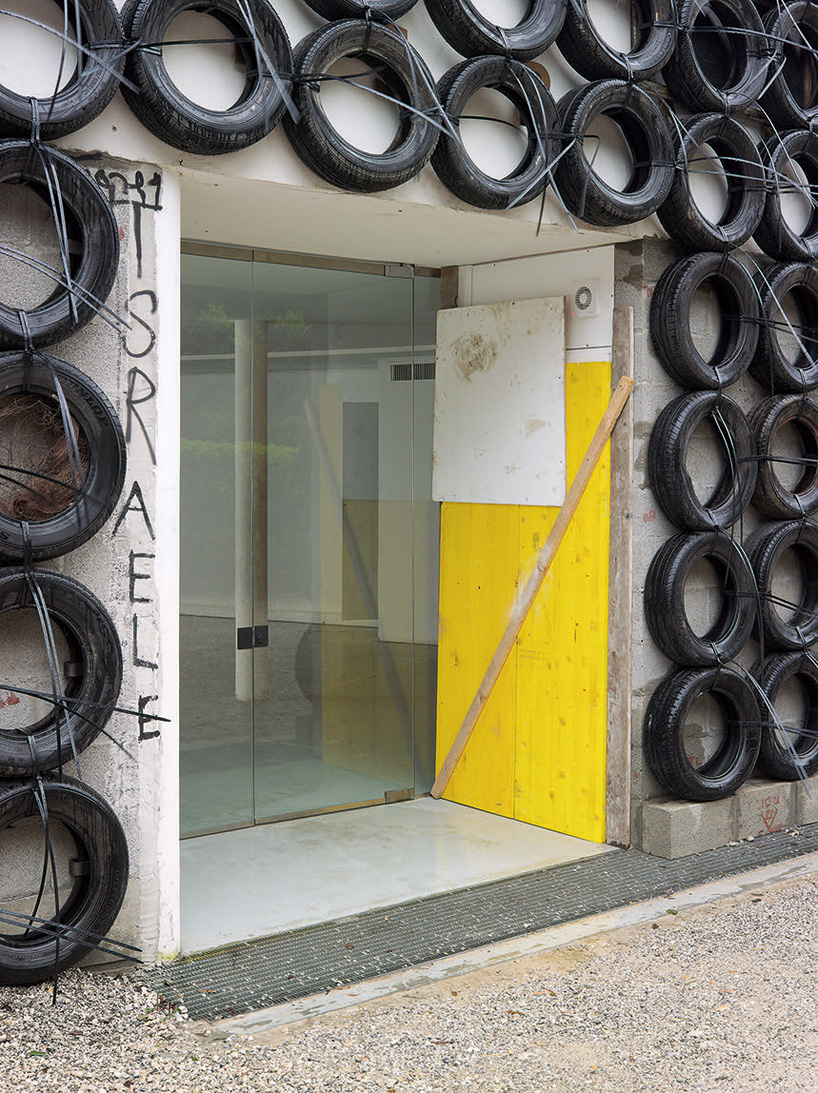
the entrance of the israeli pavilion
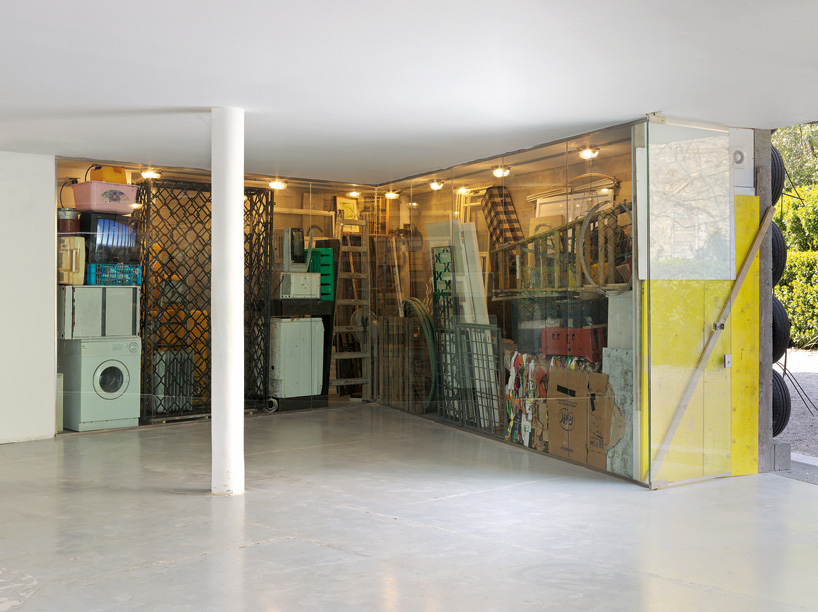
installation view of ‘boidem’, 2015 — made with found objects
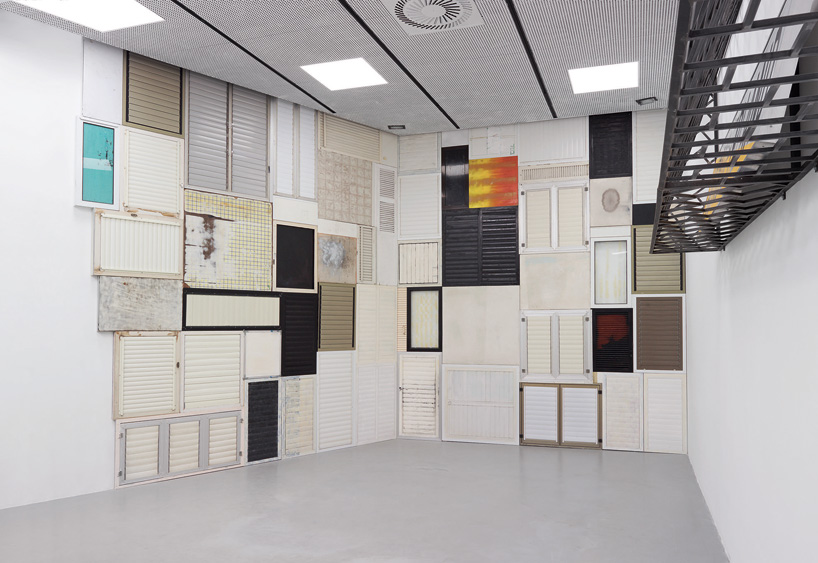
installation view of ‘shutter wall’, 2015
wood, aluminum, plastic, glass, canvas, plaster, tin, formica
500×425×5, 500×450×5
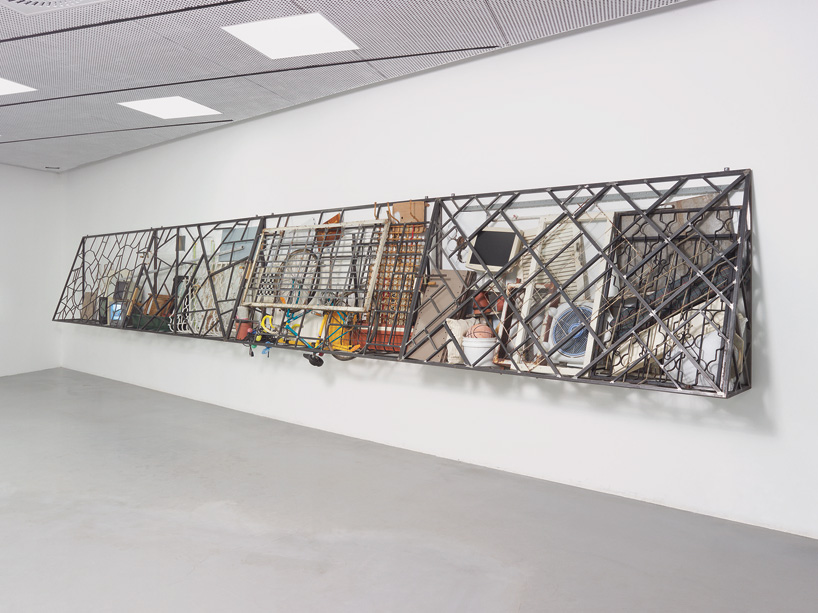
installation view of ‘lattice’, 2015
iron, found objects
140×1, 020×50
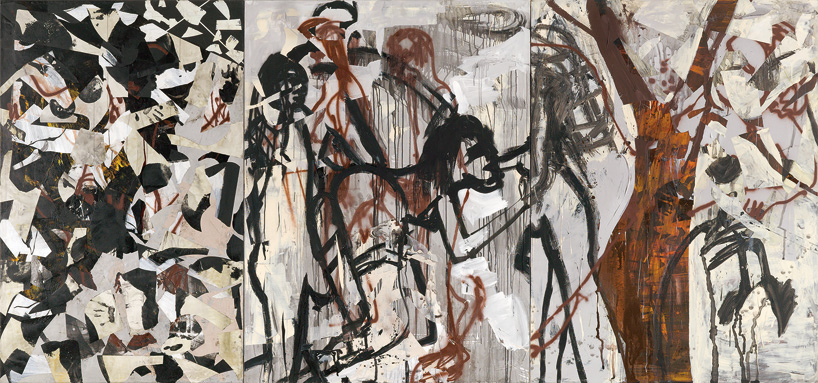
‘untitled’, triptych, 2011
acrylic on canvas / 200×430
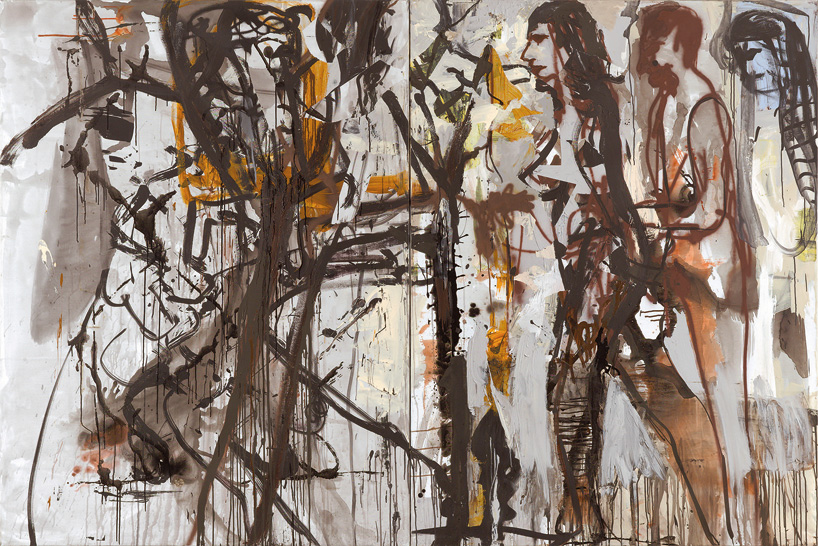
‘untitled’, diptych, 2012
acrylic on canvas / 200×300
if you are visiting the venice art biennale this year, please don’t forget to use the hashtag #veniceart2015 to help us make the best selection of shows not to miss.
shop
your own online design shop — no sales commission collected