in venice, ukrainian artists reclaim joy with tender force
in ‘still joy – from ukraine into the world,’ fleeting acts of sweetness, intimacy, and play reveal joy not as escapism but as a defiant artistic form of survival.
annalise kamegawaMay 15, 20267 min
[FEATURED]
‘still joy’ highlights ukraInian art in venice
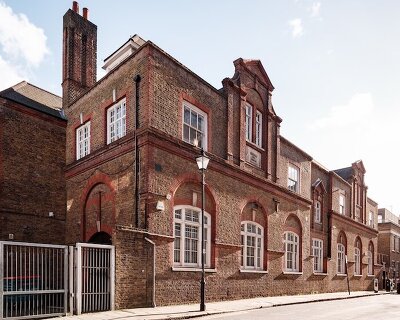
To enter the PinchukArtCentre exhibition, a collateral event of the 61st Venice Biennial of Art in Venice, one must cross over the Ponte dell’Accademia bridge and look over a scenic Venetian canal with its water taxis and vaparettos zipping by. With this view, on what is likely to be a sunny day for most visitors, there is a certain magic that this city exudes. Around the corner, there is the entrance to ‘Still Joy — From Ukraine Into the World,’ presented by the Victor Pinchuk Foundation and the PinchukArtCentre.
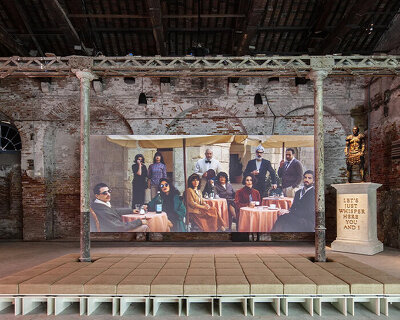
Inside the exhibition, the first installation is Dedicated to the Youth of the World II (2019) and Dedicated to the Youth of the World III (2023), presented as a two-channel video work by Ukrainian artists Malashchuk & Khimei. They are both shot at a rave in Kyiv, except one of the works was filmed in 2019 and the other a few years after the full scale invasion. Using similar shots, cutting the videos at the same time, and featuring faces with an uncanny resemblance, the duo marry the two screens with the same pulsating score. This choice renders the difference in time inscrutable. The vibe of the rave has, by all appearances, remained the same despite the unspoken event that separates the two. In a sense, the joy prevails.
Dedicated to the Youth of the World II (2019) and Dedicated to the Youth of the World III (2023) | image by Annalise Kamegawa
installation focuses on art of survival and quiet force
Behind this, with the music still playing in the background, the first in a series of letters printed on sparkling foam panels opens the show. It’s written by Hlib Stryzhko, a Ukrainian veteran and Marine. He talks about how a guard had given him a strawberry chocolate bar while he was taken into captivity by Russian forces. He’s lost some teeth, so the guard instructs him to warm the candy underneath his legs to make it easier to eat. There is a kind of melancholic happiness that this sugary treat and moment of connection impart on Stryzhko.
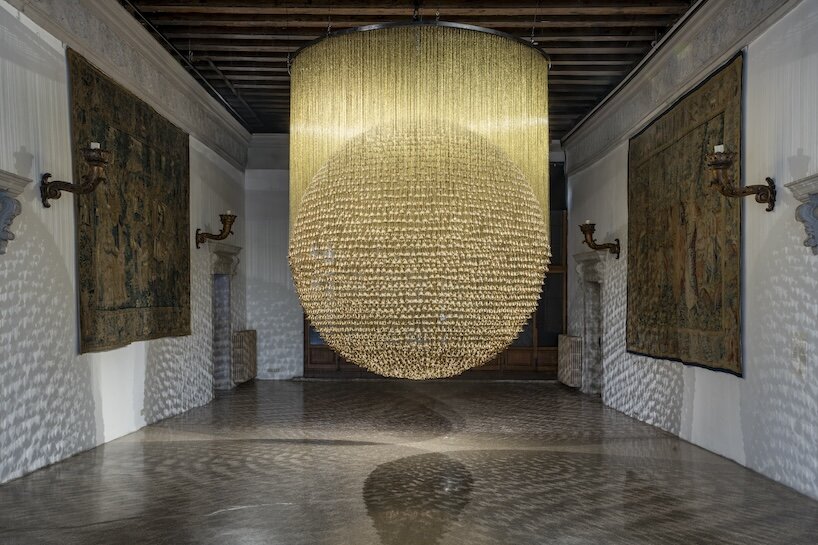
The next room in the exhibition opens up to She Knew She/It/They Would Melt (2026). It’s over a dozen candy light fixtures and other household objects made by Simone Post. Their soft glow meets the dappled sunlight on the Venice canal that is just outside the window. Everything is sweet and bright and the memory of the candy bar is front of mind. What was the simple joy of a bit of sugar then explodes and overflows into the next room. Post’s candy-coated world puts into questions what the boundaries of joy are. Can it be endless and saccharine? And what if you had so much of it that the sugar crawled up your nose?
Simone Post: She Knew She It They Would Melt, 2026 | image by OKNO Studio
video and object exhibitions conjure joy
The purpose of bringing up the joy that one feels from being in Venice is not so much to shirk the responsibility of setting the scene for this story with an easy, blue-skied mise-en-scène. But it’s to put into contrast the starkly different paradigms that can conjure ‘joy,’ what conditions are necessary to share this complex emotion that falls under this deceivingly simple term. There’s a joy from being in Venice and this ancient city in the water – it puts the art enthusiast and the cultural visitors in a certain state of awe and openness when they cross the exhibition’s threshold. But then there’s the joy that’s expressed through each work of ‘Still Joy’.
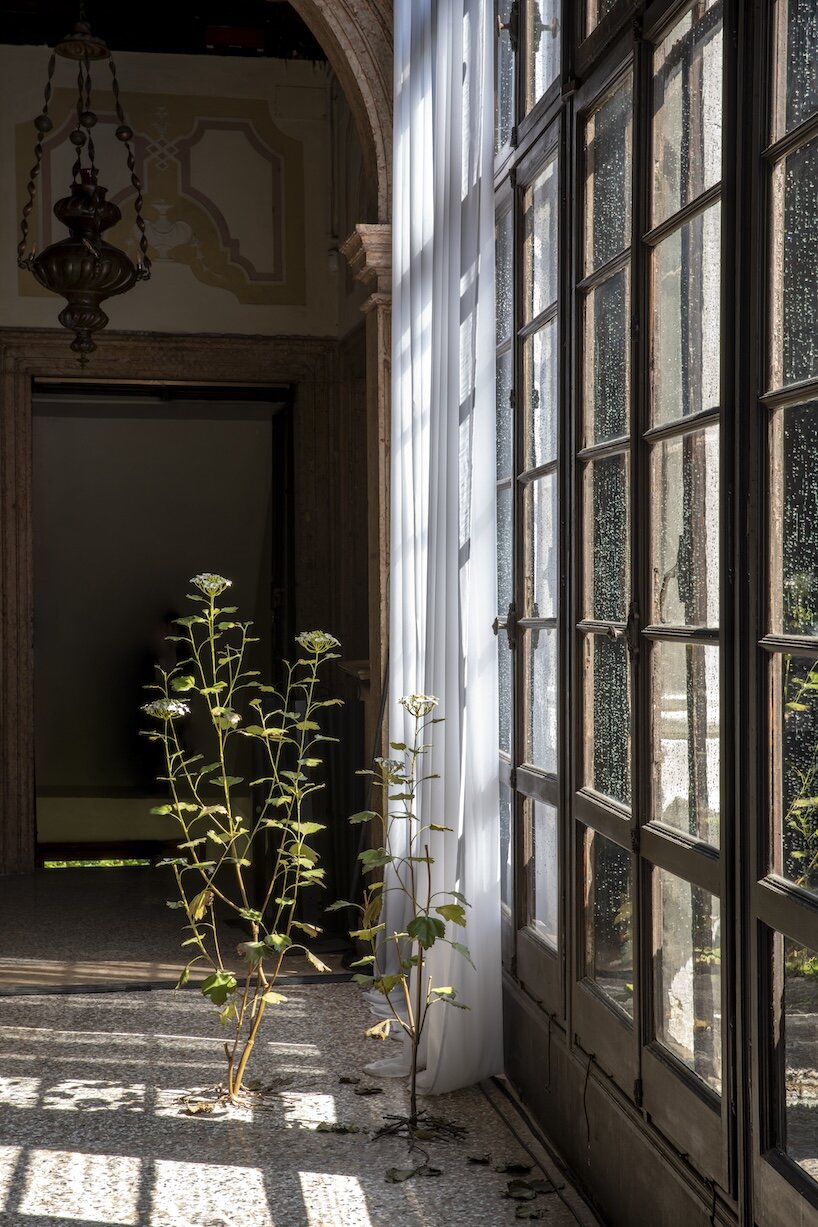
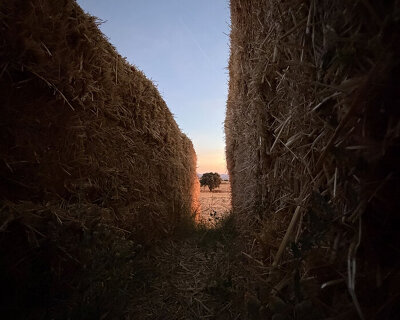
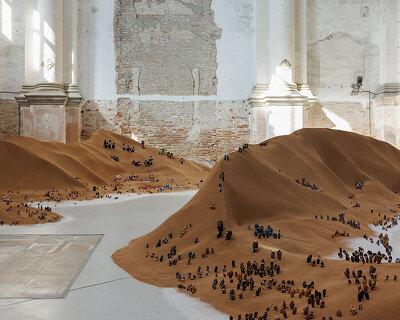
It’s recounted explicitly in the hanging foam letters of Ukrainian soldiers and military personnel who have written about the times throughout the conflict that they have felt connection to another person; the moment they saw their partner again. There’s the plants in the work Refugees (2023) by Zhanna Kadyrova, collected from sites of ruin across Ukraine and placed in the space, marking the ability to survive, and arguably thrive, despite their conditions.
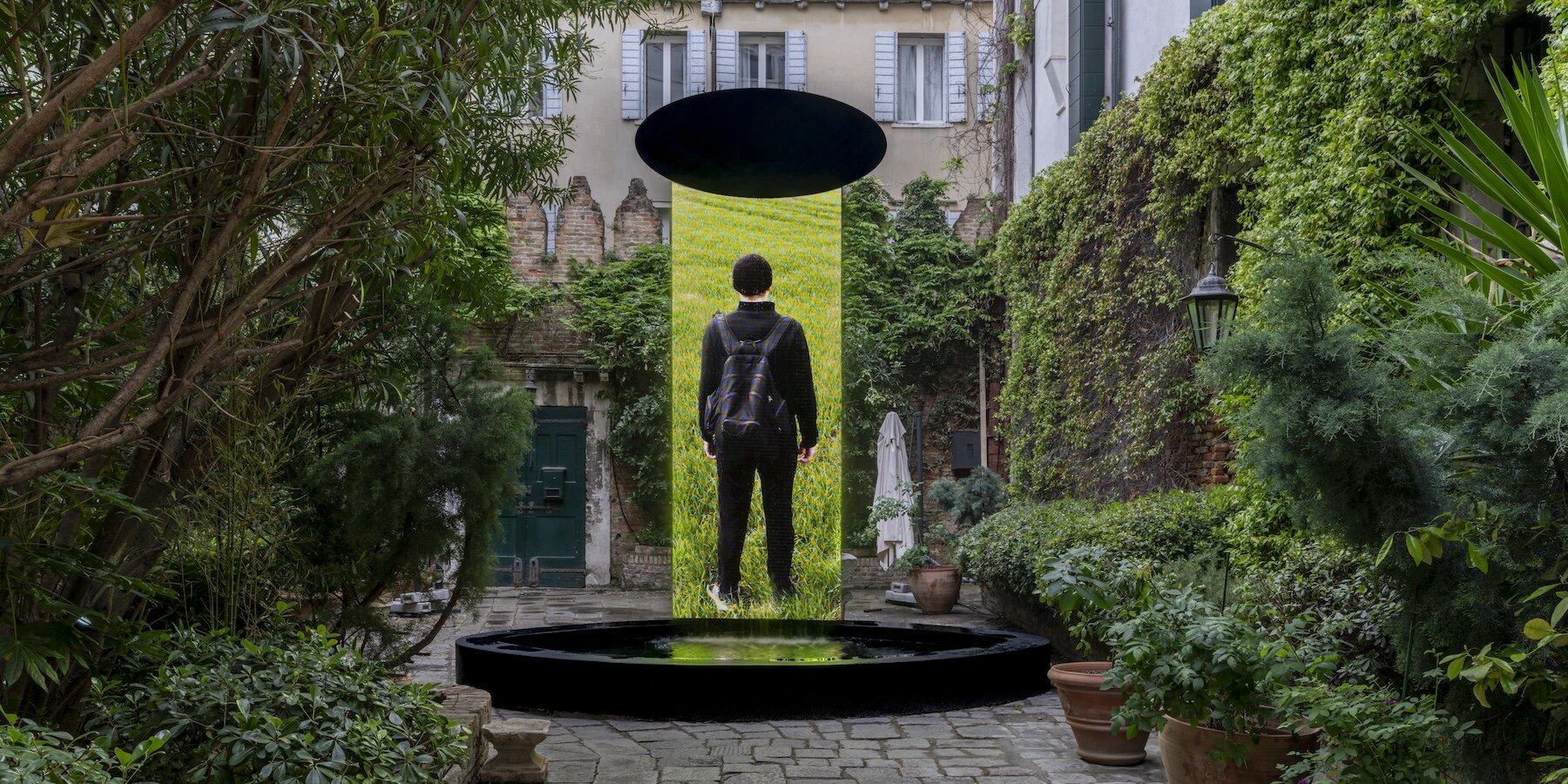
There’s another video work from Khimei and Malashchuk, Open World (2025), where a young man, maybe just twenty years old, uses a black robotic dog and a video stream to return to the city that he had to leave because of the invasion. He narrates it through what looks like a live stream from his bedroom. It mimics so closely the games of war that most boys his age would grow up playing, a facsimile of violent conflict for fun. Yet here he is, with a smile on his face, taunting snakes and exploring a waterway with a young girl his robot dog meets, existing in a time and a space that the viewer is acutely aware he can never really return to.
Zhanna Kadyrova: Refugees, 2023 | image by OKNO Studio
installation focuses on art of survival and quiet force
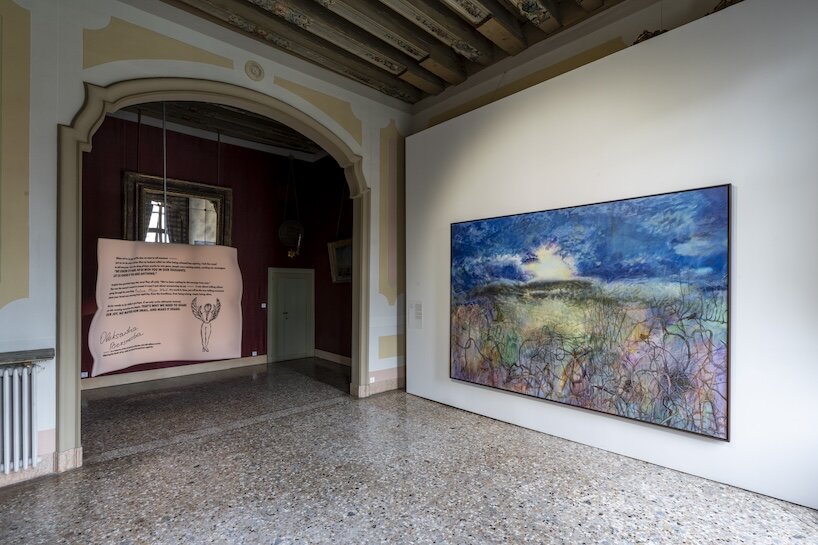
The ability to feel joy in these conditions are narrated by historian Niall Ferguson in small quotes that dot the exhibition. One specifically that comes to mind is a simple board, propped up on a radiator on the top floor of Palazzo Contarini Polignac, that reads, ‘I think what keeps people going in appalling conditions is the ability to recollect the possibility of joy from even the most trivial of comforts, even the sound of a bird singing. Soldiers in appalling conditions under relentless bombardment in squalid trenches can still find some poetic solace. And it keeps you going because it reminds you that there is still a joyful world outside hell that you might just possibly get back to. These are reminders that there is a heaven as well as hell.’
When these two manifestations of joy come together – in the lackadaisical moment of a biennale event, and the perseverant manifestations of those who have been impacted by the full-scale invasion – there is the choking feeling that for those external to the conflict, no matter what has been earnestly read or researched about the war, there is a huge gap in knowledge of its reality. In the PinchukArtCentre exhibition, the institution and its artists have created a true instantiation of where art speaks when we reach the limits of language.
With all the sympathy and learning and solidarity one can have, it’s easy to forget that a learned knowledge of an event is filled with holes. Most communication about Russia’s invasion is told in images of destruction and regurgitations of pain. It is so rare that joy is the center of conversation.
Lesia Vasylchenko: 1534, 2026 | image by OKNO Studio
Ashfika Rahman: Than Para — No Land Without Us, 2025–ongoing | image by OKNO StudioÁlvaro Urbano: Disobedience After Hilma af Klint (Kalyna), 2026 | image by OKNO StudioKateryna Aliinyk, Night in Heaven, 2026 | image by OKNO Studio