water becomes a way of understanding the world in this powerhouse parramatta installation
developed around stories and cultural practices shared by seven aboriginal organizations across new south wales, 'overflow' turns water, light and ancient sandstone into an environment that visitors experience barefoot.
prefer designboom on google[FEATURED]
walking through a tidal landscape at Powerhouse Parramatta
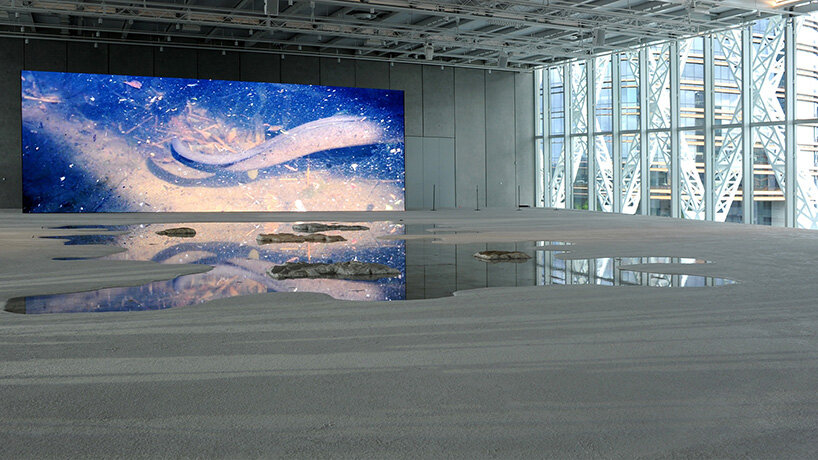
Tyrrell Studio transforms a naturally lit gallery at the recently opened Powerhouse Parramatta, Australia, into a shifting landscape of water, sandstone and reflected light with Overflow, a large-scale installation grounded in the living principles of First Nations Water Country. Conceived by Wiradjuri woman Emily McDaniel, the First Nations-led exhibition brings together stories from seven Aboriginal organizations across New South Wales, with films by Kamilaroi filmmaker Ivan Sen. The project makes water the physical medium through which visitors encounter these stories, inviting them to remove their shoes and walk barefoot across a changing tidal landscape.
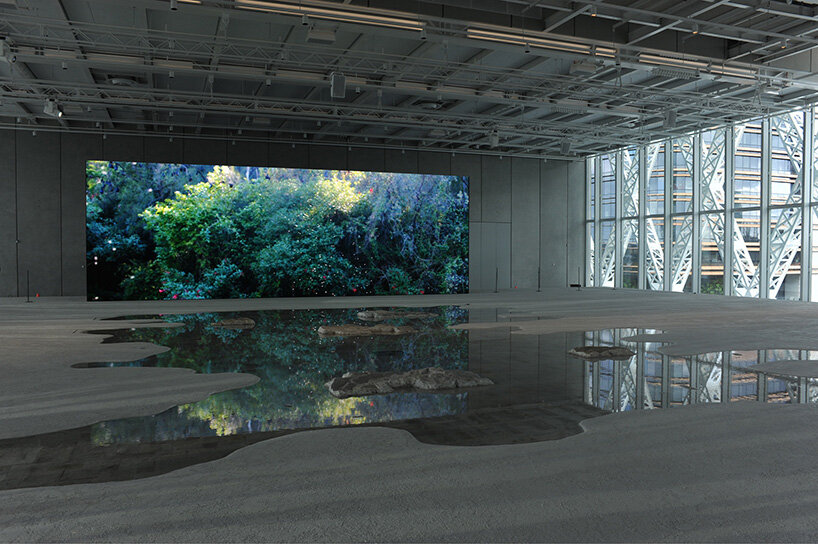
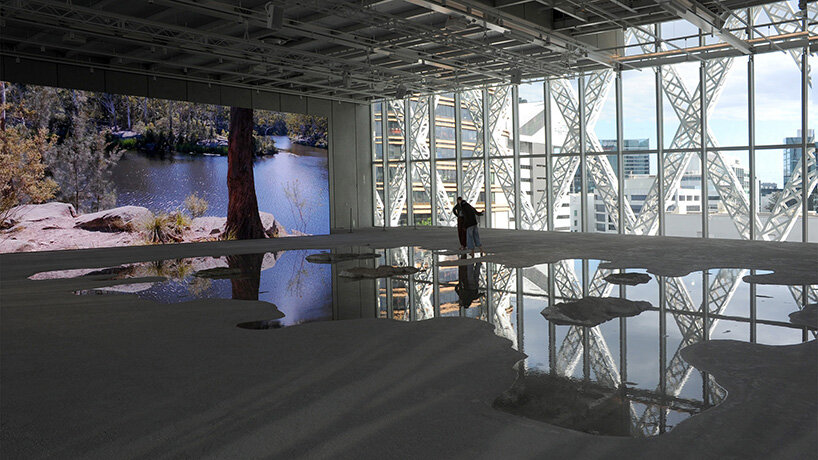
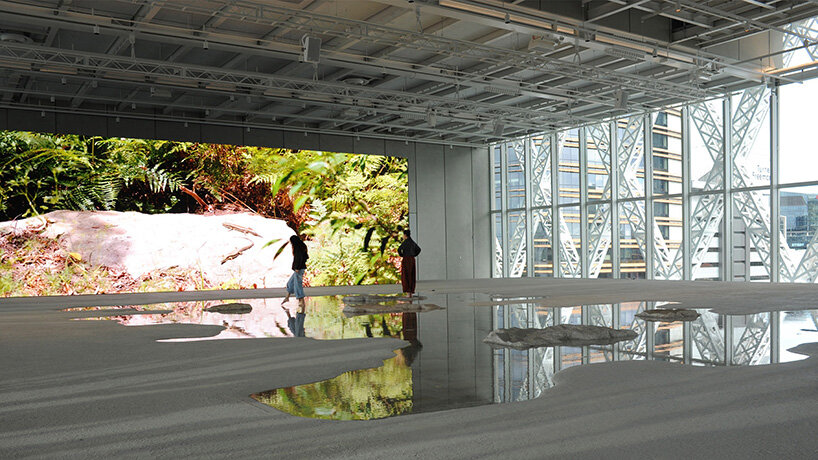
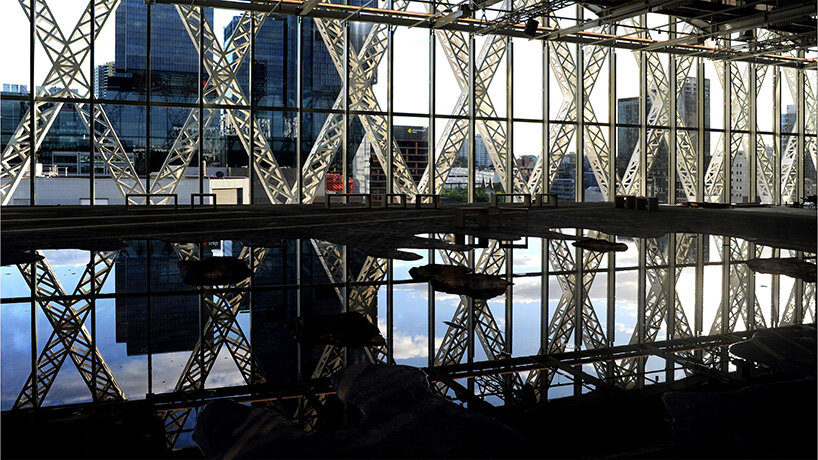
Occupying a gallery measuring approximately 60 × 40 meters, the installation takes the form of a shallow pool flowing across an abstracted sandstone rock shelf. The stone references the geological terrain beneath Parramatta, where the river has shaped the landscape over tens of thousands of years. As water rises and recedes, different sections of the sculpted surface emerge and disappear, transforming the gallery throughout the day.
Reflections of the building’s structure and surrounding sky appear on the surface of the pool, while natural daylight creates shifting patterns across the space. As the water level rises, the installation becomes a broad reflective plane; as it retreats, the sandstone outcrops become visible again.
water country beyond the riverbank
The artwork by the team at Tyrrell Studio draws on a broader understanding of the Parramatta River as a changing landscape. Before European settlement, the river occupied an extensive terrain shaped by tidal movement, sediment and the meeting of freshwater and saltwater. Its banks were not the definitive boundaries that contemporary infrastructure suggests but part of a much larger system extending through sand, stone, groundwater and floodplains.
European settlement gradually changed this relationship. Weirs, built-up riverbanks and concrete channels were introduced to control the flow of water, turning a naturally changing river into a more contained and controlled waterway. Tyrrell Studio’s design responds to this history, reconsidering what lies beyond the visible channel.
Overflow allows some of the underlying processes of the former landscape to become perceptible. Water gathers, spreads and withdraws across the stone and changing light and reflections introduce an element of unpredictability. The installation brings attention to the forces that continue to shape the terrain beneath the contemporary city.
making space for country
The cultural foundations of the exhibition come from Emily McDaniel’s original concept, which places Aboriginal cultural practices at the center of the experience. Seven participating organizations contribute knowledge and stories connected to Water Country across New South Wales, including Baramadagal Community, Gamay Rangers, The Goondee Aboriginal Keeping Place and Museum, Jagun Alliance, Joonga Land and Water Aboriginal Corporation, Moogahlin Performing Arts and Naru Aboriginal Corporation.
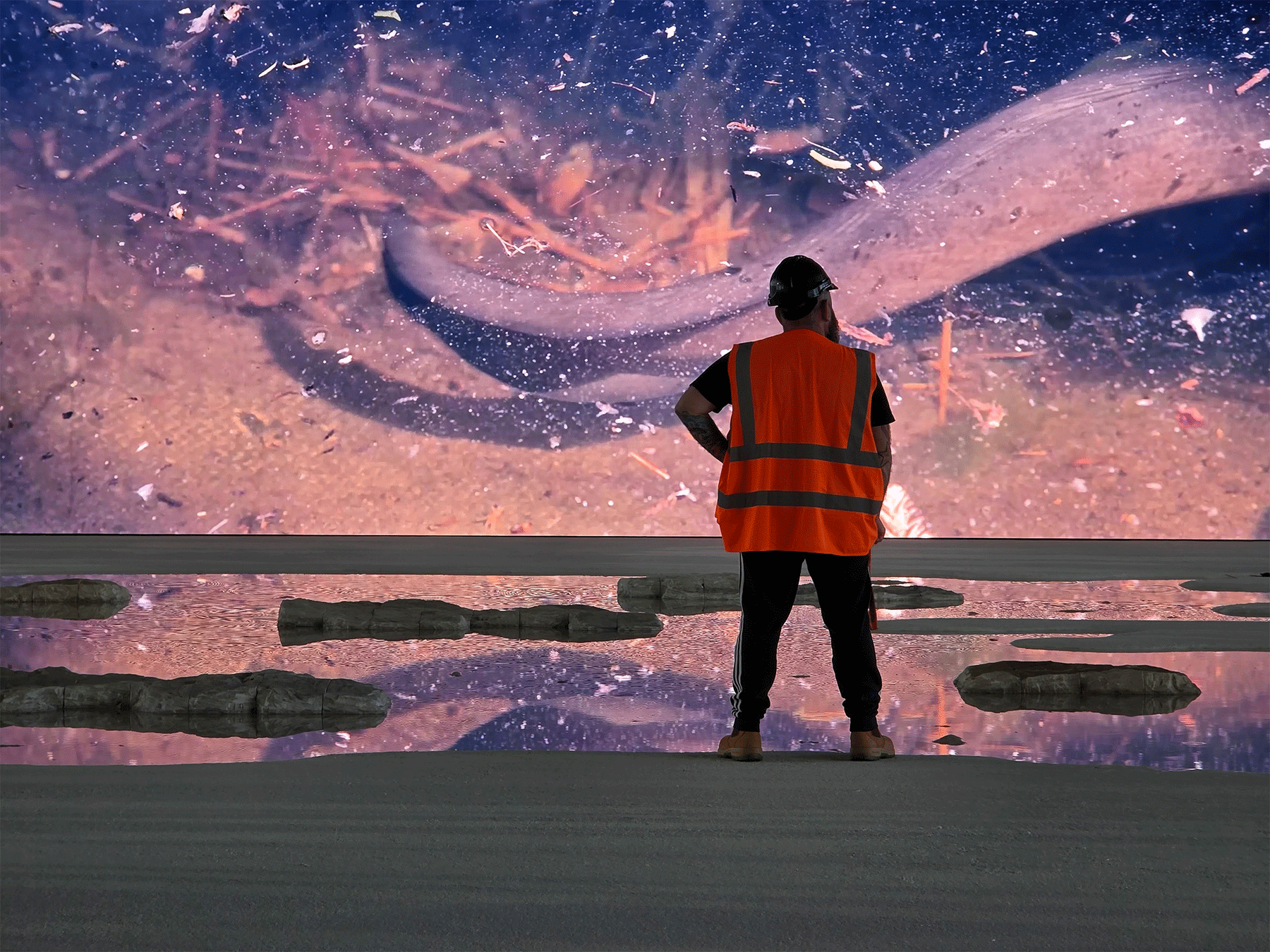
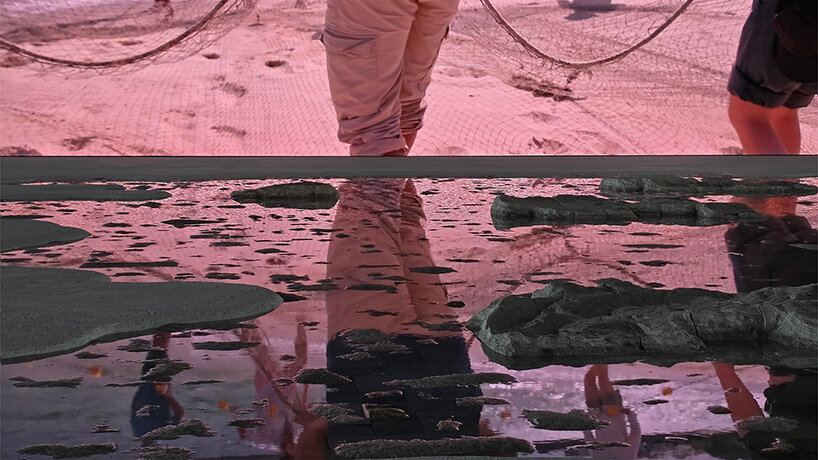
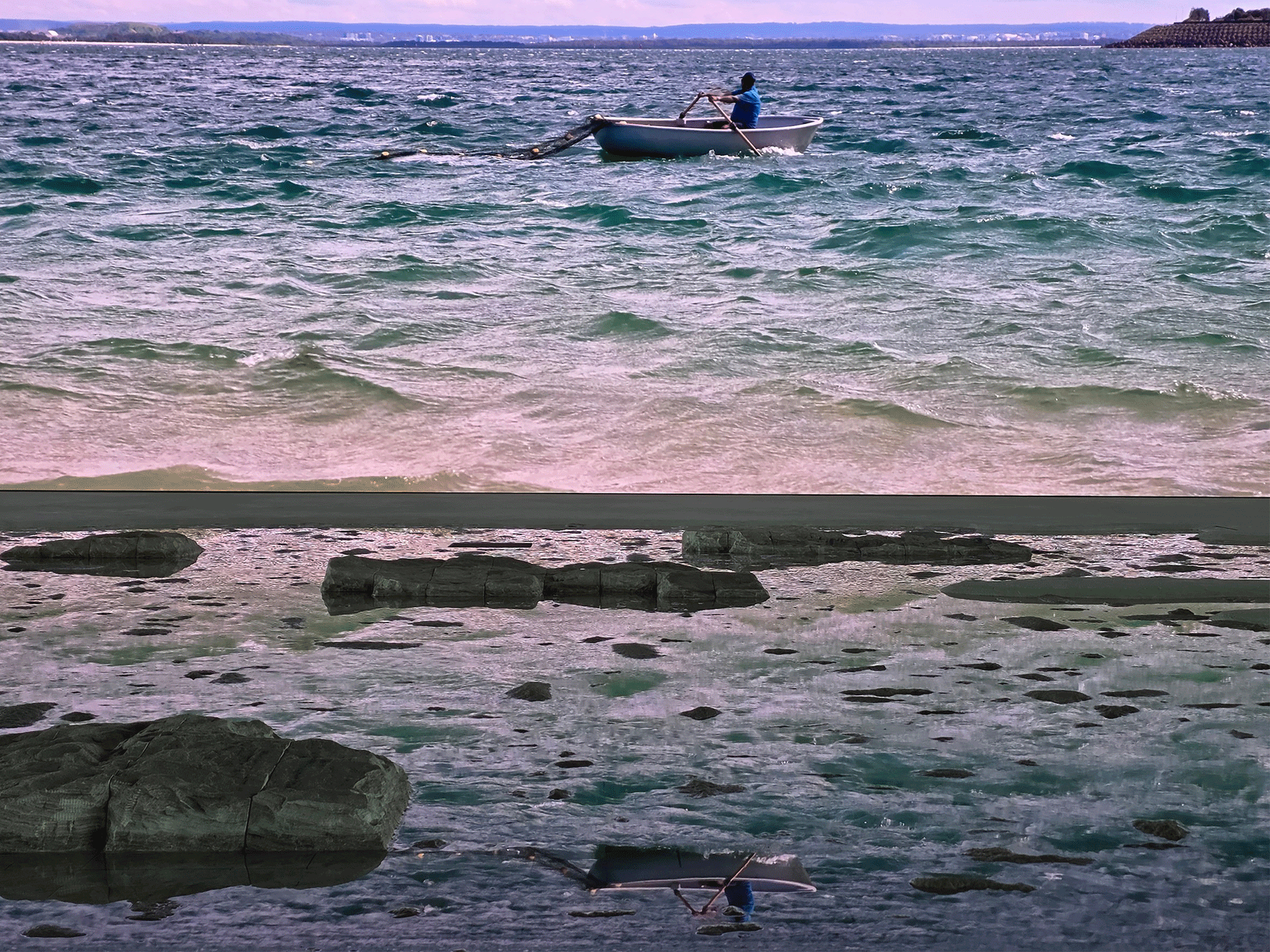
Their work encompasses caring for species, fishing, water monitoring, flood mitigation, language and cultural water rights, practices that enter the gallery through films by Ivan Sen. Sen’s films bring different waterways, communities, and forms of knowledge into conversation with the physical environment in Parramatta, projected onto and reflected across the water, where ripples fragment their images before they reform across the sandstone and the bodies of visitors.
from the riverfront into the museum
Overflow is closely connected to Tyrrell Studio’s work outside the museum, particularly its permanent 3,000-square-meter riverfront landscape, Ngurra Budyari Ngalawagulang. Developed with Baramadagal elders and Dharug community representatives, the public space draws on the cultural and natural history of Water Country. The landscape is made up of sandstone paths, vegetation and rain gardens. Water collects in shallow hollows, plants grow through the paving and the stone gradually changes with exposure to the elements. Τhe design lets nature become part of how the space looks and feels. It is a landscape that changes with the weather, the seasons and the passage of time.
Inside the museum, Overflow picks up where the riverfront leaves off. The same materials and ideas continue into the gallery, where water moves across sculpted sandstone instead of being contained within a pool. The connection can even be felt in the morning, when mist from the Parramatta River rises toward the upper floors of the museum.
project info:
name: Overflow
location: Powerhouse Parramatta | @powerhousemuseum, Sydney, Australia
exhibition design: Tyrrell Studio | @tyrrellstudio
concept creator: Emily McDaniel
film: Ivan Sen
client: Powerhouse
photography: Mark Tyrrell
Tyrrell Studio design team: Mark Tyrrell, Sarah Yates, Gabrielle Veringa, Hadi Abu Ammar, Dan Sharp
commissioned communities and organizations: Baramadagal Community, Gamay Rangers, The Goondee Aboriginal Keeping Place and Museum, Jagun Alliance, Joonga Land and Water Aboriginal Corporation, Moogahlin Performing Arts, Naru Aboriginal Corporation
Powerhouse team: Lisa Havilah, Beau James, Clare Holland, Marco Rinaldi, Ivan Muniz Reed
This article is part of designboom’s POSTHUMAN UTOPIAS chapter, exploring what happens when humans are no longer the measure of all things. These stories rethink our relationship with the planet through interspecies architecture, living materials, regenerative landscapes and emerging technologies – learn more here! The chapter is presented in partnership with INDX|GLOBAL – a global cultural platform placing Indian architecture, design, and creative intelligence in conversation with the world.
Each designboom editorial series explores one theme in depth through projects, interviews, features and news across architecture, design, art and technology. Discover more chapters here, and get in touch if you’d like to submit a story through our submissions portal or contact form.
shop
your own online design shop — no sales commission collected