ala sieradzka transforms scraps to nutrients with bono composter
with the help of earthworms, bono turns bin-bound items into nutrient filled fertilizer that can be used to cultivate herbs, veggies, and fruits at home.
prefer designboom on google[FEATURED]
ala sieradzka transforms scraps to nutrients with bono composter
all images courtesy of ala sieradzka
on average, 30-50% of daily household waste comes from organic sources; veggie scraps, fruit peelings, coffee grounds, and those french fries you thought would be good two days later. throwing away bits and pieces might not seem like much on a day to day basis, but the larger picture is far more revealing. according to the food and agriculture organization — of the united nations — ‘per capita waste by consumers in europe and north america is between 95-115kg (209-253lbs) a year’. sub-saharan africa and south east asia have a much lower PCW of 6-11kg/annual.
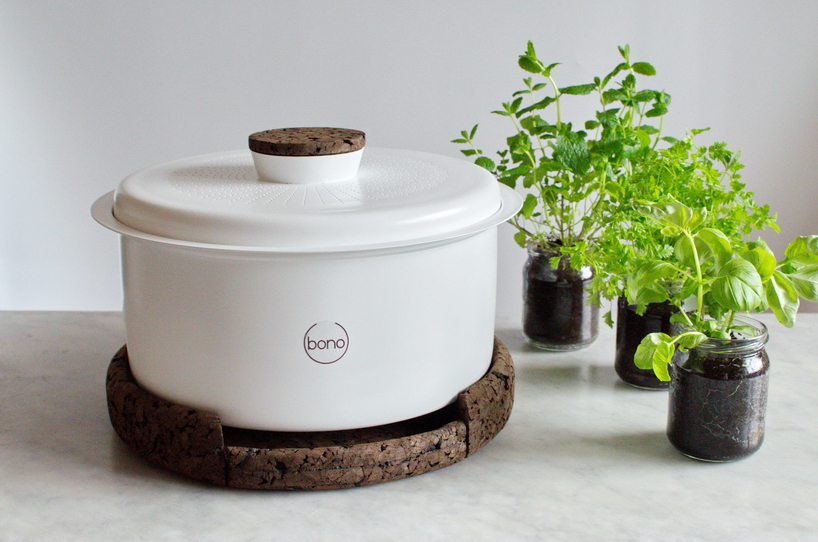
the result of organic recycling is a high-quality fertilizer that bolsters home cultivation efforts
there are countless variables surrounding who, why, what, and at which stage agricultural items are being wasted. the question is how can we, daily consumers, minimize contributing to the growing global environmental issue? ‘bono’, developed by polish designer ala sieradzka, is a minimal, easy-to-use composter. with the help of eisenia fetida, aka earthworms, ‘bono’ turns bin-bound scraps into nutrient filled fertilizer that can be used to cultivate herbs, veggies, and fruits directly at home.
video courtesy of ala sieradzka
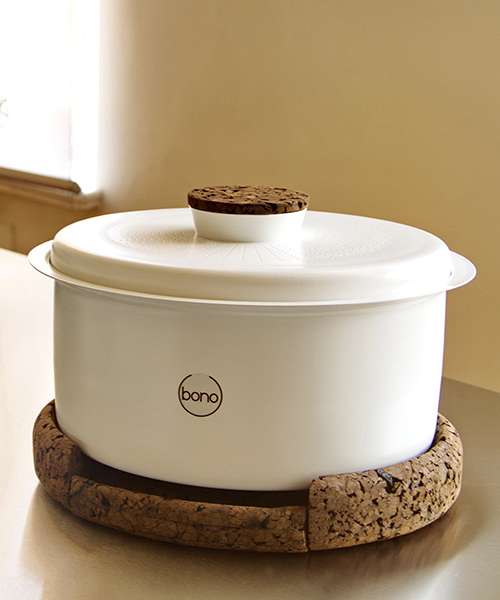
‘bono’ is made of spun, powder-coated aluminum, with a cap and base — that holds an additional aluminum dish — of expanded cork. holes for ventilation increase air circulation to quicken the process, and a pull-out drawer collects the inevitable juices of decomposition. but don’t think about pouring it down the drain, compost run-off can be given to plants as a tasty, nutrient-rich drink.
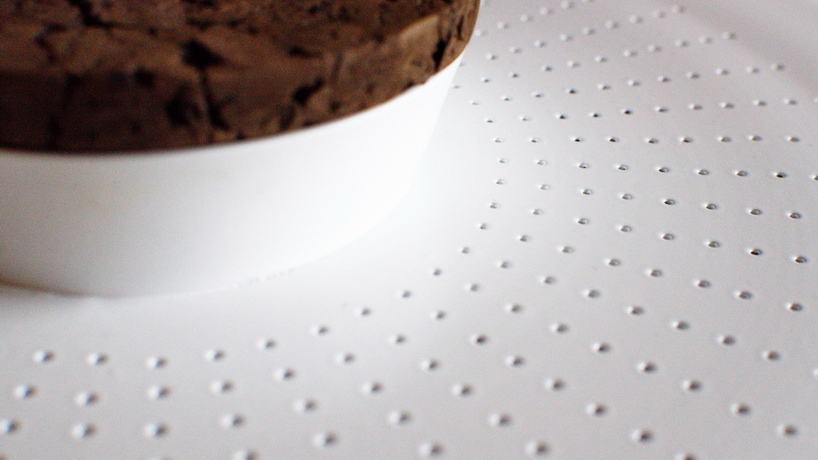
ventilation holes close-up
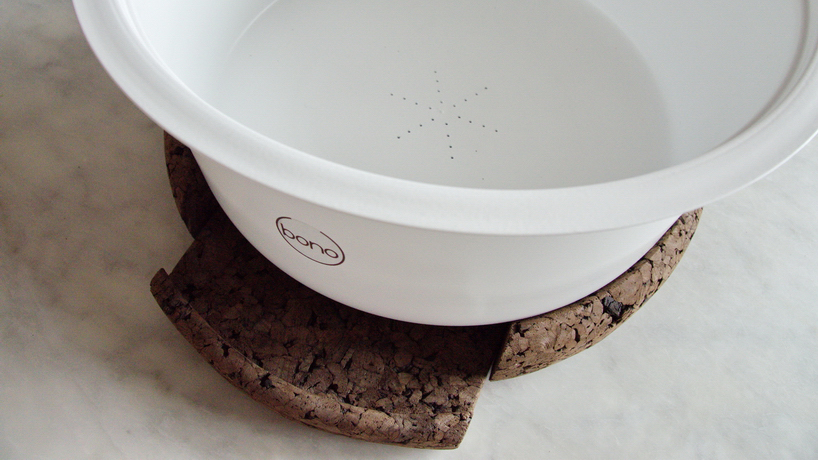
drainage holes are located at the bottom of the container
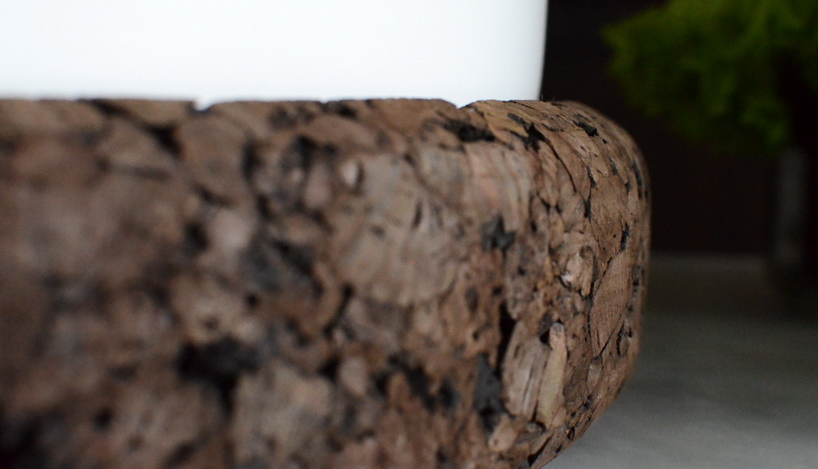
the base is made of expanded cork
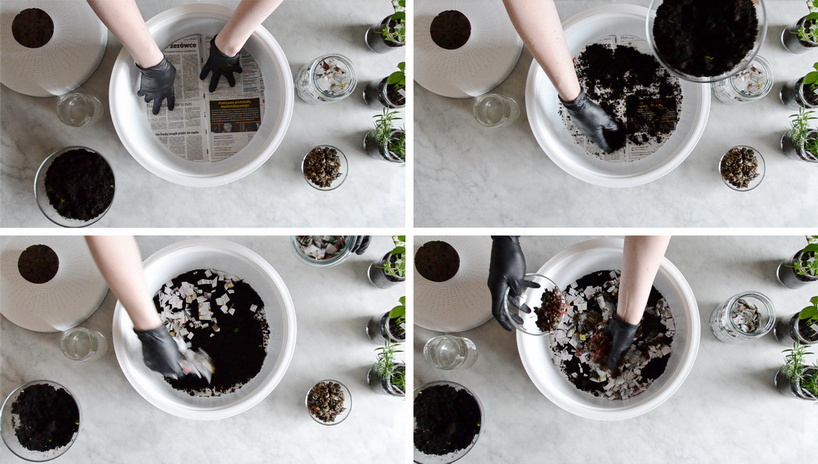
at the bottom put damp paper, sprinkle garden soil, and add newspaper shreds — earthworms are optional
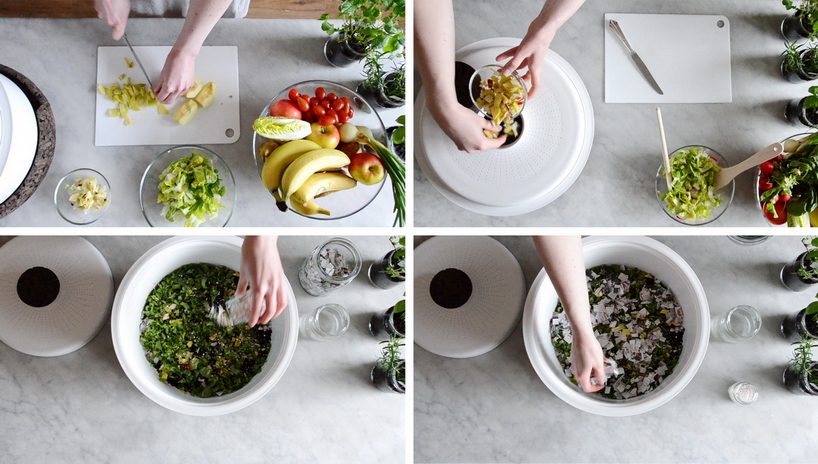
add peels of fruits, vegetables, and coffee grounds daily, once weekly sprinkle the surface with egg shells (for Ph)
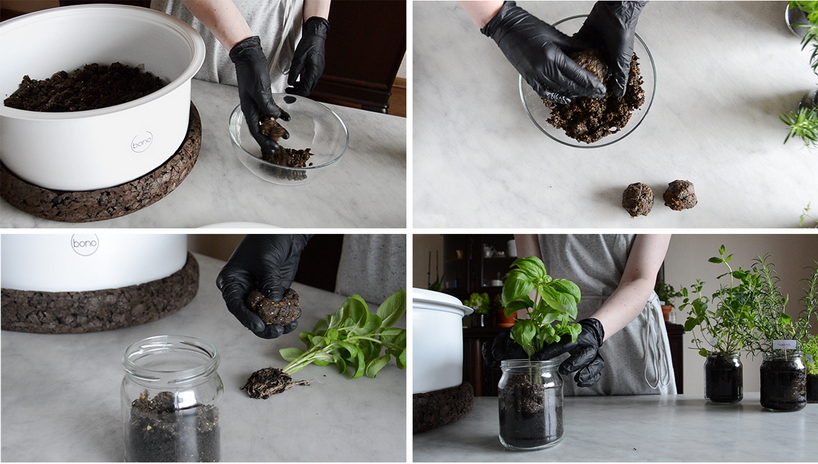 after 2-3 months biohumus collection can begin; a high value fertilizer, it has valuable micro-elements for growth
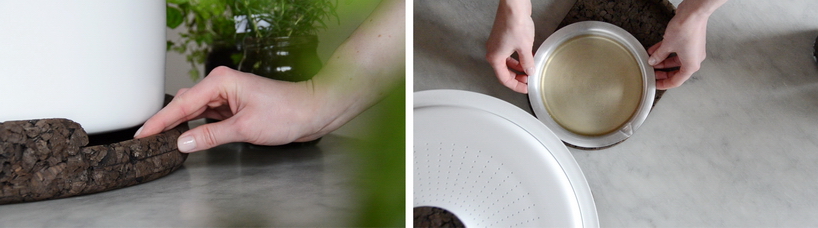
the base has a sliding shelf that holds a bowl that catches dripping liquid from the main tank
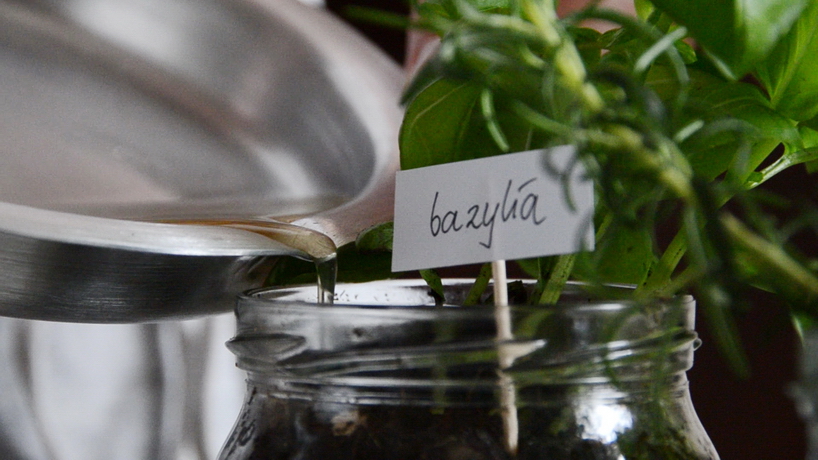
fluids can be used for watering plants
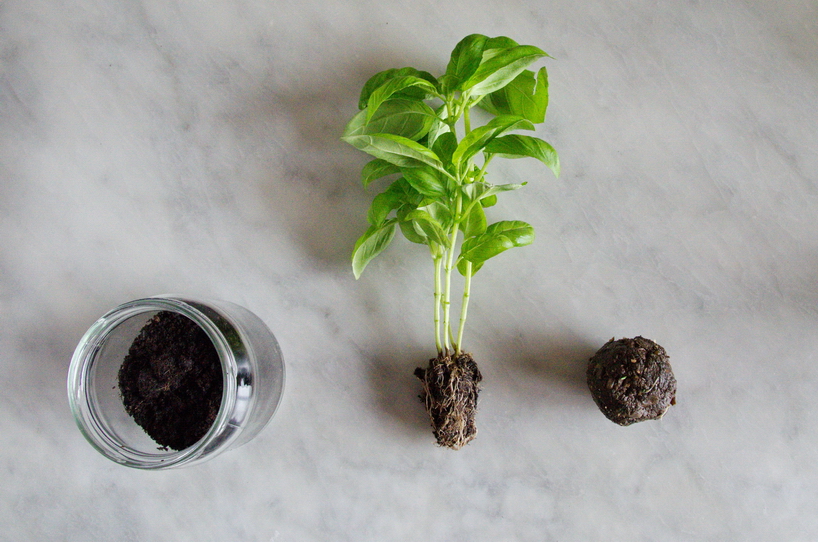
organic recycling supports home cultivation of plants
designboom has received this project from our DIY submissions feature, where we welcome our readers to submit their own work for publication. see more project submissions from our readers here.
shop
your own online design shop — no sales commission collected