alcarol’s fungi collection reveals nature’s intricate textures at salone satellite
alcarol have used fungi from dead trees and abandoned logs to create dramatic pieces of furniture.
prefer designboom on google[FEATURED]
alcarol’s fungi collection reveals nature’s intricate textures
all images courtesy of alcarol
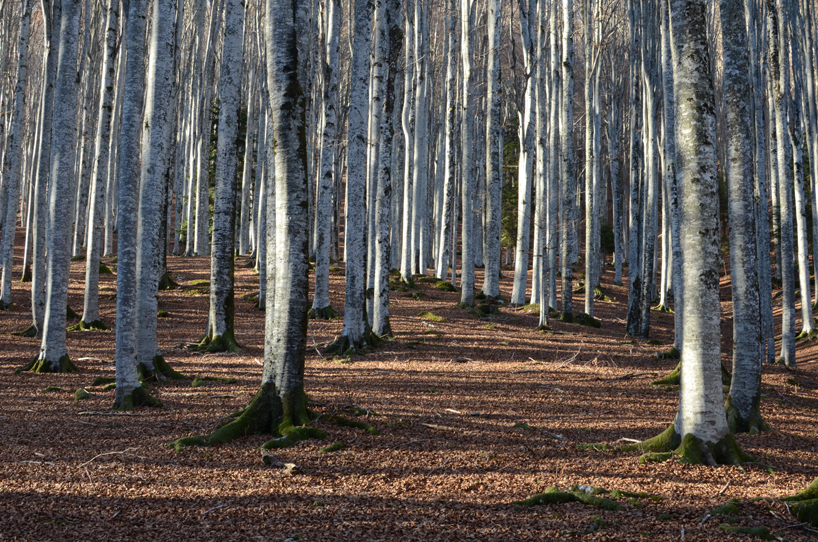
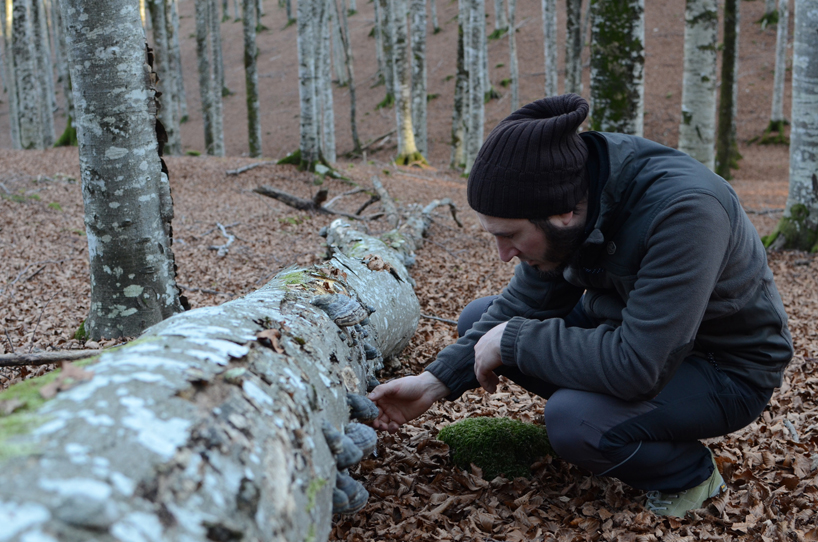
forests are the dominant terrestrial ecosystem. their biomass is the oldest source of renewable energy used since our ancestors learned the secret of fire. much of this biomass occurs below ground as partially decomposed plant detritus. its decay is a clear example of the transformative energy of nature. the final stages in the life cycle of a forest tree attracts specialised fungi organisms which attack the wood breaking down the tough lignin layer that protects it.
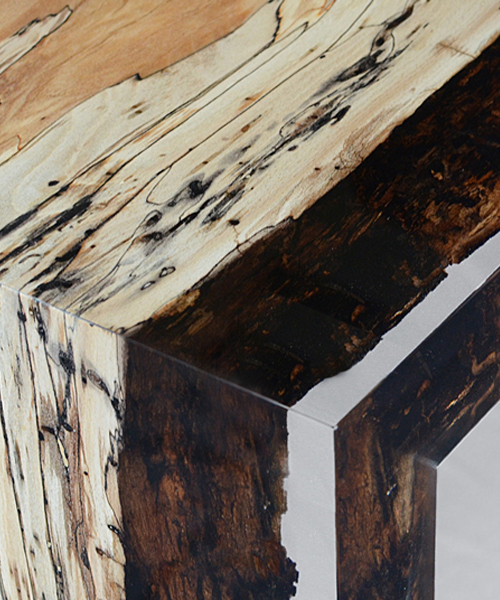
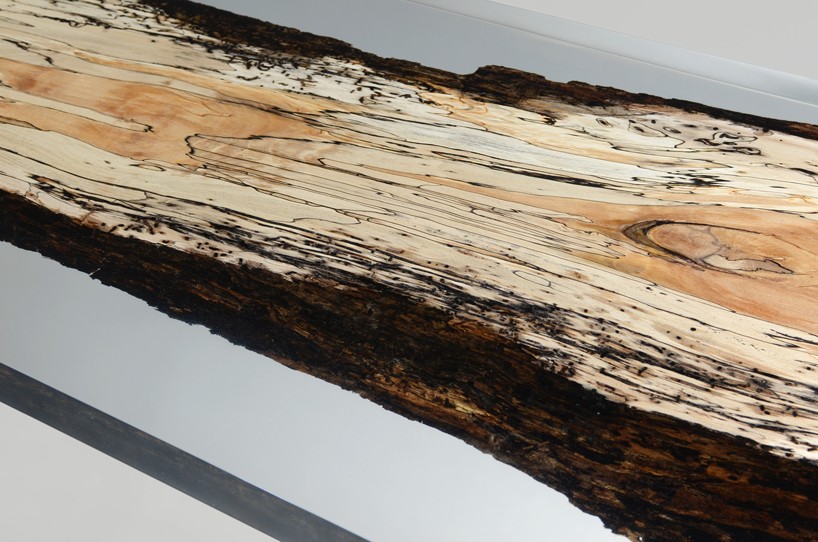
one of the effects of the early stages of wood decay is the fungi texture inside the matter of the tree: the fungal growth can create some of the most dramatic wood color changes with regions of discoloration and intricate patterns of amazing dark lines, adding a new dimension to the woodgrain.
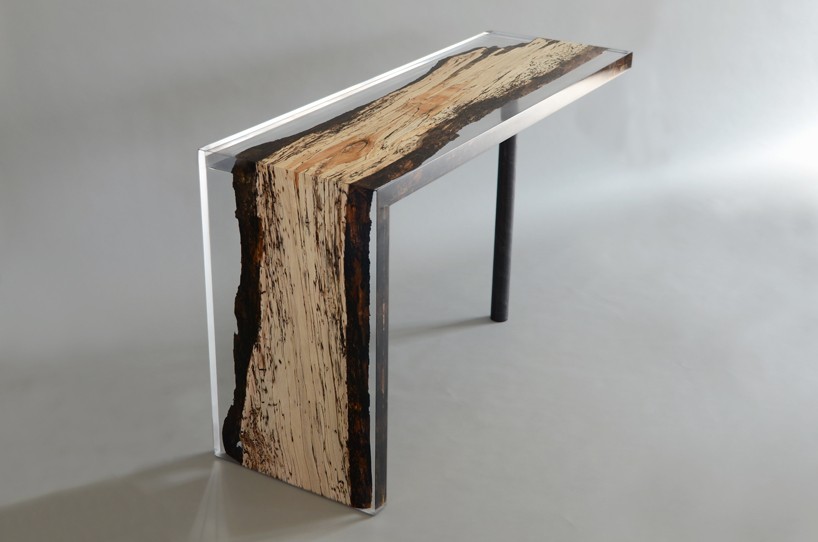
alcarol have used fungi from dead trees and abandoned logs to create unique pieces of furniture
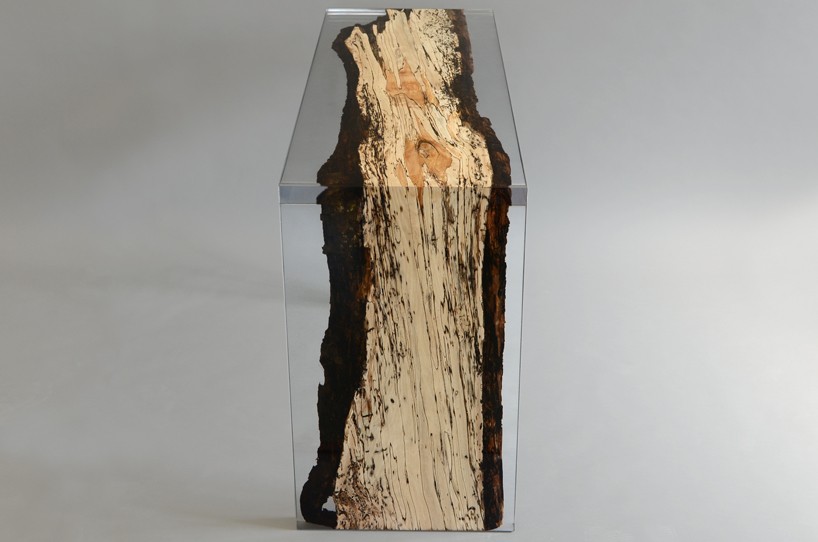
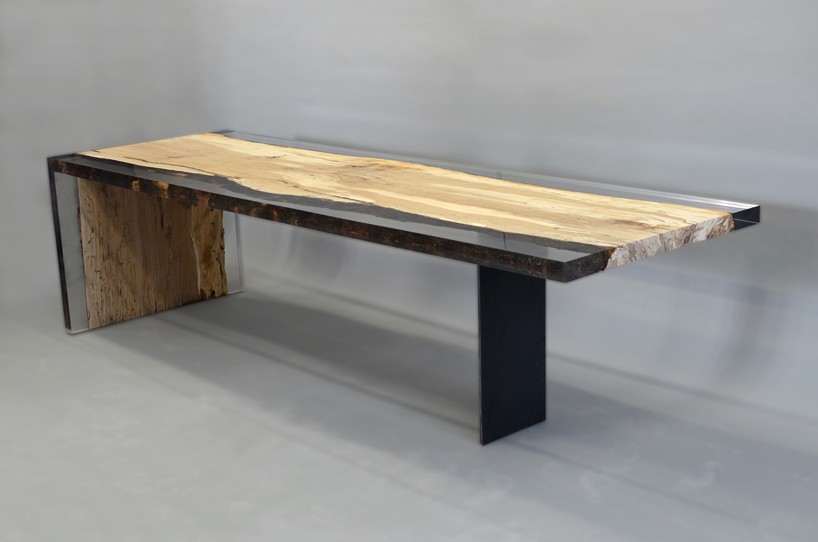
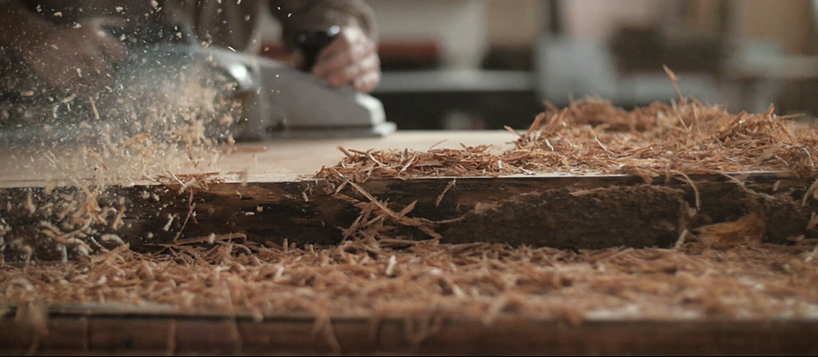
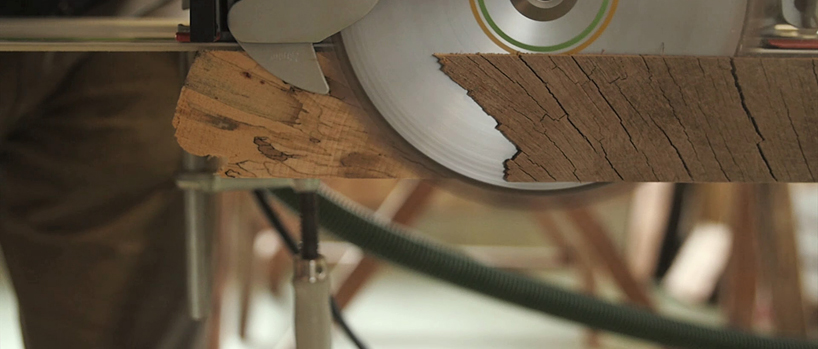
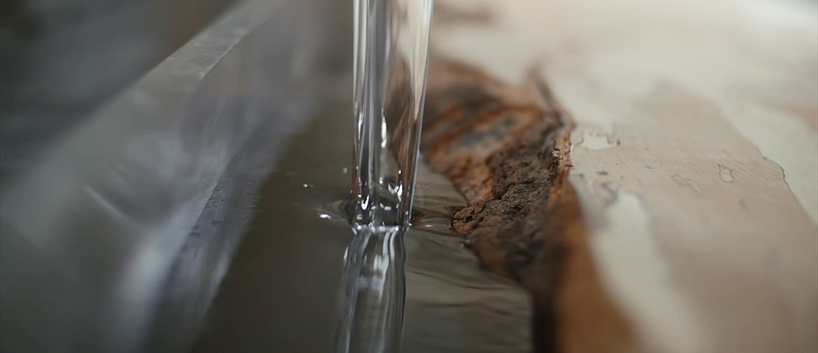
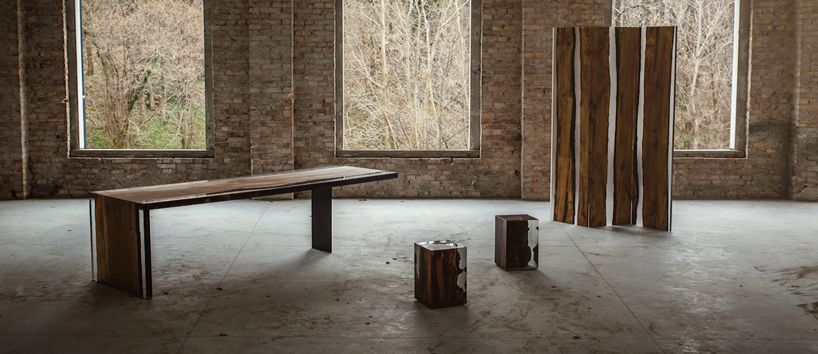
alcarol have used the fungi from dead trees and abandoned logs to create unique pieces of furniture. the company employs experimental processes to preserve the raw material exactly as it appear in his original habitat, giving it a new life before it goes to waste. the ‘fungi console’ is made of a single wood plank obtained from an abandoned beech log with its native populations of fungi, recovered in the italian dolomite forest. the plank is cut into two parts with a very thin blade and then joined so that in the corners the fungal woodgrain matches perfectly like a single bent piece, and also the resin – through a special process – is a single piece and not seen separations between horizontal and vertical resin edges.
the console shows the most fascinating creations of the fungi: wood discolorations and intricate dark lines that look like free-form art drawn with a calligraphy pen, pigment demarcations constructed by the fungal colonies to protect their territories from potential competitor fungi.
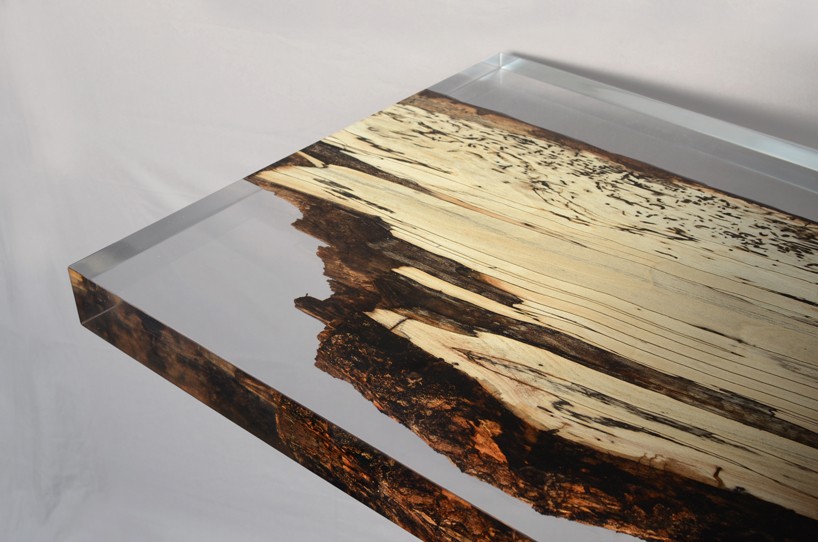
the ‘fungi console’ is made of a single wood plank obtained from an abandoned beech log
the ‘fungi stool’ is a block of wood obtained from a dead apple tree with its native populations of fungi, inside and outside the log. the final stages in the life cycle of a tree attracts specialised fungi organisms which attack the wood breaking down the tough lignin layer that protects it. the section planes – through touch, sight and olfaction – allow you to transcend the ordinary perception of a place, discovering the intimate transformative wonder of nature.
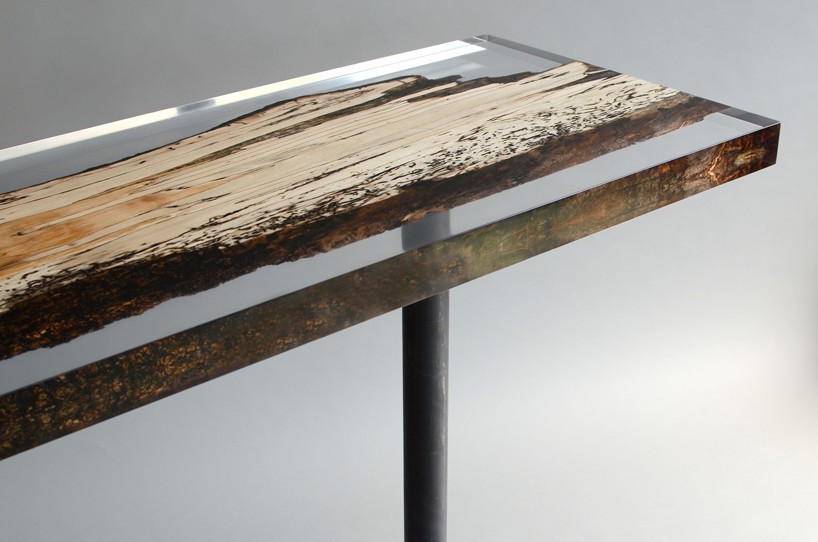
wood discolorations create dark intricate dark lines
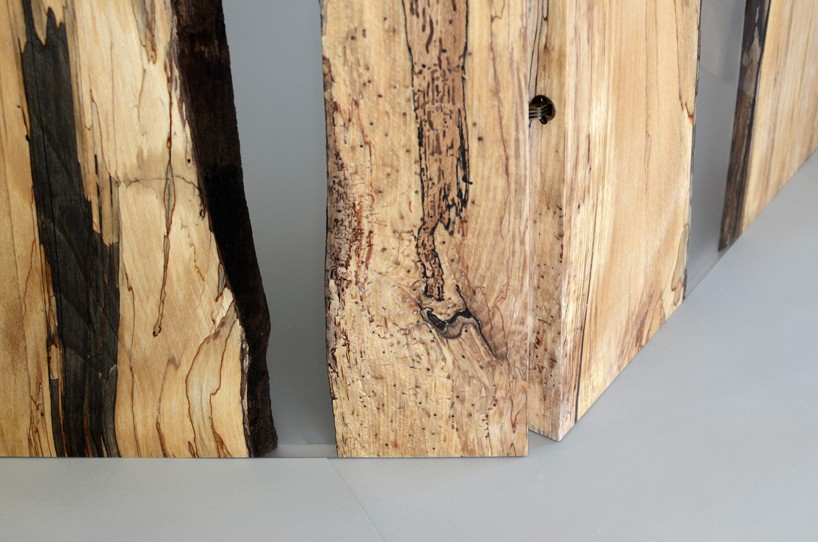
the ‘fungi screen’ is made of four wood boards obtained by sawing dead beech trees with their native populations of fungal colonies, recovered in the italian dolomite forest. the vertical arrangement seems to evoke the original forest trees, according to the idea of environmental cross-section of this extraordinary setting, and with the aim to transcend its ordinary perception.

wood decay is a clear example of the transformative energy of nature
the fungi table is made of a single wood plank obtained by sawing a very large beech log with its native populations of fungi, recovered in the italian dolomite forest. similar to the ‘console table’ the plank of wood is cut into two parts so that in the corners the fungal woodgrain matches correctly.
alcarol’s fungi collection is on show at salone satellite 2016 during milan design week.

the ‘fungi screen’ is made of four wood boards obtained by sawing dead beech trees
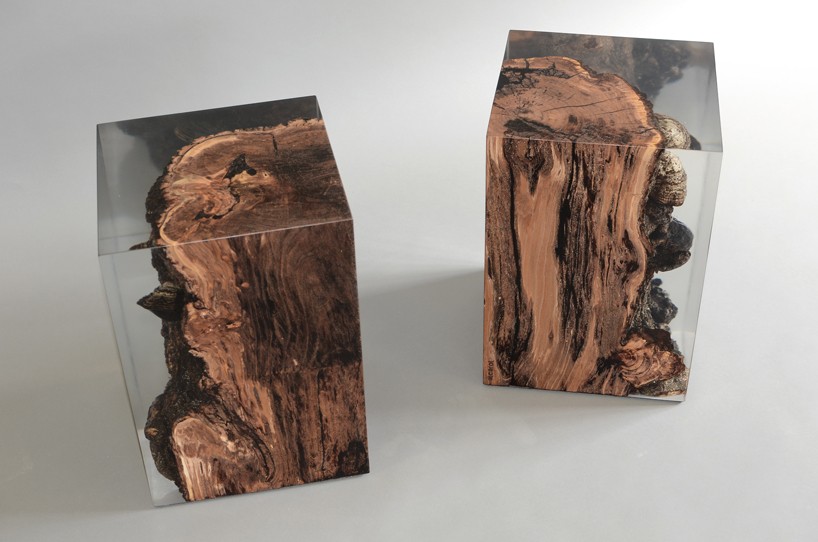
the ‘fungi stool’ is a block of wood obtained from a dead apple tree
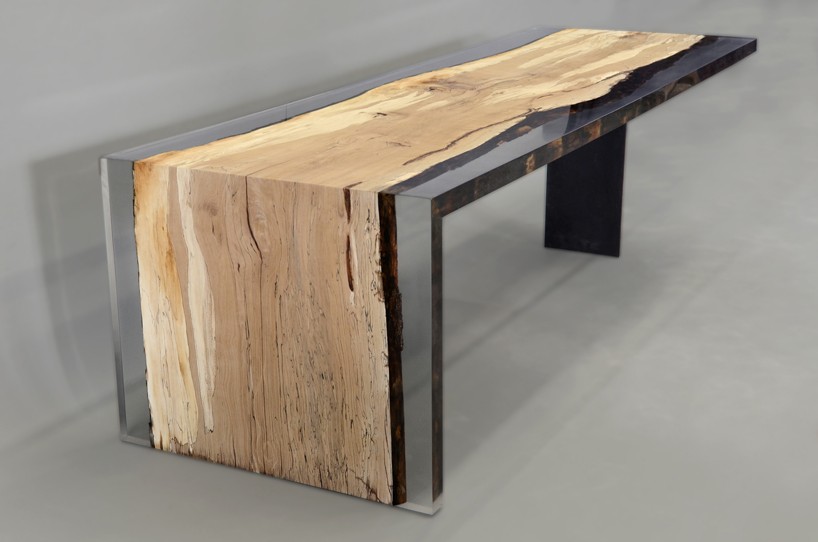
the ‘fungi table’ is made of a single wood plank obtained by sawing a very large beech log
see designboom’s instagram coverage @milan.design.week
 1/6
1/6
shop
your own online design shop — no sales commission collected