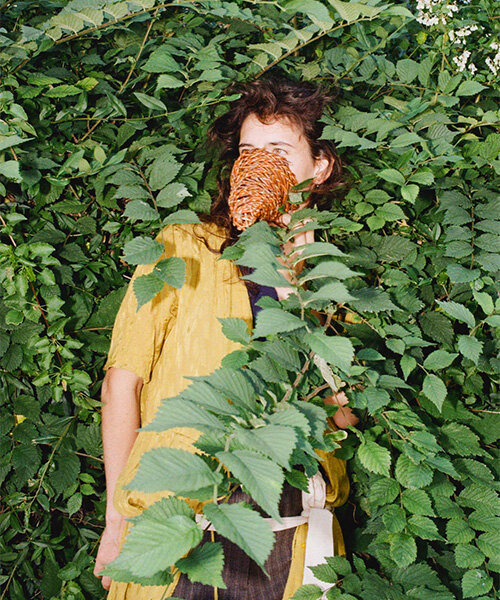
anđela zora brnas explores how design can nurture interspecies care
through willow weaving, living structures, and garden-based experiments, the interdisciplinary designer explores how humans can become more attentive participants in the ecosystems they inhabit.
prefer designboom on google[FEATURED]
imagining ourselves as part of the living world
Lets imagine. Imagine…that we are living ecosystems living in a living ecosystem. Sharing our lives, bodies and habitat with millions of other organisms. Imagine if we never forgot that. What if we celebrated it? How would our lives, bodies, and habitat feel and breathe?
We, humans, cannot live without trillions of microbes in our gut, inhaling oxygen produced by trees, sunlight waking us up or water hydrating our bodies. Even when humanity thinks it can live without other beings and is self-sufficient, it still turns toward the earth, water, air and sun for its energy, materials, nutrients, and species to extract from and manufacture products for its own survival. The age of Anthropocentrism – where human-centered systems are driven by capitalist colonialist extractive ideologies – is leading life on Mother Earth into destruction and suffering. These man-made systems are driving our humanity to exploit space and land, extract materials and build almost exclusively for humans, while ironically often not even contributing to human lives. Other-than-human species are denied the right to space, materials, choice and agency within the human-centered system- or how I usually call it ‘money/power-centered system’.
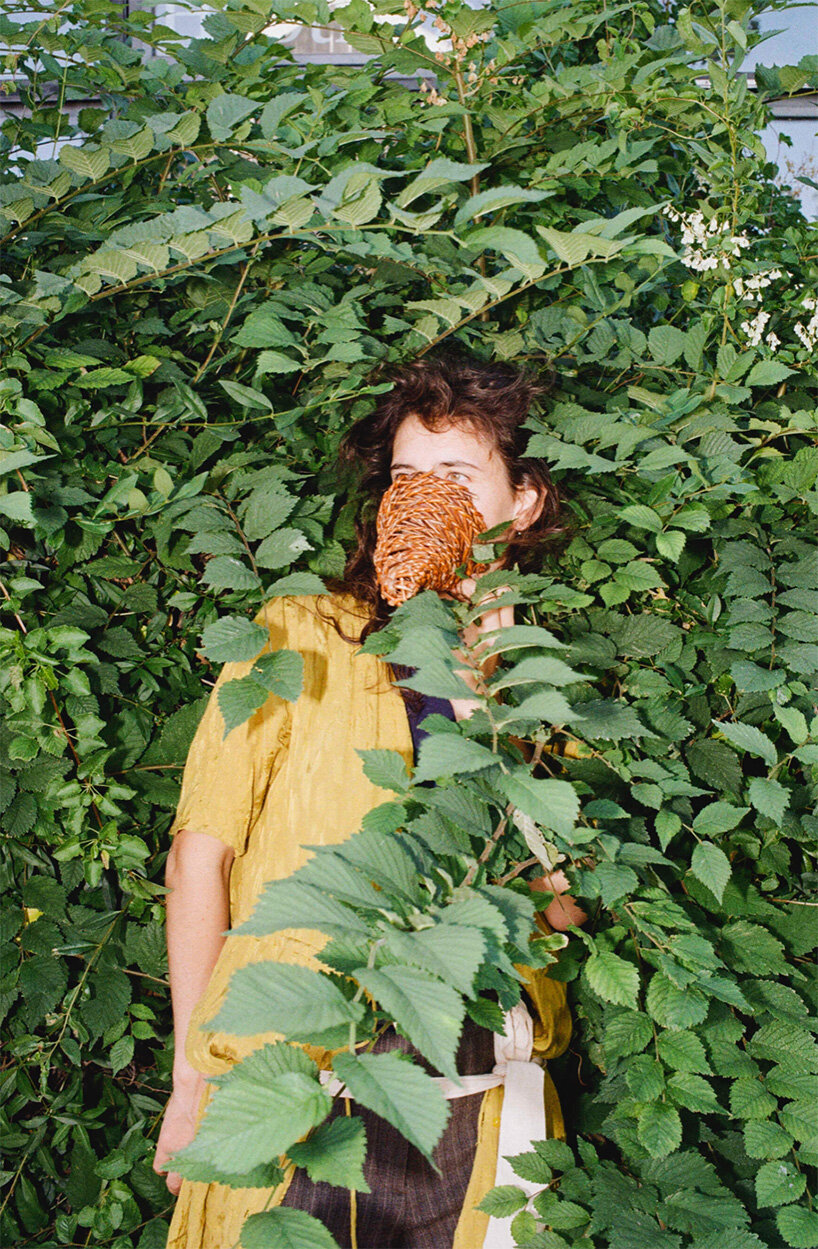
There is no question that we are in desperate need of ‘new’ and ‘old’ regenerative ways of relating to and living with other life forms. Posthumanist theories – arising to challenge human-centered worldviews and build systems – propose that we as humans are deeply entangled within the web of life. While some humans are trying to create a better future within our human-centred bubble, often the intelligence of the lived world around us is not acknowledged and included. Now when rivers are crying over the cities, earth is shaking everything and species are disappearing, we are lost and lacking ways of how to relate and collaborate with other beings. What would happen if we start to listen? Maybe even seek help from other beings? Allow to be guided by the rhythms of the ecosystems, rather than pushing the healing onto them as saviors?
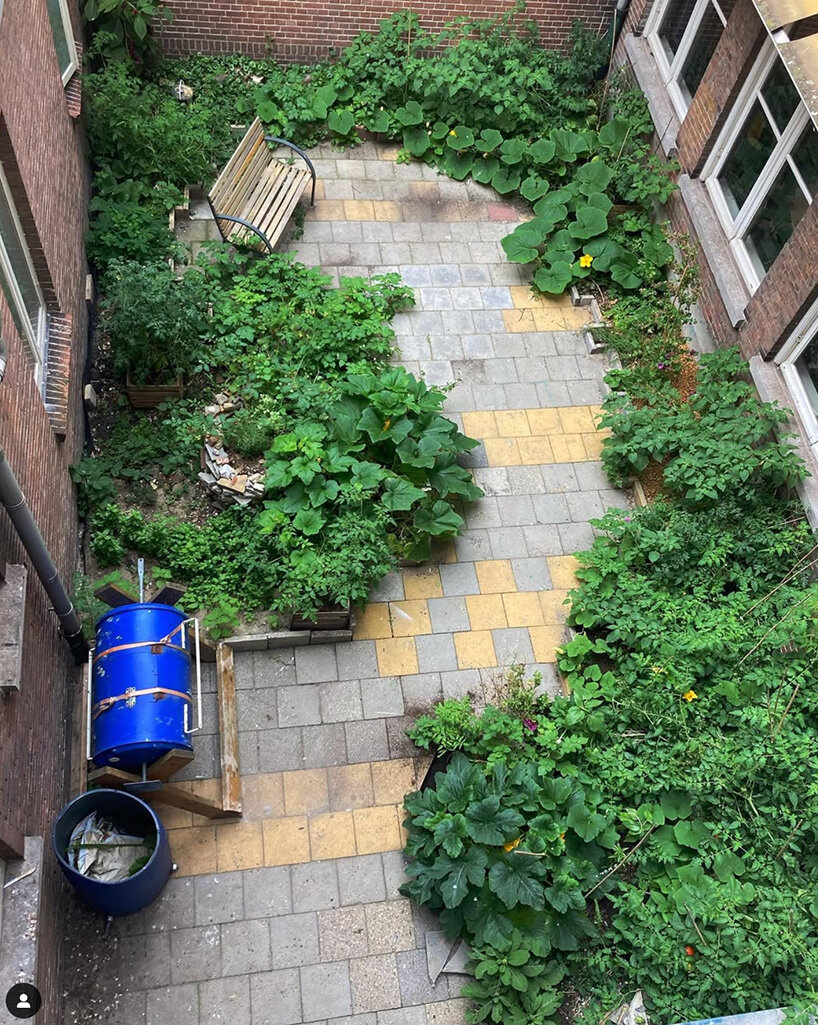
More than ever, we are in need of creative, empathetic, vulnerable and deeply sensitive ways of being, where we can practice – again as children- how to exist within this web of life. Cultural ecologist and geophilosopher David Abram calls it ‘more-than-human’ world, referring to a larger field of earthly life—animals, plants, weather, landscapes, and sensory forces—that humans are embedded within and dependent upon. What would our systems and ways of life be like if humans were de-centered from them and instead rewoven in reciprocal relationships with the more-than-human world?
It can be very daunting to realise how much we don’t know, and how far we separated ourselves from the rest of life. Recognising more-than-human as well as indigenous wisdom while seeking for guidance from them, has never been more important. Indigenous scholar Lyla June opened a new possibility in my imagination with her words: ‘What if the Earth needs us?’ She argues that our human-made systems are wrong, but that we don’t have to be these systems.
I started realising that the healing of my own wilderness; the wilderness of human kind, can only happen when we start to decompose the story of us as individual species and start imagining ourselves as part of the living ecosystems. What if we decomposed our need to ‘save the planet’ and instead focused on healing and caring for it in collaboration with the more -than-human world? As Indian ecofeminist and scholar Vandana Shiva says: ‘We are not carrying the Atlas. The Atlas is carrying us’. It’s about noticing and learning from deep embodied wisdom that ecosystems around us (yes, even in cities) have while healing our own suppressed nature within our earthly bodies.
gardens as playgrounds for interspecies collaboration
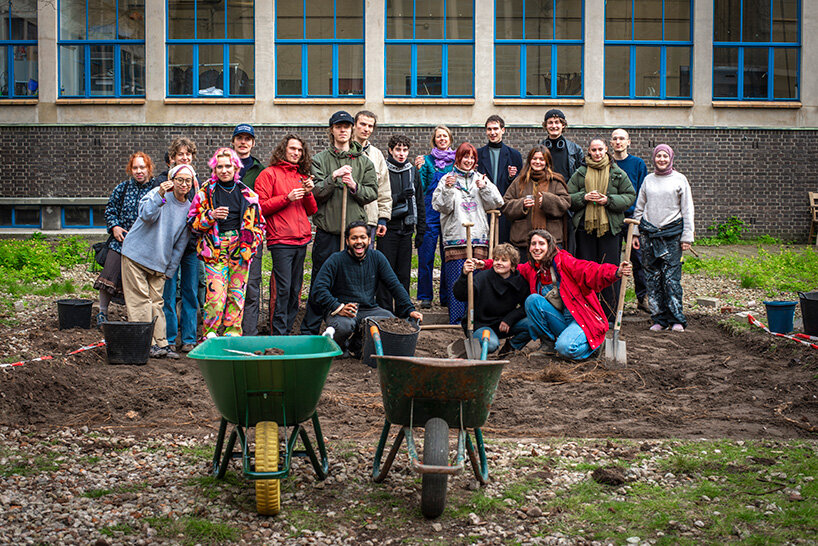
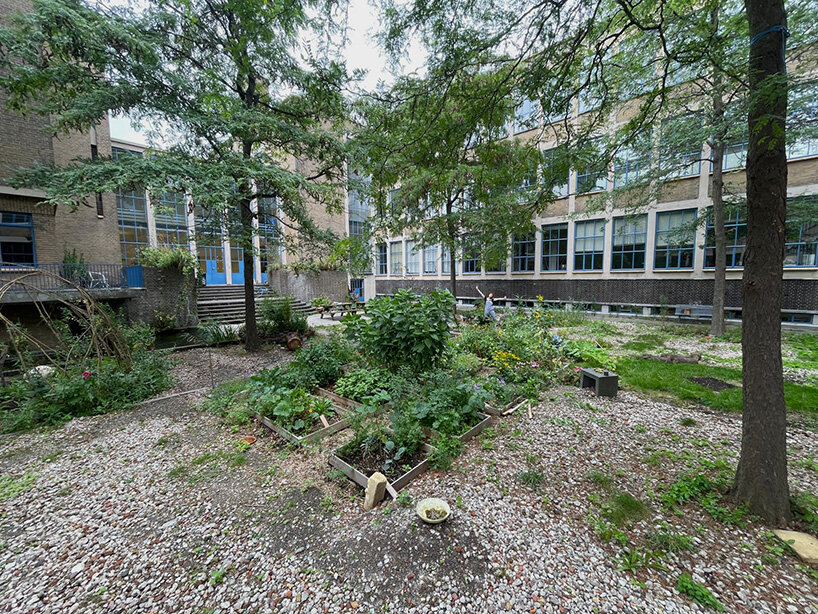
In my own process of healing the wilderness as a human and designer, I searched for guidance from plants, trees and animal wisdom surrounding me, while seeking for likeminded human earthlings. By hearing wise words of indigenous scientist and writer Robin W. Kimmerers – who in her book Braiding Sweetgrass reminds us how to practice reciprocity with other life forms and relate to them as our oldest teachers – I felt even more drawn to gardens. A crucial moment was 4 years ago when the co-creation of the student-led Green Office Ginkgo and Makers Garden happened at Kabk, Royal Academy of Arts in The Hague. We all wondered how can we imagine, practice and teach art, design and architecture as part of the cycles of life and seasonal rhythms. But we were not only dreaming – we were co-creating our imagination in real life with soil, plants and species. From seed to plant, from plant to craft and back to soil and life. I started seeing gardens as a common playground where boundaries are blurred between wilderness and crafting, humans and other species, design and process.
learning from willow trees and their ecosystems
After few years of existential crisis – where I couldn’t design out of fear for creating more harm – my struggles and wondering got finally transformed into a research quest(ion) within my graduation work ‘crafting interspecies care’ at Master Inside: ‘What can my caring role/s be, as a human and spatial designer within local ecosystems?’
What started as my graduation project, became a journey of developing and cultivating my regenerative design practice. ‘Crafting interspecies care’ is about collaborative designing and cultivating conditions that create and nurture multispecies care, respect, collaboration and thriving. The values and principles keep me grounded and guide me in the process, while the design can be manifested through many diverse mediums, forms, materials, processes, scales, timeframes, topics…all depending on the context.
I strive to switch from seeing ‘designing with materials as resources’ to ‘collaborating with companion species and their materiality and spirit’. Despite the struggle and problematics of – is it even possible to actually collaborate with another being? – with this approach, I set an intention to practice possible caring and respectful interspecies relations, communication and collaboration.
weaving spaces for multispecies cohabitation
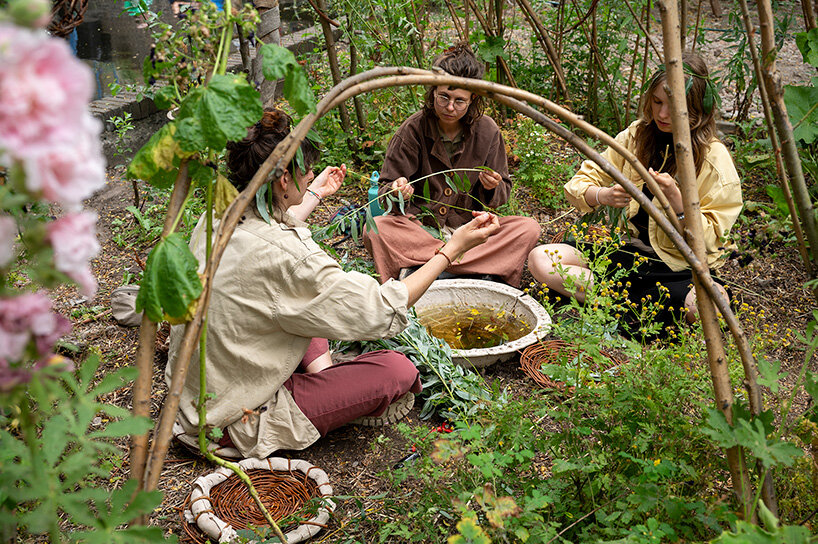
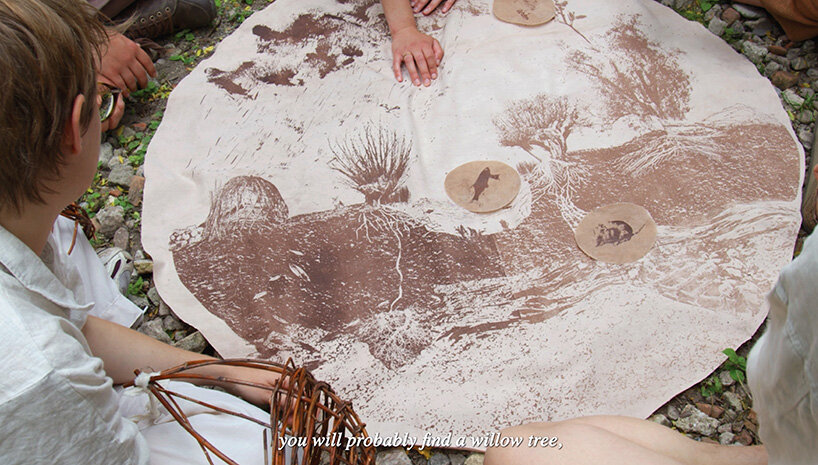
For some time, I have been discovering ways to collaborate with willow trees within the Dutch landscape and urbanscape. Connecting to their spirit and embodied wisdom was the first step, followed by deep research into the seasonal crafts the willow offers and human-willow entanglement : from willow woven fascine mattresses ‘zinkstuks’ as landscape management, growing architecture and woven vernacular walls, to small seasonal everyday crafts as clogs, basketry, furniture, pigment, charcoal, rope and the medicinal uses of willow bark (a precursor to aspirin). I started relating to willow trees as a teacher, learning space, a wise elder, home, a companion. Throughout the process of building living structures, for the first time in my life i was cutting willow branches – harvesting the material from a living being. I thank the willow with grateful words, hug and promises to harvest and create in reciprocity. Keeping in mind that it’s never a dead material – it was and will always be part of a wider web of life that carries wisdom and stories within itself. This kind of simple but deep and intentional gestures became a ritual that inevitably changed how I design and live. Learning about variety of species that are depended on the willow as their home – shelter, food or material source – and analysing the flows of the willow ecosystem procceses, made me concious of my own actions as a human within it.
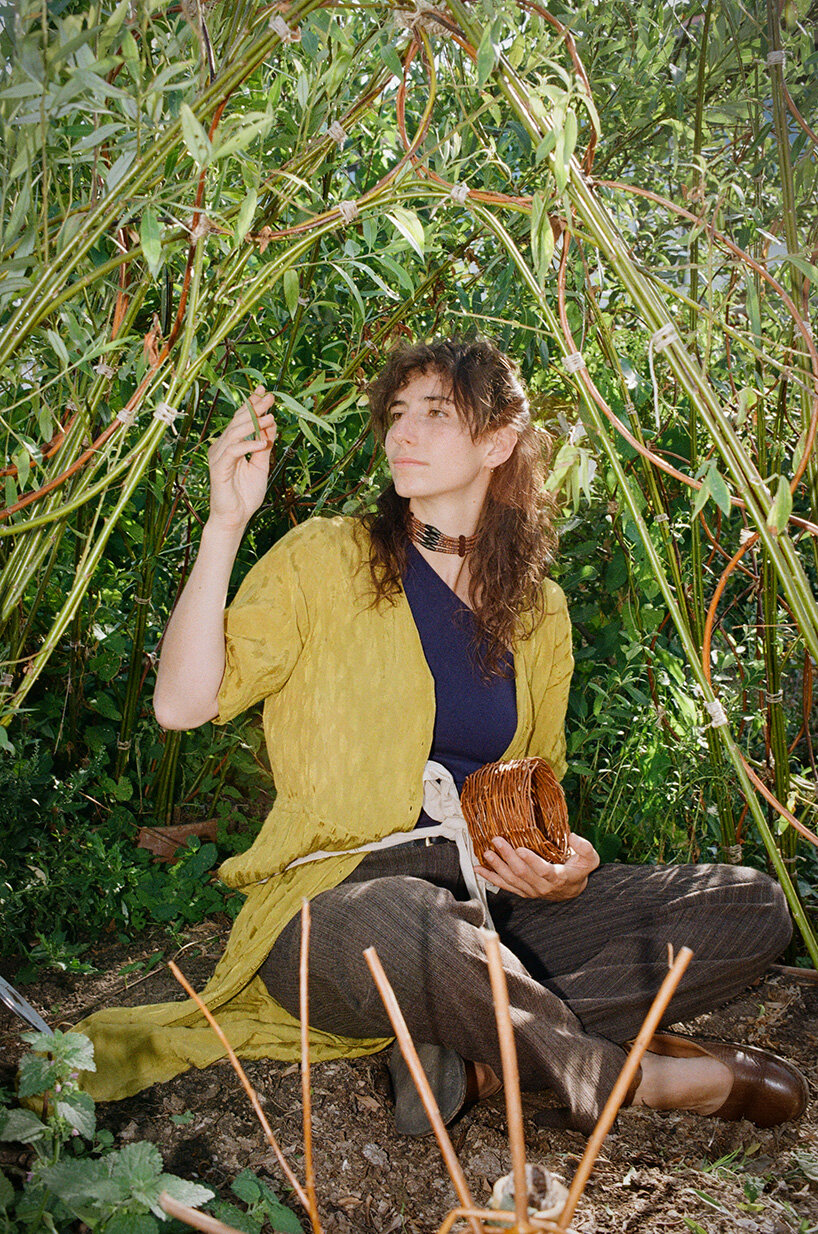
Through trial and error, collaborating with willow trees and non-humans within gardens taught me how important it is to observe, sense and be immersed in a slow-deep-entangled time. It taught me to always be reflective and question the impact on systemic scale. Is it the right time to cut a willow tree? Will this idea really support the ecosystem and other species, or is it just my human perspective (subconsciously) imposing what I want to (or I think I have to) create?
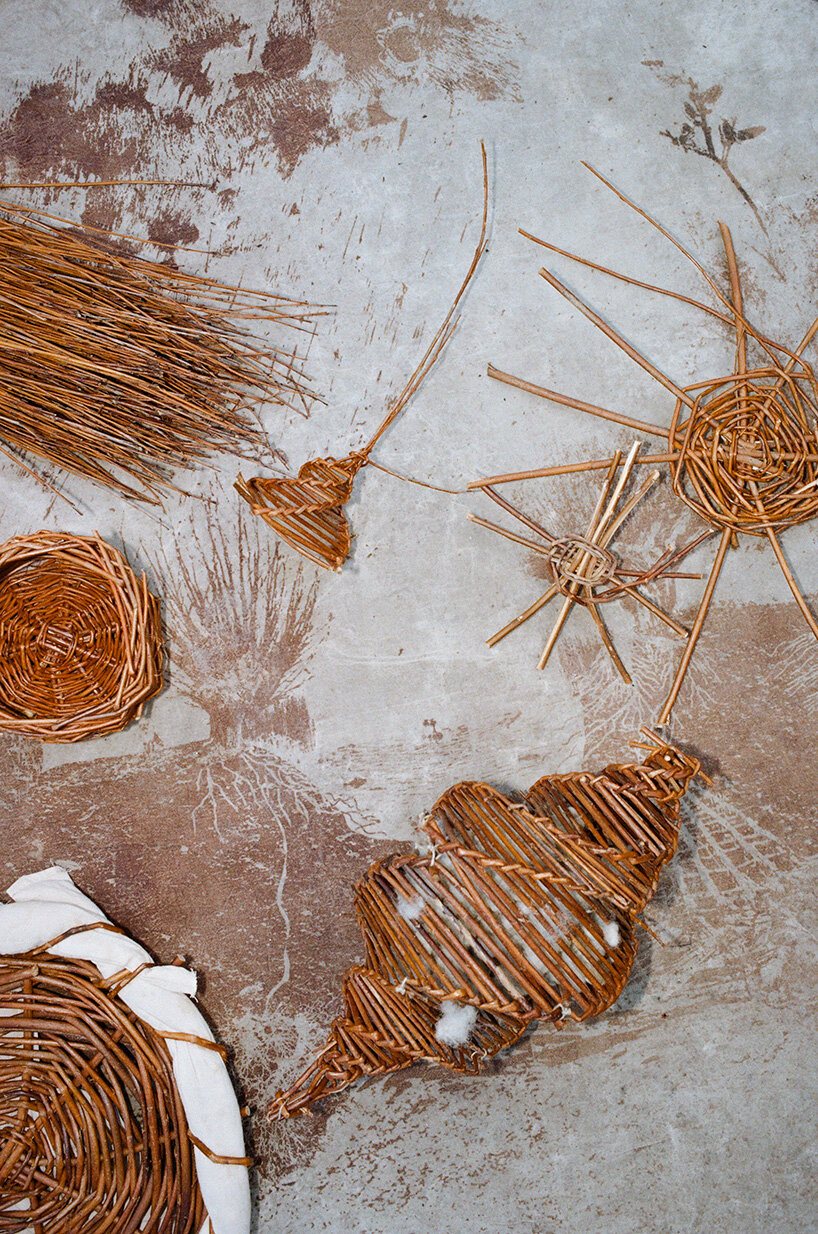
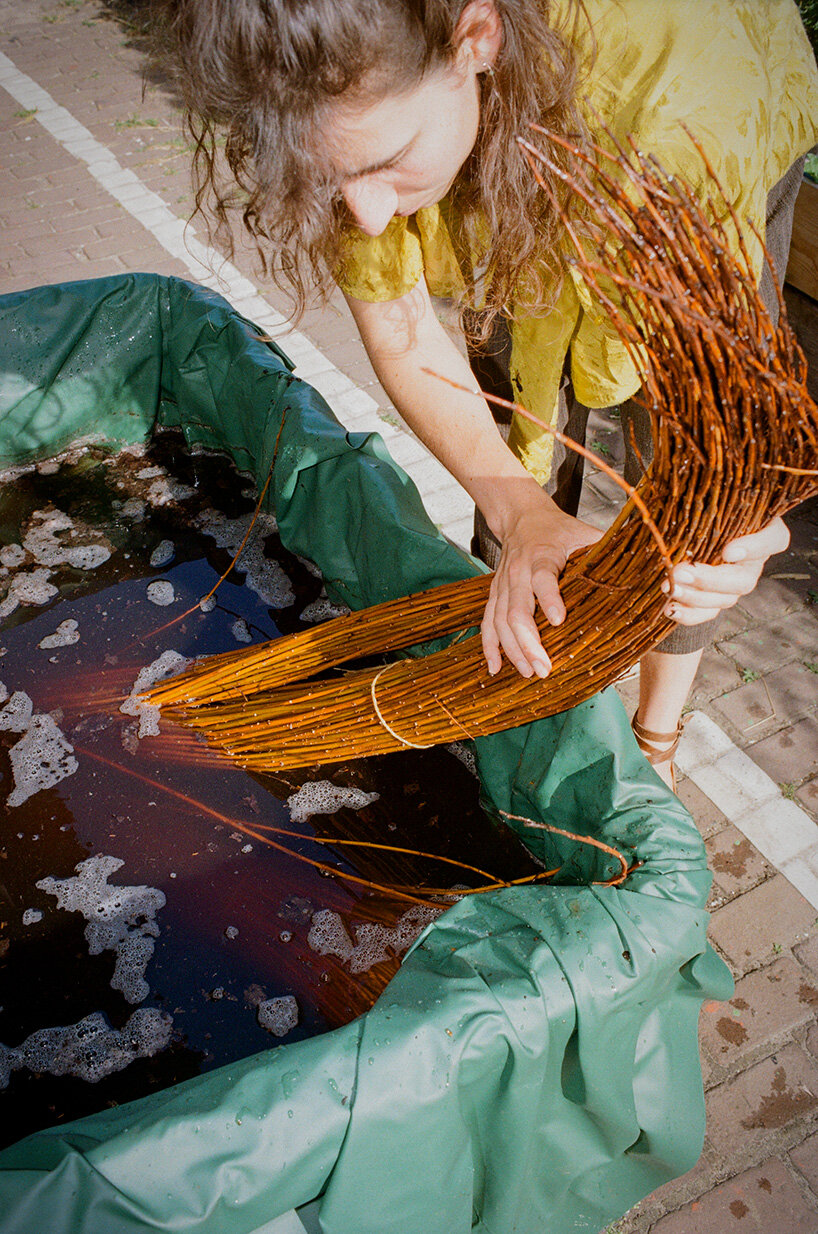
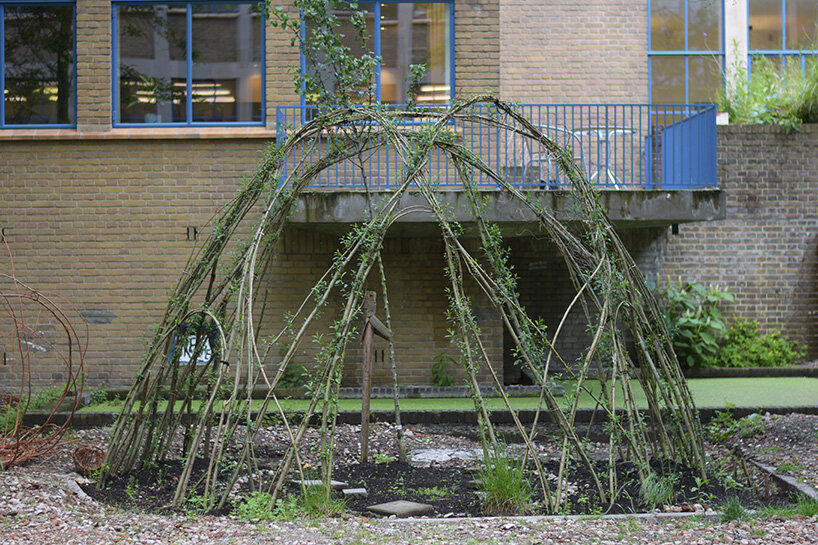
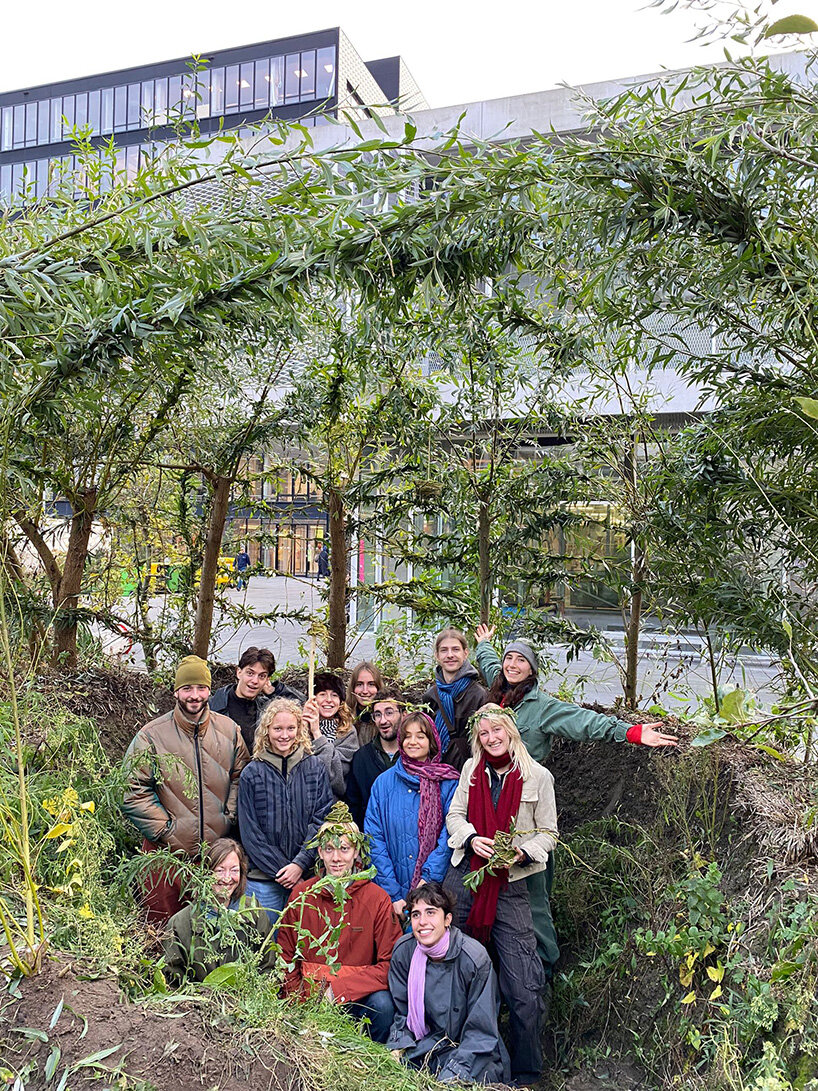
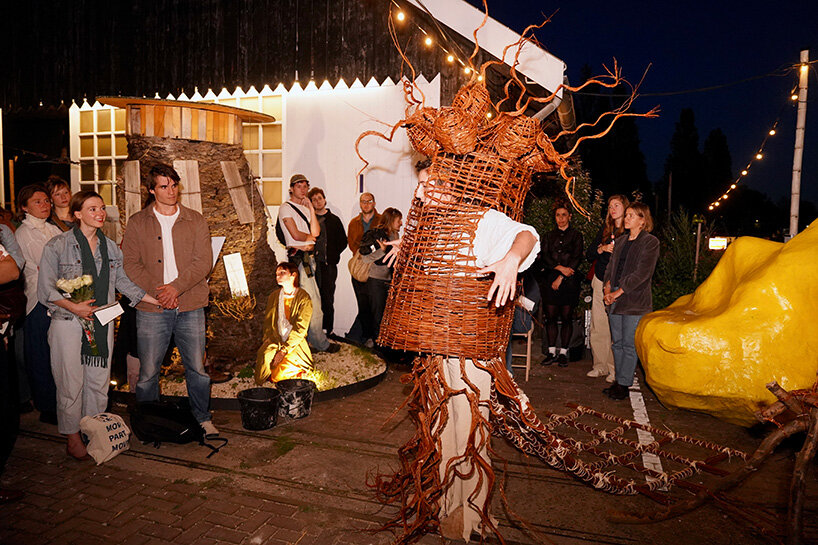
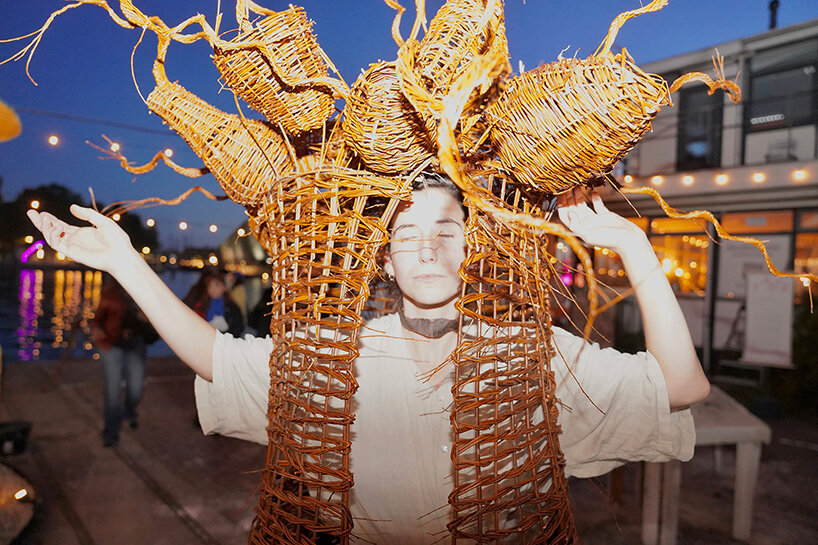
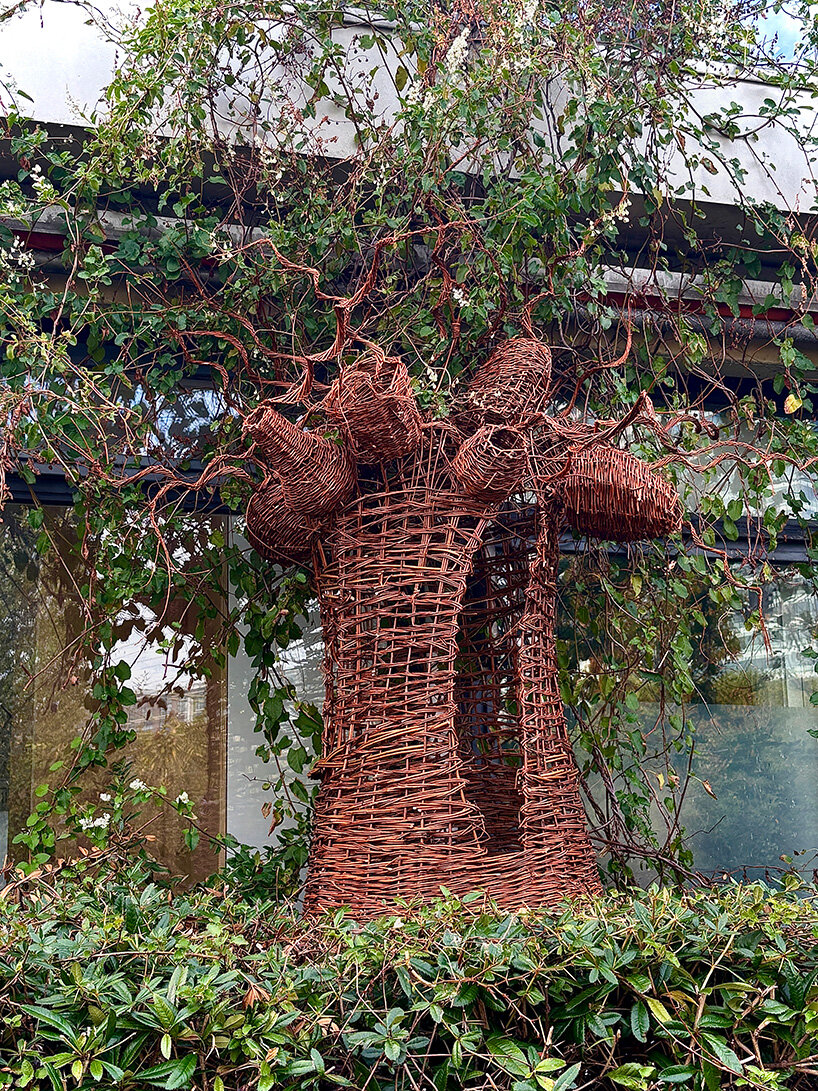
During my residency at art center Mediamatic in Amsterdam, I continued exploring my relation with willow trees and weaving multispecies worlds. Co-creating a small growing dome with willow branches is an ongoing experiment on how to craft and share spaces with other species. Humble in size, it questions the multispecies dynamics within urban public spaces and who has the right to exist, inhabit and create. It invites humans to spend time in the small dome and reflect on themselves as part of an ecosystem. The residency culminated with a storytelling performance called ‘Embodying the willow ecosystem’. A story was being told from a perspective of a willow tree aiming to spark imagination within the human audience. As an act of offering, the woven structures ‘Multispecies baskets’ were gifted to the Mediamatic ecosystem, hopefully providing shelter and nesting habitat for species in cities, while continuing to speculate of possible human caring roles within the ecosystems.
designing with(in) the cycles of life
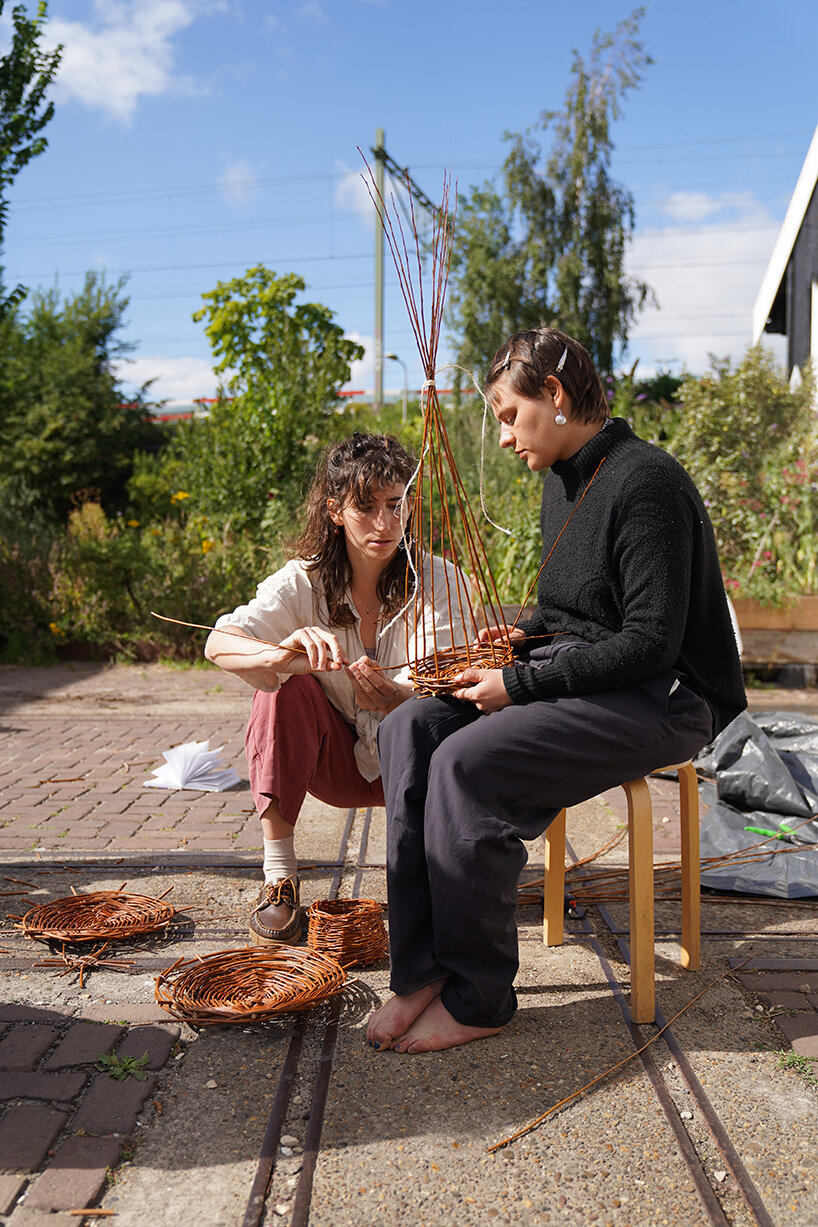
Continuing on the quest of exploring ways to craft multispecies cohabitation and caring relations, a project ‘Living architectures’ is being developed. Designer Akash Kumar, ecologist and anthropologist Tara Neary and I are researching how multispecies building with vernacular techniques of willow and clay in today’s urban Dutch cities, could potentially offer regenerative ways of human cohabitation with other species.
It has never been more urgent to embody a reflective and critical thinking, than in today’s fast driven distanced man-made systems. Designing with and within the ecosystem entails that the overall health of the ecosystem and its species needs are at the core of how we think, relate and design.
Rather than perceiving it as losing and giving up on certain ideas, it’s about choosing life, diversity and companionship. Although more complex, slower and demanding, designing with(in) the ecosystems and with the lifecycle awareness can enrich our humanity in ways we forgot its possible. Recognising and realising that we are part of the interconnected fabric of life, changes everything. Practicing, healing, reviving and rewilding is a long process and journey that requires empathy, humility, bravery, patience and creativity. We are all that, we just forgot how to feel and imagine.
So let’s imagine.
Anđela Zora Brnas (she/her) is an earthling, interdisciplinary designer, researcher, artist and workshop facilitator, in continuous discovery of her caring role(s) within the local ecosystems she inhabits. She started Studio Zora Wildcraft which focuses on re-imagining spatial design as a living, nurturing, multispecies practice. Guided by seasonal, embodied, sensory and non-linear approaches, Zora aims to create participatory spatial experiences that foster awareness and nurture possible human caring roles within the complex interconnectedness of the local ecosystems. Zora is currently based between Netherlands and Croatia.
This article is part of designboom’s POSTHUMAN UTOPIAS chapter, exploring what happens when humans are no longer the measure of all things. These stories rethink our relationship with the planet through interspecies architecture, living materials, regenerative landscapes and emerging technologies – learn more here! The chapter is presented in partnership with INDX|GLOBAL – a global cultural platform placing Indian architecture, design, and creative intelligence in conversation with the world.
Each designboom editorial series explores one theme in depth through projects, interviews, features and news across architecture, design, art and technology. Discover more chapters here, and get in touch if you’d like to submit a story through our submissions portal or contact form.
shop
your own online design shop — no sales commission collected