apple’s ‘designers of tomorrow’ brings a rattling chair and palm-frond lantern to paris
at design miami.paris, four emerging design practices turn familiar objects into invitations to linger and look more closely.
prefer designboom on google[FEATURED]
APPLE AND DESIGN MIAMI EXPLORE THE ART OF PAYING ATTENTION
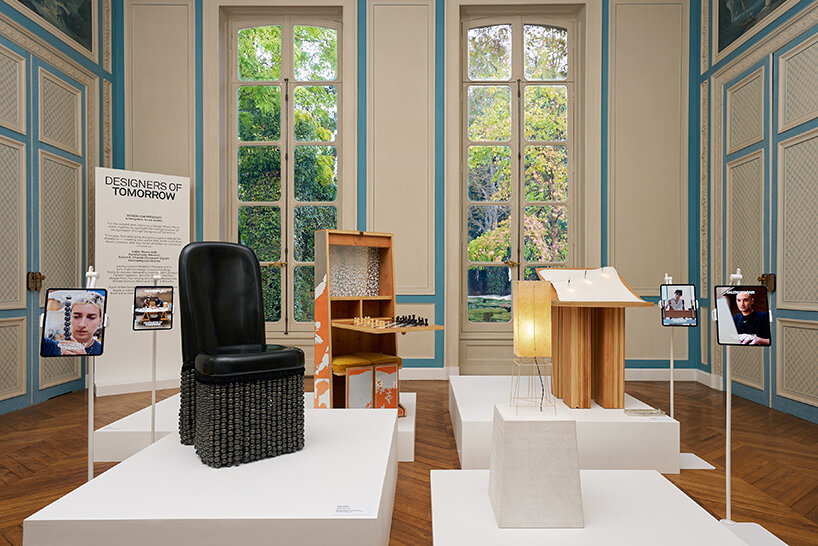
A chair edged with 1,500 handmade ceramic beads makes a soft rattling sound when someone brushes against it. Nearby, a lantern rises from a carved limestone base, its delicate frame woven from Egyptian date palm fronds. These are among the four new commissions presented at Apple‘s Designers of Tomorrow 2026, an exhibition organized with Design Miami and curated by Rodman Primack. On view at the Hôtel de Maisons during Paris Design Week 2026, the second edition brings together emerging designers whose work invites people to spend a little longer with the objects around them.
This year’s theme, Design for Presence, considers how furniture and objects can hold our attention through physical interaction. The selected practices come from different parts of the world, each approaching the brief through its own materials and methods of making. As Design Miami president and jury member Jennifer Roberts observes, the designers begin with ‘something small and easily missed’ and build an entire language around it. Across the exhibition, those starting points range from an almost-finished pencil to the familiar sound of ceramic beads knocking together.
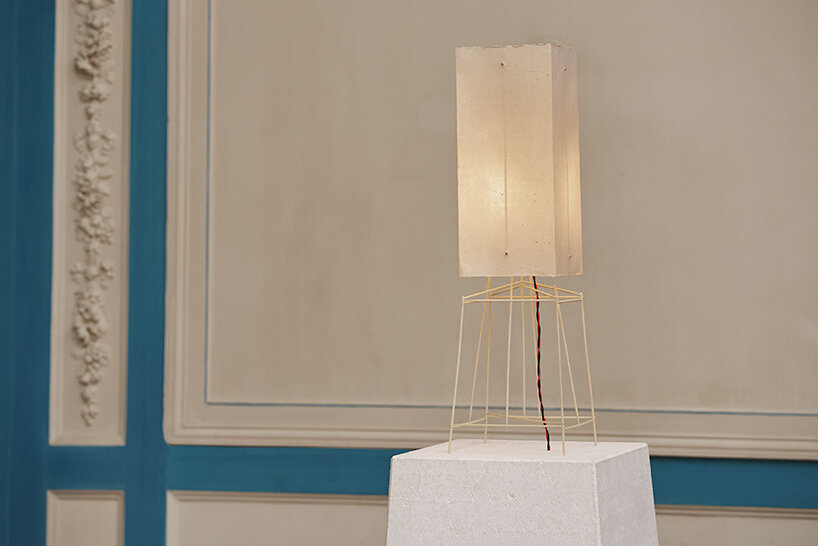
SALEM S. CHARABI BUILDS A LANTERN FROM EGYPTIAN PALMS AND STONE
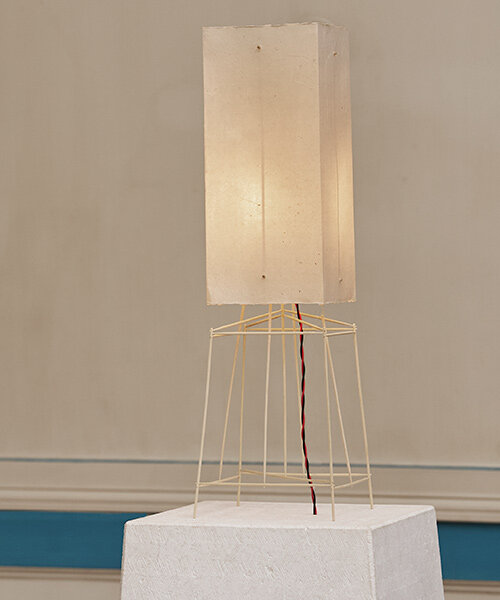
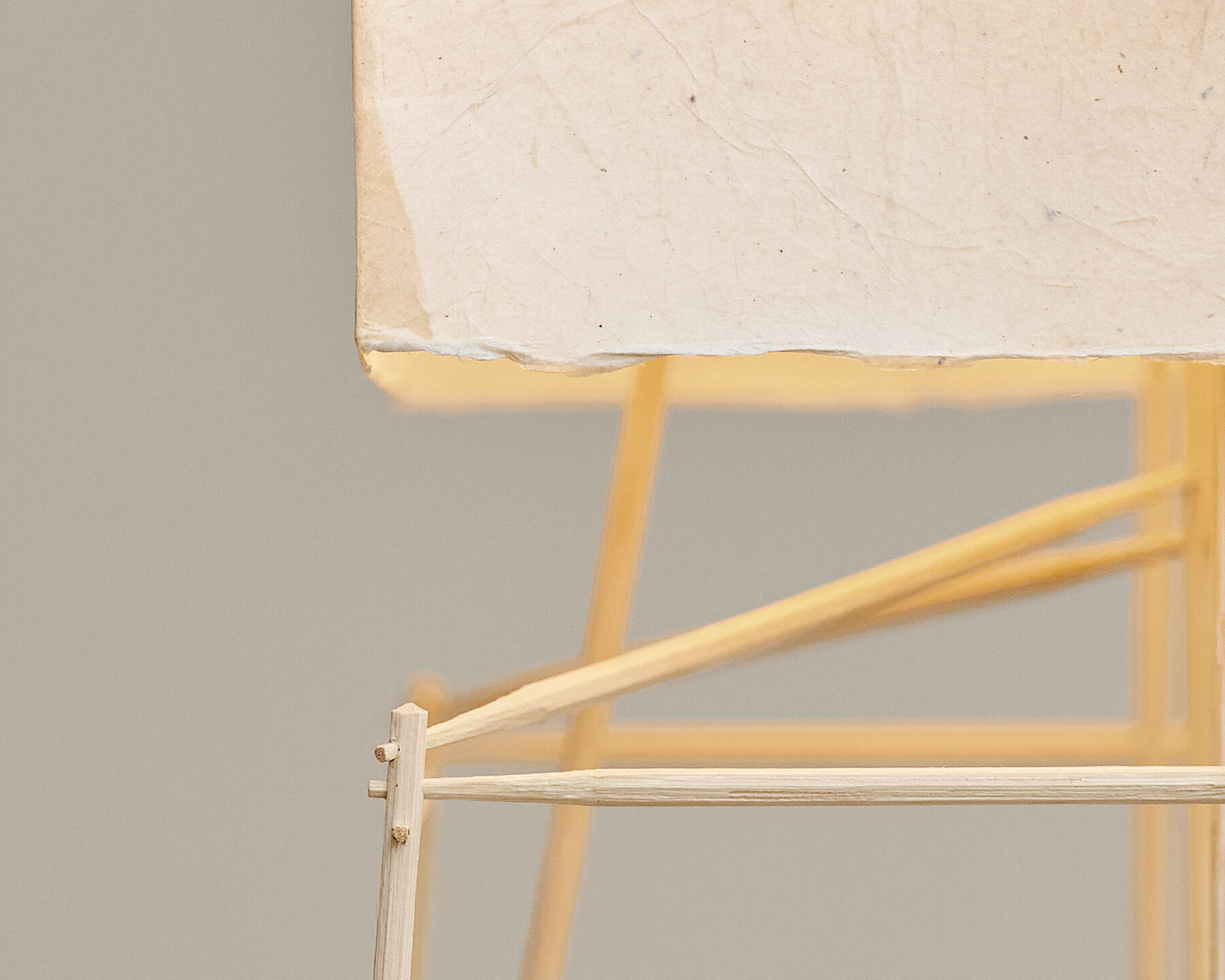
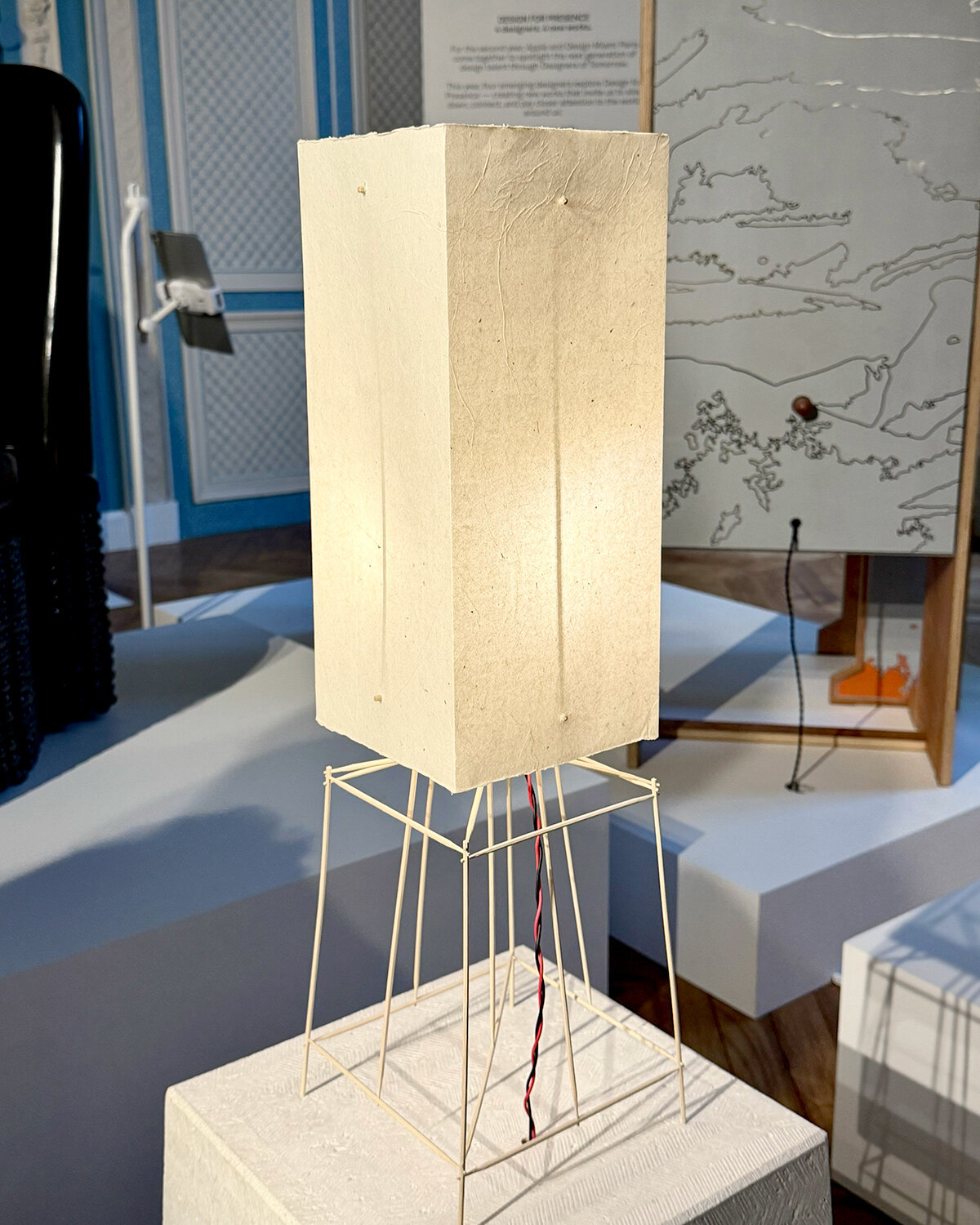
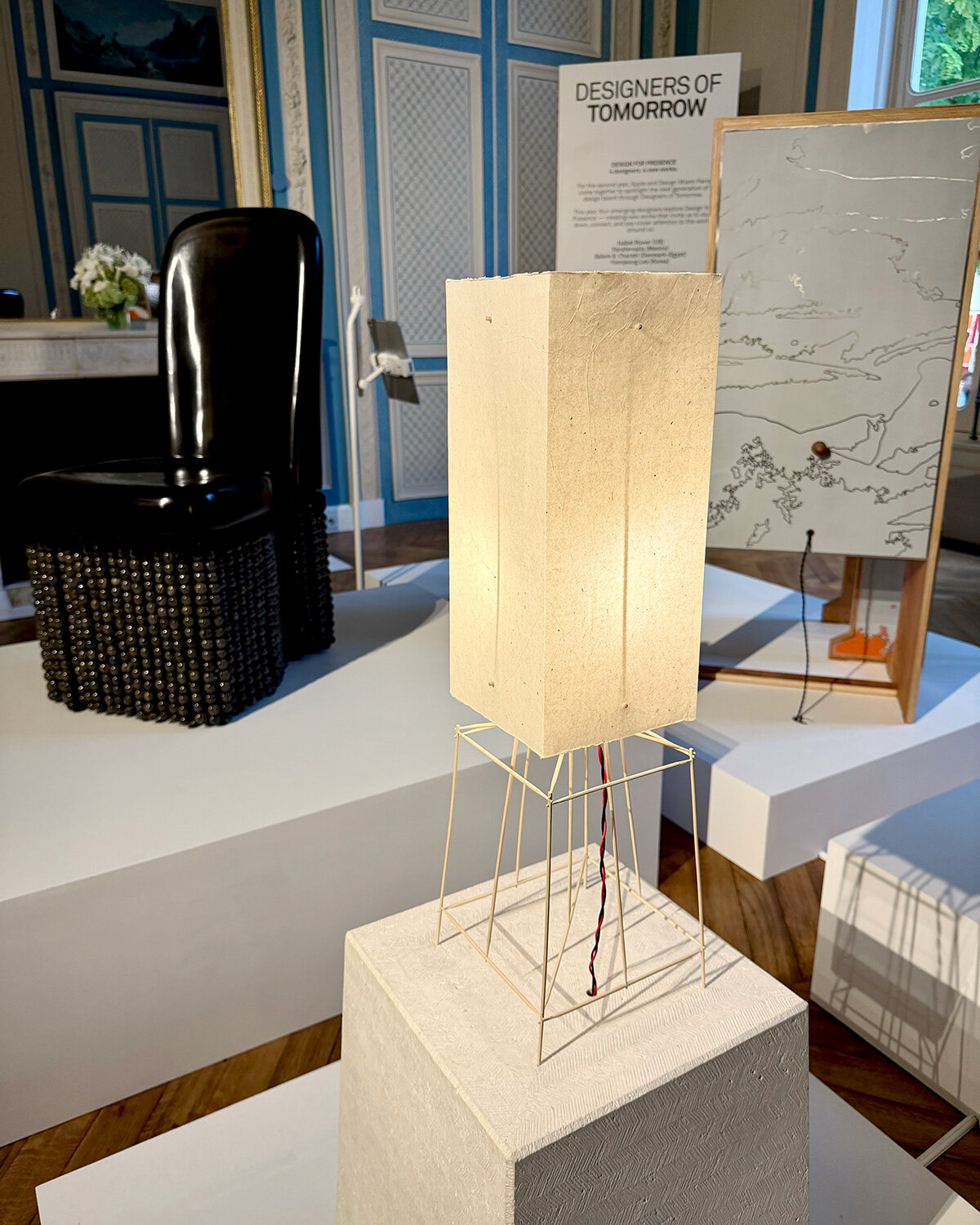
Egyptian-Danish architect Salem S. Charabi looks to the earliest gathering places for his lantern, The Emergence of Light. Inspired by the human attraction to fire, the sculptural fixture stands on a grooved block of limestone sourced from Egypt’s Galala Mountains. Above it, slender lengths of date palm frond form an intricate framework supporting a veil of translucent banana paper. The materials come from different regions of Egypt, while the construction draws on traditional methods of working with palm fibers and Japanese papermaking techniques.
Each strand of palm has been worked into an octagonal section just three millimeters wide, split and drilled by hand before its sharpened ends are fitted together. Charabi used a MacBook Pro to model the connections and work through the geometry before fabrication. There is an interesting tension between the heavy stone base and the almost weightless structure above it, where the light catches the overlapping fibers. Jury member Nifemi Marcus-Bello describes the work as having ‘great honesty and balance,’ recognizing the time and human touch embedded in its construction.
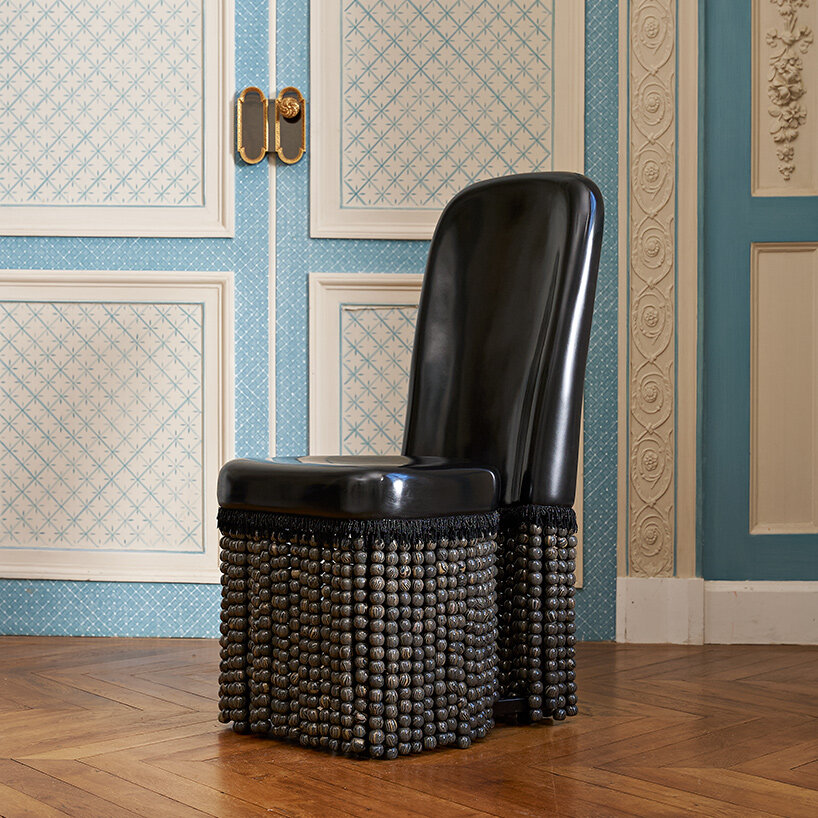
ISABEL ROWER GIVES A HISTORIC CHAIR A SKIRT OF CERAMIC BEADS
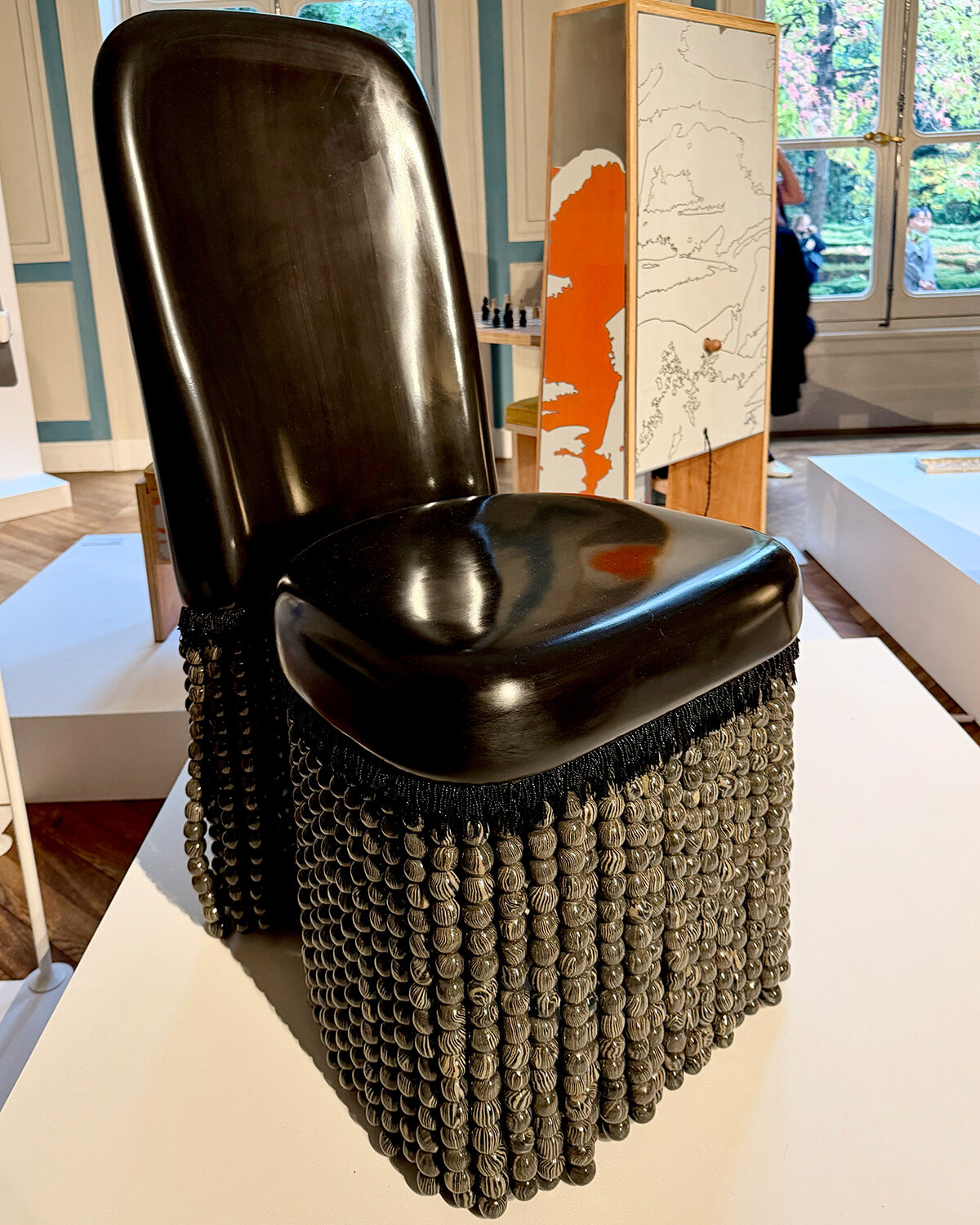
Brooklyn-based designer Isabel Rower revisits a nineteenth-century boudoir chair for Padded Chair 1860, a glossy black piece with an exaggerated silhouette and a skirt of handmade ceramic beads. Her starting point was a chair she had photographed years earlier at the Musée des Arts Décoratifs in Paris. To build her version, Rower collected discarded furniture from the curb near her studio and reassembled it into a wooden armature. She then developed the body with papier-mâché and a pulp composite made partly from shredded waste paper, finishing the surface in high-gloss black paint.
The original chair’s textile fringe has been replaced with approximately 1,500 ceramic beads, which sway and make a gentle sound when touched. It is an unexpectedly playful use of a material that Rower has long explored, introducing a small element of movement to the act of sitting. The object also recalls the elaborate surfaces of nineteenth-century decorative furniture, with an emphasis on how those surfaces feel against the body. French interior designer and jury member Marion Mailaender calls the work ‘a true conversation piece.’ Its elaborate fringe gives people a reason to reach out and discover how it behaves.
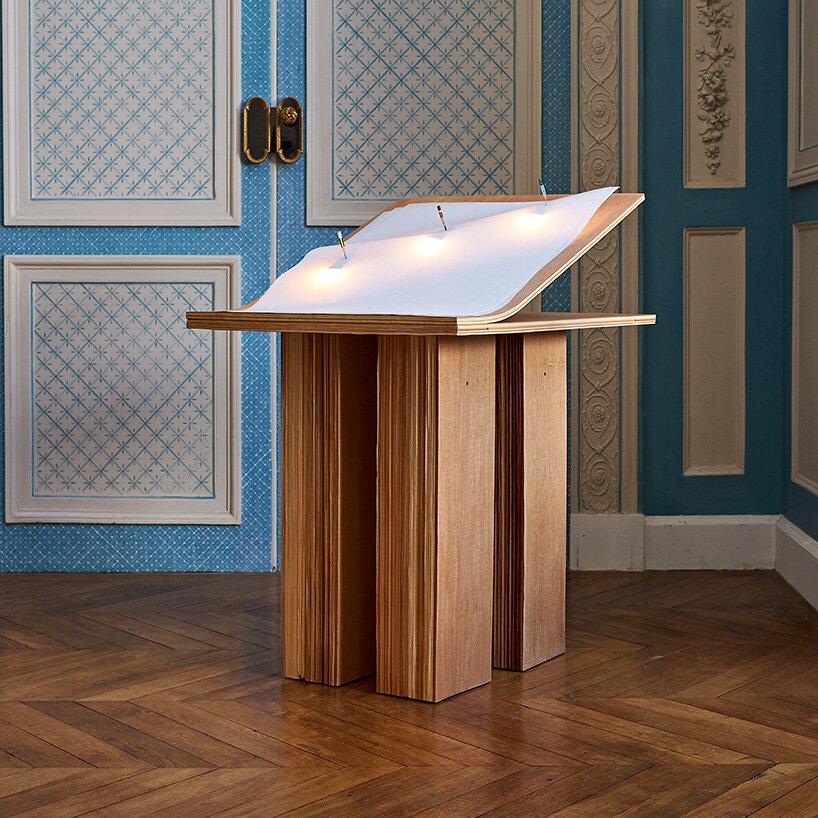
YOONJEONG LEE FINDS NEW PURPOSE IN A WORN-DOWN PENCIL
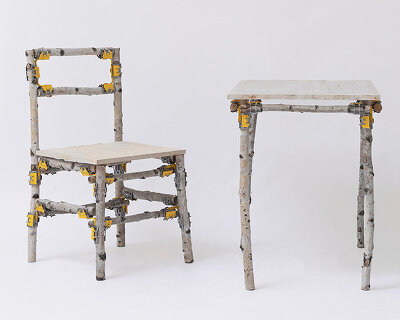
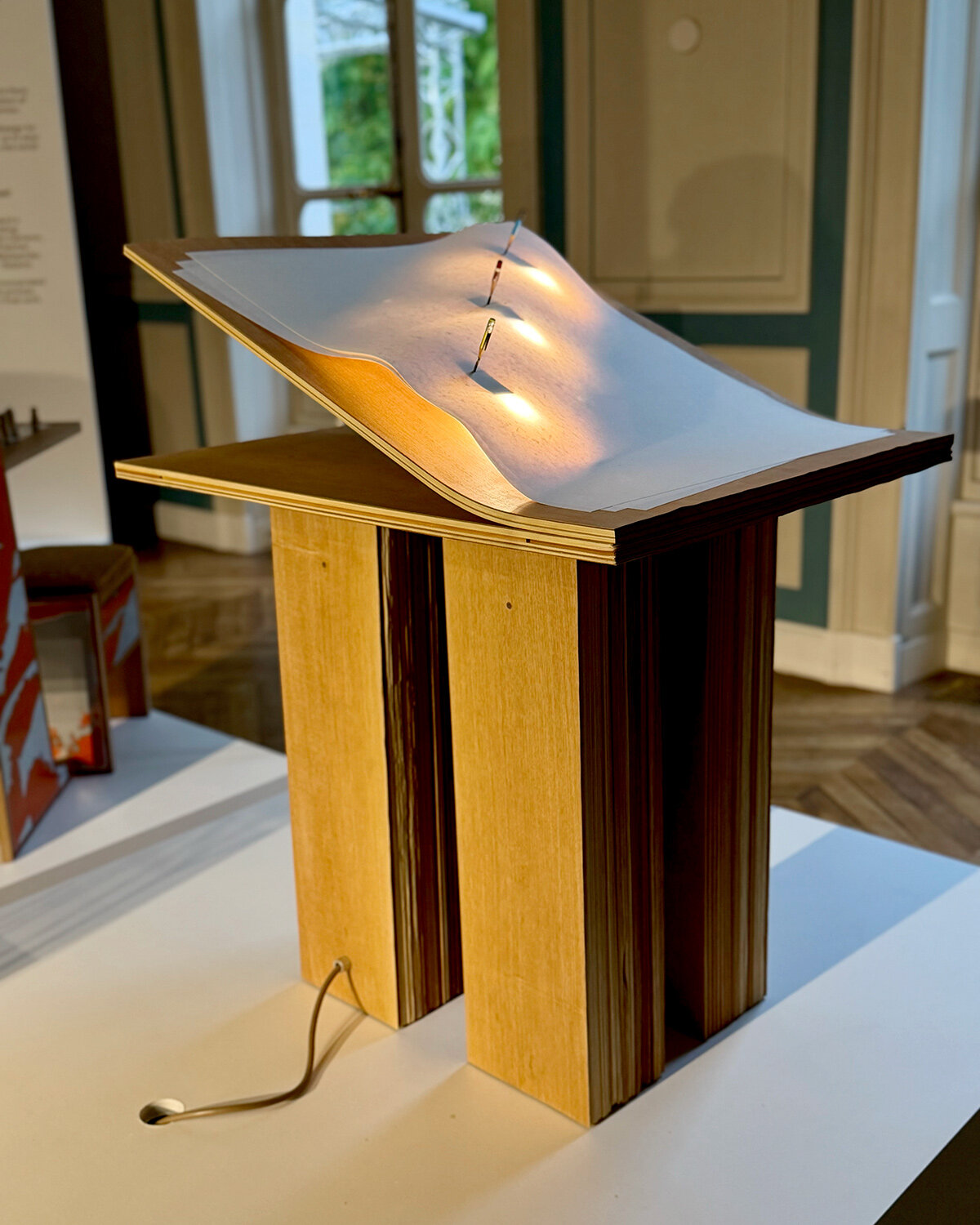
For Seoul-based designer Yoonjeong Lee, the starting point is something considerably smaller: a pencil worn almost to its end. In New Form, three pencil stubs become nails, holding sheets of paper in place above a wooden table with an integrated lamp. Lee has long worked with small fittings, examining the structural elements that tend to disappear into the larger objects they support. Here, the humble pencil becomes the central detail, encouraging a closer look at an otherwise familiar piece of furniture.
The table itself is built from approximately 5,000 thin sheets of veneer, stacked one by one to create a substantial wooden volume. The repetitive construction gives the material a distinctive layered appearance, while the paper above diffuses the light. ‘Yoonjeong has an impossibly patient way of working,’ observes furniture designer and juror Minjae Kim, who points to the meticulous attention she gives to even the smallest element. Lee used iPad Pro and Apple Pencil during the development process, although the finished work is especially compelling at the scale of the tiny pencil nails that hold it together.
PARAFERNALIA TURNS ETCHED STEEL INTO FURNITURE FOR TWO
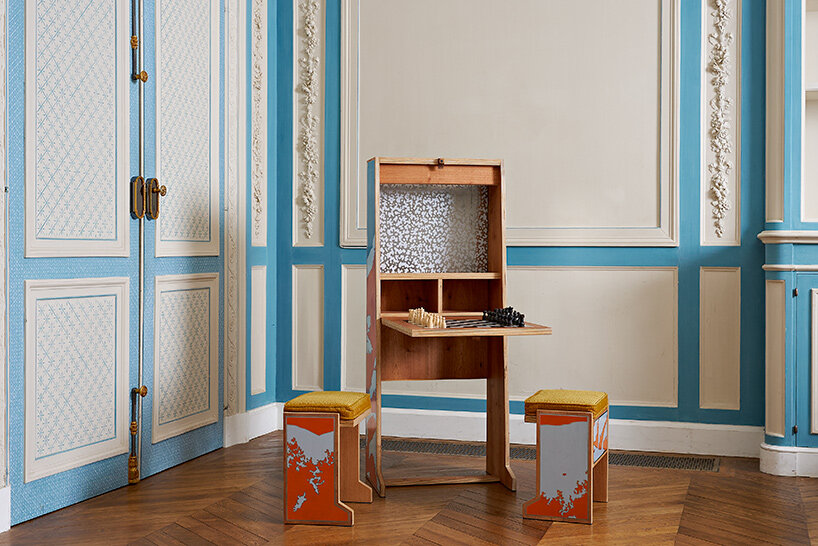
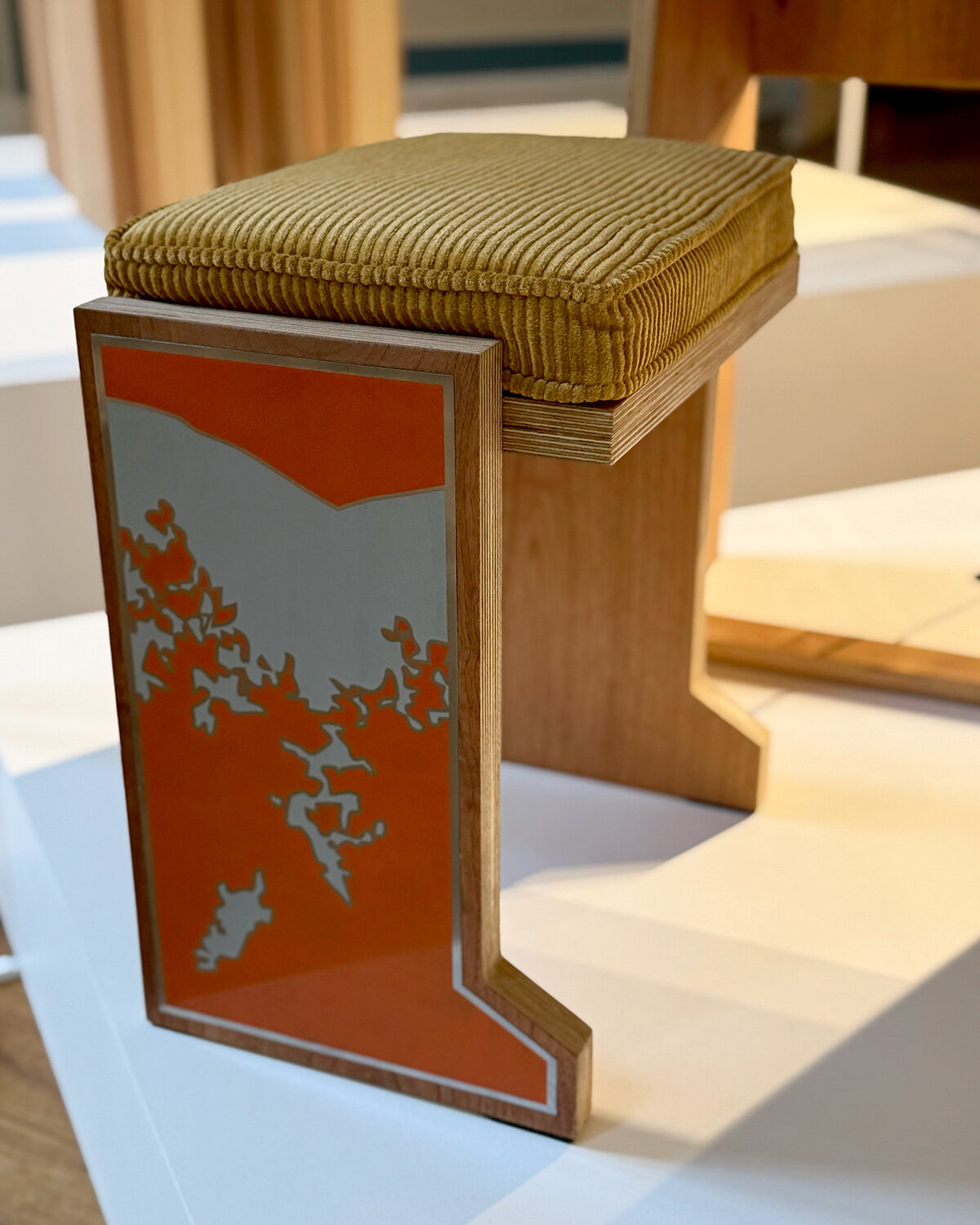
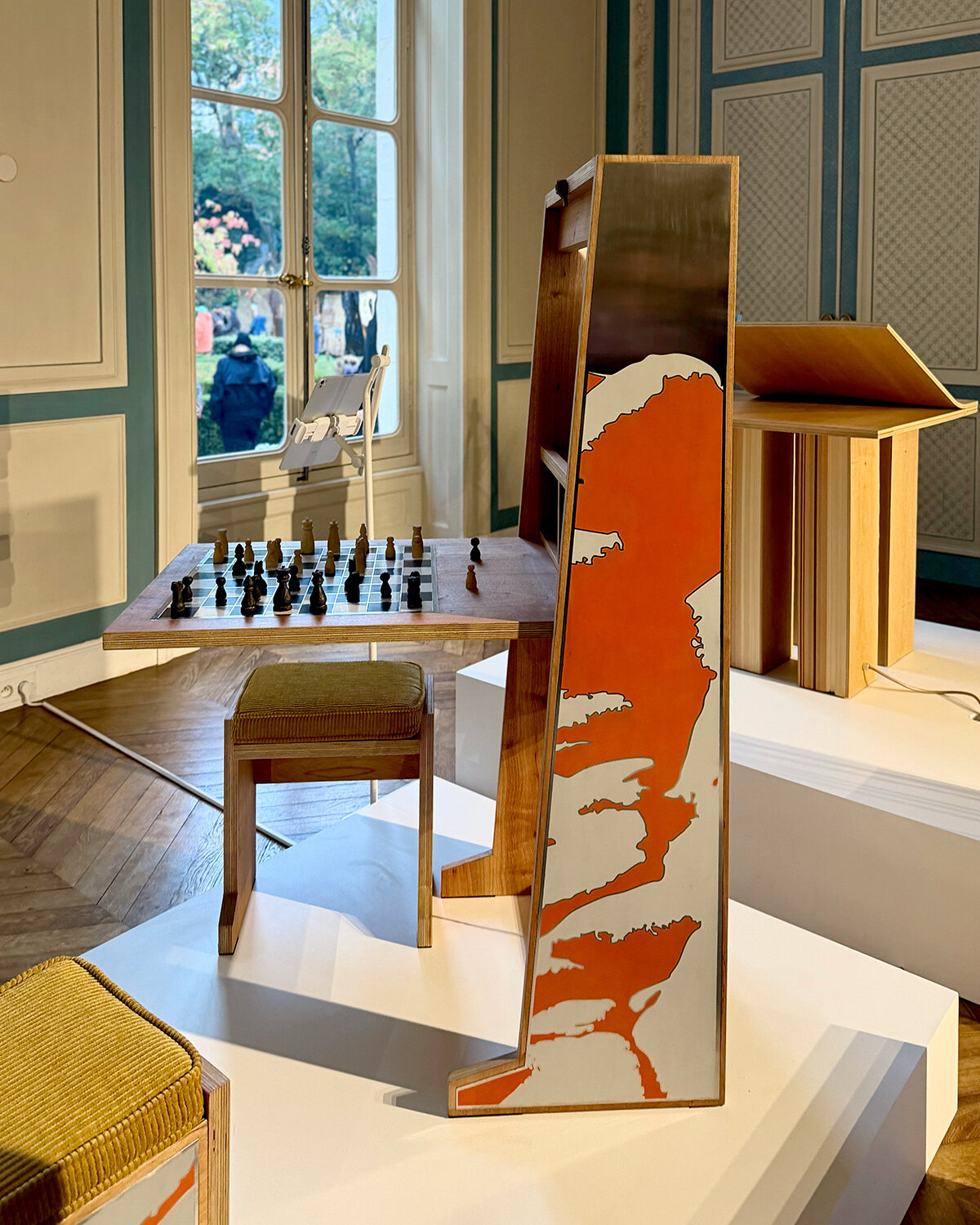
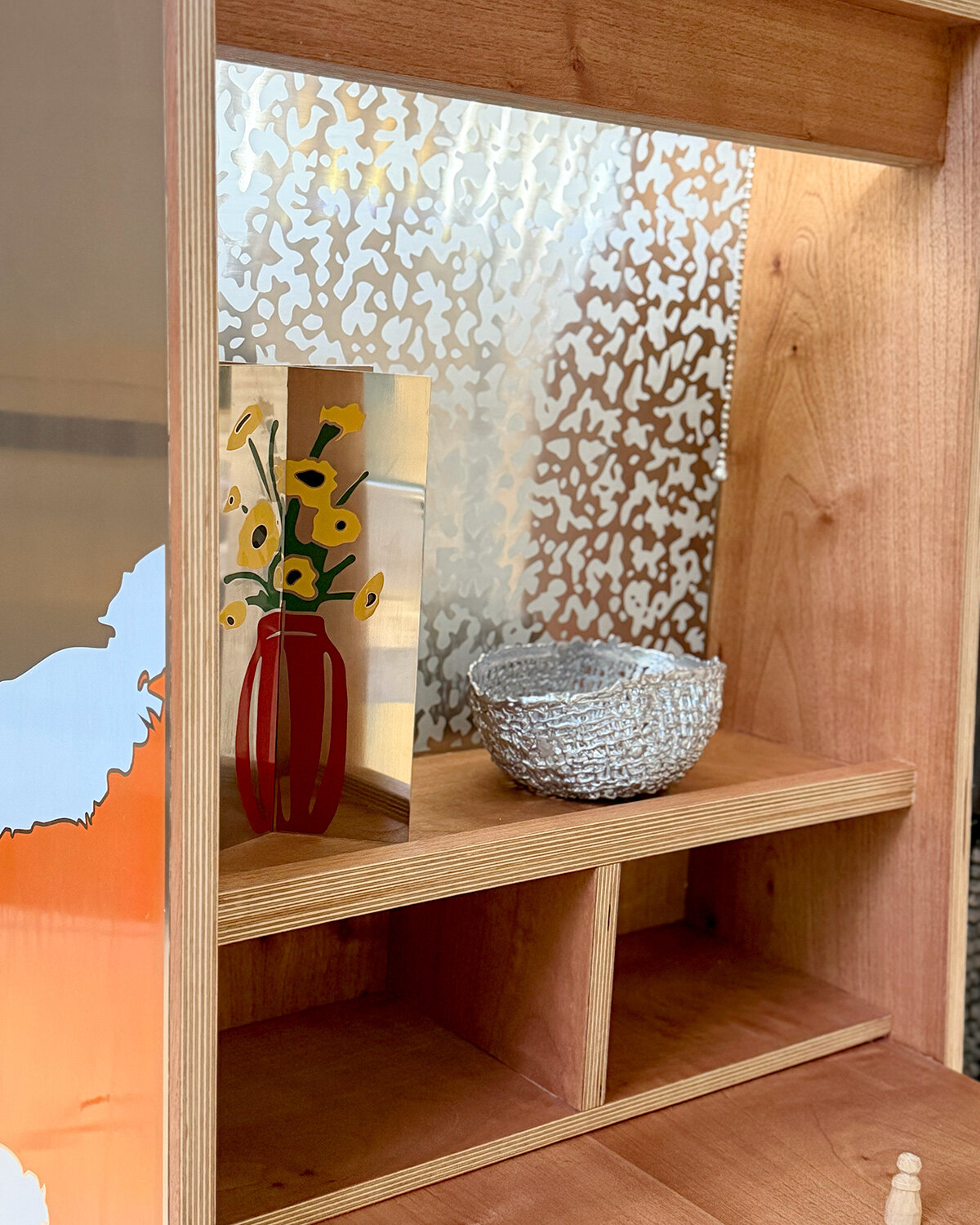
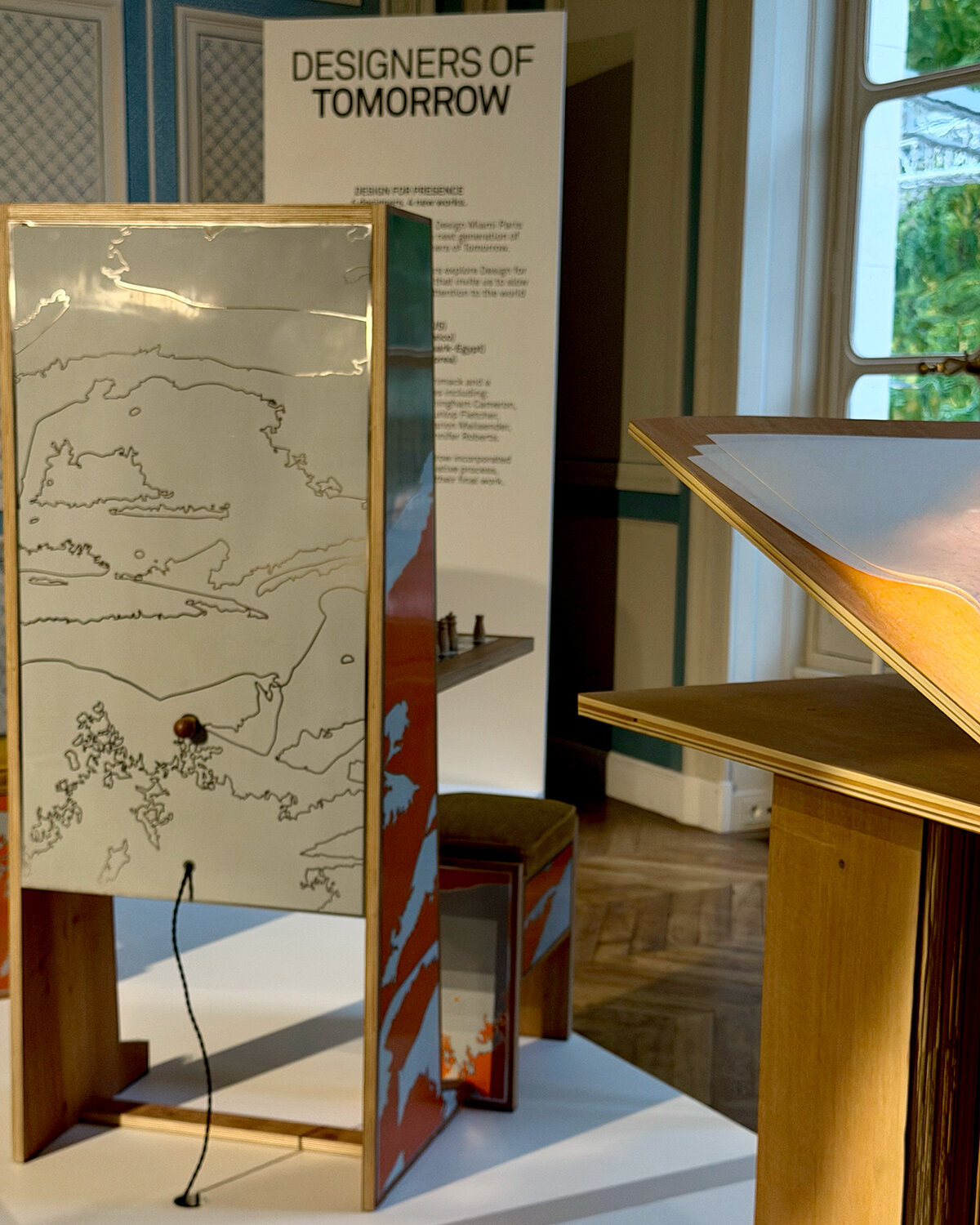
Mexican design studio Parafernalia, founded by Genki Matsumura and Sebastián Zorrilla, takes a more architectural approach with MonoAmbiente 1. The piece begins as a sculptural landscape formed from acid-etched stainless steel, its patterned surfaces suggesting an imagined terrain. As the structure opens, elements of the landscape transform into a table and two stools. What first appears to be a decorative object becomes a small setting for conversation, with space for two people to sit across from one another and play chess.
The steel surface has its own intricate graphic language, with etched markings that become more apparent as the light moves across them. Korean ceramic artist and jury member Hun Chung Lee suggests the pattern can be understood as ‘a psychological map,’ inviting viewers to interpret its imagined geography. The project also reflects the way Parafernalia operates between Monterrey and Mexico City. Matsumura and Zorrilla share sketches and develop ideas through iPad Pro, FaceTime and other digital tools, eventually bringing their remote collaboration together in a piece of furniture designed for face-to-face interaction.
THE PHYSICAL SIDE OF DIGITAL DESIGN
Across the four commissions, technology appears throughout the design process, from Charabi’s detailed 3D modeling to Rower’s visual archives and Lee’s digital sketches. Apple’s involvement gives the exhibition a particular emphasis on the tools behind contemporary creative practice. Still, the finished pieces are most interesting for their physical qualities. A ceramic fringe produces an unexpected sound, a folded metal landscape becomes a place to sit, and a pencil finds a second use long after its original purpose has been exhausted.
For SFMOMA curator and jury member Jennifer Dunlop Fletcher, the selected works invite a ‘one-on-one encounter to notice detail.’ That idea comes through in the difference between looking at these objects from across the room and approaching them up close. Their construction gradually becomes legible, revealing the small decisions behind each finished form.
The exhibition continues at the Hôtel de Maisons during Design Miami Paris, from October 21st to 25th, 2026.
1/8
project info:
name: Designers of Tomorrow 2026
organizers: Apple, Design Miami
curator: Rodman Primack
designers: Salem S. Charabi, Isabel Rower, Yoonjeong Lee, Parafernalia
location: Hôtel de Maisons, 51 rue de l’Université, Paris, France
dates: October 21st — 25th, 2026
shop
your own online design shop — no sales commission collected