
the art of the miniature staircases at cooper hewitt design museum
somewhere between utilitarian model and artistic statuette, these small steps display a mastery of miniature making.
Cooper Hewitt’s tiny Staircase Masterpieces
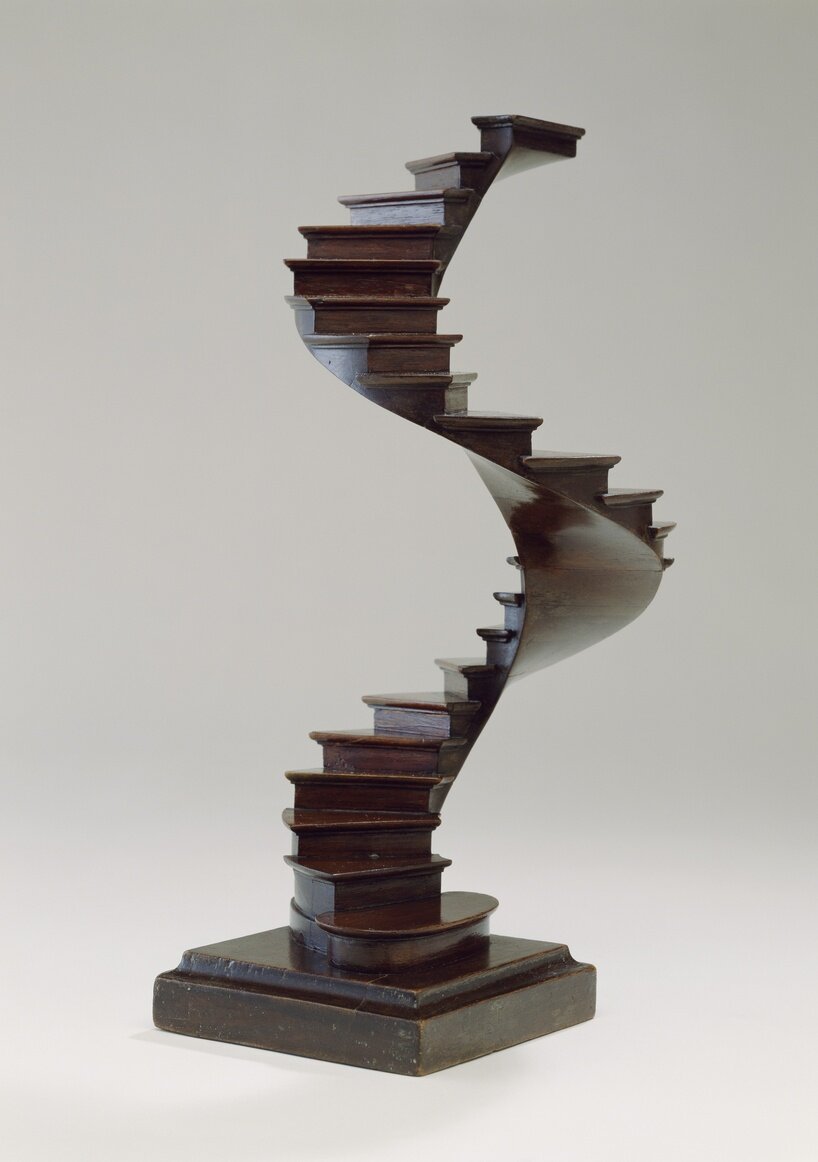
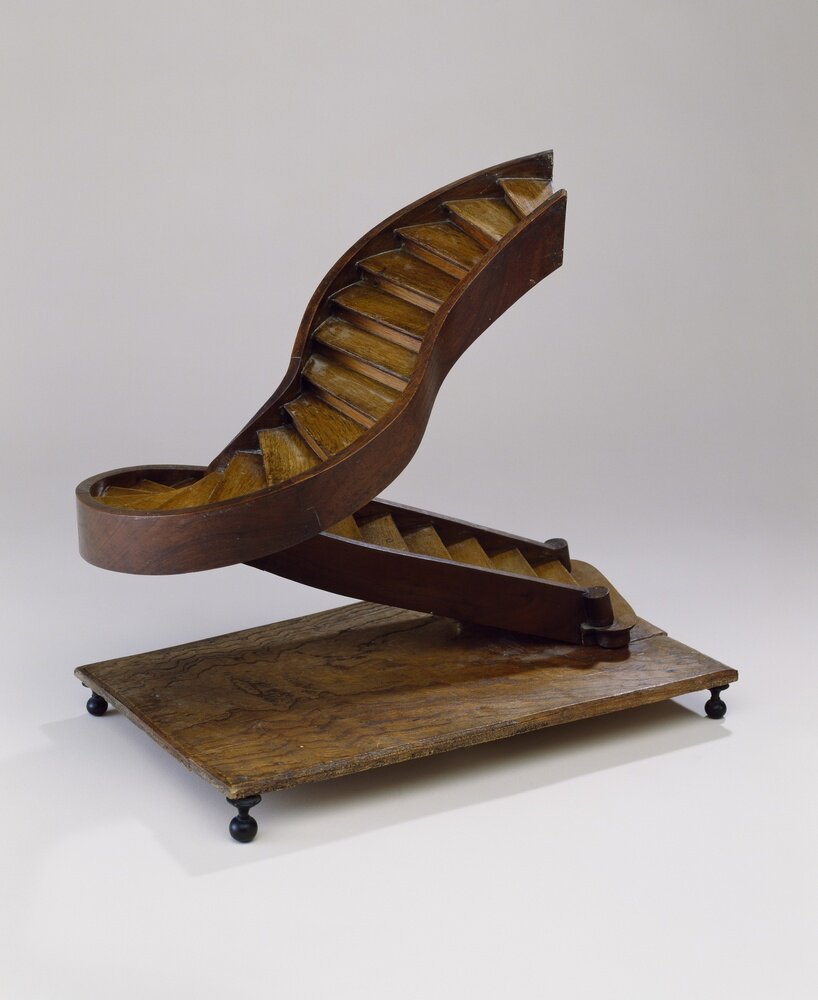
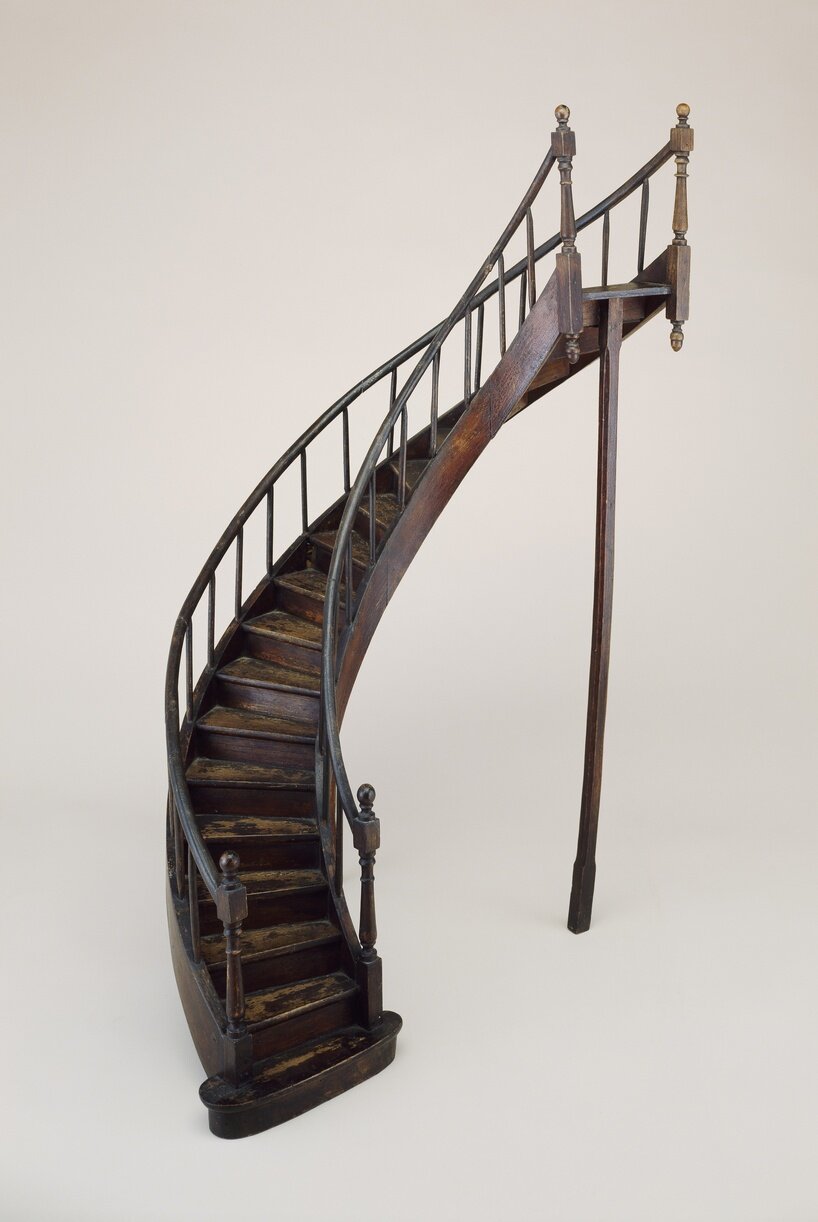
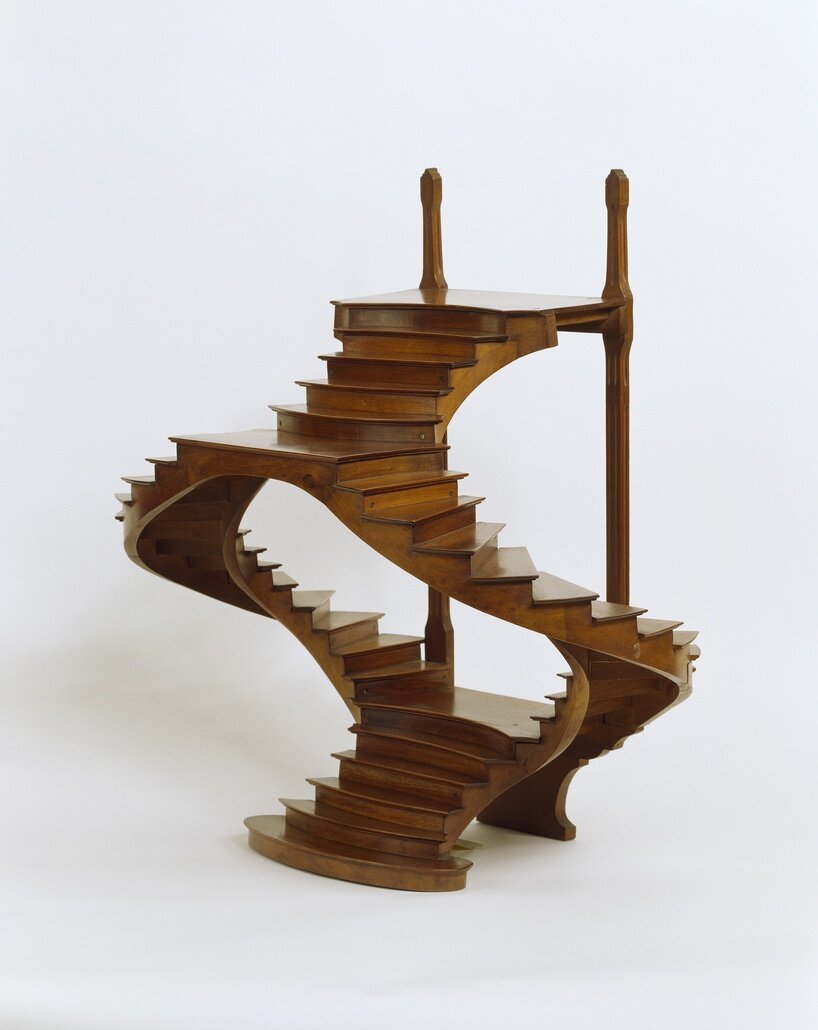
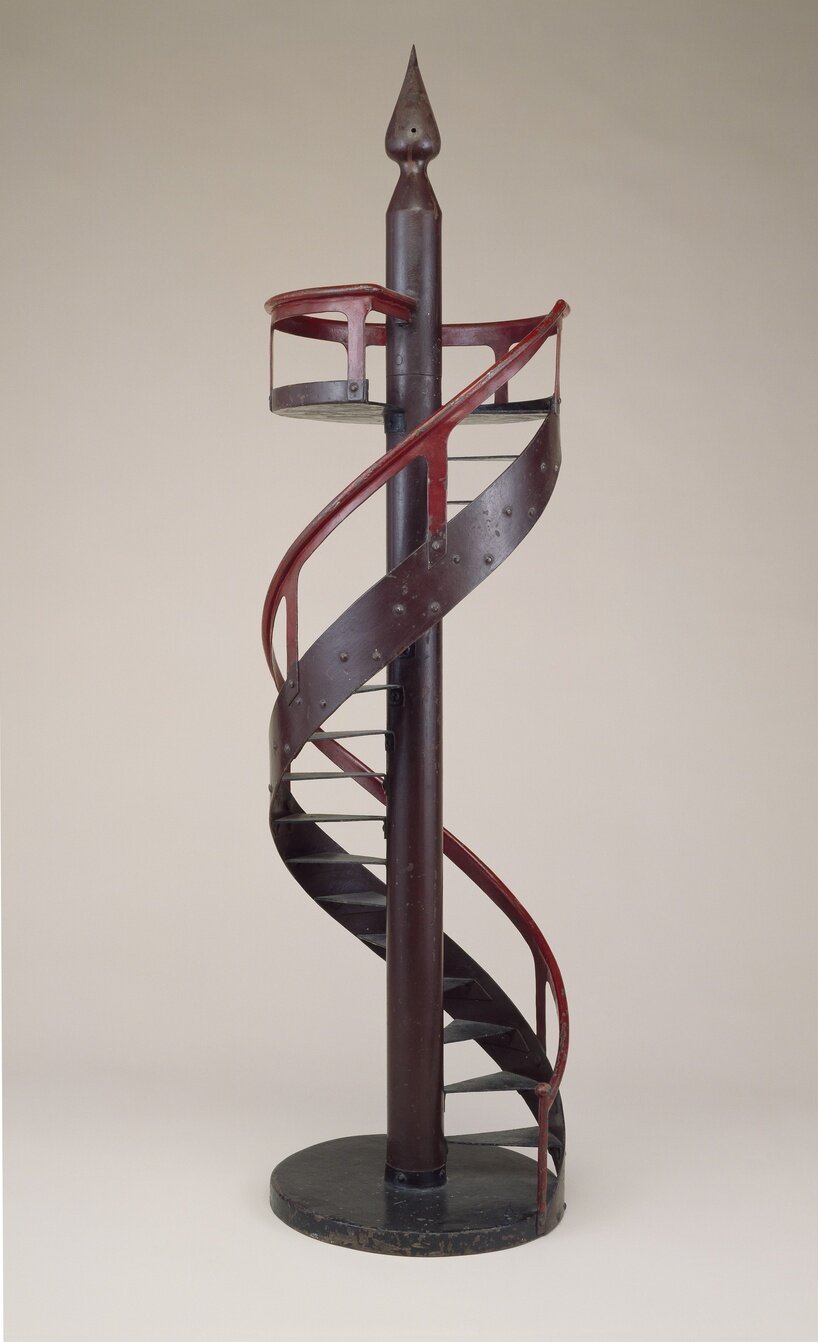
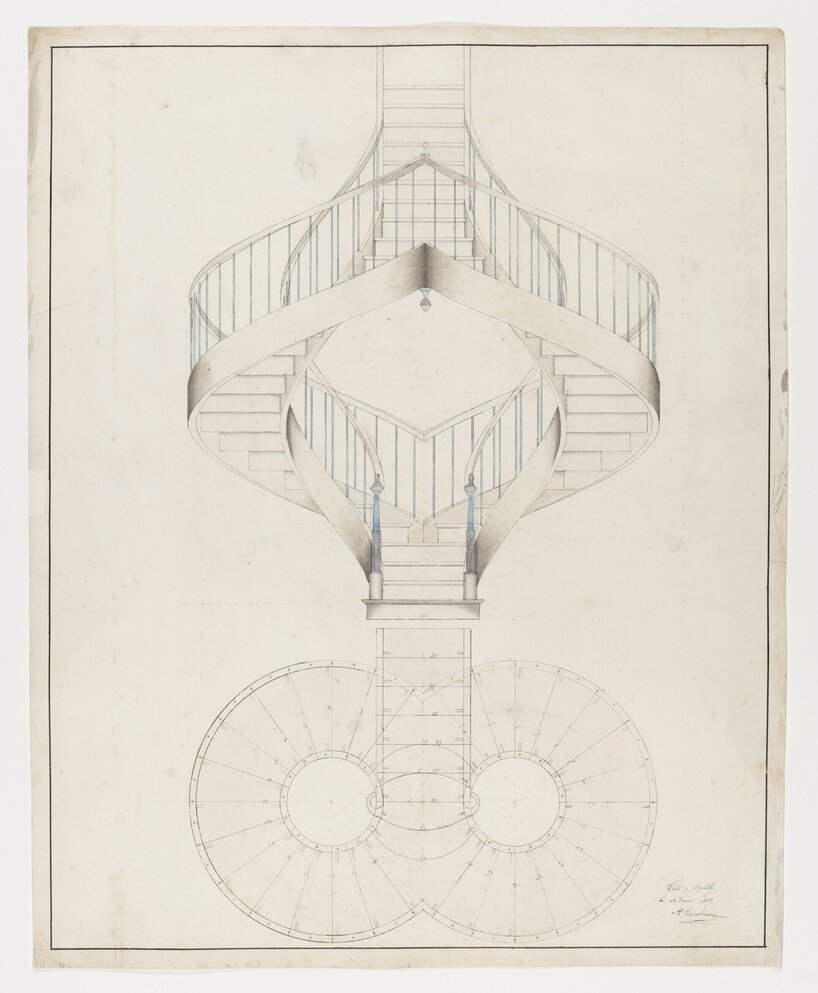
In 2006, Cooper Hewitt put a collection of staircases on display that no one could climb. The exhibition was called Made to Scale: Staircase Masterpieces, The Eugene & Clare Thaw Gift, and it consisted of a collection of miniature model staircases, finely crafted from wood and metal, from the nineteenth and twentieth centuries. Looking at these tiny, swirling helixes and delicate balustrades, there’s a certain artisanship that makes them more than utilitarian tests of interior architecture.
The Eugene & Clare Thaw Gift to the institution
The Thaw couple was introduced to the concept of a staircase model after seeing one, displayed like a statuette, in a friend’s home. In a 2006 interview, presented in the exhibition brochure, Eugene Thaw speaks to Sarah D. Coffin, former curator and head, Product Design and Decorative Arts, at Cooper Hewitt, about the beauty he saw in that first model. As he and his wife went on collecting—asking friends to be on the look out and obtaining them at auction—he mentioned that he learned more about why they were made and rendered so valuable. He says, ‘they were pièces de maîtrise, or masterworks, which were made as part of becoming a master and being accepted into a guild.’
Artistic and architectural reference
In gifting their collection to Cooper Hewitt, they made available to the public the mastery that went behind each of these models. Not only are they a useful reference for architects looking to model a structure to scale, but they are also fascinating aesthetically. They are reminiscent of children’s dollhouses, albeit very luxurious ones crafted from oak and other fine woods instead of particle board. There’s a certain imagination that emerges from seeing things in miniature, as if they were extracted from another, much smaller world.
The architectural precedent for modeled stairs
For those who went to architecture school, building a model staircase is a typical part of the curriculum, as it encapsulates, in many of its aspects, the intricacies of building space around the human form. Because a staircase is used as a tool, it must fit the proportions of the feet, its handrail must land at a comfortable height, and it should be angled in a way that efficiently brings someone from one floor to another. Hand-drafting one is a notoriously difficult task for similar reasons. At smaller scales, these models allow one to see a staircase in its entirety and appreciate all it is able to achieve technically while still providing a little aesthetic flair with a spiral, helix, or material innovation.
Sarah D. Coffin’s history of model stairs
In approaching the staircase collection at Cooper Hewitt, Coffin’s text primes visitors with a history of staircases, saying they, ‘have been part of building design since about 6000 BC.’ She then goes into the history of why these models were made, bringing the reader into the world of France’s guild system, known as compagnonnage in French, that trained promising men in a specific trade or craft if they showed promise. It allowed young people to learn a professional skill outside of a traditional master-apprentice relationship or needing it to be passed on through familial knowledge systems. Drafting and then creating these models were thus signs of training and mastery. Coffin also mentions that, while they were being trained, these boys ‘lived and ate meals in monastic-style boarding houses,’ eager to prove their competence. This training would result in the emergence of masters who had competed over many years to perfect this craft.
The small details in the tiny steps
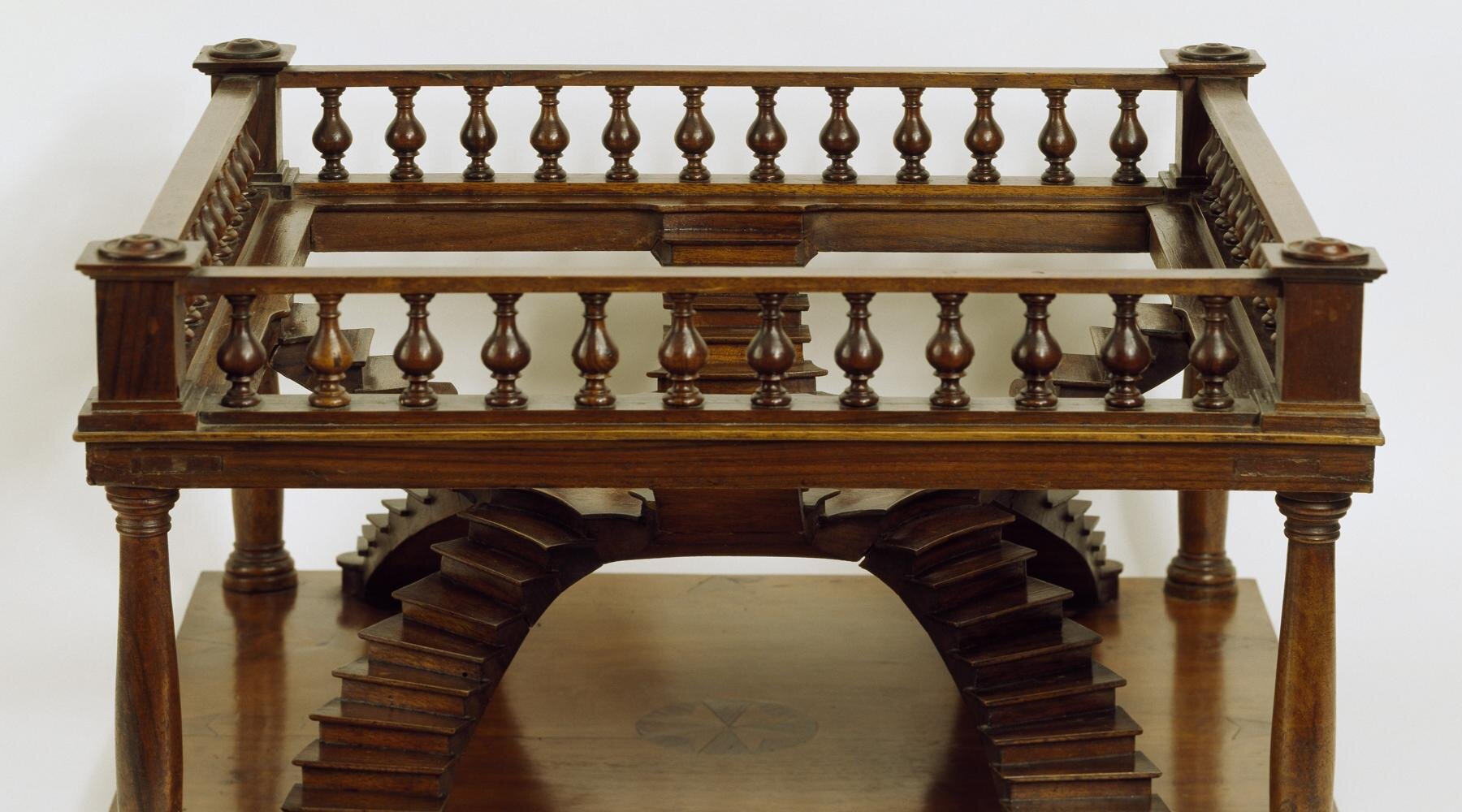
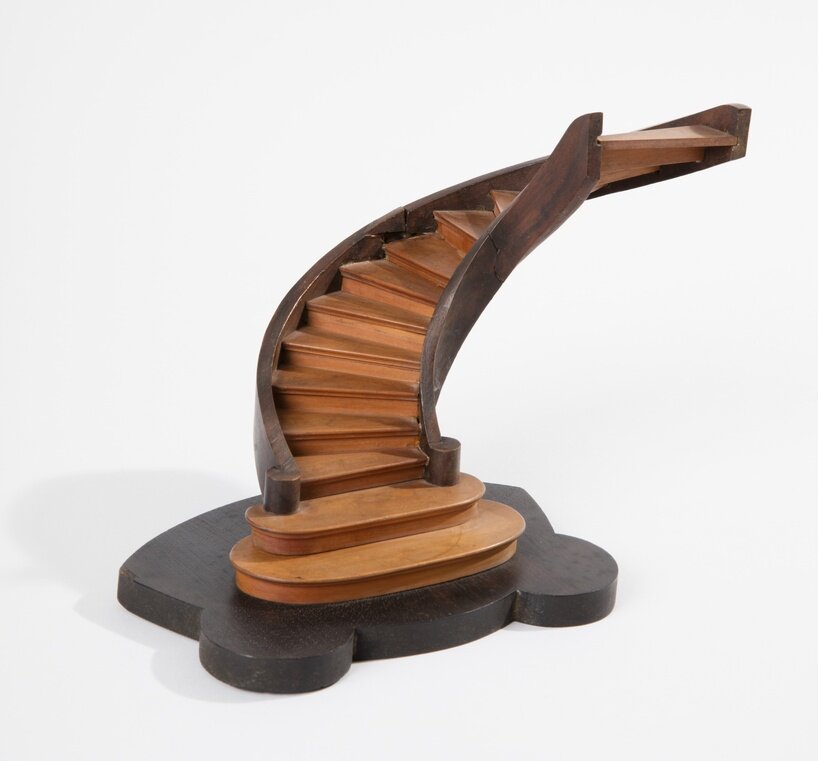
When looking at the collection, there are models that show incredibly inventive forms. One is described as a ‘double staircase model in English style,’ where a series of stairs ascends to what looks like a raised, square walkway. To get there, four staircases converge at about half the height to a sub-platform. There, another four staircases, shifted 90 degrees with respect to the base, splay out to create the secondary climb upward. All the while, curving, spun details decorate this model made in walnut, mahogany, and satinwood. Another model, also in an ‘English style,’ is much more reserved, with a single spiral and simple geometric steps. Nevertheless, the restraint feels very contemporary, showing the aesthetic breadth these models achieved.
1/3
project info:
exhibition: Made to Scale: Staircase Masterpieces, The Eugene & Clare Thaw Gift
dates: October 13, 2006–June 3, 2007
location: Cooper Hewitt, Smithsonian Design Museum, New York
curator: Sarah D. Coffin, former curator and head, Product Design and Decorative Arts, Cooper Hewitt, Smithsonian Design Museum
This article is part of designboom’s MODES OF HABITATION chapter, exploring how the spaces we inhabit can reshape the ways we live together. Discover more stories rethinking domesticity, shared living, and the many forms a home can take here.
shop
your own online design shop — no sales commission collected