atelier rwanda: natural dye in rwanda
exploring the full cycle of natural dyeing, the research-based project utilizes local fabrics, techniques and skill sets to create new products that support the identity of rwanda’s culture.
prefer designboom on google[FEATURED]
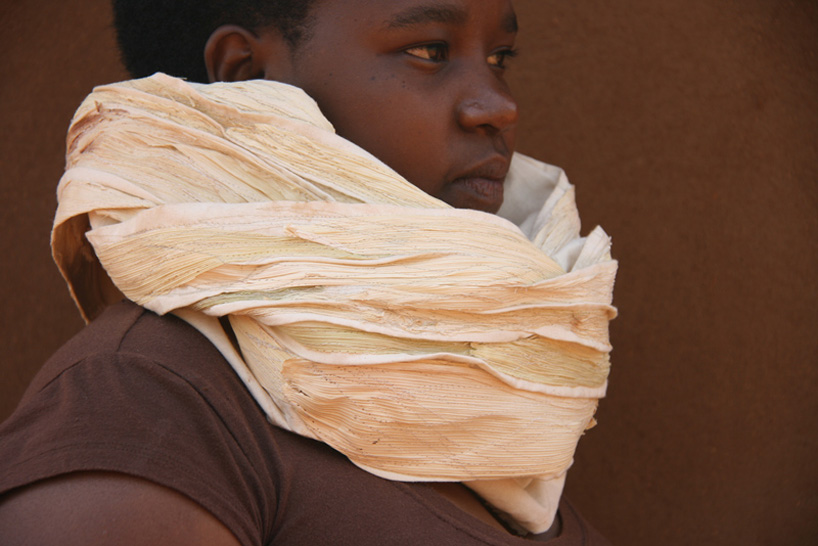
onion dyed cotton sewed with corn fiber images courtesy of atelier rwanda
‘natural dye in rwanda’ by atelier rwanda is a research based project which explores the full cycle of natural dyeing in the context of contemporary textile production in rwanda. the project, led by the designers eugenia morpurgo and maya ben david, was based on collaboration with local basketry craftswoman, a class of tailors and a group of students from the kist university of kigali as part of a workshop which recently took place in kigali.
currently, rwanda’s local textile market is based on imported fabrics. what is known as ‘african fabrics’ are designed mostly outside of africa. the aim of this project was to explore design possibilities in the field of textile while using local fabric, available techniques and the skills to support the identity of rwanda’s local culture.
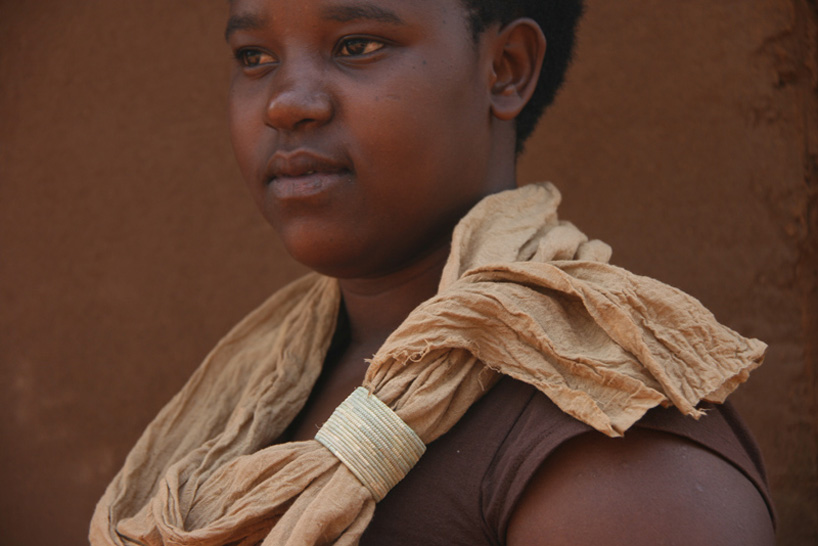 anuaritte, one of the artisans modeling the scarf
in rwanda, there is no tradition of natural textile dying although the method does exist in the region’s basketry crafts. the research surrounding this project was based on trial and error, where the team manipulated the processes and techniques used in basketry to comply with textiles.
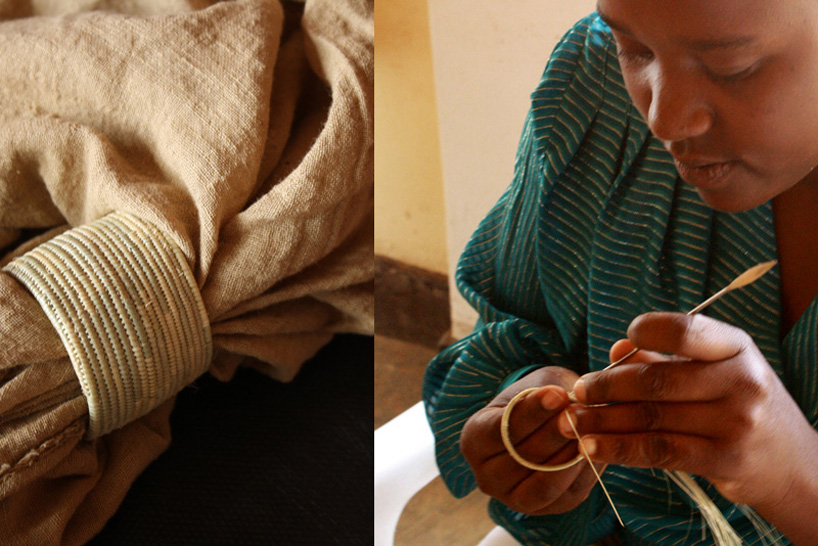 onion dyed cotton with a ring made from vegetable fibers using agaseks k’uruhindu technique
the research was followed by implementation, where the ‘tailors’ designed a series of shoes and scarves. starting with the
local production of sandals, the aim was to combine the skills of the shoe maker with the one of the tailors to create new
possibilities in local shoe production. the scarves combine natural dyed fabric with vegetable fibers and basketry techniques,
to create a local textile with a highly tactile expression, which can be easily produced with available materials and methods.
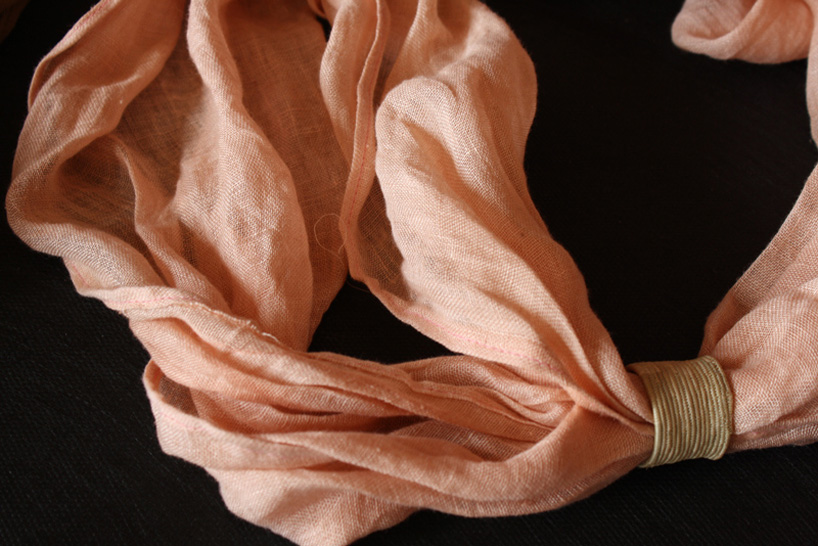 cotton dyed with mukurukumbe root
further, the objectives of the research program were: to promote efficiency and sustainability of activities related to natural fibers developing innovation of products made in local materials; to improve the productive capacity of local handicraft; to strengthen the role of craftswomen; to enhance the development and market of local resources and products; to improve the use of water supply; to strengthen, within the architectural planning and design, cultural exchanges between europe and africa in order to enhance resources and working abilities in africa.
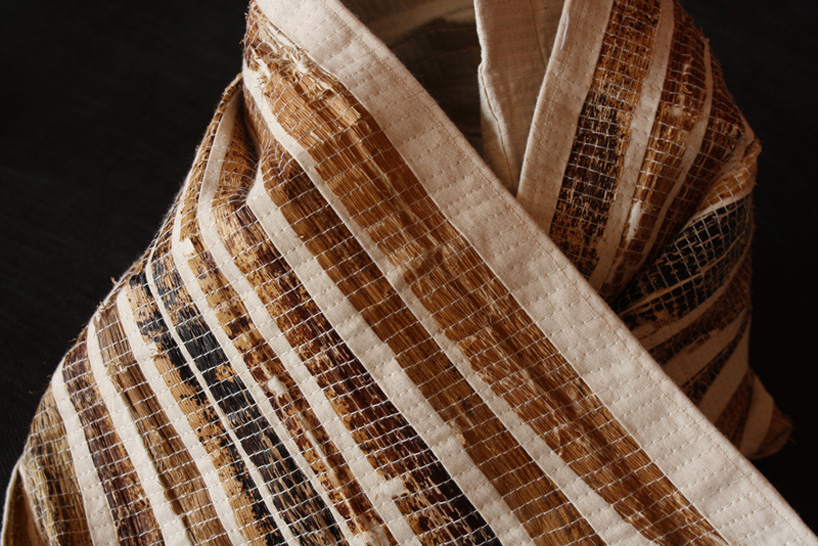 cotton sewed with banana bark
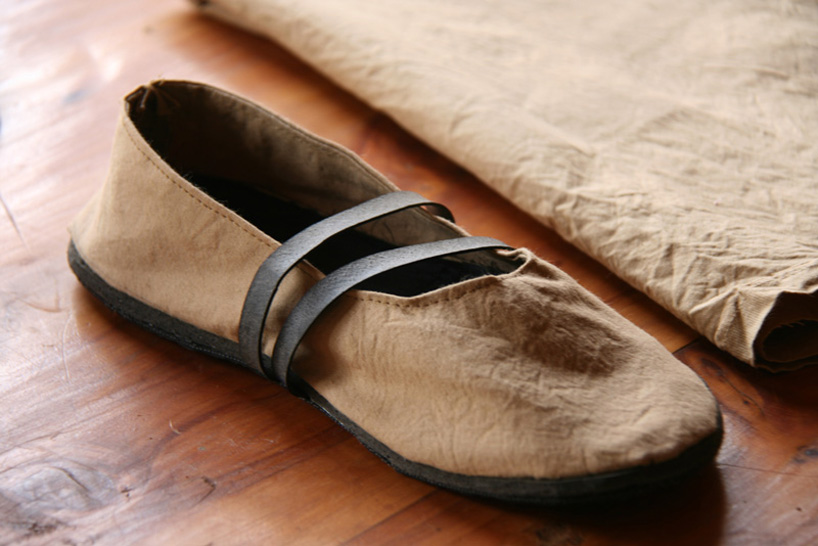 shoe produced with onion dyed cotton and sole made from tier
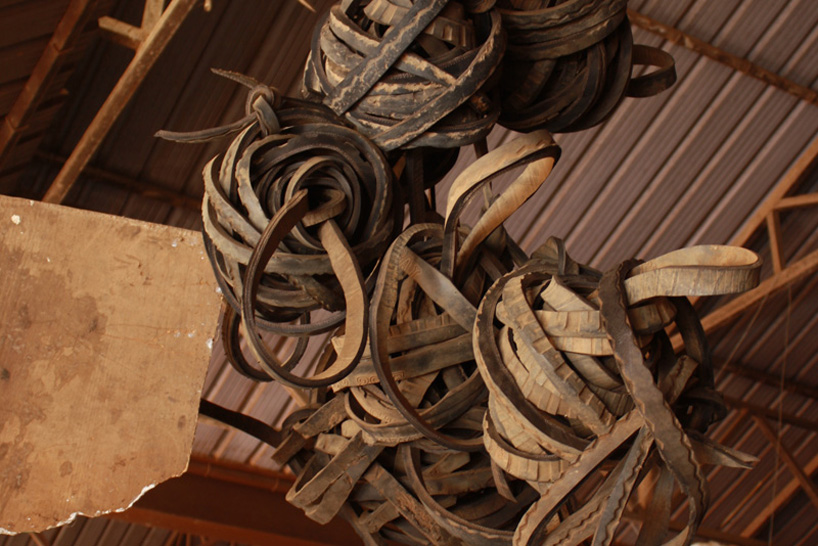 tiers for producing sandals
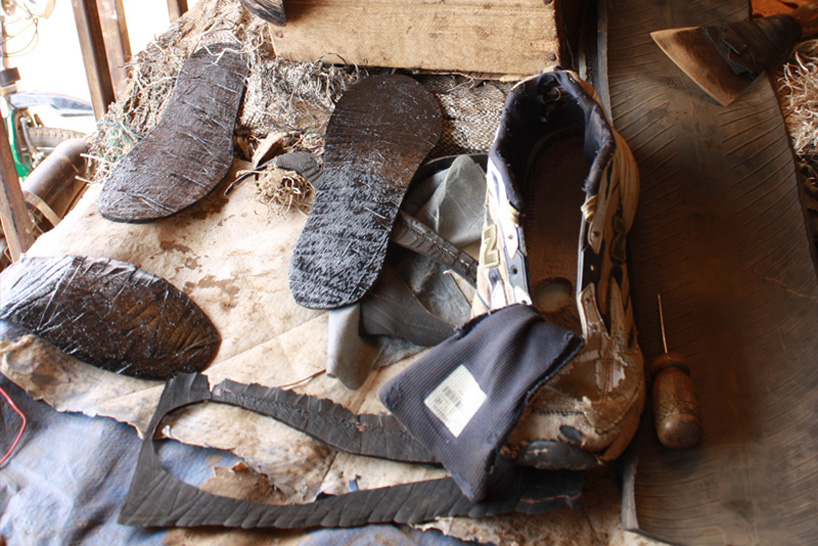 making sole from tiers at kimironko market
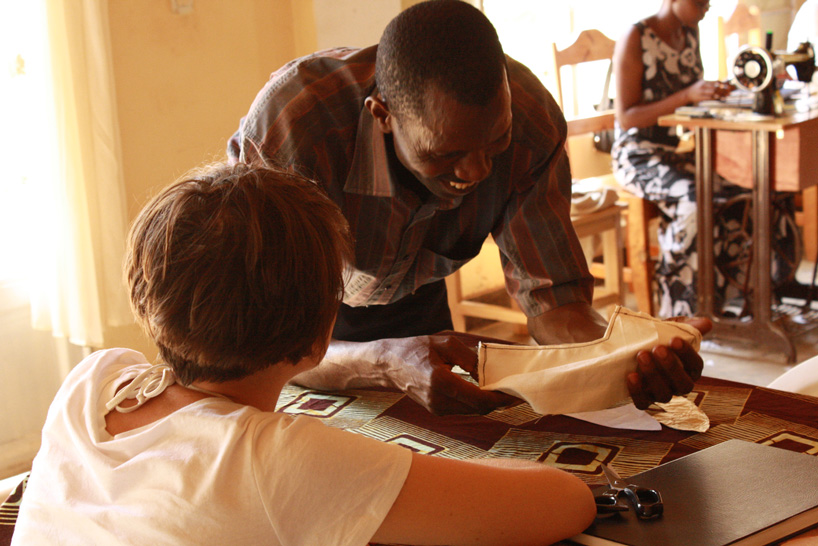 conculting with the teacher of the tailor class
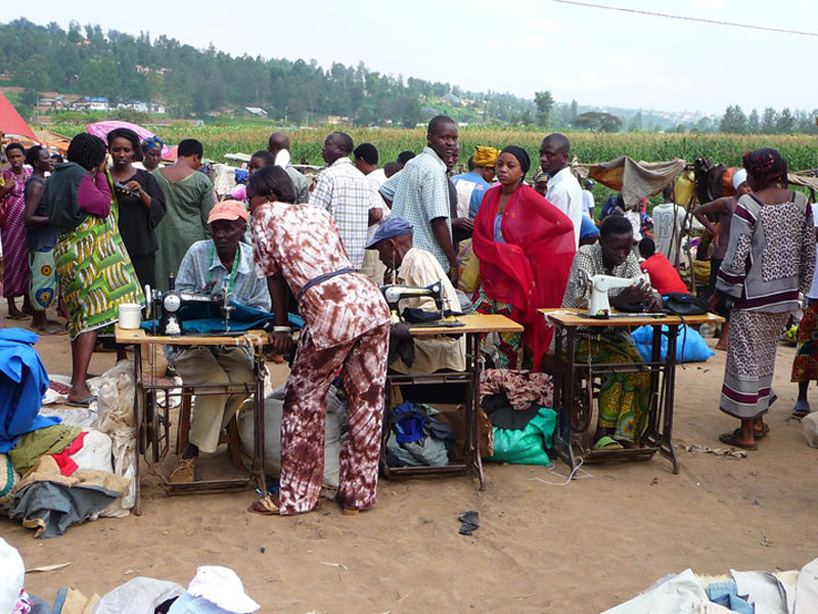 tailors at kumurindi market
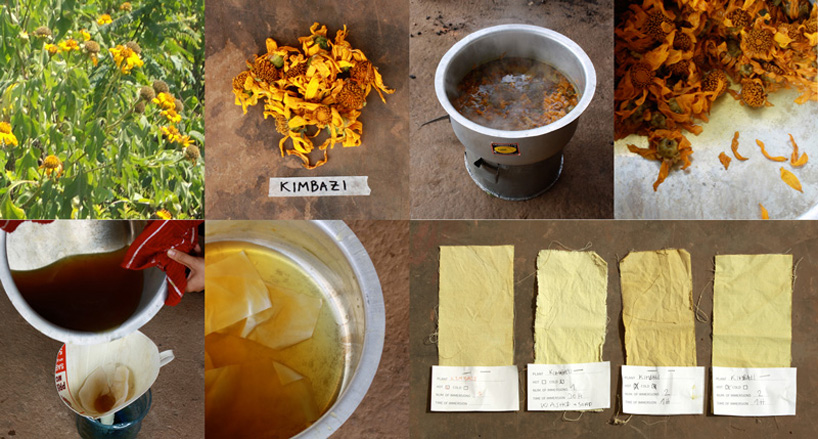 process of extracting the color from the kimbazi flower
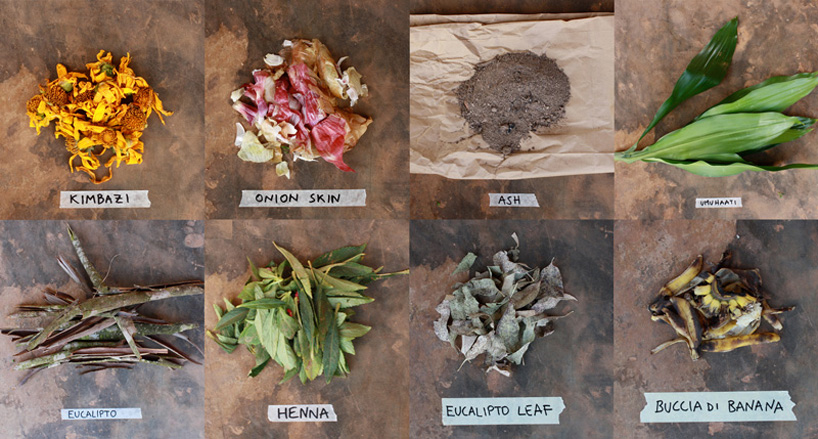 different plants which were experimented withdesignboom has received this project from our ‘DIY submissions’ feature, where we welcome our readers to submit their own work for publication.
shop
your own online design shop — no sales commission collected