john mayer talks wandering hours with audemars piguet code 11.59 starwheel
the ‘wandering hours’ mechanism of the audemars piguet code 11.59 starwheel was invented for an insomniac pope from 17th century.
prefer designboom on google[FEATURED]
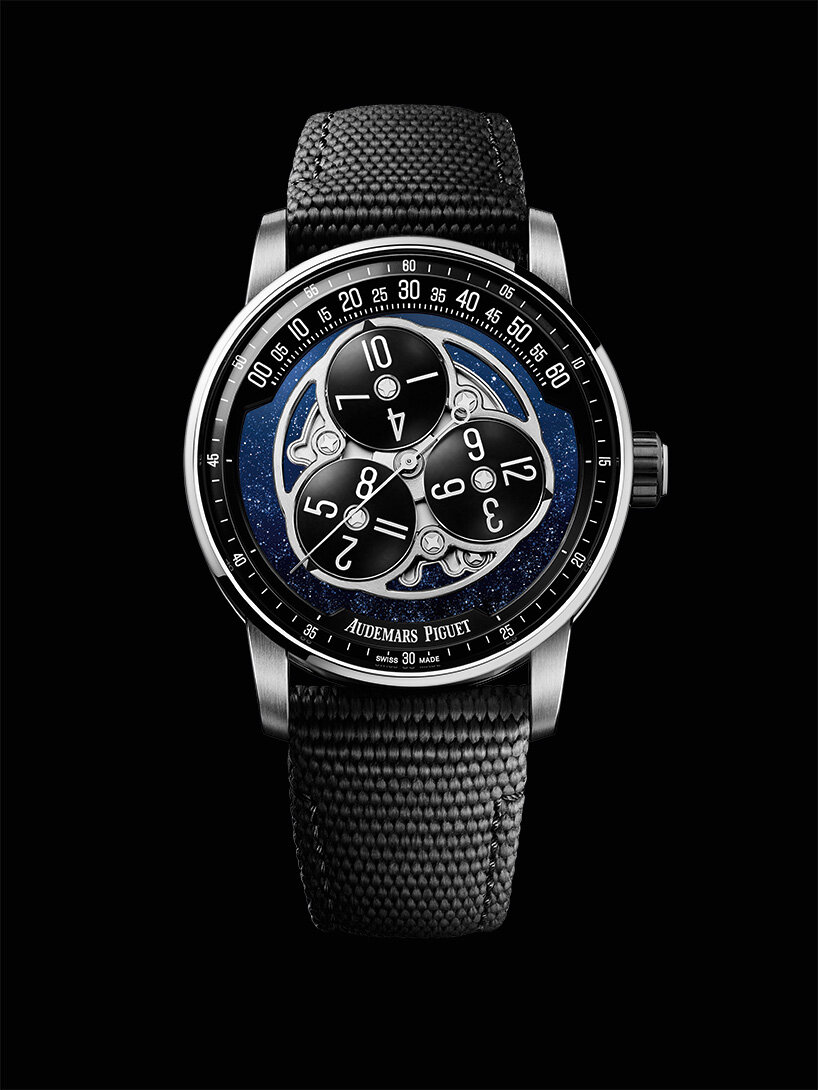
The ‘wandering hours’ mechanism of the Audemars Piguet Code 11.59 Starwheel was invented for an insomniac pope, as the story goes. At the launch of the new watch during Design Miami 2022, Audemars Piguet CEO François-Henry Bennahmias time-travelled back to 17th Century to reveal the history and concept of the timepiece. Singer-songwriter John Mayer, a passionate watch collector, joined for the journey and hinted to new collaborations in 2024.
‘Audemars Piguet were the first to create the wandering hours mechanism in the 1990s, but after its launch, we left it knowing we will bring it back eventually. It was more of a concept back then. It took time for people to really appreciate,’ explains François-Henry Bennahmias at the exclusive event with designboom in attendance.

All images courtesy of Audemars Piguet
For Musician John Mayer, his appreciation for watches stems back to his first love at six years old – an Armitron Star Wars edition. It wasn’t until his 20s, though, that the real fascination for timepieces began, collecting chronographs as well as digital. With a career touring the world, the Singer-songwriter meets new people, finds out more about different timepieces, which in turn, provokes further curiosities with mechanisms and designs. This lifestyle has highlighted the one companion wherever he goes, that is an important tool to start every day – his watch.
‘As I travelled, I would find out more and more about timepieces. I learned about one thing which took me to another thing and another thing. The greatest part of my life now is to see and hear other people have caught the same bug that I had 20/25 years ago. There is something beautiful about winding the crown. I take that moment to stop and think about the day ahead. I know then that it is going to be a great day,’ reveals John Mayer.
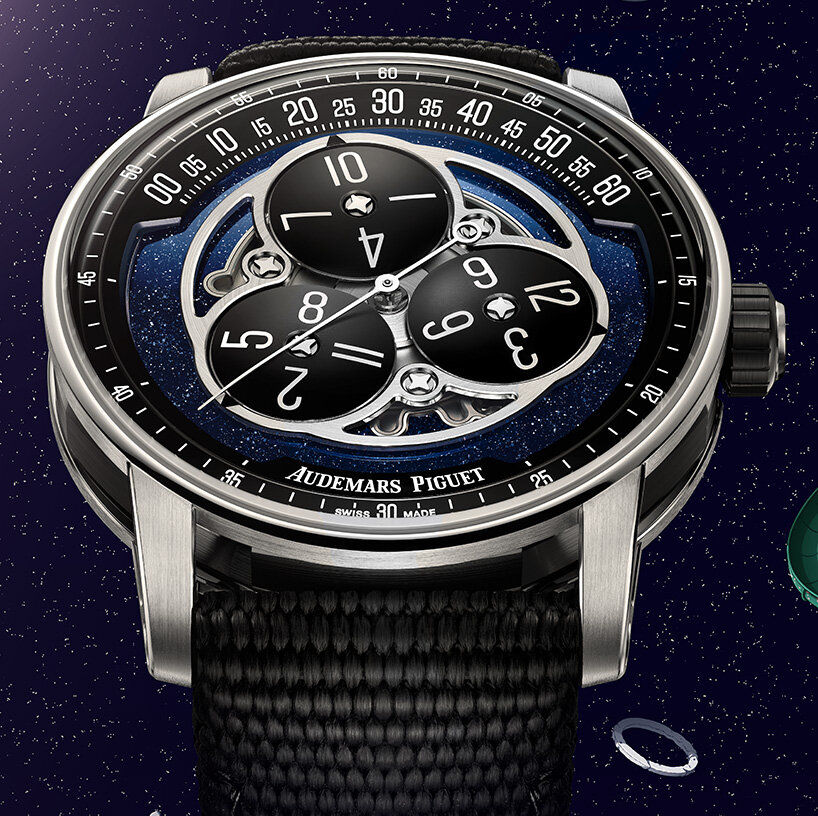
The concept of ‘wandering hours’ was a means to an end for Pope Alexander VII in 17th Century, also like a tool. Audemars Piguet reinvented the display for a new mechanism in 1991. Its mysterious complications were entirely concealed behind its case. The result lay focus on the beauty of its display where the hours are displayed on three discs on one display.
‘The Starwheel was created by Audemars Piguet in the 1990s,’ begins François-Henry. ‘The idea, however, goes back to 17th century when Pope Alexander VII couldn’t sleep at night. He asked a watchmaker to build a clock that he, firstly, could read in the dark and, secondly, that it didn’t make any noise. The wandering hours concept displays the hour clearly so that the time can be read even during the night. The concept was forgotten until one of Audemars Piguet’s watchmakers read about this wandering hours clock and approached our CEO, at the time, to create it. We studied the mechanism and launched it as a timepiece to the world in 1991 in two models. Both are nearly impossible to find today, as we did not make many.’
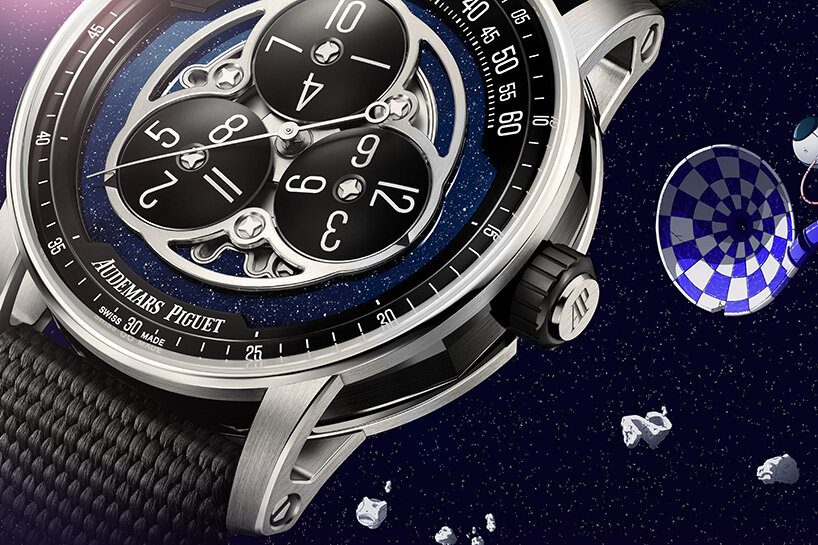
The Starwheel displays the time thanks to a central rotor that completes a rotation in three hours. Three fixed aluminum discs turn on their own axes. Each disc has four digits, from one to 12, that take turns in pointing to the arched sector at the top of the dial, where the minute scale is printed. An 18-carat white gold second hand follows the curve of the discs to complete the mechanism.
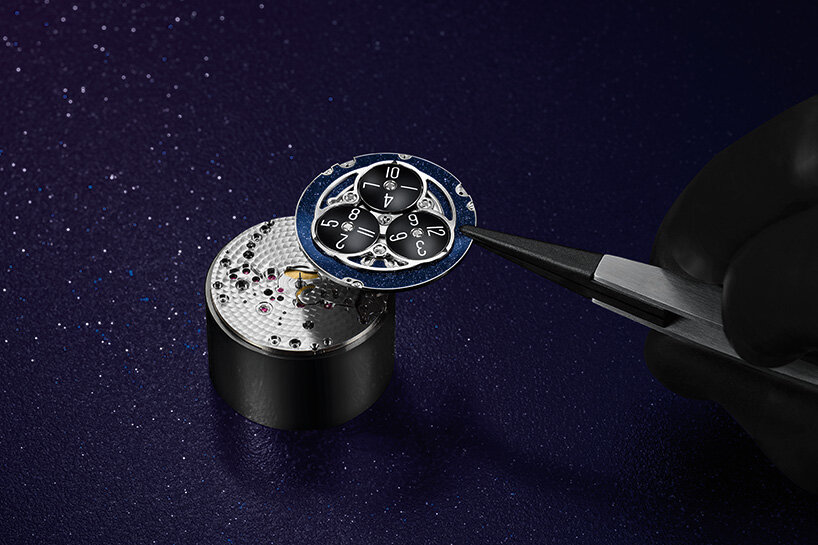
The reinvented Starwheel is housed in the ultra-contemporary Code 11.59 case by Audemars Piguet. Its architectural lines of the blue dial, 18-carat white gold case and black ceramic back enhance the allure of the wandering hour display. On the dial side, the double-curved sapphire crystal adds depth to the display. As well, its precision magnifies the numerous details that interplay with light.
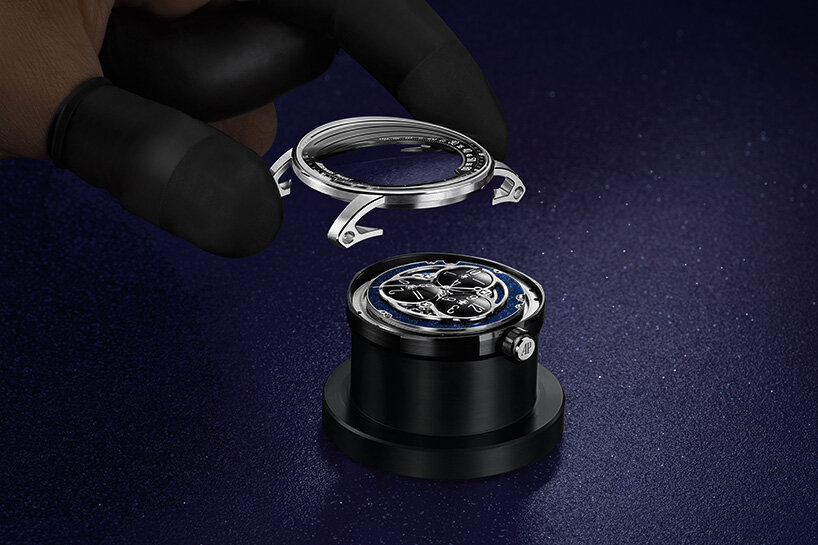
From the complex mix of materials on its case through to the revamp strap and buckle, the Audemars Piguet Code 11.59 Starwheel signifies its importance by sight and feel for the wearer. Light reflects and refracts against speckled gems that appear as if naturally cast like stars in the night sky. The reality is the manufacture’s craftspeople painstakingly hand-finished every element to create the perfect timepiece. The design evokes its magic thanks to this precision.
‘I learned precision from music. When you’re trying to get the right tempo for a song and 118 beats per minute is too fast and 117 beats per minute is too slow, there is 117 and a half beats per minute that can feel perfect. You are either there or not. It’s like an eclipse; everything is lined up or not. It doesn’t matter if there is just a millimeter out because it has to be in that window. That is how I – and Audemars Piguet – see design,’ concludes John Mayer, as he hints to a collaboration with the watchmaker in 2024.

product info:
manufacture: Audemars Piguet
model: Code 11.59
mechanism: Starwheel
shop
your own online design shop — no sales commission collected