bartlett school studio explores structural potential of sand + PVA pipes
'sanDprint' is a sustainable production method using parametric software that facilitates an unlimited re-usage of all materials involved.
prefer designboom on google[FEATURED]
bartlett school studio explores structural potential of sand + PVA pipes
all images courtesy of the barlett school of architecture RC6 B-pro masters of architecture graduate studio
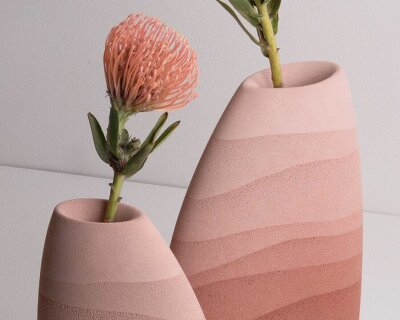
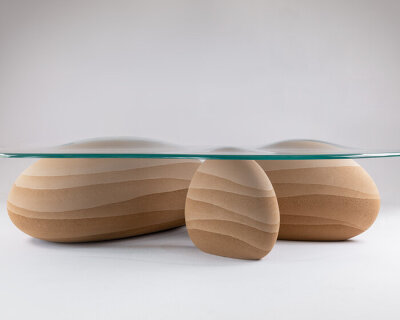
sand is a commonly available material. it has many advantageous features, for instance, the insolubility in water, the high melting point, and a certain degree of mobility when it is wet. through these properties, sand casting has been widely utilized in traditional manufacturing processes throughout time. based on the potential for this technique to do more, a group of professors and masters students from the bartlett school of architecture has developed ‘sanDprint’, a craft using rock and mineral particles as a mold, attempting ingenious methods to create a diverse mix of unique forms.
video courtesy of the barlett school of architecture’ RC6 B-pro masters of architecture graduate studio
the project simulates 3D printing by hand within a defined space filled with granules. after a variety of experiments and attempts, PVA tubes with highly elastic, flexible, size, and texture variations were finally selected in order to control the resultant shape. meanwhile, a removable frame has been designed to control the general direction of the pipes. thus, a series of possibilities could be configured by interweaving the vessels. furthermore, all the components and ingredients can be reused.
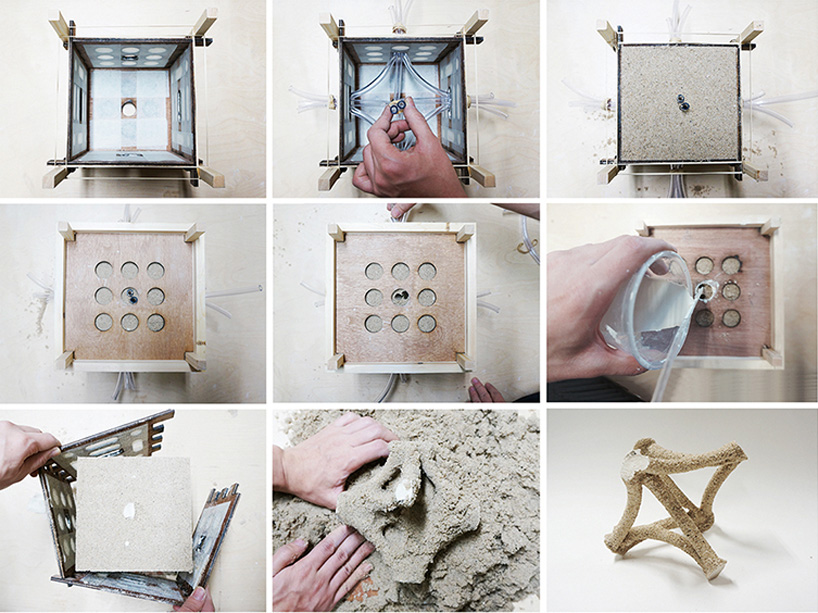
hands-on crafting
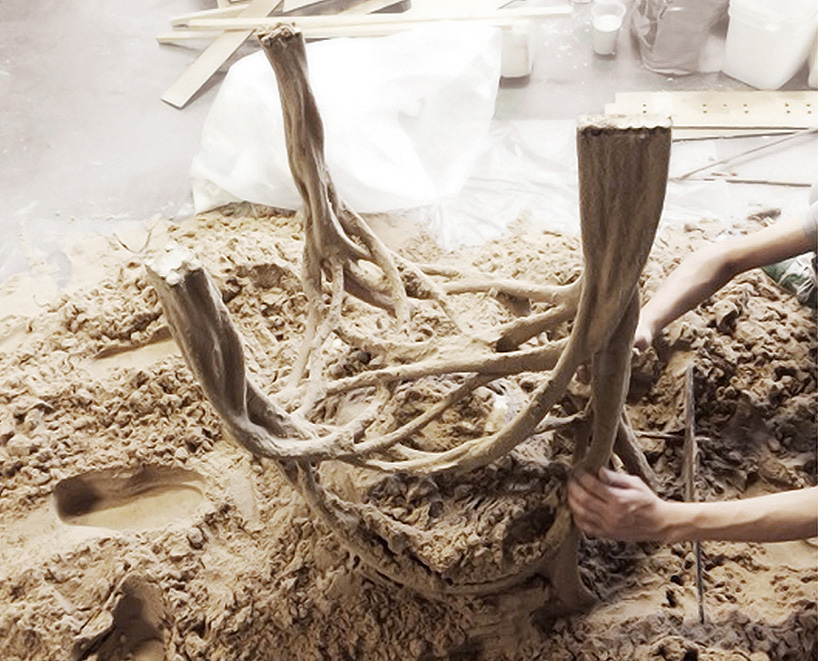
removal of sand after casting a chair
according to initial material exploration and fabricate testing, computational technology was involved to envision the structural capabilities from a small-to-large scale. processing simulations (flocking, stigmergy, and other algorithms) have been performed in the parametric digital exploration with rhino and grasshopper, which provides both natural patterns and logical strutters, by presenting products from household objects to furniture, and eventually attempting apply the work to architectural typologies.
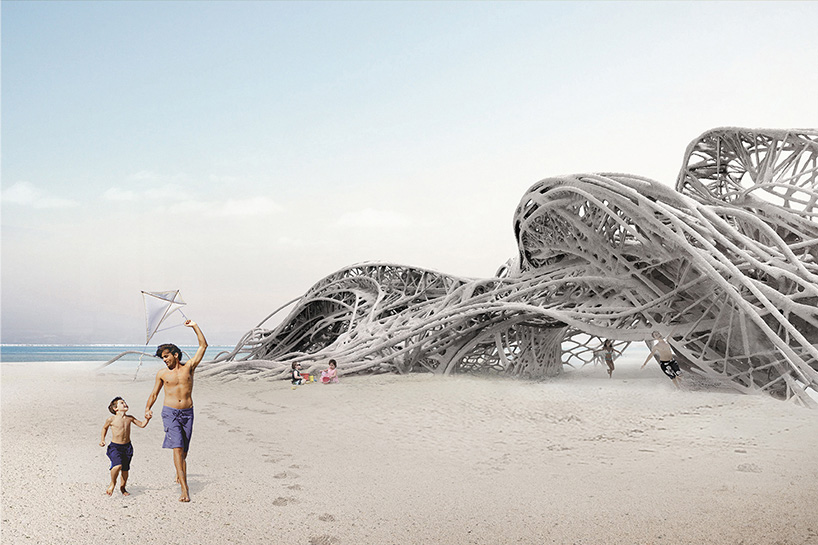
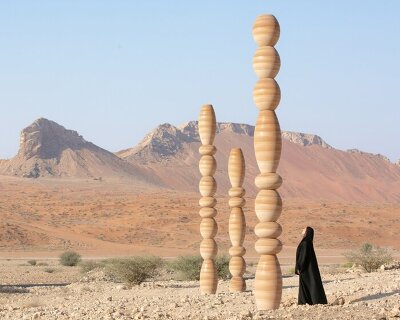
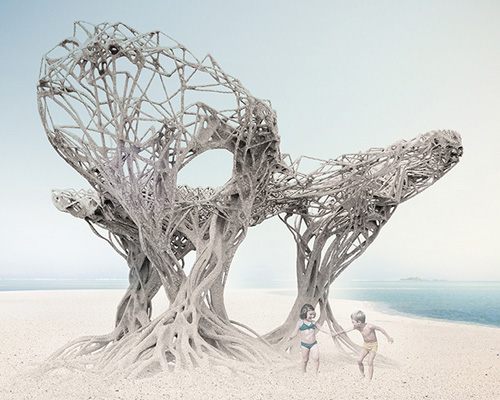
the material easily blends into the beachfront
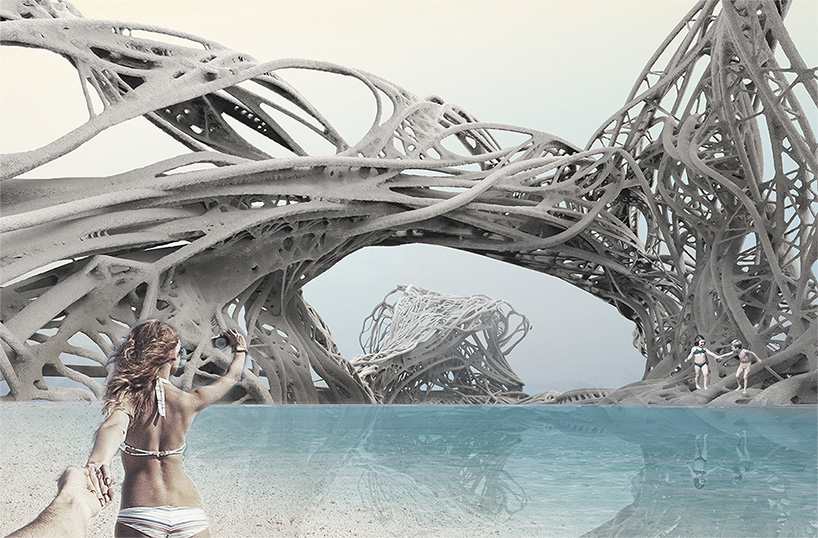
rendering of a structure embedded into a body of water
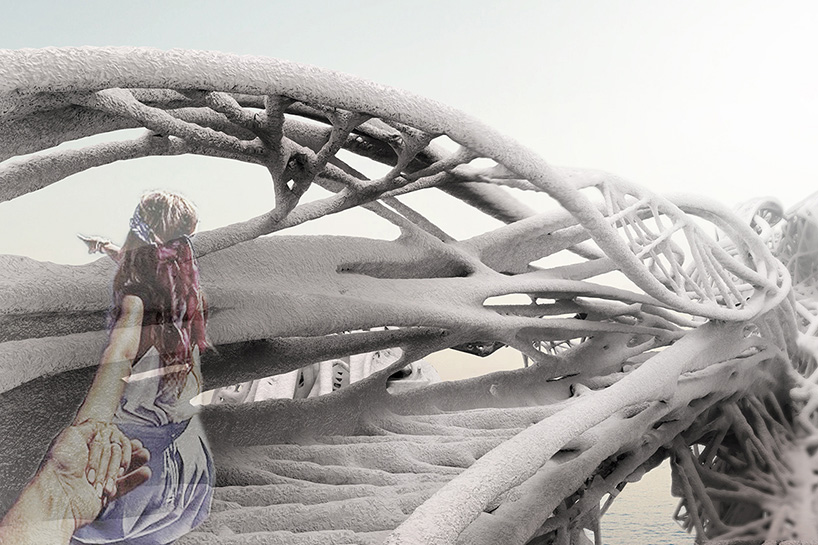
the tubes create a lattice-like structure
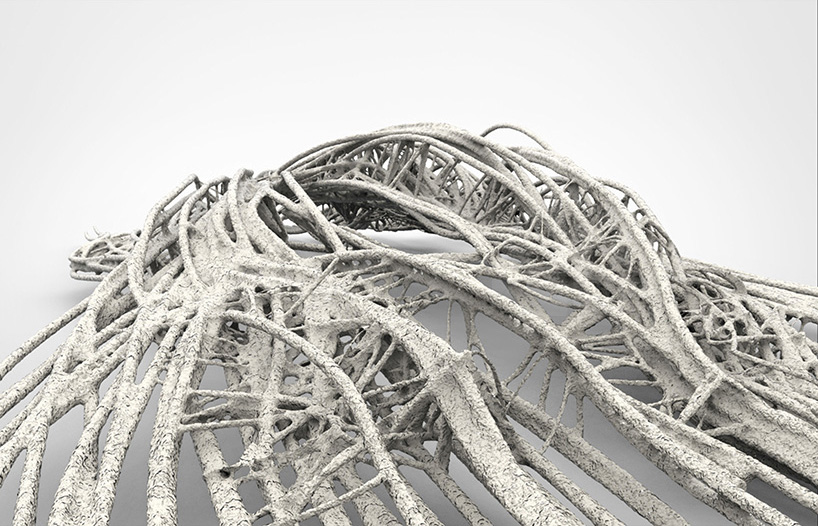
initial digital testing
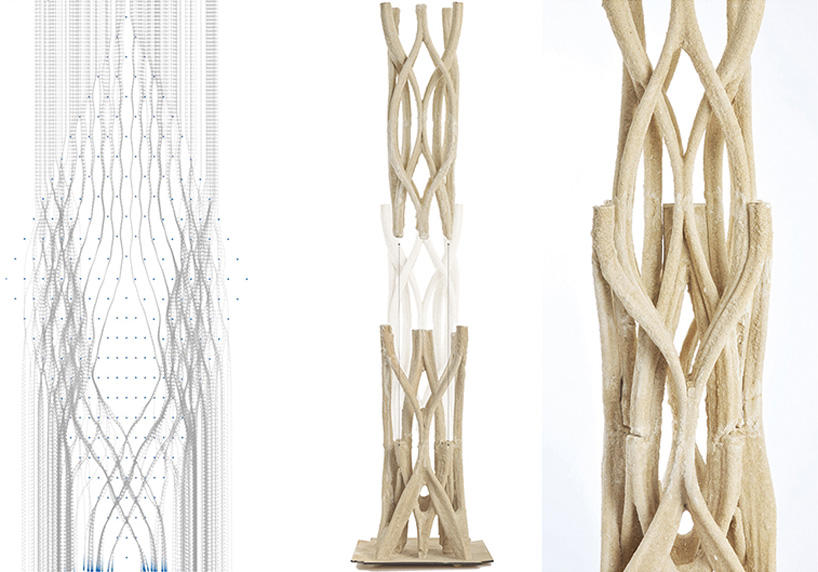
digital diagramming from processing and prototype of interlocking columns
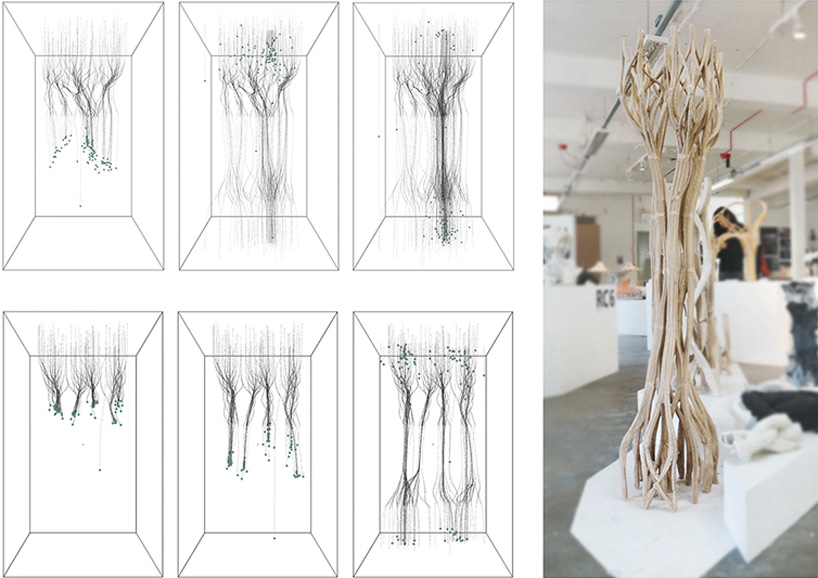
computer interface and model
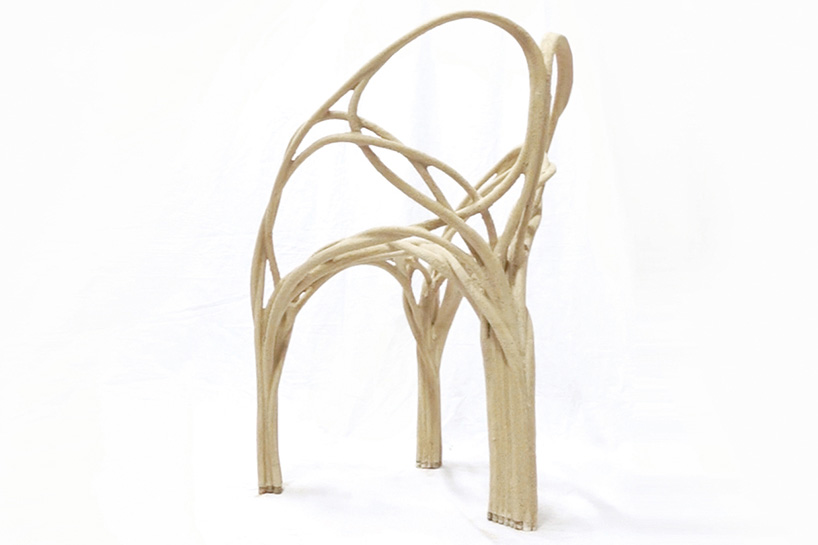
final generation of a sand casted chair
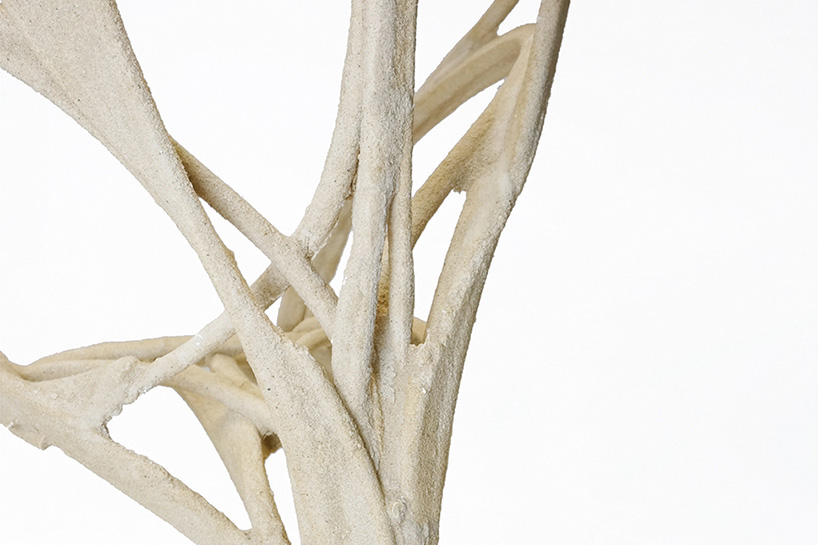
detail of a structural node
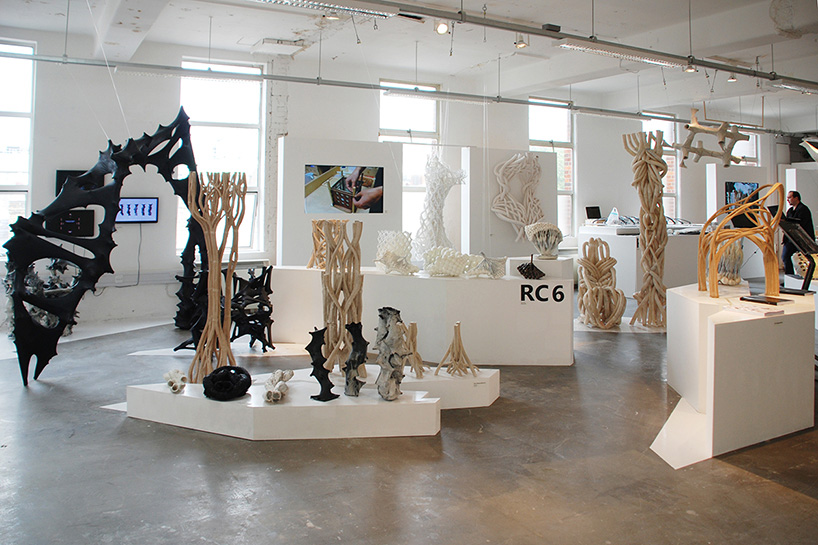
B-pro show at the bartlett school of architecture
project info:
design team: xiyangzi cao, shuo liu, zeyu yang
location: london, united kingdom
client: bartlett school of architecture, UCL
studio: research cluster 6 (2013.9-2014.9)
tutors: daniel widrig, stefan bassing, soomeen hahm
designboom has received this project from our ‘DIY submissions‘ feature, where we welcome our readers to submit their own work for publication. see more project submissions from our readers here.
shop
your own online design shop — no sales commission collected