
camilo huinca carves personal histories into sculptural wooden chairs
drawing on poetry, childhood memories, and autobiographical narratives, the chilean artist transforms furniture into a medium for storytelling and reflection.
camilo huinca turns personal memories into sculptural chairs
Chilean artist and designer Camilo Huinca, also known as ONLYJOKE, extends his visual language beyond illustration with a collection of sculptural wooden chairs. The series draws from literary figures including Rainer Maria Rilke, Franz Kafka, and Chilean poet Gonzalo Millán, translating memories of childhood, labor, family, and rural life into carved timber chairs that double as storytelling devices.
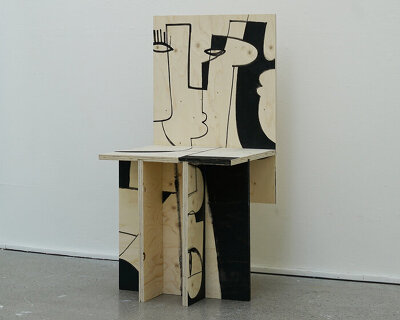
Huinca treats each chair as a narrative structure. Faces emerge from backrests, figures inhabit seats and tabletops, and painted carvings act as emotional traces embedded within the wood. The collection transforms everyday furniture into a series of autobiographical portraits, where personal experiences and literary influences become inseparable from the objects themselves.

shaped by poetry and personal mythology
Several pieces in Camilo Huinca’s furniture collection explore formative experiences through symbolic forms. Palma Sucia references a line from Gonzalo Millán’s poetry and reflects on the dignity of manual labor, using carved and painted surfaces to evoke worn skin, dried paint, cuts, and the physical marks left behind by work. The fragmented face and weathered body of the chair suggest a portrait shaped by lived experience rather than idealized representation.
Monólogo al origen draws inspiration from Rilke’s observation that childhood is humanity’s true homeland. Four carved faces support the structure of the chair, representing the emotional foundations of early life. Three smile while one appears sad, acknowledging childhood as a source of both joy and enduring wounds. Above them, a solitary figure occupies the seat, symbolizing adulthood resting upon a complex landscape of memories.
Confluencia, another of the Chilean artist’s designs, turns toward place and belonging. Inspired by summers spent in rural Chillán, the work incorporates references to local landscapes alongside fragments of personal photographs embedded within the chair. The object becomes both furniture and archive, preserving moments that might otherwise remain intangible.

furniture as a medium for reflection
Throughout the collection, Huinca uses timber as a carrier of memory. The carving marks, uneven contours, and hand-painted details keep the making process visible, giving each piece the character of a personal artifact.
Other works confront themes of adulthood and resilience. Describir un Viaje explores acceptance and emotional growth through symbolic figures that represent nature, family, absence, and continuity. El Diablo, informed by Kafka’s writings, addresses suffering and endurance through a composition that includes a burning figure, a red head, and a black horse standing as an emblem of persistence amid adversity.
Across the collection, Huinca treats furniture as a way of preserving experiences. Memories of childhood, rural landscapes, work, and loss are embedded into the chairs through carving, painting, and symbolic forms.


project info:
designer: Camilo Huinca / ONLYJOKE | @onlyjoke
This article is part of designboom’s Crafting the Future chapter, exploring what it means to be a maker in today’s world and the future of craftsmanship. Discover more related stories here.
shop
your own online design shop — no sales commission collected