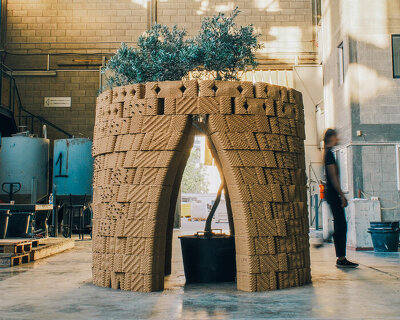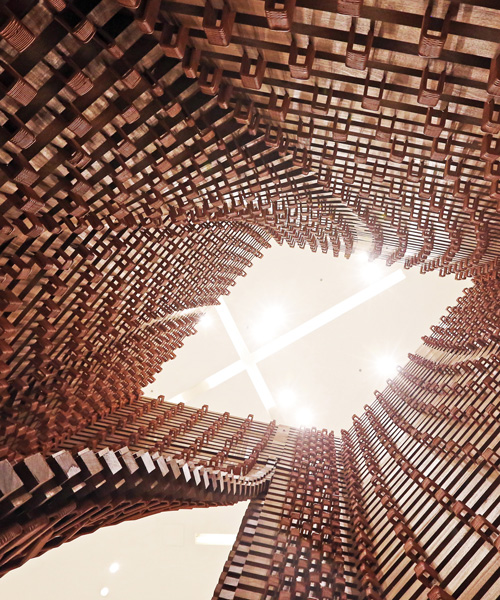
the ceramic constellation pavilion utilizes 3D printing to reinvent the terracotta brick
the structure's load-bearing features and overall stability are made possible by each brick's unique shape and placement.
prefer designboom on google[FEATURED]
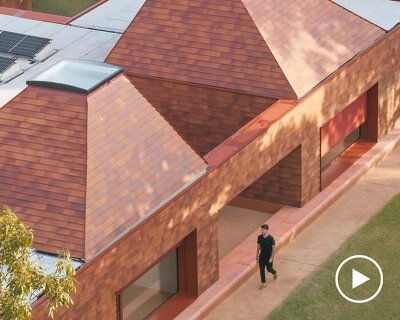
the university of hong kong’s department of architecture has collaborated with the sino group to create ‘ceramic constellation pavilion’. the structure seeks to expand contemporary views on architectural construction by creating a 3.8 meter tall pavilion made entirely of 3D printed terracotta bricks, dispensing with traditional brick-bonding techniques. instead, the structure’s load-bearing features and overall stability are made possible by each brick’s unique shape and placement.
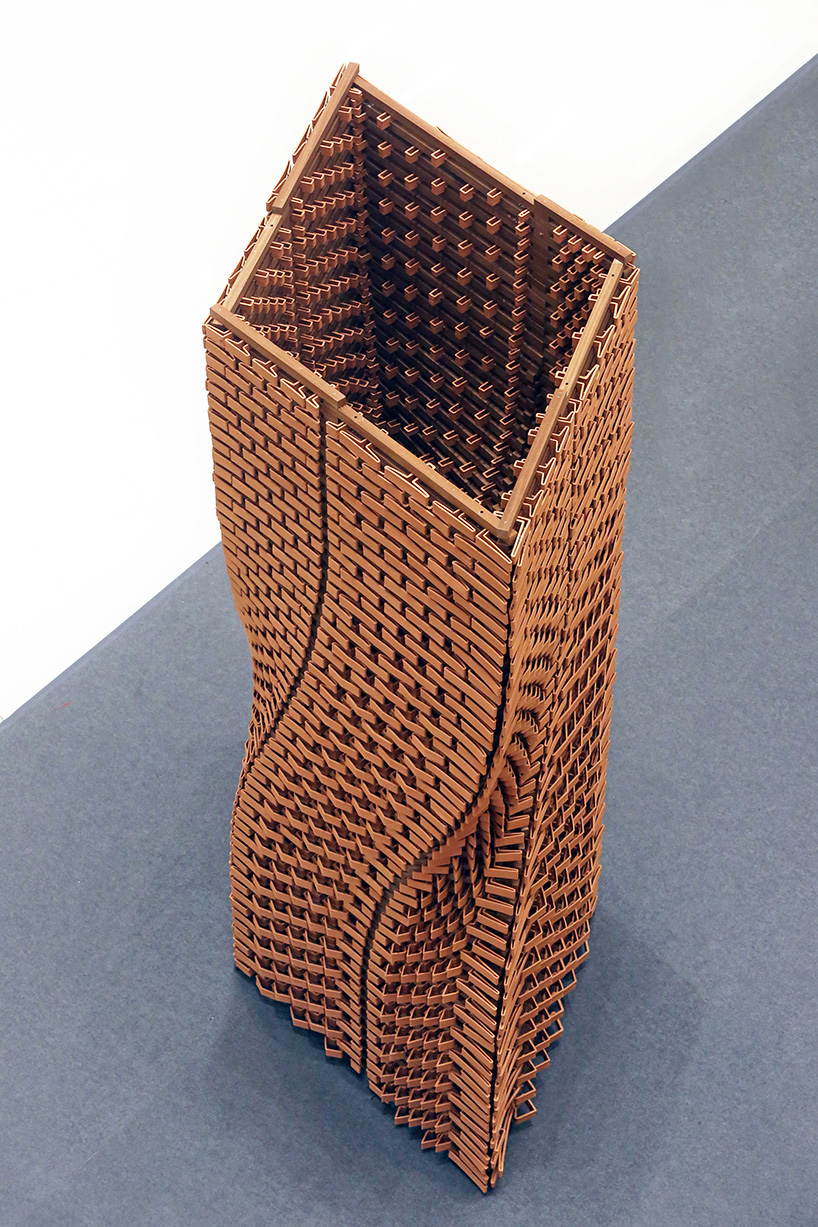
the robotic fabrication lab of department of architecture at hong kong university created a new terracotta brick
the overall structure is composed of 2,000 3D printed terracotta bricks. over a span of 3 weeks, the hong kong university faculty and students lead by donn holohan, christian lange, and holger kehne, fired each individual printed brick at 1025 degrees celsius. this process makes ‘the pavilion one of the first of its kind in the world that incorporates this specific material system.’
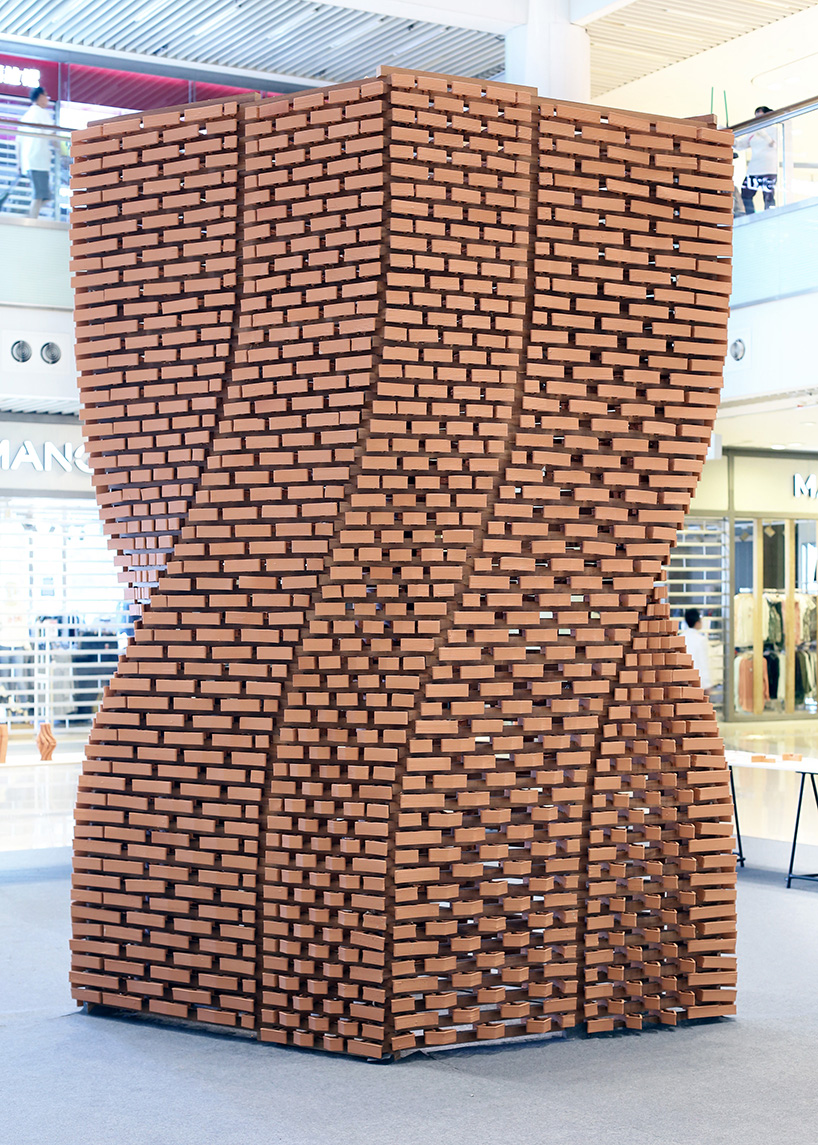
the 3.8m tall project parallels a load-bearing composite structure made with timber
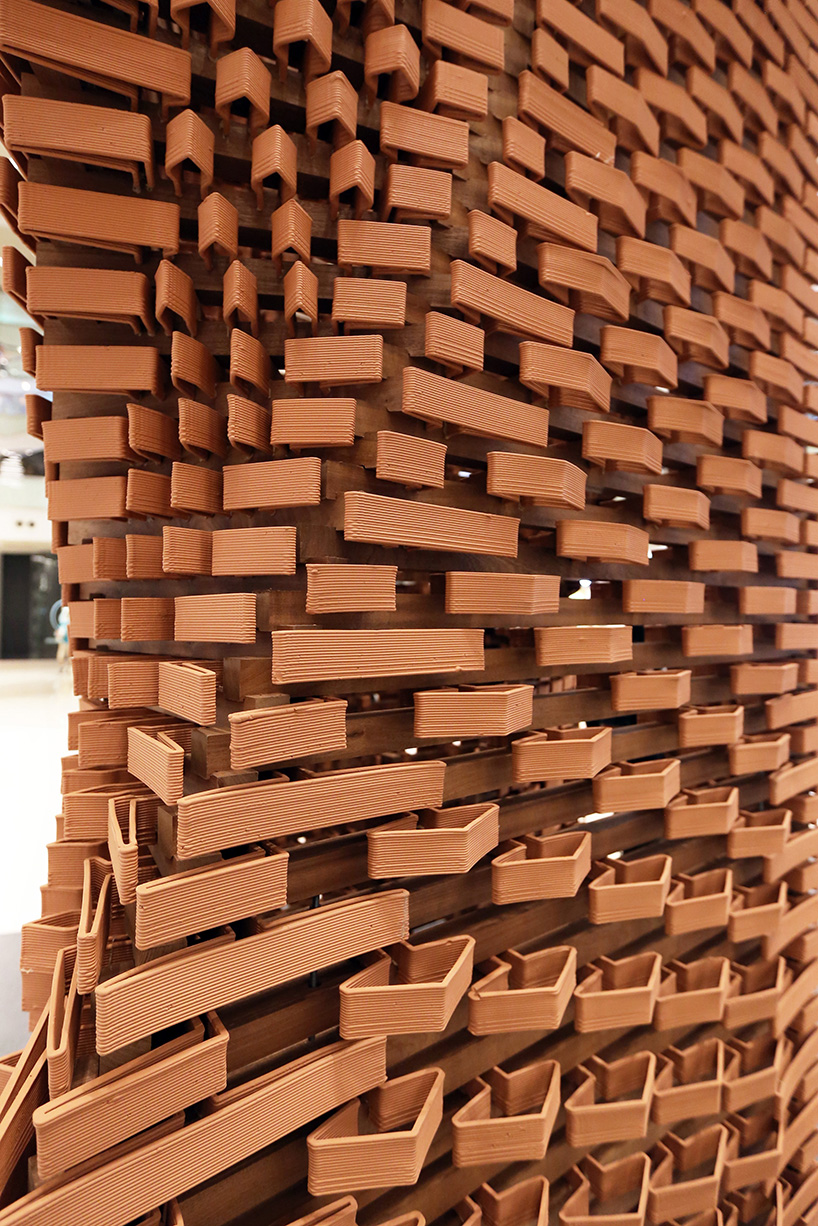
the project attempts to revitalize a material system that has a significant tradition in asia
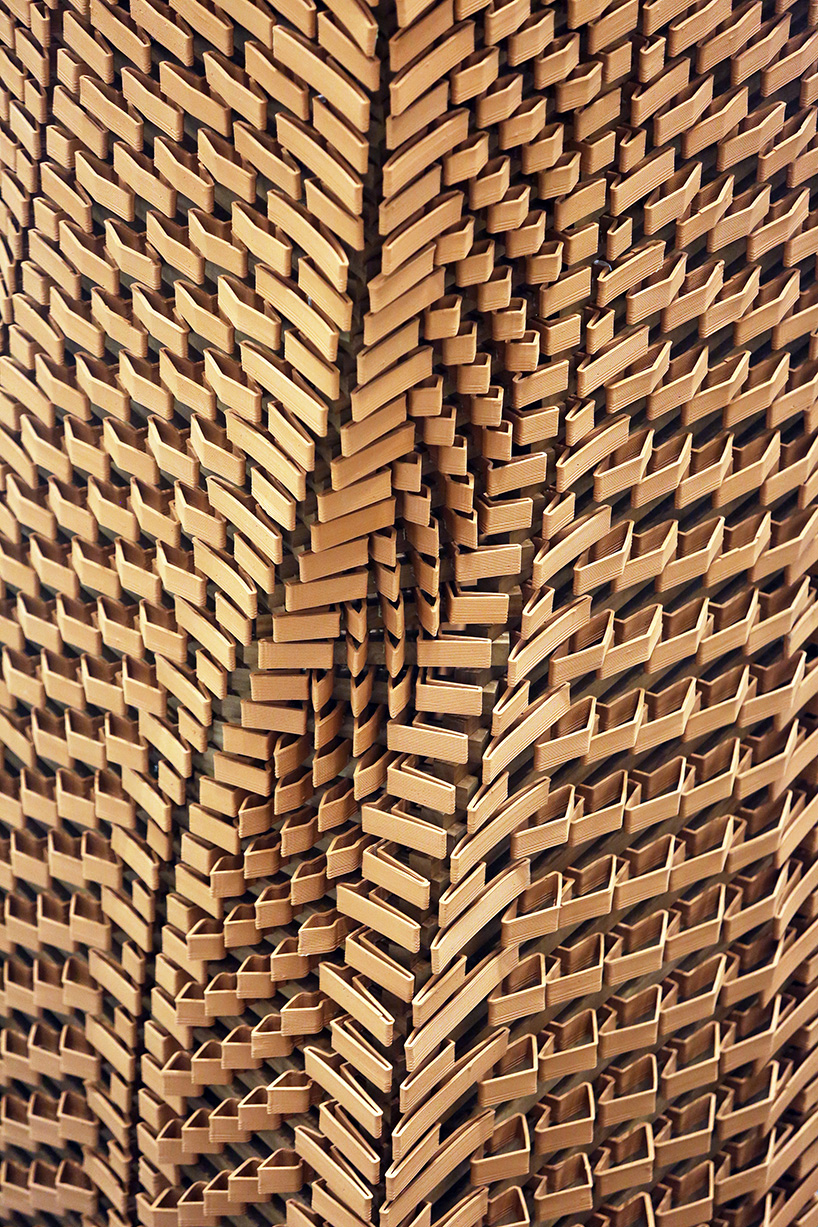
each of the nearly 2000 3D printed terracotta bricks are unique and different
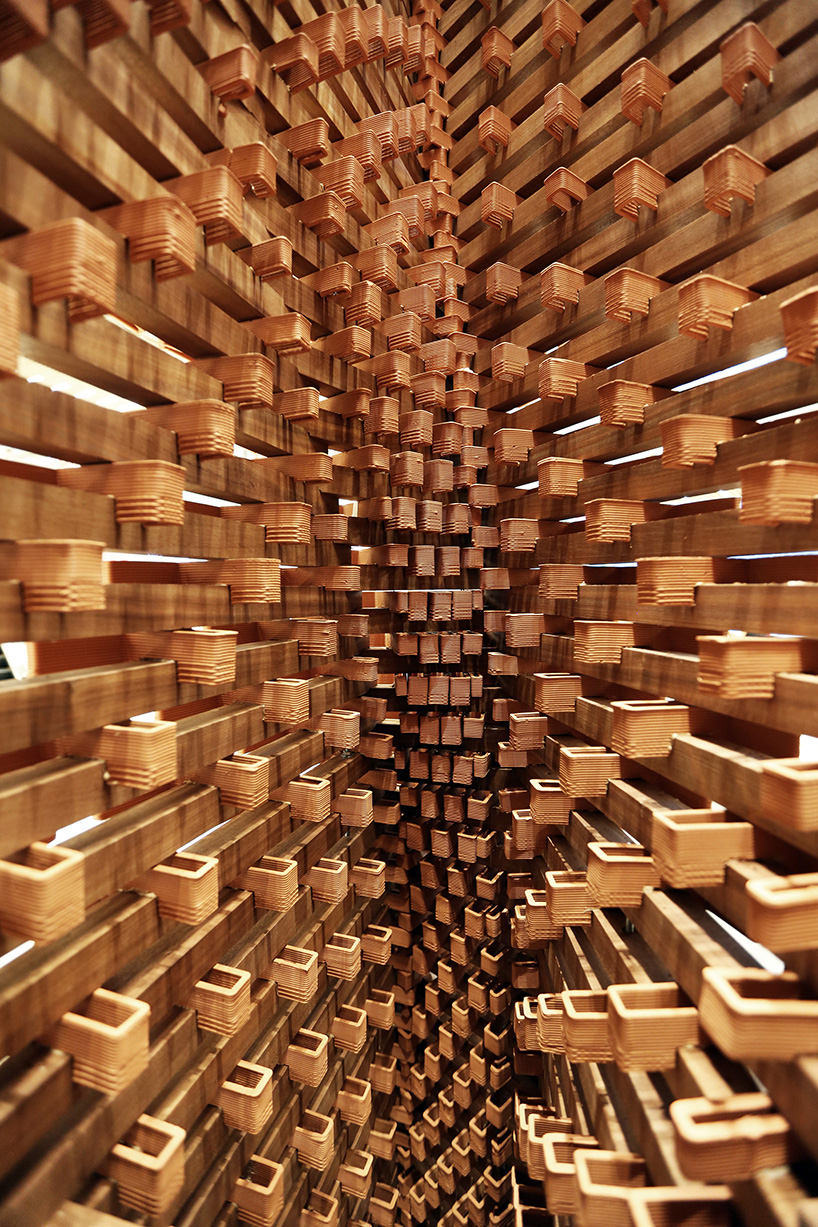
around 700 kg of raw terracotta clay were printed over a period of 3 weeks
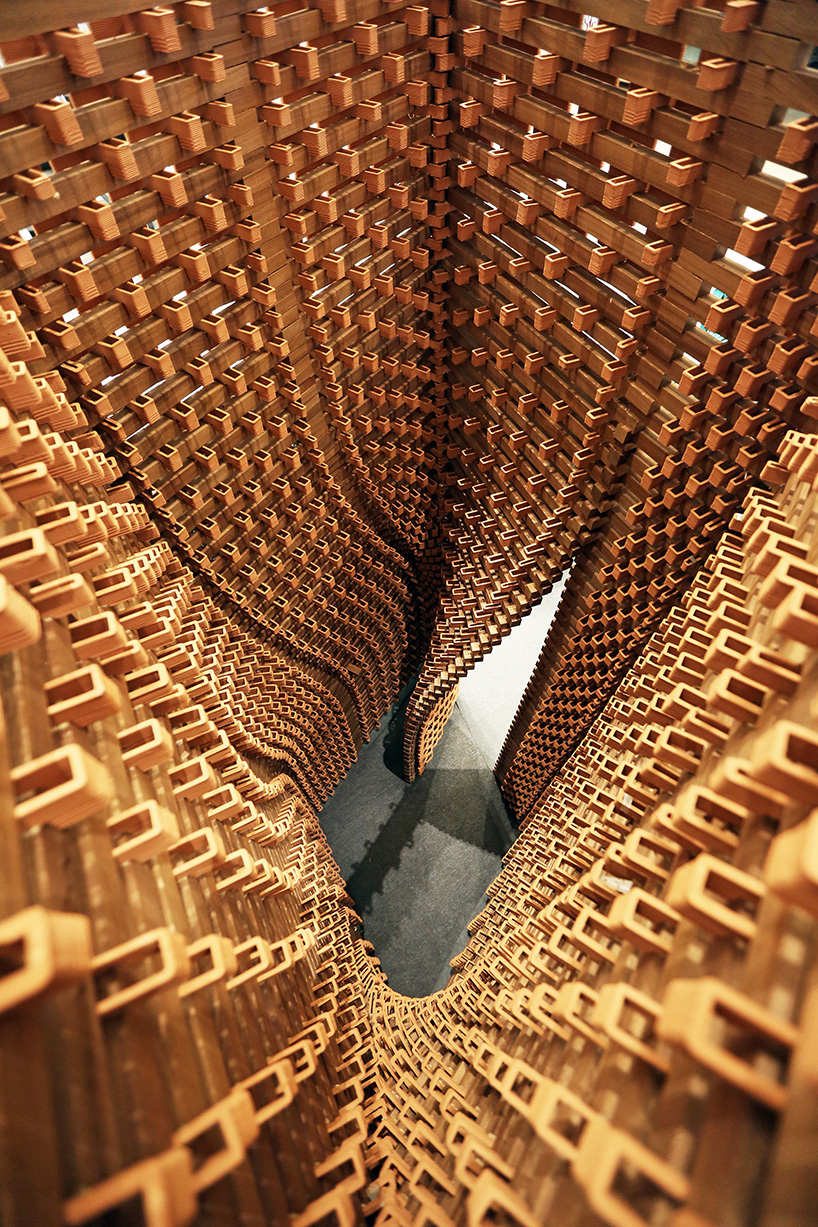
the printed bricks were then fired at 1025 degrees celsius
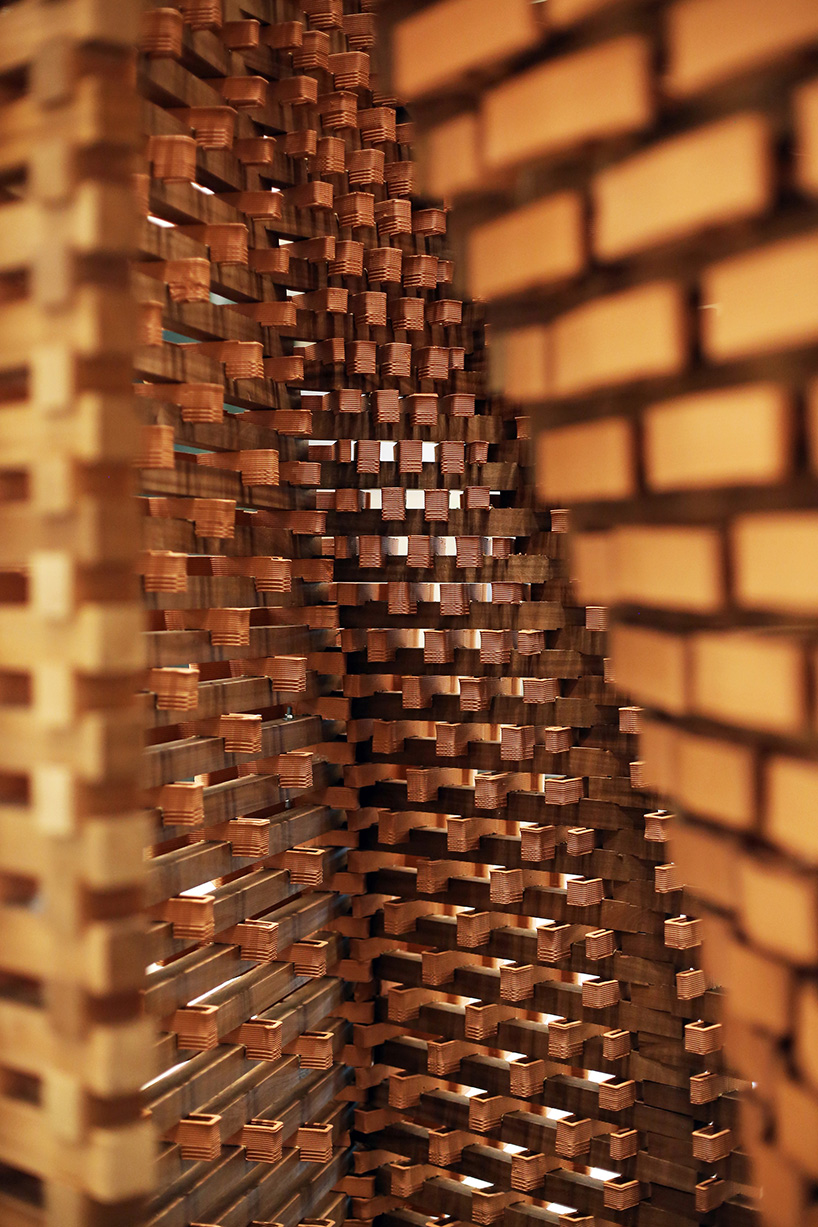
each brick took about 2-3 minutes to print
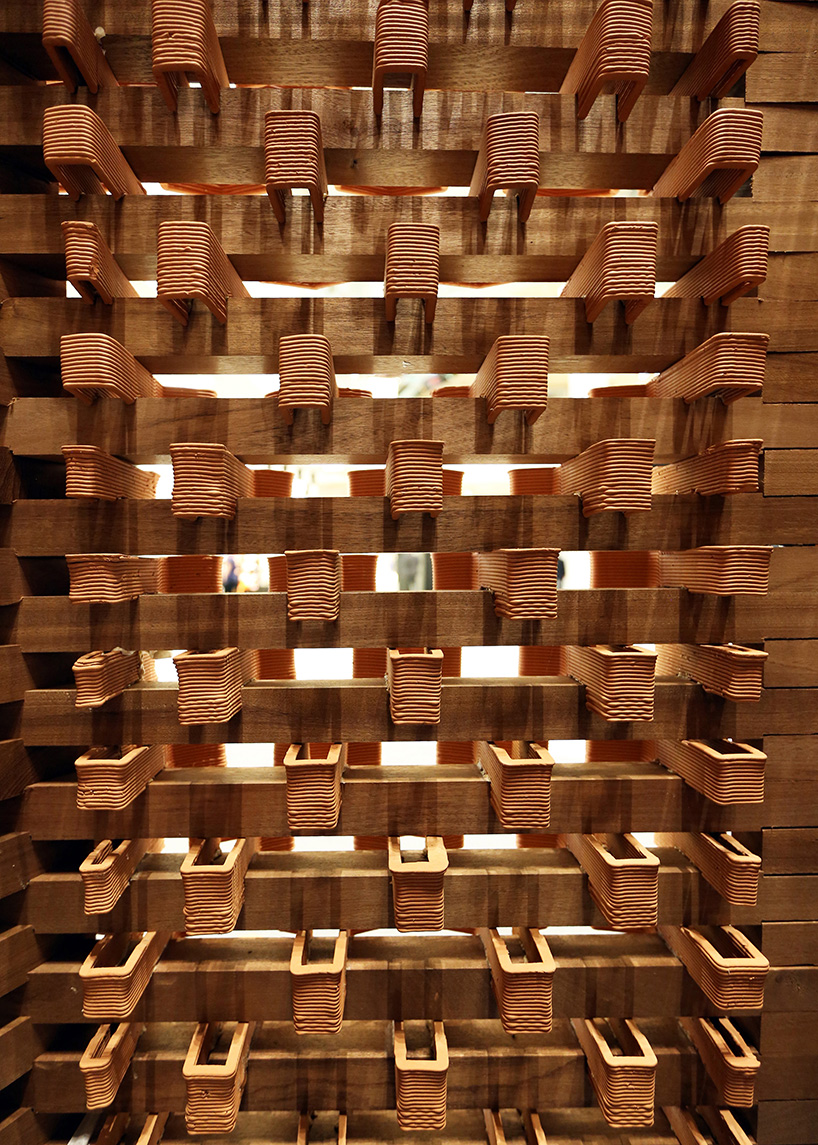
the process of brick making has been largely shaped by standardization and mass production
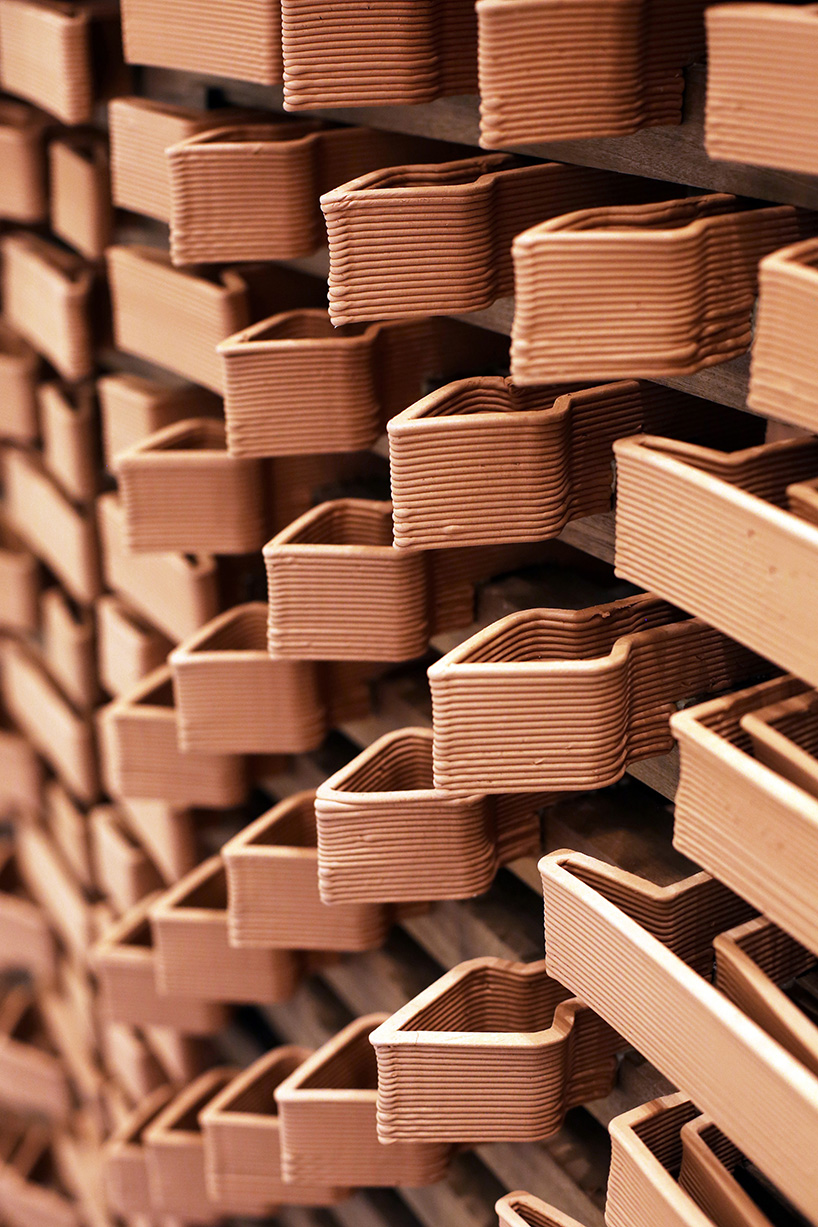
the project reflects that efficiency can be accomplished without relying on methods of mass production
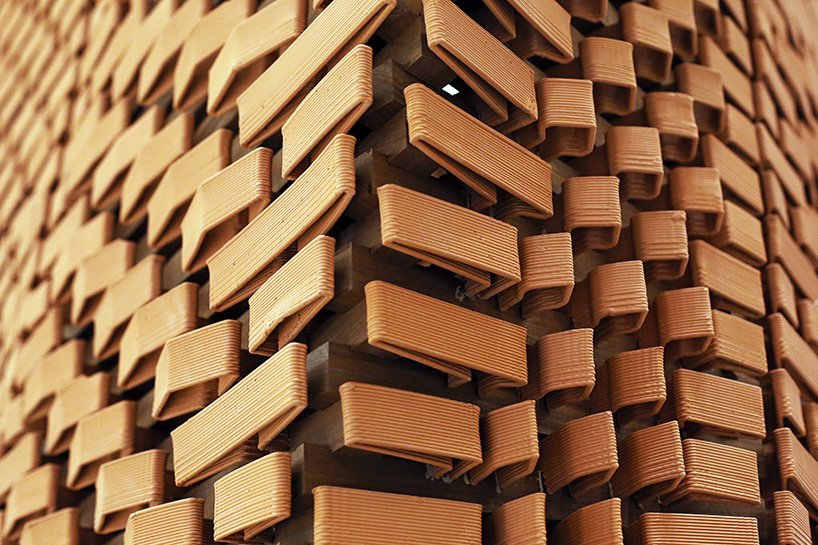
in closer detail, the variety in the bricks’ shapes become more apparent